
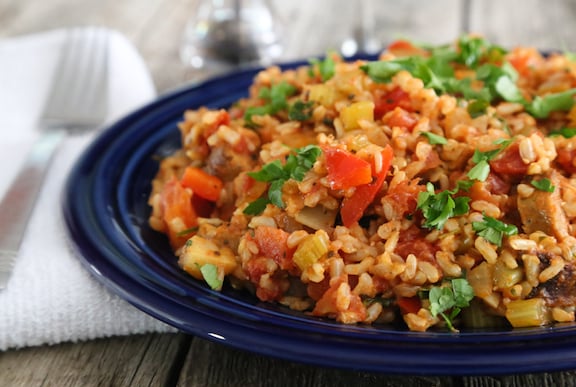
Spicy bits of vegan sausage lend an authentic flair to this simple vegan take on Jambalaya, a Creole-Cajun classic. Serve with any type of coleslaw and fresh corn bread for a hearty, satisfying dinner. Photos by Evan Atlas. [Read more...]
Search Results for: slaw
Quinoa with Black-Eyed Peas and Tomatoes
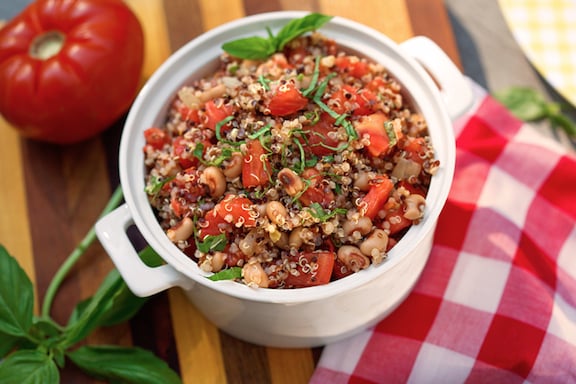
Black-eyed peas and quinoa make a hearty pair, embellished with lots of flavorful tomatoes. Try serving this with Chili Cheese Grits or fresh corn, and a simple coleslaw or salad. If you can, do try the liquid smoke or mesquite seasoning, either of which add a subtle smoky flavor. Photos by Hannah Kaminsky. [Read more...]
6 Offbeat Veggies That are Worth a Try
In my experience, I've found that those who like vegetables are particularly fond of the tried-and-true varieties. Broccoli, carrots, peas, potatoes, sweet potatoes, and corn occupy the top rung. "Second string" vegetables include cauliflower, green beans, greens, squashes, and such. If those in your household are open to new vegetable adventures, here are a few veggies that you may not think of buying regularly, but which might add fun and variety to your everyday repertoire.
Brussels Sprouts
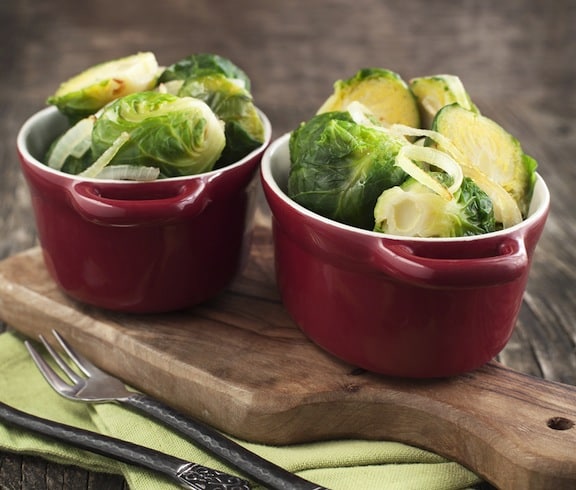
Okay, so Brussels sprouts aren't exactly "offbeat," but they may be one of the vegetables you hated as a child. I list them here, though, because I think they're underused and under appreciated. Cook them just until done, and these tiny cabbages are delightful. When eating overcooked Brussels sprouts, I can see where the prejudice may set in. Serve your perfectly cooked sprouts to your family with an air of excitement-it may be contagious!
- Maple-Sriacha Roasted Brussels Sprouts with Cranberry Wild Rice
- Wine-Glazed Brussels Sprouts
- Tempeh Stew with Brussels Sprouts, Sweet Potatoes, and Shiitakes
Edamame
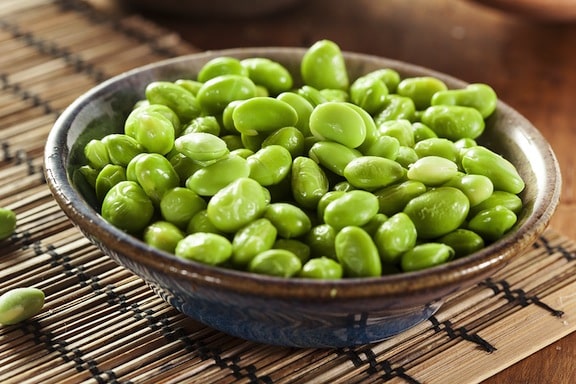
Fresh green soybeans have become widely available in the West in the past few years. Resembling baby lima beans-but less mealy and more flavorful-edamame (eda-MA-may) are a popular appetizer in Japanese restaurants. In midsummer, I get fresh edamame from my local farm markets. Cook them in their shells for about 10 minutes, then pop them open and eat them at room temperature-much like green peas. Edamame are quite easy to find in frozen form in natural foods stores, either in or out of the shell.
- Asian-Flavored Edamame and Tofu Chopped Salad
- Quinoa with Edamame and Oranges
- Edamame Salad with Red Bell Pepper
Jerusalem Artichokes
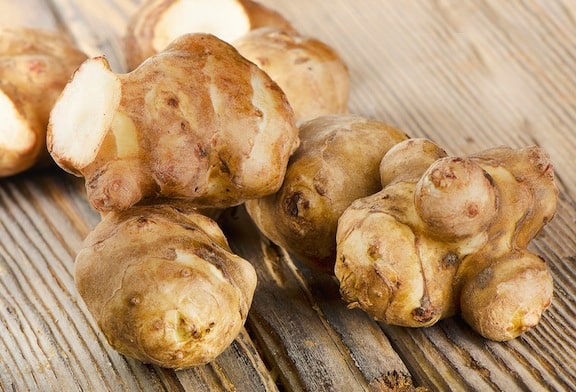
Also marketed as "sunchokes," these knobby roots have no connection with Jerusalem nor do they bear any resemblance to the more common, leafy artichokes. They are related in some way to the sunflower plant, however. These veggies have a texture that is a cross between a water chestnut and a white potato and a flavor that is pleasant but hard to describe. Jerusalem artichokes can be scrubbed, sliced, and eaten raw alone or in salads, or quickly sautéed in a little olive oil.
Jícama
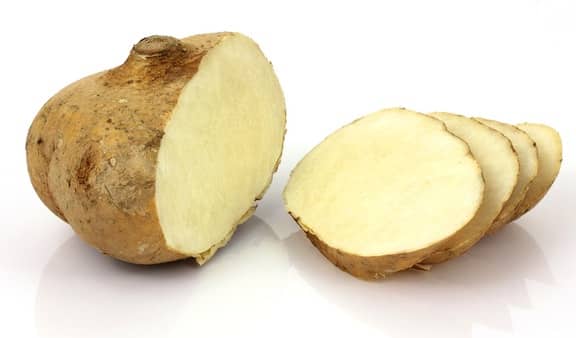
Another offbeat root, jicama (pronounced HICK-a-mah) is native to the American Southwest, and until the last decade or so was not easy to find outside that realm. Now you will find jicama in well-stocked supermarkets and produce stores from west to east. Sweet, crunchy, and a bit more watery than other roots, jicama is-like the Jerusalem artichokes-good sliced and eaten raw, used in salads, or sautéed.
Leeks
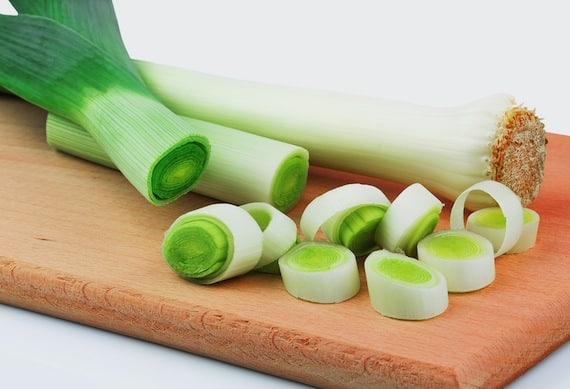
A member of the onion family, leeks resemble oversized scallions. Only the white and lightest green parts are edible. The dark green leaves may be washed well, chopped, and used to flavor homemade vegetable stock, or you can simply discard or compost them. Chop leeks and rinse very well before using. Sautéed leeks are wonderful in soups and paired with potatoes or cabbage. But you can always substitute them for ordinary onions.
- Simmered Tofu with Leeks and Tomatoes
- Sautéed Carrots and Leeks
- Mashed Sweet Potatoes with Leeks and Peas
Spaghetti Squash
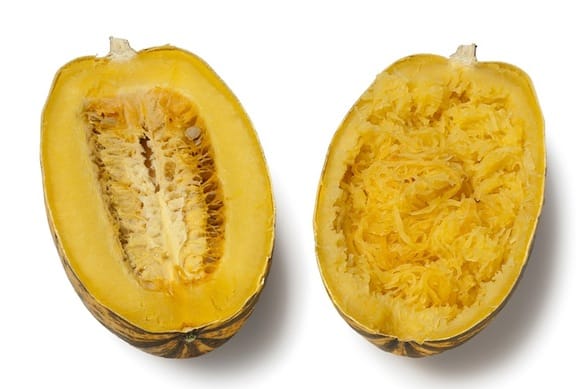
Winter squashes are not often great favorites of children (unless pureed into soups or otherwise disguised), but spaghetti squash may be the exception to this rule. Once baked, the flesh comes out in spaghetti-like strands, and children can get great enjoyment from "combing out" those strands with a fork (provided of course, that the squash is cool enough to handle). I like to serve spaghetti squash in its simplest form, sautéed in a little olive oil or Earth Balance, and seasoned with salt and pepper. Some people like to eat their spaghetti squash with marinara sauce as a low-carb substitute for pasta.
Potatoes and Collard Greens with Vegan Sausage
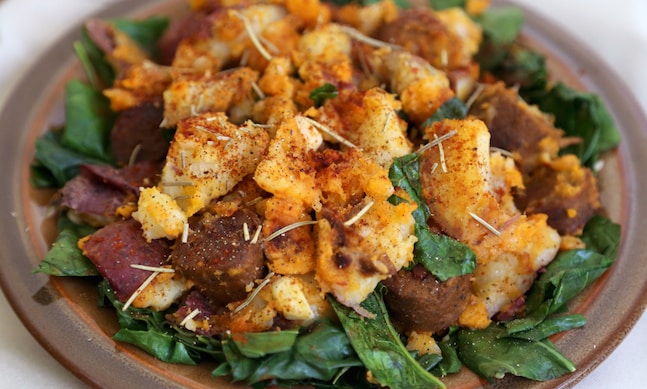
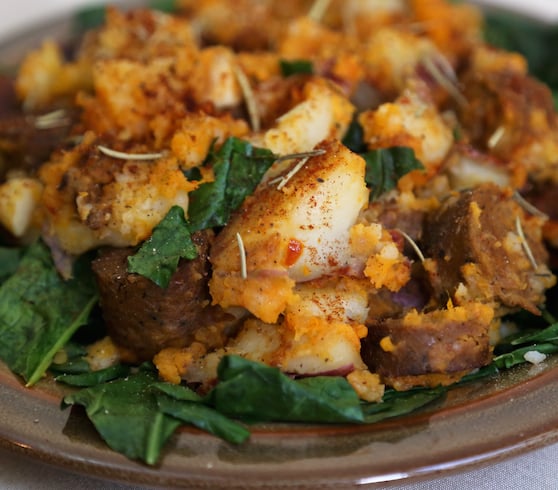
Here's a hearty dish of potatoes and vegan sausage, highlighting calcium-rich collard greens. It's so hardy, that all you need is a simple salad or slaw to complete the meal. Photos by Evan Atlas.
Serves: 4 to 6
- 4 medium-large Yukon gold or red-skinned potatoes
- 1 large sweet potato
- 2 tablespons extra-virgin olive oil
- 3 to 4 cloves garlic, minced
- 1 good-sized bunch collard greens (8 to 10 ounces)
- 2 links Tofurky or Field Roast vegan sausage, cut into ½-inch-thick slices
- ¼ cup white wine, vegetable broth, or water
- Leaves from 2 sprigs fresh rosemary,
or 1 to 2 teaspoons dried rosemary leaves, to taste - 1 teaspoon sweet paprika
- ¼ teaspoon dried hot red pepper flakes, or to taste
- Salt and fresly ground pepper to taste
Cook, bake, or microwave the potatoes and sweet potatoes until they can be pierced with a fork but still firm. When cool enough to handle, cut in half lengthwise, then cut into ½-inch-thick half circles.
Cut away the thick mid-ribs from the collard greens and cut the leaves in half lengthwise. Rinse well, then, stacking several leaves at a time, cut them into thick strips.
Heat the oil in a large skillet or steep-sided stir-fry pan. Add the garlic and sauté over low heat until golden.
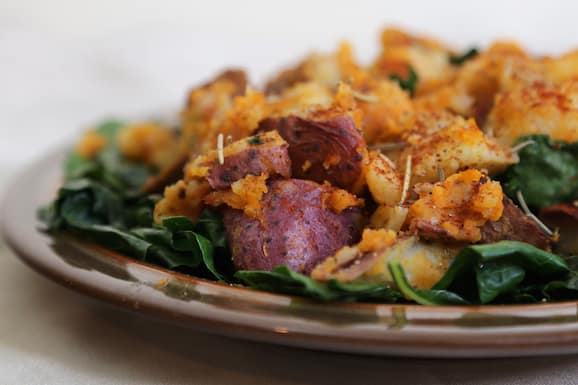
Add the potatoes, collards, sausage, and wine (or broth or water). Turn the heat up to medium high and cook, stirring frequently, until the collards are bright green and tender-crisp and the potatoes and suasage are touched with golden spots here and there.
Sprinkle in the rosemary, paprika, and red pepper flakes and cook for two to three minutes longer, stirring frequently. Season with salt and pepper and serve.
Nutrition Information:
Per Serving (based on 4 servings): 318 calories; 43g carbs; 12g fat; 15g protein; 226mg sodium
- Find lots more recipes on VegKitchen for kale, collards, and other hardy greens.
- Here are more easy, tasty potato recipes.
- Find more of VegKitchen's Vegan Dinner Recipes and more Tofu, Tempeh and Vegan Sausage Main Dishes.
- Here are more vegan sausage recipes.
Chinese Vegetable Stir Fry (Buddha's Delight)
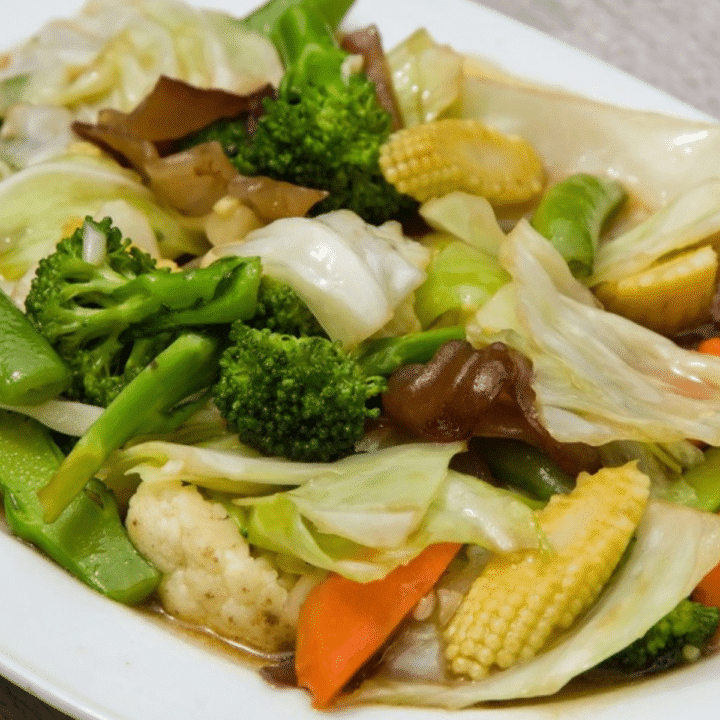
If you're a longtime vegetarian or vegan, you've likely ordered a version of this addictive Chinese restaurant staple, often nicknamed Buddha's Delight. This vegetable stir fry tosses broccoli, cabbage, snow peas, mushrooms, and baby corn in a glossy, savory ginger sauce, and it's easy to make at home and way healthier than the takeout version.
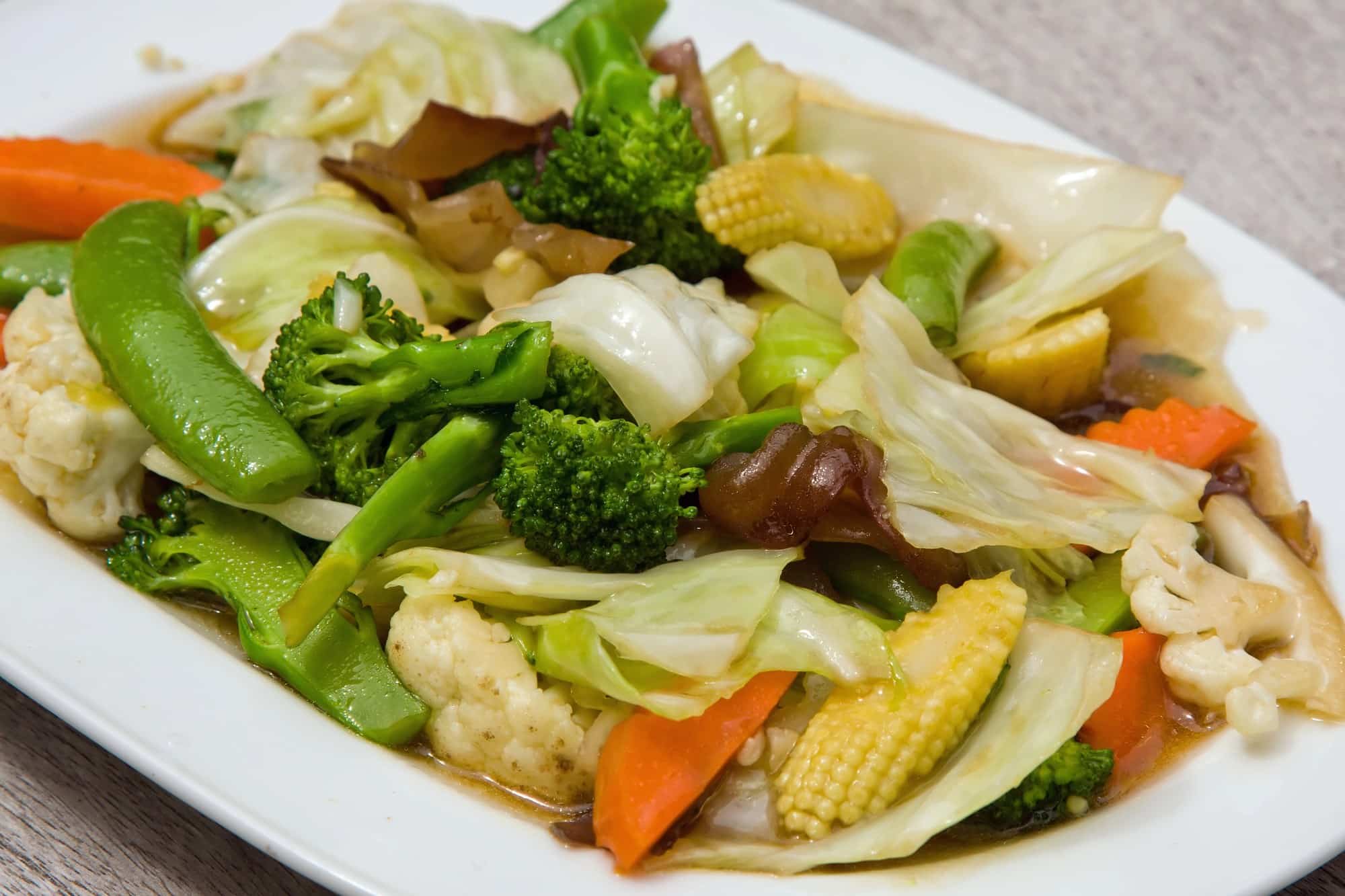
A simple vegetable stir fry is one of my favorite meals for busy weeknights. They're quick, easy, and super family friendly too. From the first chop to the table, this one takes about 25 minutes.
This homemade version of the Chinese restaurant favorite Buddha's Delight has all the flavor of your favorite takeout, but it's way healthier (and cheaper too!). Traditionally it's a Buddhist monastery dish made entirely of vegetables, which is exactly why it's been a go-to order for plant-based eaters for decades.
Key Ingredients & Substitutions
- Broccoli. The backbone of the dish. Cut the crowns into small, even florets so they cook through in the same few minutes as everything else. Cauliflower florets, or a half-and-half mix, work just as well.
- Cabbage. Napa cabbage is the classic choice and turns silky in the sauce; regular green cabbage holds more crunch. Bok choy is a good swap if that's what you have.
- Baby corn. Canned whole baby corn is a takeout signature and adds sweetness and snap. Drain and rinse it to remove the brine taste.
- Mushrooms. I used basic button mushrooms for this recipe, but shiitake mushrooms or rehydrated wood ear mushrooms (the dark, ruffled ones in the photo) give it more of a restaurant feel.
- Snow peas, carrot, celery, and scallions. These add color and crunch. Sugar snap peas can stand in for snow peas, and sliced bell pepper can replace the celery.
- Soy sauce or tamari. The main seasoning in the sauce. A good-quality brewed soy sauce like Lee Kum Kee Premium Soy Sauce makes a noticeable difference; use San-J tamari to keep the dish gluten-free.
- Toasted sesame oil. Just two teaspoons of toasted sesame oil give the sauce its nutty, aromatic finish. It's optional, but I'd hate for you to skip it.
- Cornstarch. This is what turns thin broth into a glossy sauce that clings to the vegetables. Arrowroot powder works the same way.
- Dry white wine. Optional, for a bit of brightness. Not all wines are vegan (some are fined with animal products), so choose one labeled vegan, or simply replace it with more broth or a splash of rice vinegar.
Helpful Tips
Prep everything before you turn on the heat. Stir-frying moves fast. Have the sauce whisked, the vegetables chopped, and the baby corn drained before the oil goes in the pan, because there's no time to chop once the garlic is sizzling.
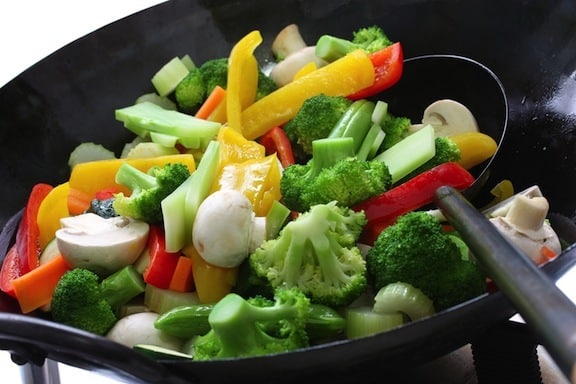
Use a wok or your largest pan. A carbon steel wok gets very hot and gives you room to toss, so the vegetables sear instead of steaming. A flat-bottomed wok works on any home stove; otherwise, use a wide 12-inch skillet.
Add the vegetables in stages. Dense vegetables like carrot and broccoli go in first, then the cabbage, mushrooms, and celery, and finally the quick-cooking snow peas, baby corn, and scallions. Everything should end up bright and tender-crisp at the same time.
Re-whisk the sauce right before adding it. Cornstarch settles to the bottom of the bowl within minutes. Give it a quick stir so it thickens evenly instead of forming clumps.
Want a shortcut sauce? A spoonful of bottled vegetarian stir-fry sauce (a mushroom-based take on oyster sauce) adds the deep, savory flavor you get at Chinese restaurants. Stir in a tablespoon along with the homemade sauce, or see our Basic Chinese Stir Fry Sauce for a make-ahead version.
Variations
- Cauliflower swap. In place of the broccoli, I sometimes opt for cauliflower florets, or a mix of half broccoli and half cauliflower.
- Add tofu. Pan-fry cubes of extra-firm tofu until golden, set them aside, and toss them back in with the sauce for a protein-packed meal.
- Make it spicy. Add a pinch of red pepper flakes with the garlic, or drizzle with chili crisp or sriracha at the table.
- Traditional add-ins. For a more classic Buddha's Delight, add soaked bean thread noodles, fried tofu puffs, water chestnuts, or sliced bamboo shoots.
- Use what you have. Feel free to experiment with other veggies. Just about anything you have on hand will work here; bell peppers, bok choy, and sliced summer squash are great additions.
Serving Ideas
Serve this vegetable stir fry over hot cooked brown rice or Asian noodles for a heartier meal. It's also a natural partner for vegan fried rice with tofu or simple sesame soba noodles, and a sprinkle of toasted cashews or peanuts on top adds a welcome crunch.
It also goes well with a crisp, tangy salad, like the Easiest Asian Slaw or a mixed greens salad with orange sections and toasted almond slices. For added protein, choose your favorite simple tofu, tempeh, or seitan preparation to serve alongside or atop this dish.
Storing & Freezing
Store leftovers in an airtight container in the refrigerator for up to 3 days. The vegetables will soften a bit and the sauce will thicken as it sits, so reheat in a skillet over medium heat with a splash of broth or water, stirring until hot. The microwave works too; just cover the dish so it doesn't dry out.
This stir fry doesn't freeze well. Cabbage, snow peas, and celery turn watery and limp after thawing, and the cornstarch-thickened sauce can separate. If you want to get ahead, chop the vegetables and whisk the sauce up to a day in advance and keep them refrigerated separately; dinner then comes together in about 10 minutes.
More Vegan Stir Fry Recipes
If you love this Buddha's Delight recipe, be sure to check out these other tasty vegan ideas:
- Sesame-Ginger Tofu and Broccoli Stir-Fry
- Napa Cabbage and Mushroom Stir-Fry
- Vegetable Chow Mein
- Vegan Wonton Soup
- 125+ Vegan Stir Fry Recipes
Recipe
Chinese Vegetable Stir Fry - Buddha's Delight
Buddha's Delight is a Chinese-style vegetable stir fry loaded with broccoli, cabbage, snow peas, mushrooms, and baby corn in a savory homemade ginger-soy sauce. It's ready in 25 minutes and even better than the takeout version!
Print
Pin
Save
Servings: servings
Equipment
- Wok or large skillet
Ingredients
For Stir Fry Sauce:
- 2 tablespoons cornstarch or arrowroot powder
- 1 ¼ cups vegetable broth
- 2 teaspoons sesame oil dark, optional
- 2 tablespoons soy sauce or tamari
- 2 tablespoons dry white wine optional
- 2 teaspoons grated ginger or ginger paste
For Stir Fry:
- 1 ½ tablespoons safflower oil or other oil for stir frying
- 2 cloves garlic minced
- 2 crowns broccoli cut into bite-sized florets
- 1 carrot large, peeled and sliced diagonally
- 1 cup mushrooms variety of choice, stemmed and cut in half
- 1 cup cabbage leaves Napa or regular green cabbage, chopped into bite sized chunks
- 1 cup snow peas trimmed
- 1 stalk celery thinly sliced on the diagonal
- 2 scallions cut into 1-inch pieces
- 15 ounces baby corn canned, drained
For serving:
- toasted cashews or peanuts for topping, optional
- rice cooked, optional
- additional soy sauce to taste
Instructions
- In a small bowl, whisk the cornstarch into about ¼ cup of the broth until smooth.
- Add the remaining broth, sesame oil, soy sauce, white wine (if using), and ginger. Whisk to combine and set aside.
- Heat the oil in a wok or large skillet over medium-high heat. Add the garlic and stir-fry for about 30 seconds, just until fragrant (don't let it brown).
- Add the carrot and broccoli and stir-fry for 2 minutes. Add the cabbage, mushrooms, and celery and stir-fry for 1 to 2 minutes more. Add the snow peas, baby corn, and scallions and stir-fry for 1 minute, until everything is bright and tender-crisp. If the pan gets dry, add a tablespoon or two of water or extra broth.
- Whisk the sauce again so the cornstarch hasn't settled, and pour it over the vegetables. Cook, stirring, for 1 to 2 minutes, until the sauce thickens and turns glossy and everything is heated through. Season to taste with additional soy sauce and serve hot over rice, topped with toasted cashews or peanuts if you like.
Notes
- Wine: not all wines are vegan. Use one labeled vegan, or replace it with more broth or a splash of rice vinegar.
- Gluten-free: use tamari instead of soy sauce.
- Variations: use a mix of broccoli and cauliflower rather than just broccoli, or swap the button mushrooms for shiitake or wood ear mushrooms.
- Make ahead: chop the vegetables and whisk the sauce up to a day ahead; refrigerate separately.
- Storage: refrigerate leftovers for up to 3 days and reheat in a skillet with a splash of broth. Not recommended for freezing.
Nutrition (Estimate per Serving)
Calories: 234kcalCarbohydrates: 35gProtein: 7gFat: 9gSaturated Fat: 1gPolyunsaturated Fat: 2gMonounsaturated Fat: 5gSodium: 826mgPotassium: 625mgFiber: 5gSugar: 9gVitamin A: 3546IUVitamin C: 40mgCalcium: 79mgIron: 2mg
Vegan-ize any recipe!Grab our free vegan cheat sheet, packed with my favorite easy substitutions to make any recipe vegan.
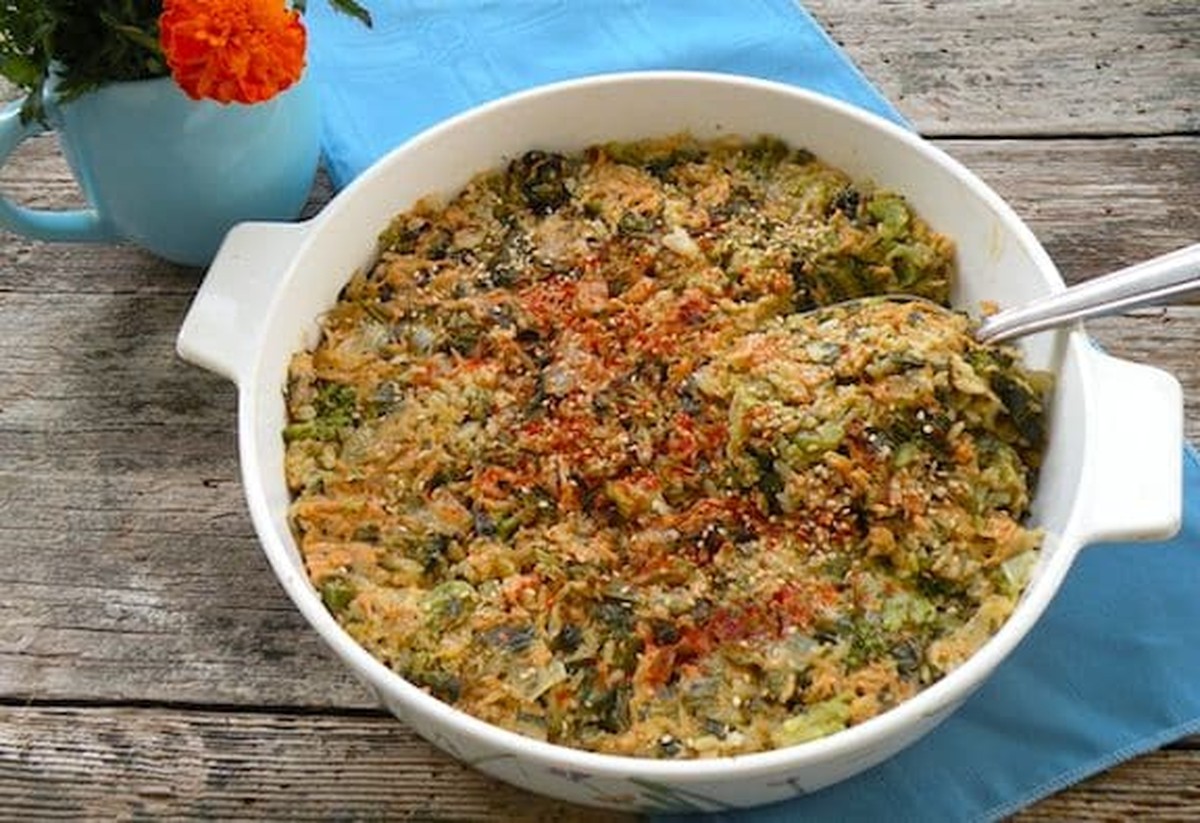
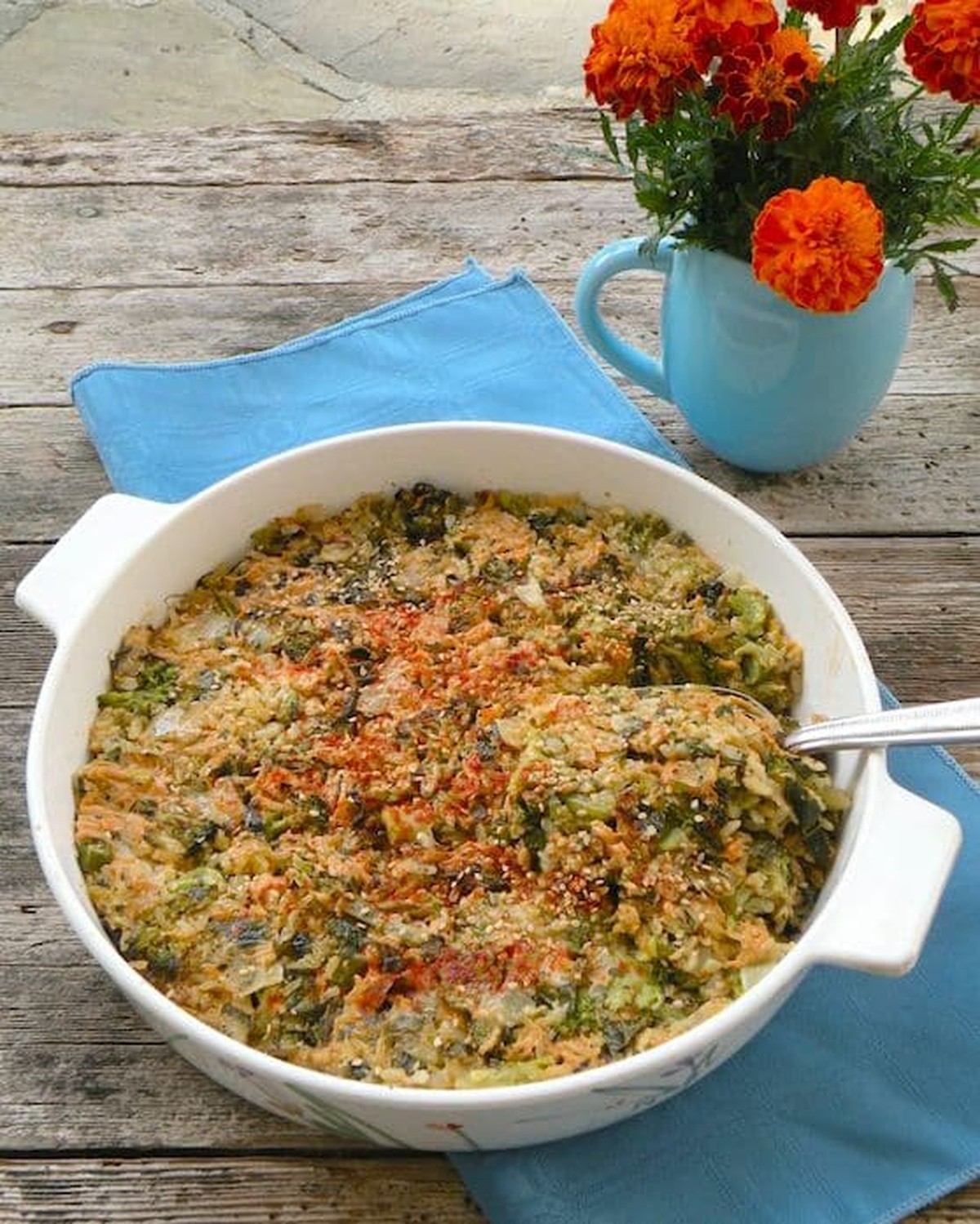
Vegan Cheddar and Broccoli Rice Casserole
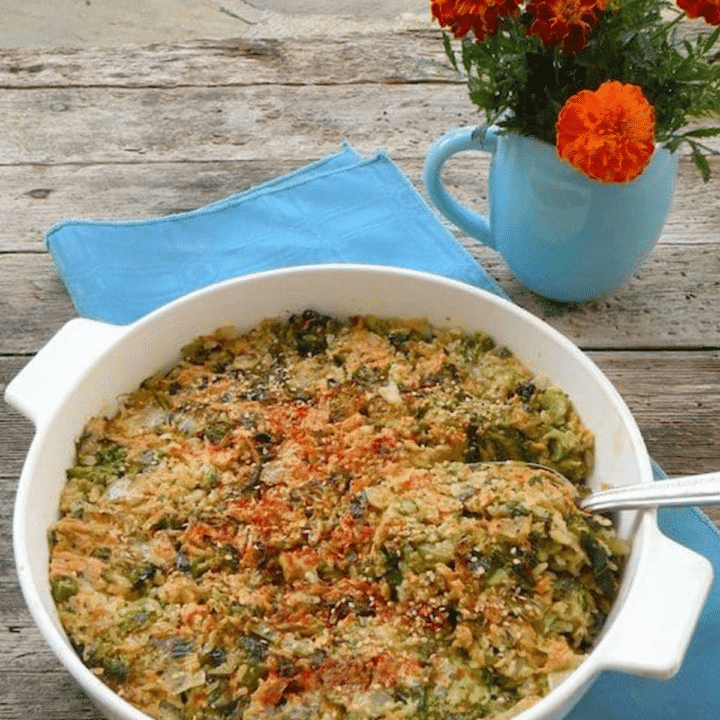
This vegan cheddar and broccoli rice casserole is the kind of old-fashioned, spiral-bound-cookbook comfort food that never goes out of style - it just needed a plant-based update. Melty vegan cheddar, tender broccoli, and fluffy brown rice bake together into a golden, slightly crusty-topped casserole that's every bit as cozy as the dairy version, minus the dairy. It comes together fast if your rice is already cooked, which makes it one of those recipes worth keeping in regular rotation for busy weeknights.
It's also wonderfully forgiving. You can swap in whatever vegan cheese shreds you have on hand, use white or brown rice, and adjust the herbs to taste. Since the oven is already going at 400°F, this is a great time to roast a pan of root vegetables alongside it for an easy, hands-off side.
What makes this casserole worth keeping on hand is how little active effort it takes once your rice is cooked. Most of the prep is just chopping vegetables and stirring everything together in one bowl before it goes into the oven to bake into something golden and a little crusty on top. It reheats beautifully, too, which makes it a smart choice for meal prep or for feeding a crowd without a lot of last-minute fuss.
Key Ingredients & Substitutions
- Broccoli - finely chopped florets (a little stem is fine) cook down quickly and distribute evenly through the rice. Broccoli slaw or pre-riced broccoli from the produce section works in a pinch.
- Cooked brown rice - day-old rice is ideal here, since it's drier and holds its texture better than freshly steamed rice. White rice, farro, or even quinoa can stand in if that's what you have.
- Vegan cheddar-style shreds - we like Violife Just Like Cheddar Shreds for how well they melt, but any meltable non-dairy cheddar works.
- Fresh parsley and dill - these brighten up what could otherwise be a heavy casserole. The dill is optional but adds a nice herby lift.
- Unsweetened nondairy milk - rice milk keeps things neutral, but soy or oat milk work equally well and add a touch more creaminess.
Helpful Tips
- Cook the broccoli only until it's just past tender-crisp and still bright green - it will continue to cook in the oven, and pre-softened broccoli turns dull and mushy by the time the casserole is done.
- Use a splash of water rather than extra oil to steam the broccoli and celery in the skillet; it keeps the pan moist without watering down the finished casserole.
- An oiled 2-quart round or oblong dish, like this ceramic casserole dish with a lid, is the right size for this amount of filling - anything much larger will bake unevenly and dry out at the edges.
- Don't skip the topping. A scattering of wheat germ, sesame seeds, or paprika over the top is what gives the casserole its slightly crusty, golden finish.
Variations
This casserole is easy to riff on. Stir in a cup of cooked white beans or chickpeas for extra protein, or fold in some sautéed mushrooms for more savory depth. If you like a little heat, a pinch of red pepper flakes or a few dashes of hot sauce mixed into the filling works well. Swapping the brown rice for cooked quinoa turns this into a close cousin of our Vegan Broccoli Quinoa Casserole, if you'd like to compare the two side by side.
Serving Ideas
Serve this straight from the baking dish as a main course alongside a simple green salad, or as a hearty side dish next to roasted vegetables or a bowl of soup. It also travels well, making it a good choice for potlucks, family dinners, or a make-ahead lunch you can portion out for the week.
Storing & Freezing
Leftovers keep well in an airtight container in the refrigerator for up to 4 days - just reheat individual portions in the microwave or oven until warmed through. This casserole also freezes nicely: let it cool completely, then wrap tightly or transfer to a freezer-safe container for up to 2 months. Thaw overnight in the refrigerator before reheating.
Recipe
Vegan Cheddar and Broccoli Rice Casserole
With plenty of broccoli and parsley along with brown rice, this is wholesome as well as somewhat addictive! Make sure to have your brown rice cooked ahead of time, and this whole enterprise becomes a snap.
Print
Pin
Save
Servings:
Ingredients
- 2 tablespoons olive oil or vegan buttery spread like Earth Balance
- 1 large onion finely chopped
- 1 large celery stalk finely diced
- 4 cups finely chopped broccoli florets some stem is fine
- ½ cup finely chopped fresh parsley
- 2 tablespoons finely chopped fresh dill optional
- 3 ½ to 4 cups cooked brown rice
- 2 cups grated vegan cheddar-style cheese
- ½ cup unsweetened rice milk or other nondairy milk
- ½ teaspoon dried basil
- ½ teaspoon dried oregano
- Salt and freshly ground pepper to taste
- Wheat germ sesame seeds, and/or paprika for topping
Instructions
- Preheat the oven to 400º F.
- Heat the oil or vegan buttery spread in a large skillet or steep-sided stir-fry pan. Add the onion and sauté over medium heat until golden.
- Add the celery and broccoli along with just a bit of water to keep the pan moist. Cover and cook until the broccoli is just past tender-crisp, but still bright green.
- Remove the pan from the heat and stir in the remaining ingredients except the toppings.
- Transfer the mixture to an oiled 2-quart round or oblong casserole dish. Pat in evenly and top with wheat germ, sesame seeds, and/or paprika.
- Bake for 35 to 40 minutes, or until the edges become a bit crusty and the top is golden.
- Allow the casserole to stand for 5 minutes or so, then serve. Either cut into neat segments or just spoon it out. It all works and it will disappear quickly!
Nutrition (Estimate per Serving)
Calories: 236kcalCarbohydrates: 33gProtein: 5gFat: 9gSaturated Fat: 3gPolyunsaturated Fat: 1gMonounsaturated Fat: 1gTrans Fat: 1gSodium: 327mgPotassium: 258mgFiber: 4gSugar: 2gVitamin A: 746IUVitamin C: 47mgCalcium: 64mgIron: 2mg
Vegan-ize any recipe!Grab our free vegan cheat sheet, packed with my favorite easy substitutions to make any recipe vegan.
Frequently Asked Questions
Can I make this casserole ahead of time?
Yes - assemble the casserole up to a day ahead, cover, and refrigerate unbaked. Add about 5 to 10 extra minutes to the bake time if it goes into the oven cold, and check that it's heated through before serving.
Can I use frozen broccoli instead of fresh?
Frozen broccoli works, but thaw and drain it well first and chop it fine. Since it's already softer than fresh broccoli, stir it in without the extra steaming step so it doesn't turn mushy by the time the casserole finishes baking.
More Vegan Casseroles
Asian Noodles with Napa Cabbage, Mushrooms, and Tofu

This simple and delectable stir-fry of napa cabbage, mushrooms and tofu, augmented with Asian noodles, goes well with an easy slaw-style salad, and spring rolls from the freezer section of your natural foods store. It's a great weekday meal, as the stir-fry can be accomplished in the time it takes to cook the noodles. Photos by Evan Atlas [Read more...]
Asian Noodles with Spicy Stir-Fried Corn and Cabbage
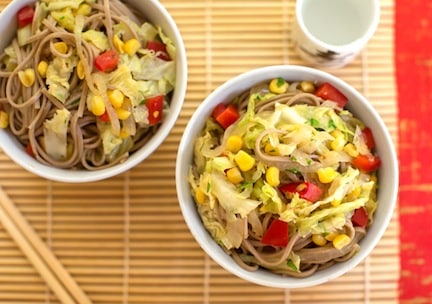
This lively stir-fry of corn and cabbage, intertwined with hearty Asian noodles, will be on the table quickly you when you want something easy and spicy. Photos by Hannah Kaminsky of Bittersweet.
Black Rice with Corn and Cranberries
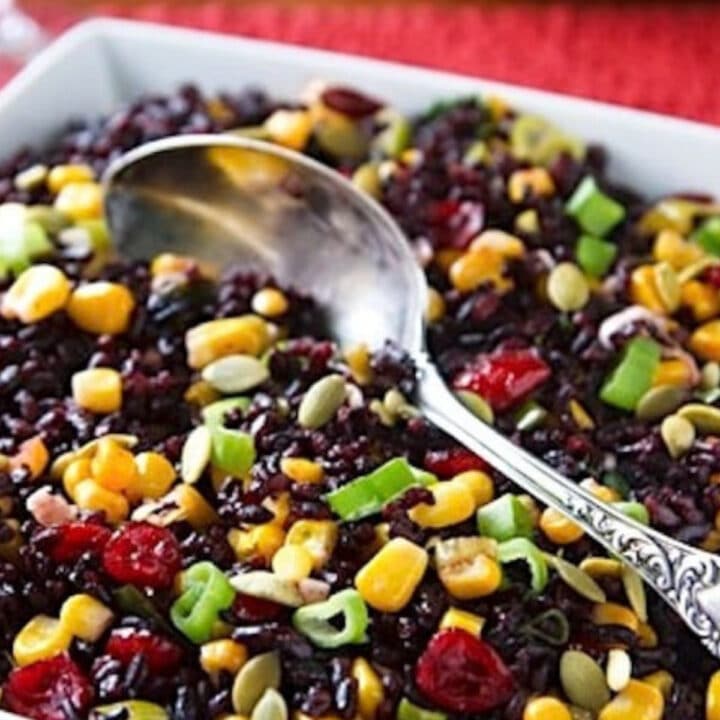
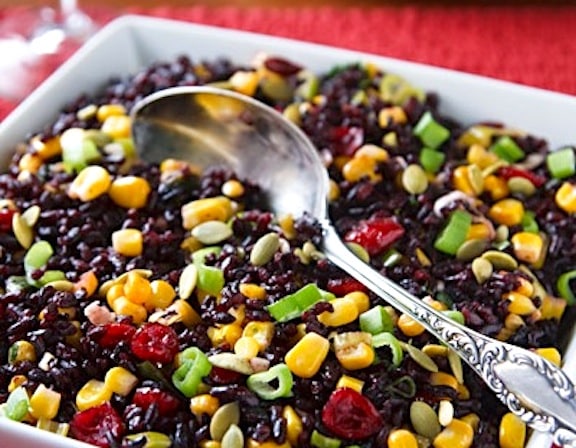
This delectable dish of black rice, sweet corn, and tart dried cranberries is a festive eyeful, but it's too good to save only for special occasions, and too simple not to make for everyday meals. Tossed with scallions, cilantro, lime, and warm cumin and finished with toasted pumpkin seeds, it makes a gorgeous holiday side dish or, stuffed into small squashes, a satisfying vegan main dish.
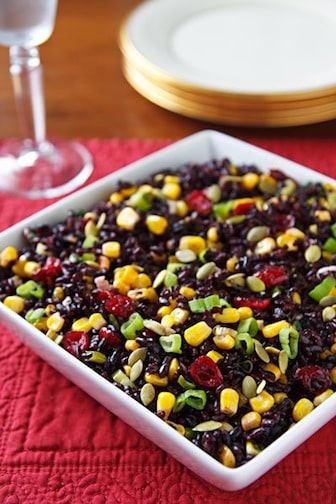
Photo by Susan Voisin.
Key Ingredients & Substitutions
- Black (forbidden) rice. The star of the dish. Black rice has a nutty, slightly sweet flavor, a pleasantly chewy texture, and a deep purple-black color that makes the corn and cranberries pop. Look for it in the specialty grains aisle of natural foods stores and well-stocked supermarkets, or order a bag of Lotus Foods Organic Forbidden Rice. Wild rice is the best substitute and gives a similar dark, dramatic look, though it needs more water and a longer simmer.
- Corn. Thawed frozen corn is quick and reliably sweet year-round. In late summer, kernels cut from two or three ears of fresh corn are even better.
- Dried cranberries. They add bursts of tart sweetness and a festive red color. Any sweetened dried cranberries work; dried cherries or golden raisins are good swaps.
- Scallions and garlic. A quick sauté in olive oil gives the dish its savory base without much work. A small shallot can stand in for the scallions.
- Lime or lemon juice and cilantro. Together they keep the dish bright and fresh. Lime pairs especially well with the cumin. If you're not a cilantro fan, use flat-leaf parsley instead.
- Cumin, oregano, and thyme. This simple trio of dried spices gives the rice a gently warm, earthy flavor that works with both holiday menus and Southwestern-style meals.
- Toasted pumpkin seeds. Pepitas add crunch and a little protein. Toast raw pumpkin seeds in a dry skillet until they puff and start to pop, or swap in toasted pecans or sunflower seeds.
Helpful Tips
Rinse the rice first. A quick rinse in a fine-mesh strainer removes excess surface starch, so the grains stay distinct rather than sticky. Don't worry when the water runs purple; that's the rice's natural pigment, and it's perfectly normal.
Adjust the texture to your taste. Black rice cooked with 2 cups of water for about 30 minutes has a pleasant chew. If you prefer it softer, add another ½ cup of water and let it cook until absorbed. Keep the lid on while it simmers so the steam does its work.
Keep the garlic mellow. Sauté the garlic over medium-low heat just until golden. Browned or burnt garlic turns bitter and can overpower the delicate sweetness of the corn and cranberries.
Stir gently. Once the rice goes into the skillet, fold everything together with a wide spatula rather than stirring hard. This keeps the grains intact and the colors vivid instead of streaked purple.
Season at the end. Taste after everything is combined and add salt, pepper, and more lime juice as needed. Rice soaks up seasoning as it sits, so if you're serving it later, give it one more taste and a squeeze of lime just before it goes to the table.
Variations
- Make it a main dish. Stir in a can of drained black beans or chickpeas for a protein-rich one-bowl meal, much like our Black Rice with Black-Eyed Peas and Greens.
- Stuffed squash. Spoon the rice into roasted acorn or delicata squash halves for a festive plated entrée, in the spirit of our Rice and Pecan-Stuffed Squash.
- Add greens. Fold in a couple of handfuls of baby spinach or finely chopped kale with the rice and let them wilt in the warm skillet.
- Smoky and spicy. Add a minced jalapeño with the garlic and a pinch of smoked paprika or chipotle chili powder with the other spices.
- Serve it as a salad. Let the rice cool, then toss with the other ingredients plus an extra tablespoon of oil and lime juice for a make-ahead grain salad that travels well to potlucks.
Serving Ideas
For a holiday table, black rice with corn and cranberries sits beautifully alongside a Thanksgiving Nut Roast or a sliced Classic Tofu Loaf, with roasted Brussels sprouts or a green salad to round out the plate. Its bold colors make it an easy way to brighten a buffet, and it holds up well at room temperature. For more festive dishes, browse our Best Vegan Christmas Recipes.
On an ordinary weeknight, serve it with black beans and sliced avocado, pile it into burrito bowls, or pair it with grilled tofu and a simple slaw. Leftovers make a colorful packed lunch, especially over a bed of greens.
Storing & Freezing
Store leftovers in an airtight container in the refrigerator for up to 4 days. Keep the toasted pumpkin seeds in a separate container so they stay crunchy, and sprinkle them on just before serving. The rice can be served cold as a salad or reheated in a skillet with a splash of water, or in the microwave, until warmed through.
For longer storage, freeze the rice mixture (without the pumpkin seeds) in freezer bags or containers for up to 3 months. Thaw it overnight in the refrigerator, then reheat gently and refresh it with a squeeze of lime juice and a little fresh cilantro. To get ahead for a holiday meal, you can also cook the rice up to 2 days in advance, refrigerate it, and finish the dish in the skillet shortly before serving.
More Vegan Rice and Grain Dishes
If you loved this recipe, here are a few more you might enjoy:
- Vegan Olive & Rice Salad
- Vegan Wild Rice Pilaf with Spinach and Almonds
- Maple-Sriracha Brussels Sprouts with Cranberry Wild Rice
- Vegan Hoppin' John (Rice and Black-Eyed Peas)
Recipe
Black Rice with Corn and Cranberries
Glossy black forbidden rice tossed with sweet corn, tart dried cranberries, scallions, cilantro, and a squeeze of lime, then finished with toasted pumpkin seeds. A festive, colorful vegan side dish that's easy enough for any weeknight and serves 6 to 8.
Print
Pin
Save
Servings: servings
Ingredients
- 1 cup forbidden black rice or wild rice (see notes)
- 3 tablespoons olive oil divided
- 3 to 4 cloves garlic minced
- 3 to 4 scallions green and white parts, thinly sliced
- 2 cups thawed frozen corn kernels or fresh corn cut from 2 to 3 ears
- ¼ cup lemon or lime juice or to taste; lime is especially good here
- ¼ to ½ cup chopped cilantro leaves to taste
- 2 teaspoons ground cumin
- ½ teaspoon dried oregano
- ¼ teaspoon dried thyme
- ½ cup dried cranberries
- Salt and freshly ground pepper to taste
- ¼ cup toasted pumpkin seeds for topping
Instructions
- Rinse the black rice in a fine-mesh strainer and combine it in a medium saucepan with 2 cups water and a pinch of salt. Bring to a boil over high heat, then reduce the heat to low, cover, and simmer gently until the water is absorbed and the grains are tender but still slightly chewy, about 30 minutes. For a softer grain, add ½ cup more water and cook until absorbed. (If using wild rice, see the notes.)
- When the rice is almost done, heat half of the oil (1 ½ tablespoons) in a large skillet over medium-low heat. Add the garlic and sauté until golden, 1 to 2 minutes. Add the scallions and corn and sauté just until warmed through, 3 to 4 minutes.
- Transfer the cooked rice to the skillet and raise the heat to medium-high. Add the lime juice, cilantro, cumin, oregano, thyme, cranberries, and the remaining oil. Stir together gently for 1 to 2 minutes, until everything is hot and evenly combined, then season to taste with salt and pepper.
- Transfer to a serving platter or bowl, sprinkle the toasted pumpkin seeds over the top, and serve warm or at room temperature.
Notes
Finding black rice: Look for black (forbidden) rice in the specialty grains section of natural foods stores and well-stocked supermarkets; it is sometimes labeled forbidden rice.
Using wild rice: Simmer 1 cup wild rice in 3 cups water for 45 to 55 minutes, until the grains split open and are tender, then drain off any water that remains. This adds about 15 to 25 minutes to the total time.
Make ahead: Cook the rice up to 2 days ahead and refrigerate. Rewarm it in the skillet with the corn mixture and finish as directed.
Leftovers: Keep covered in the refrigerator for up to 4 days. Freeze (without the pumpkin seeds and cilantro) for up to 3 months.
Nutrition (Estimate per Serving)
Calories: 268kcalCarbohydrates: 42gProtein: 5gFat: 10gSaturated Fat: 2gPolyunsaturated Fat: 2gMonounsaturated Fat: 6gSodium: 118mgPotassium: 218mgFiber: 3gSugar: 10gVitamin A: 143IUVitamin C: 7mgCalcium: 29mgIron: 2mg
Vegan-ize any recipe!Grab our free vegan cheat sheet, packed with my favorite easy substitutions to make any recipe vegan.
Quinoa with Cabbage and Green Beans
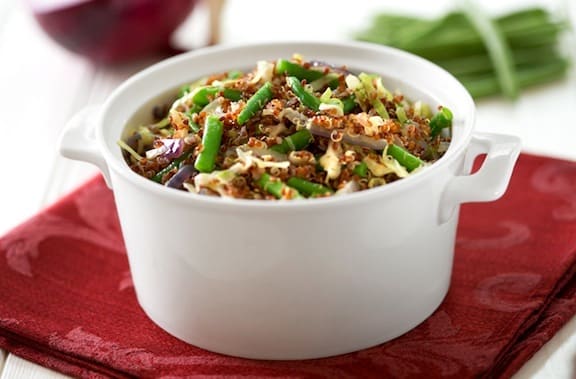
Here’s an easy dish to highlight super-nutritious quinoa. With a flavorful sauté of onion, cabbage, and green beans, this needs very little in the way of seasoning. Serve with a simple bean dish and a colorful salad or slaw for an easygoing meal. Photos by Hannah Kaminsky. [Read more...]
Quinoa, Black Bean, and Corn-Stuffed Peppers

Quinoa, black beans, and corn add up to a hearty filling for vegan stuffed peppers. Since you've got the oven going at 400º F, you may as well roast your favorite combination of veggies at the same time. Broccoli, cauliflower, eggplant, portobello mushrooms, hard or tender squashes, and fennel are all good choices. A simple coleslaw or other slaw-style salad goes well with these, whether or not you serve with roasted vegetables. Photos by Evan Atlas. [Read more...]
Quinoa and Red Lentil Burgers
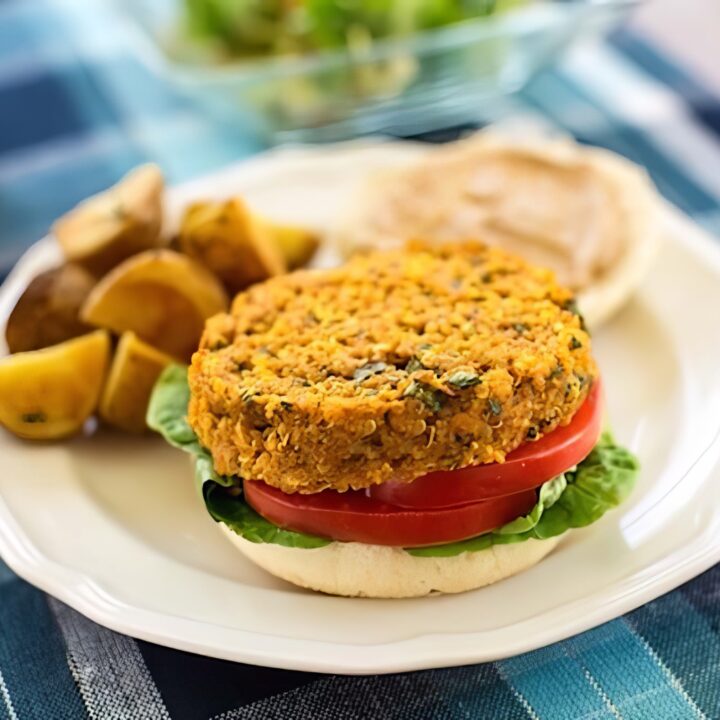
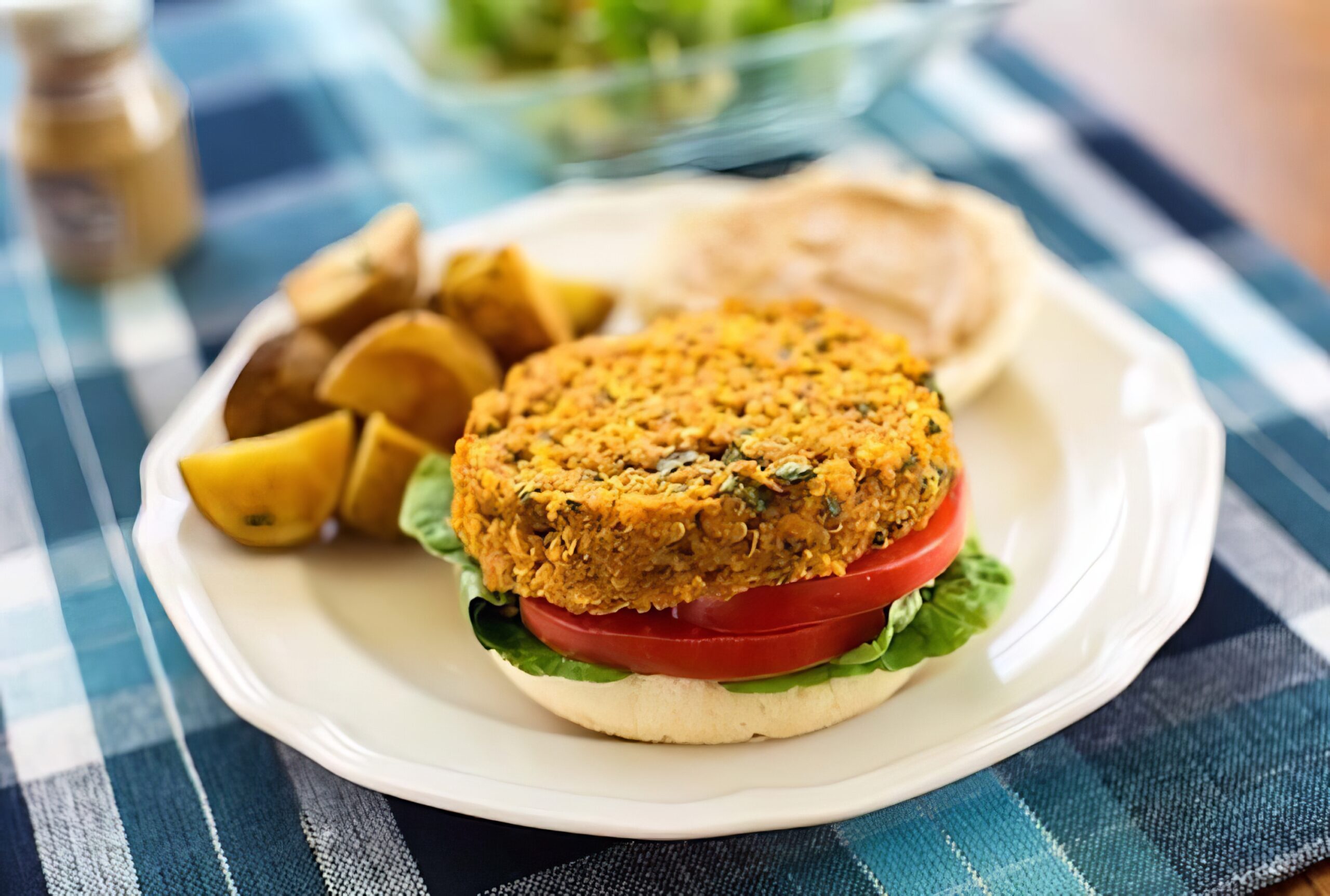
Quinoa and red lentils cook together in a single saucepan in the same amount of time - which means these spiced veggie burgers come together with minimal effort and maximum flavor.
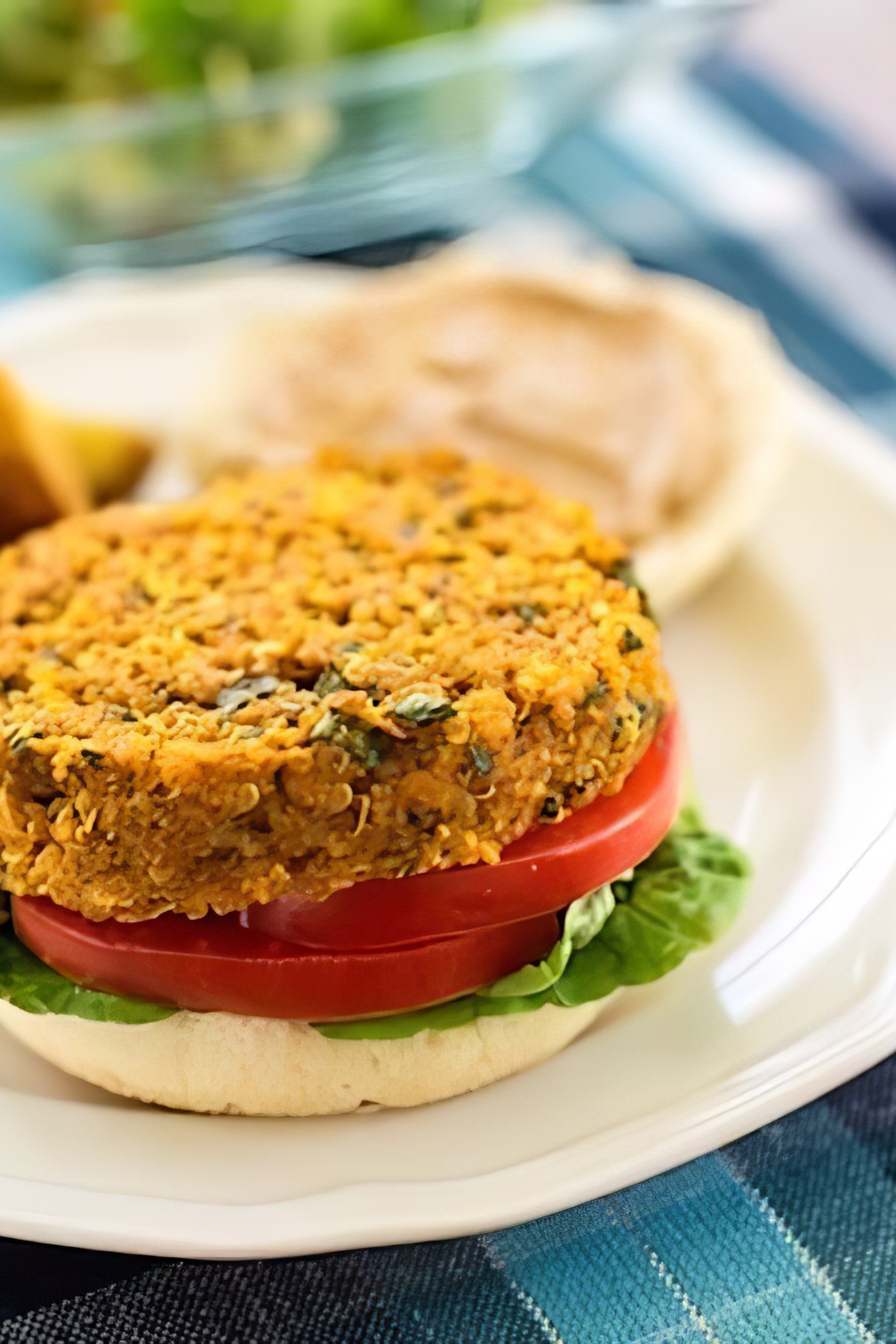
This recipe was contributed by Nava Atlas, from her popular Plant Power cookbook. Be sure to check it out for more delicious vegan recipes! Photos by Hannah Kaminsky.
Key Ingredients & Substitutions
- Quinoa. Either tan or red quinoa works here. Quinoa adds protein, a slightly nutty flavor, and that characteristic texture that holds the patties together. Rinse it before using if your package isn't pre-rinsed to remove any bitterness.
- Red lentils. Red lentils break down and become soft much faster than green or brown lentils, making them perfect for this recipe - they blend right into the mixture. No substitute needed, but green lentils can work if you cook them a bit longer. Love lentils? Try these 30-Minute Madras Lentils too.
- Vegetable bouillon cube. Cooked right in with the quinoa and lentils, it seasons the base from the inside out. Swap with 3½ cups of low-sodium vegetable broth instead of water if you prefer.
- Quick-cooking oats or quinoa flakes. These act as a binder, helping everything hold together into firm patties. Old-fashioned oats work in a pinch (just pulse them briefly in a blender first). For gluten-free, use certified gluten-free oats or quinoa flakes.
- Curry powder, cumin, and paprika. This trio gives the burgers a warm, earthy spice profile. Adjust to taste - use smoked paprika for a deeper flavor, or bump up the curry powder if you like it bolder.
- Fresh cilantro or parsley. Stirred in at the end for a burst of brightness. Use whichever you prefer - or a mix of both.
Helpful Tips
Cook everything in one pot. The quinoa, red lentils, bouillon, and oats all go into the same saucepan with water. Add the scallions and spices as the water heats up - there's no need to bloom them separately. This truly is a one-pot method.
Use a measuring cup to shape uniform patties. A ½-cup measuring cup sprayed lightly with olive oil cooking spray is the trick for getting perfectly round, evenly-sized burgers. Scoop the mixture level, invert onto parchment, tap firmly to release, then flatten to about ½ inch thick with the bottom of the cup.
Don't rush the baking. These bake at 425°F for 30 minutes total, with a flip at the halfway point. The high heat is what gives them their golden, slightly crispy exterior. Flip carefully using a thin spatula - they firm up considerably as they bake.
Make a double batch and freeze half. These burgers freeze beautifully once baked and cooled. Lay them flat on a baking sheet to freeze individually, then transfer to a zip-lock bag. Reheat from frozen in a 375°F oven for 15 minutes, or in a skillet over medium heat.
Multitask the oven. While the burgers bake, use the same oven to roast potato wedges, sweet potato slices, or other vegetables on a second rack. Dinner comes together even faster.
Variations
- Swap the spice profile. Skip the curry-cumin-paprika combo and go Mediterranean instead - try 1 teaspoon each of cumin and coriander, a pinch of cinnamon, and a squeeze of lemon zest.
- Add fresh ginger. Stir 1 teaspoon of freshly grated ginger into the saucepan along with the spices for a livelier, more aromatic burger.
- Mix in greens. Fold in a handful of baby spinach or finely chopped kale at the end of cooking - the residual heat wilts it right in.
- Make it spicier. A generous pinch of red pepper flakes or a drizzle of sriracha stirred into the mixture before shaping brings real heat. Top with sliced jalapeños for extra kick.
- Gluten-free version. Use certified gluten-free oats or quinoa flakes, and serve on gluten-free buns or wrapped in large lettuce leaves.
- Add nuts or seeds. Stir in 2 tablespoons of sunflower seeds or finely chopped walnuts for extra crunch and richness.
Serving Ideas
Serve these on whole wheat rolls, pita breads, or English muffins piled high with classic burger toppings - lettuce, sliced tomato, red onion, and avocado. A smear of vegan mayo or a tangy tartar sauce works especially well with the curried spice profile.
They're also wonderful served without bread - place a burger or two over a big green salad or grain bowl and drizzle with your favorite dressing. The warm, spiced patties pair beautifully with cool, crunchy Easy Vegan Coleslaw on the side. Roasted potato wedges round things out perfectly.
For a casual spread, set out a variety of toppings - roasted red peppers, green sprouts, sliced avocado, and a few dipping sauces - and let everyone build their own burger.
Storing & Freezing
Cooked patties keep well in an airtight container in the refrigerator for up to 4 days. Reheat in a skillet over medium heat for a few minutes per side to crisp them back up, or in a 375°F oven for about 10 minutes. Avoid the microwave - it makes them soft.
These burgers freeze exceptionally well. Let the baked patties cool completely, then freeze in a single layer before stacking with parchment between each burger. They'll keep for up to 3 months. Reheat straight from frozen in a 375°F oven for 15 minutes, or on the stovetop over medium-low heat until warmed through.
More Vegan Burgers & Patties
If you loved these quinoa burgers, here are a few more worth making:
Also try: our Gently Curried Tofu Burgers.
- Vegan Quinoa and Wild Rice Burgers
- Vegan Quinoa Mushroom Burger
- Vegan Chipotle Black Bean Burgers
- Vegan Beet Burgers
- Best Vegan Burger Recipes
Recipe
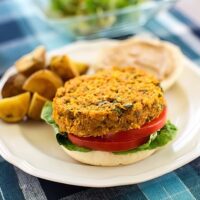
Quinoa and Red Lentil Burgers
Quinoa and red lentils cook together in one pot in the same amount of time, making these spiced veggie burgers wonderfully convenient. Adapted from Plant Power by Nava Atlas.
Print
Pin
Save
Servings: burgers
Ingredients
- 1 cup uncooked quinoa tan or red
- ½ cup red lentils
- 1 vegetable bouillon cube
- ¼ cup quick-cooking oats or quinoa flakes
- 3 scallions thinly sliced
- 2 teaspoons good-quality curry powder
- 1 teaspoon ground cumin
- 1 teaspoon sweet or smoked paprika
- ¼ to ½ cup minced fresh cilantro or parsley
- Dried hot red pepper flakes or sriracha sauce to taste
- Salt and freshly ground pepper to taste
- 1 tablespoon extra-virgin olive oil optional
Instructions
- Preheat the oven to 425°F. Line a baking sheet with parchment paper.
- Combine the quinoa, red lentils, bouillon cube, and oats in a medium saucepan with 3½ cups water. Bring to a rapid simmer, adding the scallions, curry powder, cumin, and paprika as the water heats up.
- Simmer gently, stirring occasionally, until the water is absorbed and the quinoa and lentils are tender - about 15 minutes. Stir in the cilantro or parsley, then season with red pepper flakes, salt, and pepper. Stir in the olive oil if using.
- Spray the inside of a round ½-cup measuring cup with olive oil cooking spray. Scoop a level measure of the quinoa mixture and invert onto the parchment with a sharp tap to release. Flatten to about ½-inch thick with the bottom of the cup. Repeat to make 8 patties.
- Bake for 15 minutes. Carefully flip each burger with a thin spatula, then bake for another 15 minutes until golden and firm on both sides.
- Serve on rolls, pita, or English muffins with your choice of toppings, or alongside a salad.
Nutrition (Estimate per Serving)
Calories: 27kcalCarbohydrates: 2gProtein: 7gFat: 2gSaturated Fat: 1gPolyunsaturated Fat: 1gMonounsaturated Fat: 1gSodium: 86mgPotassium: 17mgFiber: 6gSugar: 1gVitamin A: 157IUVitamin C: 2mgCalcium: 2mgIron: 2mg
Vegan-ize any recipe!Grab our free vegan cheat sheet, packed with my favorite easy substitutions to make any recipe vegan.
Seitan and Polenta Skillet with Fresh Greens
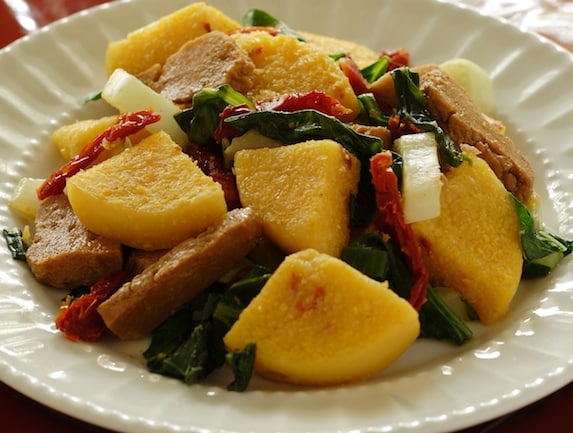
There’s something enticing about the seitan/polenta synergy, and with the addition of greens, results in a great-looking, hearty dish. Serve with a simple potato dish and salad or slaw. Recipe adapted from Vegan Express. Photo by Susan Voisin.
"Buddhist's Delight" (Chinese-Style Vegetable Stew)

Inspired by a favorite vegetarian Chinese restaurant dish, Buddhist's Delight stew is enhanced with protein-packed seitan. Gluten-free? Substitute an equivalent amount of tofu for the seitan. For an everyday meal, serve with Tri-Color Coleslaw. To make it a feast, add Scallion Pancakes or simply serve veggie spring rolls from your natural food store's frozen food section. Adapted from Vegan Soups and Hearty Stews for All Seasons. Photo by Theresa Rafetto.
Vegan Chili-Cheese Grits

Have you discovered grits (aka hominy grits)? To add variety to your grain repertoire, try grits (hulled, dried, and cracked corn kernels, long a Southern staple). Seek out stone-ground organic grits, which are much more flavorful than the ultra-refined variety sold in supermarkets. I like the Bob's Red Mill brand; they're flavorful and are made from non-GMO corn. This is great for breakfast or brunch, but it can also be a change-of pace dinner served with baked sweet potato and a crunchy coleslaw. Adapted from The Vegetarian 5-Ingredient Gourmet.
Tangy Tahini Dressing
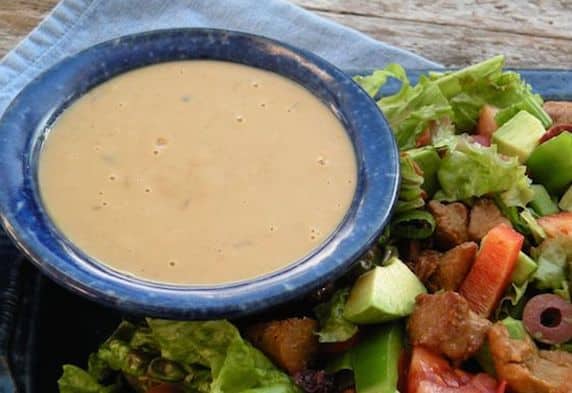
This salad dressing featuring olive oil, tahini, apple cider vinegar, and lemon, makes even the simplest salad shine. Excellent on green salads, slaws, and more. I highly recommend this with Hearty Seitan Salad. Adapted from The Vegetarian Family Cookbook. [Read more...]
Chunky Bean Spread Sandwiches
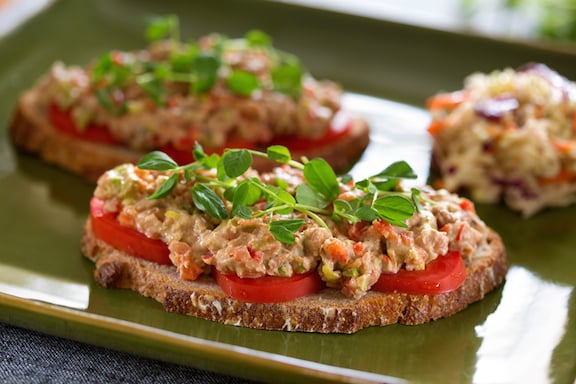
Here’s a cool and casual sandwich that really satisfies. Pinto or pink beans are amply flavored with bell pepper, olives, and scallion. An excellent fresh bread is a must to make these sandwiches in minutes for a quick lunch or dinner. Serve with fruit for lunch and a simple potato salad or slaw for dinner. Photos by Hannah Kaminsky. [Read more...]
Red Cabbage, Carrot, and Apricot Salad
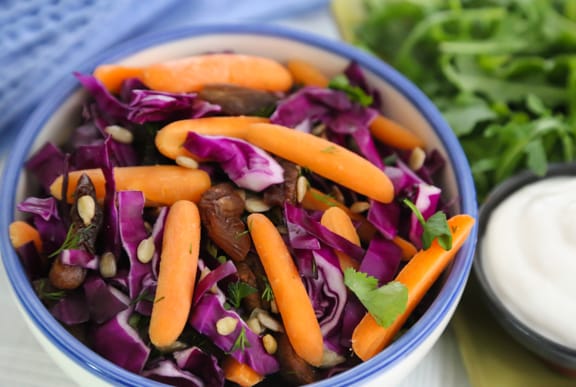
Here’s a nice change of pace from “white” coleslaw — a combination of red cabbage and carrot, sweetened with dried apricots. It adds a refreshing note to spicy meals and adds vibrant color to the plate. You can use whichever fresh herbs you like, or a combination, but I think this is particularly good with cilantro. Photos by Evan Atlas. [Read more...]
Salsa Grain-and-Bean Pilaf
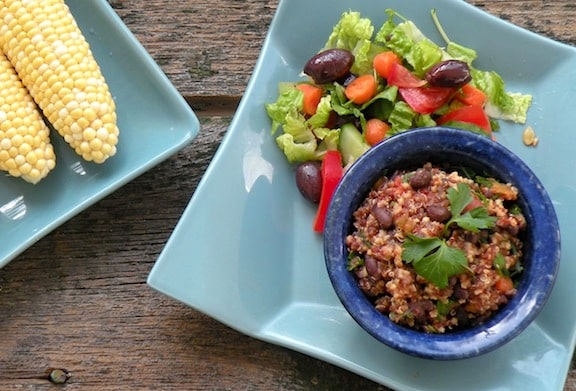
If you want to dress up a simple grain-and-bean pilaf in an instant, a good-quality, prepared tomato salsa is the answer. This is truly an emergency dinner, but a hearty and healthy one, at that! Vary the type of grain and/or bean you use each time you make this, and serve it with a simple salad or coleslaw and a steamed vegetable like broccoli, or fresh corn on the cob. Adapted from The Vegetarian 5-Ingredient Gourmet. [Read more...]
Vegan Green Chile Cornbread
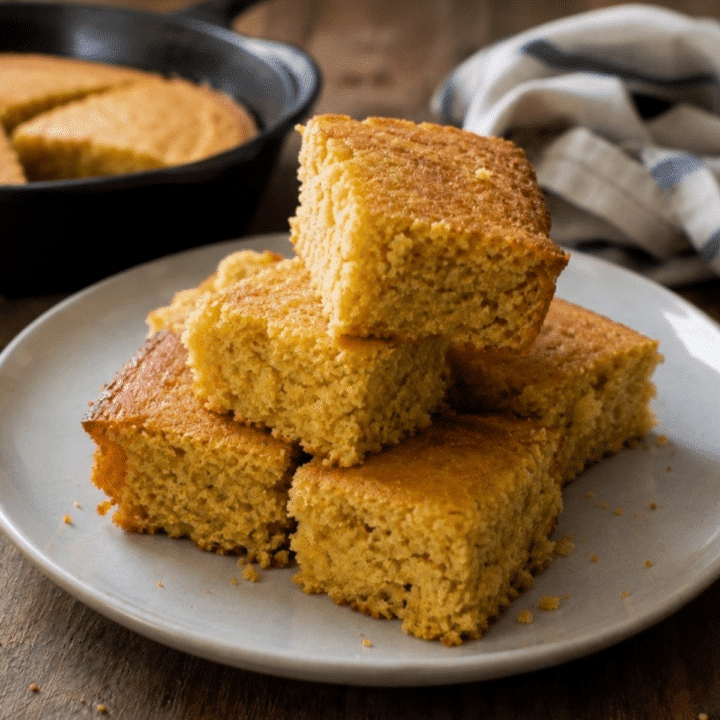
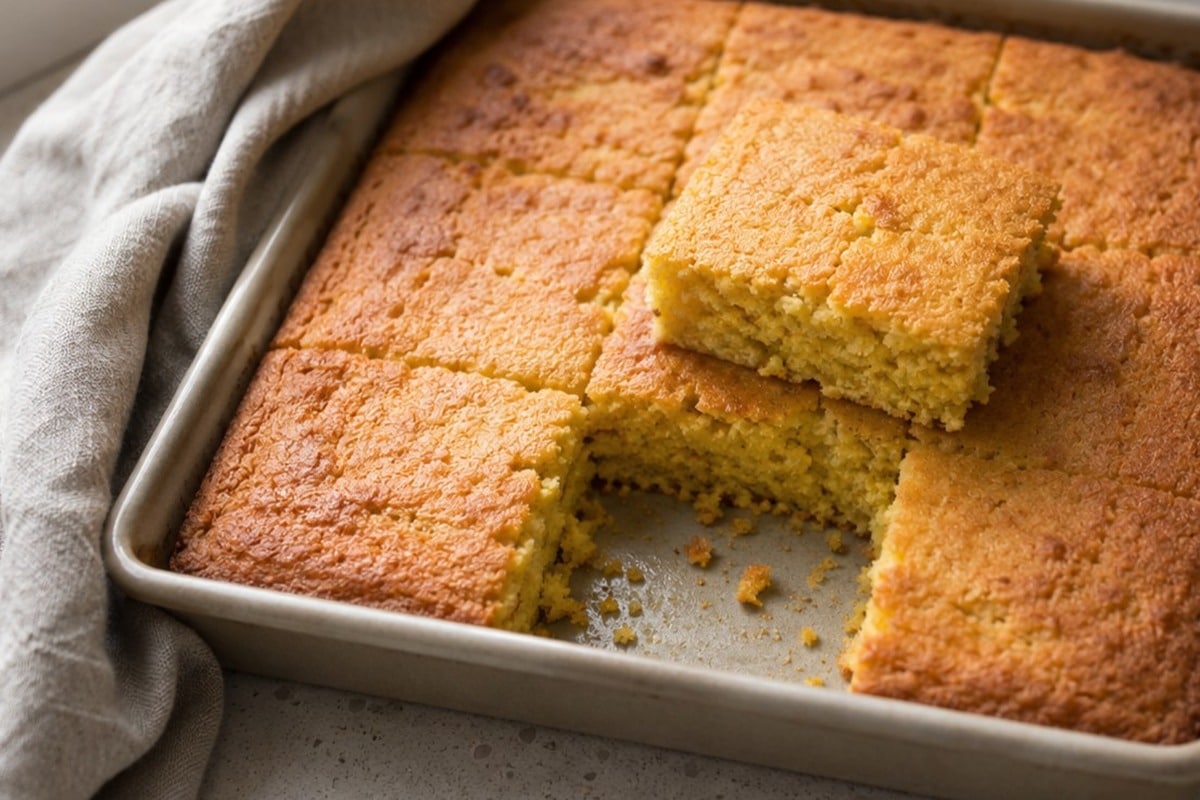
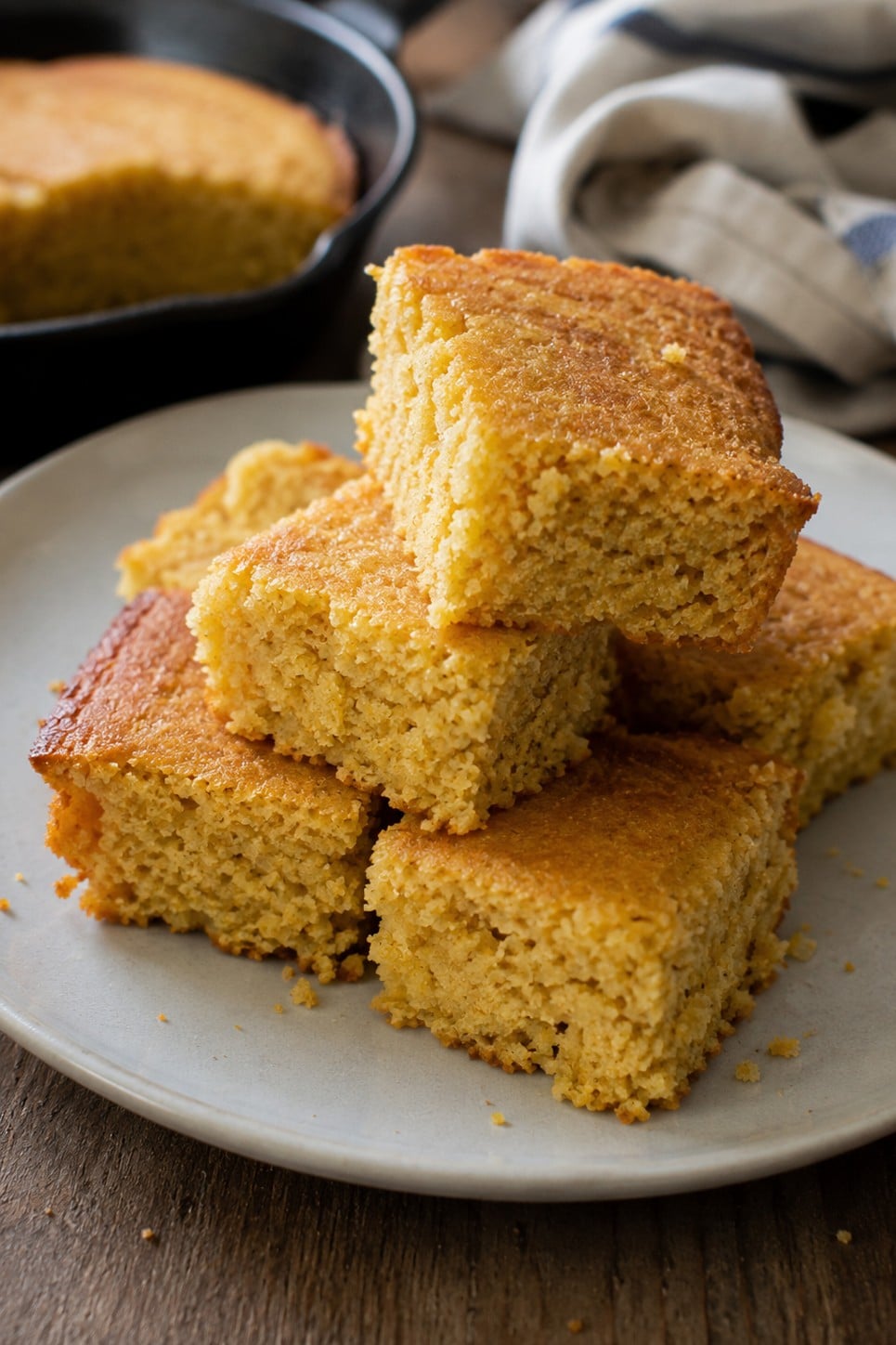
This moist vegan cornbread gets a spicy kick from green chiles and little pops of sweetness from whole corn kernels — it’s the perfect savory side for a bowl of chili, a pot of beans, or any hearty stew on your table this season.
Key Ingredients & Substitutions
- Cornmeal. The backbone of any good cornbread — it’s what gives this recipe its color, crunch, and true corn flavor. Stone-ground cornmeal has more texture than the finely milled kind, but standard yellow cornmeal works fine too if that’s what’s in your pantry.
- Whole wheat pastry flour or spelt flour. Both are lighter and less dense than regular whole wheat flour, which keeps this cornbread tender instead of gummy. Whole wheat pastry flour is the easier find; spelt flour gives a slightly nuttier flavor if you have it on hand.
- Baking soda and baking powder. This recipe leans on both leaveners together, since baking soda alone doesn’t give a batter this thick and moist enough lift on its own.
- Plain coconut yogurt or applesauce. Either one adds moisture and a little richness without any dairy. Coconut yogurt keeps the flavor closer to savory; applesauce nudges it slightly sweeter.
- Olive oil. Keeps the crumb tender and moist. Melted vegan butter is a good substitute if you want a richer, more buttery flavor.
- Unsweetened nondairy milk. Thins the batter to the right pourable-but-thick consistency. Almond, soy, or oat milk all work equally well here.
- Fresh hot chile peppers or canned diced green chiles. This is where the recipe gets its name and its kick. Fresh jalapeños or serranos bring real heat; a can of mild diced green chiles keeps things gentler if you’re serving a crowd, or kids.
- Frozen corn kernels. Adds little pops of sweetness and texture throughout the bread. Thaw them first so they don’t add extra moisture to the batter.
- Vegan cheddar cheese (optional). Melts into little pockets as it bakes, adding a savory, cheesy richness. Leave it out if you’d rather keep things simple — the cornbread is still good without it.
Helpful Tips
Don’t overmix the batter. Stir just until the dry and wet ingredients come together. Overmixing develops the gluten in the flour and can leave you with a tough, dense cornbread instead of a tender one.
Taste-test your chiles before you commit to the amount. Fresh hot peppers vary a lot in heat from one to the next. If you’re not sure how spicy yours are, start with the smaller amount, and add more next time if you want it hotter.
Use a well-oiled pan — or better yet, cast iron. A hot, oiled cast iron skillet gives cornbread a crisp, golden crust that a regular baking pan can’t quite match. If you only have a metal or glass baking pan, grease it generously so the edges release cleanly.
Check doneness with a toothpick, not just the clock. Ovens vary, and this batter is thick. Insert a toothpick or thin knife into the center; it should come out clean or with just a few moist crumbs clinging to it, not wet batter.
Let it cool for a few minutes before cutting. Slicing straight out of the oven can cause the squares to crumble. A five-minute rest firms up the crumb enough for clean cuts, while it’s still warm enough to serve.
Variations
- Smoky chipotle cornbread. Swap the fresh chiles for a minced chipotle pepper in adobo sauce for a deeper, smokier heat.
- Extra-cheesy double-corn cornbread. Stir in an extra ¼ cup of vegan cheddar and a handful of extra corn kernels for a heartier, more indulgent version.
- Herb and scallion cornbread. Add a couple tablespoons of chopped fresh cilantro and a sliced scallion or two along with the chiles for a brighter, herbier bite.
- Slightly sweet cornbread. Stir 2 tablespoons of maple syrup into the wet ingredients for a cornbread that leans a little sweeter, which pairs especially well with a smoky bowl of chili.
- Cornbread muffins. Divide the batter among a lightly oiled 12-cup muffin tin and bake for about 15 to 18 minutes, checking early since muffins bake faster than a full pan.
- Skillet cornbread. Bake the batter in a well-oiled, oven-safe cast iron skillet instead of a square pan for a rustic presentation and extra-crisp edges.
Serving Ideas
This cornbread was made for scooping up a bowl of something hearty. Serve warm squares alongside Sweet Potato Black Bean Chili — the slightly spicy bread and a smoky bowl of chili are a natural match. It’s just as good next to a bowl of Potato, Corn, and Green Chile Soup, which doubles down on that same chile flavor.
For a simple lunch or snack, split a warm square and top it with a little vegan butter and a drizzle of maple syrup, or serve it as part of a Southwestern-inspired spread with beans, rice, and a simple slaw.
Storing & Freezing
Store leftover cornbread in an airtight container at room temperature for a day, or in the refrigerator for up to 4 days — the corn, yogurt, and oil keep it more moist than a typical quick bread, so it holds up well.
This cornbread also freezes well. Wrap individual squares tightly in plastic wrap, then place them in a freezer bag or airtight container, and freeze for up to 3 months. Thaw at room temperature, or reheat wrapped in foil in a 300°F oven for 10 to 15 minutes, or in the microwave for 20 to 30 seconds.
More Vegan Bread and Side Dish Recipes
If you loved this recipe, here are a few more you might enjoy:
Recipe
Green Chile Cornbread
This moist vegan cornbread gets a kick of heat from green chiles and pops of sweetness from corn kernels — a perfect savory side for chili, beans, or any hearty stew.
Print
Pin
Save
Servings:
Ingredients
- 1 cup cornmeal preferably stone ground
- 1 cup whole wheat pastry flour or spelt flour
- 1 teaspoon baking soda
- ½ teaspoon baking powder
- 1 teaspoon salt
- 6- ounce container plain coconut yogurt or ¾ cup applesauce
- ¼ cup olive oil
- ⅓ cup unsweetened nondairy milk or more as needed
- 1 to 2 small fresh hot chile peppers seeded and minced, or one 4-ounce can chopped mild green chilies
- ½ cup frozen corn kernels thawed
- ¾ cup grated vegan cheddar cheese optional (but highly recommended!)
Instructions
- Preheat the oven to 400 degrees F.
- Combine the first 6 (dry) ingredients in a mixing bowl and stir together.
- Make a well in the center of the dry ingredients. Pour in the yogurt or applesauce, oil, and half of the rice milk. Stir until well combined, adding just a bit more nondairy milk if needed to make a smooth, slightly stiff batter, but don't let the batter be too wet.
- Stir in the chilies and corn kernels.
- Pour the mixture into an oiled 9-inch-square baking pan. Bake for 20 to 25 minutes, or until the top is golden and a knife inserted in the center tests clean.
- Let cool slightly; cut into 3 sections in one direction and 4 in the other to create 12 squares. Serve warm.
Nutrition (Estimate per Serving)
Calories: 166kcalCarbohydrates: 22gProtein: 3gFat: 7gSaturated Fat: 1gPolyunsaturated Fat: 1gMonounsaturated Fat: 4gCholesterol: 1mgSodium: 396mgPotassium: 63mgFiber: 3gSugar: 2gVitamin A: 18IUVitamin C: 1mgCalcium: 25mgIron: 1mg
Vegan-ize any recipe!Grab our free vegan cheat sheet, packed with my favorite easy substitutions to make any recipe vegan.
Sesame-Ginger Salad Dressing
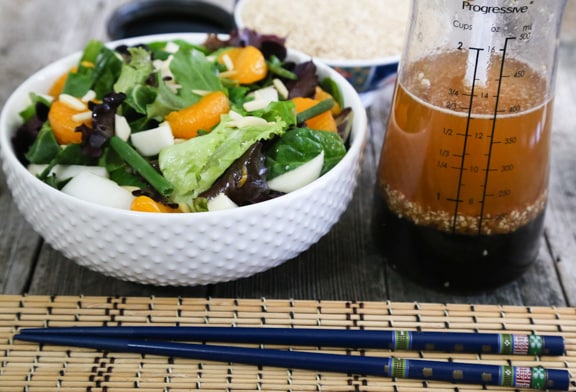
Savory and tangy, this sesame-ginger dressing is perfect for salads served with Asian-style meals. It's also good on wilted greens and on cold noodle dishes. Thanks to Progressive International for providing the salad dressing shaker shown in these photos by Evan Atlas. [Read more...]
Great Gluten-Free Vegan Eats by Allyson Kramer

Allyson Kramer, who runs the popular Manifest Vegan blog (if you are interested in gluten-free, vegan, or both together, this is the place for you!) has released her first book, the bountiful, colorful Great Gluten-Free Vegan Eats.* Going vegan is a trend that has exploded over the last few years, and gluten-free diets have also gained traction in a big way. [Read more...]
Orzo and Black Bean Salsa Salad
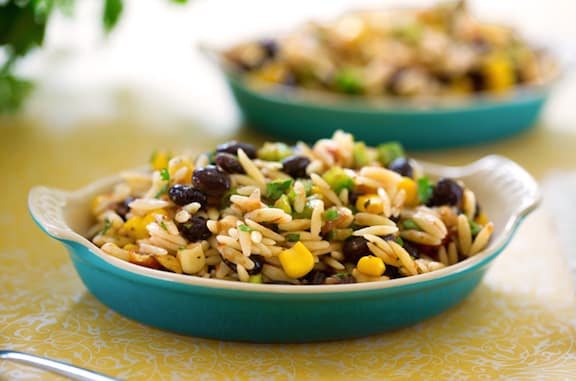
Bursting with Southwestern flavors, this pasta salad, made with tiny rice-shaped orzo, is as flavorful as it is easy to make. It features corn, prepared salsa and lots of cilantro. Serve with vegan quesadillas any time of year, or with grilled vegetables and a simple slaw for a nice summer meal. Photos by Hannah Kaminsky.
Passover Quinoa Pilaf

This colorful quinoa pilaf is a great addition to the Passover holiday's festive Seder meal. Contributed to Vegan Holiday Kitchen's Passover chapter by a longtime reader of mine, Barbara Pollak, this pilaf is attractive made with a mix of red and white quinoa, but either color can be used on its own. Photos by Hannah Kaminsky. [Read more...]
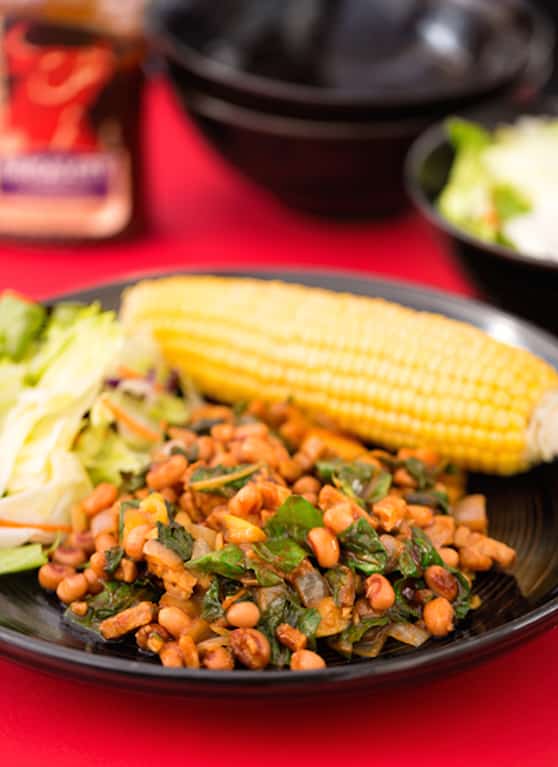
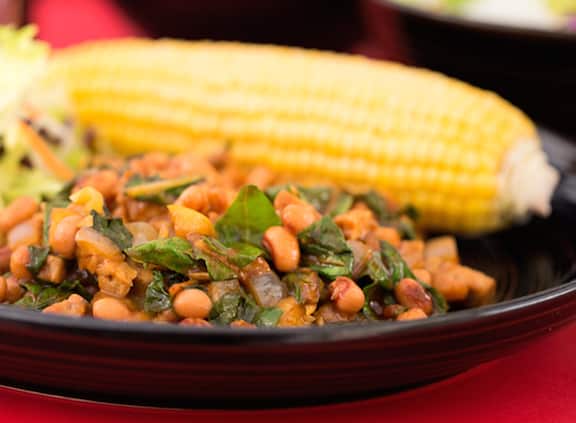
BBQ Tempeh Bacon with Black-Eyed Peas and Greens
Bites of tart apple add a delightful flavor twist to this hearty dish of BBQ tempeh bacon with black-eyed peas and greens. Serve with sweet potatoes or fresh corn and coleslaw for a satisfying meal that comes together in one skillet in well under an hour, with minimal cleanup for a weeknight dinner that still feels like Southern comfort food.
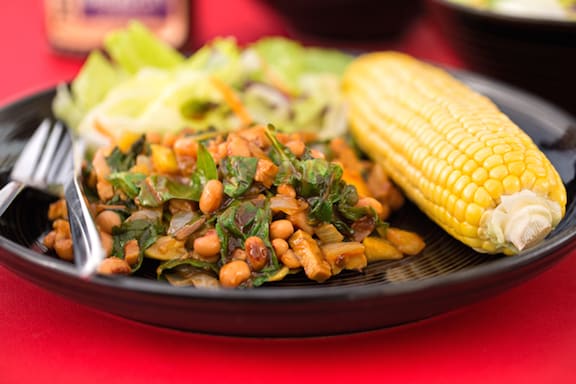
Photos by Hannah Kaminsky.
Key Ingredients & Substitutions
- Smoky tempeh strips. Pre-seasoned smoky/bacon-style tempeh gives this dish its "bacon" flavor without any extra work — finely chop it so it browns quickly and distributes through the dish rather than clumping in large pieces.
- Black-eyed peas. Hearty and slightly earthy; canned works just as well as cooked from dry for a quick weeknight version, and cuts a good chunk of time off the recipe.
- Granny Smith apple. Its tartness cuts through the richness of the tempeh and barbecue sauce — a firm, tart apple works better here than a sweet one, which can make the whole dish taste candy-sweet.
- Vegan barbecue sauce. Our Quick Vegan Barbecue Sauce is a great homemade option, or use your favorite all-natural bottled brand.
- Chard or spinach. Adds a healthy dose of greens right in the pan — chard needs a bit more cooking time than tender spinach, so add it a minute or two earlier.
- Onion and garlic. The aromatic base that builds flavor before the tempeh and sauce go in — don't skip sauteing the onion until it's genuinely translucent.
Variations
- Use kale instead. Kale works wonderfully here too, but needs more cooking time than chard or spinach — start steaming it separately just before starting the dish, then stir it in at the end once it's tender.
- Make it spicier. A dash of hot sauce or a pinch of cayenne in with the barbecue sauce adds some heat.
- Swap the beans. Pinto or kidney beans work in place of black-eyed peas if that's what you have on hand.
- Add sweet potato. Diced and roasted separately, it makes a nice bed to serve this over, echoing the classic Southern pairing.
- Add a splash of apple cider vinegar. A little extra tang at the end brightens the whole dish, especially if your barbecue sauce leans sweet.
Tips for the Best BBQ Tempeh Bacon with Black-Eyed Peas and Greens
- Chop the tempeh finely. Smaller pieces brown more evenly and mimic the texture of bacon bits better than larger chunks.
- Let the sauce reduce. Cooking the barbecue sauce down with the beans and apple for the full 10 minutes concentrates the flavor rather than leaving the dish watery.
- Don't overcook the greens. Spinach only needs a couple of minutes; chard needs a bit longer. Either way, pull them off the heat while they're still bright green.
- Taste before adding extra salt. Between the tempeh seasoning and the barbecue sauce, this dish often needs little to no additional salt.
- Use a wide skillet. This helps the tempeh brown rather than steam, which matters a lot for getting that bacon-like texture.
Make Ahead & Storage
This dish keeps well in the refrigerator for up to 4 days, and like many bean and tempeh dishes, the flavor deepens after a day. Reheat gently on the stovetop, adding a splash of water if the sauce has thickened too much, since it will continue to reduce as it sits and reheats.
How to Serve
Serve at once alongside sweet potatoes, fresh corn, or coleslaw for a well-rounded meal.
Recipe
BBQ Tempeh Bacon with Black-Eyed Peas and Greens
Bites of tart apple add a delightful flavor twist to this hearty dish of BBQ tempeh bacon with black-eyed peas and greens.
Print
Pin
Save
Servings:
Ingredients
- 2 tablespoons olive oil
- 1 medium onion finely chopped
- 2 to 3 cloves garlic minced
- 6 ounce package smoky tempeh strips finely chopped
- 1 ½ to 2 cups cooked black-eyed peas or one 15- to 16-ounce can, drained and rinsed
- 1 medium Granny Smith apple diced
- ⅔ cup vegan barbecue sauce homemade or your favorite all-natural brand
- 10 to 12 ounces chard or spinach well washed, stemmed, and chopped
Instructions
- Heat the oil in a wide skillet. Add the onion and sauté over medium-low heat until translucent.
- Add the garlic and tempeh and sauté, stirring frequently, until golden and just beginning to brown lightly.
- Stir in the black-eyed peas, apple, and barbecue sauce. Cook over medium-high heat for 10 minutes or until the sauce is reduced.
- Add the greens, then cover until wilted. Stir in, then cook for another 2 minutes or so for spinach, or 4 minutes for chard, until tender but still bright green. Serve at once.
Notes
This is also wonderful with kale, but it needs more cooking time than chard or spinach. Start steaming it separately just before starting the dish; once cooked to your liking, stir it in at the end.
Vegan-ize any recipe!Grab our free vegan cheat sheet, packed with my favorite easy substitutions to make any recipe vegan.
- Here are more tempeh recipes.
- Here are more recipes for hardy greens.
- Here are more of VegKitchen's Vegan Dinner Recipes and more Tofu, Tempeh and Vegan Sausage Main Dishes.
Salads Your Kids Just Might Eat!
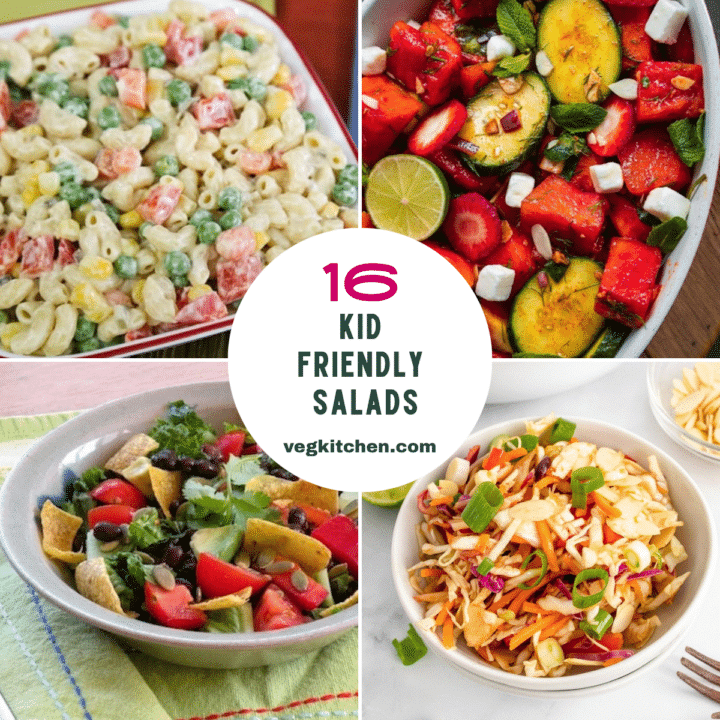
There's just something about salads that (there's no other way to say it) many kids don't particularly enjoy. I found that combining small amounts of raw vegetables with starchy comfort foods like pasta, bread, or potatoes, or adding fresh or dried fruit, helped to entice my kids and their friends to give salads a try. As for tossed green salads, the best way I found to win them over was to offer a very simple homemade Thousand Island dressing with it.
[Read more...]Raw Sweet Potato and Cabbage Salad with Coconut-Lime Dressing
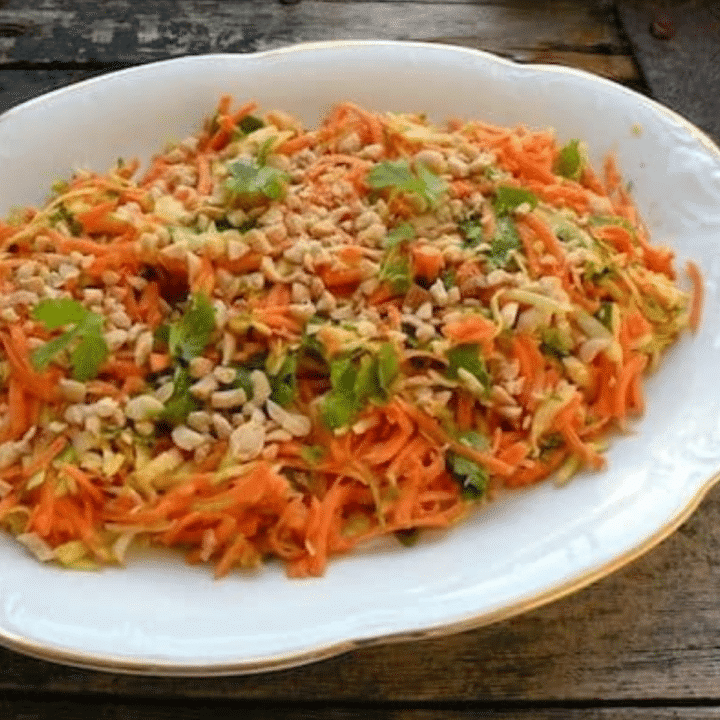
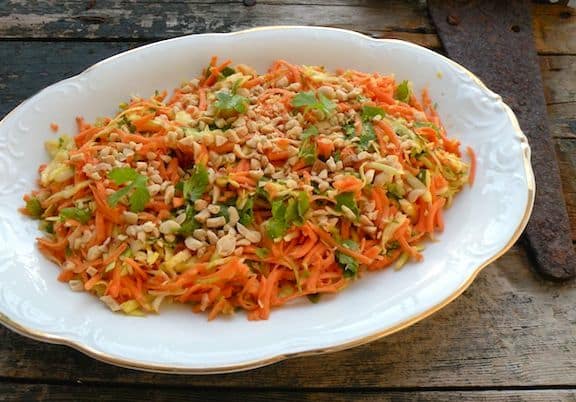
Sweet potato is a veggie that doesn't immediately come to mind as one to use raw, but it's wonderful uncooked! Combined with cabbage and some mildly Thai flavors, this easy (and rather addictive) salad is a treat all year around.
Key Ingredients & Substitutions
- Sweet potato. Grated raw, it takes on a slaw-like texture and a subtle natural sweetness — a garnet yam works just as well.
- Green cabbage. Regular, savoy, or napa cabbage all work — precut coleslaw cabbage is a handy shortcut if you're short on time.
- Coconut oil. Melted and tossed with the lime juice and agave, it gives the dressing its rich, slightly tropical flavor.
- Lime juice. Adds the bright acidity that balances the sweetness of the potato and the richness of the coconut oil.
- Toasted cashews or peanuts. Add crunch and a nutty contrast to the tender shredded vegetables.
Variations
- Swap in kale. This variation was inspired by Ricki Heller, who took this recipe and varied it using raw kale in place of the cabbage, with a small amount of red cabbage added for color and crunch — the combination of raw sweet potato and raw kale is a wonderful pairing if you want to switch things up.
- Add heat. A pinch of dried hot red pepper flakes, or a small minced fresh chile, adds a spicy kick.
- Make it a main. Add cubed baked tofu or a can of drained, rinsed chickpeas for a heartier, more substantial salad.
- Swap the nuts. Toasted pepitas or sunflower seeds work well in place of cashews or peanuts for a nut-free version.
Tips for the Best Raw Sweet Potato and Cabbage Salad
- Grate the sweet potato finely. A food processor's grating blade makes quick work of it and gives the best slaw-like texture; a box grater works well too.
- Slice the cabbage thinly. This helps it soften slightly in the dressing and blend seamlessly with the grated sweet potato.
- Let it rest before serving. The 30-minute stand isn't just for convenience — it genuinely lets the flavors marry and softens the raw vegetables just enough.
- Toast the nuts fresh. A quick toast in a dry skillet brings out much more flavor than pre-toasted nuts from a bag.
Make Ahead & Storage
This salad keeps well in a sealed container in the refrigerator for up to 3 days, and the flavor actually deepens as it sits, making it a great make-ahead side for a potluck or a week of easy lunches. Give it a quick stir before serving, since the dressing tends to settle at the bottom.
How to Serve
Serve as a refreshing side salad alongside grilled or roasted mains, or spoon over greens for a light lunch. Explore more of VegKitchen's creative and colorful slaw-style salads, and more of VegKitchen's Super Savory Salads.
Recipe
Raw Sweet Potato and Cabbage Salad with Coconut-Lime Dressing
A crunchy, mildly Thai-flavored raw salad of shredded sweet potato and cabbage tossed in a coconut-lime dressing — easy, addictive, and ready in under 15 minutes.
Print
Pin
Save
Servings: to 6
Ingredients
- 1 medium sweet potato or ½ large sweet potato (or an average-size garnet yam), peeled and cut into chunks
- 2 cups very thinly sliced green cabbage regular, savoy, or napa, or use precut coleslaw cabbage as a shortcut
- ½ cup minced fresh cilantro
- 2 to 3 scallions thinly sliced
- ¼ cup crushed toasted cashews or peanuts
- 2 tablespoons organic virgin coconut oil melted
- 1 lime juiced, or more to taste
- 1 tablespoon agave nectar or to taste
- salt to taste
- dried hot red pepper flakes to taste, optional
Instructions
- Put the sweet potato chunks through the grating blade of a food processor, or grate by hand with a box grater.
- Combine the sweet potato and cabbage in a serving bowl with the remaining ingredients and stir together.
- Let the salad stand for about 30 minutes to allow the flavors to marry, stirring once or twice during that time.
Vegan-ize any recipe!Grab our free vegan cheat sheet, packed with my favorite easy substitutions to make any recipe vegan.
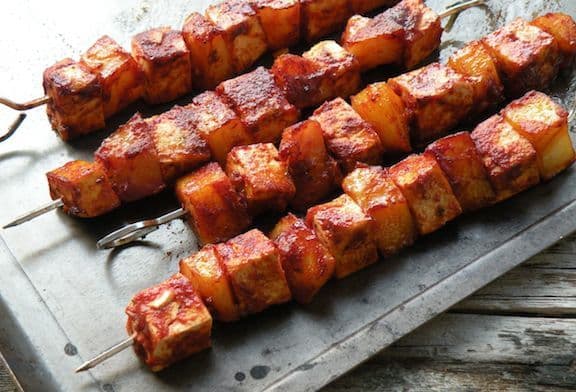
Oven-Barbecued Tofu and Potato Skewers
Threaded onto skewers and broiled until browned, these tofu and potato kebabs taste like a summer cookout any night of the year. There's no grill required, and no marinating time to plan around — just three main ingredients and a hot broiler.
Key Ingredients & Substitutions
- Red-skinned potatoes. Their thin skin cooks quickly and holds together well on a skewer. Yukon golds work too; avoid starchy russets, which fall apart more easily under the broiler.
- Extra-firm tofu. Press it well so it holds its shape and takes on the sauce instead of releasing water onto the baking sheet. Super-firm or high-protein tofu is a great swap if your store carries it, since it needs even less pressing.
- Barbecue sauce. Use a natural, all-fruit-sweetened brand for a genuinely 3-ingredient recipe, or make your own if you have a favorite — our Quick Vegan Barbecue Sauce works especially well here.
Variations
- Add vegetables. Bell pepper chunks, red onion wedges, or thick zucchini rounds thread onto the skewers beautifully alongside the tofu and potato.
- Swap the sauce. Try teriyaki, peanut sauce, or a smoky chipotle glaze in place of barbecue sauce for a completely different flavor direction.
- Grill instead of broil. These cook beautifully on an outdoor grill over medium heat — just watch them closely since the sauce can burn quickly over an open flame.
- Spice it up. Toss the potato and tofu chunks with smoked paprika and a little cayenne before skewering for extra flavor under the sauce.
- Make it a sheet pan meal. Skip the skewers entirely and roast everything together on a sheet pan for an even easier weeknight version.
Tips for the Best Tofu and Potato Skewers
- Press the tofu well. Extra moisture is the main thing standing between you and a nicely browned, sauce-coated skewer — 20 to 30 minutes under a weight makes a real difference.
- Pre-cook the potatoes just until firm-tender. They'll finish cooking under the broiler, so don't take them all the way to fork-tender on the stovetop or they'll turn mushy once skewered and broiled.
- Use metal skewers. They conduct heat and help the potato and tofu cook through faster than wooden skewers, and there's no need to soak them first.
- Watch closely under the broiler. Barbecue sauce has sugar in it, which can go from caramelized to burnt fast — stay near the oven for the last few minutes.
- Keep extra sauce nearby. Brush more on partway through broiling if the skewers start to look dry.
Make Ahead & Storage
The tofu and potatoes can be cut and the potatoes par-cooked up to a day ahead, stored separately in the fridge, so assembly on skewers takes just minutes. Leftovers keep for about 3 days and reheat well in a hot oven, though a microwave will make the tofu a bit softer than it was fresh from the broiler.
How to Serve
Serve straight off the baking sheet with extra barbecue sauce on the side. A simple green vegetable like broccoli or garlicky kale and a scoop of coleslaw turn this into a complete, easy dinner — no grill required.
Recipe

Oven-Barbecued Tofu and Potato Skewers
These simple broiled skewers of tofu and potato, slathered in barbecue sauce, taste like a summer cookout any time of year.
Print
Pin
Save
Servings:
Ingredients
- 4 medium-large red-skinned potatoes
- 14 to 16-ounce tub extra-firm tofu drained and pressed
- 1 cup, or as needed natural barbecue sauce store-bought or homemade
Instructions
- Bake, microwave, or boil the potatoes in their skins until they can be pierced through but are still firm. Plunge into cold water, then peel once cool enough to handle and cut into 1-inch chunks.
- Drain the tofu and blot very well between layers of paper towels, or press it in a tofu press for a few minutes. Cut into chunks roughly the same size as the potato.
- Preheat the oven's broiler. Thread the potato and tofu chunks onto metal skewers, alternating as you go, for about 8 skewers.
- Arrange the skewers on a lightly oiled, foil-lined baking sheet and spoon barbecue sauce generously over the potato and tofu.
- Broil for 5 minutes, then carefully turn the skewers (use a long oven mitt) and broil for another 5 minutes. Turn once more and broil a final 5 minutes if needed, until touched with brown spots. Add more sauce partway through if the skewers look dry.
- Remove from the oven and serve at once, with extra barbecue sauce on the side.
Notes
If you aren't using the oven for anything else, you can broil these in batches in a toaster oven — they'll just take a bit longer than the times above.
Vegan-ize any recipe!Grab our free vegan cheat sheet, packed with my favorite easy substitutions to make any recipe vegan.
How to Cook Beets (or use them raw)
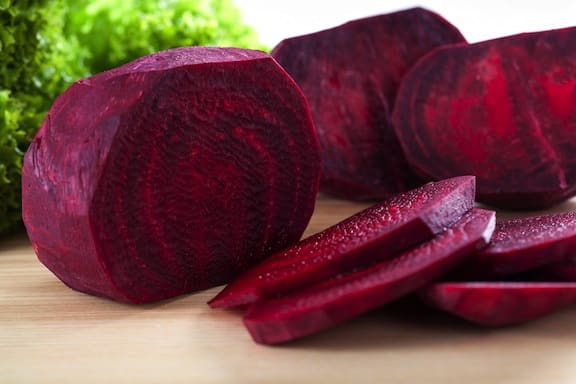
Beets inspire strong opinions—you either love them or you don't. If you're in the "love them" camp (or want to be), here's everything you need to know about how to cook beets, plus how to use them raw.
Beet Varieties
Beyond the common red beet, look for golden beets, which are sweeter and less messy. Chioggia beets are an Italian heirloom variety with red-and-white stripes, as pretty as they are sweet. Formanova beets have a long, cylindrical shape that's great for uniform slices. Look for unusual varieties at farmers markets, or grow your own.
If your beets come with the greens attached, save them—they cook up much like chard.
How to Cook Beets in the Microwave
This is the fastest way to cook beets. Rinse the beets and trim the stalks to about an inch. Place them in a deep microwave-safe container with about a half-inch of water in the bottom. Cover tightly and microwave for 2 to 4 minutes per beet (2 minutes for small beets, 4 for medium-large). Times vary by microwave, so start with less time and check for doneness.
Don't add too much water or it will boil over. If the beets aren't done, turn them over and microwave for another minute per beet. They're done when a knife slides in easily—try not to overcook them.
How to Cook Beets on the Stovetop
Stick with small or medium beets for stovetop cooking, since larger ones take forever. Rinse the beets and trim the stalks to about an inch. Combine in a large saucepan with water to cover, bring to a boil, then simmer until just tender. Timing depends on size, so start checking around 20 minutes—but don't poke too many test holes, or they'll bleed everywhere. Drain when done.
However you cook them, plunge the beets into a bowl of ice water once tender to stop the cooking. Once cool enough to handle, peel over the trash or compost bin, then slice or dice as needed. A sheet of wax paper on your cutting board will keep it from staining.
How to Roast Beets
Roasted beets are delicious, but the prep is messier since it's best to peel and slice them raw. If you partially microwave or boil them first (and let them cool), they'll be easier to peel and chop, and roasting time will be shorter.
Either way, peel over the trash or compost bin and slice on a wax-paper-lined cutting board. Place the sliced beets in a foil-lined baking dish, drizzle with olive oil, and roast at 400 to 425°F for 20 to 30 minutes, until tender, stirring once or twice. Beets roast beautifully alongside other root vegetables like carrots and sweet potatoes.
How to Use Beets Raw
Peel and cut into small pieces or grate them into salads. Or peel and chunk them for the juicer or a high-powered blender for smoothies.
Simple Ways to Serve Beets
- In late summer, when beets are at their most flavorful, serve them plain—sliced on a plate or tossed into a salad.
- Dress warm sliced beets with a little lemon juice and agave nectar.
- Grate raw beets into salads or combine with other grated roots, as in Beet and Red Cabbage Slaw.
More Ways to Cook Beets
For the full collection, see Beet Recipes: Easy, Vegan, and Delicious. A few favorites to start with:
- Vegan Beet Burgers
- Orange-Glazed Beets
- Raw or Nearly Raw Cold Beet Borscht
- Mixed Greens with Beets and Walnuts
- Hot Beet and Potato Borscht
- Beet and Red Cabbage Slaw
- Beet, Cucumber, and Orange Salad
- Roasted Beet Salad with Chili-Lime Vinaigrette
- Grated Beet and Carrot Salad
- Acai (with Beet) Smoothie
- Russian Beet and Potato Salad
- For more healthy lifestyle features, explore VegKitchen's Healthy Vegan Kitchen page.
Vegan Tahini Yogurt Sauce
Whip up a batch of this Tahini-Yogurt Sauce whenever you want! In just a few minutes, this sauce is ready for whatever sandwich or snack you have in mind!
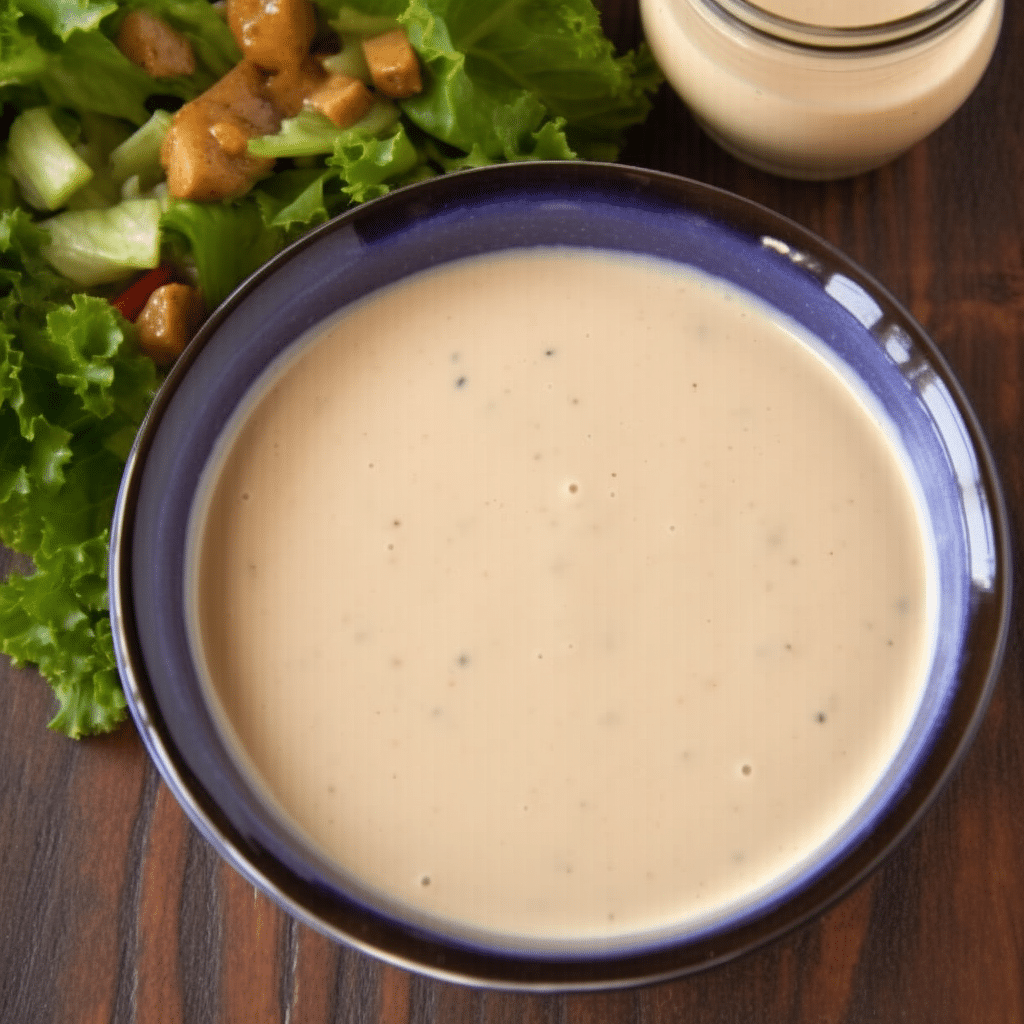
Life is too short for boring sauces. Enter this Tahini Yogurt Sauce - a creamy, tangy, and slightly nutty condiment that�s about to become your new kitchen staple. With its bold flavors and velvety texture, this sauce works magic on everything from salads to roasted veggies to grain bowls.
The best part? It�s completely plant-based, made with simple ingredients, and comes together in minutes. Let�s dive in and whip up some flavor-packed goodness!
Why You�ll Love This Tahini Yogurt Sauce
- Quick & Easy: A one-bowl wonder that�s ready in under 5 minutes.
- Plant-Based Perfection: Dairy-free but just as creamy and satisfying as the original.
- Incredibly Versatile: Use it as a dressing, dip, or drizzle�it�s a multitasker.
- Bold, Balanced Flavors: The nutty tahini, zesty lemon, and hint of mustard come together beautifully.
Key Ingredients & Substitutions
Plant-Based Yogurt (� cup): Almond or coconut yogurt keeps this sauce creamy and dairy-free. Feel free to use any plain dairy-free yogurt you like.
Tahini (� cup): The star ingredient adds nuttiness and a luscious texture. Use a smooth, high-quality tahini for the best results.
Grainy Mustard (1 tsp): Adds depth and a touch of tang. Dijon mustard works well as a substitute.
Lemon Juice (1 tbsp): Provides brightness and acidity. Adjust to taste based on your preference.
Fresh Chives or Scallions (1 tbsp, minced): For a hint of freshness. Parsley or dill can be used for a different flavor profile.
Horseradish (1 tsp, optional): Adds a spicy kick for those who like a bit of heat.
Variations
- Make it herby. Swap the chives for a handful of chopped fresh dill or parsley for a different flavor profile.
- Add garlic. A small minced or grated clove of garlic adds a savory kick.
- Make it spicier. Increase the horseradish, or stir in a pinch of cayenne or a dash of hot sauce.
- Go nut-free. Swap the tahini for sunflower seed butter for a similar texture without sesame.
- Make it thinner for dressing. Whisk in a little extra lemon juice or water until it's pourable enough to dress a salad.
How to Make Tahini Yogurt Sauce
1. Combine Ingredients: In a small bowl, whisk together the yogurt, tahini, mustard, lemon juice, chives or scallions, and horseradish (if using) until smooth and well blended.
2. Taste and Adjust: Taste the sauce and adjust the seasoning. Add more lemon juice for tang, or a pinch of salt if needed.
3. Serve or Store: Use immediately, or transfer to a tightly lidded container and refrigerate. The sauce will keep for up to a week.
Tips for the Best Tahini Yogurt Sauce
Consistency Control: If the sauce is too thick, thin it out with a splash of water or more lemon juice until it reaches your desired consistency.
Fresh Herbs Are Key: Minced chives or scallions add a burst of flavor, so use fresh ones for the best results.
Double the Recipe: This sauce is so versatile, you�ll want extra on hand for the week.
Ways to Use Tahini Yogurt Sauce
This sauce is a true multitasker. Here are some delicious ideas:
- Drizzle: Over roasted vegetables, grain bowls, tempeh or falafel.
- Dip: Serve alongside fresh veggies, pita bread, or crispy chickpeas.
- Dressing: Toss with greens or use as a creamy dressing for slaws.
- Spread: Use it as a spread for sandwiches (like these BBQ pitas!), wraps, or burgers.
- Topper: Dollop on baked potatoes or tofu for a flavor boost.
More Vegan Recipes
If you love this vegan tahini-yogurt sauce, be sure to check out my other vegan sauces and these delicious ideas:
Recipe
Vegan Tahini Yogurt Sauce
Whip up a batch of this vegan Tahini-Yogurt Sauce whenever you want! In just a few minutes, this sauce is ready to go.
Print
Pin
Save
Servings:
Ingredients
- ½ cup plain plant-based yogurt such as almond or coconut
- ¼ cup tahini
- 1 teaspoon grainy mustard
- 1 tablespoon lemon juice to taste
- 1 tablespoon fresh chives or scallions, minced
- 1 teaspoon horseradish optional
Instructions
- Combine all the ingredients in a small bowl and whisk together until smooth.
- Transfer any unused portion to a tightly lidded container where it will keep in the refrigerator for up to a week.
Nutrition (Estimate per Serving)
Calories: 28kcalCarbohydrates: 2gProtein: 1gFat: 2gSaturated Fat: 1gPolyunsaturated Fat: 1gMonounsaturated Fat: 1gSodium: 7mgPotassium: 20mgFiber: 1gSugar: 1gVitamin A: 11IUVitamin C: 2mgCalcium: 15mgIron: 1mg
Vegan-ize any recipe!Grab our free vegan cheat sheet, packed with my favorite easy substitutions to make any recipe vegan.