
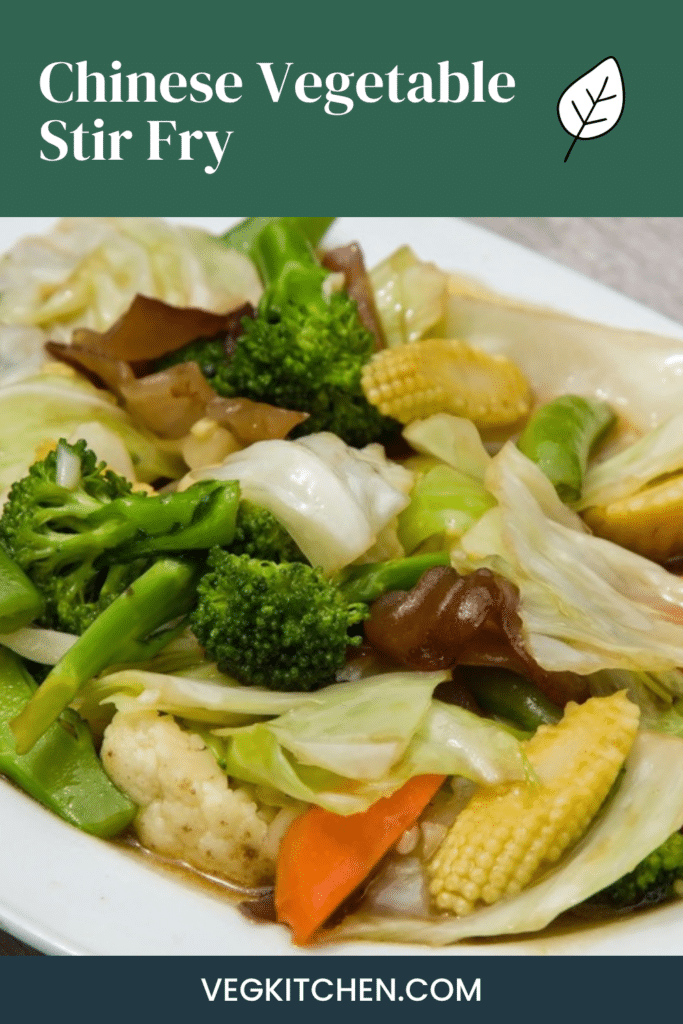
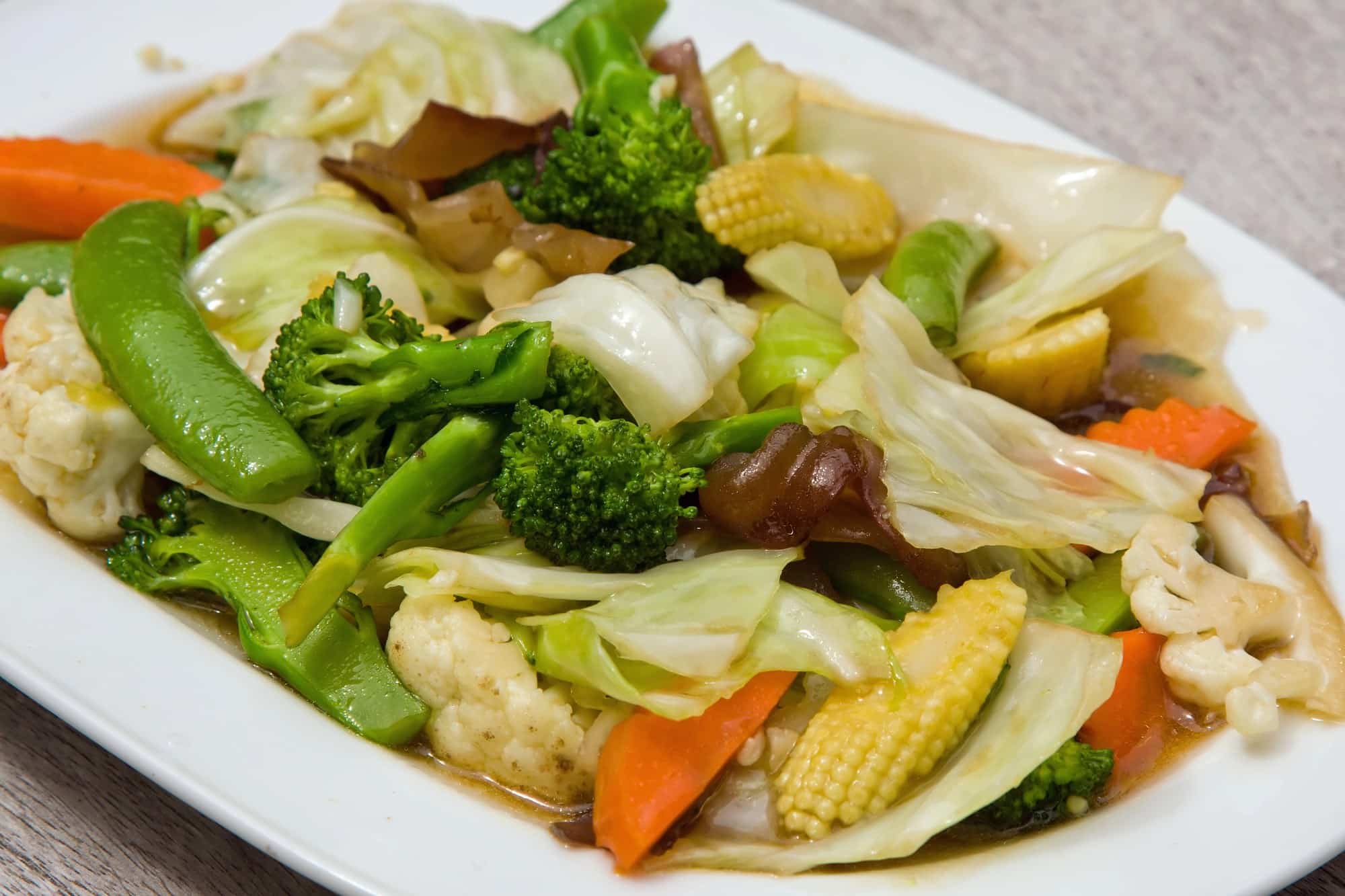
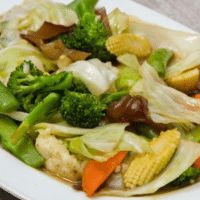
If you're a longtime vegetarian or vegan, you've likely ordered a version of this addictive Chinese restaurant staple, often nicknamed Buddha's Delight. This vegetable stir fry tosses broccoli, cabbage, snow peas, mushrooms, and baby corn in a glossy, savory ginger sauce, and it's easy to make at home and way healthier than the takeout version.
Jump to:
A simple vegetable stir fry is one of my favorite meals for busy weeknights. They're quick, easy, and super family friendly too. From the first chop to the table, this one takes about 25 minutes.
This homemade version of the Chinese restaurant favorite Buddha's Delight has all the flavor of your favorite takeout, but it's way healthier (and cheaper too!). Traditionally it's a Buddhist monastery dish made entirely of vegetables, which is exactly why it's been a go-to order for plant-based eaters for decades.
Key Ingredients & Substitutions
- Broccoli. The backbone of the dish. Cut the crowns into small, even florets so they cook through in the same few minutes as everything else. Cauliflower florets, or a half-and-half mix, work just as well.
- Cabbage. Napa cabbage is the classic choice and turns silky in the sauce; regular green cabbage holds more crunch. Bok choy is a good swap if that's what you have.
- Baby corn. Canned whole baby corn is a takeout signature and adds sweetness and snap. Drain and rinse it to remove the brine taste.
- Mushrooms. I used basic button mushrooms for this recipe, but shiitake mushrooms or rehydrated wood ear mushrooms (the dark, ruffled ones in the photo) give it more of a restaurant feel.
- Snow peas, carrot, celery, and scallions. These add color and crunch. Sugar snap peas can stand in for snow peas, and sliced bell pepper can replace the celery.
- Soy sauce or tamari. The main seasoning in the sauce. A good-quality brewed soy sauce like Lee Kum Kee Premium Soy Sauce makes a noticeable difference; use San-J tamari to keep the dish gluten-free.
- Toasted sesame oil. Just two teaspoons of toasted sesame oil give the sauce its nutty, aromatic finish. It's optional, but I'd hate for you to skip it.
- Cornstarch. This is what turns thin broth into a glossy sauce that clings to the vegetables. Arrowroot powder works the same way.
- Dry white wine. Optional, for a bit of brightness. Not all wines are vegan (some are fined with animal products), so choose one labeled vegan, or simply replace it with more broth or a splash of rice vinegar.
Helpful Tips
Prep everything before you turn on the heat. Stir-frying moves fast. Have the sauce whisked, the vegetables chopped, and the baby corn drained before the oil goes in the pan, because there's no time to chop once the garlic is sizzling.
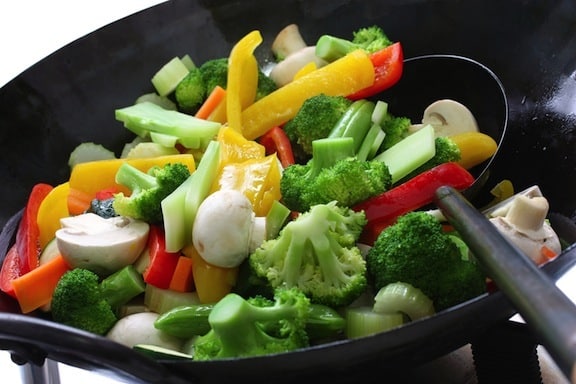
Use a wok or your largest pan. A carbon steel wok gets very hot and gives you room to toss, so the vegetables sear instead of steaming. A flat-bottomed wok works on any home stove; otherwise, use a wide 12-inch skillet.
Add the vegetables in stages. Dense vegetables like carrot and broccoli go in first, then the cabbage, mushrooms, and celery, and finally the quick-cooking snow peas, baby corn, and scallions. Everything should end up bright and tender-crisp at the same time.
Re-whisk the sauce right before adding it. Cornstarch settles to the bottom of the bowl within minutes. Give it a quick stir so it thickens evenly instead of forming clumps.
Want a shortcut sauce? A spoonful of bottled vegetarian stir-fry sauce (a mushroom-based take on oyster sauce) adds the deep, savory flavor you get at Chinese restaurants. Stir in a tablespoon along with the homemade sauce, or see our Basic Chinese Stir Fry Sauce for a make-ahead version.
Variations
- Cauliflower swap. In place of the broccoli, I sometimes opt for cauliflower florets, or a mix of half broccoli and half cauliflower.
- Add tofu. Pan-fry cubes of extra-firm tofu until golden, set them aside, and toss them back in with the sauce for a protein-packed meal.
- Make it spicy. Add a pinch of red pepper flakes with the garlic, or drizzle with chili crisp or sriracha at the table.
- Traditional add-ins. For a more classic Buddha's Delight, add soaked bean thread noodles, fried tofu puffs, water chestnuts, or sliced bamboo shoots.
- Use what you have. Feel free to experiment with other veggies. Just about anything you have on hand will work here; bell peppers, bok choy, and sliced summer squash are great additions.
Serving Ideas
Serve this vegetable stir fry over hot cooked brown rice or Asian noodles for a heartier meal. It's also a natural partner for vegan fried rice with tofu or simple sesame soba noodles, and a sprinkle of toasted cashews or peanuts on top adds a welcome crunch.
It also goes well with a crisp, tangy salad, like the Easiest Asian Slaw or a mixed greens salad with orange sections and toasted almond slices. For added protein, choose your favorite simple tofu, tempeh, or seitan preparation to serve alongside or atop this dish.
Storing & Freezing
Store leftovers in an airtight container in the refrigerator for up to 3 days. The vegetables will soften a bit and the sauce will thicken as it sits, so reheat in a skillet over medium heat with a splash of broth or water, stirring until hot. The microwave works too; just cover the dish so it doesn't dry out.
This stir fry doesn't freeze well. Cabbage, snow peas, and celery turn watery and limp after thawing, and the cornstarch-thickened sauce can separate. If you want to get ahead, chop the vegetables and whisk the sauce up to a day in advance and keep them refrigerated separately; dinner then comes together in about 10 minutes.
More Vegan Stir Fry Recipes
If you love this Buddha's Delight recipe, be sure to check out these other tasty vegan ideas:
- Sesame-Ginger Tofu and Broccoli Stir-Fry
- Napa Cabbage and Mushroom Stir-Fry
- Vegetable Chow Mein
- Vegan Wonton Soup
- 125+ Vegan Stir Fry Recipes
Recipe
Chinese Vegetable Stir Fry - Buddha's Delight
Equipment
- Wok or large skillet
Ingredients
For Stir Fry Sauce:
- 2 tablespoons cornstarch or arrowroot powder
- 1 ¼ cups vegetable broth
- 2 teaspoons sesame oil dark, optional
- 2 tablespoons soy sauce or tamari
- 2 tablespoons dry white wine optional
- 2 teaspoons grated ginger or ginger paste
For Stir Fry:
- 1 ½ tablespoons safflower oil or other oil for stir frying
- 2 cloves garlic minced
- 2 crowns broccoli cut into bite-sized florets
- 1 carrot large, peeled and sliced diagonally
- 1 cup mushrooms variety of choice, stemmed and cut in half
- 1 cup cabbage leaves Napa or regular green cabbage, chopped into bite sized chunks
- 1 cup snow peas trimmed
- 1 stalk celery thinly sliced on the diagonal
- 2 scallions cut into 1-inch pieces
- 15 ounces baby corn canned, drained
For serving:
- toasted cashews or peanuts for topping, optional
- rice cooked, optional
- additional soy sauce to taste
Instructions
- In a small bowl, whisk the cornstarch into about ¼ cup of the broth until smooth.
- Add the remaining broth, sesame oil, soy sauce, white wine (if using), and ginger. Whisk to combine and set aside.
- Heat the oil in a wok or large skillet over medium-high heat. Add the garlic and stir-fry for about 30 seconds, just until fragrant (don't let it brown).
- Add the carrot and broccoli and stir-fry for 2 minutes. Add the cabbage, mushrooms, and celery and stir-fry for 1 to 2 minutes more. Add the snow peas, baby corn, and scallions and stir-fry for 1 minute, until everything is bright and tender-crisp. If the pan gets dry, add a tablespoon or two of water or extra broth.
- Whisk the sauce again so the cornstarch hasn't settled, and pour it over the vegetables. Cook, stirring, for 1 to 2 minutes, until the sauce thickens and turns glossy and everything is heated through. Season to taste with additional soy sauce and serve hot over rice, topped with toasted cashews or peanuts if you like.
Notes
- Wine: not all wines are vegan. Use one labeled vegan, or replace it with more broth or a splash of rice vinegar.
- Gluten-free: use tamari instead of soy sauce.
- Variations: use a mix of broccoli and cauliflower rather than just broccoli, or swap the button mushrooms for shiitake or wood ear mushrooms.
- Make ahead: chop the vegetables and whisk the sauce up to a day ahead; refrigerate separately.
- Storage: refrigerate leftovers for up to 3 days and reheat in a skillet with a splash of broth. Not recommended for freezing.
Eastlynne Guy Eadie says
thanks very much for the recipe
Eastlynne Guy Eadie says
using recipe in tomorrow"s meal
jace says
Thank you 🙂