
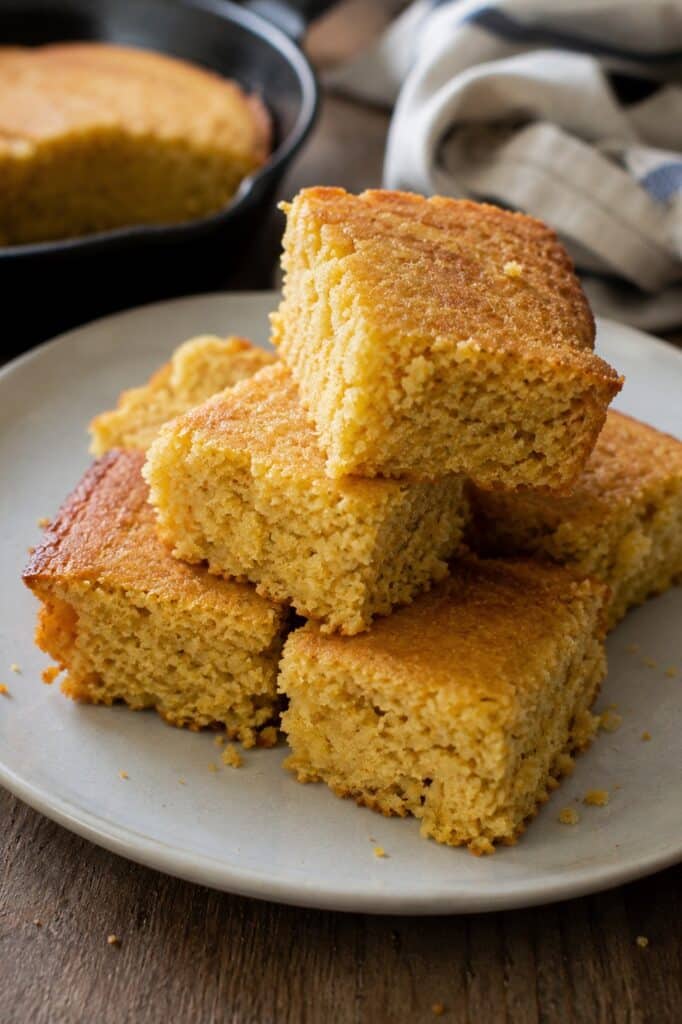
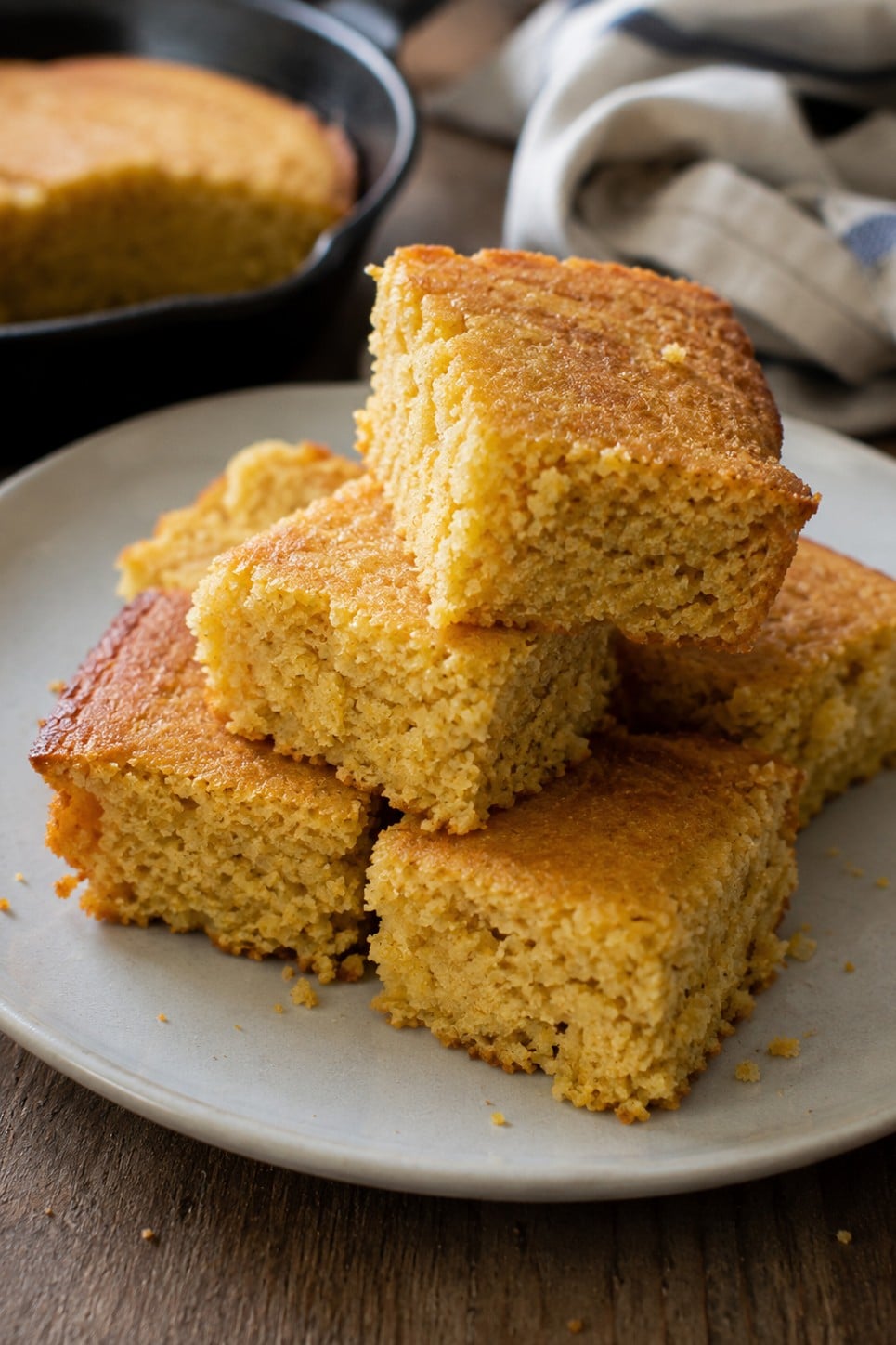
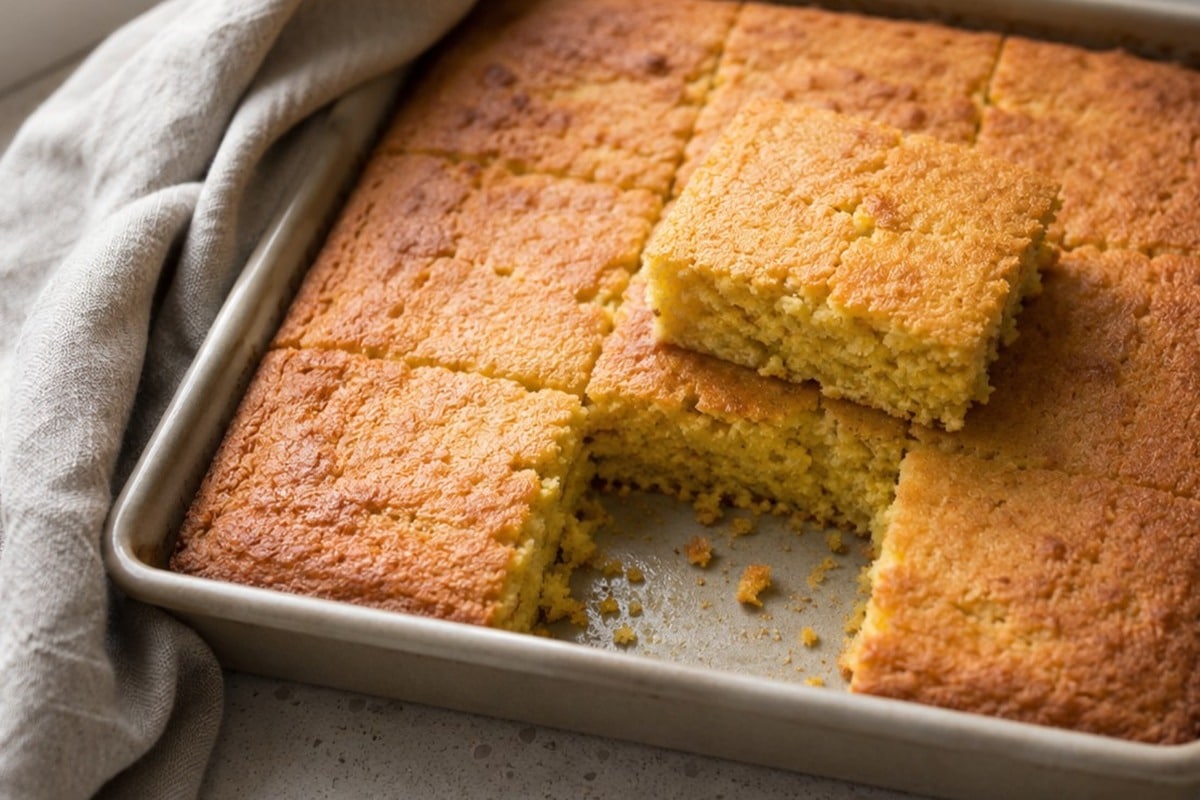
This vegan cornbread comes together in one bowl with pantry staples you probably already have, and it bakes up golden, lightly sweet, and perfectly crumbly — no eggs, buttermilk, or dairy butter required.
Key Ingredients & Substitutions
- Cornmeal. The backbone of any cornbread — it's what gives this bread its signature texture and corn flavor. Use a medium or fine-grind yellow cornmeal for a classic Southern-style crumb; coarser stone-ground cornmeal works too, but the texture will be a bit more rustic.
- All-purpose flour. Balances the cornmeal so the loaf holds together instead of crumbling apart. A 1:1 gluten-free baking blend can be swapped in if needed.
- Granulated sugar. Just a quarter cup for a hint of sweetness. Cut it back for a more savory, old-fashioned cornbread, or use a little more if you like yours closer to cornbread cake.
- Baking powder. The only leavener here, so make sure yours is fresh — old baking powder is the most common reason cornbread comes out flat and dense.
- Unsweetened plant milk. Almond, soy, or oat milk all work well. Soy milk curdles the most readily when mixed with vinegar, which gives the closest texture to traditional buttermilk cornbread.
- Neutral oil. Vegetable, canola, or melted coconut oil all work for the batter, plus you'll want a little extra for greasing the pan or skillet.
- Apple cider vinegar. Mixed with the plant milk, this creates a quick vegan "buttermilk" that reacts with the baking powder for extra lift and a slightly tangy flavor.
- Ground flaxseed. Mixed with water to make a flax egg, which binds the batter the way an egg would in a traditional recipe. Ground flaxseed meal keeps well in the freezer, so it's worth having on hand for other baking projects too.
Helpful Tips
Make the vegan buttermilk first. Stirring the apple cider vinegar into the plant milk right at the start of the recipe gives it time to curdle slightly while you measure out everything else, so it's ready to go the moment you need it.
Don't skip the flax egg's resting time. Ground flaxseed needs about five minutes in water to turn thick and gel-like. If you rush this step and add it to the batter while it's still watery, the cornbread won't hold together as well once sliced.
Preheat a cast iron skillet for the best crust. If you have a cast iron skillet, heating it in the oven while it preheats means the batter starts sizzling the second it hits the pan, which builds a deeply golden, slightly crisp crust on the bottom and edges. A room-temperature 8x8-inch baking pan works fine too — the crust just won't be quite as crackly.
Stir the batter as little as possible. Once the wet and dry ingredients meet, stir only until you no longer see streaks of flour. A few small lumps are completely normal; overmixing develops the gluten in the flour and makes the finished cornbread noticeably tougher.
Test for doneness with a toothpick, not a timer. Ovens vary, and a hot cast iron skillet bakes faster than a room-temperature pan. Start checking at the 20-minute mark by inserting a toothpick into the center — it's done as soon as it comes out clean or with just a few dry crumbs clinging to it.
Variations
- Jalapeño cornbread. Fold 1 to 2 tablespoons of finely diced jalapeño into the batter for a spicy kick that pairs especially well with a bowl of chili.
- Sweet corn cornbread. Stir in ½ cup of fresh, frozen, or drained canned corn kernels for pops of sweetness and texture in every bite.
- Maple cornbread. Swap the granulated sugar for 3 tablespoons of maple syrup and reduce the plant milk by 2 tablespoons to keep the batter from getting too thin.
- Herb and garlic cornbread. Add a teaspoon of dried thyme or rosemary and a minced garlic clove for a savory, herby loaf that's great alongside soup.
- Cornbread muffins. Divide the batter among a greased 12-cup muffin tin and bake at the same temperature for about 15 minutes, until a toothpick comes out clean.
- Gluten-free cornbread. Substitute a 1:1 gluten-free flour blend for the all-purpose flour; just double-check your baking powder and cornmeal are labeled gluten-free too.
Serving Ideas
Cornbread and chili are a classic pairing for good reason — the slightly sweet crumb is the perfect foil for something rich and spicy. Try a warm square alongside a bowl of A Big Pot of Really Good Chili, Classic Vegetarian Chili, or Sweet Potato Black Bean Chili for a satisfying, stick-to-your-ribs meal.
It's just as at home on a Southern-style spread. Serve it next to a pot of Vegan Hoppin' John and a pile of greens for a comforting New Year's or Sunday dinner, or crumble leftover slices into your favorite stuffing recipe if you want to go the traditional Thanksgiving route.
For breakfast or a snack, simply split a warm piece and add a swipe of vegan butter and a drizzle of maple syrup or a spoonful of jam. Any leftover cornbread also makes a great base for a quick vegan cornbread pudding or savory bread crumbs.
Storing & Freezing
Store leftover cornbread tightly wrapped or in an airtight container at room temperature for up to 2 days, or in the refrigerator for up to 5 days. Cornbread dries out quickly once cut, so keep the container as airtight as possible and bring pieces back to room temperature (or warm them briefly) before serving.
To freeze, let the cornbread cool completely, then wrap individual pieces tightly in plastic wrap and place them in a freezer-safe bag or container for up to 3 months. Thaw at room temperature or in the microwave, then warm briefly in a low oven or toaster oven to refresh the crust before serving.
More Southern-Style Vegan Recipes
If you loved this recipe, here are a few more you might enjoy:
- Vegan Cornbread Stuffing
- Vegan Hoppin' John (Rice and Black-Eyed Peas)
- Green Chile Cornbread
- Maple-Baked Beans and Cornbread Casserole
Recipe
Easy Vegan Cornbread
Ingredients
- 1 cup cornmeal (140g)
- 1 cup all-purpose flour (120g)
- ¼ cup granulated sugar adjust to taste — use less for a more savory cornbread (50g)
- 1 tablespoon baking powder (14g)
- ½ teaspoon salt (3g)
- 1 cup unsweetened plant milk almond, soy, or oat all work (240ml)
- ⅓ cup neutral oil vegetable or melted coconut oil, plus extra for greasing (79ml)
- 1 tablespoon apple cider vinegar (15ml)
- 1 tablespoon ground flaxseed for the flax egg (7g)
- 3 tablespoons water for the flax egg (44ml)
Instructions
- Preheat the oven to 400°F (200°C). If you're using a cast iron skillet, place it in the oven while it preheats so it gets nice and hot.
- Make the flax egg by stirring together the ground flaxseed and water in a small bowl. Let it sit for about 5 minutes, until it turns thick and gel-like.
- In a large bowl, whisk together the cornmeal, flour, sugar, baking powder, and salt.
- In a separate bowl, combine the plant milk and apple cider vinegar and let it sit for a minute so it curdles slightly (this creates a simple vegan buttermilk). Whisk in the oil and flax egg.
- Pour the wet ingredients into the dry ingredients and stir just until combined — a few lumps are fine, but don't overmix, or the cornbread will turn out tough.
- Grease an 8x8-inch baking pan, or carefully remove the hot skillet from the oven and add a little oil, swirling to coat the bottom and sides (it should sizzle slightly). Pour in the batter and smooth the top.
- Bake for 20 to 25 minutes, until the top is golden and a toothpick inserted in the center comes out clean.
- Let cool in the pan for 5 to 10 minutes before slicing and serving.
Leave a Comment!