
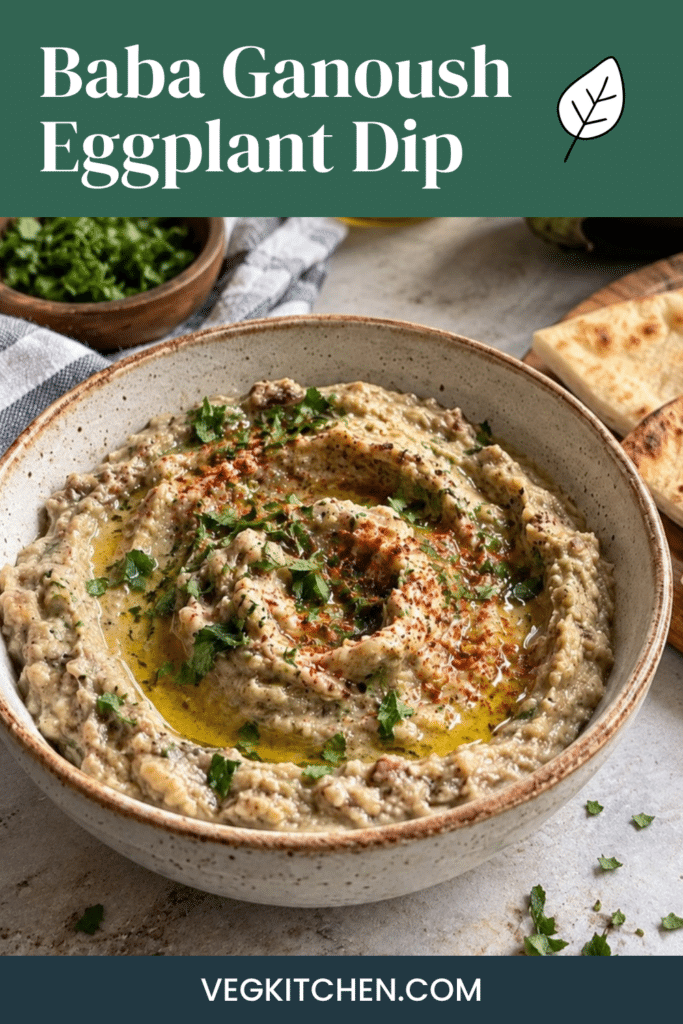
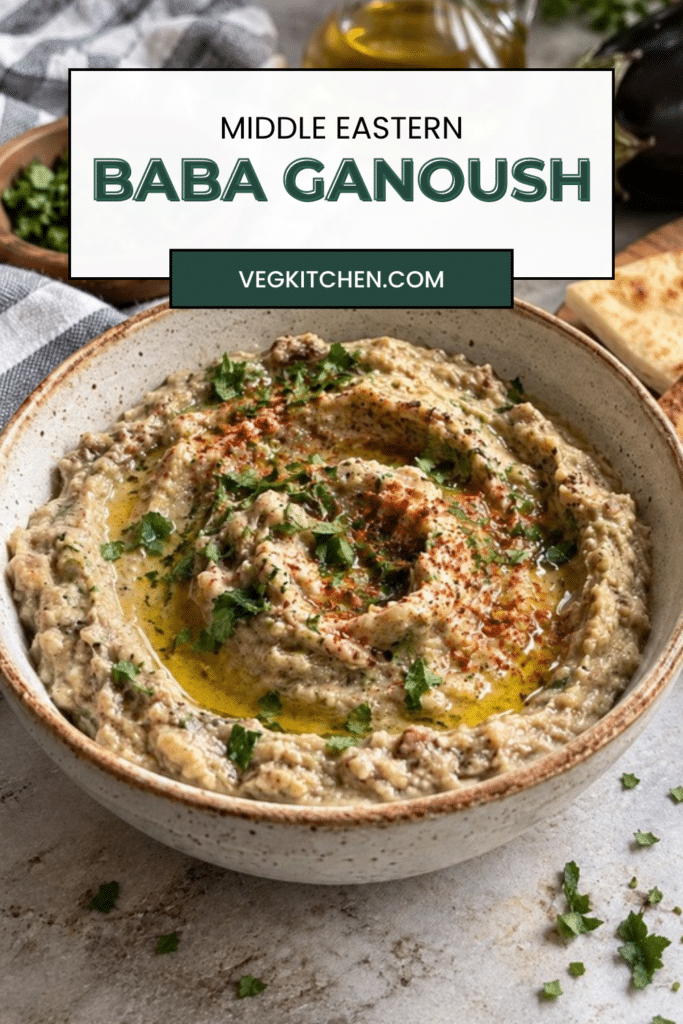
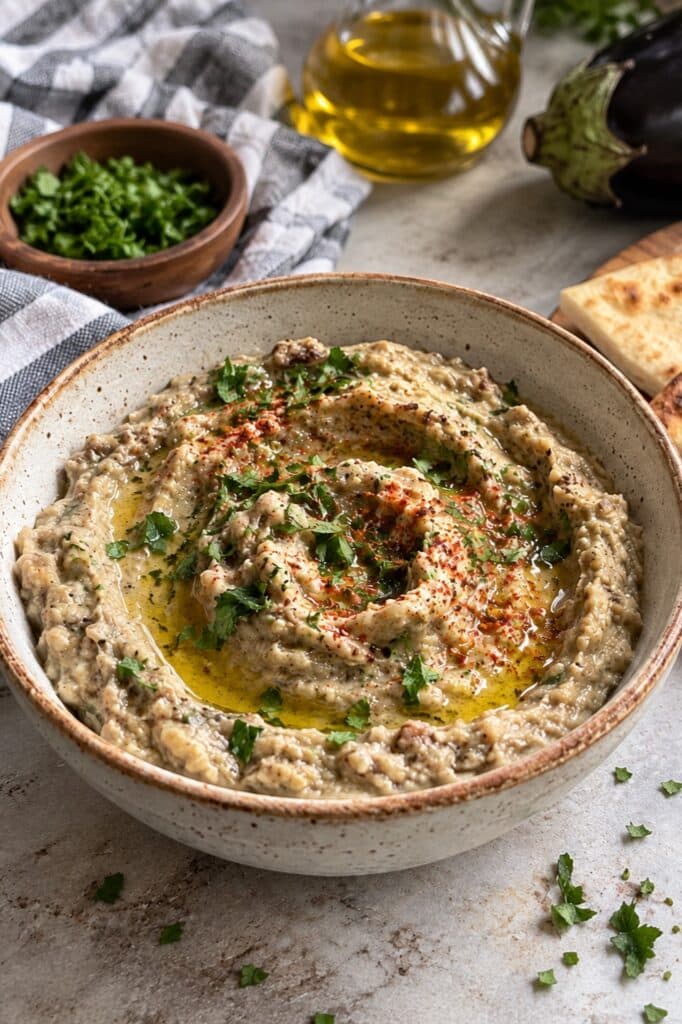
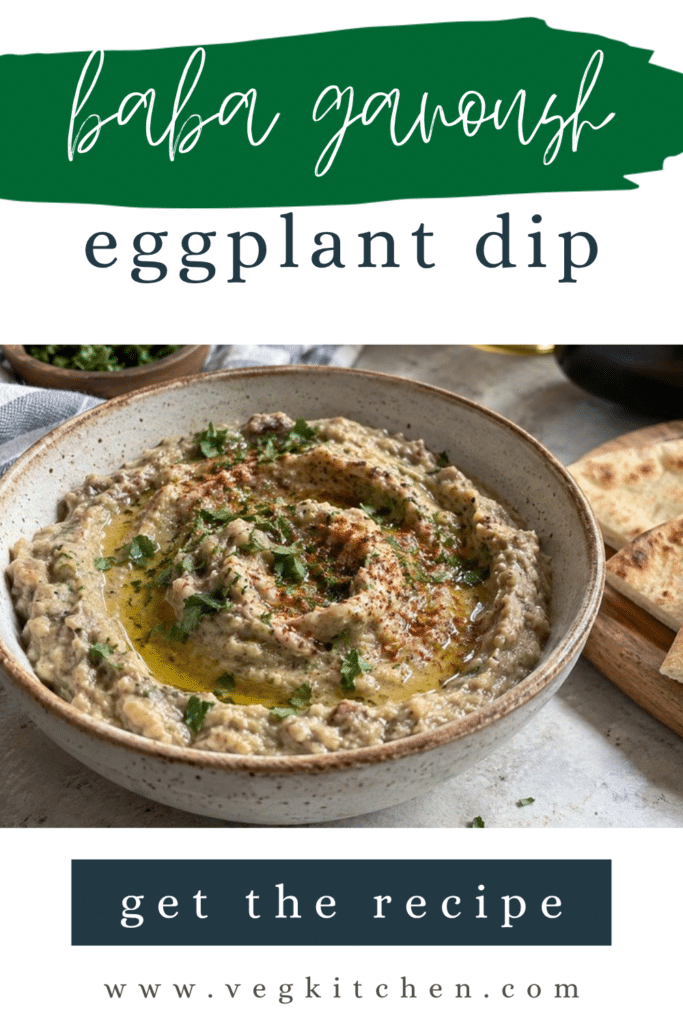
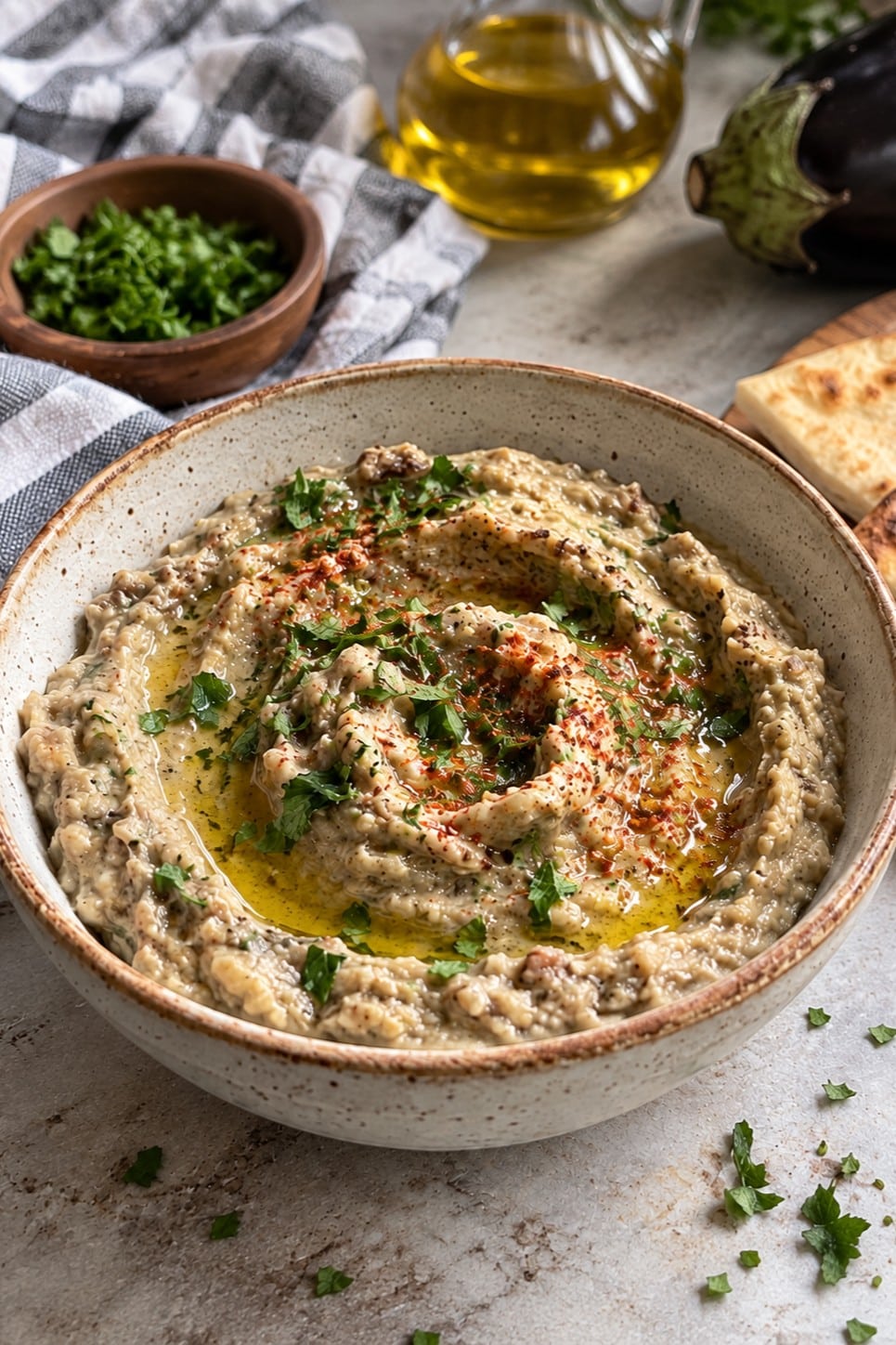
Baba ganoush is the classic Middle Eastern eggplant dip: smoky charred eggplant blended with tahini, lemon juice and garlic into a silky, rich spread that's made for scooping up with warm pita. This version adds a golden sautéed onion for extra depth, and it's naturally vegan and gluten-free.
Baba Ganoush, Baba Ghanouj, or Baba Ghanoush?
You'll see this dip spelled half a dozen ways: baba ganoush, baba ghanouj, baba ghanoush, baba ghannouj, and even babaganoush as one word. They're all the same thing. The name comes from Arabic, and because it's transliterated into English letters rather than translated, every cookbook, restaurant menu and grocery label seems to settle on its own spelling. "Baba ganoush" is the most common spelling in the U.S. today, while "baba ghanouj" is closer to how it's often written in Lebanon and in older cookbooks (this recipe was originally published here under that name).
Whatever you call it, it's one of the great dips of the Middle Eastern mezze table, served alongside hummus, tabbouleh and pickled vegetables. At its heart, it's simply an eggplant tahini dip, and once you've made it at home with properly charred eggplant, the tubs at the store won't measure up.
Key Ingredients & Substitutions
- Eggplant. Two medium globe eggplants (about 2 pounds total) give you roughly 2 ½ cups of dip. Choose firm, glossy eggplants that feel heavy for their size; they have fewer seeds and less bitterness. Italian or Japanese eggplants work too, though they're slimmer and will char faster.
- Tahini. This sesame paste is what turns roasted eggplant into baba ganoush, adding creaminess and a gentle nutty bitterness. Stir the jar well before measuring, since the oil separates. A smooth, runny brand like Baron's 100% pure tahini blends in easily. If you're out, a spoonful of unsweetened sunflower seed butter is the closest stand-in.
- Onion and garlic. Most Middle Eastern versions use raw garlic only. Sautéing a chopped onion with the garlic until golden is this recipe's twist; it mellows the garlic's bite and adds a sweet, savory backbone. Skip the onion and use one raw clove for a more traditional, sharper dip.
- Lemon juice. Fresh lemon juice brightens the smoky eggplant and balances the tahini. Bottled juice works in a pinch, but start with less, as it can taste harsh.
- Ground cumin. A half teaspoon adds warmth without taking over. Smoked paprika or a pinch of sumac are good alternatives.
- Olive oil. A tablespoon for sautéing, plus a good drizzle of extra-virgin olive oil over the top when serving.
Helpful Tips
Char the eggplant hard. The smoky flavor of great baba ganoush comes from blackened skin, so don't pull the eggplants early. They're ready when the skin is charred and blistered all over and the eggplants have completely collapsed and feel soft all the way through. Under-cooked eggplant tastes spongy and bitter. If you have a gas stove or grill, charring the eggplants directly over the flame gives the smokiest result of all.
Prick before broiling. Poke each eggplant several times with a fork before it goes under the broiler. This lets steam escape so the eggplants don't burst, and helps them cook evenly.
Drain the flesh. Once the eggplant is cool enough to handle, scoop the flesh into a colander and let it sit for 10 minutes. The brownish liquid that drains off carries much of the bitterness and would make the dip watery.
Pulse, don't purée. Baba ganoush should be a little rustic, with some texture from the eggplant. Use short pulses in a food processor and stop while it's still slightly chunky. You can also mash everything by hand with a fork for an even more traditional texture.
Season at the end. Eggplants vary a lot in flavor and moisture, so taste the finished dip and adjust. More lemon brightens it, more tahini makes it richer, and a pinch of salt pulls everything together. The flavor also deepens as it rests, so it's even better after an hour.
Variations
- Classic, no onion. Leave out the onion and blend the eggplant with one raw garlic clove, tahini, lemon and salt for the traditional Levantine version.
- Extra smoky. Add ½ teaspoon smoked paprika to the processor, especially if you're broiling rather than charring over a flame.
- Herby. Pulse in a handful of fresh parsley or mint for a greener, fresher-tasting dip.
- Pomegranate topping. Scatter pomegranate seeds over the top for color, crunch and a sweet-tart contrast.
- Spicy. Blend in a pinch of cayenne or Aleppo pepper, or top with a drizzle of chili oil.
- Toasted pine nuts. Toast a couple of tablespoons of pine nuts in a dry skillet and sprinkle them over the dip just before serving.
Serving Ideas
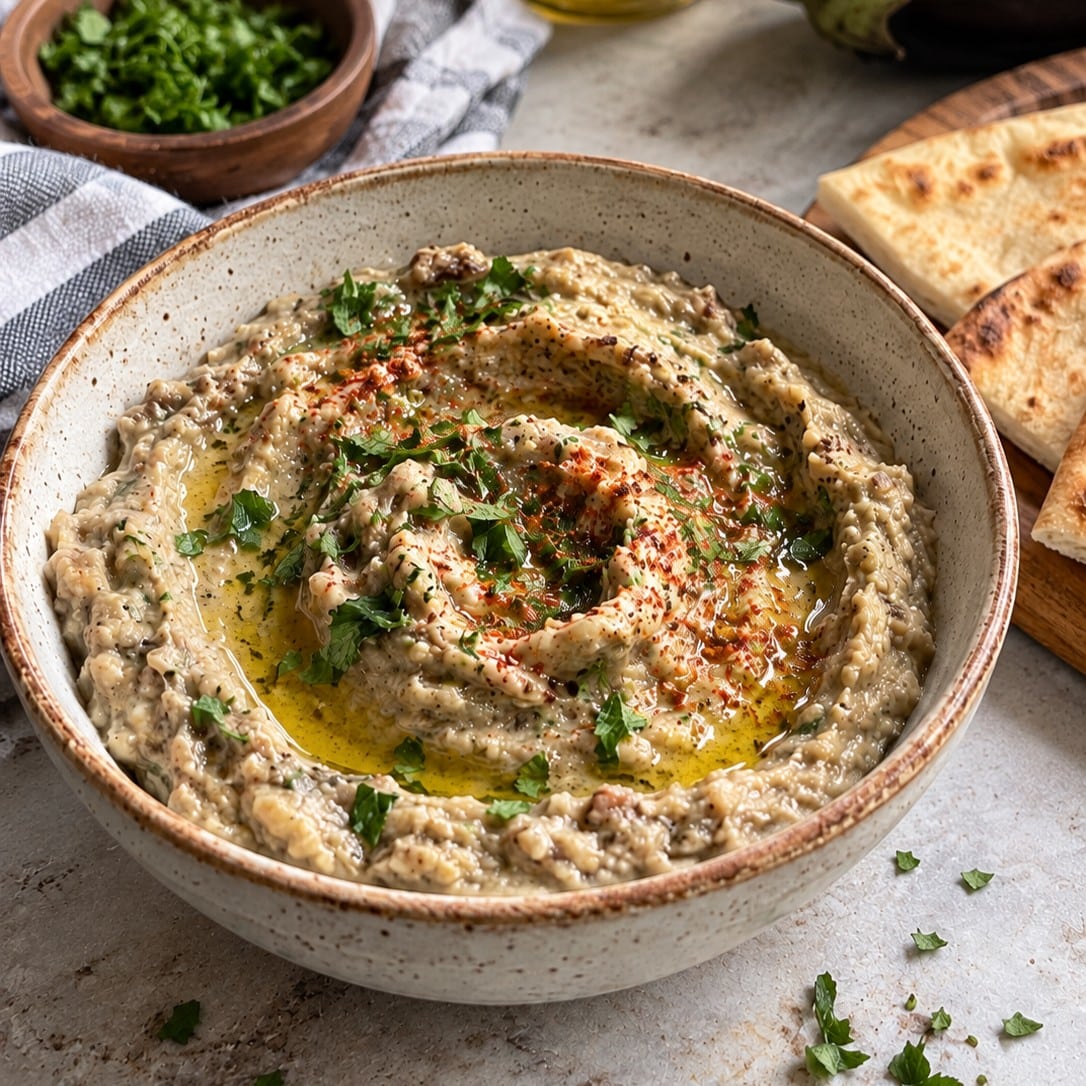
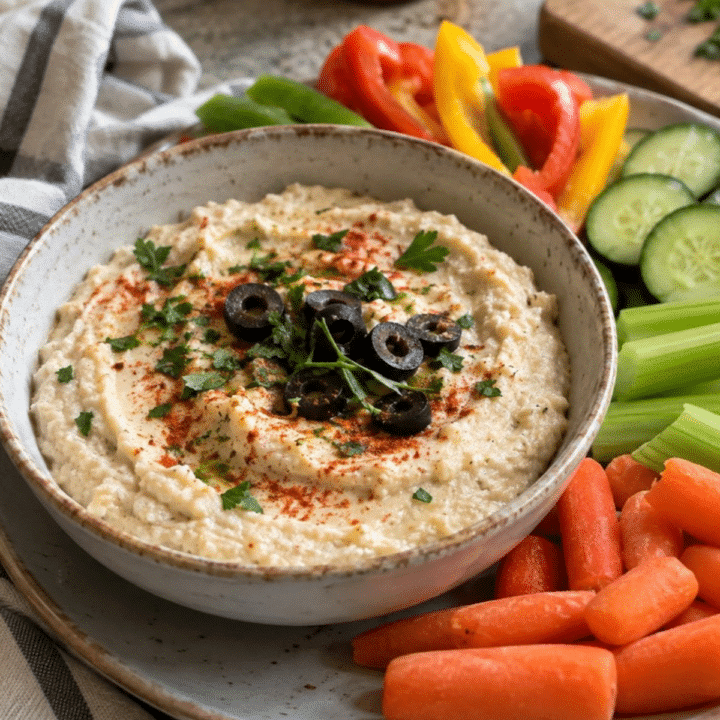
Serve baba ganoush at room temperature in a shallow bowl, swirled with the back of a spoon and finished with olive oil, a dusting of paprika and chopped parsley. Warm pita wedges are the classic partner, but homemade Lebanese lavash bread, pita chips, crackers, and raw vegetables like cucumber, carrots, bell pepper strips and radishes are all great for dipping.
For a Middle Eastern mezze spread, set it out with a bowl of hummus (try one of these flavored hummus recipes), a bright tabbouleh salad, olives and marinated vegetables. It's also excellent as a spread: tuck it into pita with vegan falafel and chopped salad, or spread it on a sandwich in place of mayo.
To round out a light meal, pair it with a crunchy fattouche salad and some roasted chickpeas.
Storing & Freezing
Store baba ganoush in an airtight container in the refrigerator for up to 4 days. Press a piece of plastic wrap onto the surface or add a thin layer of olive oil on top to keep it from drying out and darkening. Let it sit at room temperature for 20 to 30 minutes before serving, then stir and taste; you may want a squeeze of fresh lemon to wake it up. It's a great make-ahead dip for parties, since the flavor improves after a few hours in the fridge.
You can freeze baba ganoush for up to 3 months, though the texture becomes a little looser and more watery after thawing. Freeze it without the garnishes, thaw overnight in the refrigerator, pour off any liquid that separates, then stir well (or give it a quick pulse in the food processor) and adjust the seasoning with lemon juice and salt before serving.
More Middle Eastern and Eggplant Recipes
If you loved this eggplant dip, here are a few more recipes you might enjoy:
- Couscous Stuffed Eggplant
- Vegan Tahini Yogurt Sauce
- 34 Vegan Mediterranean Diet Recipes
- 35+ Vegan Appetizer Recipes for the Holidays
Recipe
Baba Ganoush (Eggplant and Tahini Dip)
Equipment
- baking sheet rimmed, lined with foil
Ingredients
- 2 medium eggplants about 2 lb (900 g) total
- 1 tablespoon olive oil plus more for drizzling
- 1 large onion chopped
- 3 cloves garlic minced (use 4 for a more garlicky dip)
- 3 tablespoon tahini well stirred, plus more to taste
- 3 tablespoon lemon juice from about 1 lemon, plus more to taste
- ½ teaspoon ground cumin
- salt and freshly ground pepper to taste
- paprika sweet or smoked, for garnish (optional)
- fresh parsley chopped, for garnish (optional)
Instructions
- Preheat the broiler with an oven rack about 6 inches below the heating element. Line a rimmed baking sheet with foil.
- Prick the whole eggplants several times with a fork and arrange them on the baking sheet. Broil, turning with tongs every 8 to 10 minutes, until the skin is charred and blistered all over and the eggplants have completely collapsed and feel very soft, 25 to 35 minutes depending on their size and your broiler.
- Let the eggplants cool until you can handle them, about 10 minutes. Slit them open, scoop the flesh into a colander, and discard the skins and stems. Let the flesh drain for 10 minutes.
- Meanwhile, heat the oil in a skillet over medium heat. Add the onion and sauté until translucent, about 5 minutes. Add the garlic and continue to sauté, stirring often, until the onion is golden brown, 5 to 7 minutes more.
- Combine the drained eggplant, the onion and garlic mixture, the tahini, lemon juice and cumin in a food processor. Pulse until the mixture is a slightly chunky purée. Season with salt and pepper, then taste and add more tahini or lemon juice if you like.
- Transfer to a shallow serving bowl and swirl the top with the back of a spoon. Drizzle with olive oil and sprinkle with paprika and parsley, if using. Serve at room temperature with pita or raw vegetables.

Leave a Comment!