
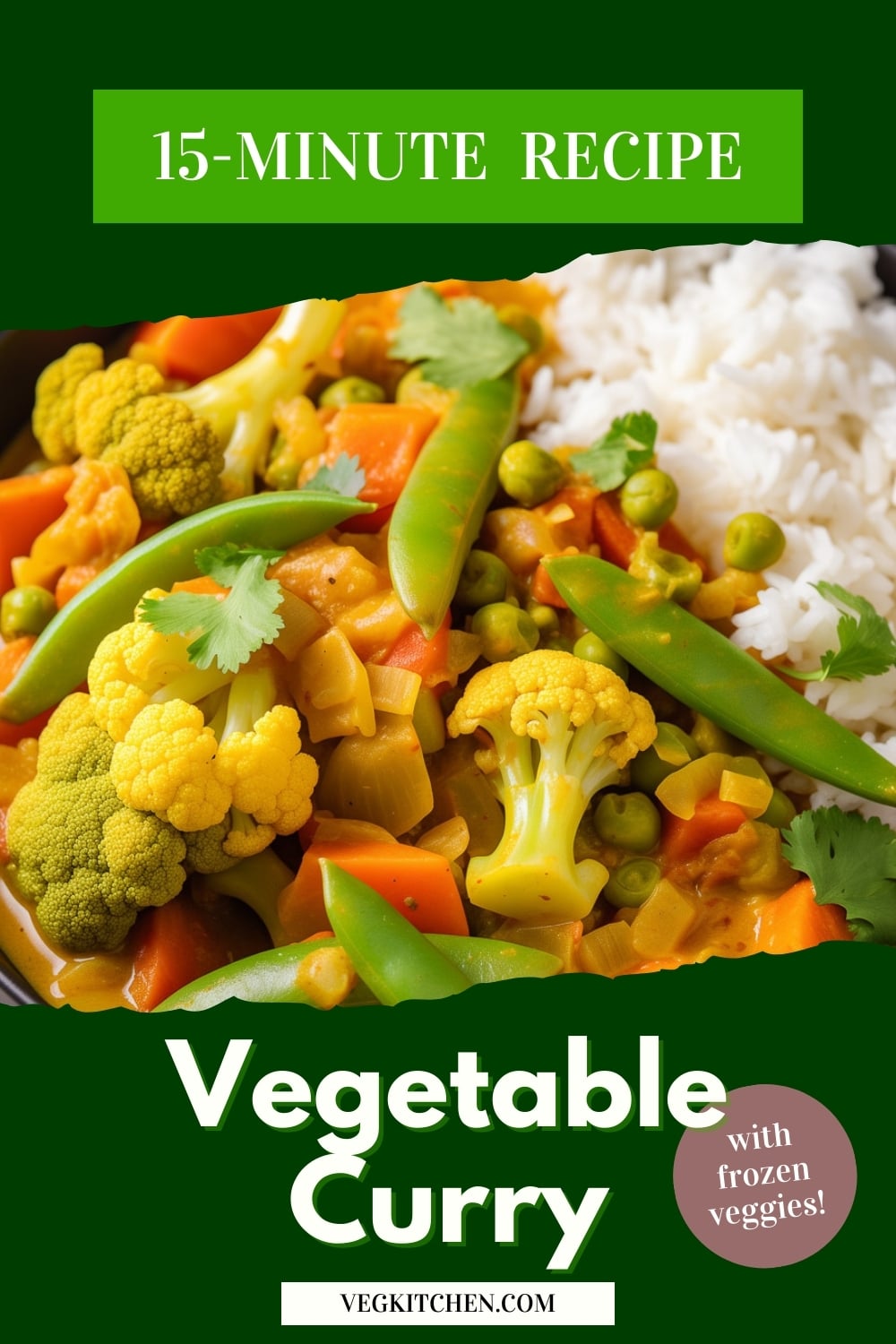

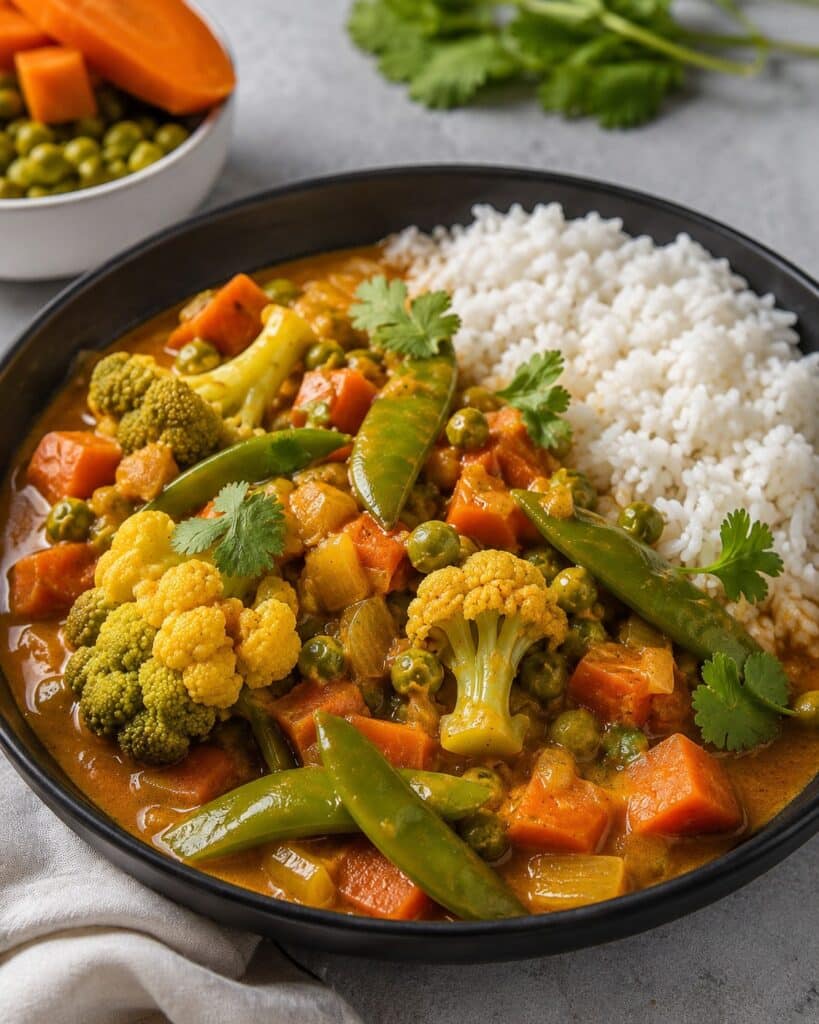
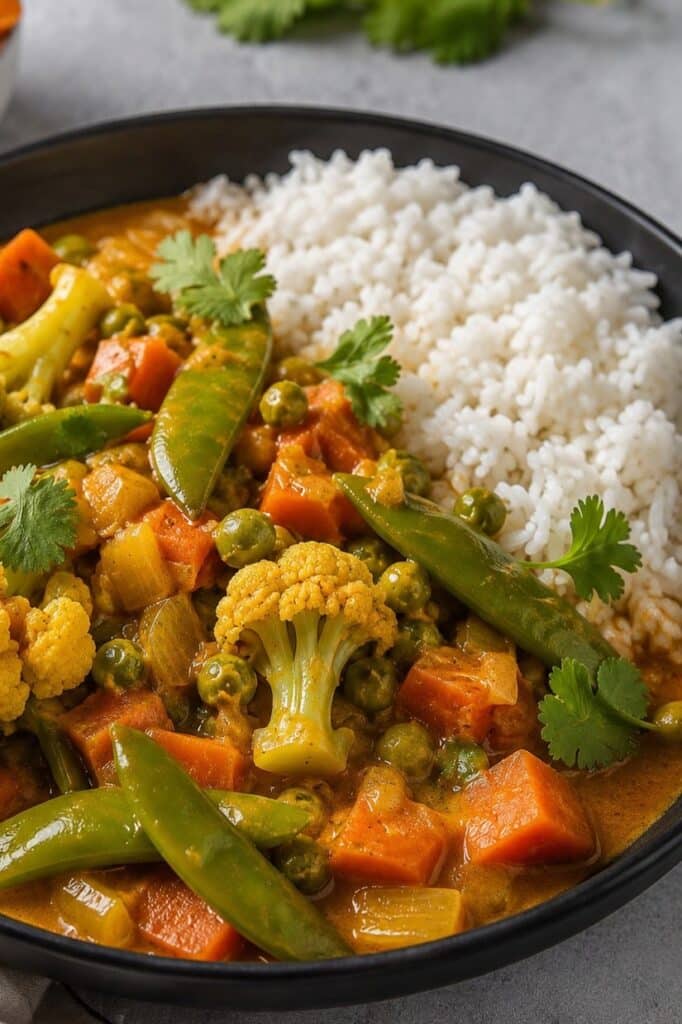
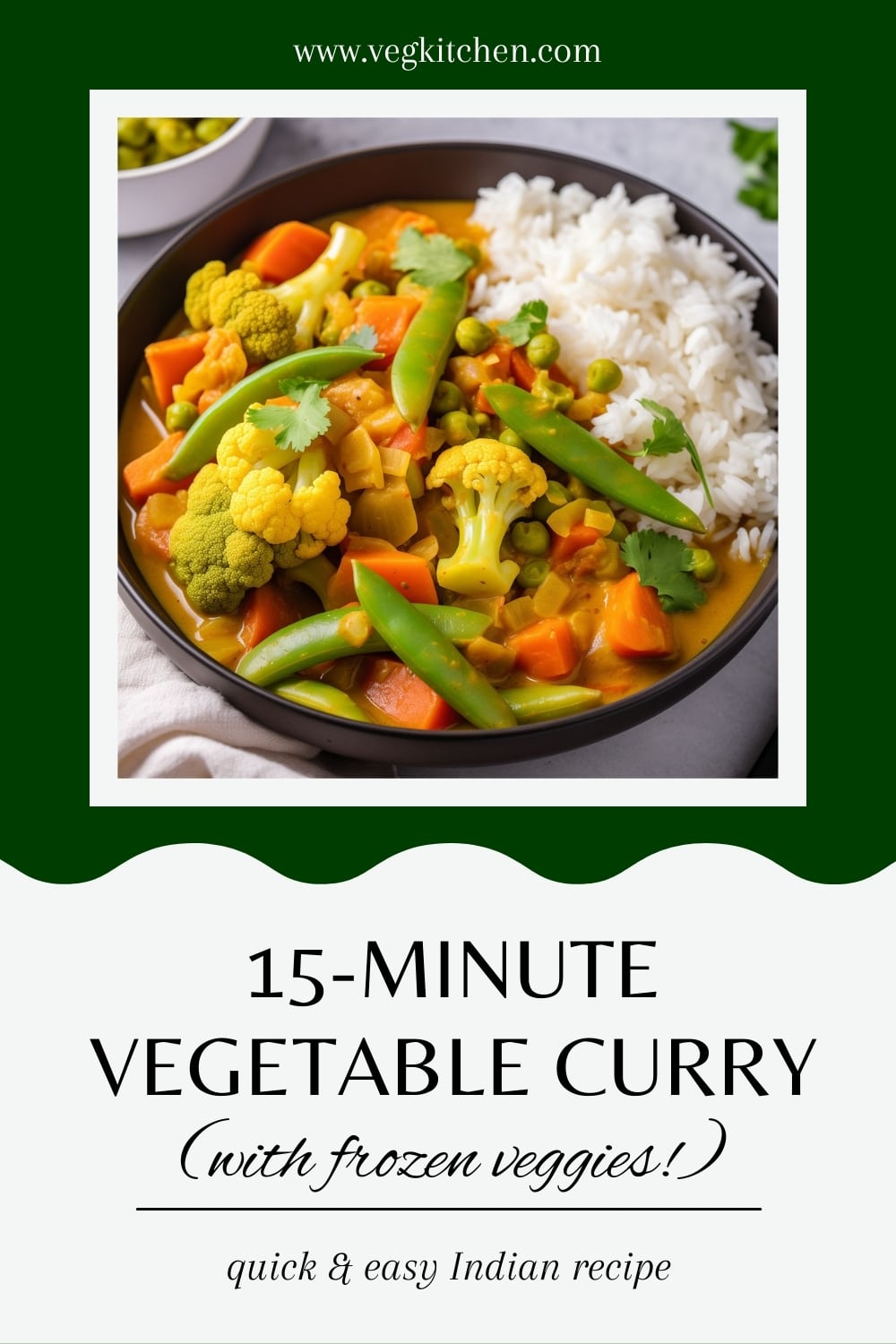
Whoever said that a hearty, flavorsome curry needs hours of simmering and a pantry full of exotic spices clearly hasn't tried my Quick & Easy Vegetable Curry! A bag of frozen vegetables, a can of chickpeas and creamy coconut milk come together in a fragrant, gently spiced sauce, and dinner is on the table in about 15 minutes.
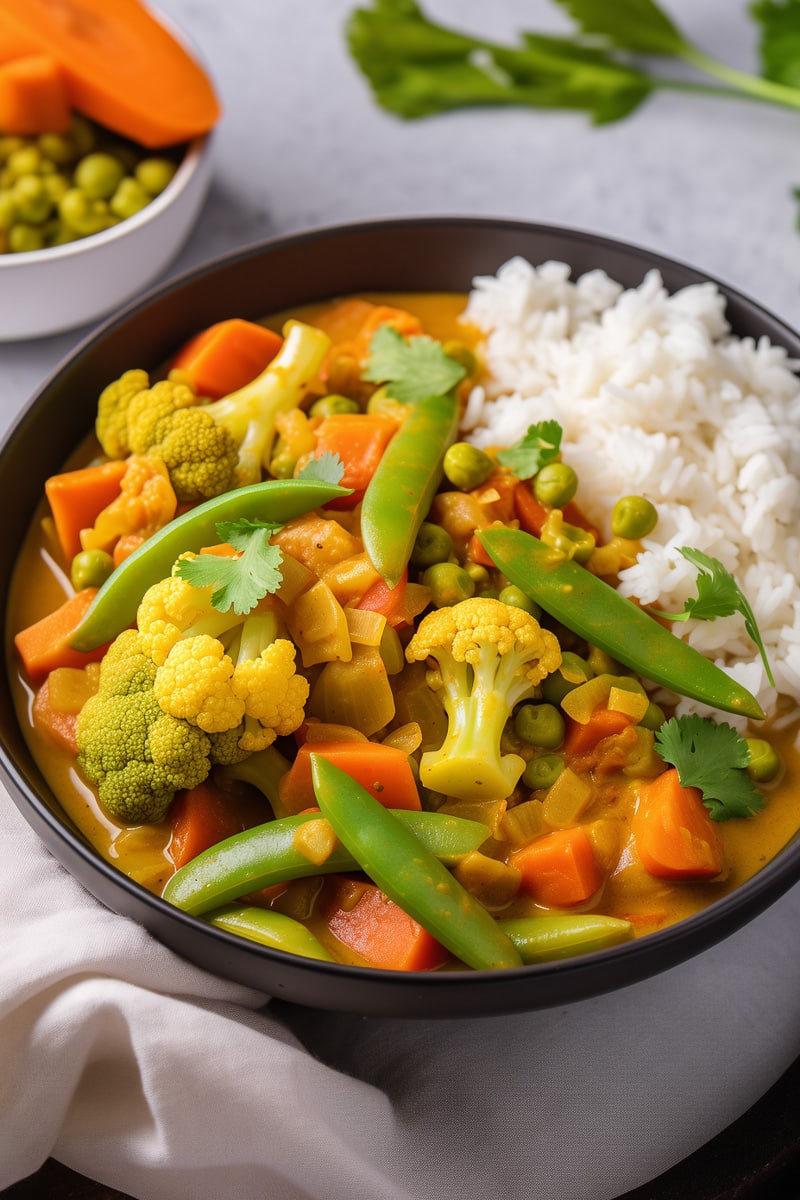
This curry is the dish you turn to on those frantic weeknights when the fridge is half-empty, the family is hungry, and time is of the essence. Ready in just 15 minutes, thanks to the help of some frozen veggies, it's like a little weeknight magic trick. Now you see an empty kitchen, now you don't!
This Quick & Easy Vegetable Curry is...
- Unbelievably fast. Ready, set, curry in just 15 minutes!
- Surprisingly simple. It uses ingredients you likely have on hand already.
- Comfort food. Each spoonful is like a warm, spice-infused embrace.
- Versatile. Have some extra veggies or tofu? Toss them in! This recipe is easy to customize.
Key Ingredients & Substitutions
- Frozen vegetables. I love the classic mix of carrots, peas, corn, and green beans, but literally any frozen veggie blend will do, so pick your own favorite. There's no need to thaw them first; they go straight from the freezer into the pan.
- Curry powder. This is the most important of the spices in this recipe, so I recommend choosing a high-quality curry powder for the best flavor. Blends vary a lot in heat and intensity, so taste and adjust. Garam masala works in a pinch, though it gives a warmer, less turmeric-forward flavor.
- Cumin, turmeric, garlic and ginger. These build on the curry powder and give the sauce real depth. If you don't have fresh ginger, use ¼ teaspoon of ground ginger and add it with the other spices.
- Coconut milk. This brings creaminess and lots of flavor. Full-fat canned coconut milk gives the richest sauce. Light coconut milk works if you'd like something lighter, and for a coconut-free version, use a creamy unsweetened oat milk or cashew cream (both are covered in the variations below).
- Chickpeas. A can of chickpeas turns the curry into a filling one-pot meal and adds plant protein. White beans, lentils or cubed tofu are all good swaps.
- Vegetable broth. Note that vegetable broth brands can vary pretty wildly in terms of saltiness. So be sure to taste your curry at the end, and adjust the salt accordingly. You may find that no extra salt is needed at all, or you may want to add quite a bit!
Which Vegetables Work Best (Fresh vs. Frozen)
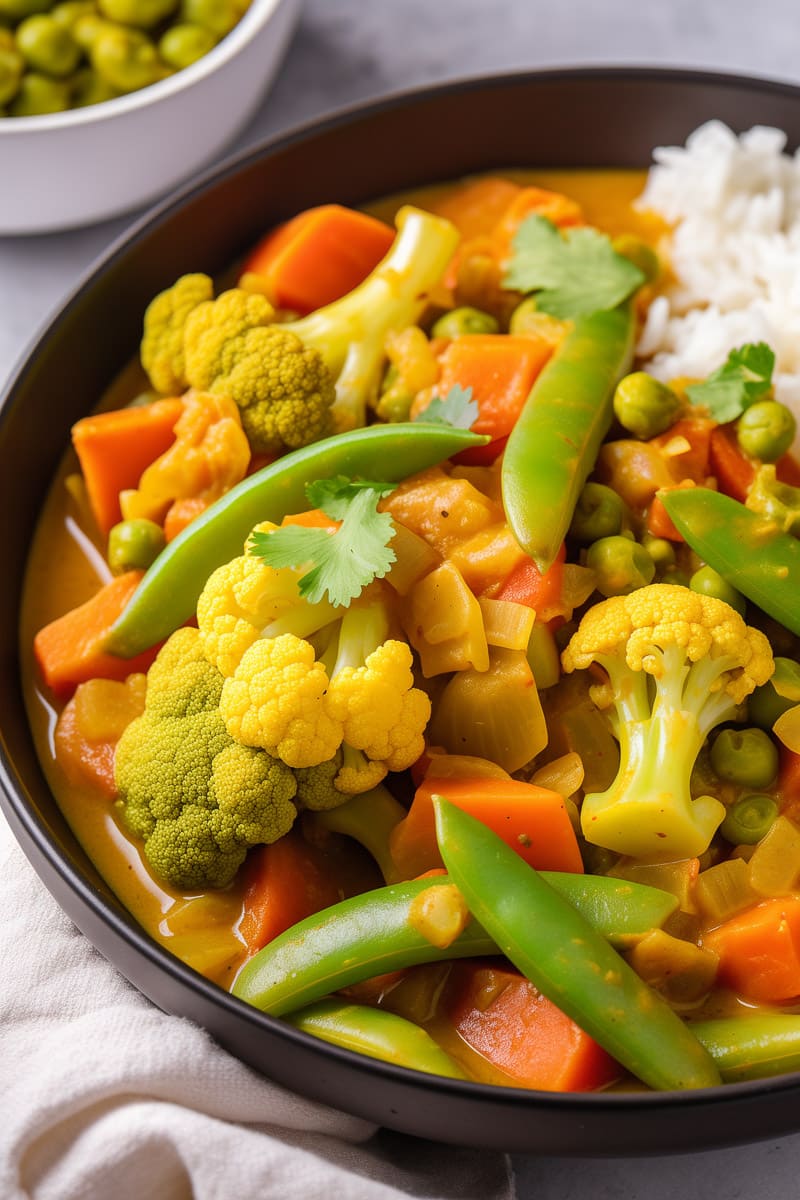
Frozen vegetables are the secret to the 15-minute timing. They're already washed, chopped and blanched, so they only need a few minutes in the simmering sauce to become tender. A classic mix of carrots, peas, corn and green beans is great, and so are frozen cauliflower florets, broccoli, cut spinach, edamame, bell pepper strips or a "stir-fry" blend. Frozen vegetables are picked and frozen at their peak, so they're a genuinely good choice here, not just a shortcut.
Fresh vegetables work too; they just take a little longer. Cut everything into small, even pieces so it cooks at the same rate. Add the sturdiest vegetables first (diced potato, sweet potato, carrot or cauliflower), let them simmer for about 8 minutes, and then add quicker-cooking ones such as zucchini, bell pepper, green beans or peas. Tender greens like spinach go in at the very end. Expect the total cooking time to stretch to 20 to 25 minutes, depending on what you use.
Whichever you choose, aim for about 3 cups of vegetables for one can of coconut milk. Much more than that and the sauce gets thin and the flavors get diluted.
Helpful Tips
Don't be shy with the curry powder. If your curry powder is on the mild side, don't be shy to add a bit more than called for. You measure that stuff with your heart.
Bloom the spices. Cooking the curry powder, cumin and turmeric in the oil for a full minute before adding the liquid wakes up their flavor. Stir constantly so they don't scorch; if the pan looks dry, add a splash of broth.
Use a wide pan. A large, deep skillet or sauté pan gives the sauce more surface area, so it comes back to a simmer quickly after the frozen vegetables go in and reduces a little as it cooks.
Adjust the thickness at the end. If the sauce is thinner than you'd like, let it simmer uncovered for a few extra minutes or mash a few of the chickpeas against the side of the pan. If it's too thick, loosen it with a splash of broth or water.
Finish with acid. A squeeze of lime juice right before serving brightens all the warm spices and balances the richness of the coconut milk. Taste again after adding it, and then adjust the salt.
Make It Your Own
- Chickpeas, or not. Chickpeas are already in the recipe, but you can double them for an extra-hearty curry, or swap in white beans, kidney beans or a cup of cooked lentils. Leave them out entirely for a lighter vegetable side dish.
- Protein power-up with tofu. Toss in some pan-fried tofu or tempeh for an extra protein punch. Cube extra-firm tofu, brown it in a separate pan, and stir it in at the end so it stays crisp. For more ideas, see our family-friendly tofu recipes or these easy curried sweet potatoes and tofu.
- Coconut milk swaps. Light coconut milk gives a thinner, lighter sauce. For a coconut-free curry, use 1 cup of creamy unsweetened oat milk or cashew cream plus an extra ½ cup of broth, or stir in a can of crushed tomatoes for a tomato-based curry.
- Spice level. As written, this curry is mild and kid-friendly. For more heat, add a pinch of cayenne or red pepper flakes with the spices, a sliced green chili with the garlic, or use a hot curry powder. Serve chili sauce on the side if some at the table like it milder.
- Add fresh greens. Stir in a couple of handfuls of baby spinach or shredded kale in the last minute of cooking for extra nutrients. And it looks gorgeous too!
- Make it sweeter. For a sweeter curry, try adding a dash of maple syrup or agave syrup, or a handful of golden raisins.
Serving Suggestions
Serve this curry hot with a side of fluffy basmati rice to soak up the sauce, or dress it up with our lemon-flavored rice with vegetables. Quinoa or couscous make a tasty twist, and cauliflower rice is a good lower-carb option.
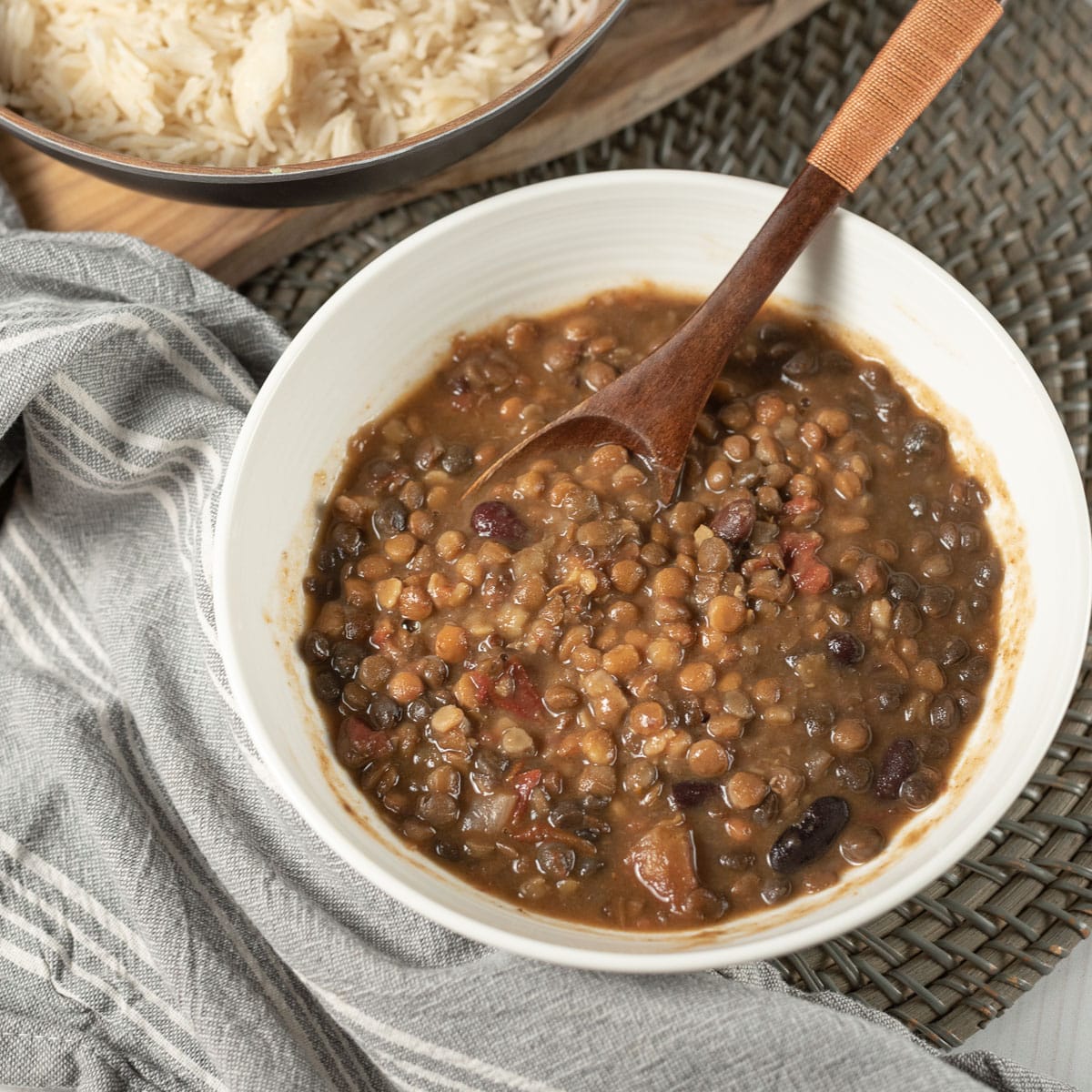
It's also delicious with flatbreads for scooping, like roti, vegan naan bread or our homemade chapati. Round out an Indian-inspired spread with our masala lentils or Madras lentils, plus a spoonful of minty apple-apricot chutney.
I like to garnish my curry with some chopped fresh cilantro and some lime wedges, a classic combo. But this would also be great topped with chopped peanuts or cashews, sliced red onion, a dollop of plain vegan yogurt, or lemon instead of lime.
Storing & Freezing
Store this vegetable curry in an airtight container in the refrigerator for 3 to 4 days. Like most curries, it tastes even better the next day as the flavors meld, which makes it a great make-ahead lunch. To serve again, simply reheat over medium heat on the stovetop, adding a splash of broth or water if the sauce has thickened.
The curry can be frozen for up to 3 months, though the vegetables will be a little softer and the coconut milk may separate slightly once thawed. A good stir while reheating brings the sauce back together. Thaw it overnight in the fridge and reheat gently on the stovetop. For the best texture, freeze the curry without rice and cook the rice fresh when you serve it.
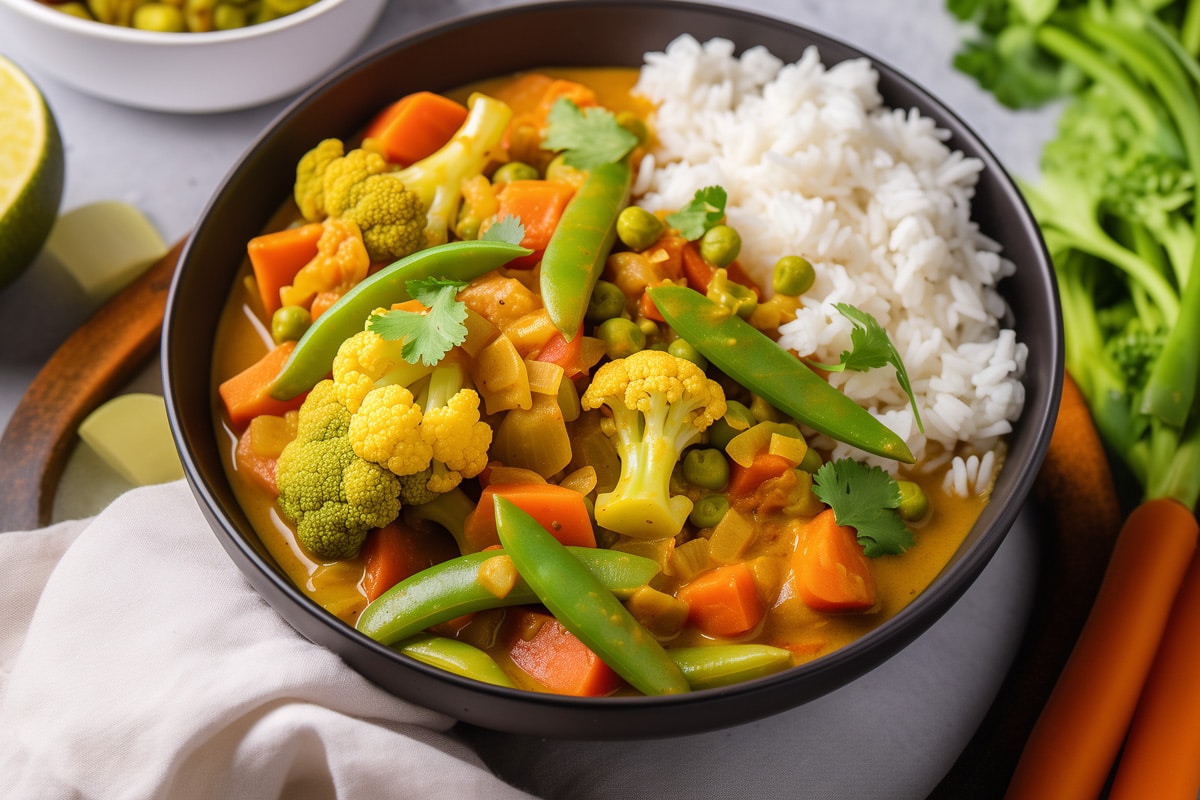
Made this curry? I'd love to hear how it turned out and which vegetables you used! Please leave a star rating in the recipe card below, and share your tweaks in the comments.
More Easy Vegan Indian Recipes
If you love this quick and easy vegetable curry, be sure to check out these other delicious vegan recipes:
Recipe

15-Minute Vegetable Curry (with frozen veggies!)
Ingredients
- 2 tablespoons coconut oil
- 1 small red onion finely chopped
- 2 cloves garlic minced
- 1 inch piece of ginger grated
- 1½ tablespoons good-quality curry powder adjust according to taste
- 1 teaspoon ground cumin
- ½ teaspoon turmeric powder
- 1 (14-ounce) can coconut milk full-fat for the creamiest sauce
- 1 cup vegetable broth
- 3 cups mixed frozen vegetables such as carrots, peas, corn, and green beans
- 1 (15-ounce) can chickpeas drained and rinsed
- Salt and pepper to taste
- Fresh cilantro and lime wedges for serving
Instructions
- Heat 2 tablespoons of coconut oil in a large skillet over medium heat. Sauté 1 small chopped red onion for about 3 minutes until soft. Then, add 2 minced garlic cloves and 1-inch grated ginger, cooking for another minute until fragrant.
- Stir in 1½ tablespoons of curry powder, 1 teaspoon of ground cumin, and ½ teaspoon of turmeric. Cook for 1 minute to release the flavors.
- Pour in a 14-ounce can of coconut milk and 1 cup of vegetable broth, mixing well.
- Add 3 cups of mixed frozen vegetables and a 15-ounce can of drained and rinsed chickpeas. Bring to a simmer, then reduce the heat to maintain a gentle simmer.
- Let the curry cook for about 8-10 minutes, or until the vegetables are tender.
- Season with salt and pepper to taste.
- Serve hot, garnished with fresh cilantro and a squeeze of lime juice. This curry goes well with rice or flatbread.


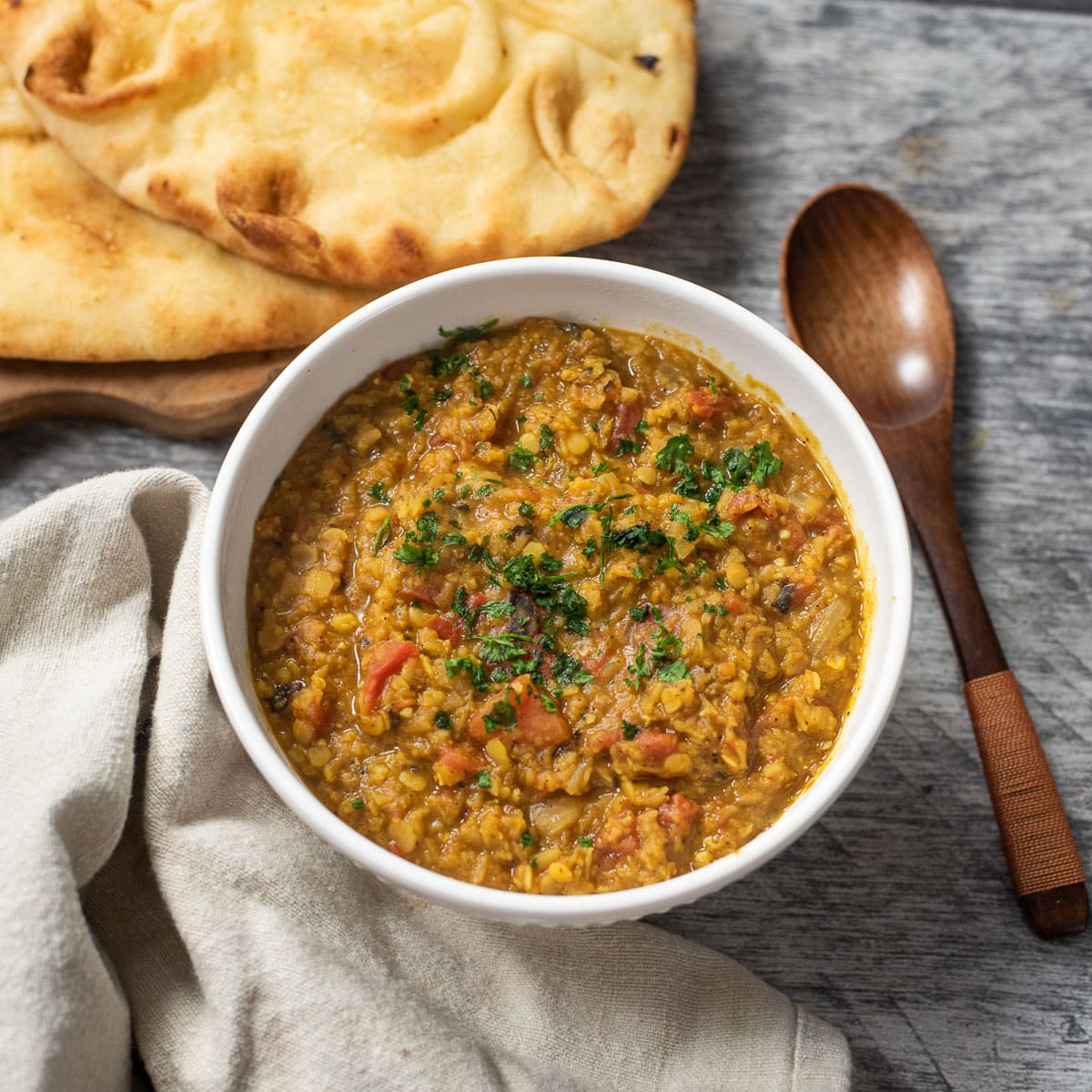
Joe says
In a world where our phones have high-definition cameras, I cannot believe a "reputable" cookbook author would use an AI image for their dish. All credibility is thrown out the window, is the recipe AI generated? In a sea of fantastic recipe bloggers, I am so disheartened by what seems to be such a disingenuous grift, that I am compelled to leave my first ever comment on a recipe.
Carrie says
Made this one last night, and it was really easy and good. It took me longer than 15 minutes. But still pretty fast.
Nicole @ VegKitchen says
This will probably be a bit embarrassing for you, Joe. But these recipe images are not AI generated. Perhaps I should take that as a compliment. While we do use some AI editing tools to handle things like removing backgrounds or errant props, we still do take our own recipe photos and write our own recipes. While I share your concerns about the proliferation of "auto-blogging", we are unfortunately at a point where most consumers can't even tell the difference, as evidenced by your comment here. There are also no web-based tools that can accurately tell the difference. Sad state of affairs.