
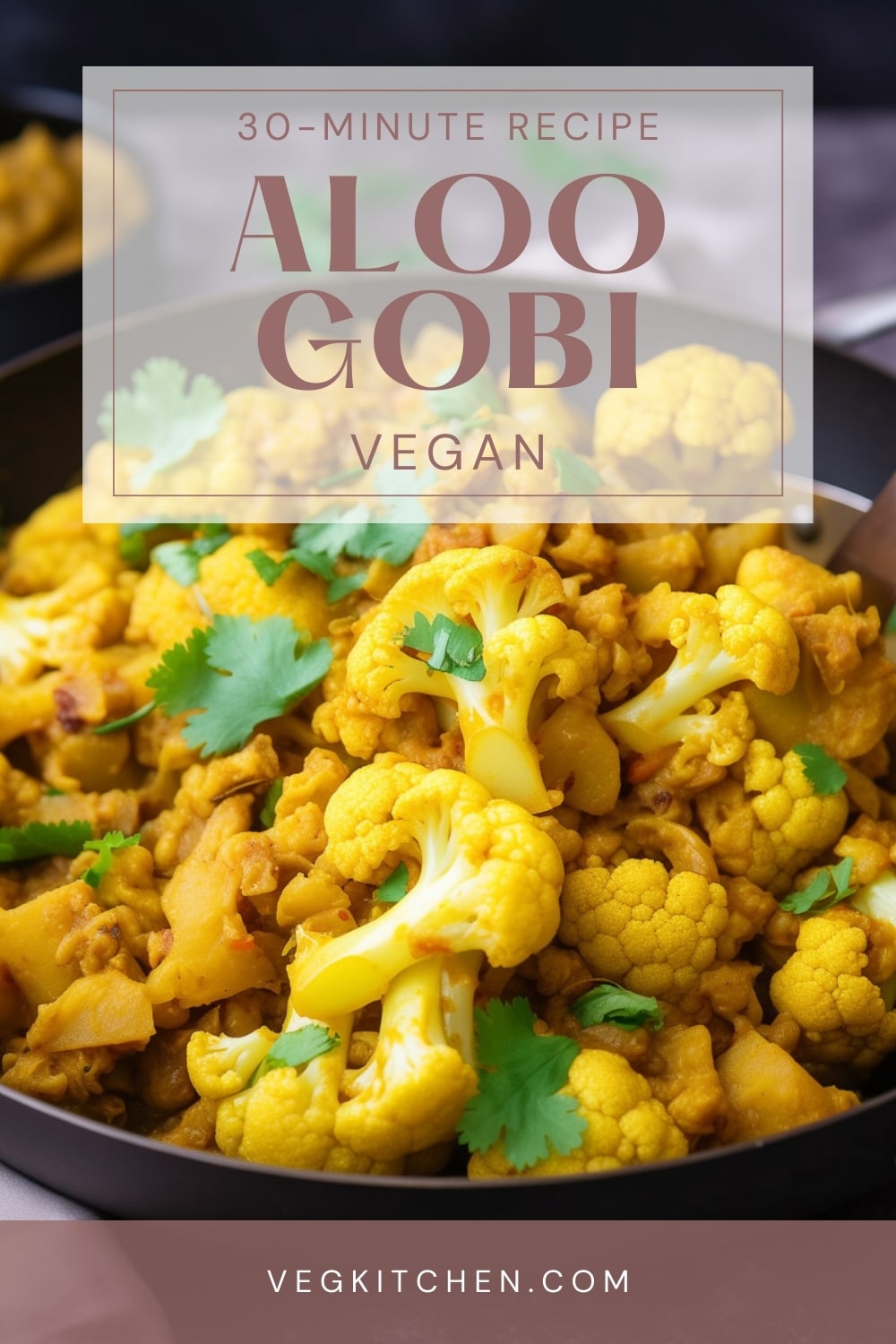
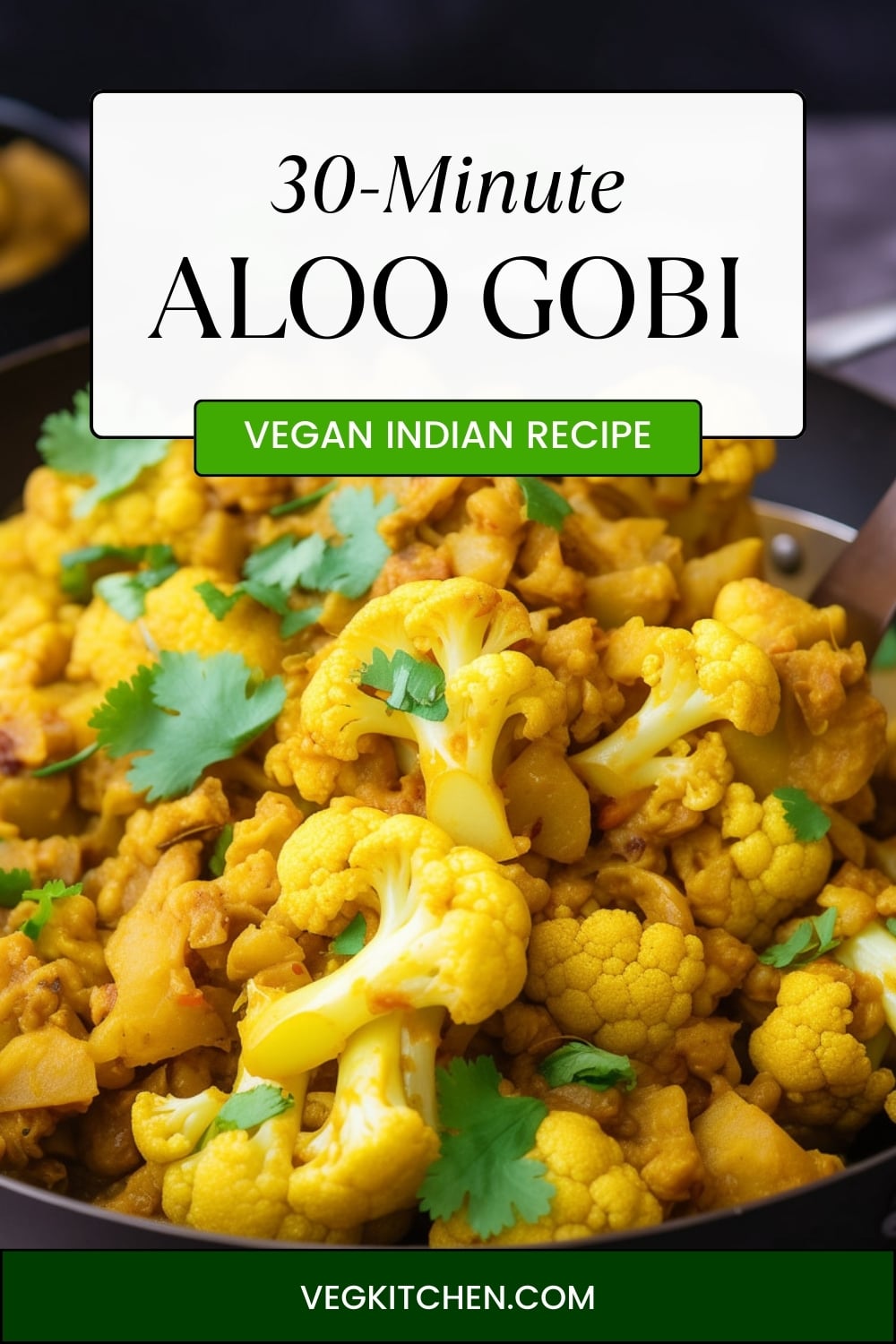
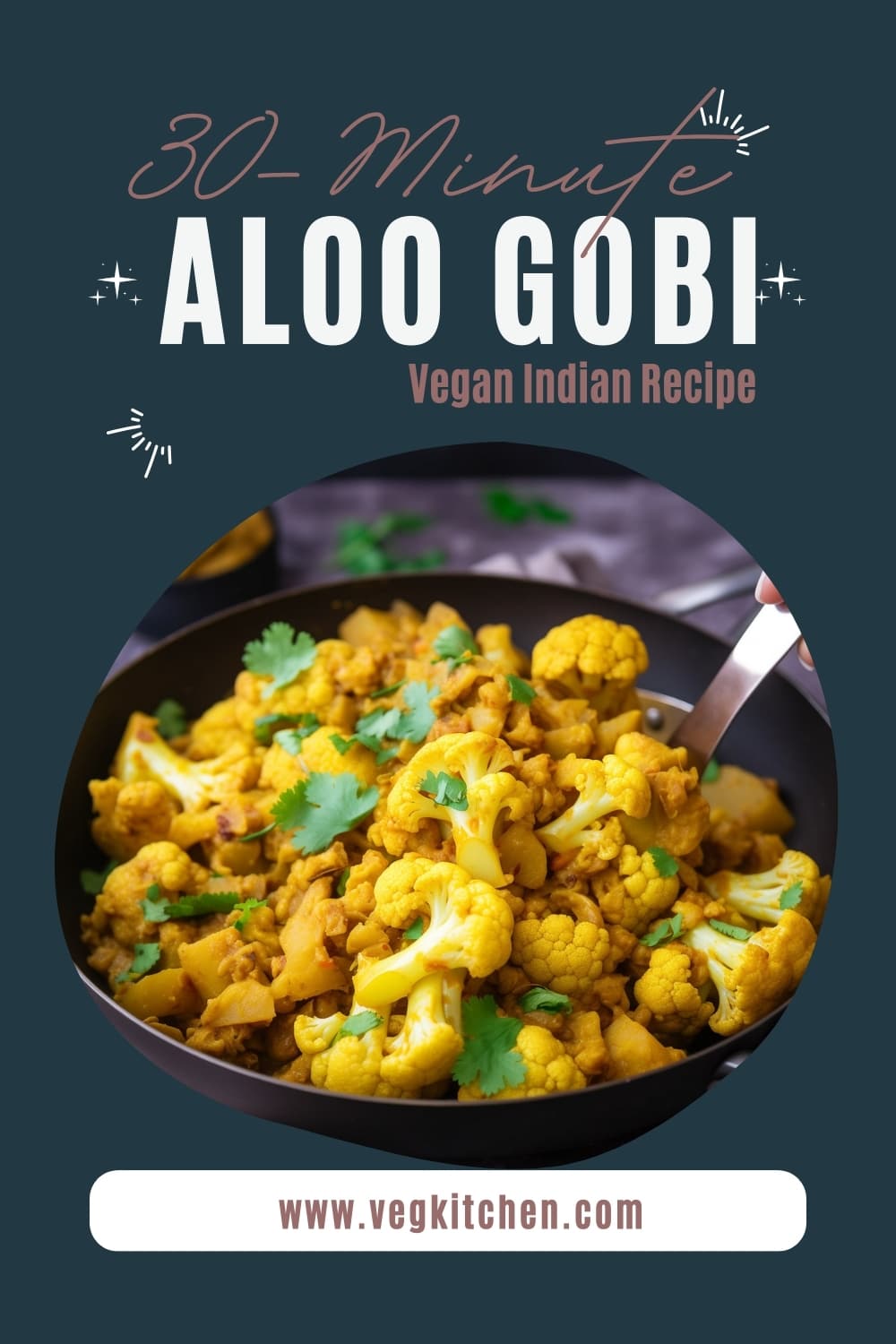
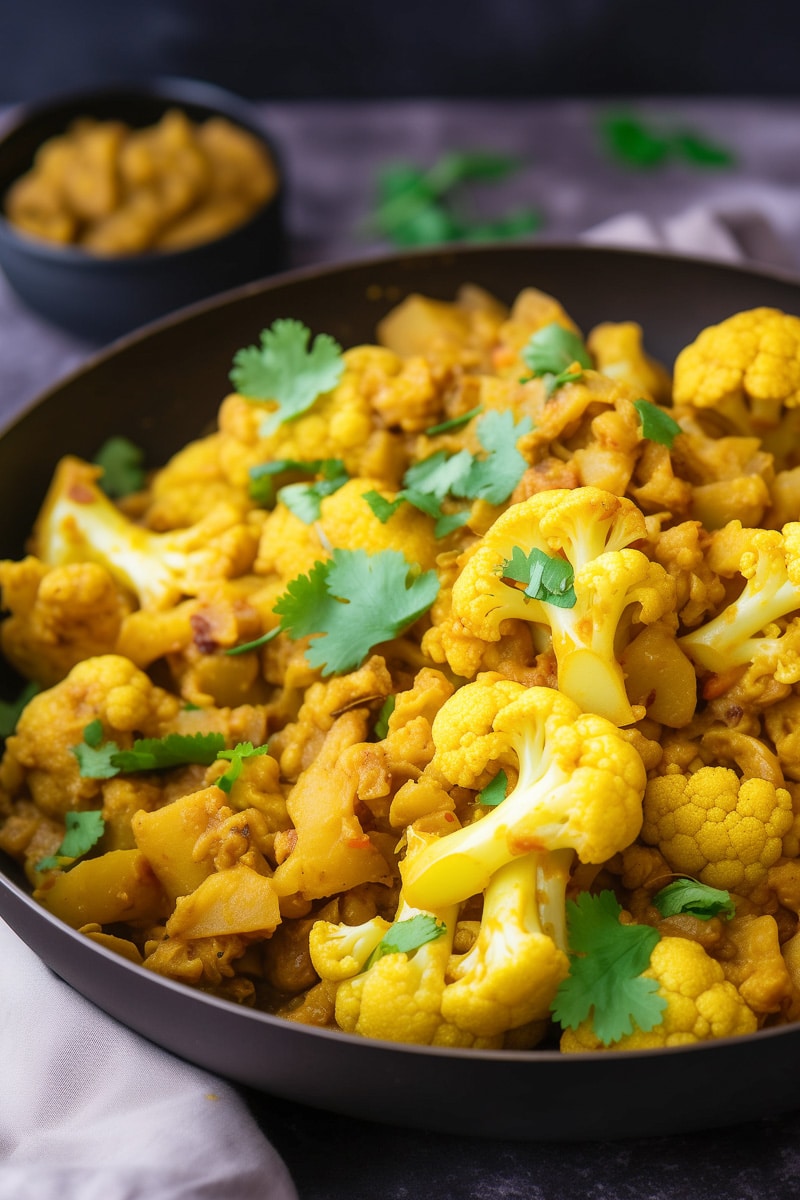
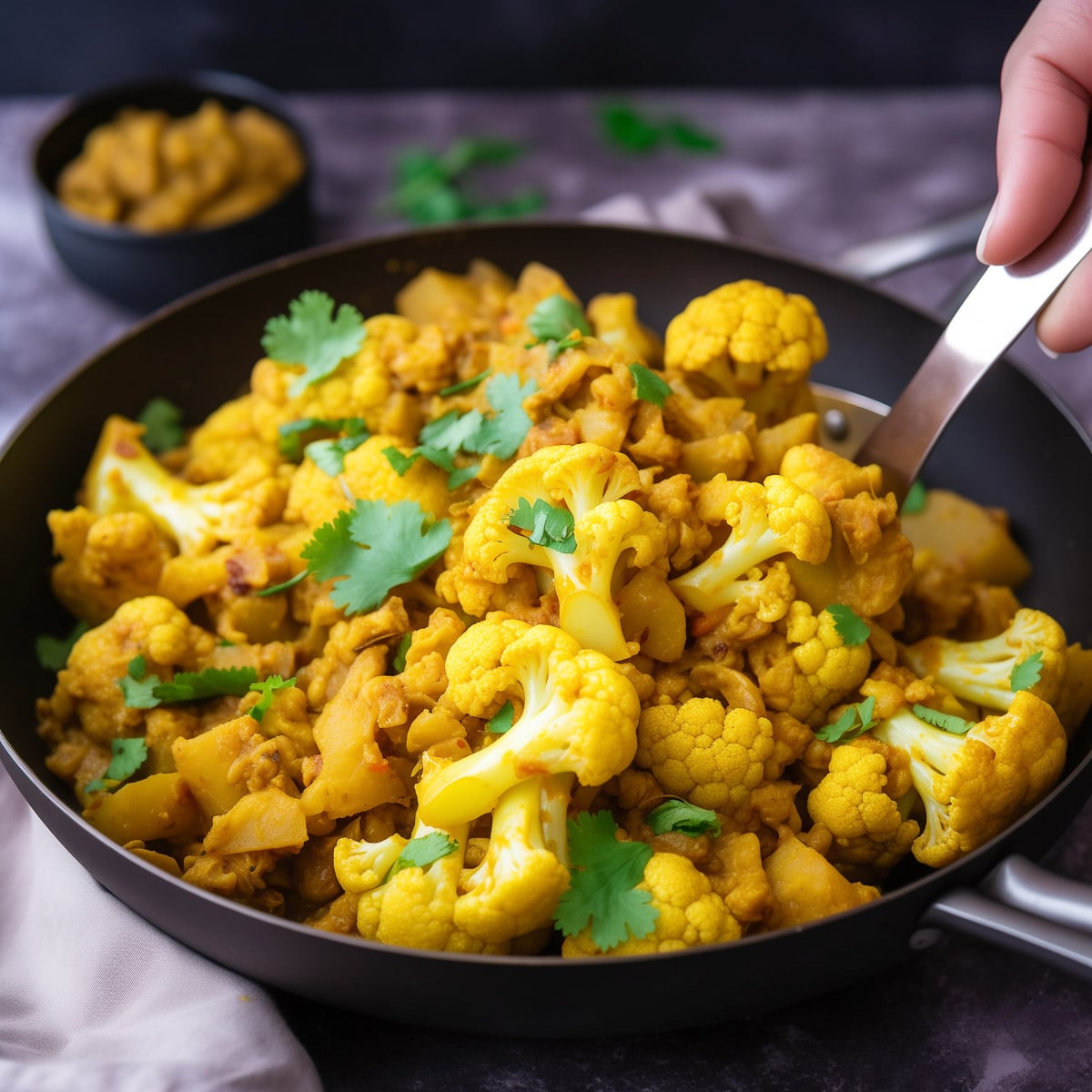
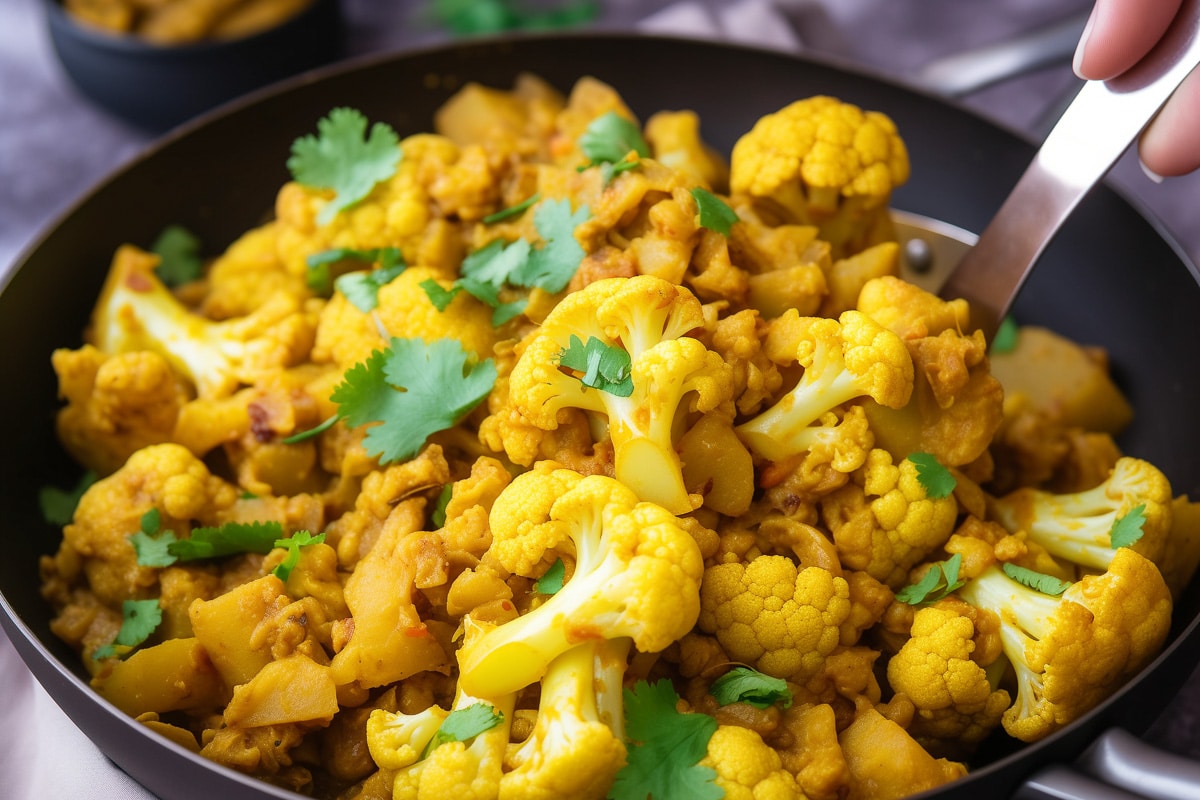
This Aloo Gobi tastes just as delicious as the restaurant version, and you won't believe how easy it is to make this popular Indian potato and cauliflower curry at home! Tender potatoes and golden cauliflower get tossed in a fragrant tomato-onion masala, and the whole thing comes together in about 30 minutes of cooking.
I've always been a big fan of Indian food, but my interest certainly increased when I married into my husband's Indian family. I really enjoy experimenting with all of the rich flavors of this vegan-friendly cuisine.
And while I will never claim to be an expert on Indian cooking, I think I've come up with some real keepers. 😉 This Aloo Gobi is one of my faves for its simplicity. It's relatively quick, only takes about 30 minutes on the stove, and my whole family loves it.
This aloo gobi is:
- Indian comfort food.
- Slightly spicy and packed with flavor.
- Easy to make with simple ingredients.
- 100% vegan and naturally gluten-free!
What is Aloo Gobi?
Aloo Gobi is a classic Indian curry consisting of "aloo," meaning potato in Hindi, and "gobi," meaning cauliflower. It's a no-frills kind of meal that's a staple in North India, especially in Punjab. The dish is pretty much what you'd get if potatoes and cauliflower had a party and invited some spices like turmeric, cumin, and coriander to jazz things up. It's a "dry" curry (a sabzi), so instead of swimming in sauce, the vegetables are coated in a thick, clingy masala.
Key Ingredients & Substitutions
- Potatoes. I use plain old Russet potatoes most often, but waxy potatoes like Yukon Gold also work really well. Russets turn slightly fluffy at the edges and soak up the masala, while Yukon Golds hold their shape a little better if you plan on leftovers.
- Cauliflower. You'll use a medium head of cauliflower, cut into florets roughly the same size as your potato chunks. Pre-cut florets are fine for convenience. Either way, pat them dry after rinsing, since wet florets steam instead of browning.
- Tomatoes. I prefer to use a fresh tomato in aloo gobi, but you can also use about ¾ cup of canned diced tomatoes. The fire-roasted varieties give a great flavor!
- Onion, garlic and ginger. This trio is the backbone of the masala. A spoonful of jarred ginger-garlic paste is a handy shortcut on busy nights.
- Cumin seeds. Whole cumin seeds sizzled in hot oil give the dish its toasty, nutty base note. If you only have ground cumin, skip the sizzle step and add an extra ½ teaspoon of ground cumin with the other spices.
- Ground spices. Turmeric, ground cumin, ground coriander and red chili powder do the heavy lifting. Indian red chili powder is pure ground chili, not the cumin-and-oregano blend sold as "chili powder" in American stores; a mix of paprika and a pinch of cayenne is a fine stand-in. If you cook Indian food often, a masala dabba (Indian spice box) keeps all of these within reach next to the stove.
- Oil. Any neutral, high-heat oil works, such as vegetable, canola or avocado oil. Don't skimp on it: the oil is what toasts the spices and browns the vegetables.
Helpful Tips
Cut everything the same size. Cut your potatoes and cauliflower into uniform, bite-sized pieces (about 1 inch) so they cook at the same pace. Potatoes take a little longer than cauliflower, so if anything, cut the potatoes slightly smaller.
Use a wide, heavy pan and don't crowd it. The difference between browned aloo gobi and steamed aloo gobi mostly comes down to surface area. A large pan lets the vegetables sit in a single layer and touch the hot surface, while a small, deep pot traps moisture and steams them. A well-seasoned 12-inch cast iron skillet is ideal here because it holds its heat when the vegetables go in, but any wide skillet or wok will do.
Brown before you add the water. Once the potatoes and cauliflower are coated in the masala, turn the heat up to medium-high and let them cook for 4 to 5 minutes, stirring only every minute or so, until the edges pick up some golden color. Stirring constantly keeps them from ever making good contact with the pan. For even deeper browning, pan-fry the potatoes and cauliflower in an extra tablespoon of oil first, set them aside, then build the masala and return them to the pan.
Use just enough water, then finish uncovered. Half a cup of water is all it takes to steam the potatoes tender under the lid; more than that and the dish turns soft and mushy. Start checking at about 12 minutes. When a knife slides easily into the potatoes, take the lid off and let the pan cook for another 2 to 3 minutes so the last of the liquid evaporates and the masala clings to the vegetables.
Cook the masala until the oil separates. Give the onion, tomato and spices enough time to cook down into a thick paste. When you see the oil pooling at the edges of the mixture, the raw edge of the spices is gone and it's time to add the vegetables.
Adjust the heat to your taste. As written, ½ teaspoon of red chili powder gives a mild-to-medium warmth. For little ones or spice-shy eaters, cut it to ¼ teaspoon, or use Kashmiri chili powder, which adds lovely red color without much burn. For more kick, go up to a full teaspoon, add one or two slit green chilies along with the onion, or stir some slivered red chili peppers into the masala. If you overshoot, a squeeze of lemon juice and a spoonful of vegan raita on the side will tame it.
Variations
- Add some protein. Chickpeas or tofu can bulk this aloo gobi up for an even heartier meal. For a version built around tofu, try our Tofu Aloo Gobi.
- Make it creamier. A splash of coconut milk added in the last few minutes of cooking makes a nice, creamier finish.
- Herb it up. Apart from cilantro, try fresh mint or dill for a different herby note.
- Smoky cauliflower. Roast the cauliflower in the oven until slightly charred before adding it to the dish.
- Sweet potato aloo gobi. Replace the white potatoes with sweet potatoes for a totally new dish with a sweeter flavor. They cook faster, so check them after about 8 minutes.
- Roasted aloo gobi. Prepare the masala on the stovetop, then toss it with oven-roasted potatoes and cauliflower for the crispiest version of all.
Serving Ideas
Because aloo gobi is a dry curry, it's happiest next to something that can scoop it up or soak up the spices. Fluffy basmati rice is the classic pairing. For a little extra flavor, make quick jeera rice by sizzling a teaspoon of cumin seeds in oil before adding the rice and water.
Warm flatbread is just as good. Tear off a piece of naan or roti and use it to pick up the potatoes and cauliflower. Check the label if you buy naan, since many store-bought versions contain yogurt, milk or ghee; roti and chapati are usually just flour, water and oil. Our homemade chapati is a close cousin and easy to make at home.
For a full Indian-style spread, serve aloo gobi alongside a bowl of dal, such as this Easy Vegan Dal Tadka or a simple Red Lentil Dal, and a cooling vegan raita. To make the raita, stir grated cucumber, chopped fresh mint, a pinch of ground cumin and salt into plain, unsweetened coconut or soy yogurt. For an even heartier meal, add this vegan chana masala to the table.
Storing & Reheating
In the fridge. Let the aloo gobi cool, then store it in an airtight container in the refrigerator for 4 to 5 days. Like most curries, it tastes even better the next day once the spices have had time to settle in, which makes it a great make-ahead lunch.
In the freezer. You can freeze aloo gobi for up to 2 months. Freeze it in portions in freezer-safe containers, and thaw overnight in the fridge before reheating. Be aware that the cauliflower will be softer and the potatoes a bit more tender after freezing, so the fridge is the better option if texture matters most to you.
Keeping the cauliflower from going soft. If you know you'll have leftovers, pull the pan off the heat when the cauliflower is just tender and still has a little bite, since it keeps softening as it sits. Let it cool uncovered before sealing the container so trapped steam doesn't make it soggy. To reheat, skip the covered microwave bowl and warm it in a skillet over medium-high heat with a teaspoon of oil, spreading it out and stirring only occasionally so the edges crisp up again. If you do use the microwave, heat it uncovered in short bursts. A handful of fresh cilantro and a squeeze of lemon will brighten up the leftovers.
More Vegan Indian Recipes
If you love this Aloo Gobi, be sure to check out these other delicious vegan recipes:
Made this aloo gobi? We'd love to hear how it turned out! Leave a star rating on the recipe card below, and tell us in the comments how spicy you made it and what you served it with.
Recipe
30-Minute Aloo Gobi (Vegan)
Equipment
Ingredients
- 2 large potatoes aloo, such as Russet, peeled and cut into bite-sized chunks
- 1 medium cauliflower gobi, cut into small florets
- 2 tablespoons vegetable oil
- 1 teaspoon cumin seeds
- 1 medium onion finely chopped
- 2 cloves garlic minced
- 1 inch piece of ginger grated
- 1 large tomato diced
- 1 teaspoon turmeric powder
- 1 teaspoon ground cumin
- 1 teaspoon ground coriander
- ½ teaspoon red chili powder adjust to taste
- Salt to taste
- ½ cup water
- Fresh cilantro leaves chopped for garnish
Instructions
- Prep the vegetables: Peel the potatoes and cut them into 1-inch chunks. Cut the cauliflower into florets about the same size. Pat everything dry and set aside.
- Sizzle the cumin seeds: In a large (12-inch) skillet or wok, heat the vegetable oil over medium heat. Add the cumin seeds and let them sizzle for about 30 seconds, until fragrant and a shade darker.
- Cook the onion, garlic and ginger: Add the chopped onion and sauté for 4 to 5 minutes, until it starts to turn golden. Add the minced garlic and grated ginger and cook for 1 minute more, until fragrant.
- Add the tomato and spices: Stir in the diced tomato, turmeric, ground cumin, ground coriander, red chili powder and salt. Cook for 4 to 5 minutes, stirring often, until the tomato breaks down into a thick paste and the oil starts to separate at the edges.
- Brown the potatoes and cauliflower: Add the potatoes and cauliflower and stir well to coat them in the masala. Raise the heat to medium-high and cook for 4 to 5 minutes, stirring only every minute or so, until the edges start to turn golden.
- Add water and simmer: Pour in the water and stir, scraping up any browned bits from the bottom of the pan. Cover, reduce the heat to medium-low and cook for 12 to 15 minutes, stirring once or twice, until the potatoes are tender when pierced with a knife.
- Finish and serve: Uncover the pan, raise the heat to medium-high and cook for 2 to 3 minutes, until any remaining liquid has evaporated and the masala clings to the vegetables. Taste and adjust the salt, then garnish with fresh cilantro and serve.
Susan says
I don't see the note regarding the sauce. ??
I would like to try this but need to know what kind of sauce.
Anthony H Guastella says
Thank you very much for the recipes. I love Indian food but need to learn to cook it for myself. I am all but cured of my leukemia with a new generation biologic called Imbruvica and a vegan diet. I eat vegan and try various supplements with excellent results. At nearly 60 my body is healing itself and I am free from all high cholesterol, heart disease, high blood pressure etc. Keep up the great info. I live for it.
Sharon says
I cannot see were the 'note' is for sauce. Have I missed it somehow?
Nava says
Sharon, sorry about that, and thanks for the catch! I just added the note, but since it won't show up on the page for a few hours, here's what it says:
Note: For this dinner, we used Maiya Kaimal Madras Curry, which is fairly spicy. You can use any of the other vegan sauces in this line. There are other brands of Indian sauces (like tikka masala), but read labels carefully, many of them contain dairy. You'll find these kinds of sauces in natural food stores or well-stocked supermarkets. If you can't find them, you can always order online.
Kerrie says
Yummy
Kieran Scott says
loved this. it is now one of my regular family meals.