
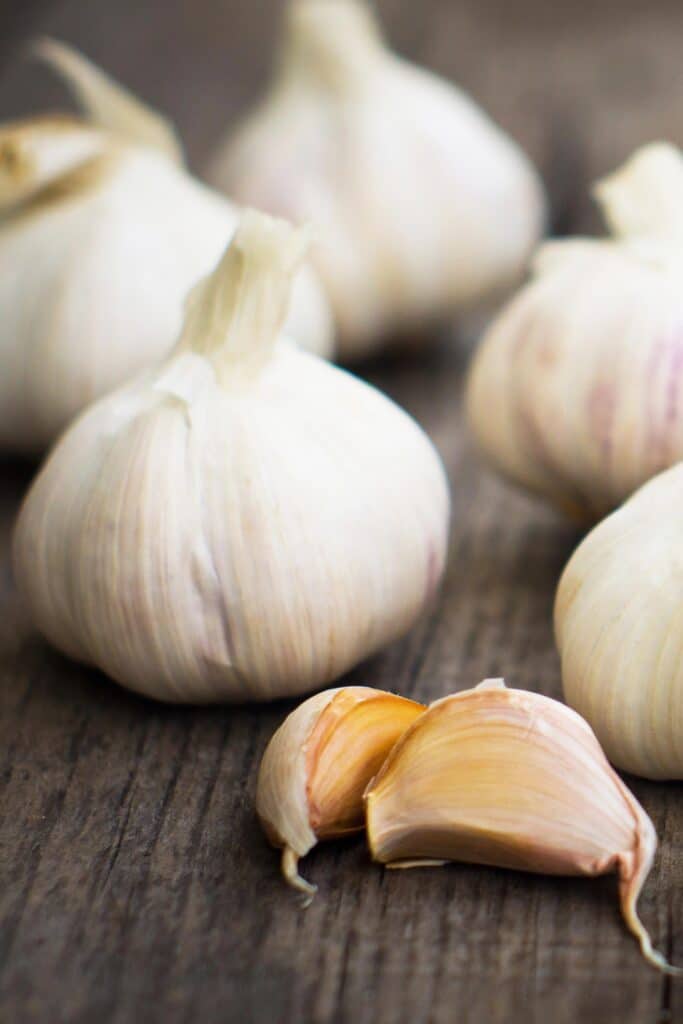
Got more garlic than you can use? Here's how to preserve garlic six safe ways: freezing, drying, garlic vinegar, garlic salt, garlic oil, and refrigerator pickles, plus the food-safety rules that matter most when garlic meets oil.
This article was contributed by Vicki Chelf many years ago, although it has since been updated. Check out her cookbook, Vicki's Vegan Kitchen for more delicious plant based ideas!
Preserved garlic is not always a substitute for fresh, but it does have its own charms and some distinct advantages, especially if you grow it yourself and have a bumper crop!
Different methods of preserving garlic lend themselves to their own culinary uses, so explore them all and see which ones best suit your needs.
Garlic Preservation Methods at a Glance
Here's a quick summary of all six methods before we dive into the details. Use it to figure out which one fits how you actually cook.
| Method | How Long It Keeps | Best For |
|---|---|---|
| Freezing (peeled or unpeeled cloves) | 10–12 months, frozen | Everyday cooking, soups, sauces |
| Frozen garlic-oil puree | Several months, frozen only | Spoonable garlic for quick weeknight cooking |
| Drying/dehydrating | Many months, sealed & dry | Garlic powder, garlic salt, pantry storage |
| Garlic vinegar | About 4 months, refrigerated | Salad dressings, marinades |
| Garlic salt | Many months, airtight jar | All-purpose seasoning |
| Garlic oil | Dehydrated garlic: a few weeks, refrigerated. Fresh garlic: 4 days refrigerated, or frozen | Cooking oil, dressings |
| Refrigerator garlic pickles | About 4 months, refrigerated & submerged | Snacking, sandwiches, garnish |
Food Safety: Garlic in Oil
Before we get into the specific methods, this is the one safety rule worth putting up front: garlic stored in oil is only safe if it's refrigerated and used quickly, or kept frozen.
Garlic is a low-acid food, and oil creates an oxygen-free environment. Together, that combination can support the growth of Clostridium botulinum, the bacteria that causes botulism, a rare but serious and potentially fatal illness. According to the National Center for Home Food Preservation and Oregon State University, these are the rules to follow:
- Refrigerate it right away. Never leave fresh garlic in oil at room temperature, not even on the counter for a few hours while you cook.
- Use it within 4 days. Fresh garlic in oil is safe in the refrigerator for up to 4 days, well within a week. After that, discard it.
- Freeze it for longer storage. If you want to keep garlic in oil longer than a few days, freeze it and keep it frozen until you're ready to use it.
- The same goes for roasted garlic. Roasted cloves or garlic confit covered in oil follow the exact same rules as raw garlic in oil.
- Don't trust your senses. Botulinum toxin has no smell, taste, or visible sign, so a jar that looks and smells fine can still be dangerous. When in doubt, throw it out.
Commercially bottled garlic-in-oil products are shelf-stable only because manufacturers add food-grade acid to lower the pH, and that's not something you can safely replicate at home. We'll flag exactly which garlic-oil methods below are fridge-safe and which really need the freezer.
Quick Tip!
Here are a few useful gadgets for garlic lovers, that will help with peeling, mincing, storage, and the like:
Freezing Garlic
Perhaps the easiest way to preserve garlic is to freeze it. Peel the cloves and place them in freezer bags, or skip peeling altogether and freeze whole heads, breaking off cloves as you need them.
Either way, the cloves turn a little soft and mushy once thawed. That's normal, and the flavor holds up well. Frozen garlic is best used in cooked dishes like a pot of vegan tomato soup rather than anything calling for crisp, raw garlic. Properly sealed, it keeps its quality for about 10 to 12 months.
Chopped garlic freezes well too: wrap it tightly in plastic wrap, then grate or break off small amounts as needed. It's a helpful shortcut for cooks who often have to throw a meal together quickly.
You can also freeze garlic that's been pureed with oil. The oil keeps the mixture soft enough to spoon straight from the freezer, which is handy for busy cooks.
To make frozen garlic-oil puree, place one part peeled garlic cloves in a blender or food processor with two parts olive oil. Puree the mixture, then immediately transfer it to a freezer container, cover, and freeze right away.
Do not store garlic-oil puree at room temperature or in the refrigerator. Keep it frozen until you're ready to use it, for the food-safety reasons explained above.
Drying Garlic
Peel the garlic, discarding any bruised or damaged cloves. Cut the cloves in half lengthwise, place them in an electric food dehydrator, and follow the manufacturer's instructions for drying. (This Hamilton Beach dehydrator is a good, inexpensive option.)
If you do not have a food dehydrator, you can dry the garlic in your oven. Make drying racks by stretching cheesecloth over the oven racks and securing it with toothpicks. Spread the garlic on the racks and dry at 140°F for about 2 to 3 hours, checking every 30 minutes or so near the end, until the pieces are completely crisp and dry.
Once fully dried, garlic keeps well for months in a sealed, dark, dry container. From here, blend it into powder for the garlic salt method below, or use the crisp pieces whole in soups and stews.
Garlic Vinegar
To make garlic vinegar, take a bottle of white or red wine vinegar and drop in either whole or chopped garlic. Use as much garlic as you wish, as long as it stays completely submerged in the vinegar.
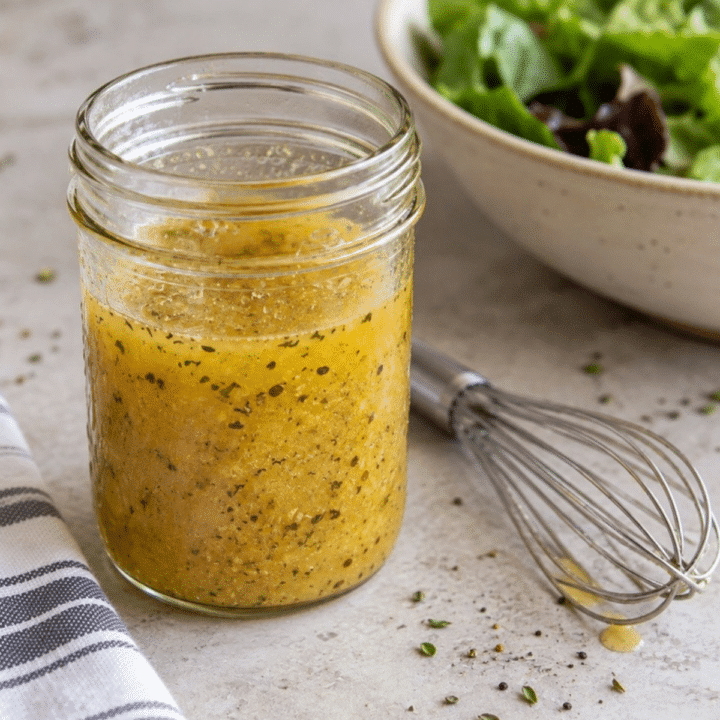
Store your garlic vinegar in the refrigerator, and use both the vinegar and the garlic in salad dressings like our Garlic Mustard Vinaigrette or 5-Minute Vinaigrette Dressing, or in any dish that calls for both ingredients.
Garlic vinegar keeps, refrigerated, for about four months. If mold develops, discard the whole batch rather than trying to salvage it.
Garlic Salt
Place dried garlic (from the drying method above) in a blender and process it until it turns to powder. Add four parts sea salt for each one part garlic powder, and pulse for just a second or two to combine.
Don't process the mixture too long, or it will cake. Store the finished garlic salt in an airtight glass jar, where it will hold its flavor for many months.
Garlic Oil
Fresh garlic and oil are a risky combination unless you follow the food-safety rules above. There are two ways to make garlic oil safely:
Refrigerator method (dehydrated garlic only): Add dehydrated garlic to olive oil in a wide-mouth jar, screw on the lid, and refrigerate. Because dried garlic has no moisture left for bacteria to use, this version is safe in the fridge, though it's best used within a few weeks for flavor. If the oil solidifies, just spoon out what you need with a completely dry spoon.
Freezer method (fresh garlic): Peeled, fresh garlic cloves can be added to oil and stored in the freezer for several months. See the frozen garlic-oil puree instructions above.
What to avoid: Don't store fresh, non-dehydrated garlic in oil in the refrigerator for more than 4 days, and never at room temperature. Stick to the dehydrated-garlic or frozen methods for anything you want to keep longer.
Refrigerator Garlic Pickles
Loosely fill a glass jar with peeled garlic cloves. Add enough red or white wine vinegar to cover the garlic completely, then add about one tablespoon of sea salt per cup of vinegar used.
Dried (not fresh) herbs such as red pepper flakes, bay leaves, and oregano may be added to taste. Dried herbs won't introduce extra moisture the way fresh ones can.
Cover the jar with a tight-fitting lid and shake to distribute the salt and herbs. Refrigerator garlic pickles keep for about four months in the refrigerator, as long as the garlic stays submerged in the vinegar. Toss a few into a salad or onto a sandwich, or browse our vegan salad dressing recipes for ways to use the tangy brine.
Helpful Tips
Start with the best bulbs. Preserving won't improve garlic, so choose firm heads with tight, papery skins and no soft spots, mold, or green sprouts. Set aside any bruised or damaged cloves and use them fresh within a day or two instead.
Label and date everything. Write the contents and the date on every jar, bag, and container, and add a "use by" date to anything involving garlic in oil. It takes seconds and removes the guesswork about whether that jar in the back of the fridge is still safe.
Freeze in small portions. Spoon garlic-oil puree or minced garlic into an ice cube tray, freeze until solid, then pop the cubes into a freezer bag. You can also press the puree flat in a zip-top bag and snap off just what you need. Either way, you only thaw what you'll use.
Roast before you freeze. Roasted garlic freezes beautifully. Squeeze the soft cloves out of their skins, freeze them in small portions, and stir them straight into dishes like Roasted Garlic Mashed Potatoes. Just remember that roasted garlic covered in oil follows the same 4-day refrigerator rule as raw garlic in oil.
Don't panic if garlic turns blue or green. Garlic sometimes takes on a blue-green tint in vinegar or other acidic mixtures. It's a harmless reaction between garlic's natural sulfur compounds and the acid, and the garlic is still fine to eat. Mold, sliminess, or an off smell are different stories: discard the batch.
Frequently Asked Questions
Can you preserve garlic in olive oil?
Yes, but only two ways are safe for longer storage: dehydrated garlic in olive oil stored in the refrigerator, or fresh garlic in olive oil kept frozen. Fresh garlic in oil left in the fridge is only safe for up to 4 days, and it's never safe at room temperature, because of the botulism risk explained above.
How long does garlic last in olive oil?
Fresh garlic in oil keeps about 4 days in the refrigerator, or several months in the freezer. Oil made with dehydrated garlic keeps longer in the fridge, up to a few weeks, since there's no moisture left in the garlic to support bacterial growth.
How do you preserve garlic for a year?
Freezing and drying are your best options for year-long storage. Frozen garlic keeps its quality for about 10 to 12 months, and dried garlic, kept in a sealed, dark container, lasts many months as well.
What's the best way to preserve garlic cloves?
It depends on how you'll use them. Freezing is the simplest option for everyday cooking, drying is best if you want garlic powder or garlic salt on hand, and garlic vinegar or refrigerator pickles give you ready-to-use flavor for dressings and salads.
More Garlic Recipes
Once your garlic is preserved, put it to work in a few of these garlic-forward favorites:
- Broiled Lemon-Garlic Mushrooms
- Spaghetti Aglio Olio with Fresh and Dried Tomatoes
- Spaghetti with Zucchini, Garlic, and Basil
- Garlicky Asparagus with Mushrooms
We hope you've enjoyed learning the various methods of how to preserve garlic and welcome more of your comments, below.

Sam says
I just came across your site when I was looking up my garlic question. I puree garlic in bulk ( the Sams club size botte) with a little salt, put them in small freezer bags and freeze them to use. Recently I found that the 'frozen' garlic in the freezer remains in a semiliquid form ( soft sticky pulp, not frozen) even when the other items in the freezer are adequately frozen! Why does this happen? Should I be concerned about botulism?
Nava says
Sam, this is a good question. This is a guest article written by another author, so I will ask her to respond here as soon as she can. Thanks for stopping by!
Victoria Renoux says
Hi Sam,
I believe it is probably the salt that keeps the garlic from being frozen hard. Think of the salt sprinkled over icy roads in wintertime to melt the ice. Salt is a preservative, and the freezer is obviously cold enough to freeze other foods, so it feels safe to me, but I am a cook, not a scientist.
Sam says
Thanks Nava and Victoria for your replies. I have cooked with this garlic and had no issues ( medically), though my food gets thoroughly cooked when spiced with garlic!
Emily says
I would think that garlic could be refrigerated (or home canned) in citric acid and water. I mixed 1 t. of citric acid in 8 oz. of water and using a pH strip, it registered a solid 1 which is extremely acidic. What does everyone think of this? Would it work?
Richard W says
Emily,
Re: Canning garlic and acidity.
I suggest that you look up UC (University) of Davis "preserving garlic"- it explains that it it EXTREMELY difficult to home can garlic.
Emily says
I decided against the home canning method and am keeping it at 33 degrees with a pH of 1. I have the pH strips and am adding citric acid as needed to keep it at this extremely acid level. I just can't stand the idea of wine flavored or vinegar flavored garlic...but a "lemony" favor is far less objectionable. If I'm still alive in 6 months we'll know it's effective!
Judith Smith says
I have been chopping homegrown garlic and covering with EVOO then storing in fridge for use. We usually use it in a week or two and I repeat the process with fresh garlic from our stored heads, as the jar gets empty. We spoon it out of jar, oil and garlic together for use. Am I putting my family at risk doing this?
Nava says
Judith, I'm not the garlic expert, so I'll get the author of this article to answer your question. Stay tuned...
Victoria Renoux says
Hi Judith,
I think if it is in the refrigerator, and used quickly it may be ok, but frankly, I wouldn't take the risk. Why not add some salt, and vinegar, or place it in the freezer? It will not freeze solid, and not be much different than in the fridge.
mike says
hi
i live in mijas publo southern spain
most restaurants in this part of spain
just put olive oil and garlic in bottles and leave it on the tables at room temperature (can be +35c) untill it is used
i am sure this is not safe but after 12 years i have never heard of any problems!!
John Cowan says
Hullo all,
Have just harvested & dried this year's garlic crop (South Coast NSW) & am currently plaiting like a madman! However I will have lots left over that is not suitable suitable for plaiting & therefore will be looking to preserve some for that short period of each year between the old lot sprouting - Septemberish - & harvesting the next crop - mid to late Novemberish. Has anyone tried preserving peeled garlic cloves in brine? Did it work? What proprtion of salt?
John.
Nava says
John, sorry for the delayed response. I've just gotten so behind on responding this month. I'll contact the author of this post and see if she can weigh in on your question of preserving garlic cloves in brine. Stay tuned ...
Emily says
Well...it's been 7 months and I'm still alive. The best method I've found is indeed using citric acid and maintaining the pH of 1 in plain water refrigerated. The garlic remains firm and the perfect color. Unfortunately I just ran out...so next May I will have to put up a half gallon instead of a quart. It held it's flavor perfectly and was much better than any store bought. Runs a close second to fresh.
Kris Graham says
can someone give me the recipe for using citric acid and water? I have a lot of peeled garlic that I thought I was going to cook, but I know that I will never finish it all.
thanks KGraham
Linda says
Even better than pickling is to culture the garlic cloves (like traditional saurkraut, with whey from yogurt or other culture medium). It is a very old and more nutritious way of preservation. Needs refrigeration after fermentation.
Barb says
I saute garlic in olive oil and then put in jar with more olive oil and refrigerate. How does this sound?
Nava says
Barb, this sounds really good and delicious, though I have no idea how long this would last. Likely it would be used up quickly, as it goes with everything.
MARTHA says
I placed a lot of peeled garlic in a glass jar with olive oil covering it in the refrigerator for about a couple weeks now. I just looked up how to preseve garlic. I'm afraid to use it now. Will it still be good if it has been in the refrigerator with only the oil?
Nava says
Martha, since it has only been a couple of weeks, and refrigerated, it should be OK, though this method is specified more for freezing. I can't say, though, with 100% certainty, so if you feel uneasy about it, don't use them.
Leonardo says
Hello,
Thank you very much for this list of methods. I found it very helpfull. Just one point that might be improved... Botulism is caused by Clostridium botulinum (not by C. butulism).
Thanks again
Leonardo
Nava says
Thanks for this valuable information, Leonardo.
sandiepac says
Yesterday just made a larger than normal batch minced garlic and covered in olive/sunflower oil and refrigerated to give to some friends. After reading, now nervous,should I recall? Can I now add salt or vinegar or both to the refrigerated batch at this stage and still use?
Nava says
Hello — why don't you advise your friends to use this batch within a week, and if it is too much to use in such a short time, to freeze small portions. This should be fine.
Ralph says
I noticed that supermarkets have garlic in jars that seem to be in water,and they are on the store shelves.how sre these preserved, they seem to have a really fresh flavor.
Thank you
Nava says
Hi Ralph — the garlic in jars in supermarkets has some sort of preservative to keep it fresh. One that is used is phosphoric acid, the same ingredient that's used in cola drinks. While it's probably safe in minute amounts, phosphoric acid is not considered a healthy ingredient and too much can lead to side effects. Before you consider buying, see what is used as a preservative and do a quick search on it!
Cheryl says
I'm addicted to garlic stuffed olives.I realized I like the garlic better than the olives. Would it work to buy cheap bottled olives and put the garlic in the olive brine? Would it work for pickles too? Should I heat the brine? Blanch the garlic? Any ideas.
Also, the place I buy the stuffed olives has gotten rid of the brine & covered in olive oil. After reading about not storing garlic & olive oil is this olive garlic & olive oil combo safe?
naomi chumo says
thank you guys for all your comments. They are all very informative
Debbie says
Hello, what about lacto fermentation. Myself and others in our off grid community have been lacto fermenting a lot of our veggies as we believe it is excellent for our stomachs. We put 2 tablespoons sea salt to one quart of water . This works well. You can do a search to find wonderful recipes.
joyce says
how long can u preserve garlic bn it in oil, salt or vinegar
Nava says
Debbie, sorry for the lag in approving your comment, it went under my radar. Thank you so much for this suggestion, which sounds very simple and effective.
Nava says
Joyce, can you clarify your question? It's hard to understand what you mean. Thanks!
Wyatt says
When freezing garlic, how long can it be kept in the freezer?
Mel says
Where can I find ph test strips thta measure to a 1. most start at 4.5?
Nava says
Hi Mel -- Amazon has a bunch of choices, though I wouldn't know which to recommend: http://www.amazon.com/s/ref=nb_sb_noss_1?url=search-alias%3Daps&field-keywords=ph+test+strips
Nava says
Wyatt, this is a really good question, but I couldn't find a straight answer (and I couldn't reach the author of this article). Like all fresh foods, probably the sooner used, the better. My semi-educated guess is 1 to 3 months. If you find anything more specific, can you come back and post it here? Thanks!
Eve says
I am roasting my garlic cloves drizzled with EVOO and sprinkled with salt and pepper. Can I freeze them when cooled for later use in dishes?
Lorna says
I have harvested a lot of garlic this summer and have read all the above comments on preserving, I am going to try the puree and oil method and freeze in ice cube trays so I can pop a small or large amount straight into my cooking, I have in the past simply put the garlic into olive oil with peppers and herbs, but will stop this method now.
Nava says
Eve, this sounds like a good way to store garlic in the freezer. Just make sure that there is as little air as possible in your container. My best guess it that these will keep well like this for 3 months.
Nava says
Lorna, this sounds like a good plan; as I said in the comment above to Eve, just make sure that you cover this in such a way that there is as little air as possible, and that no air can get in, to avoid freezer burn.
mick says
Hi all I am going to try several methods of preserving garlic as has been described but will vacuum pack for the fridge and freezer methods.
Green Thumbalina says
After peeling my freshly harvested garlic and then minceing, it was placed in a steralized jar and put in the fridge, no salt, no oil..... I used this very large jar of garlic, over a period of 18 months, whenever fresh cloves were not available, this was always used cooked in dishes. All members of the family and visitors alike are still alive and very healthy....
Azul says
I am almost 40. My whole life I saw my mom and aunts buying garlic by bulk and making into puree with canola oil. Then put it into a glass container and stored in the refrigerator. I am doing the same but using EVOO instead the canola. We all are very alive and healthy. I am not saying it is the right thing to do, I j ust wanted you guys to know it.
philip litrel says
After experimenting with most of the mentioned methods of preserving garlic I have ended up just roasting fresh peeled cloves with evoo and salt & pepper and refrigerating. When I need garlic just a quick chop and and then used in any application. I find that the previously roasted has a sweeter taste and lacks the bitter bite that I get ( usually just the smell) sometimes when sauteing fresh uncooked garlic. So I buy bulk peeled garlic (US grown only) and roast and refrigerate for future use Garlic is GREAT!
GEORGE WASHINGTON LR says
I have a large jar of granulated garlic which I cannot use all at once.to keep it I am thinking about putting it in storage bags as I have a food saver and I can get the air out of the bags---will that work geneorge
Nava says
That would probably work … might be good to store in small portions in the freezer.
Bj says
I had a very good batch of pickled garlic! I finished it but now i put raw garlin in the pickle juice! Will this be ok?
Nava says
That should be fin, BJ - I almost always re-use pickle juice for at least one more batch of something or another.
nikolas says
Lacto fermentation is the best way to store foods and was used for millenia around the world till big business came along and wanted us under their control so they can bleed our bank accounts if we just rely on them and their unhealthy products that is dead food, lacto fermented food is living and our bodies just love it.
My grand mother did this to all her vegetables and lived over 100 years in health.
Cheryl Smith says
I keep ginger in the refrigerator in a small jar of soy sauce. Wouldn't this work for garlic as well? Thank you!
Nava says
Cheryl, I suppose that the salt in the soy sauce would be a means of preserving garlic (especially for those who don't need to avoid sodium!) but I have no experience with this. Let us know if this works for you, and perhaps someone else will weigh in as well.
Barbra says
Helpful article, totally what I was looking for.
Diana says
I've seen lots of articles about drying different things in your oven, but in my 50 years, I've never seen an oven that you can set below 170, so why all these articles about setting ovens to 130 and below? Ridiculous.
Lewis says
What sort of oven have you got? Our Neff oven starts at 50.
Diane says
Hi there
Does anyone have any ideas/experience with preserving roasted garlic??? Might sound odd, but I have replaced mashed potatoes with cauliflower mash (aka cauli-rice or faux-tatoes) and my recipe says to flavour it with roasted garlic. I tried fresh garlic and as much as I love garlic - ew - it's way too intense and oniony tasting. I don't want to have to turn the oven on to roast a few cloves of garlic each time I want that flavour so I'm looking for bright ideas.
Merle says
I just roast as many cloves as I want, push them out of their jackets, mash them. Using a cookie sheet or cardboard, Put tbsp of the mashed, roasted garlic on plastic wrap. I leave an inch between the mounds. Put another piece over the mounds. Put in freezer. When frozen, remove the mounds from the cookie sheet. Fold them up. Put in a quart freezer bag & take out as much or as little as you need.
lenna says
Our new oven has a dehydrate setting I wanted
To make that clear for (PM) so no it's not rediculous:)
Barbara says
Is it safe to freeze and store roasted garlic with no oil?
Cheryl says
Thank you so very much for all your wonderful ways of preserving garlic! I have a huge bowl of the cloves we grew this year in the garden that I must preserve! Thank You!
em says
my ancient Jenn-Arie has a "warm" setting,and I checked it with an Oven thermometer I can keep it consistently at several temps (my choice) below 170, and dry even a bit quicker if I prop the door open with a wooden spoon . I use a sliding metal window screen and dry tons of stuff,peppers, herbs, kale, celery, turnips, etc beautifully!
Tweet says
This may seem like a completely ignorant question but could someone please further explain the ratio of garlic to oil? I have a large amount of garlic that I want to puree with EVOO. If I used 1 cup of garlic would I use 2 cups of oil? Any help would be appreciated. Sincerely, a novice cook.
KT says
Love these ideas , just wanted to say thank you for all your work and knowledge and also for sharing this . I tried the dehydrating in my oven and it was perfect . I used wooden clothes pins to keep the cloth on the rack . My oven is digital so I can set it at any temp . My older dial setting oven wouldn't , thank u again . I found some garlic regrowing itself in the bag so I've planted those in the house . Soon I'll have fresh garlic again ,
Thora says
I have always made olive oil flavoured with garlic or roasted garlic. Provided you do NOT leave the garlic in the oil, you can store it at room temp. I make it by warming oil on low, and dropping the bulb of garlic in it. When the bulb is golden (for fresh garlic) or darker (for roasted garlic), I take it out (do not let it burn). Let the oil cool and pour into sterilized bottles. The remaining oil will keep as long as any other olive oil.
John says
Diane,to roast a few cloves without turning on the oven simple toss the unpeeled cloves into a skillet over medium heat on the stove for 10 to 15 minutes turning often till the skins start to blacken. Peel and mash.
Randall Sieunath says
Hello I am trying to package garlic for resale how do I prevent the peeled garlic from turning blue/green. Is there a preservative that I can use similar to sodium benzoate to help preserve it, Need to know urgently thanks.
Pat says
I have a recipe for Lebanese Garlic Sauce and it states that the recipe, which makes 2 cups will keep in the refrigerator for one month. I see that there are many recipes on the web when I google it and they all do not say anything about this garlic sauce being unsafe. Do you have any advice on this issue?
Nava says
Pat, I feel like this is out of my realm of expertise. Unless there is some preserving agent in the sauce, like vinegar or lemon, you may want to freeze it in small portions and thaw one small portion at a time to use.
Ken says
Regarding the temperature for drying garlic and why it needs to be lower than most ovens can cope with I read an article that explained that the essential oils of garlic change above 140 degrees and you lose most of the goodness of garlic. Technnically crushing or chopping garlic releases an enzyme called alliinase that catalyzes the formation of allicin. Allicin rapidly breaks down to form a variety of organosulfur compounds. Use of microwaves or temperatures above 140 degrees prevents this chemical reaction so the goodness is not created. Incidentally moistening your dried garlic powder in a little water before cooking will result in greater production of allicin. So if you don't own a dehydrator and your oven's lowest temp is 170 like mine then wait for a cool day (so you can reap the benefits) and leave the oven door open a bit to keep the temp at less than 140
Cheryl says
I LOVE garlic stuffed olives. Actually I Love the garlic from the olives. Does anyone know if its possible to use the brine from olives to pickle or preserve garlic? has anyone tried it?
Mary says
both my electric oven and wood burning range can be used to dry garlic. The oven starts at 50 deg and with the range if you wait until the fire is low and leave the oven door slightly ajar, all your herbs, fruits, veg etc are dried by morning and retain their colour.
gene prepchuk says
can I freeze peeled garlic whole
thanks for your time and answer
jef eatchel says
can you store garlic shallots and black pepper in wine
Nava says
Jef, this would probably be good for a few days in the fridge, but beyond that, I'm not sure how long it will last.
Nava says
Jef, this is a good question but I'm not sure of the answer. I'd think it could be stored like this in the fridge for a week or so, or in the freezer for a few months.
Ann says
Is it safe to freeze and store roasted garlic with no oil? This was asked by Barbara but got no response.
Althea says
I want to know when preserving garlic, whether in oil or vinegar - do you have to heat/boil the oil/vinegar and then cool
it down. Thanks
Nava says
Althea, I don't think it's necessary to boil vinegar or oil. Just use as is.
Nava says
Hi Ann -- it seems like it's actually safer to store garlic in the freezer with no oil. Here's a full article on the oil/no oil technique and how to avoid the risk of botulism! http://www.hgtvgardens.com/freezing/can-you-freeze-garlic-cloves
Lynette says
Thanks lots for this. Had all the detail I wanted and also stopped me from possibly poisoning myself and family. Well done
Jim Koehler says
Hello!
Very nice site you have here...
...keep up the good work!
If the cloves acquire a bluish tinge while in Rice Wine vinegar after a week, what does that condition indicate?
Tnx...
...Jim
Nava says
Jim, I would be suspect of garlic that acquires a bluish tinge ... not sure exactly what that means, but it doesn't sound good!
Jim Koehler says
Good advice....
However, I'm going to let it stand and see what happens.
Wish me luck!
(noooo...I'm not going to ingest it!)
...Jim
Philip Litrel says
what about preserving garlic in soy sauce??
and how?
Nava says
Philip, that's an interesting idea, as soy sauce is so salty, but unfortunately we haven't tried this, so can't say if it works or if it's safe to do. Maybe experiment with a few cloves and see what happens after a few weeks?
Larry W Mayes says
While my daughter avoids garlic like a vampire, I would eat it in place of Halloween candy. I would prefer a Balsamic vinegar for storage in my refrigerator. Attributing garlic to great cholesterol numbers, does this seem reasonable from a guy who fries up bologna for an occasional sandwich?
Alvin says
Hi, Does anyone knows how to store Chili Garlic Sauce? and how to prolong shelf life? i prepare my very own chili garlic sauce.
birdie says
What is the shelf life for keeping garlic in the freezer?
Rutledge says
Discolored Garlic
Garlic contains sulfur compounds which can react with copper to form copper sulfate, a blue or blue-green compound. The amount of copper needed for this reaction is very small and is frequently found in normal water supplies.
Garlic Can Turn Blue
Raw garlic contains an enzyme that if not inactivated by heating reacts with trace amounts of sulfur in the garlic and copper from water or utensils to form blue copper sulfate. The garlic is still safe to eat.
Lamont says
I don't know if anyone else has done this but I pack peeled garlic in jars and then heat honey and pour over to top. screw on lid and then refrigerate for 6 months or longer.
garlic flavor and water go into solution and garlic absorbs sweetness. yummy honey is oerfect preservative.
Cheryl says
I have a recipe for preserving garlic handed down from generations must be ok as no one has been harmed yet
1/2 lb. garlic cloves
2 cups vinegar (pickling or distilled)
2/3 cup sugar
1 tsp. kosher or pickling salt
red pepper flakes
1/2 tsp. mustard seeds and 1/2 tsp. celery seeds
place seeds in a cheese cloth bag tied
bring vinegar sugar salt and seed bag to a boil place pepper flakes into sterile jars fill with garlic cloves remove and discard the seed bag cover the garlic with the vinegar seal and store in pantry
Nava says
This sounds wonderful, thanks!
Jeannette says
I put garlic in white vinegar for a week. Went to use them they turned green???????are they still good???????
Jim Koehler says
Jeanette?....See post #30
...Jim
Lita Watson says
I think that if we preserve the garlic with boiled vinegar and cloves peeled, it can be kept in the refrigerator for up to a year.
Yael Tamar says
What a fantastic ideas!! I go through so much garlic, so all of these would be great to give a try. Thanks for sharing!
Dee Turner says
U.C. Davis recommends 1tablespoon of citric acid in 2 cups of warm water (otherwise the crystals won't dissolve), added to 2/3 cup of chopped garlic. I put this in the fridge and have used it for up to two months with no adverse effects. I do drain the liquid from the garlic just prior to use.
Bonnie Boudreaux says
My method for peeling fresh garlic:
Put whole pod of garlic in plastic bag, I bought a rubber mallet (hammer just smashed too much cloves). I then add garlic pods to very hot tap water for about 10-15 minutes, after time, I cut root end first, and 98% of the time garlic peeling just EASILY sides off. Excellent way for me, especially since I use lots of garlic in my cooking.
Rosslyn says
Hi
I know I can preserve ginger in cooking cherry
Can I do the same for garlic and turmeric
Would be interesting
Nubia Cree says
Up up up, good