
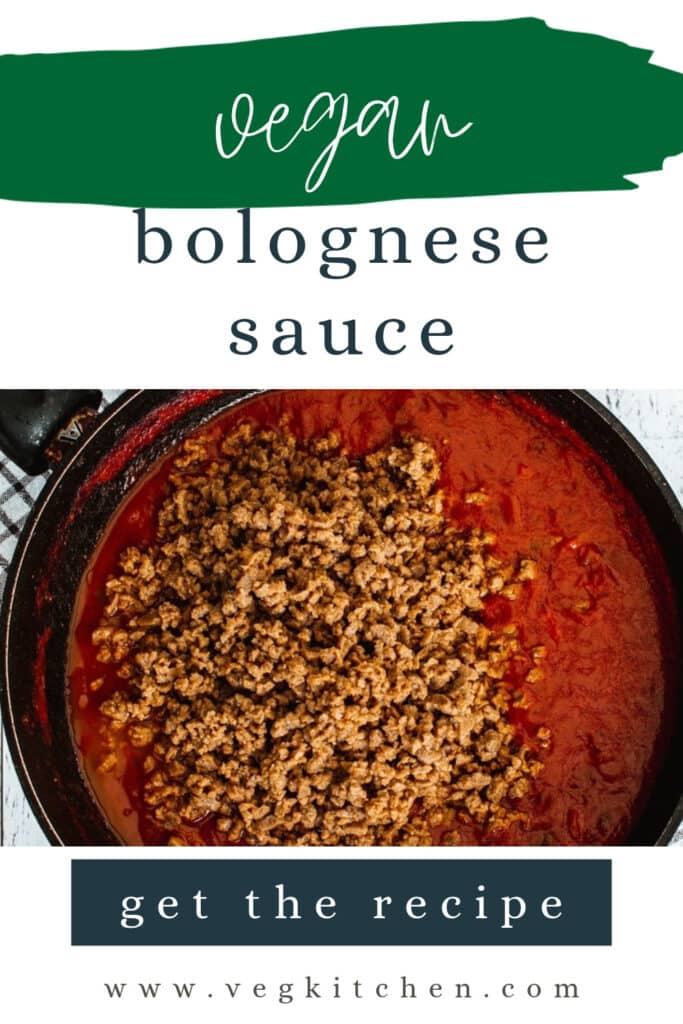
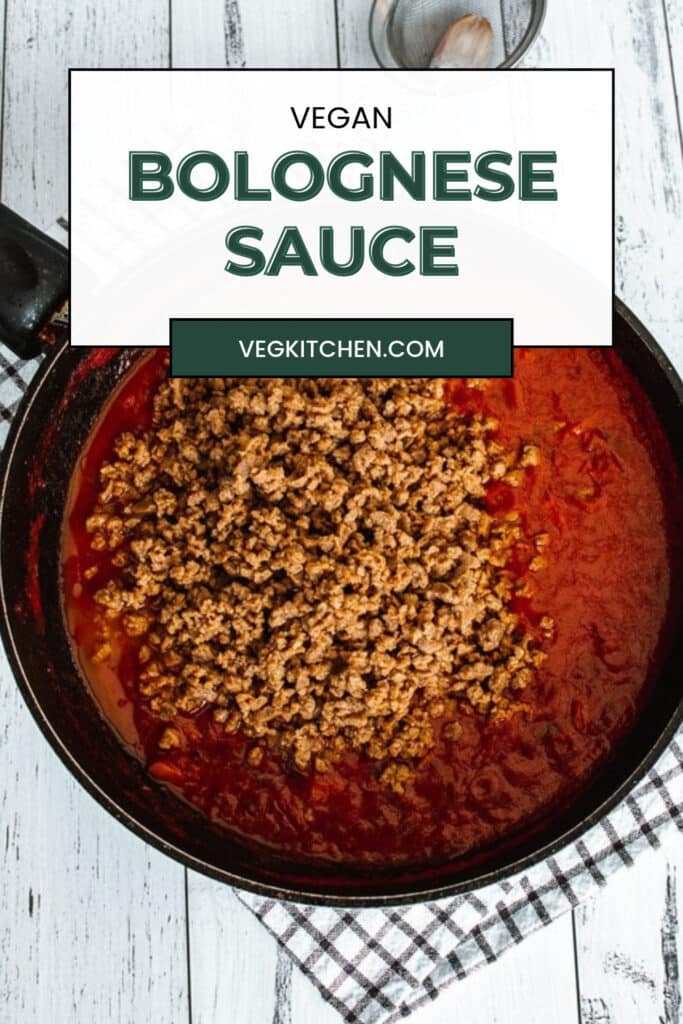
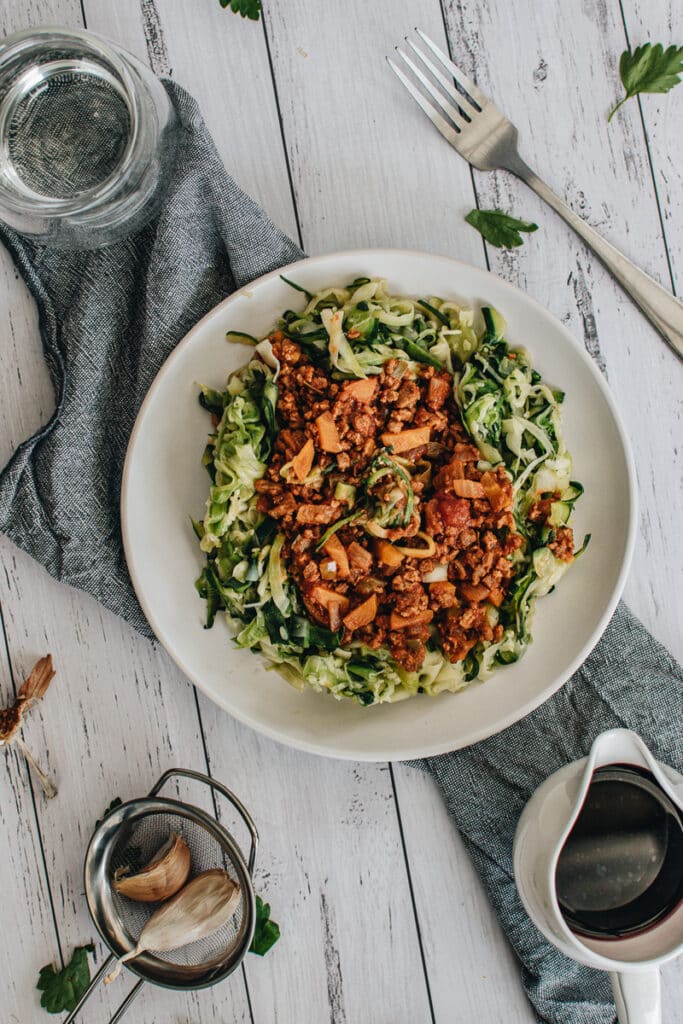
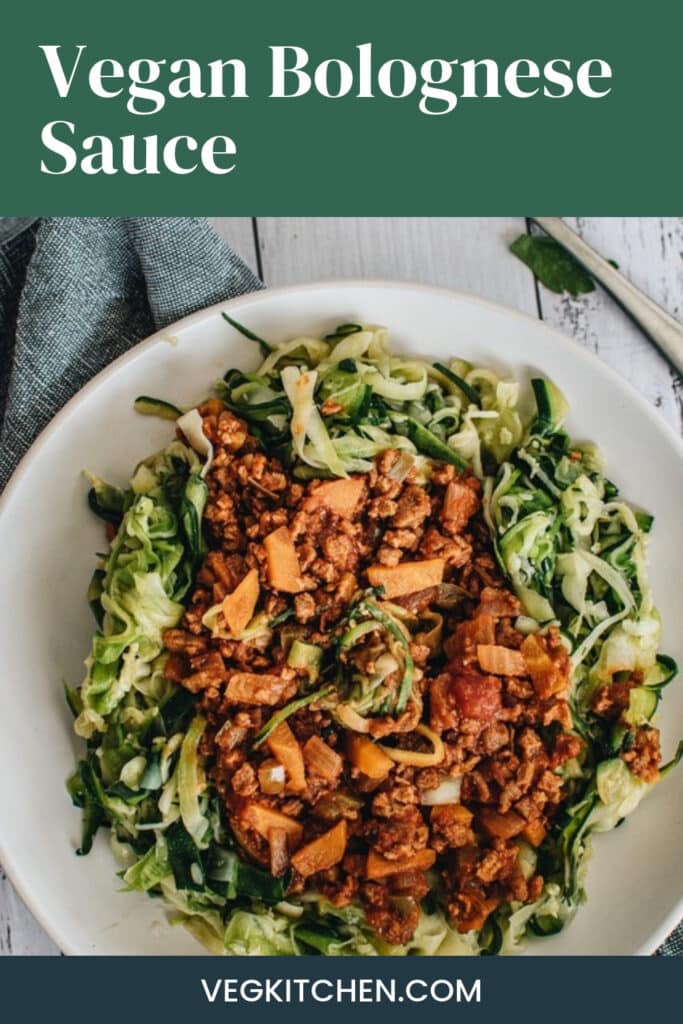
This Vegan Bolognese Sauce is a thick, deeply savory tomato and red wine sauce with a hearty texture from textured soy protein. It tastes like it simmered all afternoon, but it's on the table in under an hour.
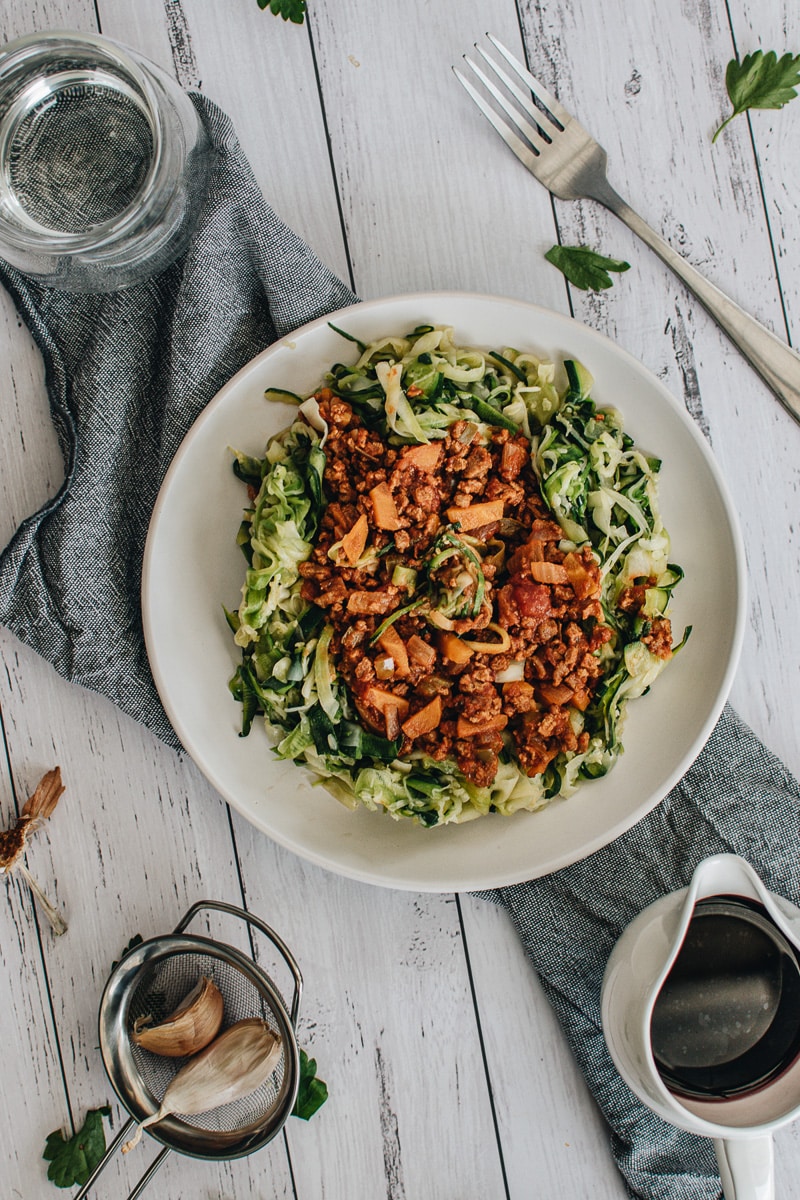
A traditional Bolognese gets its body from ground meat that cooks low and slow for hours. Here, textured soy protein does that job. Once it's hydrated, it has the same fine, crumbly bite as ground beef, and because it doesn't need to brown or break down, the sauce only has to simmer long enough for the vegetables to soften and the wine and tomatoes to come together.
The flavor starts with onion, carrot, bell pepper, and garlic sautéed in olive oil, then gets its depth from a splash of red wine, paprika, and dried oregano. A spoonful of maple syrup rounds off the acidity of the tomatoes. Every ingredient is plant-based and naturally gluten-free, so the sauce suits almost any table. This is a great one to make on Sunday and eat all week long!
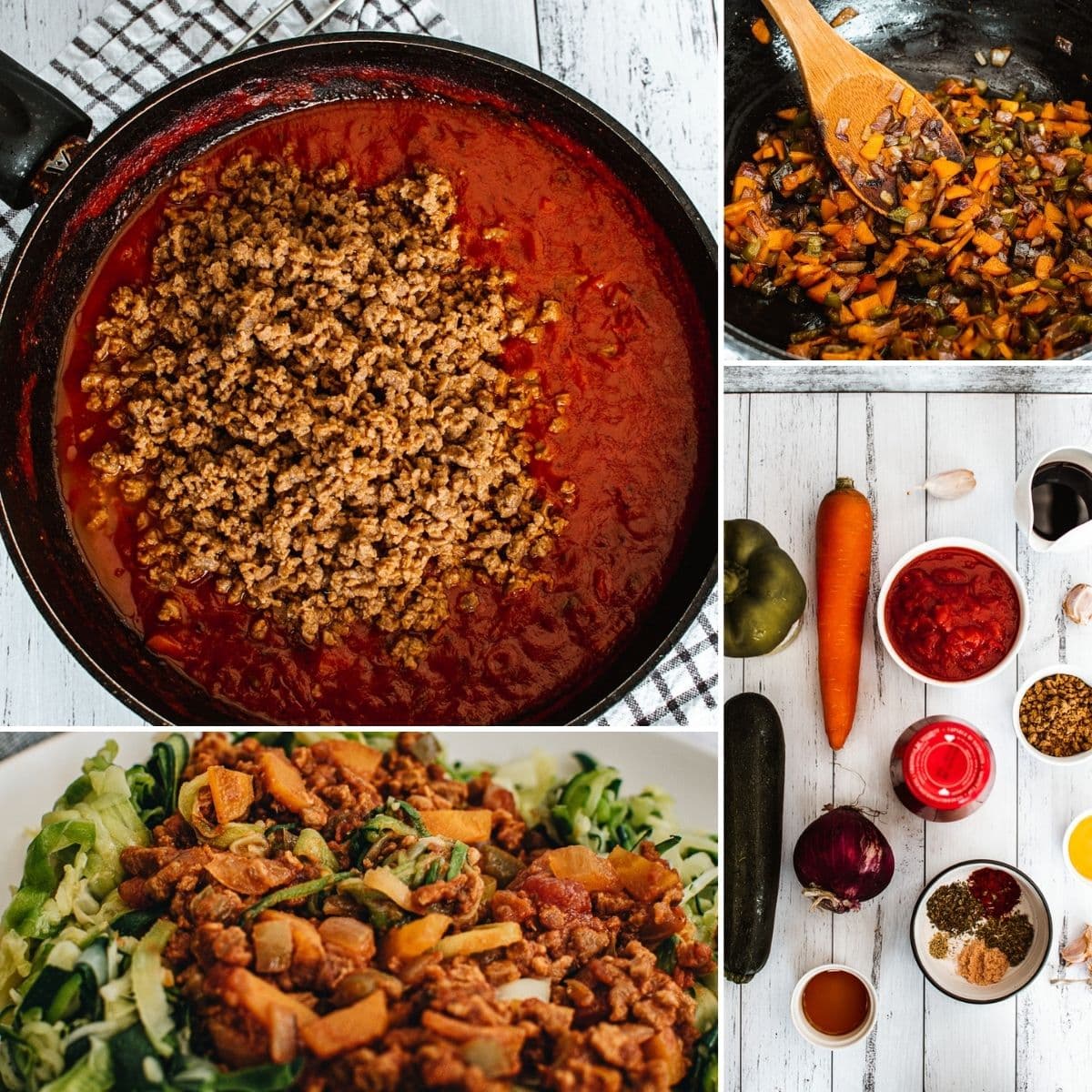
Key Ingredients & Substitutions
- Textured soy protein. Also sold as TVP (textured vegetable protein), these dry soy granules are the "meat" in this sauce. They're inexpensive, keep for months in the pantry, and add plenty of protein. Look for the small granules, like NOW Foods organic textured soy protein, rather than large chunks. To skip soy, see the lentil and mushroom options under Variations, or use a store-bought plant-based ground "beef" product.
- Vegan red wine. Wine adds a rich, slightly fruity depth that makes the sauce taste slow-cooked. Not every wine is vegan, which comes as a surprise to many people, so check the label or a guide like Barnivore. A dry red such as Chianti, Merlot, or Sangiovese works best. To skip the wine, use the same amount of vegetable broth plus 1 teaspoon of balsamic or red wine vinegar for a little brightness.
- Maple syrup. Just a tablespoon balances the acidity of the tomatoes and wine without making the sauce taste sweet. Use pure maple syrup, such as this Grade A dark robust maple syrup. Agave nectar or a teaspoon of coconut sugar works in a pinch.
- Diced tomatoes and tomato sauce. A 14.5-ounce can of diced tomatoes gives the sauce some texture, while the tomato sauce (puree) makes it thick and smooth. Fire-roasted diced tomatoes are a good choice to add a subtle smoky note.
- Onion, carrot, and bell pepper. This trio builds the sweet, savory base. Use a red pepper for a sweeter sauce or a green pepper for a slightly more grassy, savory one. A stalk of finely diced celery is a good addition if you have it.
- Paprika and dried oregano. Classic, warming seasonings that make the sauce taste distinctly Italian. Sweet paprika is what the recipe uses, but smoked paprika is also a good choice for a deeper smoky flavor.
Helpful Tips
Chop the vegetables small. Dice the onion, carrot, and pepper into small, even pieces, about ¼ inch. They'll soften in the same amount of time and melt into the sauce instead of sitting in it as chunks, which gives you that classic Bolognese texture.
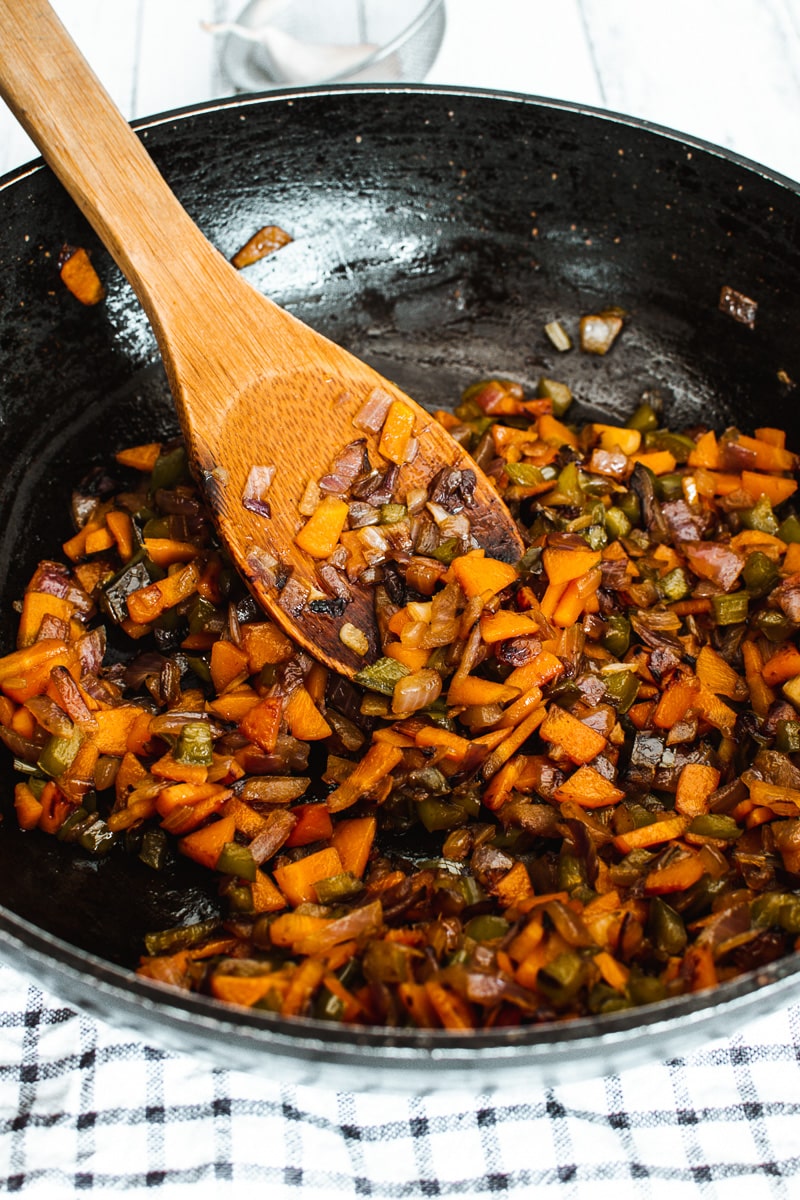
Don't rush the sauté. Give the vegetables the full 10 minutes over medium heat, stirring now and then. When the onion is soft and translucent and the carrot has started to sweeten, the sauce has a much deeper base of flavor.
Let the wine cook down. Simmering the wine with the spices before the tomatoes go in cooks off the harsh alcohol edge and concentrates its flavor. If the pan smells sharp and boozy, give it another minute or two.
Hydrate the soy protein fully. Textured soy protein should be soft all the way through, with no crunchy bits. If some granules are still firm after soaking, add a splash more hot water and wait a few more minutes, then drain off anything it hasn't absorbed so the sauce doesn't turn watery.
Season at the end. The canned tomatoes and tomato sauce already contain salt, so taste the finished sauce before adding more. A pinch of salt and a few grinds of black pepper right before serving make the flavors pop.
Variations
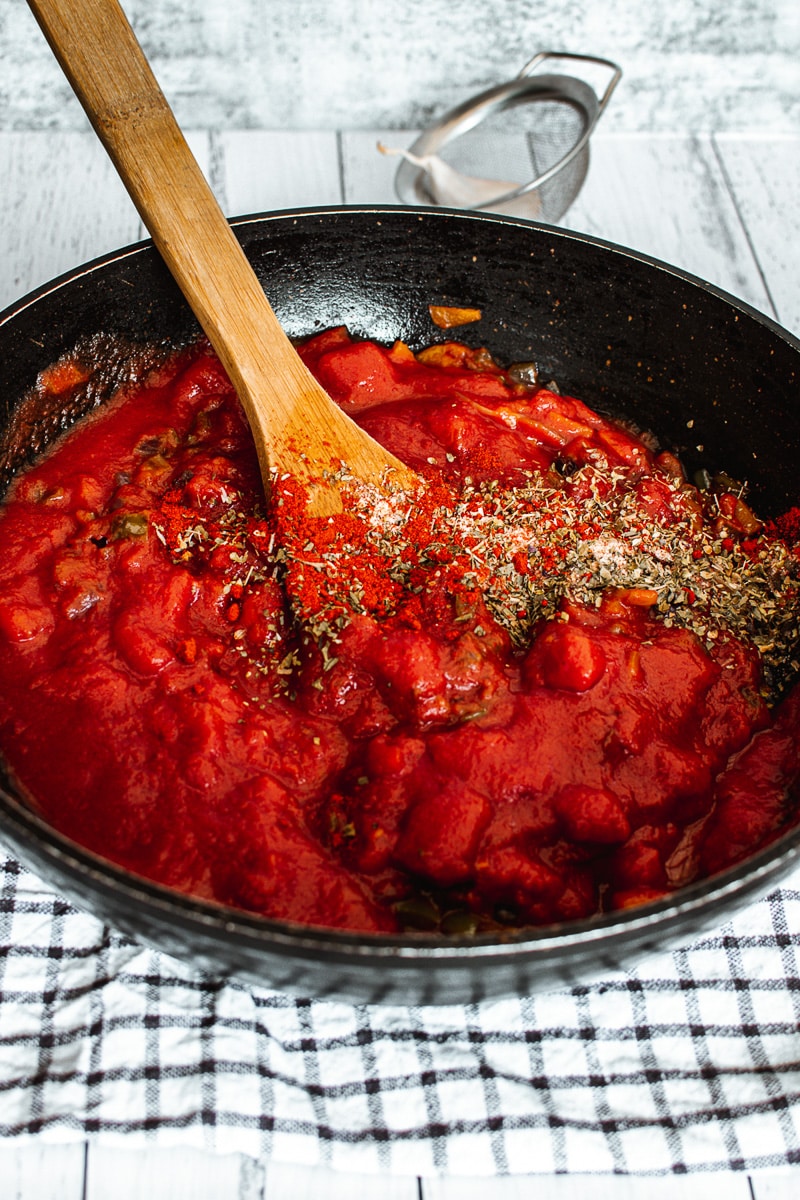
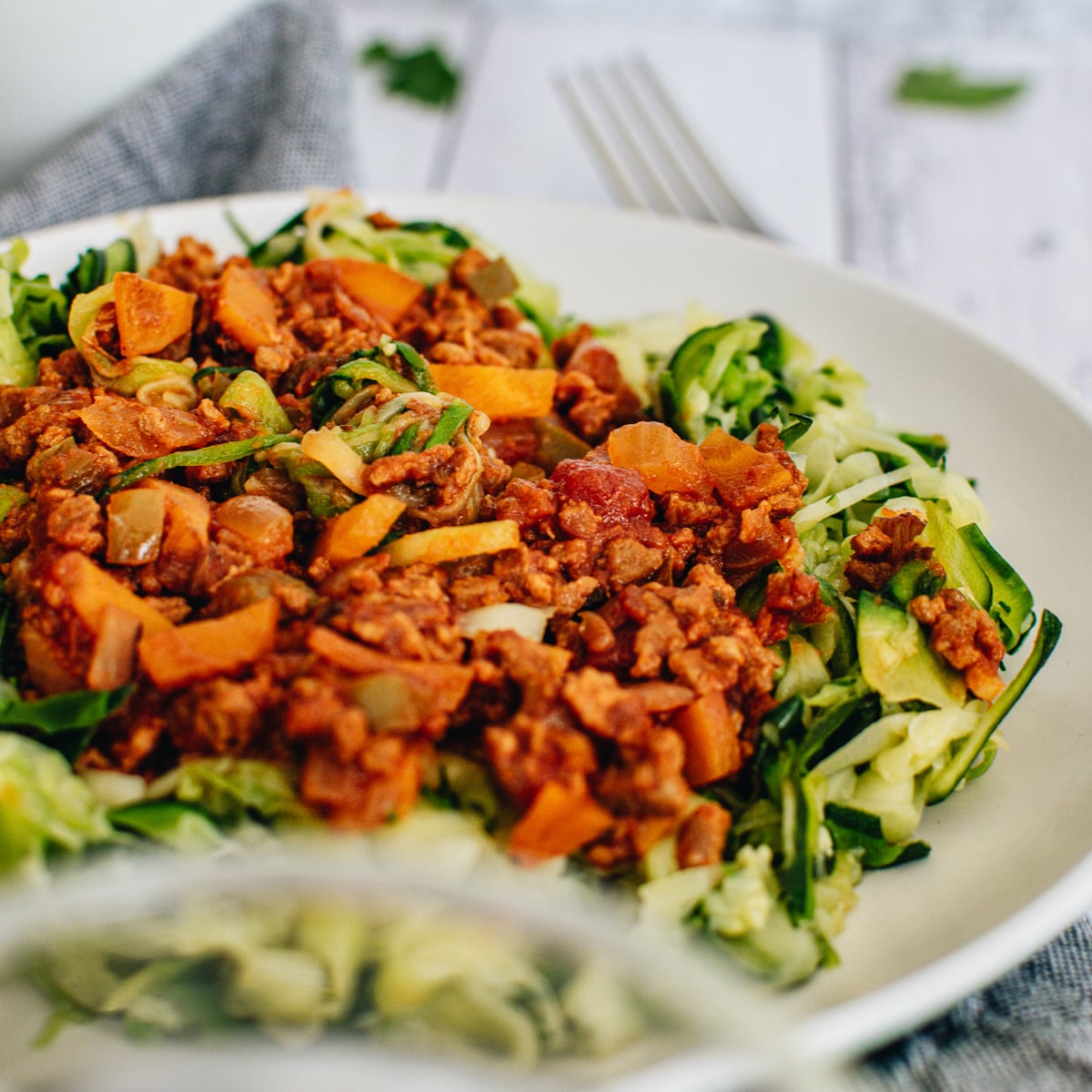
- Veggie noodles. Pasta is great here, but the sauce is just as good over noodles made from zucchini, summer squash, sweet potatoes, carrots, or beets. Buy them ready-made or make your own with a spiralizer, as in these vegan zucchini noodles with vegan Bolognese.
- Fresh toppings. Finish each plate with halved cherry tomatoes, torn fresh basil, and a sprinkle of vegan Parmesan for a meal that looks as good as it tastes.
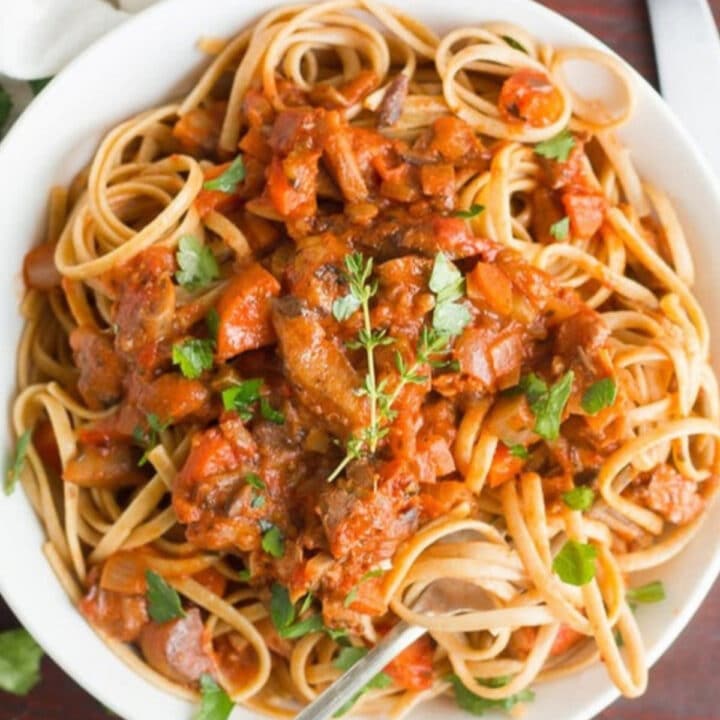
- Mushroom Bolognese. Swap the soy protein for finely chopped mushrooms, or try our vegan mushroom Bolognese, which uses mushrooms in place of the meat.
- Lentil Bolognese. Use 1½ cups of cooked brown or green lentils in place of the textured soy protein for a soy-free sauce with an earthy flavor.
- Extra vegetables. Stir in a finely diced zucchini with the other vegetables, or a couple of handfuls of baby spinach at the very end.
- A little heat. Add ¼ to ½ teaspoon of red pepper flakes with the paprika for a gently spicy sauce.
Serving Ideas
Bolognese is traditionally served with wide, flat noodles like tagliatelle or pappardelle, which hold onto every bit of the sauce. Spaghetti, rigatoni, and penne are all good too. Choose an egg-free pasta (most dried pasta is) or a gluten-free one to keep the whole meal gluten-free.
The sauce isn't just for pasta. Spoon it over creamy polenta or a baked potato, layer it into a vegan zucchini lasagna, or toss it with pillowy sweet potato gnocchi for a cozy, hearty dinner.
On the side, a crisp green salad or a vegan kale Caesar salad and some warm garlic bread are all you need.
Storing & Freezing
Let the sauce cool, then keep it in an airtight container in the refrigerator for up to 4 days. It's even better the next day, once the flavors have had time to settle. Store any leftover pasta separately so it doesn't soak up all the sauce.
This sauce freezes beautifully. Portion it into freezer-safe containers or bags, leaving a little room at the top, and freeze for up to 3 months. Thaw it overnight in the refrigerator, then reheat it in a saucepan over medium-low heat, stirring often and adding a splash of water if it has thickened too much.
Vegan Bolognese FAQs
Can you overcook Bolognese?
Not really. Within the bounds of safety, of course. A longer simmer only deepens the flavor. Just keep the heat low, stir now and then so nothing catches on the bottom of the pot, and add a splash of water if the sauce gets too thick.
Do you simmer Bolognese with the lid on or off?
For this vegan version, a lid is fine. It keeps the sauce from reducing too quickly while the vegetables and tomatoes soften. If you'd like a thicker sauce at the end, take the lid off for the last few minutes.
Why is my Bolognese sauce watery?
Usually it just needs a little more time. Simmer it uncovered for 5 to 10 minutes to let the extra liquid cook off. Also make sure you drained the soy protein well, since leftover soaking water thins the sauce.
More Vegan Pasta Sauces & Noodle Dishes
If you love this sauce, here are a few more you might enjoy:
- Vegan Mushroom Bolognese
- Vegan Zucchini Noodles with Vegan Bolognese
- Vegan Vodka Pasta
- Vegan Sweet Potato Gnocchi
Recipe
Vegan Bolognese
Ingredients
- 1 cup textured soy protein also called TVP
- 2 tablespoon olive oil
- 1 medium onion finely diced
- 1 medium carrot peeled and finely diced
- 3 cloves garlic minced
- 1 teaspoon paprika
- 1 teaspoon dried oregano
- ½ cup vegan red wine or vegetable broth, see notes
- 1 tablespoon maple syrup pure
- 1 can diced tomatoes 14.5 ounces (411 g), with their juices
- 1 cup tomato sauce
- ½ red or green bell pepper seeded and finely diced
- 1 cup water for hydrating the soy protein
- Salt & black pepper to taste
Instructions
- Finely dice the onion, carrot, and bell pepper, and mince the garlic. In a large pot or deep skillet, heat the olive oil over medium heat.

- Add the onion, carrot, bell pepper, and garlic and sauté for about 10 minutes, stirring occasionally, until the onion is soft and translucent. Stir in the paprika, dried oregano, and red wine. Bring to a simmer, cover, and cook for 10 minutes to let the wine cook down.
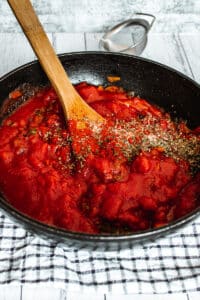
- Add the diced tomatoes with their juices, the tomato sauce, and the maple syrup. Stir to combine, cover again, and simmer over medium-low heat for 10 to 15 minutes, stirring now and then, until the tomatoes have softened and the sauce has thickened.
- Meanwhile, bring the water to a boil in a small saucepan. Stir in the textured soy protein, take the pan off the heat, and let it stand for 5 to 10 minutes, until the soy protein is tender all the way through. If any granules are still firm, add a splash more hot water and wait a few minutes longer. Drain off any water it hasn't absorbed in a fine-mesh strainer.
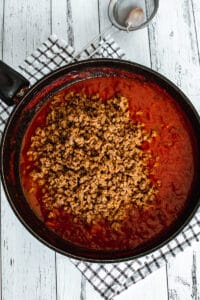
- Stir the hydrated soy protein into the sauce and simmer for 2 to 3 minutes, until heated through. Season to taste with salt and black pepper, then serve over your favorite pasta or vegetable noodles.
Florina-Maria says
My 79 year old auntie who usually hates anything meat free, LOVED IT. She had 2 extra portions. Thank you! Delicious and fast