

Here's a quick and easy sandwich idea that can save you in a pinch when you need a quick lunch or dinner. Mashed avocado is mixed with tomato and lemon or lime and topped with a sprinkling of your favorite bean. Keep more of the beans nearby for extra protein. Serve with sweet or regular potato and salad (or a warming soup) for a simple and gratifying meal! [Read more...]
Search Results for: soup
Vegan Butternut Squash Smoothie
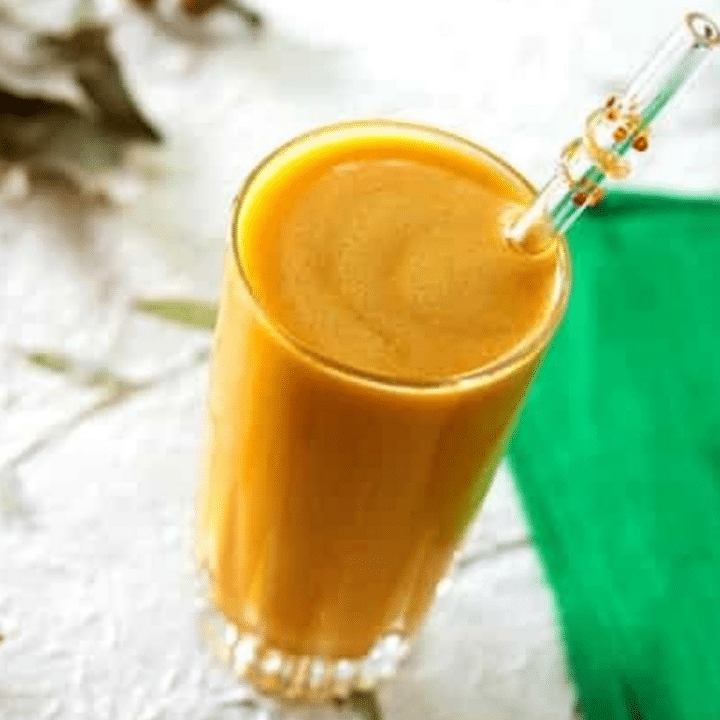
This velvety vegan smoothie tastes like a liquid slice of pumpkin pie — no oven required. Warmly spiced with cinnamon and ginger and packed with vitamins A and C, this butternut squash smoothie is the one you'll want on repeat all fall and winter.

Photos by Hannah Kaminsky of Bittersweet Blog.
Key Ingredients & Substitutions
- Butternut squash. Well-baked and mashed squash gives this smoothie its silky texture and naturally sweet, almost pie-like flavor. Sugar pumpkin or golden acorn squash both work well as substitutes — just use a good, sweet squash.
- Vanilla nondairy milk. Sweetened or unsweetened both work, and any nut milk is fine here. Sweetened milk means you likely won't need to add extra sweetener at all.
- Orange juice. Fresh-squeezed is best for brightness, but any good-quality OJ will do.
- Cinnamon and ground ginger. This classic warm-spice combo is what makes the smoothie taste like pumpkin pie in a glass. Swap in ½ teaspoon grated fresh ginger if you want a more distinct, peppery kick.
- Cashew or almond butter. Adds richness and a dose of healthy fat and protein so the smoothie feels like a real breakfast, not just juice.
- Vanilla extract. Rounds out the spices and enhances the natural sweetness of the squash.
- Liquid sweetener (optional). Stevia, agave, or maple syrup — but taste the smoothie first. You may not need any, especially if you're using sweetened nondairy milk.
Helpful Tips
Bake the squash ahead of time. This smoothie relies on well-baked, mashed butternut squash for its smooth texture and mellow sweetness, so bake a squash (or two) whenever you have the oven on for something else and freeze the extra puree in single-cup portions for whenever a craving hits.
Cutting a raw squash is the hardest part — prebaking makes it easy. See VegKitchen's video on how to prebake a whole butternut squash so it becomes simple to cut in half and scoop. Bake it a little longer than the video instructs; you want to be able to pierce the narrow neck very easily with a knife.
Using a high-speed blender? You can skip baking altogether and start with about 1 ¼ cups raw butternut squash chunks instead. A powerful high-speed blender like a Vitamix will break the raw squash down completely; if the mixture gets a little warm from the blending friction, just add a few ice cubes to cool it back down to smoothie temperature.
Taste before you sweeten. Between the squash, orange juice, and vanilla nondairy milk, this smoothie already has a lot of natural sweetness built in. Blend first, taste, and only add liquid sweetener if it actually needs it.
Chill your ingredients for a frostier texture. Using cold nondairy milk and orange juice straight from the fridge (or squash puree that's been chilled after baking) gives you a thicker, more milkshake-like smoothie without watering it down with ice.

Variations
- Swap the squash. Sugar pumpkin or golden acorn squash both make excellent substitutes for butternut, as long as the squash is good and sweet.
- Add a frozen banana. Blend in half a frozen banana for extra creaminess and natural sweetness (you may not need any liquid sweetener at all).
- Boost the protein. Stir in a scoop of your favorite vanilla or unflavored plant-based protein powder to turn this into a more filling meal.
- Make it a smoothie bowl. Use less liquid and pour the thicker result into a bowl, then top with granola, pepitas, and a drizzle of maple syrup.
- Deepen the spice. Add a pinch of ground nutmeg or clove along with the cinnamon and ginger for a more complex, pie-spice flavor.
- Make it extra green. Blend in a handful of baby spinach; the color mellows into a warm gold-green but the flavor barely changes.
Serving Ideas
This smoothie is filling enough to be breakfast on its own, especially with the almond butter and squash providing some staying power. For a heartier morning, pair a glass with a slice of whole-grain toast spread with more nut butter, or a handful of granola on the side.
It also makes a nice not-too-sweet dessert or afternoon pick-me-up during pumpkin season — serve it in a small glass alongside a slice of vegan pumpkin pie for a fun flavor echo, or set out a pitcher of it next to other fall favorites like butternut squash soup for a cozy, all-squash brunch spread.
Storing & Freezing
This smoothie is best enjoyed right after blending, but leftovers will keep in an airtight container or sealed jar in the refrigerator for up to 1 day. The squash and juice will naturally separate as it sits, so give it a good shake or a quick re-blend before drinking.
To freeze, pour the finished smoothie into an airtight container or ice cube tray and freeze for up to 1 month. Thaw partially in the refrigerator overnight, then re-blend to bring back the smooth texture before serving — it won't be quite as fresh-tasting as a newly blended batch, but it's a handy way to have a portion ready to go.
More Vegan Drinks
If you loved this vegan smoothie, here are a few more you might enjoy:
- Vegan Chocolate Raspberry Banana Smoothie
- Vegan Pina Colada
- Dragonfruit Lemonade (3 Ingredients!)
- 5 Vegan Maca Recipes
Recipe

Vegan Butternut Squash Smoothie
This creamy vegan butternut squash smoothie tastes like a liquid slice of pumpkin pie, gently spiced with cinnamon and ginger and naturally sweetened. It's a cozy, vitamin-packed way to start a fall or winter morning.
Print
Pin
Save
Servings: large (12-ounce) smoothies, or 3 smaller (8-ounce) servings
Ingredients
- 1 cup butternut squash well-baked and mashed; see notes (about 245g)
- ¾ cup vanilla nondairy milk sweetened or unsweetened; any nut milk works well (about 177ml)
- ¾ cup orange juice preferably fresh-squeezed (about 177ml)
- ½ teaspoon cinnamon ground (about 1.3g)
- ¼ teaspoon ginger ground; or ½ teaspoon grated fresh ginger for a more distinct flavor (about 0.5g)
- 1 tablespoon cashew or almond butter heaping (about 16g)
- ½ teaspoon vanilla extract (about 2.5ml)
- liquid sweetener to taste, optional; stevia, agave, or maple syrup; taste first, you may not need it, especially if using sweetened nondairy milk
Instructions
- Combine the mashed butternut squash, nondairy milk, orange juice, cinnamon, ginger, cashew or almond butter, and vanilla extract in a blender.
- Blend on high until completely smooth and creamy, about 30 to 60 seconds. Taste, then blend in liquid sweetener if you'd like it sweeter.
- Pour into glasses and serve at once at room temperature.
Notes
If using a high-speed blender and you have the means to cut up a raw butternut squash, you can start with 1 ¼ cups raw chunks instead of baked squash. You can also use sugar pumpkin or golden acorn squash in place of the butternut — this works best with a good, sweet squash.
Nutrition (Estimate per Serving)
Calories: 170kcalCarbohydrates: 31gProtein: 3gFat: 6gSaturated Fat: 0.6gSodium: 40mgPotassium: 480mgFiber: 3gSugar: 20gVitamin A: 8500IUVitamin C: 45mgCalcium: 60mgIron: 1mg
Vegan-ize any recipe!Grab our free vegan cheat sheet, packed with my favorite easy substitutions to make any recipe vegan.
Mouthwatering Mashed Potatoes with Groovy Onion Gravy

Have a fabulous celebration with these mashed potatoes and gravy, a must-have on the dinner table during the holidays - they're a welcome addition for both vegan Thanksgiving and Christmas dinner menus. Try some of the variations for both recipes and make it even more fun! Contributed by Beverly Lynn Bennett, from The Complete Idiot's Guide to Vegan Living*. Photos by Hannah Kaminsky.
Classic Ratatouille

This classic French vegetable stew is a perfect way to enjoy several abundant summer garden vegetables — eggplant, zucchini, peppers, and tomatoes —in a single, savory dish. Fresh basil, and oregano or thyme provide extra pleasure for both the palate and the eye. Serve on its own with crusty bread, or over pasta or polenta. [Read more...]
Chinese Vegetable Stir Fry (Buddha's Delight)
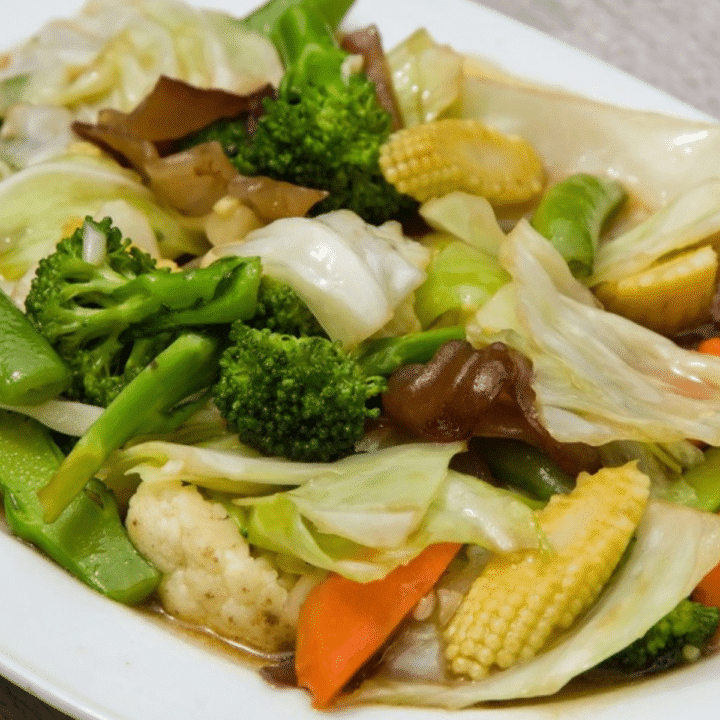
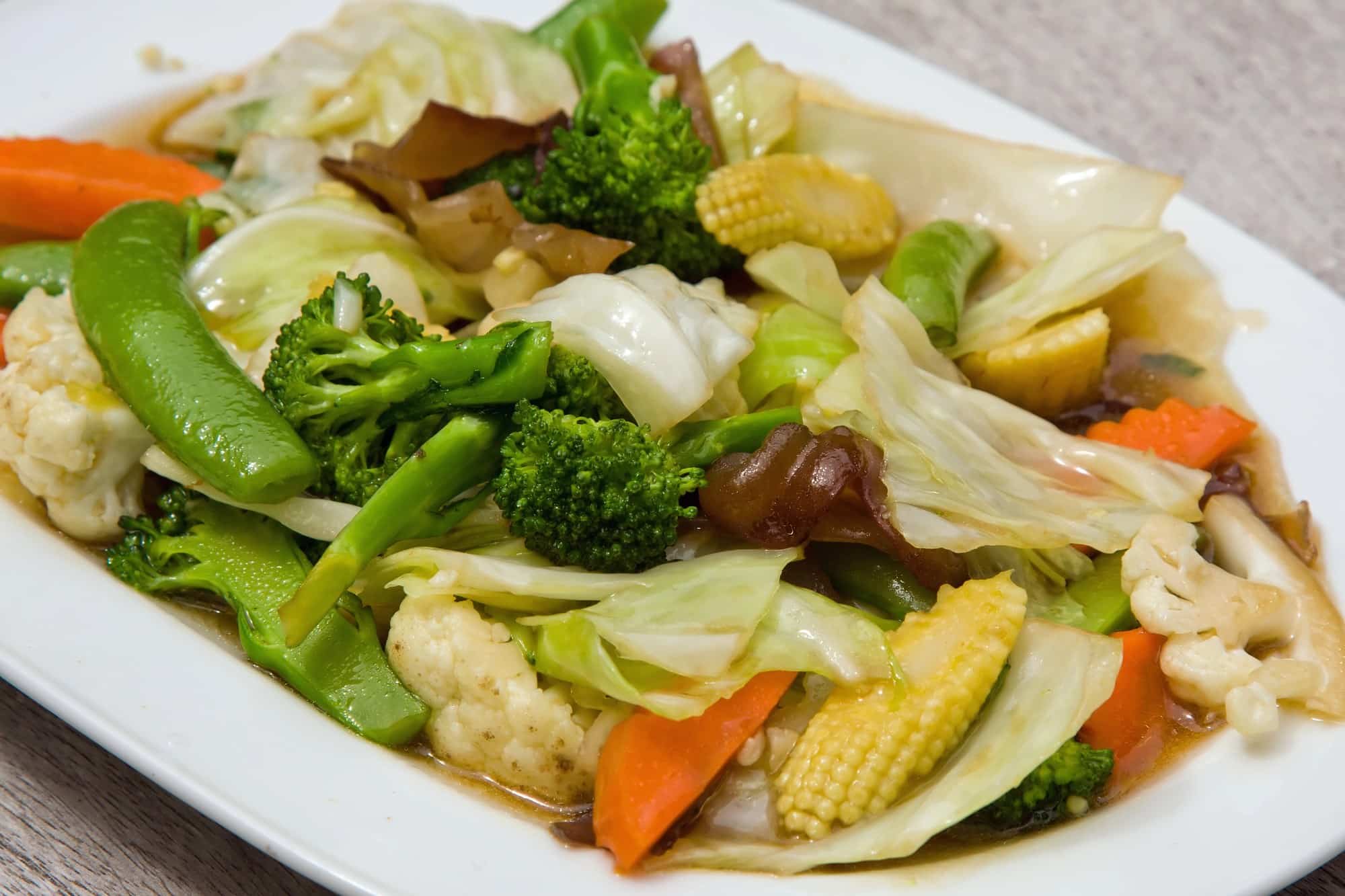
If you're a longtime vegetarian or vegan, you've likely ordered a version of this addictive Chinese restaurant staple, often nicknamed Buddha's Delight. This vegetable stir fry tosses broccoli, cabbage, snow peas, mushrooms, and baby corn in a glossy, savory ginger sauce, and it's easy to make at home and way healthier than the takeout version.
A simple vegetable stir fry is one of my favorite meals for busy weeknights. They're quick, easy, and super family friendly too. From the first chop to the table, this one takes about 25 minutes.
This homemade version of the Chinese restaurant favorite Buddha's Delight has all the flavor of your favorite takeout, but it's way healthier (and cheaper too!). Traditionally it's a Buddhist monastery dish made entirely of vegetables, which is exactly why it's been a go-to order for plant-based eaters for decades.
Key Ingredients & Substitutions
- Broccoli. The backbone of the dish. Cut the crowns into small, even florets so they cook through in the same few minutes as everything else. Cauliflower florets, or a half-and-half mix, work just as well.
- Cabbage. Napa cabbage is the classic choice and turns silky in the sauce; regular green cabbage holds more crunch. Bok choy is a good swap if that's what you have.
- Baby corn. Canned whole baby corn is a takeout signature and adds sweetness and snap. Drain and rinse it to remove the brine taste.
- Mushrooms. I used basic button mushrooms for this recipe, but shiitake mushrooms or rehydrated wood ear mushrooms (the dark, ruffled ones in the photo) give it more of a restaurant feel.
- Snow peas, carrot, celery, and scallions. These add color and crunch. Sugar snap peas can stand in for snow peas, and sliced bell pepper can replace the celery.
- Soy sauce or tamari. The main seasoning in the sauce. A good-quality brewed soy sauce like Lee Kum Kee Premium Soy Sauce makes a noticeable difference; use San-J tamari to keep the dish gluten-free.
- Toasted sesame oil. Just two teaspoons of toasted sesame oil give the sauce its nutty, aromatic finish. It's optional, but I'd hate for you to skip it.
- Cornstarch. This is what turns thin broth into a glossy sauce that clings to the vegetables. Arrowroot powder works the same way.
- Dry white wine. Optional, for a bit of brightness. Not all wines are vegan (some are fined with animal products), so choose one labeled vegan, or simply replace it with more broth or a splash of rice vinegar.
Helpful Tips
Prep everything before you turn on the heat. Stir-frying moves fast. Have the sauce whisked, the vegetables chopped, and the baby corn drained before the oil goes in the pan, because there's no time to chop once the garlic is sizzling.
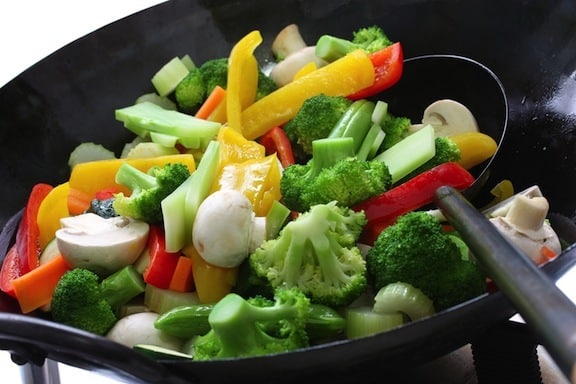
Use a wok or your largest pan. A carbon steel wok gets very hot and gives you room to toss, so the vegetables sear instead of steaming. A flat-bottomed wok works on any home stove; otherwise, use a wide 12-inch skillet.
Add the vegetables in stages. Dense vegetables like carrot and broccoli go in first, then the cabbage, mushrooms, and celery, and finally the quick-cooking snow peas, baby corn, and scallions. Everything should end up bright and tender-crisp at the same time.
Re-whisk the sauce right before adding it. Cornstarch settles to the bottom of the bowl within minutes. Give it a quick stir so it thickens evenly instead of forming clumps.
Want a shortcut sauce? A spoonful of bottled vegetarian stir-fry sauce (a mushroom-based take on oyster sauce) adds the deep, savory flavor you get at Chinese restaurants. Stir in a tablespoon along with the homemade sauce, or see our Basic Chinese Stir Fry Sauce for a make-ahead version.
Variations
- Cauliflower swap. In place of the broccoli, I sometimes opt for cauliflower florets, or a mix of half broccoli and half cauliflower.
- Add tofu. Pan-fry cubes of extra-firm tofu until golden, set them aside, and toss them back in with the sauce for a protein-packed meal.
- Make it spicy. Add a pinch of red pepper flakes with the garlic, or drizzle with chili crisp or sriracha at the table.
- Traditional add-ins. For a more classic Buddha's Delight, add soaked bean thread noodles, fried tofu puffs, water chestnuts, or sliced bamboo shoots.
- Use what you have. Feel free to experiment with other veggies. Just about anything you have on hand will work here; bell peppers, bok choy, and sliced summer squash are great additions.
Serving Ideas
Serve this vegetable stir fry over hot cooked brown rice or Asian noodles for a heartier meal. It's also a natural partner for vegan fried rice with tofu or simple sesame soba noodles, and a sprinkle of toasted cashews or peanuts on top adds a welcome crunch.
It also goes well with a crisp, tangy salad, like the Easiest Asian Slaw or a mixed greens salad with orange sections and toasted almond slices. For added protein, choose your favorite simple tofu, tempeh, or seitan preparation to serve alongside or atop this dish.
Storing & Freezing
Store leftovers in an airtight container in the refrigerator for up to 3 days. The vegetables will soften a bit and the sauce will thicken as it sits, so reheat in a skillet over medium heat with a splash of broth or water, stirring until hot. The microwave works too; just cover the dish so it doesn't dry out.
This stir fry doesn't freeze well. Cabbage, snow peas, and celery turn watery and limp after thawing, and the cornstarch-thickened sauce can separate. If you want to get ahead, chop the vegetables and whisk the sauce up to a day in advance and keep them refrigerated separately; dinner then comes together in about 10 minutes.
More Vegan Stir Fry Recipes
If you love this Buddha's Delight recipe, be sure to check out these other tasty vegan ideas:
- Sesame-Ginger Tofu and Broccoli Stir-Fry
- Napa Cabbage and Mushroom Stir-Fry
- Vegetable Chow Mein
- Vegan Wonton Soup
- 125+ Vegan Stir Fry Recipes
Recipe
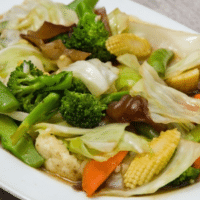
Chinese Vegetable Stir Fry - Buddha's Delight
Buddha's Delight is a Chinese-style vegetable stir fry loaded with broccoli, cabbage, snow peas, mushrooms, and baby corn in a savory homemade ginger-soy sauce. It's ready in 25 minutes and even better than the takeout version!
Print
Pin
Save
Servings: servings
Equipment
- Wok or large skillet
Ingredients
For Stir Fry Sauce:
- 2 tablespoons cornstarch or arrowroot powder
- 1 ¼ cups vegetable broth
- 2 teaspoons sesame oil dark, optional
- 2 tablespoons soy sauce or tamari
- 2 tablespoons dry white wine optional
- 2 teaspoons grated ginger or ginger paste
For Stir Fry:
- 1 ½ tablespoons safflower oil or other oil for stir frying
- 2 cloves garlic minced
- 2 crowns broccoli cut into bite-sized florets
- 1 carrot large, peeled and sliced diagonally
- 1 cup mushrooms variety of choice, stemmed and cut in half
- 1 cup cabbage leaves Napa or regular green cabbage, chopped into bite sized chunks
- 1 cup snow peas trimmed
- 1 stalk celery thinly sliced on the diagonal
- 2 scallions cut into 1-inch pieces
- 15 ounces baby corn canned, drained
For serving:
- toasted cashews or peanuts for topping, optional
- rice cooked, optional
- additional soy sauce to taste
Instructions
- In a small bowl, whisk the cornstarch into about ¼ cup of the broth until smooth.
- Add the remaining broth, sesame oil, soy sauce, white wine (if using), and ginger. Whisk to combine and set aside.
- Heat the oil in a wok or large skillet over medium-high heat. Add the garlic and stir-fry for about 30 seconds, just until fragrant (don't let it brown).
- Add the carrot and broccoli and stir-fry for 2 minutes. Add the cabbage, mushrooms, and celery and stir-fry for 1 to 2 minutes more. Add the snow peas, baby corn, and scallions and stir-fry for 1 minute, until everything is bright and tender-crisp. If the pan gets dry, add a tablespoon or two of water or extra broth.
- Whisk the sauce again so the cornstarch hasn't settled, and pour it over the vegetables. Cook, stirring, for 1 to 2 minutes, until the sauce thickens and turns glossy and everything is heated through. Season to taste with additional soy sauce and serve hot over rice, topped with toasted cashews or peanuts if you like.
Notes
- Wine: not all wines are vegan. Use one labeled vegan, or replace it with more broth or a splash of rice vinegar.
- Gluten-free: use tamari instead of soy sauce.
- Variations: use a mix of broccoli and cauliflower rather than just broccoli, or swap the button mushrooms for shiitake or wood ear mushrooms.
- Make ahead: chop the vegetables and whisk the sauce up to a day ahead; refrigerate separately.
- Storage: refrigerate leftovers for up to 3 days and reheat in a skillet with a splash of broth. Not recommended for freezing.
Nutrition (Estimate per Serving)
Calories: 234kcalCarbohydrates: 35gProtein: 7gFat: 9gSaturated Fat: 1gPolyunsaturated Fat: 2gMonounsaturated Fat: 5gSodium: 826mgPotassium: 625mgFiber: 5gSugar: 9gVitamin A: 3546IUVitamin C: 40mgCalcium: 79mgIron: 2mg
Vegan-ize any recipe!Grab our free vegan cheat sheet, packed with my favorite easy substitutions to make any recipe vegan.
Vegan Cheddar and Broccoli Rice Casserole
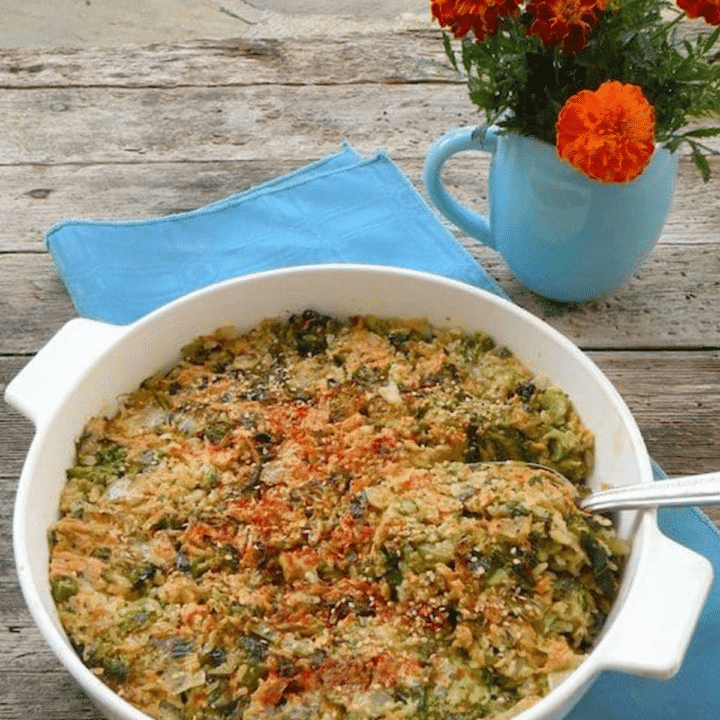
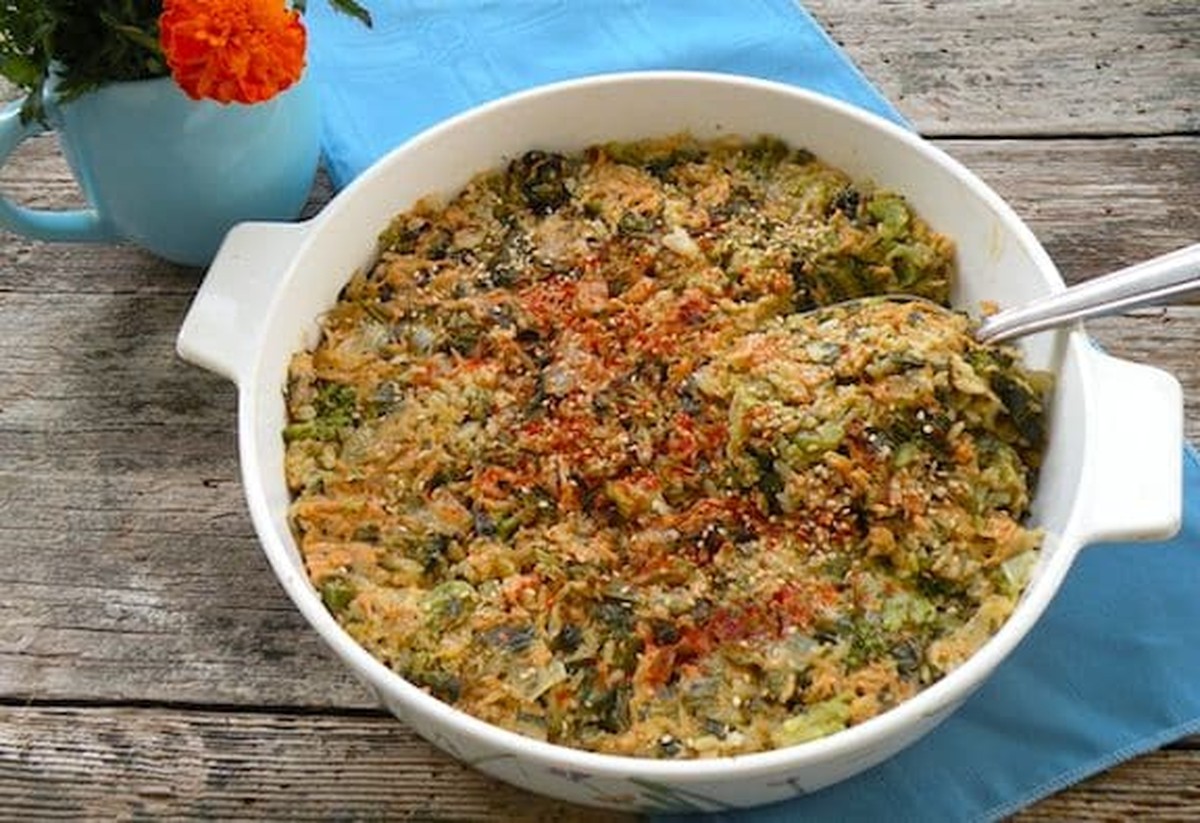
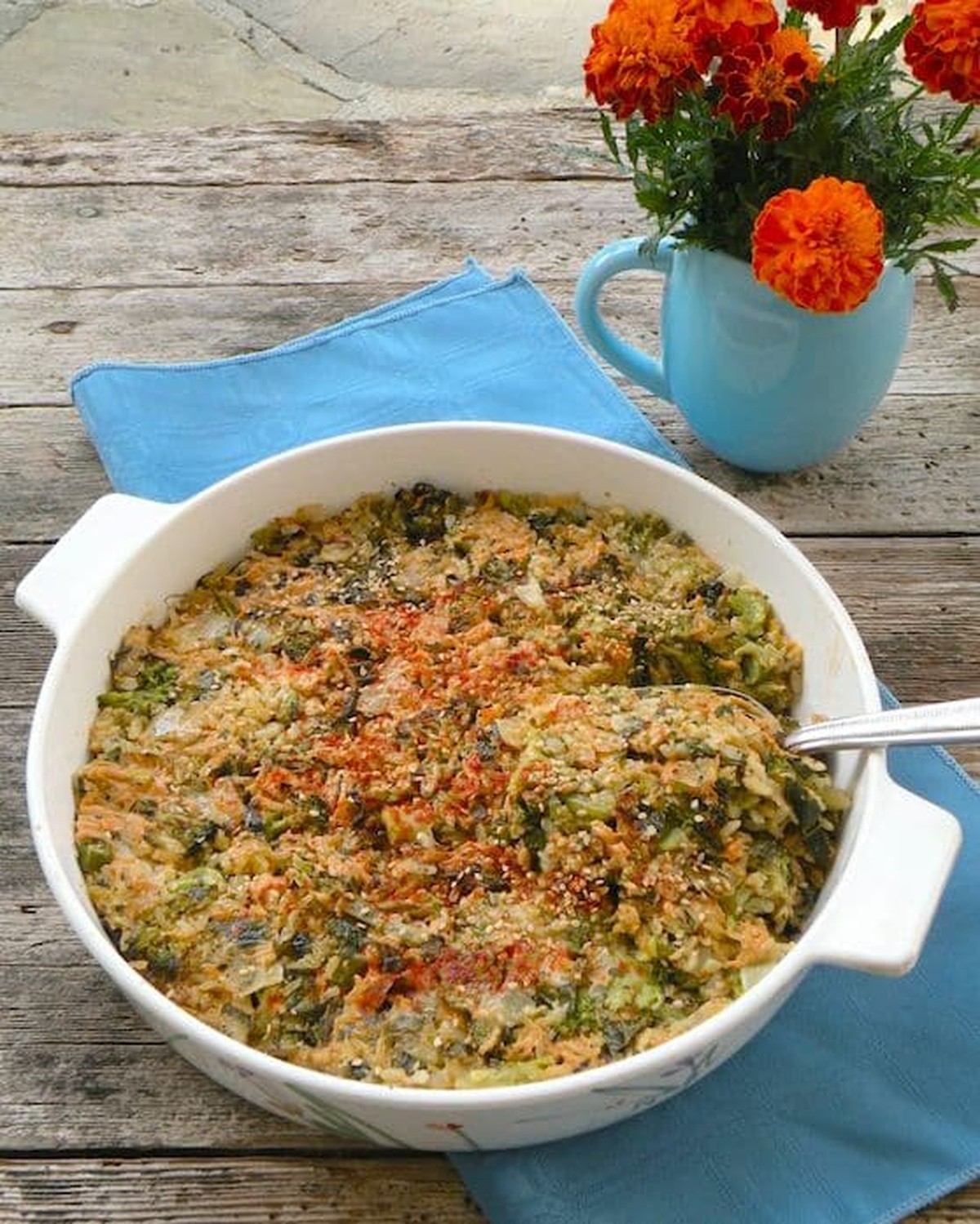
This vegan cheddar and broccoli rice casserole is the kind of old-fashioned, spiral-bound-cookbook comfort food that never goes out of style - it just needed a plant-based update. Melty vegan cheddar, tender broccoli, and fluffy brown rice bake together into a golden, slightly crusty-topped casserole that's every bit as cozy as the dairy version, minus the dairy. It comes together fast if your rice is already cooked, which makes it one of those recipes worth keeping in regular rotation for busy weeknights.
It's also wonderfully forgiving. You can swap in whatever vegan cheese shreds you have on hand, use white or brown rice, and adjust the herbs to taste. Since the oven is already going at 400°F, this is a great time to roast a pan of root vegetables alongside it for an easy, hands-off side.
What makes this casserole worth keeping on hand is how little active effort it takes once your rice is cooked. Most of the prep is just chopping vegetables and stirring everything together in one bowl before it goes into the oven to bake into something golden and a little crusty on top. It reheats beautifully, too, which makes it a smart choice for meal prep or for feeding a crowd without a lot of last-minute fuss.
Key Ingredients & Substitutions
- Broccoli - finely chopped florets (a little stem is fine) cook down quickly and distribute evenly through the rice. Broccoli slaw or pre-riced broccoli from the produce section works in a pinch.
- Cooked brown rice - day-old rice is ideal here, since it's drier and holds its texture better than freshly steamed rice. White rice, farro, or even quinoa can stand in if that's what you have.
- Vegan cheddar-style shreds - we like Violife Just Like Cheddar Shreds for how well they melt, but any meltable non-dairy cheddar works.
- Fresh parsley and dill - these brighten up what could otherwise be a heavy casserole. The dill is optional but adds a nice herby lift.
- Unsweetened nondairy milk - rice milk keeps things neutral, but soy or oat milk work equally well and add a touch more creaminess.
Helpful Tips
- Cook the broccoli only until it's just past tender-crisp and still bright green - it will continue to cook in the oven, and pre-softened broccoli turns dull and mushy by the time the casserole is done.
- Use a splash of water rather than extra oil to steam the broccoli and celery in the skillet; it keeps the pan moist without watering down the finished casserole.
- An oiled 2-quart round or oblong dish, like this ceramic casserole dish with a lid, is the right size for this amount of filling - anything much larger will bake unevenly and dry out at the edges.
- Don't skip the topping. A scattering of wheat germ, sesame seeds, or paprika over the top is what gives the casserole its slightly crusty, golden finish.
Variations
This casserole is easy to riff on. Stir in a cup of cooked white beans or chickpeas for extra protein, or fold in some sautéed mushrooms for more savory depth. If you like a little heat, a pinch of red pepper flakes or a few dashes of hot sauce mixed into the filling works well. Swapping the brown rice for cooked quinoa turns this into a close cousin of our Vegan Broccoli Quinoa Casserole, if you'd like to compare the two side by side.
Serving Ideas
Serve this straight from the baking dish as a main course alongside a simple green salad, or as a hearty side dish next to roasted vegetables or a bowl of soup. It also travels well, making it a good choice for potlucks, family dinners, or a make-ahead lunch you can portion out for the week.
Storing & Freezing
Leftovers keep well in an airtight container in the refrigerator for up to 4 days - just reheat individual portions in the microwave or oven until warmed through. This casserole also freezes nicely: let it cool completely, then wrap tightly or transfer to a freezer-safe container for up to 2 months. Thaw overnight in the refrigerator before reheating.
Recipe
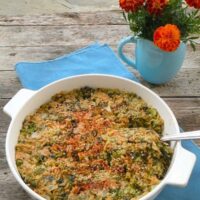
Vegan Cheddar and Broccoli Rice Casserole
With plenty of broccoli and parsley along with brown rice, this is wholesome as well as somewhat addictive! Make sure to have your brown rice cooked ahead of time, and this whole enterprise becomes a snap.
Print
Pin
Save
Servings:
Ingredients
- 2 tablespoons olive oil or vegan buttery spread like Earth Balance
- 1 large onion finely chopped
- 1 large celery stalk finely diced
- 4 cups finely chopped broccoli florets some stem is fine
- ½ cup finely chopped fresh parsley
- 2 tablespoons finely chopped fresh dill optional
- 3 ½ to 4 cups cooked brown rice
- 2 cups grated vegan cheddar-style cheese
- ½ cup unsweetened rice milk or other nondairy milk
- ½ teaspoon dried basil
- ½ teaspoon dried oregano
- Salt and freshly ground pepper to taste
- Wheat germ sesame seeds, and/or paprika for topping
Instructions
- Preheat the oven to 400º F.
- Heat the oil or vegan buttery spread in a large skillet or steep-sided stir-fry pan. Add the onion and sauté over medium heat until golden.
- Add the celery and broccoli along with just a bit of water to keep the pan moist. Cover and cook until the broccoli is just past tender-crisp, but still bright green.
- Remove the pan from the heat and stir in the remaining ingredients except the toppings.
- Transfer the mixture to an oiled 2-quart round or oblong casserole dish. Pat in evenly and top with wheat germ, sesame seeds, and/or paprika.
- Bake for 35 to 40 minutes, or until the edges become a bit crusty and the top is golden.
- Allow the casserole to stand for 5 minutes or so, then serve. Either cut into neat segments or just spoon it out. It all works and it will disappear quickly!
Nutrition (Estimate per Serving)
Calories: 236kcalCarbohydrates: 33gProtein: 5gFat: 9gSaturated Fat: 3gPolyunsaturated Fat: 1gMonounsaturated Fat: 1gTrans Fat: 1gSodium: 327mgPotassium: 258mgFiber: 4gSugar: 2gVitamin A: 746IUVitamin C: 47mgCalcium: 64mgIron: 2mg
Vegan-ize any recipe!Grab our free vegan cheat sheet, packed with my favorite easy substitutions to make any recipe vegan.
Frequently Asked Questions
Can I make this casserole ahead of time?
Yes - assemble the casserole up to a day ahead, cover, and refrigerate unbaked. Add about 5 to 10 extra minutes to the bake time if it goes into the oven cold, and check that it's heated through before serving.
Can I use frozen broccoli instead of fresh?
Frozen broccoli works, but thaw and drain it well first and chop it fine. Since it's already softer than fresh broccoli, stir it in without the extra steaming step so it doesn't turn mushy by the time the casserole finishes baking.
More Vegan Casseroles
Raw Cold Beet Borscht
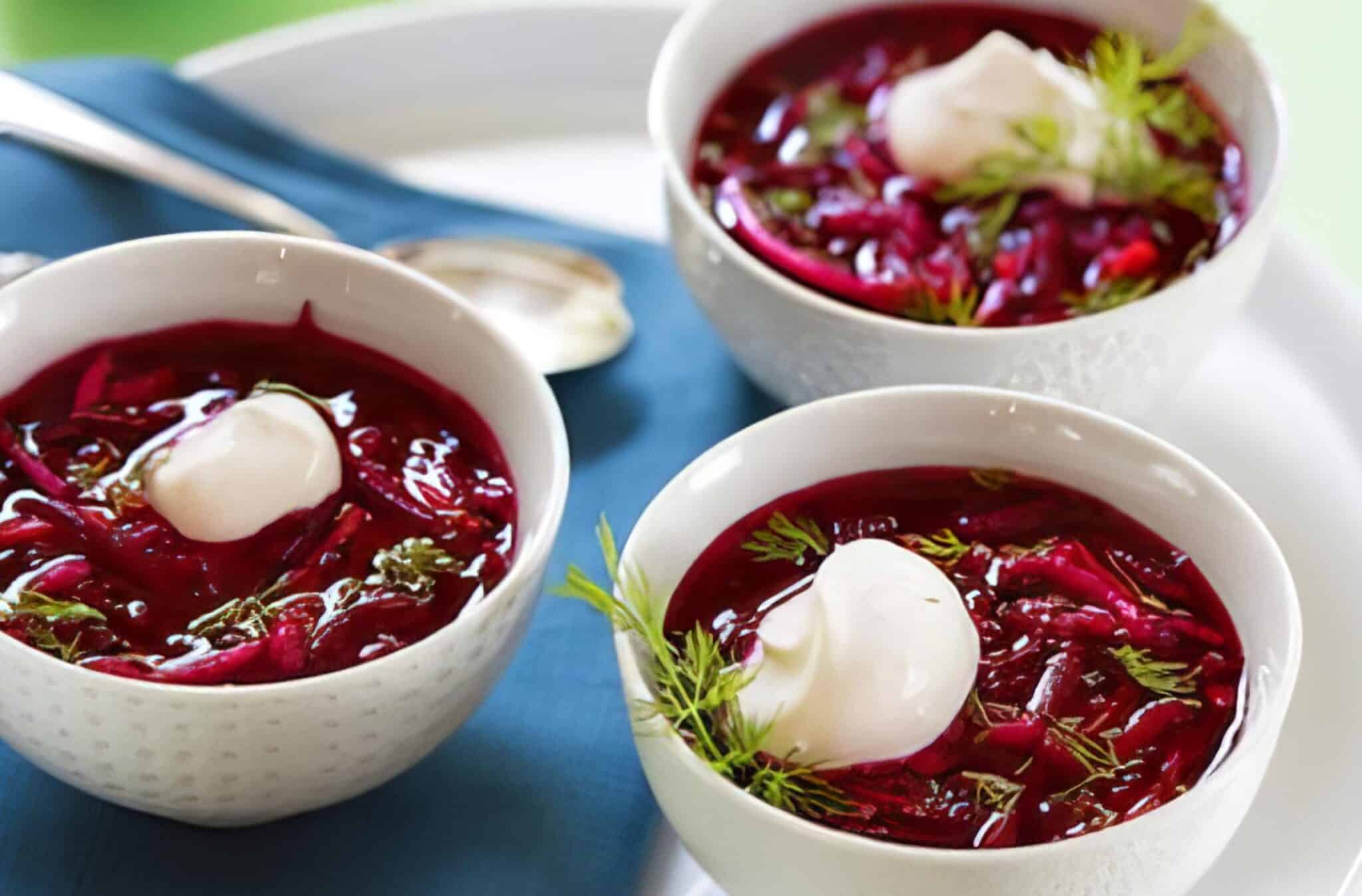
This raw beet borscht is a refreshing, no-cook version of the classic Eastern European soup. Bursting with the natural sweetness of beets, carrots, and apples, it's a vibrant dish perfect for warm days.
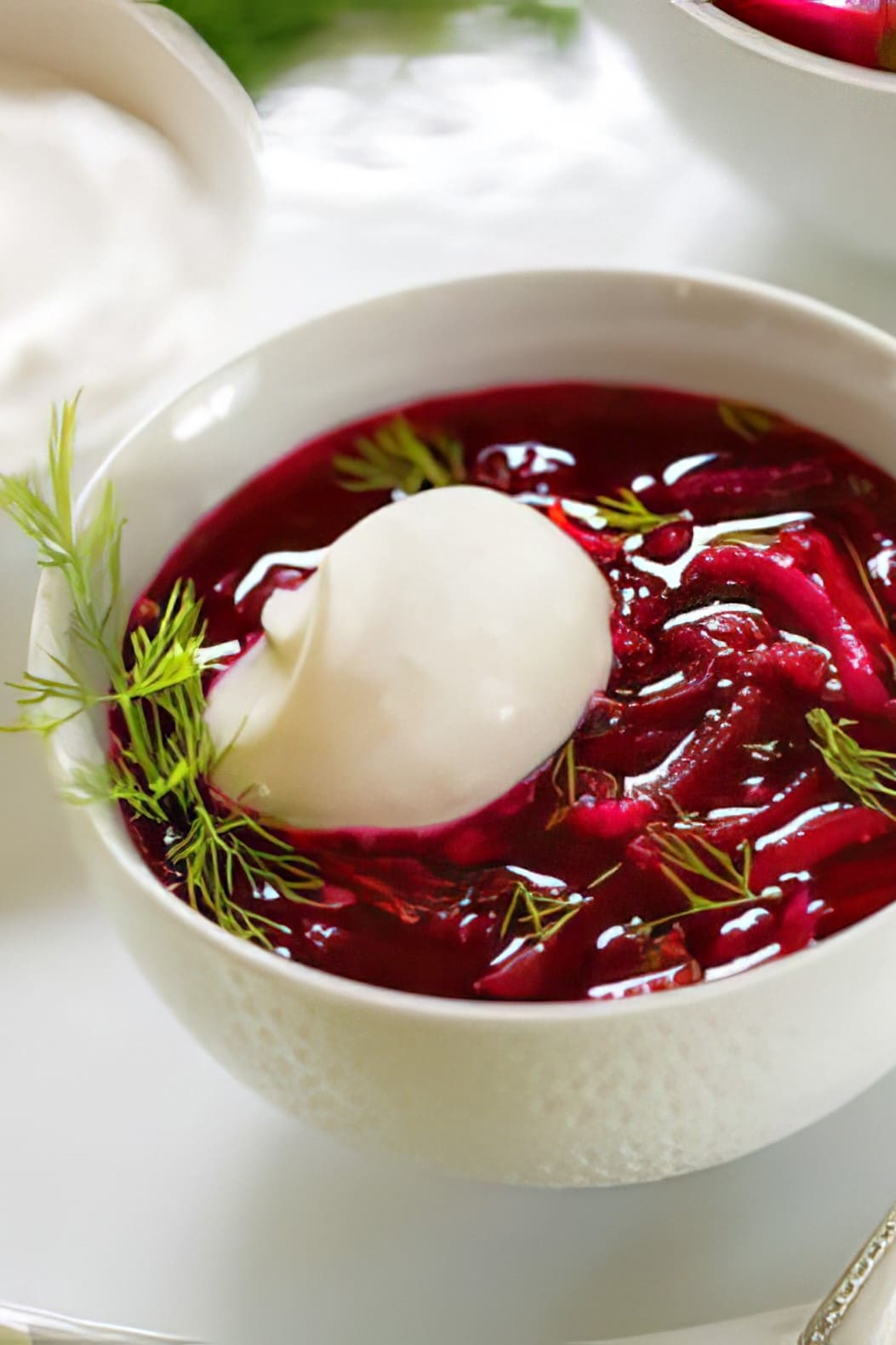
Traditional borscht is a hearty, cooked beet soup enjoyed hot or cold. This raw adaptation skips the cooking, preserving the crisp textures and earthy flavors of fresh vegetables and fruits.
The combination of grated beets, carrots, cucumber, and sweet apple creates a naturally sweet base, while lemon juice adds a zesty brightness.
Fresh dill and scallions introduce herbal notes, making this chilled soup a delightful starter or light meal.
Why You'll Love This Raw Beet Borscht
- No-Cook Preparation: Ideal for hot days when you want to avoid the stove.
- Nutrient-Rich: Retains the full spectrum of vitamins and minerals from raw vegetables.
- Vegan and Gluten-Free
- Quick and Easy: Minimal pr!eparation time; just grate, mix, and chill.
Helpful Tips & Substitutions
Grate with Ease: Use a food processor with a grating attachment to save time and effort. You can grate the vegetables by hand as well, but it quite the chore. Be sure to check the guide to cooking beets for more tips on how to prepare them!
Chill Thoroughly: Allow the soup to refrigerate for at least 3 hours to enhance the flavors and ensure it is fully chilled.
Creamy toppings: Top your borscht with a dollop of vegan sour cream or cashew cream. It's a delightful contrast to the tangy soup. Coconut yogurt is also a good choice.
Use any beets! While traditional red beets are the most common for making borscht, golden beets can be used for a different hue and milder taste.
Variations to Try
Add a Spicy Kick: Add a pinch of cayenne pepper or finely chopped jalapeño for some heat.
Herbal Twist: Incorporate fresh mint or basil for a different flavor profile.
Nutty Addition: Top with chopped walnuts or almonds for added texture and richness.
More Vegan Recipes
If you love this vegan borscht, be sure to check out these other delicious ideas:
Recipe
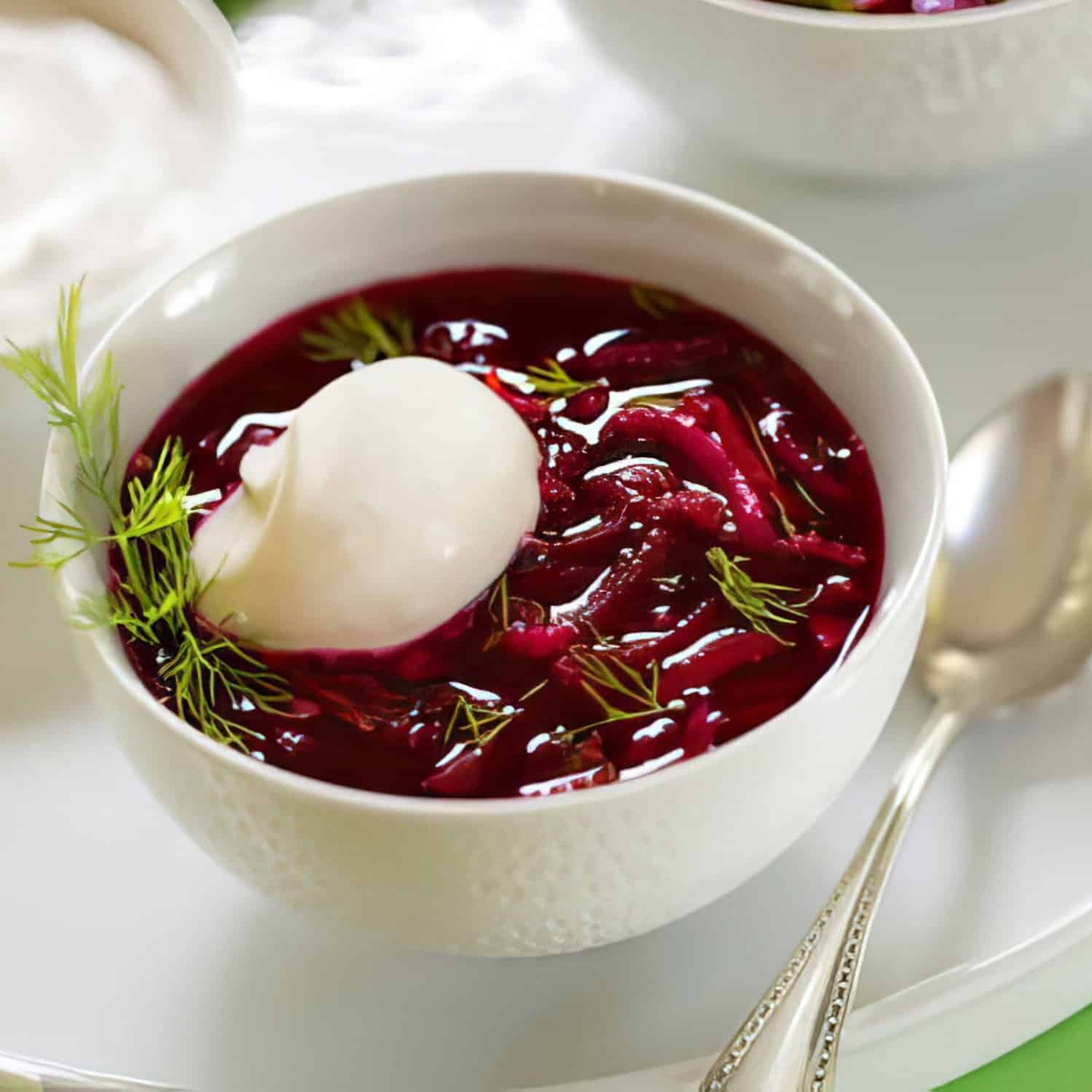
Raw Cold Beet Borscht
This raw beet borscht is a refreshing, no-cook version of the classic Eastern European soup.
Print
Pin
Save
Servings:
Equipment
- Food processor with grater attachment
Ingredients
- 2 large beets peeled and cut into chunks (or see note if you'd like to lightly cook the beets)
- ½ small cucumber cut into chunks
- 1 medium apple sweet variety, cut into chunks
- 1 medium carrot peeled and cut into chunks
- 2 tablespoons fresh dill minced, add more to taste
- 1 scallion thinly sliced
- Juice of 1 to 2 lemons to taste
- 3 tablespoons agave nectar or to taste
- salt and freshly ground pepper to taste
- vegan sour cream purchased or homemade, or Cashew Cream for topping, optional
Instructions
- Grate the beets, cucumber, apple, and carrot in a food processor fitted with the grating blade. Transfer the grated ingredients to a soup tureen or some other kind of serving container such as a deep, steep-sided casserole dish.
- Fill the container with enough water to give the soup a dense but not overly crowded consistency. Stir in the dill and scallions.
- Add the juice of 1 to 1 ½ lemons (depending on how large and juicy they are), and the agave. Season gently with salt and pepper.
- Cover and let the soup chill for at least 3 hours. This can be made the morning before you want to serve it for dinner, or the day before. Just before serving, taste and add more lemon juice and agave to your liking.
- Serve garnished with a dollop of vegan sour cream or cashew cream, if desired.
Notes
If you prefer beets lightly cooked, just use your favorite cooking method, whether in the microwave or on the stovetop. Don't overcook! Cook just until they can be pierced, then plunge them in a bowl of ice water until they're cool enough to handle.
Nutrition (Estimate per Serving)
Calories: 94kcalCarbohydrates: 22gProtein: 2gFat: 0.3gSaturated Fat: 0.04gPolyunsaturated Fat: 0.1gMonounsaturated Fat: 0.03gSodium: 79mgPotassium: 384mgFiber: 4gSugar: 17gVitamin A: 1784IUVitamin C: 9mgCalcium: 23mgIron: 1mg
Vegan-ize any recipe!Grab our free vegan cheat sheet, packed with my favorite easy substitutions to make any recipe vegan.
Southwestern Summer Succotash

In this Southwestern variation of succotash, the bright melange of the freshest corn, tomatoes, summer squash and chilies makes for a wonderful celebration of the summer harvest. Serve with Easy Vegan Quasadillas or Soft Tacos for a tasty meal. I like to steam the green beans separately and add at the last minute, because their cook time is unpredictable, and I like them to be bright and just tender-crisp in the dish. [Read more...]
Seitan “Meat and Potatoes” Stew

Seitan gives this stew a “meaty” texture, and combined with potatoes and carrots becomes a comforting, hearty dish. Prepared seitan is readily available in most natural foods stores as well as a growing number of well-stocked supermarkets, but you can make your own as well (see the link in the ingredient list). Photos by Evan Atlas. Adapted from The Vegetarian Family Cookbook. [Read more...]
Kale Chips recipe


Let's start things off by acknowledging that I'm late to the kale chip trend. But better late than never right?
Last week I picked up a beautiful bunch of kale, along with a refrigerator full of delicious fruits and vegetables at my new favourite grocer. The problem was, in my excitement when presented with a fantastic array of produce, I bought way more than would fit in the fridge. So instead of undertaking the impossible task of fitting the kale in an already over stuffed fridge I settled on making kale chips, and seeing what all the fuss was about.
The process is simple. Remove the kale leaves from their stalks, wash, dry and lightly coat with oil and salt and bake. After making a couple of batches I found the lower the temperature you bake the kale chips at the better. The chips remain crispy for much longer (in fact 1 week later the last of kale chips are still crisp). Also, a lower temperature ensures the kale stays beautifully green.
A lot of recipes call for salting after the chips are baked, however I found the kale chips are best salted before baking. The reason for this is twofold. Firstly the oil helps the salt stick to the chips, and secondly, I believe the salt helps dry the chips out better. Anyway, that's my experience. A word of caution though. Go easy on the seasoning because as the chips shrink in size while baking this will increase the saltiness.
As far as salt goes feel free to experiment with salts and other seasonings. My first batch used a flaky grey sea salt I picked up on my last trip to the United States and they were divine. The second batch used truffle salt, for a little bit of decadence. I also think they'd be wonderful with a lemon pepper salt, or a smokey salt. Well, that's the plan for the next couple of batches I'll be baking because this is definitely one trend I'll be following because these chips are addictive. So much so it was a struggle to not eat the whole of the first batch straight from the oven.
So tell me, have you tried kale chips?

Fresh Corn and Tomato Salad

This pleasing combination of two of summer's premier bumper crops-corn and tomatoes-makes for a delightful mid-to late-summer salad that goes with just about any kind of meal. Pair it with a simple bean dish and/or Creamy Chilled Avocado Soup or serve with vegan quesadillas. Photos by Hannah Kaminsky. [Read more...]
Puree of Spring or Summer Greens
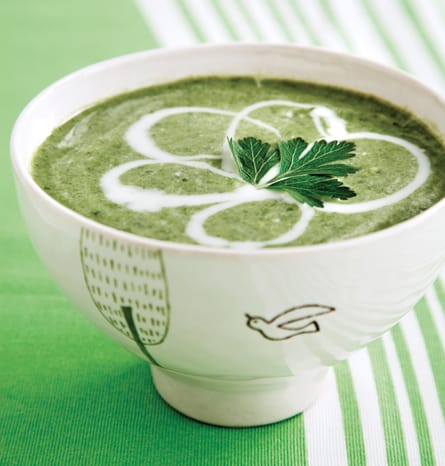
Here’s a soup designed to make the most of kale or chard, spinach, arugula, and lettuces when they become too abundant. When greens threaten to take over the fridge, I turn to this recipe, which has become an annual tradition! If you love greens and have plenty of them, you’ll find this nourishing recipe useful as well as delicious. Make sure all greens are very well washed. Adapted from Vegan Soups and Hearty Stews for All Seasons.
Greek Potato Stew with Zucchini and Green Beans

Here's a simple Greek potato stew bursting with summery flavors — green beans and zucchini in a mellow tomato base. A fresh, crusty bread rounds out the meal along with a big green salad with some chickpeas tossed in. For a company meal, add Olive Bar Medley with Tofu "Feta" as an appetizer, and a good wine. [Read more...]
Seven-Vegetable Couscous

Seven is a lucky number in Jewish tradition, so a soup or stew featuring seven vegetables is a Rosh Hashanah (Jewish New Year) favorite among Sephardic Jews. Despite the longish ingredient list, it's easy and quick enough to serve as a mid-week main dish even if you don't observe the Jewish New Year. Feel free to replace other veggies for the ones listed below. Want a gluten-free version? Substitute quinoa for the couscous. From Vegan Holiday Kitchen. Photo by Susan Voisin, FatFree Vegan Kitchen.
Sesame Kale and Broccoli Sauté
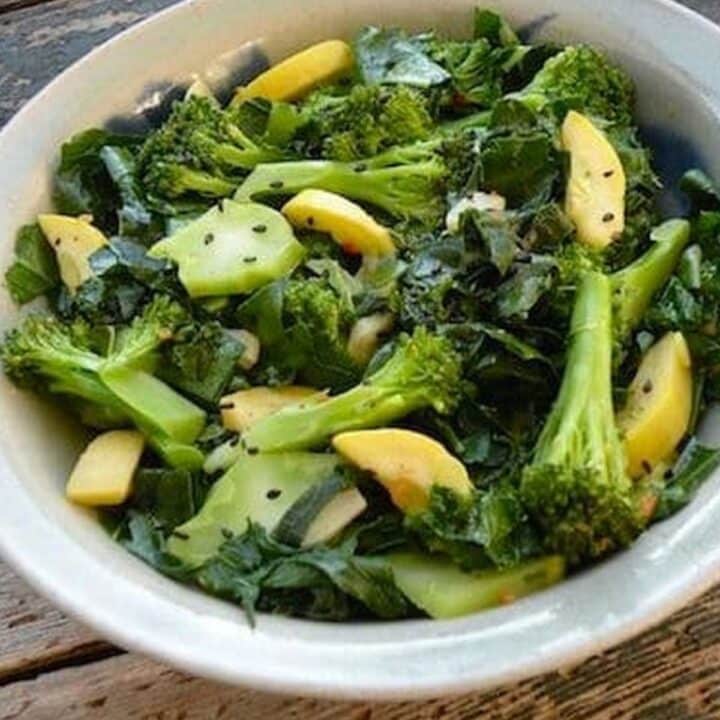
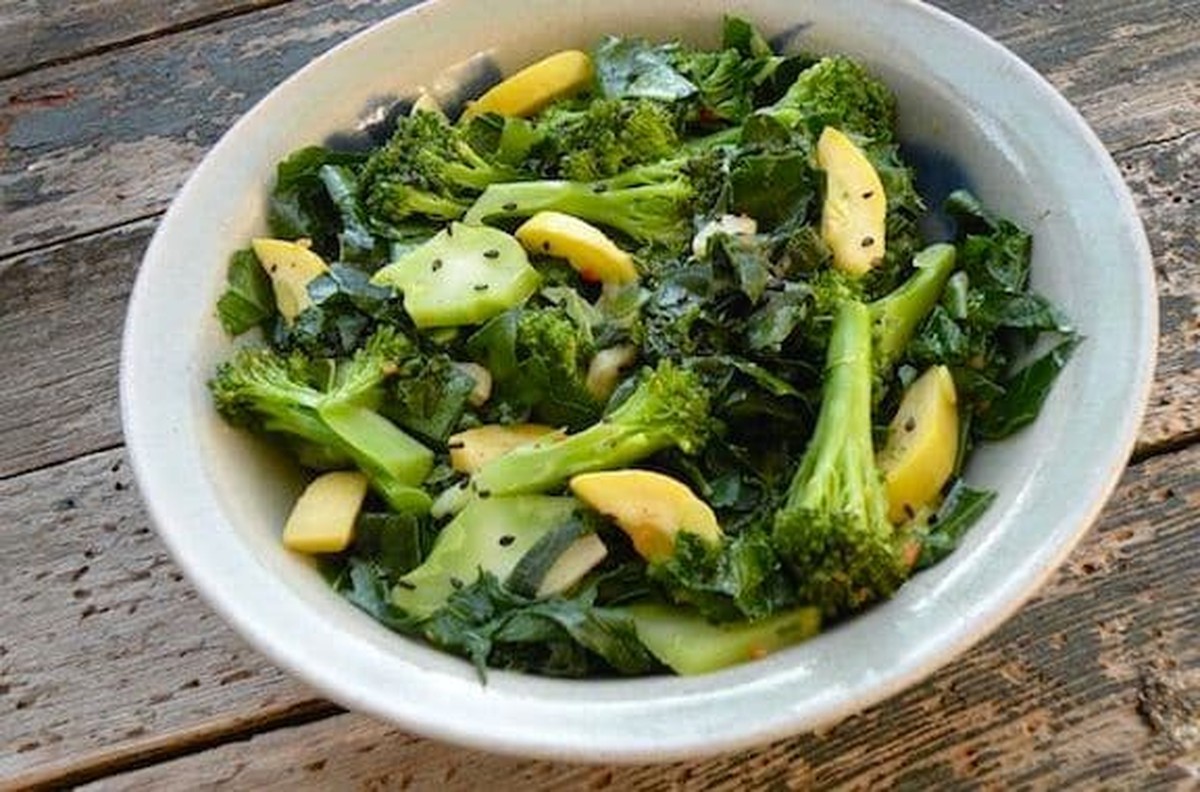
Kale and broccoli make a great team in this quick sauté with Asian-inspired flavors - sesame oil, garlic, rice vinegar, and soy sauce come together in just minutes to turn two simple green vegetables into a side dish with real depth. It pairs especially well with other Asian-inspired noodle, rice, or tofu dishes, but it's versatile enough to serve alongside just about anything.
What makes this sauté worth returning to is how little time it actually takes once everything is chopped. From the moment the garlic hits the pan to the moment you're sprinkling on sesame seeds, the whole thing comes together in well under 10 minutes - making it an easy way to work more dark leafy greens into a weeknight meal without much extra effort.
Key Ingredients & Substitutions
- Kale - any variety works here, from curly to lacinato (dinosaur) kale. Rinse it right before cooking; the water still clinging to the leaves helps the sauté along.
- Broccoli - cut into small, bite-sized pieces so it cooks through in the same short time as the kale.
- Yellow summer squash or red bell pepper - either adds a pop of color and a bit of sweetness. Use whichever you have on hand, or a combination of both.
- Dark sesame oil - this is the backbone of the dish's flavor, so use toasted sesame oil rather than the light/refined kind for the most aroma.
- Rice vinegar and soy sauce - this pair adds brightness and savory depth right at the end of cooking. Reduced-sodium soy sauce keeps the dish from tasting too salty.
Helpful Tips
- Prep all the vegetables before you start cooking - once the garlic hits the pan, this dish moves quickly and there's no time to chop mid-sauté.
- Cover the pan just long enough for the kale to wilt, about 2 minutes. Leaving it covered longer can make the vegetables lose their bright color and turn overly soft.
- Add the vinegar and soy sauce only after uncovering the pan - adding them earlier can mute their brightness over the extra cooking time.
- Toast the sesame seeds in a dry pan for a minute before sprinkling them on if you want an extra layer of nutty flavor.
Variations
As the original recipe suggests, other hardy greens like chard, collards, mustard greens, or escarole all work well in place of the kale. For more heat, add a pinch of dried hot red pepper flakes along with the black pepper, or swap in smoked paprika for a deeper, smokier flavor instead. A handful of toasted cashews or slivered almonds stirred in at the end adds a satisfying crunch if you'd like to turn this into a slightly heartier side.
Serving Ideas
This sauté is an easy partner for other Asian-inspired mains, like our Sesame-Ginger Tofu and Broccoli Stir-Fry, or spooned over a bowl of rice or noodles for a simple vegetable-forward meal. It also holds its own as part of a larger spread of small dishes, alongside dumplings, spring rolls, or a simple miso soup.
Storing & Freezing
Leftovers keep in an airtight container in the refrigerator for up to 3 days; reheat gently in a skillet to help the vegetables keep some bite. This dish doesn't freeze well, since both kale and broccoli turn quite soft and watery once thawed.
Recipe
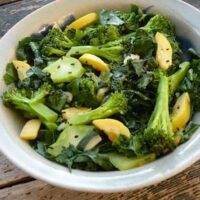
Sesame Kale and Broccoli Saute
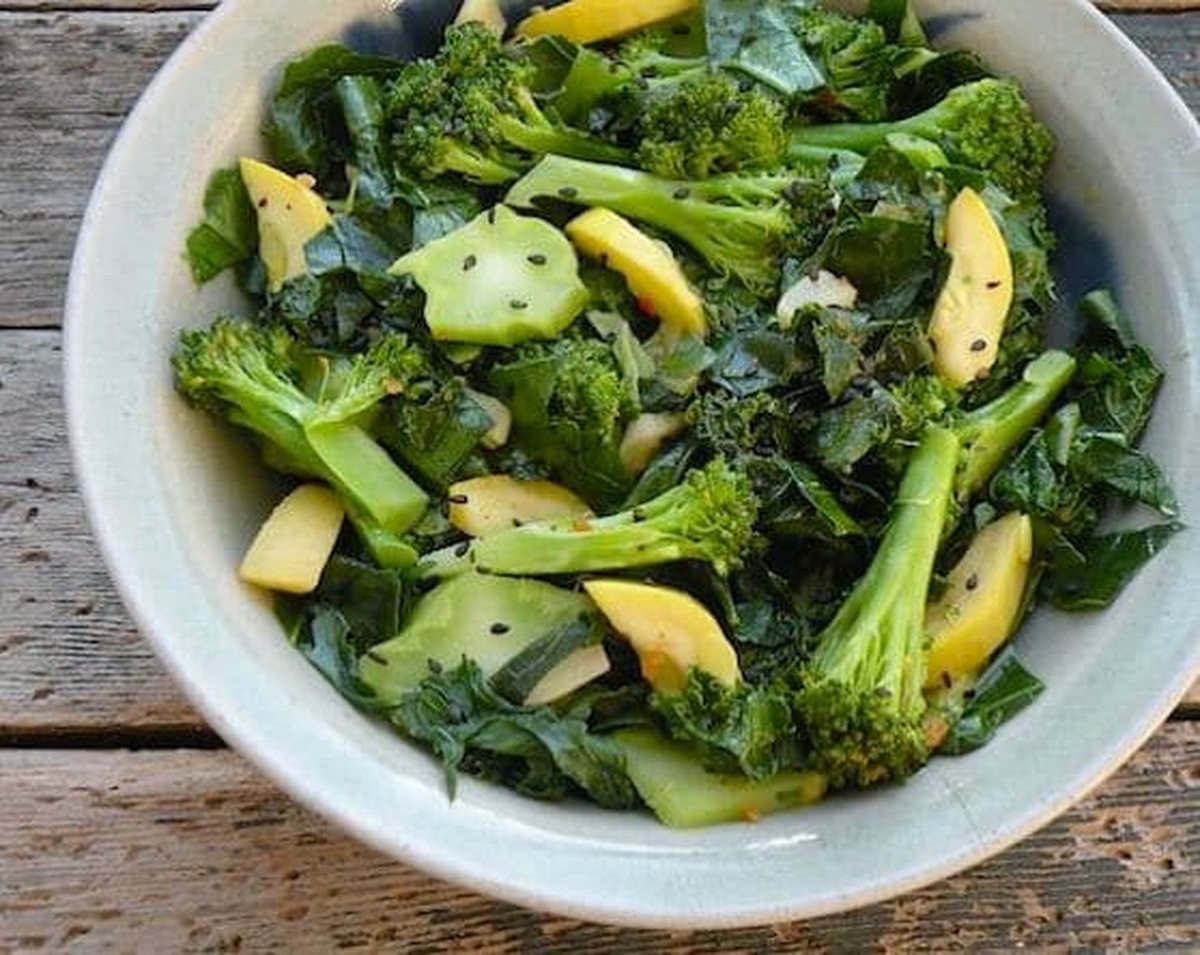
Kale and broccoli team up in this quick Asian-inspired saute with sesame oil, garlic, rice vinegar, and soy sauce.
Print
Pin
Save
Servings:
Ingredients
- 10-12 ounces kale any variety
- 1-2 broccoli crowns cut into small bite-sized pieces
- 1 small yellow summer squash quartered lengthwise, seeds cut away, thinly sliced; or 1 medium red bell pepper, cut into strips
- 1 tablespoon dark sesame oil
- 2 tablespoons white wine, vegetable broth, or water
- 3-4 cloves garlic minced
- 1 tablespoon rice vinegar or white wine vinegar or more, to taste
- 1 tablespoon reduced-sodium soy sauce
- Freshly ground pepper to taste
- Dried hot red pepper flakes or smoked paprika to taste, optional
- 1 tablespoon tan or black sesame seeds
Instructions
- Cut the leaves from the kale stems. If using the stems, trim about an inch from the bottoms, then slice thinly. Otherwise, discard them.
- Chop the kale leaves into bite-sized pieces. Give the leaves a good rinse at this point, as the water clinging to them will be good for the saute.
- Prepare the broccoli and squash or bell pepper as directed and set aside, as the saute goes very quickly from this point.
- In a large skillet or stir-fry pan, heat the sesame oil and wine. Add the garlic and saute over low heat until golden.
- Add the kale, broccoli, and squash or bell pepper. Turn up the heat to medium-high and cover.
- Once the kale wilts down, about 2 minutes, uncover and give the vegetables a good stir. Drizzle in the vinegar and soy sauce.
- Continue to saute, stirring, just until the vegetables are bright and tender-crisp, about 2 minutes longer.
- Remove from the heat and season with pepper and optional red pepper flakes. Sprinkle in the sesame seeds, and serve straight from the pan.
Nutrition (Estimate per Serving)
Calories: 95kcalCarbohydrates: 11gProtein: 4gFat: 5gSaturated Fat: 1gPolyunsaturated Fat: 1gMonounsaturated Fat: 2gSodium: 190mgPotassium: 380mgFiber: 3gSugar: 2gVitamin A: 4000IUVitamin C: 80mgCalcium: 100mgIron: 2mg
Vegan-ize any recipe!Grab our free vegan cheat sheet, packed with my favorite easy substitutions to make any recipe vegan.
Frequently Asked Questions
Do I need to remove the kale stems?
It's up to you. Softer stems can be trimmed and thinly sliced to cook right along with the leaves, but thicker, tougher stems are better discarded or saved for stock, since they won't soften in the short cooking time this dish needs.
Can I make this without any oil?
You can sauté the garlic in a splash of the wine or broth instead of sesame oil, but you'll lose much of the dish's signature nutty flavor. If you'd like some of that flavor back without the oil, stir in a few drops of sesame oil right at the end instead of cooking with it, which still gives you that toasted aroma without needing to cook with the oil directly.
More Vegan Side Dishes
Chickpea Salad with Tomatoes and Basil

This easy chickpea salad, filled with flavorful tomatoes and aromatic basil, makes a good lunch on its own with whole grain bread and fresh fruit. It's a great companion to many Italian-style pasta dishes or simple grain dishes during the cooler months, especially if the meal needs a protein boost. It's also good with pasta salads or potato salads as part of a summer meal, served with a cold soup or fresh corn. It's especially good with ripe summer tomatoes, though off season you can use tomatoes on vine or hydroponic tomatoes. [Read more...]
Vegan Avocado Tempeh Reuben Sandwich

The classic deli reuben sandwich can be made meatless as well as dairy-free with homemade or store-bought smoky strips, and just a touch of vegan cheese. Sauerkraut gives it a nice tang, and avocado makes it luscious! It’s great for a quick at-home lunch or dinner, served with soup or salad.The ingredients given here can be easily multiplied for more servings. Photos by Hannah Kaminsky. [Read more...]
Classic Vegan Chili
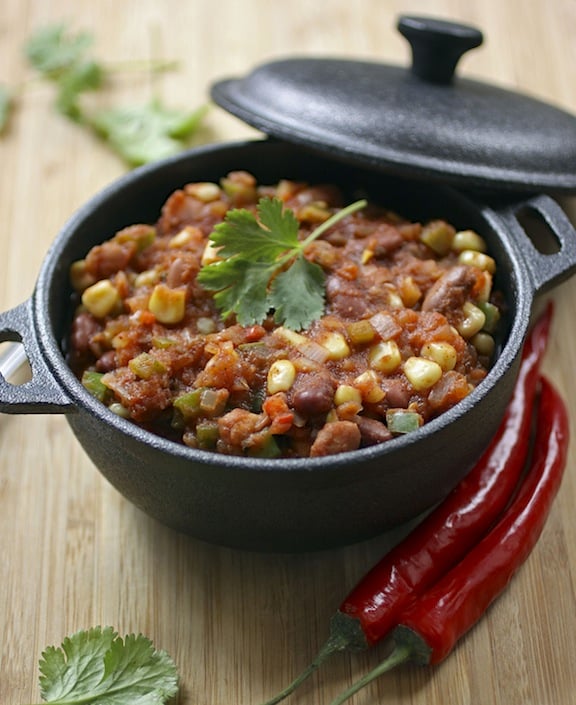
This classic vegan chili is everything you want in a bowl of comfort food: hearty beans, sweet corn, and a rich, spiced tomato base that simmers into something deeply satisfying. It comes together with pantry staples in under an hour, making it just as easy for a weeknight dinner as it is for a big pot to feed a crowd.
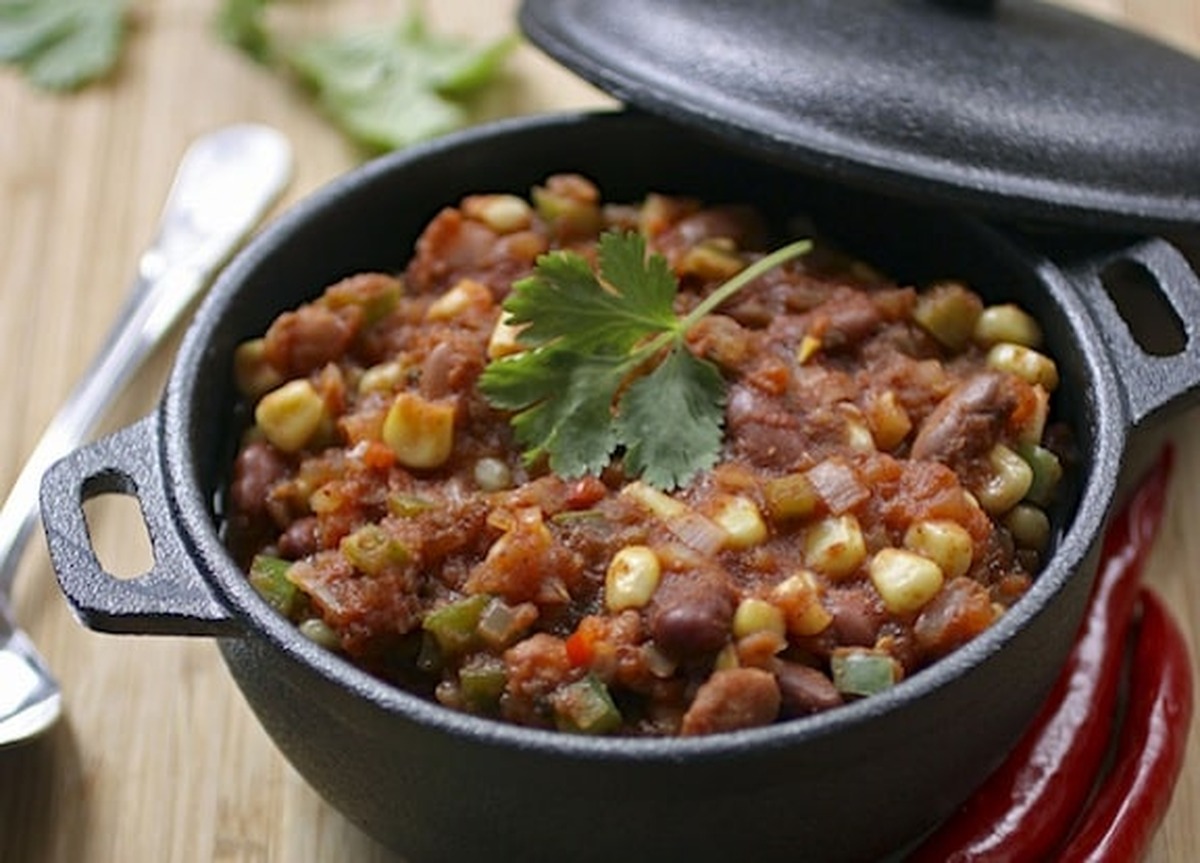
Photos by Lori Maffei.
Key Ingredients & Substitutions
- Olive oil. Just enough to soften the aromatics. Any neutral oil works fine if that's what you have on hand.
- Onions. The flavor backbone of the chili. White or yellow onions both work well here.
- Garlic. Adds depth and a little bite. Pre-minced garlic is a fine time-saver, though fresh is best.
- Green bell pepper. Adds sweetness and texture. A poblano or red bell pepper are both good swaps if you want a different flavor note.
- Pinto or pink beans. Creamy and hearty, and what gives this chili its classic texture. Kidney beans, black beans, or a mix of all three work just as well.
- Crushed tomatoes. Forms the base of the sauce. Diced tomatoes pulsed briefly in a blender make a good substitute if that's what's in your pantry.
- Corn kernels. Adds little pops of sweetness throughout. Frozen corn works year-round, or you can leave it out for a more traditional bean chili.
- Fresh hot chili peppers or canned green chiles. This is where you control the heat. Jalapeños, serranos, or a can of mild chopped green chiles all work depending on how spicy you like it.
- Dried oregano. A classic chili seasoning. Mexican oregano has a slightly citrusy edge if you can track it down.
- Chili powder. The main seasoning in the pot, so it's worth using a good-quality blend rather than one that's mostly filler.
- Ground cumin. Earthy and warm, and essential to that classic chili flavor. Freshly ground cumin has noticeably more punch than pre-ground if you have a spice grinder.
- Salt. Added at the end so you can season to taste once the chili has reduced and concentrated.
Helpful Tips
Don't rush the onions. Sautéing the onions and garlic until they're truly soft and starting to turn golden - not just translucent - builds a much deeper flavor base for the whole pot. Give it a full 6 to 8 minutes over medium heat rather than cutting it short.
Use a good chili powder. Chili powder blends vary a lot in quality and freshness. A stale or filler-heavy chili powder will leave the whole dish tasting flat, so it's worth reaching for a fresher, more flavorful brand if your usual one has been sitting in the cabinet for years.
Let it simmer low and slow. A full 30-minute simmer, covered, gives the beans and vegetables time to soften and the flavors time to meld. Resist the urge to crank the heat to speed things up - a gentle simmer keeps the tomatoes from scorching on the bottom of the pot.
Adjust the thickness as you go. This chili is meant to be thick, not soupy, but every batch of beans and tomatoes releases a different amount of liquid. If it looks too dense partway through cooking, stir in water a half cup at a time until it's exactly how you like it.
Give it a rest before serving. If you have the time, let the finished chili sit off the heat for an hour before reheating and serving. Like most stews, it actually tastes better once the flavors have had a chance to settle and deepen.
Variations
- Spicier chili. Add one or two extra seeded and minced jalapeños or other hot peppers, or stir in jarred sliced jalapeños to taste. Let it simmer for another 5 minutes after adding them so the heat has time to spread through the pot.
- Cheesy topped. Pass around a bowl of shredded vegan cheddar-style cheese for topping individual servings at the table.
- Textured chili. If you'd like a heartier, more textured bowl without a "meaty" quality, stir in about a cup of cooked quinoa, bulgur, or whole-grain couscous near the end of cooking.
- Smoky chili. Add a minced chipotle pepper in adobo sauce, or a teaspoon of smoked paprika, for a deeper, smokier flavor.
- Slow cooker chili. Sauté the onion and garlic on the stovetop first, then transfer everything to a slow cooker and cook on low for 6 to 7 hours, or on high for 3 to 4.
- Extra vegetables. Diced zucchini, carrots, or sweet potato all cook down nicely in this chili and stretch the pot even further.
Serving Ideas
This chili is at its best served hot in bowls with a wedge of Green Chile Cornbread or a slice of Easy Vegan Cornbread alongside for scooping up the last bites. A basket of warm biscuits works just as well if cornbread isn't on hand.
For toppings, set out diced avocado, a dollop of vegan sour cream, chopped fresh cilantro, or a sprinkle of shredded vegan cheese so everyone can build their own bowl. Leftovers also make a great topping for a baked potato or a scoop of rice.
Storing & Freezing
Let the chili cool to room temperature, then store leftovers in an airtight container in the refrigerator for up to 5 days. The flavor actually improves after a day or two, making this one of those recipes that's even better as leftovers.
This chili freezes beautifully. Portion cooled chili into freezer-safe containers or bags and freeze for up to 3 months. Thaw overnight in the refrigerator, then reheat gently on the stovetop over low heat, adding a splash of water or vegetable broth if it's thickened up too much in the freezer.
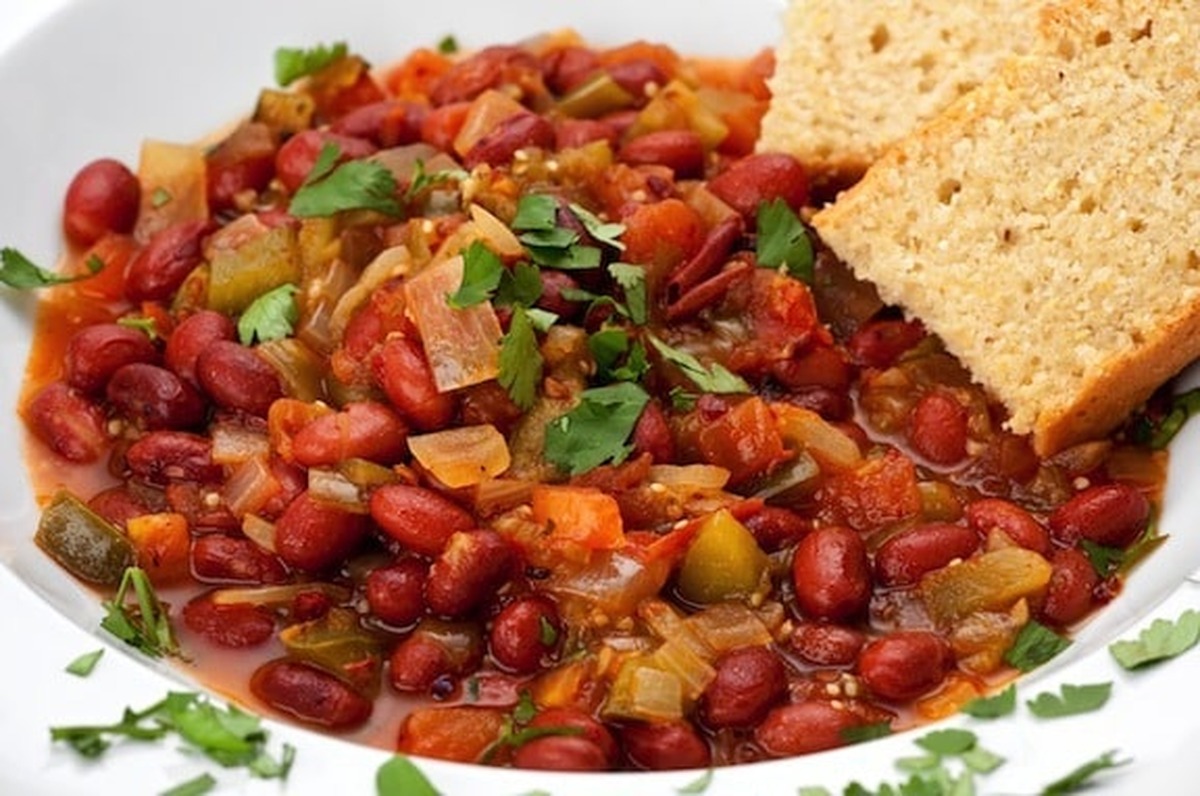
More Vegan Soups, Stews, and Chilis
If you loved this recipe, here are a few more you might enjoy:
Recipe
Classic Vegan Chili
This classic vegan chili is a hearty mix of beans, corn, and bell pepper simmered in a mildly spiced tomato base. It's easy enough for weeknight dinners and always a hit for casual company. Serves 6 to 8.
Print
Pin
Save
Servings: servings
Ingredients
- 1 tablespoon olive oil (15 mL)
- 2 medium onions finely chopped (about 320g)
- 2 cloves garlic minced (6g)
- 1 large green bell pepper finely chopped (150g)
- 4 cups cooked pinto or pink beans about 1 ⅔ cups dry, or two 15-ounce cans, drained and rinsed (680g)
- 28 ounce can crushed tomatoes (794g)
- 1 ½ cups corn kernels cooked fresh or thawed frozen (225g)
- 1-2 fresh hot chili peppers seeded and minced, or one 4-ounce can mild or hot chopped green chiles (113g)
- 1 teaspoon dried oregano (1g)
- 2-3 teaspoons chili powder good-quality, more or less to taste (5-7g)
- 1 teaspoon ground cumin (2g)
- salt to taste
Instructions
- Heat the olive oil in a large soup pot or Dutch oven over medium heat. Add the onions and garlic and sauté, stirring occasionally, for 6 to 8 minutes, until the onions are softened and starting to turn golden.
- Stir in the bell pepper, beans, crushed tomatoes, corn, chili peppers (or canned green chiles), oregano, chili powder, and cumin. Bring to a gentle simmer, then cover and cook over low heat for 30 minutes, stirring occasionally. If the chili looks too thick, stir in water a half cup at a time until it reaches a consistency you like — it should stay thick, not soupy.
- Season with salt to taste and adjust the other seasonings as needed. If you have time, let the chili stand off the heat for about an hour to let the flavors meld, then reheat gently over low heat before serving in bowls.
Nutrition (Estimate per Serving)
Calories: 230kcalCarbohydrates: 42gProtein: 11gFat: 3gSaturated Fat: 0.5gPolyunsaturated Fat: 0.5gMonounsaturated Fat: 1.5gSodium: 480mgPotassium: 700mgFiber: 12gSugar: 4gVitamin A: 10IUVitamin C: 35mgCalcium: 8mgIron: 15mg
Vegan-ize any recipe!Grab our free vegan cheat sheet, packed with my favorite easy substitutions to make any recipe vegan.
Curried Potatoes with Peas and Cashews

Peas and cashews lend a subtle sweetness to this curried potato dish. Once you've got the just-done potatoes ready, the rest of the dish comes together in no time. For an enticing meal, serve with Couscous Pilaf with Apple and Dried Fruits, and pass around a spicy chutney for a nice touch. For a bigger Indian-style spread, add our 30-Minute Vegan Chana Masala. Photos by Evan Atlas. [Read more...]
Homemade Seitan

Store-bought seitan is usually excellent, but it can be expensive. Using pure gluten flour is a shortcut to a homemade version that's not difficult to make. This recipe may be idiosyncratic, but it works well and with practice produces seitan that's chewy but not overly tough. Whenever I make this, I freeze half. It's nice come across and use it a few weeks later. [Read more...]
Kale, Yellow Squash, and Sweet Potato Stew
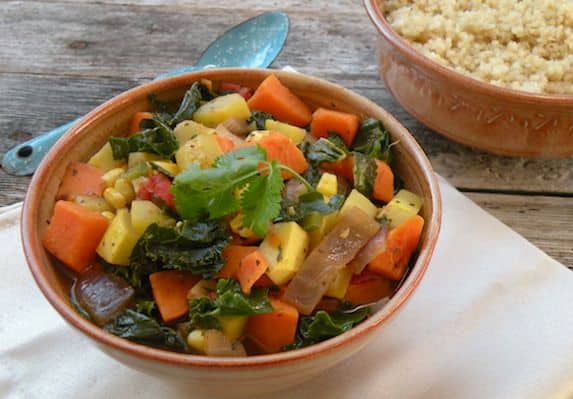
As everyone knows, greens are good for you, and with its high calcium content, kale is a standout. In this stew, the deep greens contrasted with the yellow of the squash and the orange of the sweet potato, makes this an attractive and nourishing dish for the autumn harvest. [Read more...]
Mixed Greens Salad with Avocado, Apples, and Baked Tofu
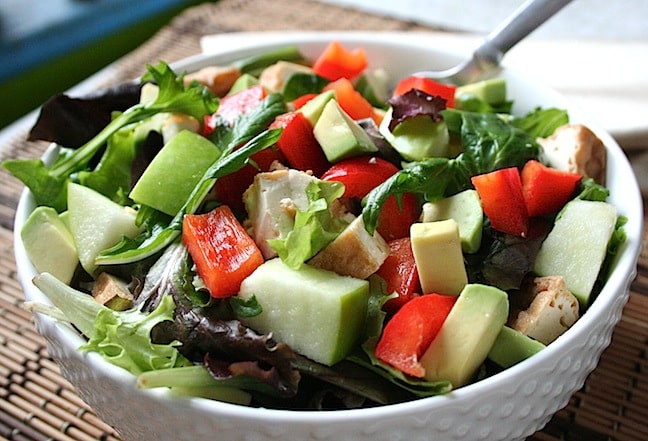
This luscious salad adds substance to a meal when served with light main dishes, and makes a nice at-home lunch on weekends and holidays. This is a tasty salad to stuff into a pita or wrap up. Or, for a light meal, serve with soup and fresh bread. [Read more...]
"Buddhist's Delight" (Chinese-Style Vegetable Stew)

Inspired by a favorite vegetarian Chinese restaurant dish, Buddhist's Delight stew is enhanced with protein-packed seitan. Gluten-free? Substitute an equivalent amount of tofu for the seitan. For an everyday meal, serve with Tri-Color Coleslaw. To make it a feast, add Scallion Pancakes or simply serve veggie spring rolls from your natural food store's frozen food section. Adapted from Vegan Soups and Hearty Stews for All Seasons. Photo by Theresa Rafetto.
Spinach, Artichoke, and Chickpea Salad

A feast of color and texture, this salad of baby spinach, embellished with other colorful veggies, is quick to prepare and a pleasure to serve. Serve it in larger portions as a main-dish salad, or in smaller portions as a substantial side salad. Delicious served with a pureed vegetable soup and some fresh bread. Photos by Rachael Braun.
Moroccan-Style Vegetable Stew
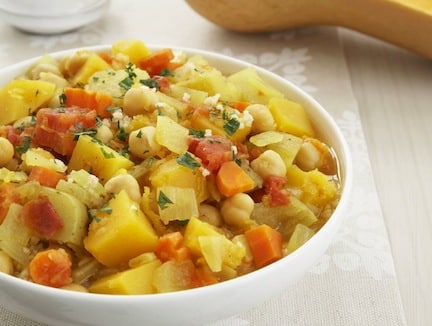
This delicious Moroccan-inspired stew looks as good as it tastes. It's a wonderful way to warm up cold season dinners, with sweet sugar pumpkin or butternut squash in an aromatic broth. This can also be a wonderful choice for fall Jewish holidays - Rosh Hashanah (Jewish New Year)and Sukkoth. Adapted from Vegan Soups and Hearty Stews for All Seasons by Nava Atlas. Photo by Theresa Raffetto.
Thai-Spiced Sweet Potato Stew

With Thai ingredients available at most natural foods stores and well-stocked supermarkets, it has become easy to enjoy the delightful flavors of this cuisine at home. Use your discretion with the hot seasoning you choose; a little will give a hint of heat, but if you want a spicier stew, you can step it up from there. Adapted from Vegan Soups and Hearty Stews for all Seasons by Nava Atlas. Photos by Hannah Kaminsky.
New Orleans Red Beans and Rice
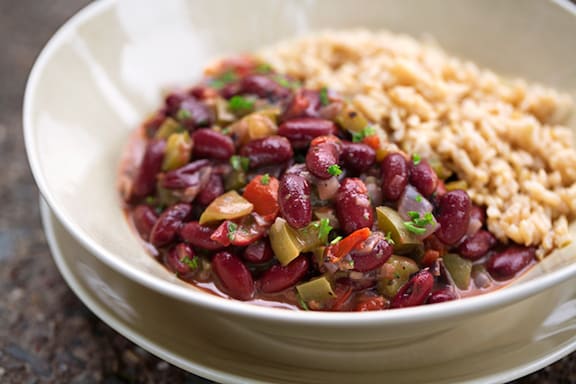
If one had to choose a single truly characteristic dish of New Orleans, it would be hard to come up with one more renowned than red beans and rice. A dish that has been around long enough to have become established in local folklore, it's also one that even today, graces many New Orleans restaurant menus. Vegetarians visiting New Orleans should be aware that "red and white," as it has come to be known, is often made with spicy smoked sausage.
When I visited New Orleans back in 1985, I was lucky enough to find a rare meatless version at the I & I Creole Vegetarian Restaurant, which is no longer open. The chef and owner, had made a batch that day. Her "secret ingredient" was a bit of peanut butter, which imparted a rich, roasted flavor. That, along with a good dusting of cayenne, produces an excellent adaptation of this classic. This isn't a dish to start when you come home from work at night! It’s not a lot of work, but needs time to simmer. It’s perfect to make on a rainy Sunday afternoon. Adapted from Great American Vegetarian. Photos by Hannah Kaminsky.
Serves: 8
- 2 cups (1 pound) dry red or kidney beans
- 1 ½ tablespoons olive oil
- 2 medium onions, chopped
- 1 medium green bell pepper, finely diced
- 2 large celery stalks, diced
- 2 cloves garlic, minced
- 14- to 15-ounce can diced tomatoes (try fire-roasted)
- 2 bay leaves
- 2 heaping tablespoons natural peanut butter
- ¼ cup chopped fresh parsley
- Several leaves sliced fresh basil, or 1 ½ teaspoons dried
- ½ teaspoon dried thyme
- Salt and freshly ground pepper to taste
- Cayenne pepper to taste
- Hot cooked rice
Sort and rinse the beans, then soak the beans overnight in plenty of water to cover. Before cooking them, drain the beans, then place them in a soup pot with water in approximately 1 ½ times their bulk. Bring to a simmer and add the oil, onions, bell pepper, celery, garlic, tomatoes, and bay leaves. Cover and simmer over low heat for 1 hour.
At this point the water level should be just below the beans and vegetables. Add a bit more water if necessary to bring it to that level. Add the peanut butter, parsley, basil, and thyme. Simmer gently over very low heat for 1 ½ hours, stirring occasionally.
At this point there should be a thick, sauce-like consistency to the liquid. Mash a small amount of beans against the side of the pot with a wooden spoon.
Season with salt, pepper, and cayenne. Cover and cook until most of the beans have burst and are very soft, 20 to 30 minutes longer. The resulting consistency should be thick and saucy. Remove the bay leaves and serve over hot cooked rice.
Nutrition information (with ½ cup cooked rice)
Per serving: Calories: 297; Total Fat: 3g; Protein: 11g; Carbs: 54g; Sodium: 16 mg


“Three Sisters” Stew
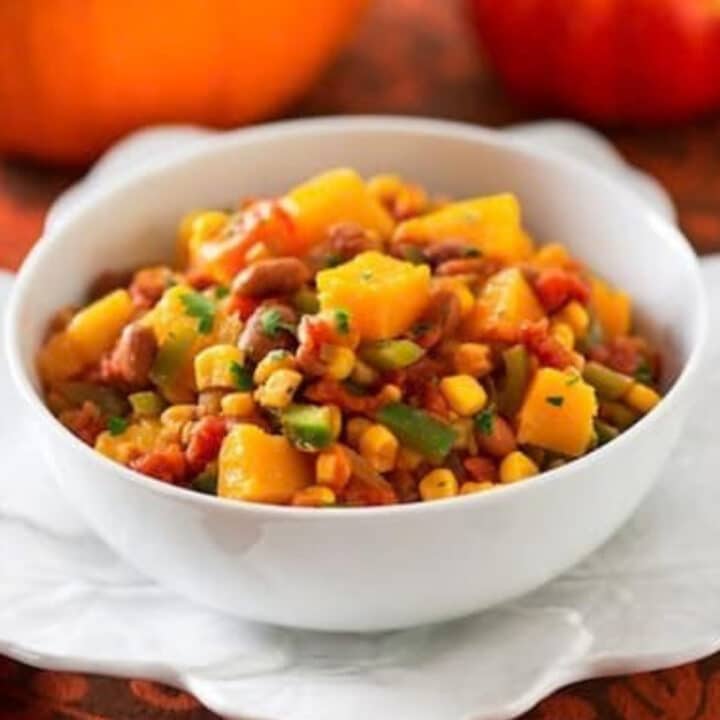
This hearty Three Sisters Stew is loaded with tender squash, protein-packed beans, and sweet corn in a gently spiced tomato base. It's delicious comfort food, and makes a perfect vegan main dish for Thanksgiving too!

Here's a great main dish option for Thanksgiving dinner, or any chilly fall evening. This stew is somewhat like a chili, though it's more about the squash than the beans. Big, golden chunks of roasted butternut squash or pumpkin share the pot with pinto beans, corn, bell pepper, and fire-roasted tomatoes, all warmed up with cumin, chili powder, and a little fresh chili pepper.
About the Three Sisters
Corn, beans, and squash are known as the "Three Sisters," the trio of crops that many Indigenous peoples of North America, including the Haudenosaunee (Iroquois), have long planted and eaten together. Grown side by side, each one helps the others: the corn stalks give the beans something to climb, the beans enrich the soil, and the broad squash leaves shade the ground to hold in moisture and keep weeds down. At the table they make a nourishing, well-rounded meal. This stew is a simple home-kitchen dish inspired by that pairing rather than a traditional Indigenous recipe, and it's our small way of honoring the people who have cultivated these foods for centuries.
Key Ingredients & Substitutions
- Butternut squash or sugar pumpkin. The star of the stew. Roasting it first gives it a deeper, sweeter flavor and keeps the cubes from turning mushy. Kabocha, red kuri, or acorn squash all work well too, and pre-cut butternut squash is a great shortcut.
- Pinto beans. Creamy and mild, they soak up the spices beautifully. Canned beans like Bush's reduced-sodium pinto beans keep this easy; kidney beans, black beans, or cooked-from-dry beans are fine swaps.
- Corn. Fresh kernels cut from the cob are wonderful in early fall, but frozen corn is just as good and there's no need to thaw it first.
- Fire-roasted diced tomatoes. They add a subtle smokiness that plain tomatoes don't. A can of Del Monte fire-roasted diced tomatoes works perfectly; regular diced tomatoes plus a pinch of smoked paprika make a fine substitute.
- Spices and chili pepper. Ground cumin, chili powder, and oregano give the stew its warm, chili-like flavor. A fresh jalapeño or serrano adds gentle heat, or use a small can of mild green chilies if you prefer less spice.
- Vegetable stock. Just a cup keeps the stew thick and moist rather than soupy. Store-bought is fine, or make your own from kitchen scraps.
Helpful Tips
Bake the squash ahead. To make meal prep quick and easy, you can bake your pumpkin or squash a day in advance and keep it in the fridge. Then the whole dish comes together in a snap! This makes it a great dish to serve when you're entertaining.
Take the shortcut when you need it. If you're short on time or simply can't deal with chopping and peeling pumpkin or squash, use pre-peeled and cut butternut squash. In the fall and winter it's easy to find in the produce department of most supermarkets and natural foods stores. Add the raw cubes straight to the pot and simmer a little longer, until they're fork-tender.
Don't over-bake the squash. Pull it from the oven when a knife slides in with just a little resistance. It finishes cooking in the stew, and slightly firm squash holds its shape instead of melting into the sauce.
Use a heavy pot. A wide, heavy-bottomed pot like a Lodge enameled Dutch oven holds a gentle simmer without scorching the thick stew on the bottom.
Let it rest. Like most stews, this one tastes even better after it sits. If time allows, let it stand for an hour or two before reheating, and stir in the fresh cilantro right before serving so it stays bright.
Variations
- Smoky chipotle. Add a minced chipotle pepper in adobo along with the spices for deeper smoke and heat.
- Sweet potato. Swap half the squash for cubed sweet potato; roast or simmer it until tender.
- Extra greens. Stir a few handfuls of chopped kale or spinach into the pot during the last five minutes of simmering.
- Hominy. Replace some or all of the corn kernels with a can of drained hominy for a heartier, posole-like texture.
- Slow cooker. Sauté the onion and garlic, then add everything except the cilantro to a slow cooker with raw squash cubes and cook on low for 6 to 7 hours.
Serving Ideas
Serve the stew in wide bowls with a wedge of easy vegan cornbread for a meal that doubles down on the corn. It's also lovely spooned over brown rice, quinoa, or a wild rice pilaf, or wrapped up in warm homemade tortillas.
For Thanksgiving, set it out as a hearty vegan centerpiece alongside cranberry sauce, a green salad, and roasted Brussels sprouts. Top each bowl with toasted pumpkin seeds, sliced avocado, or a dollop of vegan sour cream for a little extra richness.
Storing & Freezing
Store leftovers in an airtight container in the refrigerator for up to 4 days. The flavors keep developing, so it's a great make-ahead dish. Reheat gently on the stovetop over medium-low heat, adding a splash of stock or water if it has thickened too much.
Three Sisters Stew freezes well for up to 3 months. Cool it completely, then freeze in portions in freezer-safe containers, leaving a little room for expansion. Thaw overnight in the fridge and reheat on the stovetop. The squash softens a bit after freezing, but the flavor holds up nicely; add fresh cilantro after reheating rather than before freezing.

More Vegan Soups and Stews
If you love this Three Sisters Stew, be sure to browse my full collection of vegan soups, stews, and chilis. Or check out these other delicious vegan ideas:
- Best Vegan Thanksgiving Main Dishes
- Old Fashioned Vegan Stew
- Vegan Butternut Squash, Sweet Potato & Corn Chowder
- Sweet Potato Black Bean Chili
- Creamy Vegan Pasta and Butternut Squash Casserole
Recipes photos by Hannah Kaminsky.
Recipe

"Three Sisters" Stew
This hearty Three Sisters Stew is loaded with tender roasted squash, protein-packed pinto beans, and sweet corn in a gently spiced tomato base. It's delicious comfort food, and makes a perfect vegan main dish for Thanksgiving too!
Print
Pin
Save
Servings: servings
Ingredients
- 1 large butternut squash or sugar pumpkin, about 2 pounds; or use pre-cut squash
- 2 tablespoons olive oil
- 1 onion medium, chopped
- 3 cloves garlic minced
- 1 bell pepper medium, green or red, cut into short narrow strips
- 14 ounces fire-roasted diced tomatoes canned, with liquid
- 2 ½ cups canned pinto beans drained and rinsed
- 2 cups corn kernels fresh or frozen
- 1 cup vegetable stock or water
- 1 hot chili pepper fresh, seeded and minced; or substitute one 4-ounce can chopped mild green chilies
- 2 teaspoons ground cumin
- 2 teaspoons chili powder or mesquite seasoning, add more to taste
- 1 teaspoon dried oregano
- salt to taste
- black pepper to taste
- ¼ cup fresh cilantro or parsley, fresh, chopped
Instructions
- Preheat the oven to 375 degrees F and line a shallow baking pan with foil.
- Remove the stem from the squash or pumpkin and cut it in half lengthwise. Place the halves cut side up in the pan and cover loosely with foil. (If your knife isn't sharp enough to cut it, wrap the whole squash in foil and bake it whole, adding 15 to 20 minutes.) Bake for 40 to 50 minutes, until a knife pierces the flesh with a little resistance.
- When cool enough to handle, scrape out the seeds and fibers (clean the seeds for roasting, if you'd like). Peel the squash and cut it into large (about 1-inch) dice.
- Heat the oil in a large soup pot or Dutch oven over medium-low heat. Add the onion and sauté until translucent, about 5 minutes. Add the garlic and continue to sauté until the onion is golden, 3 to 4 minutes more.
- Add the squash, bell pepper, tomatoes with their liquid, pinto beans, corn, stock, chili pepper, cumin, chili powder, and oregano. Bring to a simmer, then cover and simmer gently over low heat, stirring occasionally, until all the vegetables are tender, 20 to 25 minutes. Season to taste with salt and pepper.
- The stew should be thick and very moist but not soupy; add a little more stock or water if needed. If time allows, let the stew stand off the heat for 1 to 2 hours, then heat through before serving. Just before serving, stir in the cilantro and adjust the seasonings to taste.
Notes
For additional spice, use two hot chili peppers instead of one.
Shortcut: Skip the baking step and use about 5 cups of pre-cut raw butternut squash cubes. Add them with the other vegetables in step 5 and simmer 30 to 35 minutes, until tender.
Make ahead: Bake the squash up to 1 day ahead. Leftovers keep in the fridge for up to 4 days and freeze well for up to 3 months.
Nutrition (Estimate per Serving)
Calories: 173kcalCarbohydrates: 31gProtein: 5gFat: 5gSaturated Fat: 1gPolyunsaturated Fat: 1gMonounsaturated Fat: 3gSodium: 436mgPotassium: 613mgFiber: 6gSugar: 7gVitamin A: 10920IUVitamin C: 42mgCalcium: 103mgIron: 2mg
Vegan-ize any recipe!Grab our free vegan cheat sheet, packed with my favorite easy substitutions to make any recipe vegan.
Focaccia Bread

Though focaccia (a traditional Italian flatbread) is yeasted, it doesn’t take as long to make as other yeasted breads; it only requires one brief rising. Start making this bread just before you put up a pot of soup that needs to simmer for a bit, and the two should be ready simultaneously. Make sure to check out the olive variation following the recipe! [Read more...]
Vegan Butternut Squash, Sweet Potato & Corn Chowder
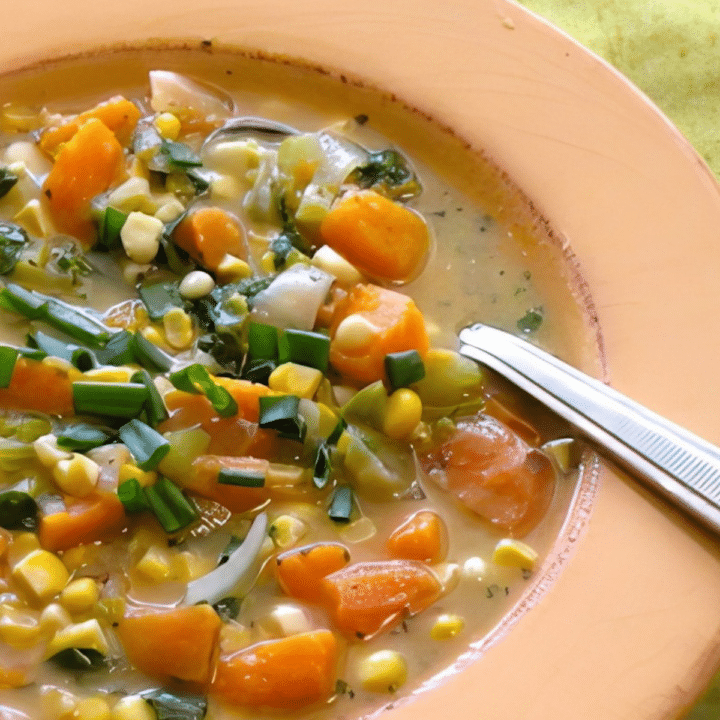
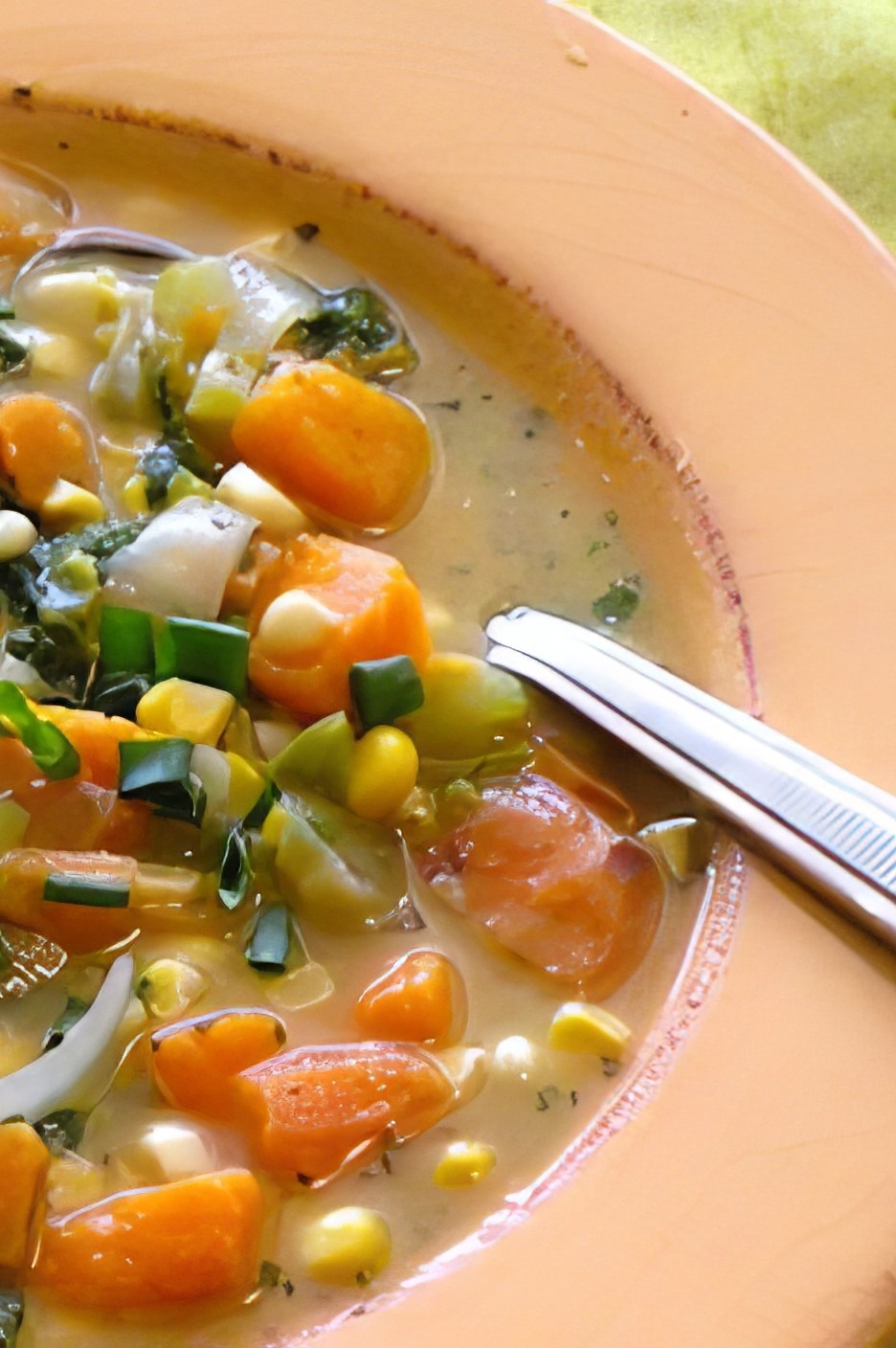
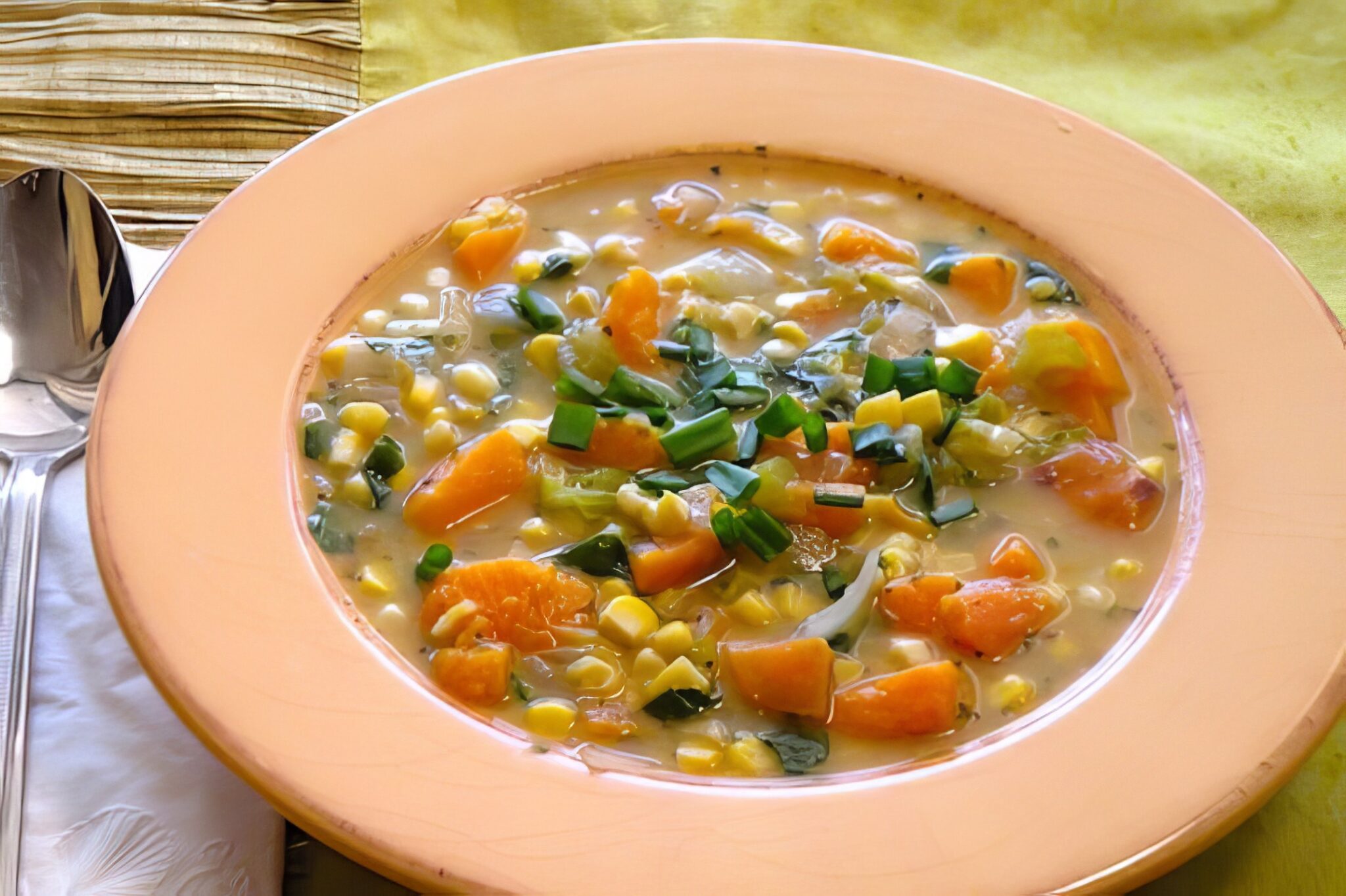
This vegan butternut squash chowder is a thick, chunky bowl of roasted squash, sweet potato, and sweet corn simmered with warm cumin and finished with a splash of rice milk. It's the kind of soup that makes the whole kitchen smell like fall, and it's hearty enough to serve as a light meal on its own.
Key Ingredients & Substitutions
- Butternut squash. Roasting it whole in foil first makes peeling and dicing much easier. In a pinch, pre-cut fresh squash from the produce section works too, just skip the roasting step and simmer it a little longer in the broth.
- Sweet potato. Adds body and natural sweetness that balances the savory broth. A red-skinned or Yukon Gold potato can stand in if you're out of sweet potato, though the chowder will be a bit less sweet.
- Corn kernels. Fresh corn cut from the cob has the best flavor in late summer and early fall, but frozen corn kernels work great year-round and save you a step.
- Vegetable broth. Use a good low-sodium broth so you can control the seasoning yourself, or sub in 4 cups of water with 2 vegetable bouillon cubes.
- Cumin and salt-free seasoning blend. These two are what give the chowder its warm, savory depth without leaning on salt. A ground cumin and a salt-free seasoning blend like Mrs. Dash both work well.
- Rice milk. Adds a bit of creaminess without any dairy. Unsweetened soy or oat milk are easy substitutes if that's what you have on hand.
- Parsley and scallions. Stirred in and sprinkled on at the very end, they add a fresh, bright finish to an otherwise rich, earthy soup.
Helpful Tips
Roast the squash while you prep everything else. The whole squash needs about 40 minutes in the oven, which is plenty of time to chop the onion, celery, and sweet potato and get the broth simmering, so nothing about this recipe requires you to stand around waiting.
Thicken the base without any cream. Scooping out a couple of cups of the cooked vegetables, mashing them, and stirring them back in is the classic way to give this chowder body. If you'd rather skip a step, an immersion blender does the same job in seconds: just pulse it a few times right in the pot.
Don't skip the resting time if you can help it. Letting the chowder sit for even 20 to 30 minutes before serving gives the flavors time to meld. It's even better the next day, which makes it a great make-ahead option for a busy week or a holiday meal.
Add the rice milk at the end, off high heat. Stirring it in during the last few minutes of a gentle simmer keeps the chowder from separating or tasting overly starchy. A low simmer for a few minutes is all it needs to warm through.
Taste before you salt. Between the seasoning blend and the vegetable broth, this chowder already has a good amount of savory flavor. Add salt gradually at the end so you don't oversalt a dish that's meant to taste naturally sweet and earthy.
Variations
- Make it extra creamy. Puree the entire pot with an immersion blender instead of just a portion for a smooth, bisque-style soup. Our Creamy Corn Chowder uses this method if you want to see it in action with a different flavor combination.
- Add a smoky note. A teaspoon of smoked paprika or a pinch of chipotle powder stirred in with the cumin gives the chowder a smoky, campfire-like edge.
- Stir in some greens. A couple of handfuls of chopped kale or spinach added in the last five minutes of cooking sneaks in extra nutrition without changing the flavor much.
- Swap in miso for extra umami. A tablespoon of white miso whisked in at the end (the way we do it in our Miso-Butternut Squash Soup) adds a savory depth that pairs beautifully with the sweet potato and corn.
- Make it a chili-chowder hybrid. Stir in a drained can of black beans and a diced jalapeno for more heat and protein.
- Go grain-free or add grains. This chowder is naturally gluten-free as written; if you'd like more heft, a scoop of cooked wild rice or quinoa stirred in at the end works nicely.
Serving Ideas
A big bowl of this chowder is satisfying enough on its own, but it's even better with something to dip or scoop. Warm cornbread or a batch of our Vegan Biscuits are perfect for soaking up the last spoonfuls of broth.
This chowder also makes a wonderful addition to a holiday table. Serve smaller portions in mugs or small bowls as a starter alongside dishes like our Vegan Sweet Potato Casserole, or ladle out full bowls for a simpler, cozy weeknight dinner with a green salad on the side.
Storing & Freezing
Let the chowder cool to room temperature, then store it in an airtight container in the refrigerator for up to 4 days. The flavor actually improves after a day or two, so this is a great soup to make ahead.
This chowder freezes well, though the texture will be a little softer once thawed since the vegetables continue to break down. Freeze in an airtight, freezer-safe container for up to 3 months, then thaw overnight in the refrigerator and reheat gently on the stovetop, adding a splash of extra broth or rice milk if it's thickened up too much.
More Vegan Soups, Stews & Chilis
If you loved this recipe, here are a few more you might enjoy:
Recipe
Vegan Butternut Squash, Sweet Potato & Corn Chowder
A cozy, chunky vegan butternut squash chowder loaded with sweet potato, corn, and warm cumin, finished with a splash of rice milk for a creamy, dairy-free bowl that's perfect for fall and holiday meals.
Print
Pin
Save
Servings: servings
Ingredients
- 1 medium butternut squash about 1 ½ pounds
- 2 tablespoons olive oil
- 1 large onion finely chopped
- 2 medium celery stalks finely diced
- 1 large sweet potato peeled and diced
- 4 cups vegetable broth or water with 2 vegetable bouillon cubes
- 2 bay leaves
- 2 teaspoons cumin
- 1 tablespoon salt-free seasoning blend such as Frontier or Mrs. Dash
- 2 ½ to 3 cups corn kernels fresh (from about 3 medium ears) or frozen, thawed
- 1 cup rice milk or as needed
- Salt and freshly ground pepper to taste
- ¼ cup minced fresh parsley or more, to taste
- 2 scallions thinly sliced, for garnish
Instructions
- Partially prebake the squash to make it easier to peel and cut. Wrap the whole squash in foil and bake at 375 degrees F for about 40 minutes, or until you can pierce the narrow end with a little resistance.
- Once the squash is cool enough to handle, cut it in half lengthwise and remove the seeds and fibers. Cut into ¾-inch slices, peel, then dice.
- Heat the olive oil in a large soup pot. Add the onion and celery and saute over medium heat until the onion turns golden, about 5 minutes.
- Add the sweet potato and vegetable broth. Bring to a slow boil, then stir in the bay leaves, cumin, and salt-free seasoning blend. Lower the heat and simmer, covered, for 10 minutes.
- Add the diced squash and corn. Continue to cook until all the vegetables are tender, about 15 minutes longer.
- With a slotted spoon, scoop out about 2 cups of the solid ingredients, mash well, and stir back into the soup - or simply insert an immersion blender and puree a small portion of the soup right in the pot to thicken the base.
- Stir in enough rice milk to give the chowder a slightly thick, creamy consistency. Season with salt and pepper, then simmer over low heat for 5 more minutes.
- If time allows, let the chowder stand for about an hour before serving, then reheat gently. This soup also keeps well and can be made a day ahead, since the flavor deepens overnight.
- Just before serving, stir in the parsley and garnish each bowl with sliced scallions.
Nutrition (Estimate per Serving)
Calories: 169kcalCarbohydrates: 23gProtein: 2gFat: 4gSaturated Fat: 1gPolyunsaturated Fat: 1gMonounsaturated Fat: 2gSodium: 398mgPotassium: 494mgFiber: 3gSugar: 5gVitamin A: 13996IUVitamin C: 22mgCalcium: 75mgIron: 2mg
Vegan-ize any recipe!Grab our free vegan cheat sheet, packed with my favorite easy substitutions to make any recipe vegan.
Vegan Butternut Squash with Wild Rice & Onion Stuffing

Even those of us who’ve given up the bird still want a showstopper for the table, and this vegan butternut squash stuffed with whole wheat bread, wild rice, and caramelized onions delivers exactly that. For more make-ahead holiday menu ideas, check out my Vegan Thanksgiving Cookbook and Vegan Christmas Cookbook. Photos by Hannah Kaminsky.

Key Ingredients & Substitutions
- Butternut squash. Look for squashes small enough to serve as individual portions (about 1 pound each) that can stand upright once halved. Delicata, acorn, or sweet dumpling squash all work as substitutes - just adjust the roasting time for size.
- Wild rice. Its chewy texture and nutty flavor hold up beautifully inside a roasted squash. A wild rice blend works too, or swap in cooked brown rice or quinoa if that's what you have on hand.
- Whole wheat bread. Torn into pieces, it soaks up the broth and stuffing flavors just like a classic bread stuffing. Use a certified gluten-free bread to make the whole dish gluten-free.
- Red onion and garlic. Sautéed until golden, they build the savory base of the stuffing. Any onion you have on hand will work in a pinch.
- Sesame seeds and fresh herbs. Sage and a pinch of dried thyme give the stuffing its cozy, Thanksgiving flavor, while sesame seeds add a subtle crunch and nutty depth.
- Orange juice and vegetable broth. A splash of fresh orange juice brightens the stuffing, while vegetable broth keeps everything moist. Use all broth if you'd rather skip the citrus.
Helpful Tips
Bake the squash ahead of time. The initial roasting step - wrapping the squash in foil and baking until just tender - can be done up to a day in advance. Let it cool, scoop out the pulp, and store the shells and filling separately in the fridge until you're ready to stuff and finish baking.
Don't skip resting the rice. Wild rice can take 40 minutes or more to fully absorb its cooking liquid. Let it sit, covered, for a few minutes once the water is absorbed so the grains finish plumping up.
Taste the stuffing before you stuff. Since the bread, wild rice, and vegetables are all already cooked, taste the stuffing mixture before filling the squash and adjust the salt, pepper, or thyme to your liking.
Watch the squash size. Smaller squashes cook faster and are easier to serve as individual portions. If yours are on the larger side, add a few extra minutes to the initial roasting time and check for doneness by piercing the narrow neck with a knife.
Reheat gently. Since the squash and stuffing are both already cooked by the time you get to the final bake, that step is really just about heating everything through. A covered dish in a moderate oven keeps the filling moist instead of drying it out.
Variations
- Swap the squash. Hubbard, delicata, sweet dumpling, and golden nugget squash are all great stuffable alternatives to butternut.
- Add dried fruit. A handful of dried cranberries or chopped dried apricots stirred into the stuffing adds a touch of sweetness that pairs perfectly with the wild rice.
- Go nutty. Toasted pecans or walnuts add crunch and richness - stir them in along with the sesame seeds.
- Make it a pilaf instead. Skip the squash shells altogether and serve the wild rice stuffing on its own as a side dish, similar to this Cranberry-Pear Wild Rice Stuffing.
- Change the grain. Quinoa or brown rice can stand in for the wild rice if that's what's in your pantry, with great results.
- Spice it up. A pinch of smoked paprika or a dash of cayenne in the stuffing adds warmth without overpowering the other flavors.
Serving Ideas
This stuffed squash is hearty enough to serve as the main event at a vegan Thanksgiving or holiday dinner - set it in the center of the table alongside the rest of your vegetarian and vegan Thanksgiving spread. A scoop of Vegan Sweet Potato Casserole or a simple green salad rounds out the meal nicely.
For a smaller gathering, it also works beautifully as a plated first course or a satisfying vegan main dish any night of the week - just pair it with a simple soup or salad to round out the plate.
Storing & Freezing
Leftover stuffed squash keeps well in the refrigerator for up to 4 days. Store it in an airtight container, or cover the baking dish tightly with foil.
To freeze, let the stuffed squash cool completely, then wrap each half tightly in foil and freeze for up to 2 months. Thaw overnight in the refrigerator before reheating, covered, in a 350 degree F oven until warmed through.

More Vegan Thanksgiving Recipes
If you loved this recipe, here are a few more you might enjoy:
- Rice and Pecan-Stuffed Squash
- Cranberry-Pear Wild Rice Stuffing
- Maple-Glazed Butternut Squash
- 6 Vegan Stuffings for Thanksgiving & Beyond
Recipe

Vegan Butternut Squash with Wild Rice & Onion Stuffing
Roasted butternut squash halves stuffed with whole wheat bread, wild rice, and caramelized onions — a hearty, vegan centerpiece for Thanksgiving or any holiday table.
Print
Pin
Save
Servings: servings
Ingredients
- 4 medium-small butternut squashes about 1 pound each
- ¾ cup raw wild rice rinsed
- 1 ½ tablespoons olive oil
- 1 large red onion
- 2 to 3 cloves garlic minced
- 2 ½ cups whole wheat bread torn, firmly packed; use gluten-free bread if you'd like
- 1 tablespoon sesame seeds
- A few sliced fresh sage leaves or leave whole if small, optional
- ½ teaspoon dried thyme
- 1 tablespoon mixed season blend salt-free, such as Frontier or Mrs. Dash, or to taste
- ½ cup vegetable broth
- Juice of 1 small orange about ¼ cup; or omit and just use more vegetable broth
- Salt and freshly ground pepper to taste
Instructions
- Preheat the oven to 375 degrees F.
- Wrap the whole squashes in foil and place on a rack in the center of the oven. Bake for 40 to 45 minutes, or until you can pierce through the narrow neck with a knife and feel a little resistance. You can do this step ahead of time. Let the squashes cool somewhat, then cut in half lengthwise and scoop out the seeds and surrounding fibers.
- Meanwhile, bring 2 cups of water to a boil in a saucepan. Stir in the wild rice, reduce to a simmer, then cover and cook until the water is absorbed, about 40 minutes. Remove from the heat and let sit, covered, for a few minutes to finish steaming.
- Heat the oil in a skillet over medium heat. Add the onion and garlic and sauté until golden, about 5 to 7 minutes.
- In a mixing bowl, combine the cooked wild rice with the sautéed onion and garlic, then stir in the whole wheat bread, sesame seeds, sage, thyme, seasoning blend, vegetable broth, orange juice, and salt and pepper. Taste and adjust the seasoning as needed.
- Scoop out the squash pulp, leaving firm shells about ½ inch thick. Chop or dice the pulp and stir it into the wild rice mixture. Stuff the squash shells with the mixture, place in foil-lined baking dishes, and cover.
- Before serving, place the stuffed squashes, still covered, in a preheated 350 degree F oven.
- Bake for 15 to 20 minutes, or just until heated through, then serve.
Nutrition (Estimate per Serving)
Calories: 230kcalCarbohydrates: 40gProtein: 6gFat: 8gSaturated Fat: 1gPolyunsaturated Fat: 2gMonounsaturated Fat: 4gSodium: 320mgPotassium: 750mgFiber: 6gSugar: 8gVitamin A: 39894IUVitamin C: 80mgCalcium: 213mgIron: 3mg
Vegan-ize any recipe!Grab our free vegan cheat sheet, packed with my favorite easy substitutions to make any recipe vegan.
Sautéed Fennel, Leeks and Mushrooms

Though anise-flavored fennel is a great veggie, most of us don't think to use it for everyday meals. Sautéed with leeks and mushrooms, it makes a simple side dish that's a nice accompaniment to pasta and grain dishes. Photos by Hannah Kaminsky. [Read more...]
Vegan Green Chile Cornbread
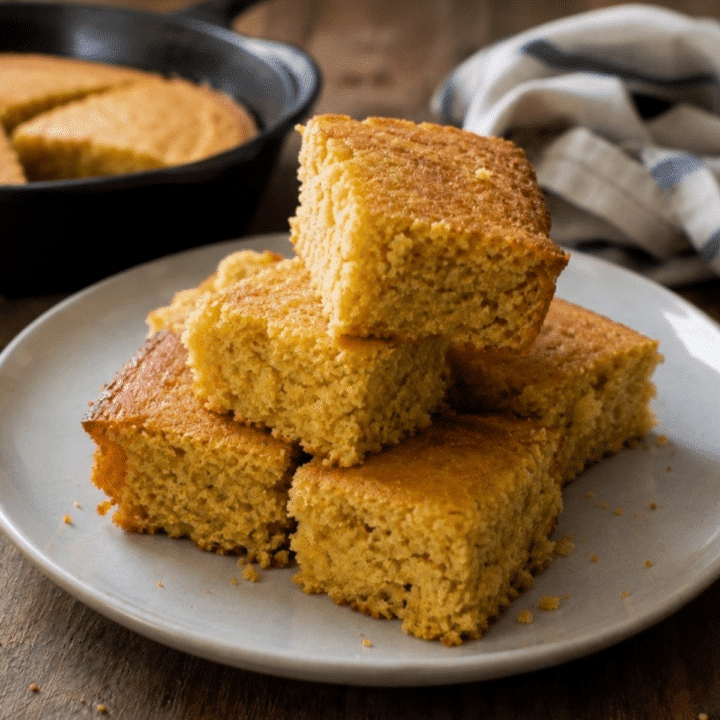
This moist vegan cornbread gets a spicy kick from green chiles and little pops of sweetness from whole corn kernels — it’s the perfect savory side for a bowl of chili, a pot of beans, or any hearty stew on your table this season.
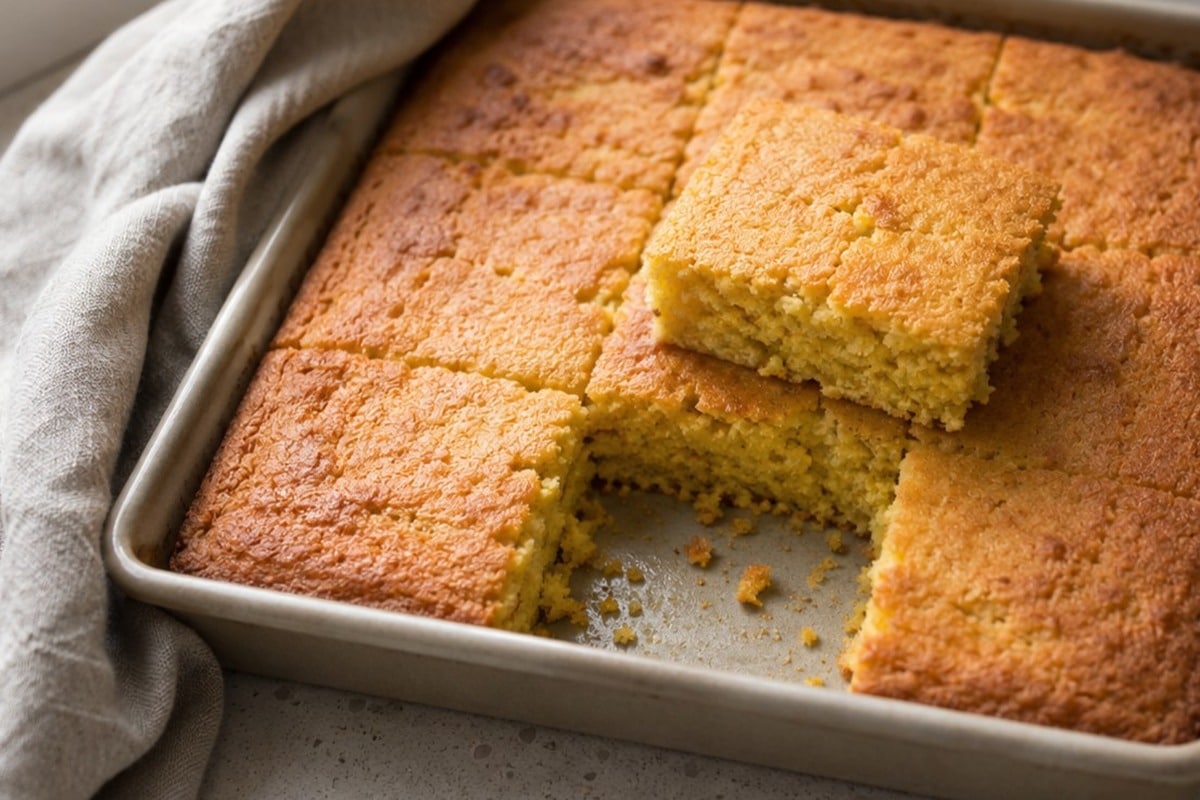
Key Ingredients & Substitutions
- Cornmeal. The backbone of any good cornbread — it’s what gives this recipe its color, crunch, and true corn flavor. Stone-ground cornmeal has more texture than the finely milled kind, but standard yellow cornmeal works fine too if that’s what’s in your pantry.
- Whole wheat pastry flour or spelt flour. Both are lighter and less dense than regular whole wheat flour, which keeps this cornbread tender instead of gummy. Whole wheat pastry flour is the easier find; spelt flour gives a slightly nuttier flavor if you have it on hand.
- Baking soda and baking powder. This recipe leans on both leaveners together, since baking soda alone doesn’t give a batter this thick and moist enough lift on its own.
- Plain coconut yogurt or applesauce. Either one adds moisture and a little richness without any dairy. Coconut yogurt keeps the flavor closer to savory; applesauce nudges it slightly sweeter.
- Olive oil. Keeps the crumb tender and moist. Melted vegan butter is a good substitute if you want a richer, more buttery flavor.
- Unsweetened nondairy milk. Thins the batter to the right pourable-but-thick consistency. Almond, soy, or oat milk all work equally well here.
- Fresh hot chile peppers or canned diced green chiles. This is where the recipe gets its name and its kick. Fresh jalapeños or serranos bring real heat; a can of mild diced green chiles keeps things gentler if you’re serving a crowd, or kids.
- Frozen corn kernels. Adds little pops of sweetness and texture throughout the bread. Thaw them first so they don’t add extra moisture to the batter.
- Vegan cheddar cheese (optional). Melts into little pockets as it bakes, adding a savory, cheesy richness. Leave it out if you’d rather keep things simple — the cornbread is still good without it.
Helpful Tips
Don’t overmix the batter. Stir just until the dry and wet ingredients come together. Overmixing develops the gluten in the flour and can leave you with a tough, dense cornbread instead of a tender one.
Taste-test your chiles before you commit to the amount. Fresh hot peppers vary a lot in heat from one to the next. If you’re not sure how spicy yours are, start with the smaller amount, and add more next time if you want it hotter.
Use a well-oiled pan — or better yet, cast iron. A hot, oiled cast iron skillet gives cornbread a crisp, golden crust that a regular baking pan can’t quite match. If you only have a metal or glass baking pan, grease it generously so the edges release cleanly.
Check doneness with a toothpick, not just the clock. Ovens vary, and this batter is thick. Insert a toothpick or thin knife into the center; it should come out clean or with just a few moist crumbs clinging to it, not wet batter.
Let it cool for a few minutes before cutting. Slicing straight out of the oven can cause the squares to crumble. A five-minute rest firms up the crumb enough for clean cuts, while it’s still warm enough to serve.
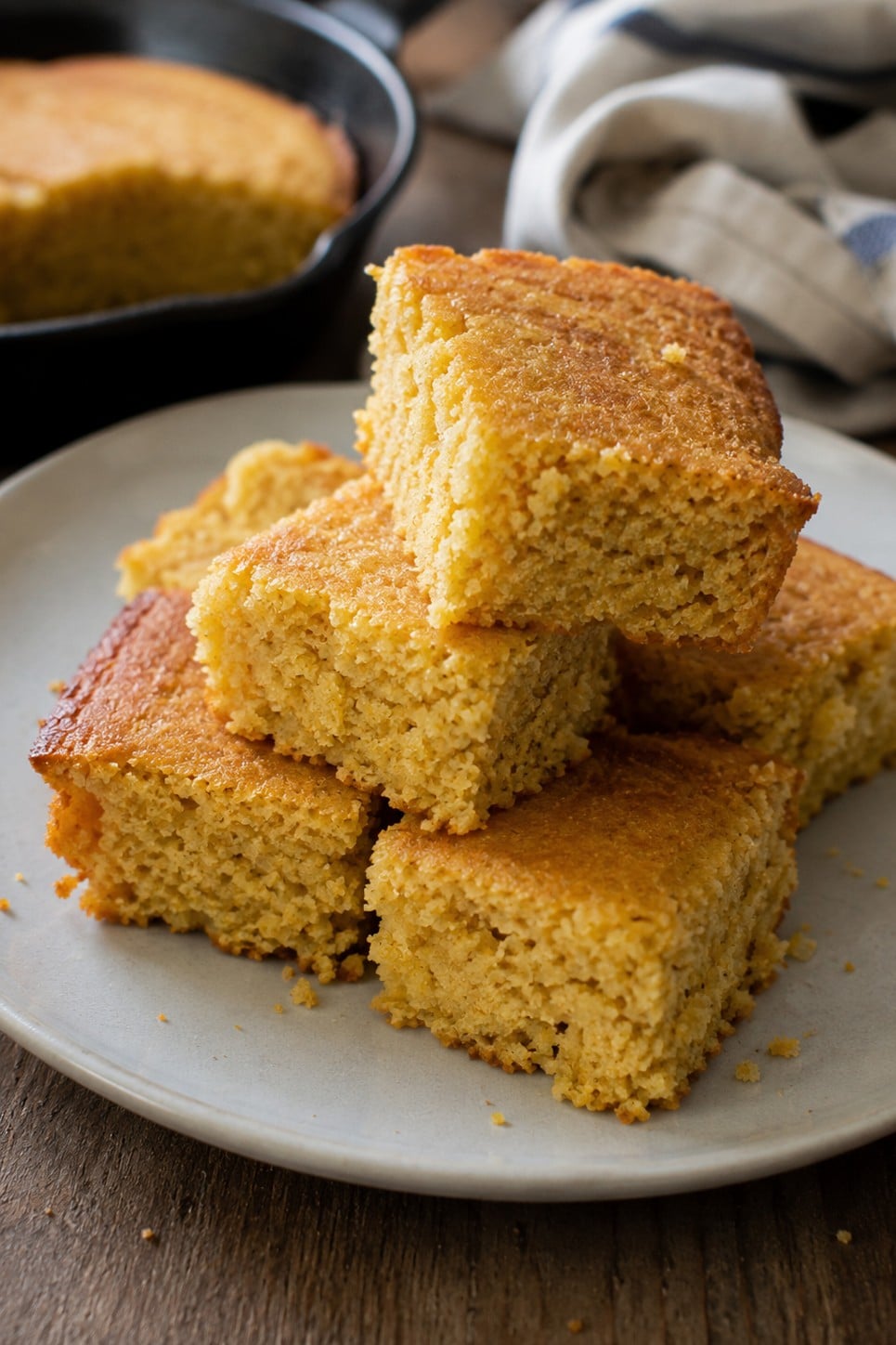
Variations
- Smoky chipotle cornbread. Swap the fresh chiles for a minced chipotle pepper in adobo sauce for a deeper, smokier heat.
- Extra-cheesy double-corn cornbread. Stir in an extra ¼ cup of vegan cheddar and a handful of extra corn kernels for a heartier, more indulgent version.
- Herb and scallion cornbread. Add a couple tablespoons of chopped fresh cilantro and a sliced scallion or two along with the chiles for a brighter, herbier bite.
- Slightly sweet cornbread. Stir 2 tablespoons of maple syrup into the wet ingredients for a cornbread that leans a little sweeter, which pairs especially well with a smoky bowl of chili.
- Cornbread muffins. Divide the batter among a lightly oiled 12-cup muffin tin and bake for about 15 to 18 minutes, checking early since muffins bake faster than a full pan.
- Skillet cornbread. Bake the batter in a well-oiled, oven-safe cast iron skillet instead of a square pan for a rustic presentation and extra-crisp edges.
Serving Ideas
This cornbread was made for scooping up a bowl of something hearty. Serve warm squares alongside Sweet Potato Black Bean Chili — the slightly spicy bread and a smoky bowl of chili are a natural match. It’s just as good next to a bowl of Potato, Corn, and Green Chile Soup, which doubles down on that same chile flavor.
For a simple lunch or snack, split a warm square and top it with a little vegan butter and a drizzle of maple syrup, or serve it as part of a Southwestern-inspired spread with beans, rice, and a simple slaw.
Storing & Freezing
Store leftover cornbread in an airtight container at room temperature for a day, or in the refrigerator for up to 4 days — the corn, yogurt, and oil keep it more moist than a typical quick bread, so it holds up well.
This cornbread also freezes well. Wrap individual squares tightly in plastic wrap, then place them in a freezer bag or airtight container, and freeze for up to 3 months. Thaw at room temperature, or reheat wrapped in foil in a 300°F oven for 10 to 15 minutes, or in the microwave for 20 to 30 seconds.
More Vegan Bread and Side Dish Recipes
If you loved this recipe, here are a few more you might enjoy:
Recipe
Green Chile Cornbread
This moist vegan cornbread gets a kick of heat from green chiles and pops of sweetness from corn kernels — a perfect savory side for chili, beans, or any hearty stew.
Print
Pin
Save
Servings:
Ingredients
- 1 cup cornmeal preferably stone ground
- 1 cup whole wheat pastry flour or spelt flour
- 1 teaspoon baking soda
- ½ teaspoon baking powder
- 1 teaspoon salt
- 6- ounce container plain coconut yogurt or ¾ cup applesauce
- ¼ cup olive oil
- ⅓ cup unsweetened nondairy milk or more as needed
- 1 to 2 small fresh hot chile peppers seeded and minced, or one 4-ounce can chopped mild green chilies
- ½ cup frozen corn kernels thawed
- ¾ cup grated vegan cheddar cheese optional (but highly recommended!)
Instructions
- Preheat the oven to 400 degrees F.
- Combine the first 6 (dry) ingredients in a mixing bowl and stir together.
- Make a well in the center of the dry ingredients. Pour in the yogurt or applesauce, oil, and half of the rice milk. Stir until well combined, adding just a bit more nondairy milk if needed to make a smooth, slightly stiff batter, but don't let the batter be too wet.
- Stir in the chilies and corn kernels.
- Pour the mixture into an oiled 9-inch-square baking pan. Bake for 20 to 25 minutes, or until the top is golden and a knife inserted in the center tests clean.
- Let cool slightly; cut into 3 sections in one direction and 4 in the other to create 12 squares. Serve warm.
Nutrition (Estimate per Serving)
Calories: 166kcalCarbohydrates: 22gProtein: 3gFat: 7gSaturated Fat: 1gPolyunsaturated Fat: 1gMonounsaturated Fat: 4gCholesterol: 1mgSodium: 396mgPotassium: 63mgFiber: 3gSugar: 2gVitamin A: 18IUVitamin C: 1mgCalcium: 25mgIron: 1mg
Vegan-ize any recipe!Grab our free vegan cheat sheet, packed with my favorite easy substitutions to make any recipe vegan.
Buckwheat Groats (Kasha): How to Cook and Use
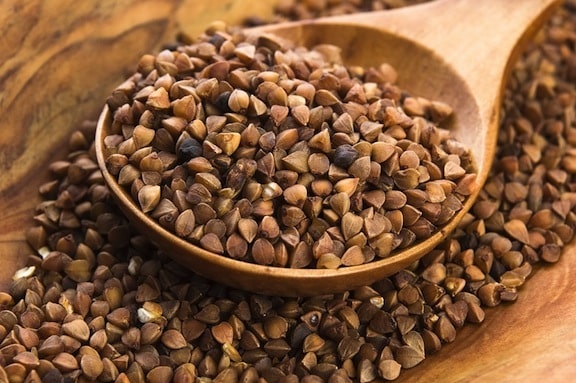
Toasty, brown buckwheat groats may either be passionately disliked for their strong, distinct flavor and aroma or greatly savored for the same reasons. An oddity among grains, buckwheat is not a cereal grain in the botanical sense, but a beautiful pink-flowered plant related to rhubarb. The soft, pyramid seeds, when hulled and cracker, are known as buckwheat groats. Further milling produces buckwheat flour.
[Read more...]
African-American Sweet Potato and Peanut Stew
You'll love this hearty and savory African-American Sweet Potato and Peanut Stew. It's full of healthy veggies!

This stew contains peanuts, sweet potato and black-eyed peas-a triumvirate of nutrient-dense, delicious crops. Time does the work with this stew. The longer it sits, the more lovely and complete the flavor.
This stew pairs beautifully with rice or flatbread. You can serve it with homemade naan or injera as well.
How to Make African-American Sweet Potato and Peanut Stew
- Heat oil in large pot over medium-high heat.
- Add chopped peppers and onions, and stir.
- Add celery, potatoes, green beans, and peppers.
- Stir in remaining veggies and cinnamon stick.
- Bring stew to a boil and simmer for 30 minutes.
- Remove cinnamon stick, add seasonings, and serve.
Full directions for how to make African-American Sweet Potato and Peanut Stew are in the printable recipe card below.
African-American Sweet Potato and Peanut Stew FAQs
How should I store leftover stew?
You can store leftover stew in an airtight container in the fridge for up to one week. Alternatively, if you need to save it for a long time, you can store this stew in the freezer for up to 3 months.
Can I substitute the veggies in this stew?
You can easily swap out the veggies in this stew for pretty much anything you have on hand. Try swapping out zucchini, other varieties of squash, carrots, peas, etc.
Sample more of VegKitchen's recipes for global stews.
Recipe

African-American Sweet Potato and Peanut Stew
You'll love this hearty and savory African-American Sweet Potato and Peanut Stew. It's full of healthy veggies!
Print
Pin
Save
Servings:
Ingredients
- 2 tablespoon canola oil or coconut oil
- 1 onion chopped
- 1 jalapeño minced, or a good pinch of red pepper flakes
- 2 stalks celery chopped
- 1 sweet potato peeled and chopped
- 1 lb green beans trimmed and chopped into bite-sized pieces
- 1 red pepper chopped
- 1 stick cinnamon
- 15 oz black-eyed peas or black beans, rinsed and drained
- 15 oz diced tomatoes
- 2 tablespoon peanut butter preferably organic
- sea salt and fresh ground pepper
- 1 handful cilantro chopped
Instructions
- Heat oil over medium-high heat in a large soup pot.
- Add chopped onions and pepper, then stir for one minute.
- Then add chopped celery, sweet potato, green beans, and red pepper. Stir another few minutes until vegetables start to soften.
- Then add cinnamon stick, black-eyed peas or black beans, and chopped tomatoes.
- When mixture comes to a boil, reduce heat to low and cover, simmering for 30 minutes.
- Stir in the peanut butter. Discard cinnamon stick. Season with sea salt and pepper and gently mix in cilantro.
Nutrition (Estimate per Serving)
Calories: 361kcalCarbohydrates: 53gProtein: 15gFat: 12gSaturated Fat: 2gPolyunsaturated Fat: 4gMonounsaturated Fat: 6gTrans Fat: 1gSodium: 108mgPotassium: 1144mgFiber: 15gSugar: 16gVitamin A: 10001IUVitamin C: 70mgCalcium: 146mgIron: 6mg
Vegan-ize any recipe!Grab our free vegan cheat sheet, packed with my favorite easy substitutions to make any recipe vegan.
Ellen Kanner is the Huffington Post's Meatless Monday blogger, the syndicated columnist of the Edgy Veggie and contributor to publications including Culinate, Bon Appetit and Every Day With Rachael Ray as well as her own blog Edgy Veggie.
Spinach or Arugula and Miso Pesto

This delicious pesto turns ordinary carbs into special meals. You can use this as suggested below for serving with pasta, pizza, or potatoes. Or skip the carbs as I've done here, and toss this pesto with "noodles" made of raw zucchini and/or yellow summer squash made with a spiral slicer. No matter how you use it, this pesto, made greener with spinach, imparts a rich, briny flavor from the addition of miso. [Read more...]
Cuban-Inspired Black Beans and Rice
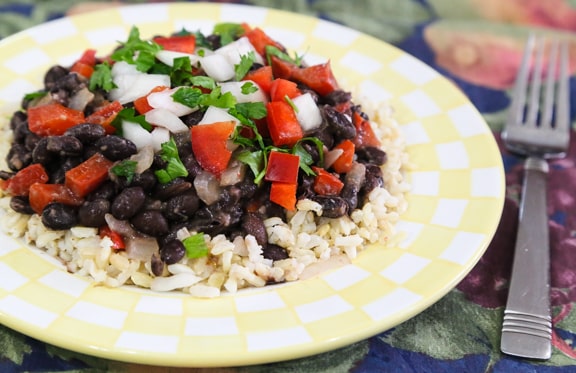
This Vegan Black Beans and Rice is loaded with Cuban-inspired flavors and packed with hearty plant-based protein and healthy brown rice. And it's easy to make in just 30 minutes!
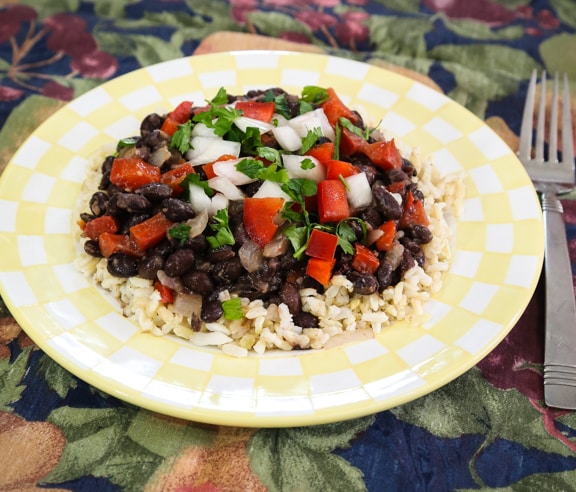
Growing up in Florida, you get a chance to experience a lot of Cuban (or Cuban inspired) foods, thanks to the large Cuban-American community.
And black beans and rice are one of the classics! (In fact, beans and rice are two of my favorite plant based ingredients.) This vegan-friendly version is loaded with healthy protein and lots of flavor.
Plus, it's so simple to make that you can throw it together for a weeknight dinner.
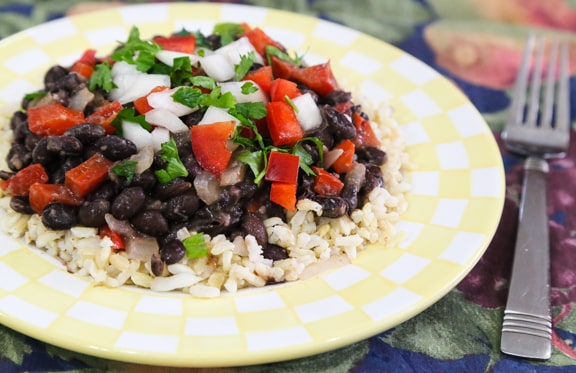
Tips & Tricks
I used canned black beans for this recipe, but you can also use dried beans if you prefer. You'll need to soak and cook approximately 1 ⅔ cups dried beans to make enough for the recipe.
The apple cider vinegar gives a nice flavor, but you can substitute white wine vinegar if that's what you have on hand.
I served the black beans with brown rice, because I prefer to use whole grains when possible. But it would be equally delicious with white rice or even couscous.
More Tasty Vegan Recipes
If you love this recipe, be sure to check out these other delicious plant-based ideas:
- Cuban Plantain and Rice Bowls
- Jamaican Red Beans and Rice
- New Orleans Red Beans and Rice
- Spanish-Style Rice and Red Beans
Recipe
Cuban-Inspired Black Beans and Rice
This Vegan Black Beans and Rice is loaded with Cuban-inspired flavors and packed with hearty plant-based protein. And it's easy to make in just 30 minutes!
Print
Pin
Save
Servings: servings
Ingredients
- 1 onion large, finely chopped
- 1 bell pepper red or green, finely diced
- 2 tablespoon olive oil
- 3 cloves garlic minced
- 3 ½ cups black beans canned, drained and rinsed
- 2 tablespoon apple cider vinegar
- salt and pepper to taste
- 1 dash cayenne pepper or to taste
- ½ cup water
- cooked brown rice for serving
- 1 small onion finely chopped, for optional garnish
Instructions
- Heat 1 ½ tablespoons of the oil in a large skillet. Add the onion and sauté over medium-low heat until it is translucent. Add the bell pepper and garlic and continue to sauté until the onion is golden.
- Add the beans, vinegar, and seasonings (be generous with the black pepper) along with the water or cooking liquid. Simmer over very low heat, covered, for 10 minutes.
- With the back of a wooden spoon or a mashing implement, mash about ½ cup of the beans in the skillet, or enough to thicken the base. Make sure there is enough liquid to keep everything nice and moist but not soupy. Simmer for 5 minutes longer.
- Serve the black beans over the cooked rice, topping each serving with a sprinkling of the chopped raw onion, if desired.
Notes
Serves 6 as a side dish, or 3-4 as a main course.
Nutrition (Estimate per Serving)
Calories: 191kcalCarbohydrates: 27gProtein: 9gFat: 5gSaturated Fat: 1gPolyunsaturated Fat: 1gMonounsaturated Fat: 3gSodium: 4mgPotassium: 435mgFiber: 9gSugar: 2gVitamin A: 634IUVitamin C: 27mgCalcium: 36mgIron: 2mg
Vegan-ize any recipe!Grab our free vegan cheat sheet, packed with my favorite easy substitutions to make any recipe vegan.
Great Gluten-Free Vegan Eats by Allyson Kramer

Allyson Kramer, who runs the popular Manifest Vegan blog (if you are interested in gluten-free, vegan, or both together, this is the place for you!) has released her first book, the bountiful, colorful Great Gluten-Free Vegan Eats.* Going vegan is a trend that has exploded over the last few years, and gluten-free diets have also gained traction in a big way. [Read more...]
Roasted Potatoes with Black Olives
You'll love the hearty yet tangy flavor of these Roasted Potatoes with Black Olives. They're the perfect combination of home-style comfort food and zippy Mediterranean food.
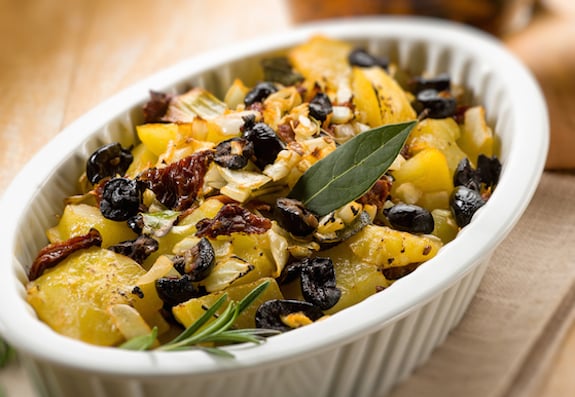
These roasted potatoes taste great on the side of most mains. I love pairing them with a light salad, a hearty vegan meatloaf, or a warming soup.
Here's a simple way to bring out great flavor in roasted potatoes. Roasted potatoes are always a treat no matter what, but the rosemary adds a distinctive and delicious flavor. Even better, the olives add little bursts of flavor in every bite!
How to Make Roasted Potatoes with Black Olives
- Preheat oven and line a roasting pan with parchment.
- Scrub potatoes, then cut into quarters.
- Toss potatoes with onion and olive oil.
- Arrange veggies in one layer in roasting pan.
- Bake for 15 minutes.
- Add remaining seasoning ingredients and stir.
- Bake longer until potatoes are golden.
- Transfer to serving container, season, and serve.
Full directions for how to make Roasted Potatoes with Black Olives are in the printable recipe card at the bottom of the post.
Roasted Potatoes with Black Olives FAQs
How are roasted potatoes different than mashed potatoes?
The difference between roasted potatoes and mashed potatoes is pretty simple. Roasted potatoes are simply whole or chopped potatoes that have been roasted in the oven. Mashed potatoes, on the other hand, have been cooked and them mashed.t
Can I make this dish into mashed potatoes?
You can easily make this dish into mashed potatoes. Simply place the roasted potatoes into a food processor or mash them with a handheld potato masher. The flavors will still blend together just as well.
Here are more easy, tasty potato recipes.
Recipe
Roasted Potatoes with Black Olives
You'll love the hearty yet tangy flavor of these Roasted Potatoes with Black Olives-the perfect combo of comfort food and Mediterranean.
Print
Pin
Save
Servings:
Ingredients
- 3 lbs small potatoes Yukon gold or red-skinned
- 1 medium yellow onion chopped
- 2 tablespoon olive oil
- 3 sprigs fresh rosemary or as much as you'd like, leaves only
- ½ cup oil-cured black olives pitted and chopped
- ¼ cup sun-dried tomatoes sliced; optional
- 1 teaspoon dried thyme
- 1 teaspoon sweet paprika
- salt and freshly ground pepper to taste
Instructions
- Preheat the oven to 425°F. Line a roasting pan with baking parchment for easy cleanup.
- Scrub the potatoes well, then cut into quarters.
- In a large mixing bowl, toss the potatoes with the onion and olive oil.
- Arrange potatoes and onions in a single layer on the roasting pan.
- Bake for 15 minutes.
- Then add the rosemary, olives, and optional dried tomatoes. Sprinkle in the thyme and paprika and stir.
- Bake for 10 to 15 minutes longer or until the outsides of the potatoes are golden and the insides tender.
- Transfer the mixture to a serving container, season with salt and pepper, and serve.
Nutrition (Estimate per Serving)
Calories: 253kcalCarbohydrates: 45gProtein: 6gFat: 7gSaturated Fat: 1gPolyunsaturated Fat: 1gMonounsaturated Fat: 5gSodium: 195mgPotassium: 1153mgFiber: 6gSugar: 4gVitamin A: 261IUVitamin C: 48mgCalcium: 46mgIron: 3mg
Vegan-ize any recipe!Grab our free vegan cheat sheet, packed with my favorite easy substitutions to make any recipe vegan.
Spinach and Basil Pesto

Spinach, in combination with basil, makes a less intensely-flavored pesto sauce. Some may enjoy this milder flavor, whether served traditionally on pasta, or as a topping for potatoes or an offbeat dressing for potato salad, on grains, or as a garnish for soup. [Read more...]
Southeast Asian-Style Vegetable Stew

Broccoli, cauliflower, green beans, and peppers mingle in a rich coconut–peanut base, making a stew that's great all year round. Adapted from Vegan Soups and Hearty Stews for All Seasons. Photos by Theresa Raffetto.
Vegan White Pizza with Asparagus and Spinach

Here's a light, lively vegan white pizza recipe that's perfect for a springtime meal. It features favorite spring veggies - asparagus and spinach on a creamy backdrop. Serve with a big green salad; toss in some chickpeas, whose flavor is highly compatible with the pizza. This pizza goes down easy, so double the recipe if you're serving a hungry group. Recipe adapted from Vegan Express. Photos by Evan Atlas. [Read more...]
- « Previous Page
- 1
- …
- 4
- 5
- 6
- 7
- Next Page »