

This easy vegan mac and cheese is rich and comforting. Using pureed silken tofu as a base makes it super creamy. Boost the nutrition of this comfort food meal by serving with plenty of fresh veggies - this goes well with simply prepared broccoli or kale - and a colorful salad or platter of fresh cut vegetables with dip. For an even healthier sauce, try our Almost-Raw Cheez Sauce, based on baby carrots, raw cashews, nutritional yeast, and other nutrient-dense ingredient [Read more...]
Search Results for: carrots
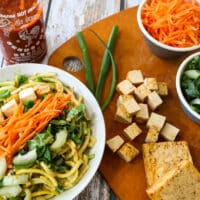
Peanut Satay Zucchini Noodle Bowl
These zucchini noodles are packed with flavor from a flavorful peanut satay sauce and loaded with nutritious veggies and tofu. And the best part - it's ready in 15 minutes!
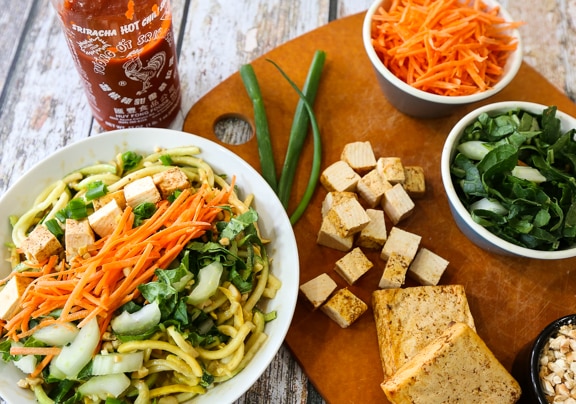
Who doesn't love zucchini noodles? They make a perfect base for ever-popular vegan bowls, too. We love them not because there's anything wrong with regular pasta noodles. But in the same way as cauliflower "rice" has gotten to be such a big thing, it's just another very cool way to eat more veggies.
But what if you don't have a machine - how do you make zucchini noodles without a spiralizer? You buy them already spiralized, that's how. And then this peanut satay noodle bowl will be ready in a flash.
I love zucchini noodles, and I even have a spiralizer. But I'm so lazy that I hardly ever use it. I mean, I have to climb onto a step stool, get it down from a cabinet, then after using it, almost the whole thing needs to be washed and takes up the entire dish drainer. Then, of course, I have to climb onto the step stool to put it back. No wonder it sits there mostly unused.
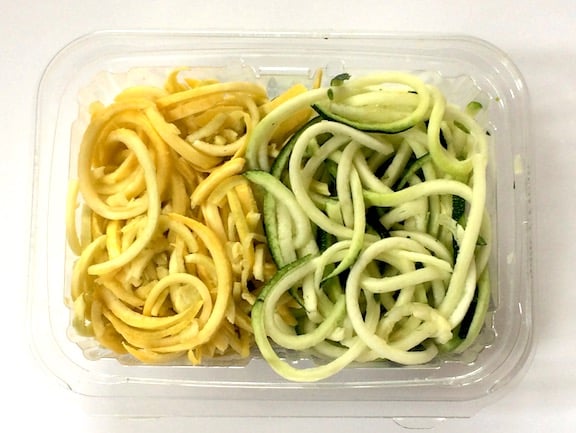
So, imagine my delight when I discovered spiralized zucchini (and a bunch of other spiralized veggies in my supermarket's produce section. Granted, buying these prepared veggie noodles is a bit more expensive than buying a couple of zucchini and spiralizing it yourself. But for me, it means saving two trips on the godforsaken step stool, and cleaning up afterwards!
Zucchini noodles are so tasty with peanut sauce. And you guessed it - we'll be using prepared peanut satay sauce, too. I figure the little extra I'm spending on the prepped zucchini noodles, I'm saving on getting all the ingredients needed to make satay sauce from scratch.
The nice things about one bowl meals is that you don't need to obsessively measure ingredients. You can also substitute other vegetables for the ones we use here. Just arrange them artfully (or sloppily, we won't tell) on the base on the zucchini noodles bathed in satay sauce, serve, and enjoy.
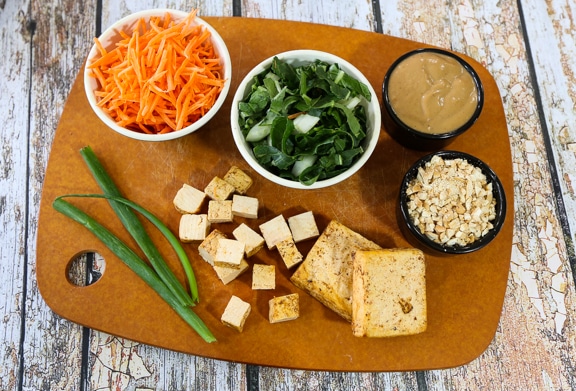
What you need
- 10 to 12 ounce package fresh zucchini noodles (or a combo of zucchini and yellow squash)
- 12 to 16-ounce bottle peanut satay sauce
- 1 bunch regular bok choy or 1 baby boy choy
- 5.5- to 8-ounce package baked tofu
- 1 bunch scallions
- Bag of grated carrots
- Roasted peanuts or cashews, small quantity (optional)
You may already have on hand
- Sriracha or other hot stuff
What to do
1 Remove the zucchini noodles from the packaging and combine in a mixing bowl with enough satay sauce to coat generously. Divide between two wide shallow bowls.
2 If you're using regular bok choy you'll only need a couple of stalks. Either way, rinse the bok choy or baby bok choy, pat dry, and slice thinly.
3 Cut about half of the tofu into dice. Slice one or two scallions thinly.
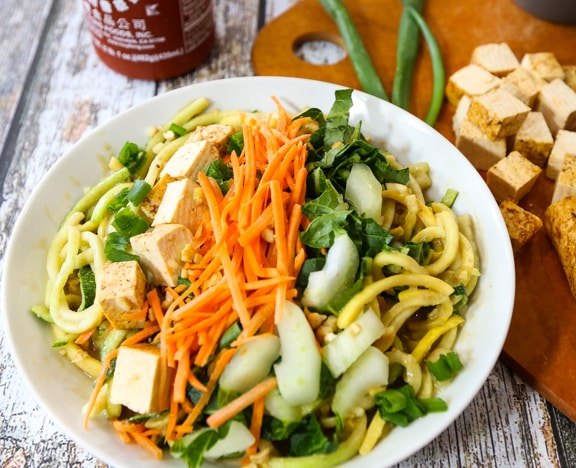
4 Arrange the bok choy, tofu, and grated carrots over the zucchini noodles. Sprinkle with chopped nuts, if using, and pass around hot sauce if you'd like.
Note: You'll have quite a bit of bok choy (if using a regular bunch), scallion, and carrot from this meal; plus a small amount of tofu and some satay sauce. Use them to make a tasty raw salad or a quick stir-fry. Add whatever you'd like to the mix - leafy greens and/or tomatoes to a salad; a grain to the stir-fry.
If you love this recipe, check out these other delicious creations:
- Zucchini Noodles with Vegan Bolognese
- Creamy Pesto Zucchini Noodles
- Sesame Zucchini Noodles
- Easy Zucchini Noodles with Peanut Sauce
Photos by Evan Atlas
Recipe
Peanut Satay Zucchini Noodles
These zucchini noodles are packed with flavor from a flavorful peanut satay sauce and loaded with nutritious veggies and tofu. And the best part - it's ready in 15 minutes!
Print
Pin
Save
Servings:
Ingredients
- 10 to 12 ounce package fresh zucchini noodles or a combo of zucchini and yellow squash
- 12 to 16- ounce bottle peanut satay sauce
- 1 bunch regular bok choy or 1 baby boy choy
- 5.5- to 8- ounce package baked tofu
- 1 bunch scallions
- Bag of grated carrots
- Roasted peanuts or cashews small quantity (optional)
- You may already have on hand
- Sriracha or other hot stuff
Instructions
- Remove the zucchini noodles from the packaging and combine in a mixing bowl with enough satay sauce to coat generously. Divide between two wide shallow bowls.
- If you're using regular bok choy you'll only need a couple of stalks. Either way, rinse the bok choy or baby bok choy, pat dry, and slice thinly.
- Cut about half of the tofu into dice. Slice one or two scallions thinly.
- Arrange the bok choy, tofu, and grated carrots over the zucchini noodles. Sprinkle with chopped nuts, if using, and pass around hot sauce if you'd like.
Notes
You'll have quite a bit of bok choy (if using a regular bunch), scallion, and carrot from this meal; plus a small amount of tofu and some satay sauce. Use them to make a tasty raw salad or a quick stir-fry. Add whatever you'd like to the mix - leafy greens and/or tomatoes to a salad; a grain to the stir-fry.
Nutrition (Estimate per Serving)
Calories: 594kcalCarbohydrates: 55gProtein: 25gFat: 29gSaturated Fat: 1gSodium: 2689mgPotassium: 1428mgFiber: 6gSugar: 39gVitamin A: 19049IUVitamin C: 214mgCalcium: 561mgIron: 5mg
Vegan-ize any recipe!Grab our free vegan cheat sheet, packed with my favorite easy substitutions to make any recipe vegan.
10 Great Quinoa Bowl Recipes
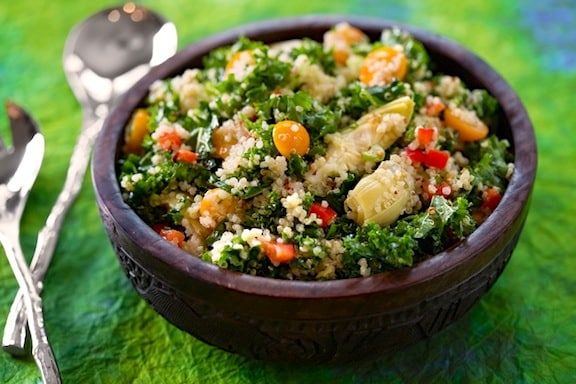
If you need an easy way to serve up a ton of protein and nutrients in one go, you’ll want to look into these vegan quinoa bowl recipes. These quinoa bowl recipes serve up fruit, veggies and tasty spices all heaped onto some delicious quinoa. Serve these up for an easy breakfast, lunch or dinner—seriously, you can have them any time of day! [Read more...]
15+ Creative Vegan Recipes Using Vegetable Broth That Aren't Soups
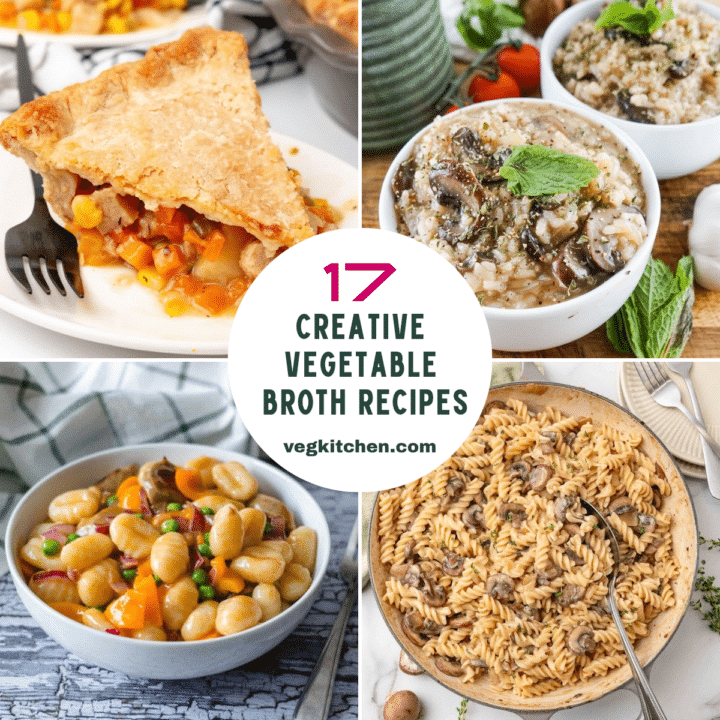
Vegetable broth is one of the hardest-working ingredients in a vegan kitchen, and it can do so much more than soup. It gives risotto its creamy, savory depth, turns a little flour and oil into a silky gravy, and makes pilafs, stuffings, and casseroles taste like they've been simmering all day.
So if you've got a carton in the pantry (or a jar of homemade in the fridge), here are 17 of our favorite cozy recipes with vegetable broth that aren't soups. You'll find pot pies, mushroom risotto, gnocchi in gravy, paella, holiday stuffings, hearty grain dishes, and more, plus a quick guide to making your own broth from kitchen scraps at the end.
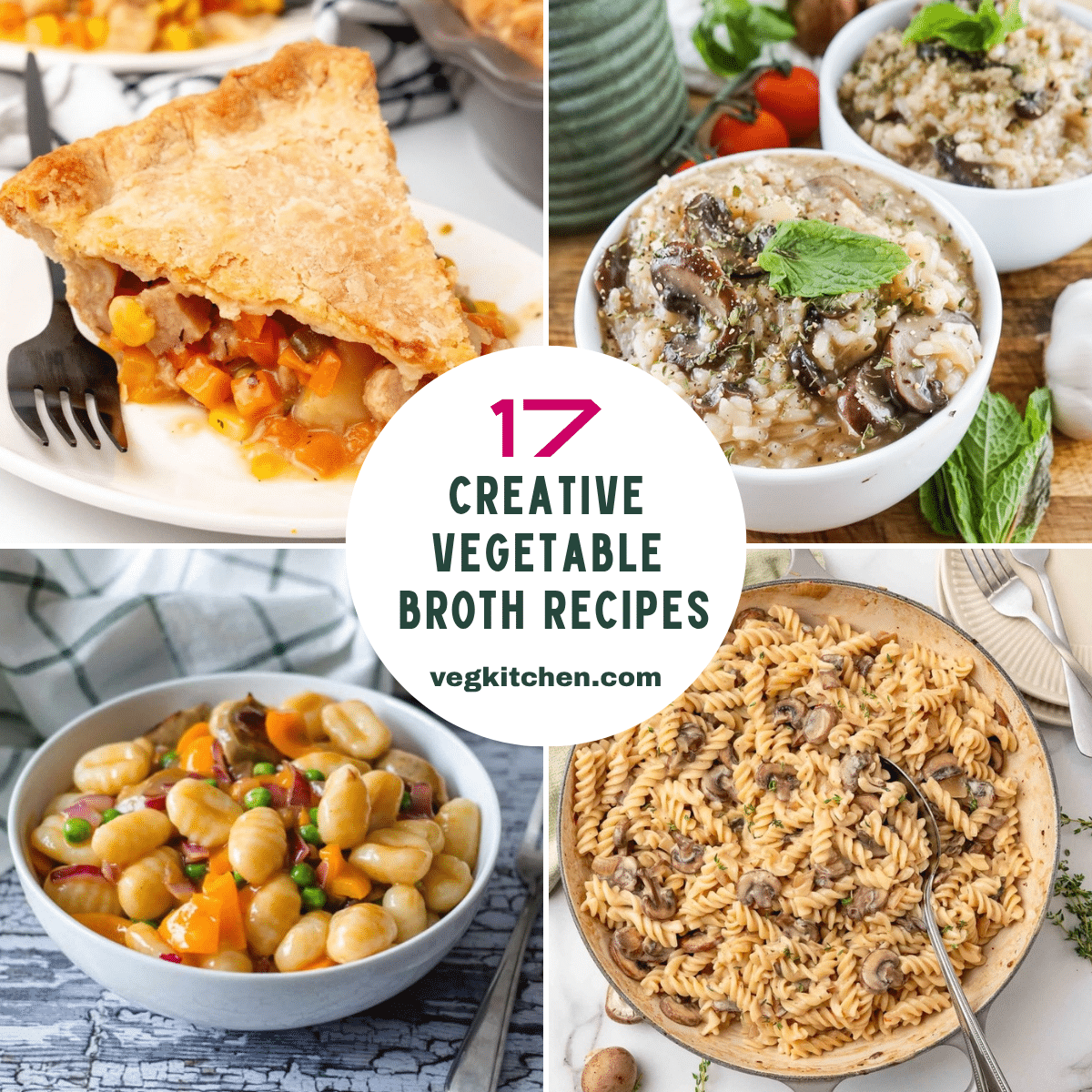
From weeknight pastas to show-stopping holiday mains, these creative vegan recipes prove that a good broth is the secret to cozy, comforting food all year long.
17 Creative Vegan Recipes Using Vegetable Broth

All the comfort of a classic pot pie, baked casserole-style under a flaky homemade crust. Two and a half cups of vegetable broth turn into a thick, thyme-scented gravy that hugs the potatoes and mixed veggies.
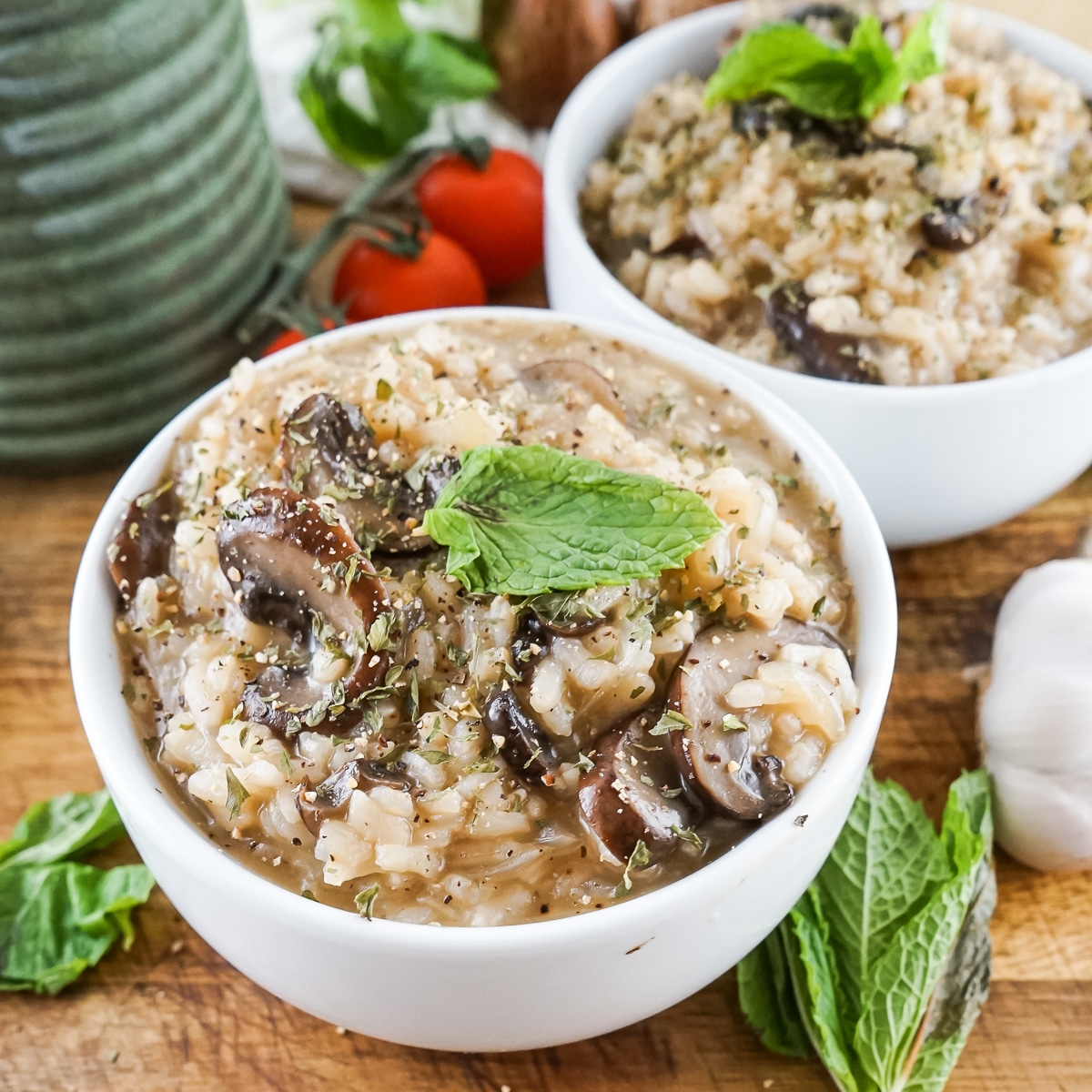
Risotto is where good broth really shines, since the rice drinks it in one ladle at a time. Just a handful of ingredients (mushrooms, onion, garlic and plenty of stock) add up to a creamy, dairy-free bowl of comfort.
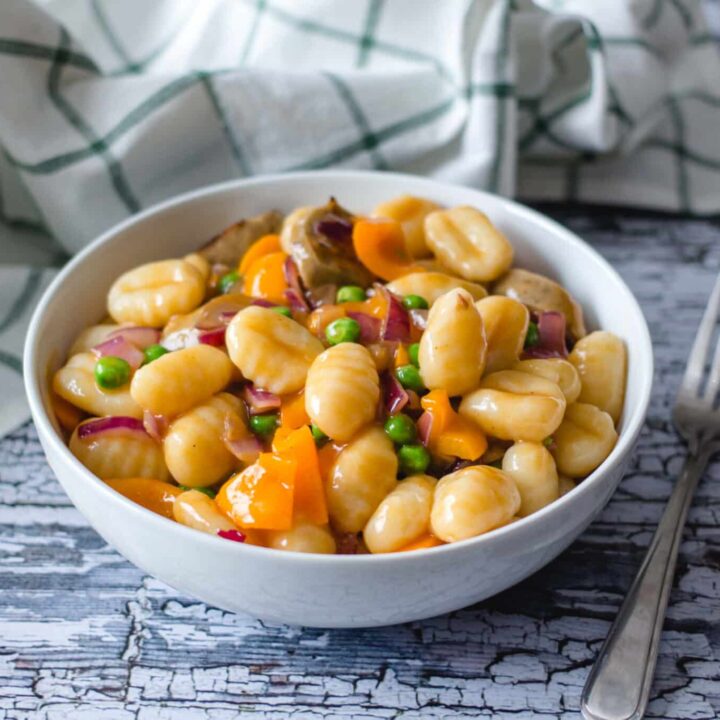
Pillowy potato gnocchi and savory vegan Italian sausage get smothered in a peppery brown gravy built on vegetable broth and soy sauce. It's stick-to-your-ribs comfort food in about 45 minutes.
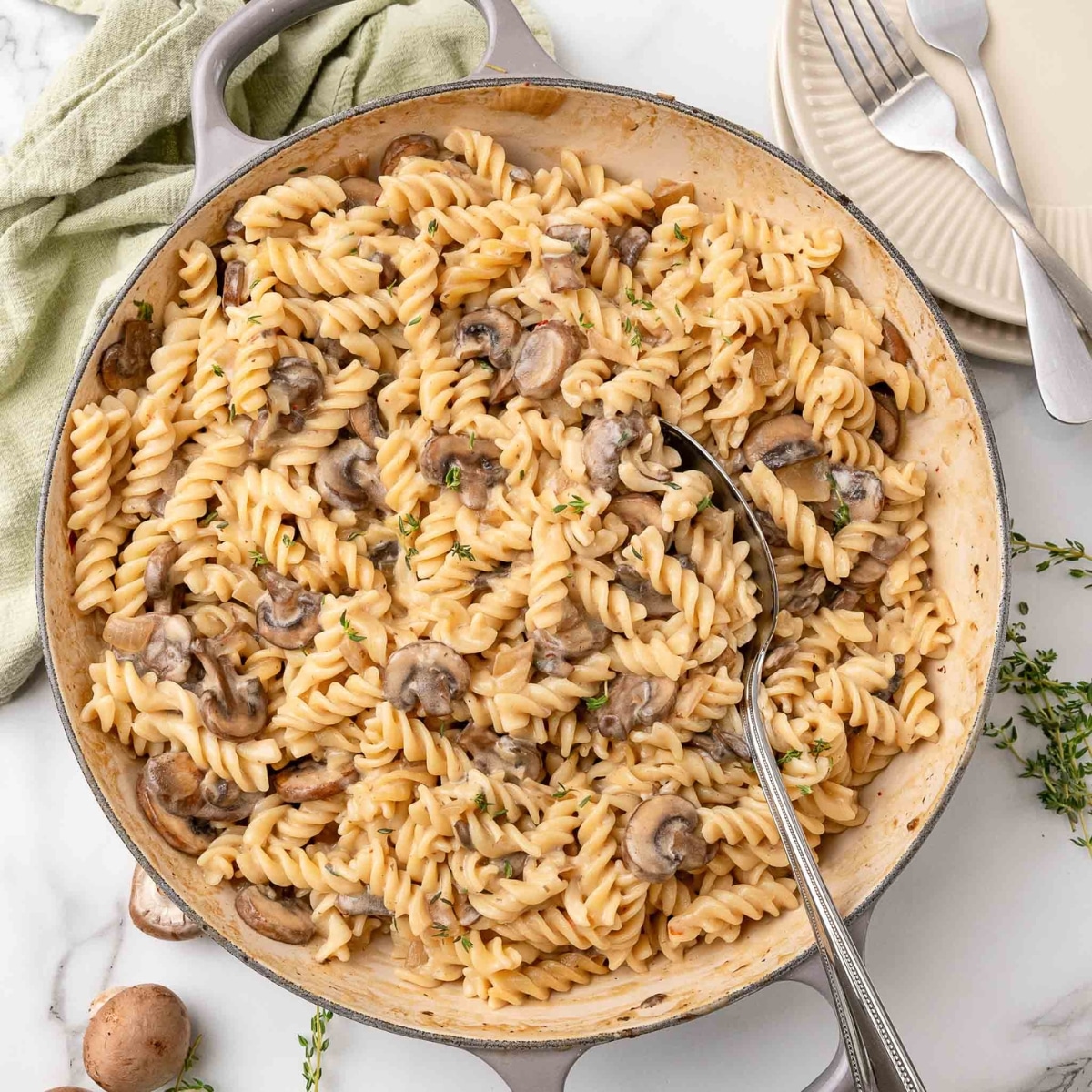
Vegetable broth and coconut milk team up to make a silky, velvety sauce for earthy baby bella mushrooms, with a splash of white wine and fresh thyme. It's rich enough for company and quick enough for a weeknight.
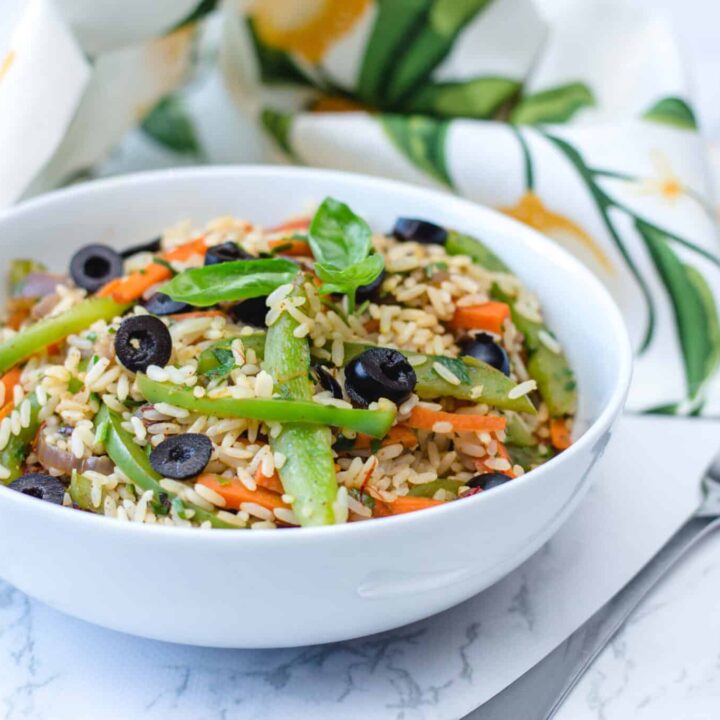
Saffron and paprika tint the rice golden as it simmers in vegetable broth with peppers, artichokes and olives. Everything cooks in one pan, so cleanup is as easy as dinner.

Extra-luscious mashed Yukon Golds get a generous ladle of onion gravy made with vegetable stock, tamari, nutritional yeast, sage and thyme. It's a holiday-worthy side that's just as welcome on a Tuesday.
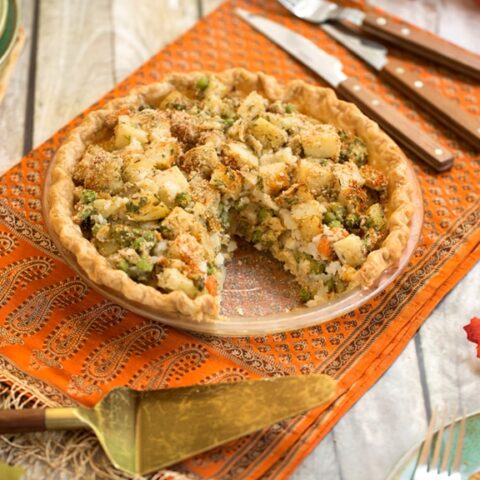
A nostalgic, double-crust pot pie packed with potatoes and your favorite diced vegetables in a savory stock-based filling. It's a crowd-pleasing vegan centerpiece for Thanksgiving, Christmas or any chilly night.

Roasted butternut squash halves are piled high with a stuffing of whole wheat bread, wild rice and caramelized onions, moistened with vegetable broth and a splash of orange juice. It makes a showstopping holiday main.
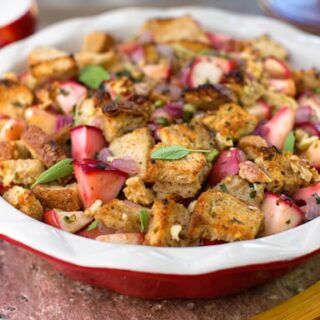
Crisp red apples, red onion, walnuts and fresh rosemary bring sweet and herbal notes to this whole grain bread stuffing. Low-sodium vegetable broth keeps it moist without any butter.

This simple gravy is mostly vegetable broth and mushrooms, thickened with arrowroot and seasoned with soy sauce and nutritional yeast. Spoon it over mashed potatoes, grains, tofu or veggie burgers in about 25 minutes.

Brown rice simmers in a full carton of vegetable broth, then gets tossed with eggplant, the "holy trinity" of onion, celery and green pepper, and smoky paprika. Pass the hot sauce!

Cooking quinoa in vegetable broth instead of water gives this cheesy broccoli casserole a savory backbone. Sun-dried tomatoes and a melty vegan cheddar topping make it a family-friendly one-dish meal.
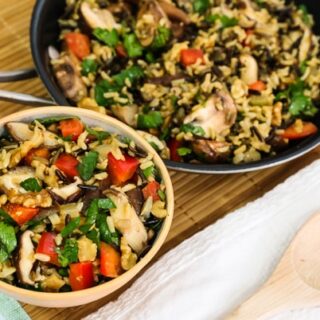
Wild rice and brown rice cook up in low-sodium vegetable broth, then meet sauteed cremini and shiitake mushrooms and crunchy walnuts. It's earthy and satisfying, and good warm or at room temperature.
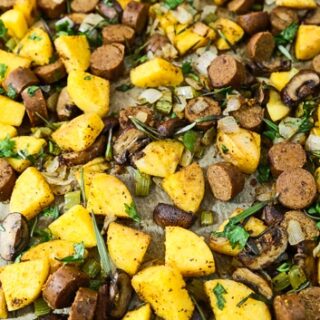
Cubes of prepared polenta stand in for bread in this change-of-pace stuffing with vegan sausage, mushrooms and fresh herbs. A splash of vegetable broth keeps it tender as it bakes.
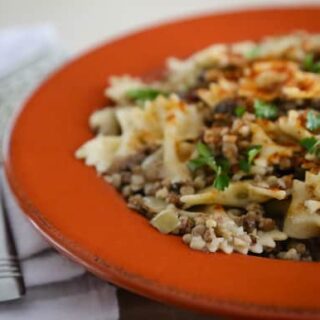
This classic Jewish comfort dish pairs toasty buckwheat groats with bow-tie pasta, browned onions and mushrooms. Cooking the kasha in vegetable broth gives it deep, savory flavor in just 30 minutes.
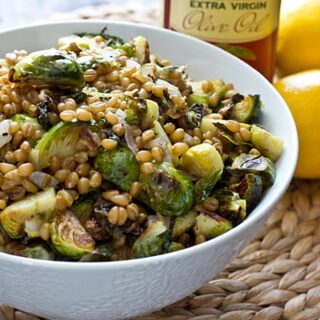
Chewy wheat berries simmer in three cups of vegetable broth, then get tossed with crispy roasted Brussels sprouts, shallots, walnuts and lots of lemon. It's a hearty whole grain dish that works as a main or a side.
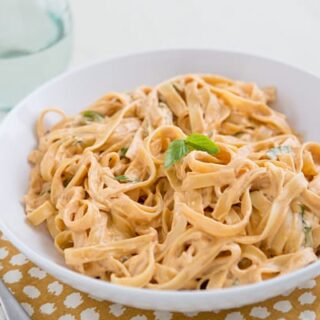
Soaked cashews blended with vegetable broth, sun-dried tomatoes, garlic and nutritional yeast make a creamy, dairy-free alfredo sauce. Toss it with whole-wheat fettuccine and fresh basil for a cozy pasta night.
How to Make Vegetable Broth from Kitchen Scraps
Homemade broth costs next to nothing and puts your vegetable trimmings to good use. Keep a zip-top bag or container in the freezer and add scraps as you cook: onion ends and skins, carrot peels, celery tops and leaves, mushroom stems, leek greens, herb stems, and garlic papers. Skip cabbage, broccoli, and Brussels sprouts, which can turn broth bitter, and beets, which will turn it pink.
- Load the pot. Once you have 2 to 3 cups of frozen scraps, add them to a large stock pot with a chopped onion, a couple of carrots and celery ribs, a few garlic cloves, 2 bay leaves, and a few sprigs of parsley and thyme.
- Simmer. Cover with about 8 cups of water, bring to a boil, then lower the heat and simmer, partially covered, for 45 minutes to 1 hour.
- Strain and store. Strain out the solids and season lightly with salt (or leave it unsalted so you can season each recipe as you go). Refrigerate for up to 5 days, or freeze in portions for up to 3 months. Ice cube trays are handy for small amounts.
For the full step-by-step recipe, see How to Make Vegetable Broth with Kitchen Scraps on our sister site, Oh My Veggies.
Short on time? A good store-bought broth works beautifully in every recipe above. We like Pacific Foods Organic Low Sodium Vegetable Broth, since low-sodium broth lets you control the salt. A jar of Better Than Bouillon Seasoned Vegetable Base is great to keep on hand too: stir about 1 teaspoon into each cup of hot water, and it takes up far less pantry space than cartons.
More Vegan Recipes You'll Love
If you love these creative vegetable broth recipes, be sure to check out these other cozy collections:
Pesto and Mushroom-Stuffed Sweet Potato Dinner

This Pesto and Mushroom-Stuffed Sweet Potato dinner is a beautiful, blissfully easy vegan meal idea that doesn't require you to follow any recipes. Among our 6 Fantastic Ways to Stuff Sweet Potatoes, this centerpiece stuffed potato is my absolute favorite. There's something about the mildly briny pesto combined with the smooth sweet potato and earthy mushrooms that goes beyond each of these three already-delicious components. [Read more...]
Roasted Veggie Quinoa Casserole
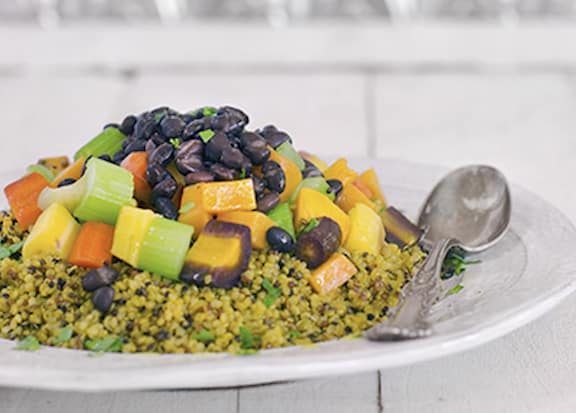
The quinoa and black beans in this dish are high in protein, making it a hearty one-dish meal. It's very budget-friendly, too. Reprinted with permission from The Migraine Relief Plan: An 8-Week Transition to Better Eating, Fewer Headaches, and Optimal Health, © 2016 Stephanie Weaver. Published by Surrey Books, an imprint of Agate Publishing, Inc. Photos © 2016 by Laura Bashar. [Read more...]
How to Make Anything Taste Like (Vegan) Bacon
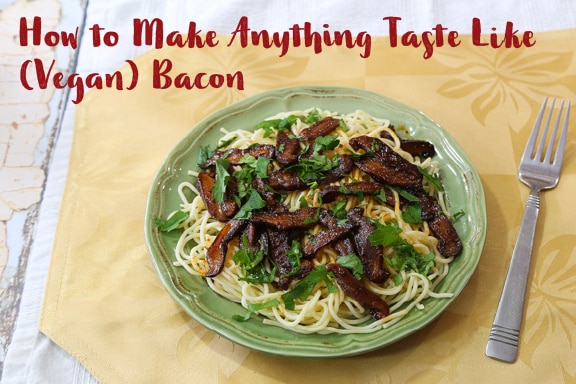
Here are a few great ways to turn plant-based ingredients into an animal-free alternative to bacon. That bacon-y smell and flavor that drives people crazy can be replicated by making a simple marinade with just a few ingredients. When you see how easy it is to make almost anything taste like (vegan) bacon, have fun and try this with other foods.
Even if these preparations aren't exactly like bacon, and admittedly, they're not, their flavors and aromas are addictive in their own right - sweet, salty, and smoky. Anything you cook like this will disappear quickly. [Read more...]
Vegan Cholent
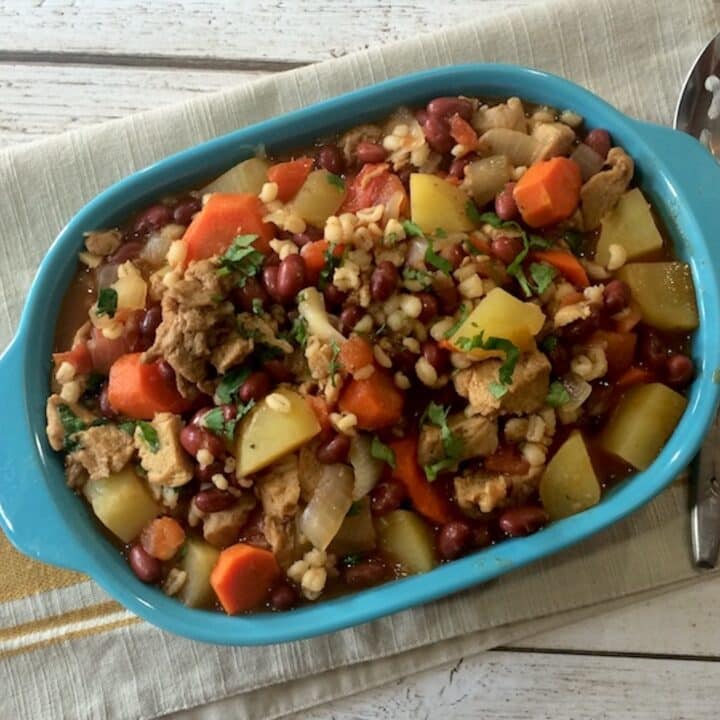
Cholent is a Jewish classic that can be considered an early predecessor to slow-cooker recipes. In its original form, it's put in the oven before the Sabbath and cooked at a very low temperature for about 12 hours so that it can be eaten for the Sabbath midday or late afternoon meal. It's one of the rare Eastern European Jewish specialties that highlights beans. There is a Sephardic cousin to this recipe called hamin. [Read more...]
5 Great Ways to Use Hummus
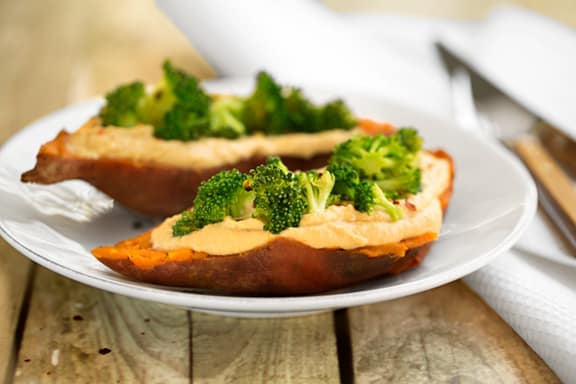
Not long ago, hummus became one of the fastest-growing snack foods in America. This Middle Eastern classic is made of healthful chickpeas and tahini, so it's a welcome alternative to the usual starchy and sugary junk foods people often gravitate to.

As a bonus, this Middle Eastern classic is already vegan! Here are 5 great ways to use hummus, aside from its most common use as a dip for fresh pita bread.
Of course, you can make your own hummus and experiment with your own creative combinations and flavorings. But here at VegKitchen, we're very lazy and fully endorse the use of store-bought hummus varieties. There are so many varieties and flavors of hummus that it often has its own bay in the supermarket produce section!
Use As A Spread For Wraps Or Sandwiches
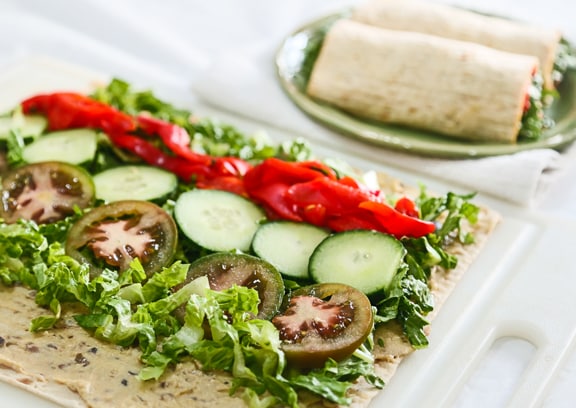
This suggestion might, admittedly, be coming straight from Captain Obvious. But for anyone looking for a nice change of pace for wraps or sandwiches, you'll thank him for the reminder. Hummus keeps well on bread and wrappers, and doesn't get soggy when packed up for school or office lunch a few hours later. It also helps stick all the sandwich ingredients together!
Hummus goes well with leafy greens, avocado, bell pepper strips, shredded carrots, leftover cooked grains, and other legumes. Add variety to your combinations based on what's in your fridge!
If you want more specific recipe instructions, see Hummus and Veggie Lavash Wraps, Hummus, Avocado, and Baby Spinach Sandwich, Hummus Wraps with Grains and Greens, and Hummus, Cucumber, and Avocado Wrap. All of these recipes are so easy that you can just follow the photo rather than the recipe-no need to obsessively measure ingredients!
Use As A Topping For Potatoes
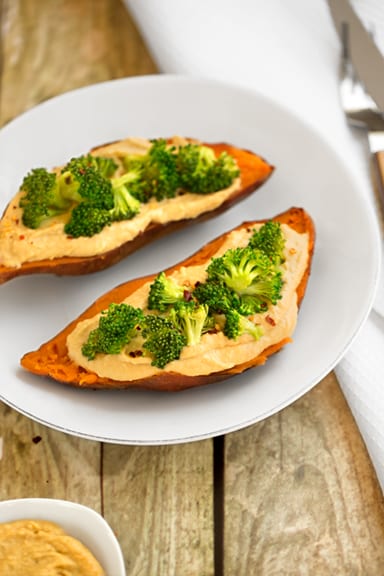
Tangy hummus is a great foil for the starchy flavors of potato or sweet potato. You can add other vegetables to the equation, too. Steamed broccoli tops the sweet potato variation above. Wilted spinach or other greens are also a great option.
Simply mix a few steamed vegetables in with the hummus before scooping over the potatoes. Then top with salsa or drizzle with sriracha, as shown in the photo at the top of this post. Served with a simple salad or slaw, these hummus slathered potatoes make for a great emergency dinner.

Use As Extra Protein For Vegan Bowls

Bowls are all the rage as a one-dish way to serve a well-rounded meal of complex carbs, protein, and veggies (cooked and/or raw). Bowls are meant to appeal to the eye as well as the palate. Simply arrange colorful veggies on a bed of cooked grain. The hummus doubles as your protein and your sauce!
Use As A Topping For Toast

Lately, avocado toast has become a big thing. This version's a bit in reverse: hummus toast topped off with thick slices of avocado. Their flavor and texture are so compatible, you could say that they're made for each other!
Use As An Appetizer Or Snack With Raw Veggies
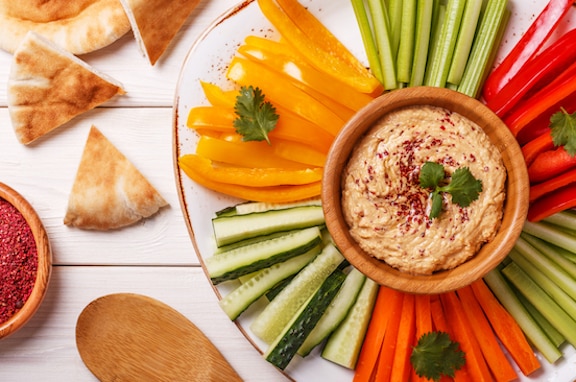
This is another pretty obvious use of hummus, but how many times do you forget to prepare an appetizer when company's coming? If you keep prepared hummus in the fridge, you'll have an instant appetizer that everyone loves at the ready.
Spoon some hummus into a small bowl (pretend you made it; I won't tell), and surround the bowl with raw vegetables and whole-grain chips or crackers. If you're really pressed for time, you can get cut fresh vegetables at the supermarket, as well.
As another plus, hummus served as a dip works as a great incentive to get kids and picky eaters to eat their vegetables.
Want even more ideas? Check out four more ways to use hummus over at Oh My Veggies!
Vegan BLT Salad
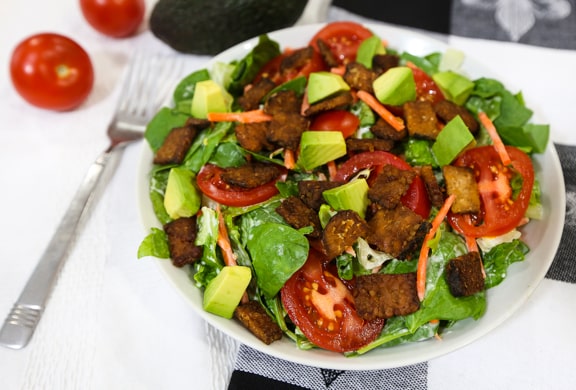
The smoky-sweet flavor of tempeh bacon makes a simple salad sizzle. Especially in winter, when salad is a lot less tempting than soups and stews, adding something warm and hearty like tempeh bacon makes it more appealing. And if you're lightening up post-winter holidays, the classic combo of lettuce, tomatoes, and (vegan) bacon minus the bread will hit the spot without feeling heavy. Use your favorite kind of store-bought tempeh bacon, or try Dreena Burton's fabulous Baconut, a homemade bacon substitute made with coconut flakes. [Read more...]
Chickpea Chopped Salad
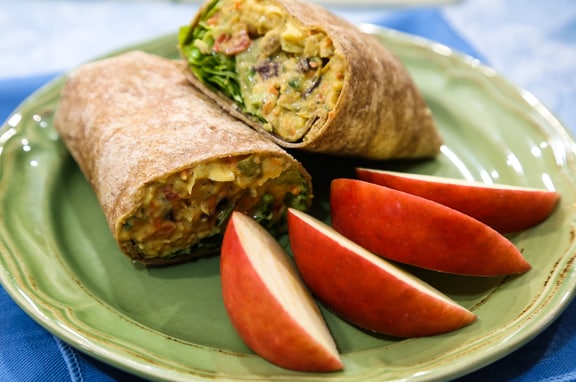
Here's a tasty chickpea chopped salad that may just become your go-to sandwich spread or wrap filling. Or, just add a scoop to a green salad to add protein. Filled with olives, cucumbers, peppers, and sunflower seeds, this is both comforting and crunchy all at once. It's great for a portable lunch for work or school, too. Photos by Evan Atlas.
Creamy Thai Carrot Sweet Potato Soup

This soup shows off the flavor of red curry paste, an authentic Thai ingredient. It's warm and spicy, but not overpowering, and it's usually enhanced with notes of lemongrass, garlic, ginger, and chiles. It works wonders in this soup, creating rich and full-blown flavor in an instant! The soup also boasts a rich, thick texture, which makes it comforting as the weather turns cooler. It's also fantastic served with a scoop of cooked rice on the bottom of the bowl to make it heartier. Reprinted from Oh She Glows Every Day, © 2016 by Angela Liddon. By arrangement with Avery, a member of Penguin Group (USA) LLC, a Penguin Random House Company. [Read more...]
Hot or Cold Coconut Carrot Soup
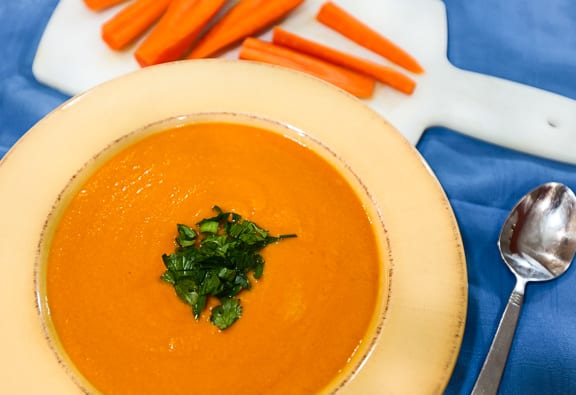
Here's a curried carrot soup in a coconut base that's perfect for any time of year. You can enjoy it chilled in the summer, or serve it hot when the weather gets nippy. Use baby carrots as a clever shortcut - no peeling or chopping required. Photos by Evan Atlas. [Read more...]
Kale and Cucumber Salad with Avocado-Tahini Dressing
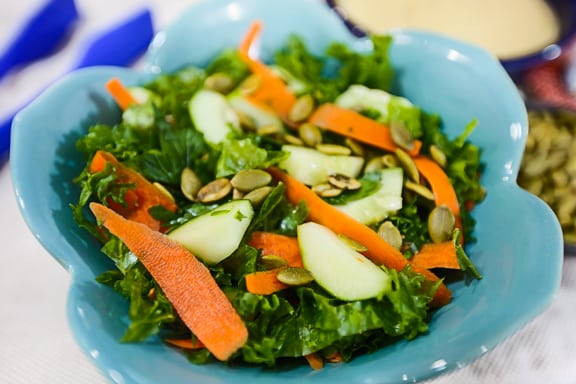
Massaged kale served simply with cucumbers, carrots, and a luscious dressing of avocado and tahini is an incredible treat. It's fantastic as a lighter and more refreshing kale salad to serve in warmer weather, though you can enjoy this any time of year. Adapted from Wild About Greens by Nava Atlas. Photos by Evan Atlas. [Read more...]
Teff Love by Kittee Berns
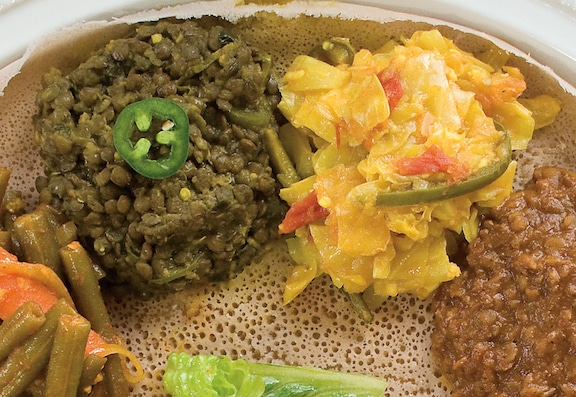
Teff Love: Adventures in Vegan Ethiopian Cooking
by Kittee Berns
Winner of the VegNews 2015 VEGGIE AWARDS for Cookbook of the Year
Why wait for a trip to your favorite Ethiopian restaurant? Teff Love by Kittee Berns lets you import the delicious flavors of Ethiopia right to your own kitchen! Kittee Berns explains this cuisine through easy to follow recipes, so you can savor authentic Ethiopian food without ever leaving home. Discover how to source and use the tantalizing seasonings and savory ingredients that are the foundation of these unique dishes.
Green Pea and Arugula Spread
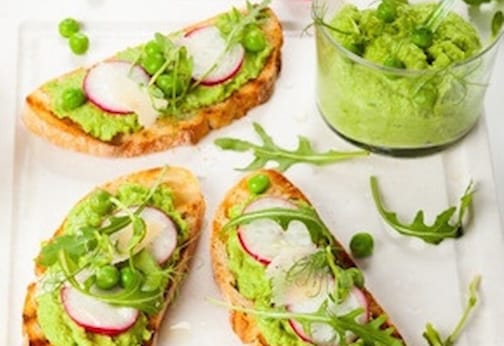
This bright green pea and arugula appetizer or sandwich spread will bring springtime to your palate, but it can be enjoyed year-round. Serve as an appetizer with sliced baguette or bruschetta; as a sandwich spread with sliced cucumber and/or radish. Alternatively, you can also use this is a dip for raw vegetables - try a mixture of cauliflower florets, red bell pepper strips, baby carrots, and snap peas. This makes about 2 cups. [Read more...]
White Root Vegetables: A Guide to 14 Types (with Photos)
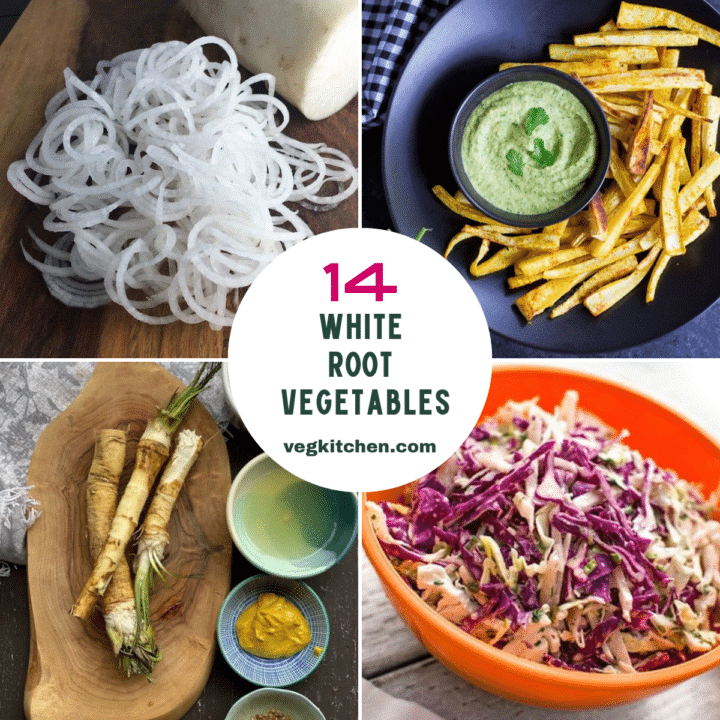
Spotted a pale, knobby or long white root at the market and can't put a name to it? You're in the right place. This guide covers 14 white root vegetables, from daikon and parsnips to jicama, taro and lotus root, with photos, the quickest ways to tell look-alikes apart, what each one tastes like, and the best ways to cook it.
Start with the comparison table if you just need a fast ID, then jump to the vegetable that matches what you saw. Near the end there are quick sections for the three things people search for most: long white root vegetables, big white root vegetables, and vegetables that look like radishes.
White Root Vegetables at a Glance
| Vegetable | What it looks like | Taste | How to cook it |
|---|---|---|---|
| Daikon | Long, smooth, white, carrot-shaped but much thicker; often green near the top | Crisp, juicy, mildly peppery raw; sweet and mellow cooked | Raw in salads, pickled, simmered in soups, stir-fried |
| Parsnip | Carrot-shaped, cream to tan, wide shoulders, ringed skin | Sweet, nutty, a little spicy | Roasted, in soups and stews, mashed |
| Turnip | Round, white with a purple top, 2 to 4 inches across | Peppery raw; mild and sweet cooked | Roasted, mashed, sautéed, pickled |
| Rutabaga | Larger than a turnip, purple top, yellowish bottom, often waxed | Sweet, buttery, earthy | Mashed, roasted, in stews |
| Celeriac (celery root) | Round, gnarly, beige-brown, hairy rootlets at the base | Celery and parsley with a nutty edge | Soups, mash, roasted, grated raw |
| Jicama | Round, flat-topped, thin tan-brown skin | Crisp, juicy, lightly sweet, like apple meets water chestnut | Raw sticks, slaws, salads, quick stir-fries |
| Kohlrabi | Pale green or purple bulb with stems sticking out | Like a sweet broccoli stem | Raw slaw, roasted, sautéed, soups |
| White sweet potato | Sweet potato shape, tan or purple-red skin, white flesh | Mildly sweet, chestnut-like, fluffy | Baked, roasted, mashed, fries |
| Taro | Round to barrel-shaped, shaggy brown skin with rings | Nutty, starchy, creamy when cooked | Always cooked: boiled, braised, fried, in curries |
| Cassava (yuca) | Long club shape, thick bark-like brown skin, often waxed | Mild, starchy, slightly sweet | Always cooked: boiled, fried, mashed |
| Horseradish | Long, thick, rough and gnarled, tan-brown | Fiercely hot and pungent when grated | Grated raw into sauces and condiments |
| Salsify | Long, thin, stick-like; tan and hairy or black | Delicate, nutty, like artichoke hearts | Sautéed, braised, in soups and gratins |
| Lotus root | Linked tan sections like sausages; lacy holes inside | Crisp, mild, lightly sweet | Stir-fried, braised, in soups, as chips |
| White carrot | Exactly like a carrot, but ivory white | Mild, sweet, less carrot-y | Raw, roasted, glazed, in soups |
The 14 White Root Vegetables, One by One
1. Daikon
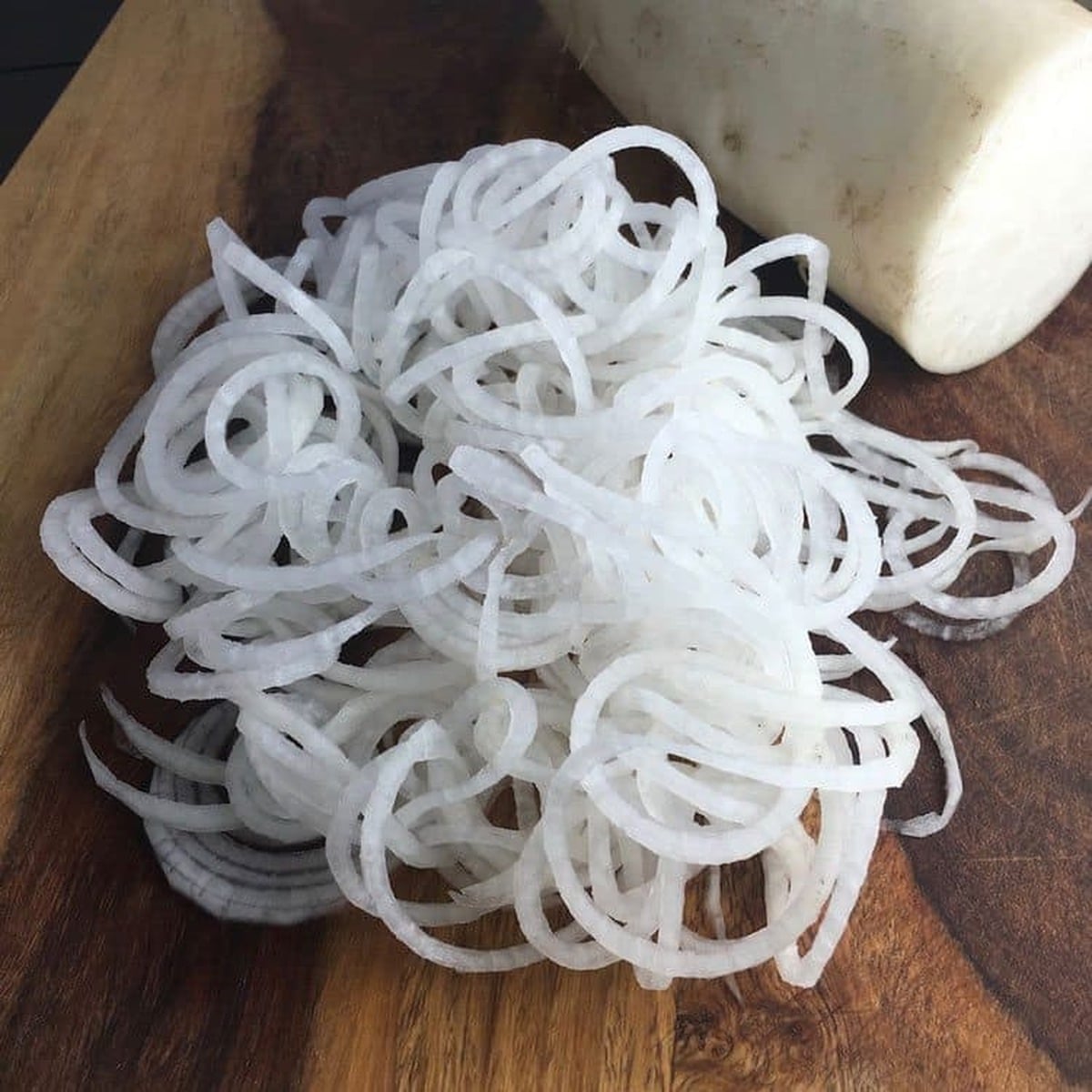
How to spot it: Daikon is the vegetable most people mean when they search for a "long white root vegetable." It's smooth, bright white and cylindrical, usually 8 to 20 inches long and 2 to 4 inches thick, and often pale green near the top where it pushed out of the soil. Korean radish (mu) is the same family but shorter and stouter, with more green on the shoulders. Its name means "big root" in Japanese, and it's sold in Chinese markets as white radish or lo bok.
How to tell it from look-alikes: A parsnip is cream to tan, tapers to a point and has a wide, flat crown with ringed skin; daikon is whiter, thicker and nearly the same width from top to bottom. Horseradish is also long, but its skin is rough, brown and gnarled.
Taste: Raw daikon is crisp, juicy and mildly peppery, gentler than a red radish. Cooked, it turns tender, sweet and mellow and soaks up whatever broth it's simmered in.
How to cook it: Grate or julienne it raw into salads and noodle bowls, like these Cold Japanese Noodles with Daikon and Carrots or Veggie Sushi Rice Bowls or even this Daikon Noodle Soup. Or cut it into half-moons and simmer it in a brothy soup such as Miso Soup with Winter Vegetables. It also makes excellent quick pickles!
2. Parsnip
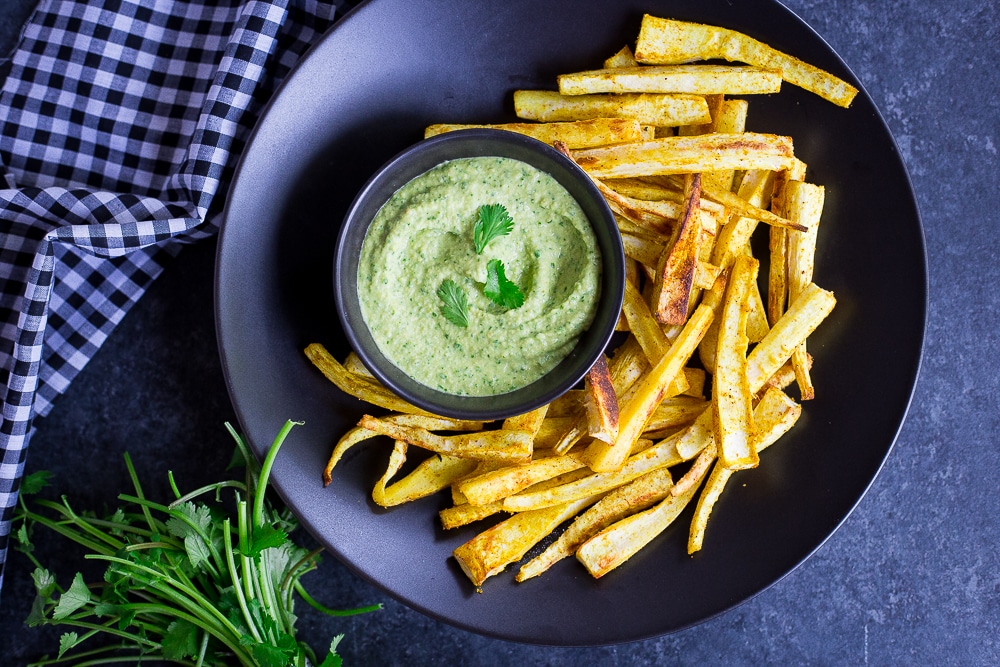
How to spot it: Parsnips look like cream-colored carrots with broad shoulders. The top is wide and slightly sunken where the leaves were trimmed, the skin has faint rings, and the root tapers to a thin tail. Most are 6 to 10 inches long.
How to tell it from look-alikes: White carrots are smoother and slimmer at the top, without a parsnip's wide, dished crown. Parsley root is similar but smaller and usually sold with its leaves attached. Snap a small piece of parsnip and you'll notice a sweet, almost spicy aroma that carrots don't have.
Taste: Sweet, nutty and earthy, with a hint of spice. Parsnips get even sweeter after a frost, and large ones can have a woody core that's best cut out.
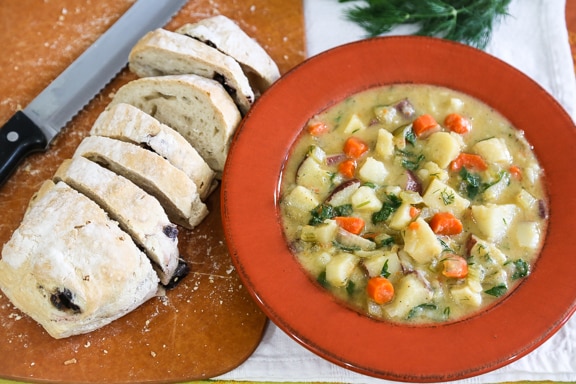
How to cook it: Roasting is the classic: toss chunks with olive oil and roast until the edges caramelize, as in Garlicky Roasted Root Vegetables. Parsnips also give soups a gentle sweetness. Try this cozy Vegan Parsnip Chowder or Creole Creamy Carrot Soup.
3. Turnip
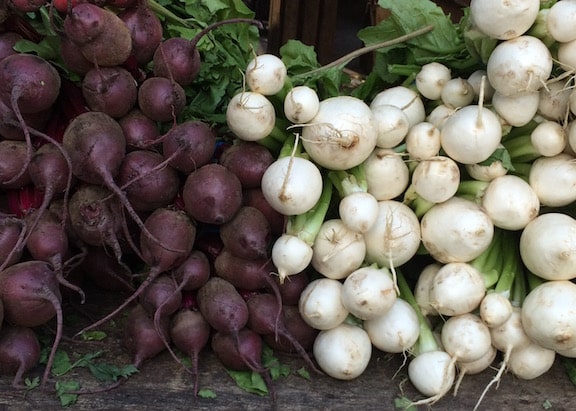
How to spot it: Turnips are round or slightly flattened globes, usually 2 to 4 inches across, white on the bottom with a purple or pinkish blush on top where the sun reached them. Baby Japanese turnips (Hakurei or Tokyo turnips) are smaller, all white and often sold in bunches with their greens.
How to tell it from look-alikes: A rutabaga is bigger, yellowish below the purple and usually waxed. A white radish is smaller and smoother, with a sharper bite. Kohlrabi looks similar from a distance, but its bulb sprouts stems from its sides, not just the top.
Taste: Raw turnips are crisp and a little peppery, somewhere between a radish and a cabbage. Cooking makes them mild and sweet. Small, young turnips are the most tender and least bitter.
How to cook it: Roast or mash them alongside potatoes, sauté them in a quick side like Sautéed Turnips and Peppers, or simmer them in a North African stew such as Vegetables Tajine. Thin raw slices of baby turnips are lovely in salads.
4. Rutabaga
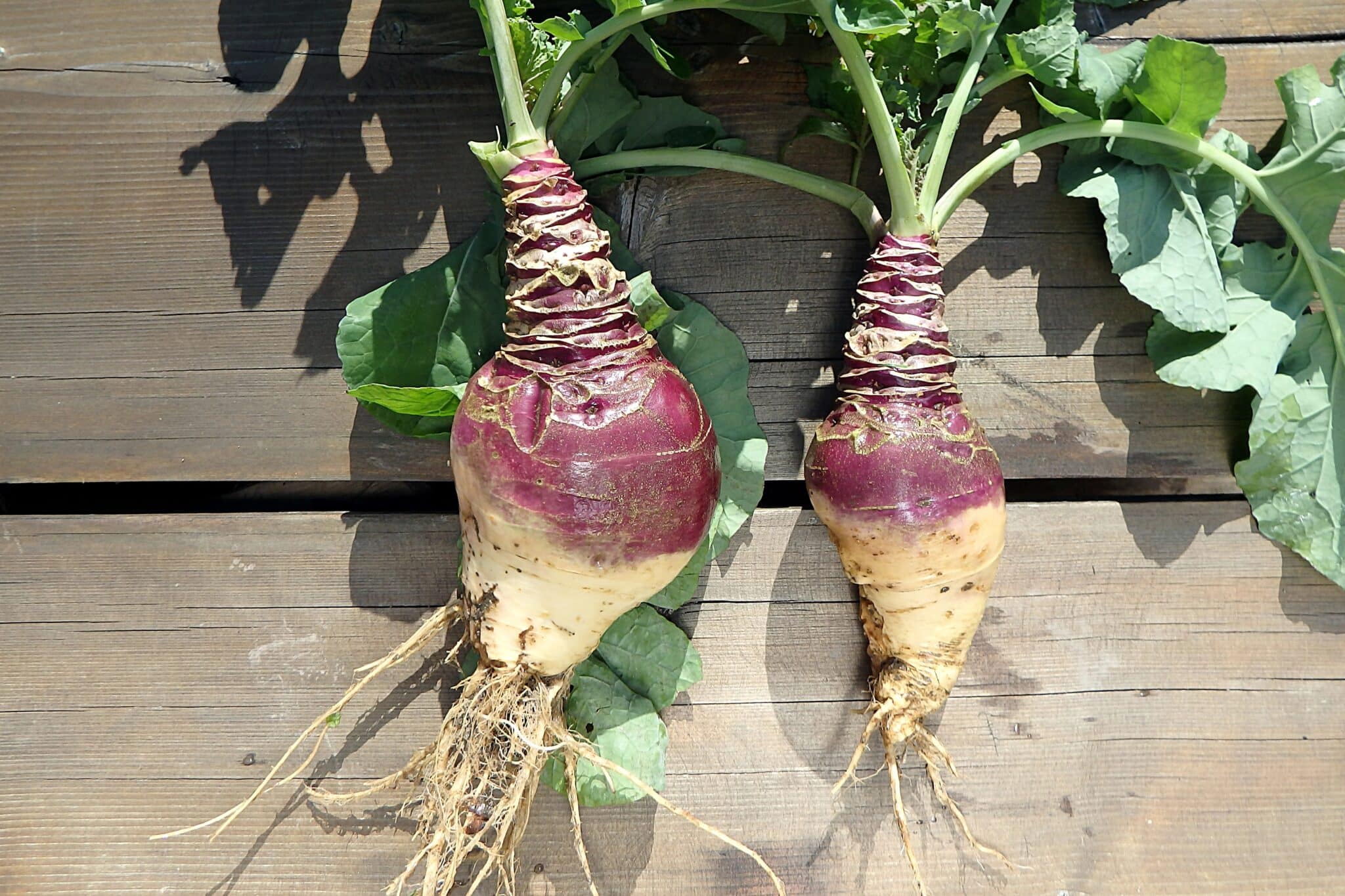
How to spot it: Rutabagas (called swedes in the UK) are a cross between a turnip and a cabbage. They're larger than turnips, often the size of a softball or bigger, with a purple top, a creamy yellow bottom and a thick neck with ridged leaf scars. Supermarket rutabagas are usually coated in wax to keep them fresh.
How to tell it from look-alikes: Cut it open: turnip flesh is white, while rutabaga flesh is pale yellow to golden. Rutabagas are also denser and heavier for their size.
Taste: Sweeter and more buttery than turnips, with a gentle earthy, cabbage-like note.
How to cook it: Peel away the wax and skin with a sharp knife, then mash it with potatoes, roast it in cubes, or add it to hearty stews like Winter One-Pot Lentils and Rice. Our roasted vegetables guide has timing tips for rutabaga and other roots.
5. Celeriac (Celery Root)
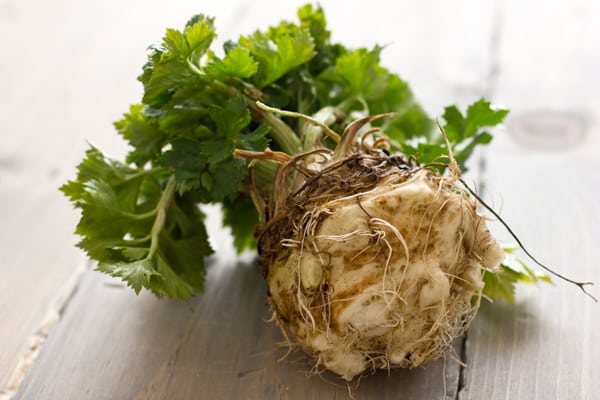
How to spot it: Celeriac is the knobbly, rough-skinned, beige-brown ball that looks a bit alarming the first time you see it. It's roughly 3 to 5 inches across, with a tangle of hairy rootlets at the bottom and sometimes celery-like stalks on top. Inside, the flesh is creamy white.
How to tell it from look-alikes: Its gnarly, tangled base is unlike anything else here. Taro is also brown and rough, but it has neat rings and shaggy fibers instead of a mass of rootlets.
Taste: Like celery and parsley combined, with a nutty, slightly sweet finish. It's milder once cooked.
How to cook it: Cut off the skin with a knife (a peeler won't get through the crevices). Grate it raw for a crunchy slaw with a mustardy vegan mayo, simmer it into silky soups, mash it with potatoes, or roast it in wedges. Drop cut pieces into lemony water so they don't brown.
6. Jicama
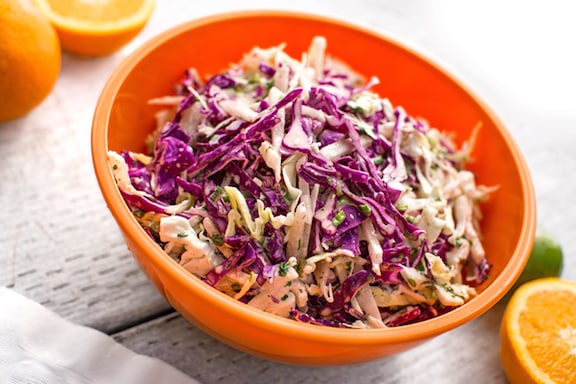
How to spot it: Jicama (HEE-kah-mah) is round with a flattened top and bottom, a bit like a big turnip, with thin, matte, tan-brown skin. They range from the size of a fist to several pounds. The flesh is bright white, crisp and very juicy.
How to tell it from look-alikes: It can be mistaken for a turnip or a potato, but jicama's skin is papery and dull brown all over, with no purple, and it feels heavy and hard. Cut it, and the watery crunch is unmistakable.
Taste: Mildly sweet and nutty, like a cross between an apple, a pear and a water chestnut.
How to cook it: Jicama is usually eaten raw. Peel it well (the skin isn't edible), then cut it into sticks with lime and chili, or shred it into a Vegan Jicama Coleslaw. It's also great in Jicama Salad with Oranges and Watercress and stays crunchy in quick stir-fries. For more ideas, see 10 Easy Jícama Recipes You'll Love.
7. Kohlrabi
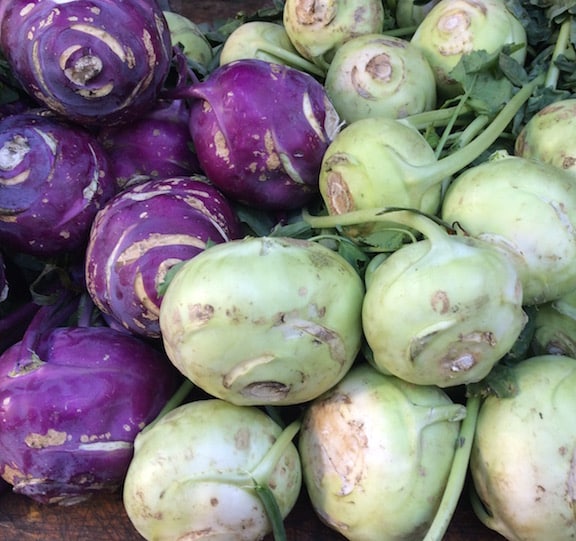
How to spot it: Kohlrabi is technically a swollen stem, not a root. It grows just above the ground, so it looks like a pale green (or purple) ball with long leaf stems sprouting from its sides and top, a bit like a small alien spaceship. Inside, it's crisp and white.
How to tell it from look-alikes: Those stems coming out of the sides are the giveaway; turnips and radishes only have leaves on top. Once the stems are trimmed, look for the little scars they leave around the bulb.
Taste: Mild, sweet and juicy, like a broccoli stem or the heart of a cabbage, with a slight peppery note.
How to cook it: Peel off the fibrous outer layer, then cut it into sticks for dipping, shred it into slaw, or cut it into matchsticks for salads. It also roasts beautifully and can be sautéed or added to soups in place of potatoes.
8. White Sweet Potato
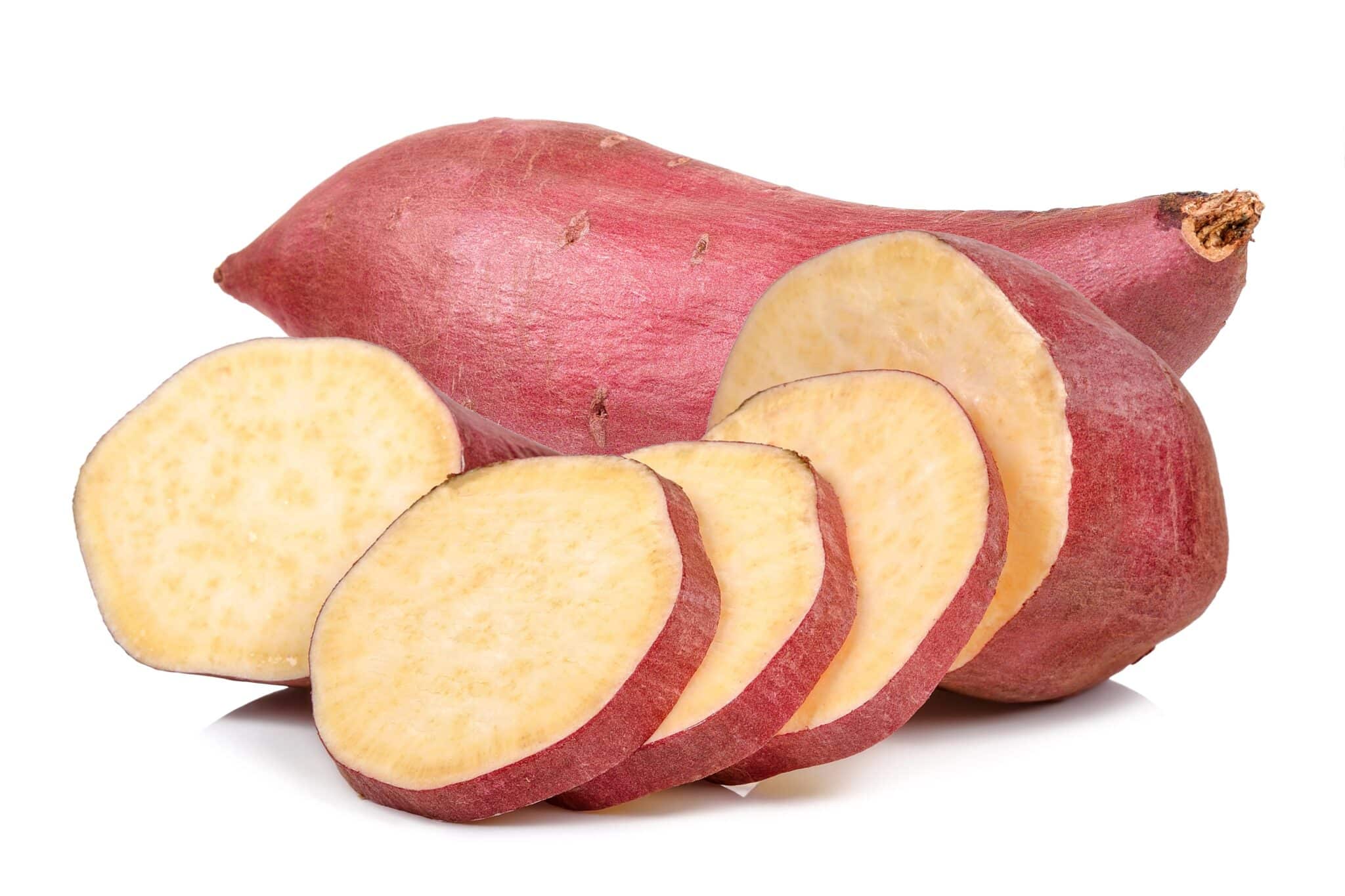
How to spot it: White sweet potatoes have the familiar tapered sweet-potato shape but pale flesh. Some, like Hannah and O'Henry, have tan or cream skin; Japanese sweet potatoes (satsuma-imo) have purple-red skin and creamy white flesh. The Caribbean boniato has pinkish, patchy skin and white flesh.
How to tell it from look-alikes: Regular potatoes are rounder and have "eyes" rather than tapered ends. True yams have rough, bark-like skin and are rarely sold in ordinary supermarkets. Cut a white sweet potato and the flesh turns faintly yellow once cooked.
Taste: Less sugary than orange sweet potatoes, with a drier, fluffier texture. Japanese sweet potatoes are especially sweet and chestnut-like.
How to cook it: Use them in any sweet potato recipe: bake them whole, roast wedges as in Simple Garlic-Roasted Sweet Potatoes, or swap them into a holiday Sweet Potato Tzimmes. Browse more ideas in our vegan sweet potato recipes.
9. Taro
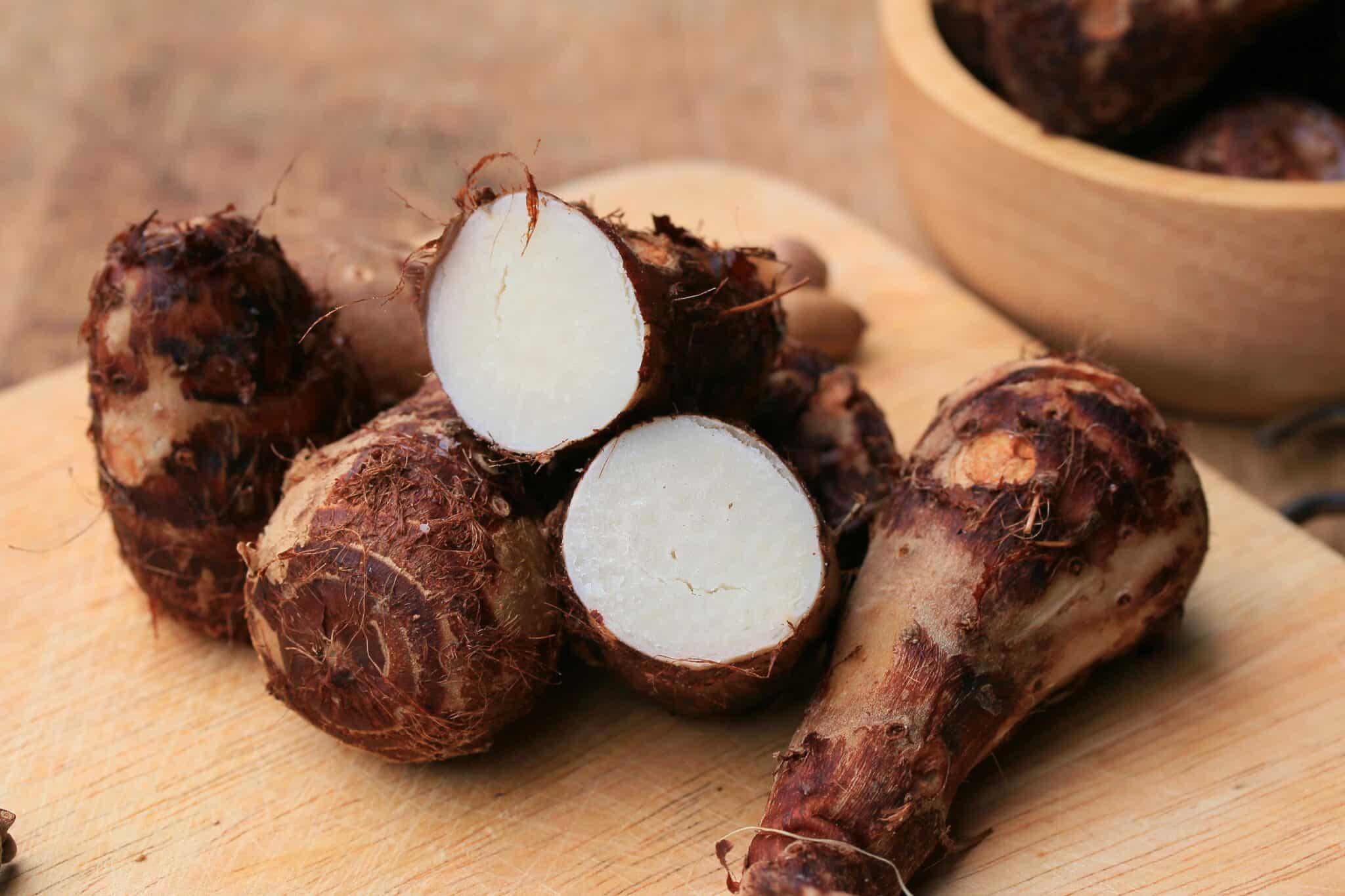
How to spot it: Taro is a brown, hairy, bark-like root with concentric rings around it. Small ones (eddoes) are about the size of an egg; larger ones (dasheen) can be the size of a small coconut. Cut it open and the flesh is white or cream, often speckled with purple-gray flecks.
How to tell it from look-alikes: Its rings and shaggy fibers set it apart from celeriac and jicama. Cassava is much longer and has smoother, bark-like skin with no rings.
Taste: Nutty, starchy and slightly sweet, like a potato crossed with a chestnut, with a creamy, sometimes slightly sticky texture when cooked.
How to cook it: Never eat taro raw; it contains compounds that irritate the mouth and throat until they're cooked. Wear gloves when peeling, then boil, steam or braise it, add it to coconut curries and stews, or slice and bake it into chips.
10. Cassava (Yuca)
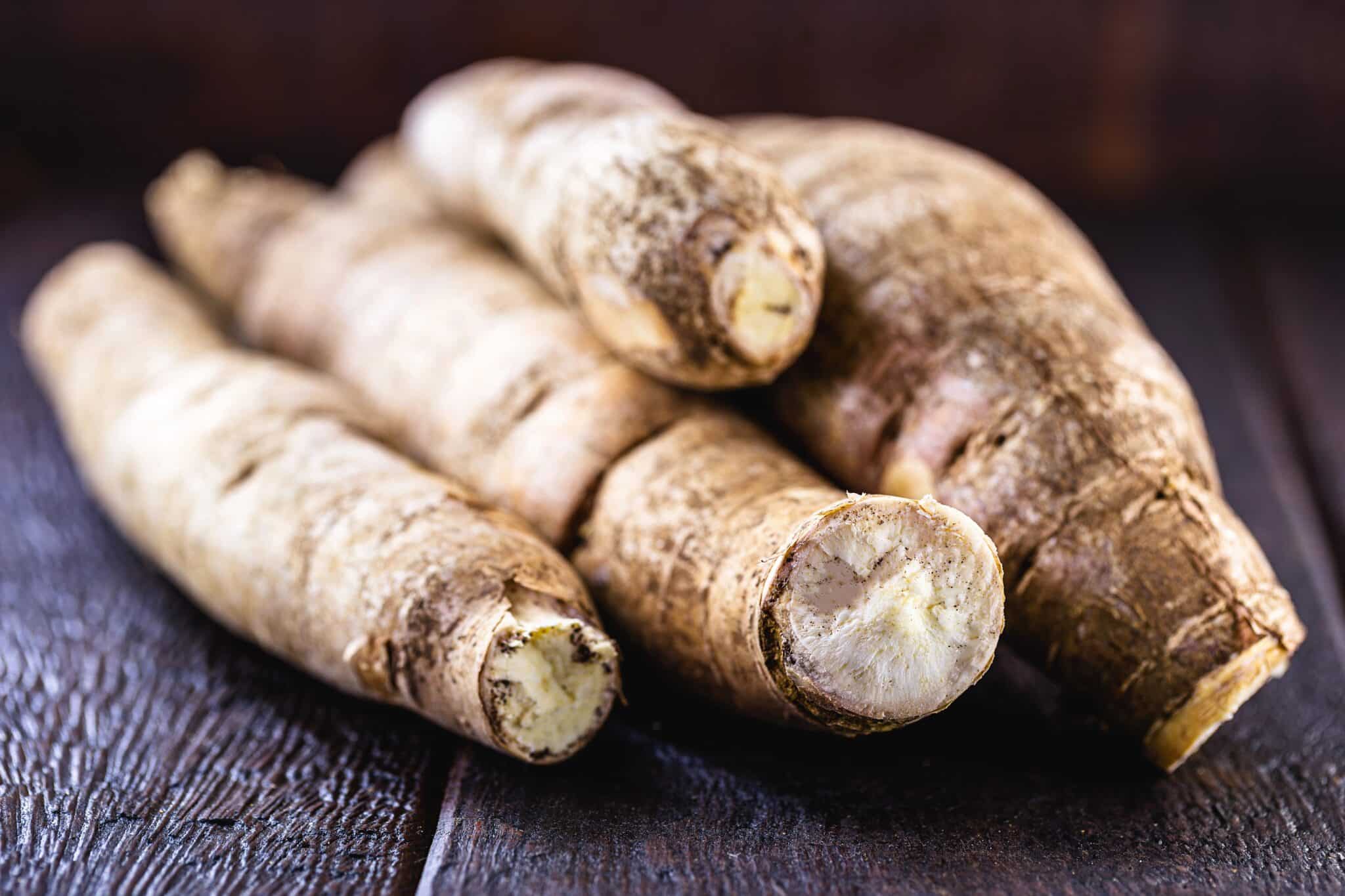
How to spot it: Cassava, also called yuca or manioc, is a long, club-shaped root, usually 8 to 16 inches long and 2 to 3 inches thick, with thick, dark brown, bark-like skin. It's usually sold coated in wax. The flesh is bright white with a fibrous string running down the center. (Yuca isn't the same as yucca, the spiky ornamental plant.)
How to tell it from look-alikes: It's thicker and woodier-looking than a parsnip or daikon, and its skin looks like tree bark. Snap off the end, and you'll see very white, dense flesh.
Taste: Mild, starchy and slightly sweet, denser and more satisfying than potato.
How to cook it: Cassava must always be peeled and cooked, since raw cassava contains natural compounds that cooking removes. Peel it with a knife, cut out the woody center, then boil until tender and toss with garlic, lime and olive oil, or boil and then fry it into crispy yuca fries. Cassava is also the source of tapioca and cassava flour.
11. Horseradish
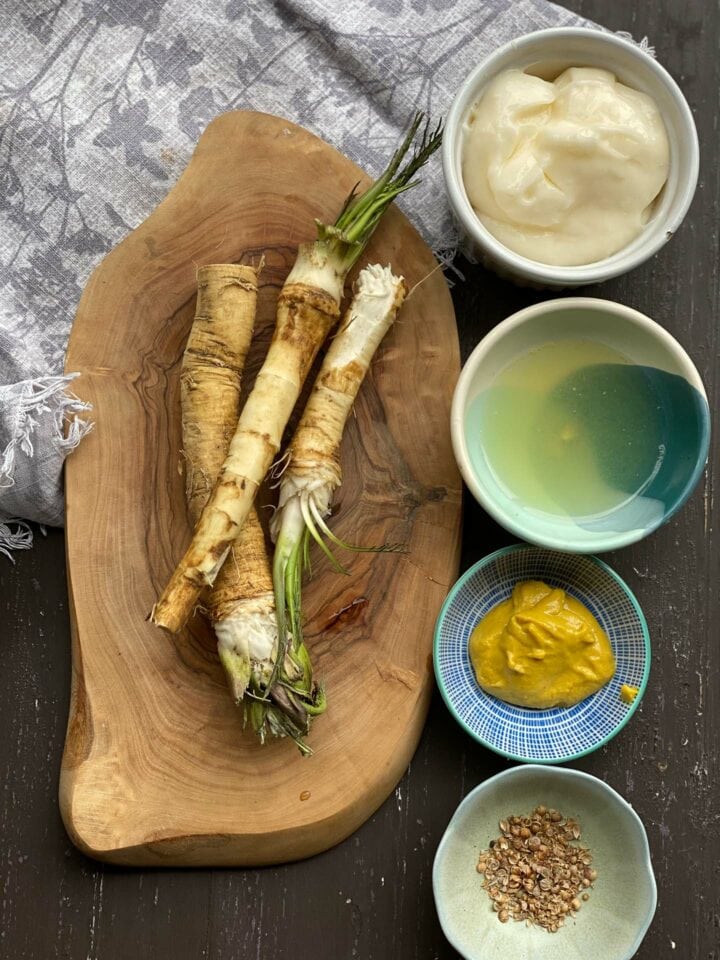
How to spot it: Fresh horseradish is a long, thick, gnarly root, usually 8 to 12 inches long, with rough tan-brown skin and a knobby top. Inside, it's white and hard.
How to tell it from look-alikes: It's the same general shape as a parsnip or daikon, but the skin is rougher and darker. The surest test: grate a little. Horseradish releases an eye-watering, sinus-clearing aroma within seconds.
Taste: Intensely hot and pungent when freshly grated, with a clean bite similar to wasabi. The heat fades quickly after grating unless you add vinegar.
How to cook it: Horseradish is almost always used raw as a condiment- and you can make your own homemade vegan horseradish sauce! Peel a small section and grate it on a fine rasp such as a Microplane grater, then stir in vinegar and a pinch of salt. Use it in dips, dressings and sauces, like the Horseradish-Dill Mayonnaise for tempeh fries, or on the Seder plate (see our vegan Passover Seder recipes).
12. Salsify
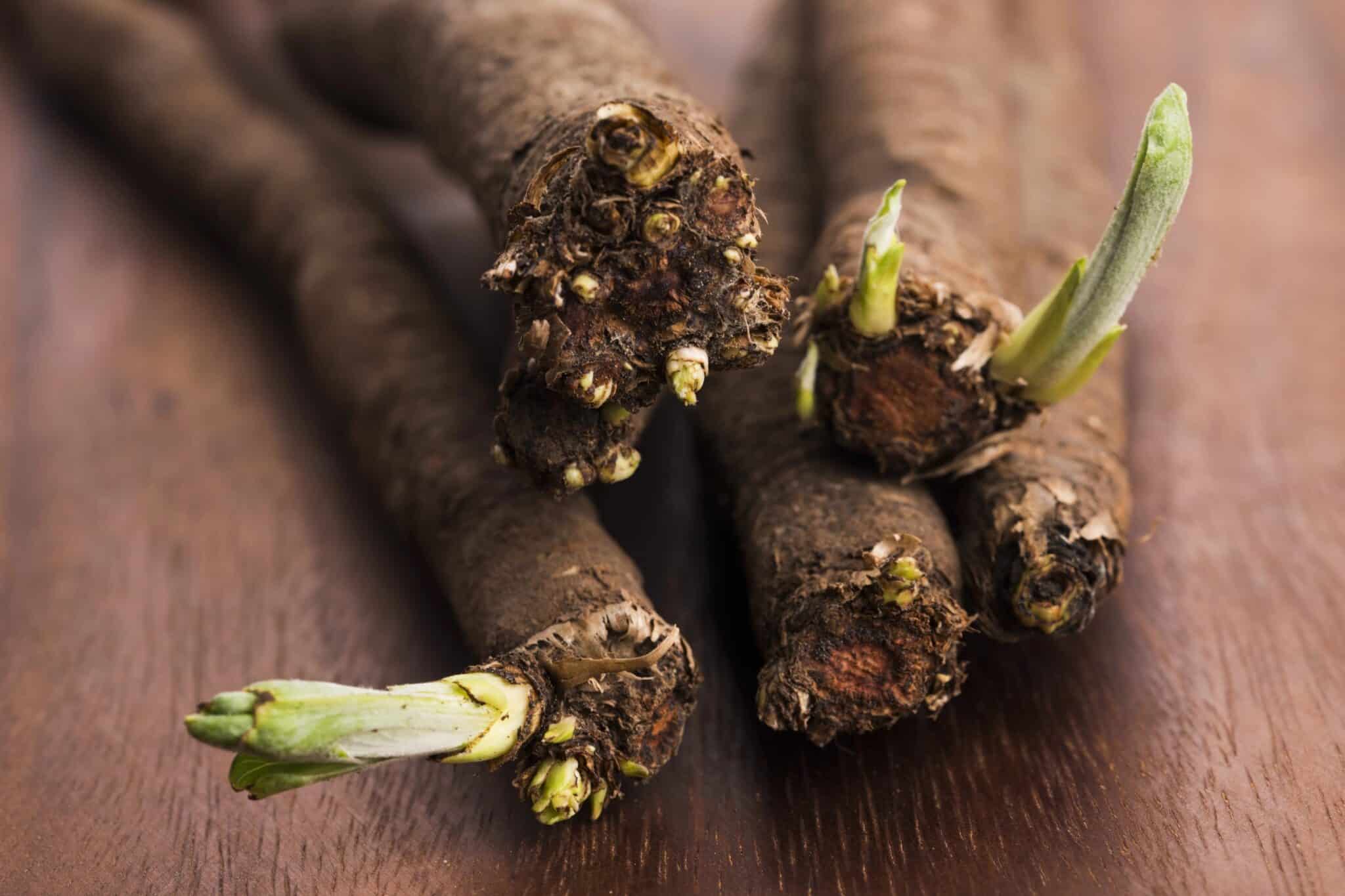
How to spot it: Salsify is a long, thin taproot about the size of a skinny carrot. White salsify has tan, slightly hairy skin; black salsify (scorzonera) has dark brown-black skin. Both have white flesh and a milky sap when cut.
How to tell it from look-alikes: It's much thinner and more stick-like than a parsnip or daikon, and the sticky white sap is a telltale sign.
Taste: Delicate, nutty and a little like artichoke hearts. It's nicknamed the "oyster plant" because some people taste a faint oyster-like note.
How to cook it: Scrub it, peel it and drop the pieces straight into lemony water, as it browns fast. Simmer until tender and then sauté in olive oil with garlic and herbs, braise it, or add it to soups and gratins.
13. Lotus Root
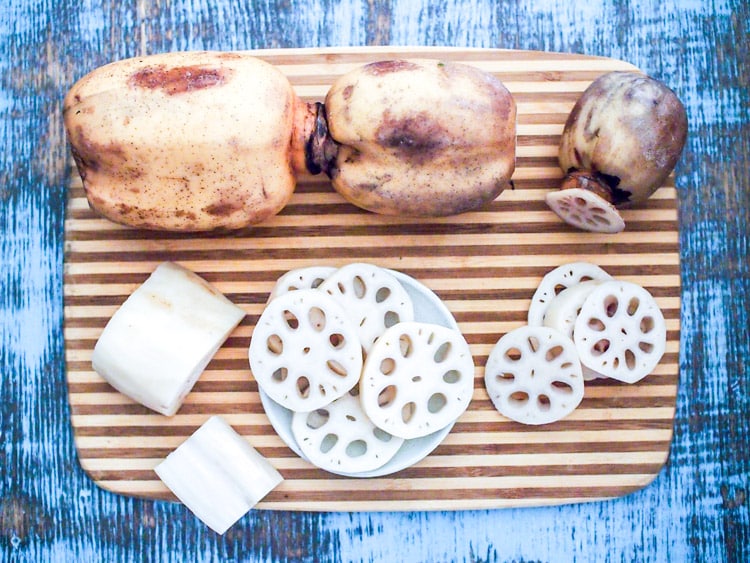
How to spot it: Lotus root is the underwater stem of the lotus plant. It grows in linked sections that look like fat, tan sausages, each 4 to 8 inches long. Slice it crosswise and you'll see its famous lacy pattern of holes.
How to tell it from look-alikes: Nothing else on this list has those holes. Whole, the linked, smooth, light brown segments are a giveaway.
Taste: Crisp, mild and lightly sweet, with a starchy crunch that holds up even after cooking.
How to cook it: Peel it, slice it thin and soak the slices in water with a splash of vinegar to keep them white. Stir-fry it with garlic and chili, braise it in soy and sugar, add it to soups, or fry thin slices into chips. It's generally cooked rather than eaten raw. You can check out some more creative lotus root ideas here.
14. White Carrots
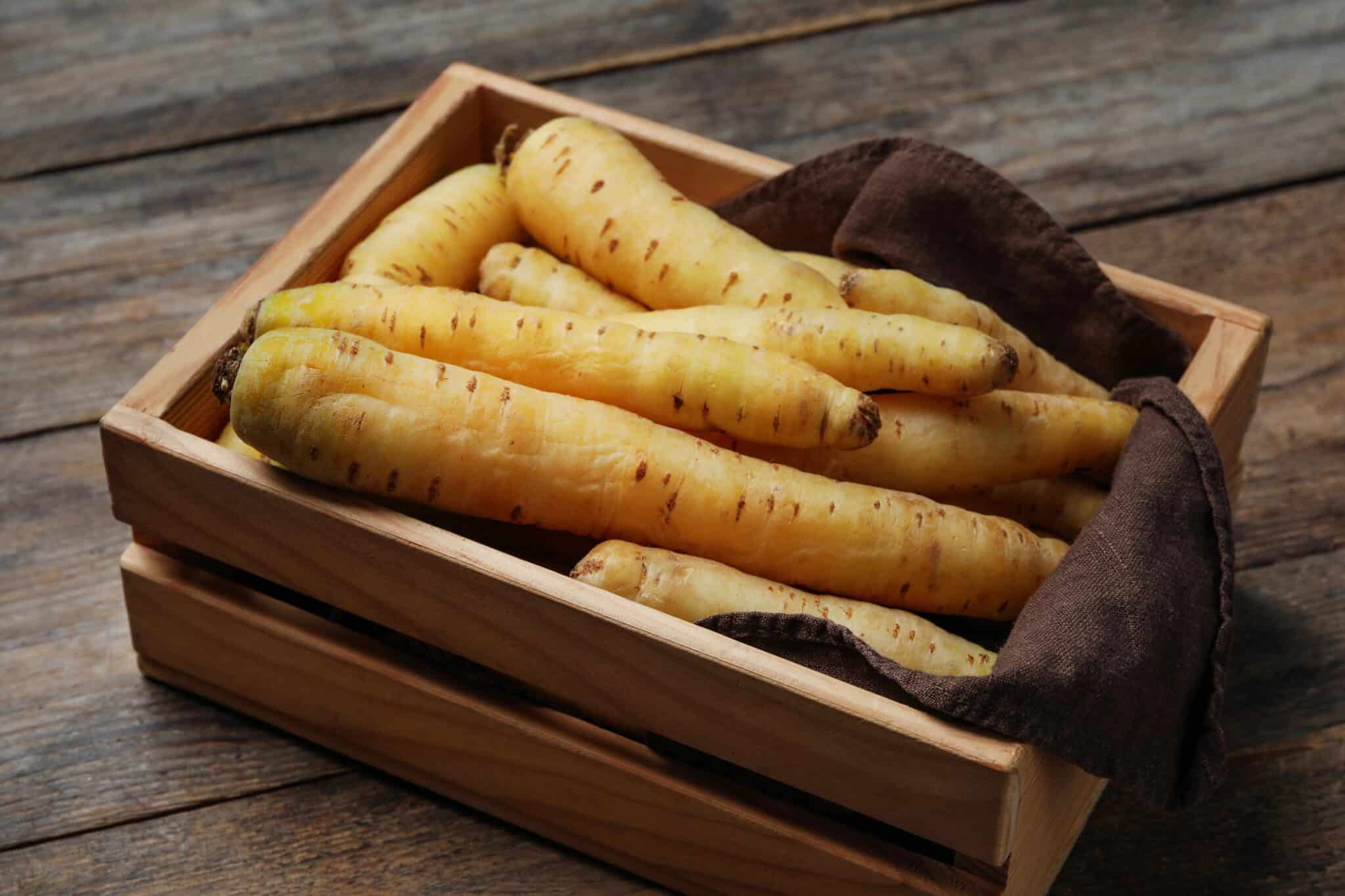
How to spot it: White carrots look exactly like orange carrots, just ivory or cream colored. Varieties such as White Satin and Lunar White are showing up at farmers' markets and in rainbow carrot bunches.
How to tell it from look-alikes: This is the one most often confused with parsnips. White carrots are smoother, slimmer at the top, without a parsnip's wide sunken crown, and they smell like carrots rather than the spicier parsnip scent. They're also crisp and snappy raw, while parsnips are firmer and more fibrous.
Taste: Mild and sweet, less earthy and "carroty" than orange carrots.
How to cook it: Use them anywhere you'd use regular carrots: raw in salads and slaws, roasted, glazed or simmered in soups. Mixed with orange and purple carrots, they make a gorgeous tray of roasted vegetables. I especially love these Vegan Honey Glazed Carrots.
Long White Root Vegetables
If the vegetable you saw was long and white, it's most likely one of these:
- Daikon. The most common answer. Smooth, bright white, thick and even from end to end, often with a green top.
- Parsnip. Cream to tan, with wide shoulders tapering to a point and ringed skin.
- White carrot. Carrot-shaped and smooth, but ivory instead of orange.
- Horseradish. Long, thick and rough, with gnarled tan-brown skin.
- Cassava (yuca). Long and club-shaped with bark-like brown skin; white only on the inside.
- Salsify. Long, very thin and stick-like, with tan or black skin.
- Burdock root (gobo). Not in our main list, but worth knowing: a very long, skinny, brown-skinned root with white flesh, popular in Japanese cooking.
Big White Root Vegetables
Some white roots get surprisingly large. If yours was big and heavy, consider these:
- Daikon. Regular daikon can reach 2 feet long and several pounds, and the round Sakurajima variety grows to the size of a basketball.
- Jicama. Large ones can weigh 4 or 5 pounds, round with flat tops and tan skin.
- Rutabaga. Often the size of a softball or bigger, purple on top and yellowish below.
- Celeriac. A big, gnarly, beige-brown ball with a hairy base.
- Taro. Large dasheen taro can be as big as a coconut, with ringed, shaggy skin.
- Kohlrabi. Most are tennis-ball sized, but giant varieties can grow as big as a cantaloupe.
By the way, if you've heard of a "big white vegetable" in Chinese cooking, that's the literal name of napa cabbage (da bai cai), not a root at all. Daikon is known as white radish (bai luo bo).
Vegetables That Look Like Radishes
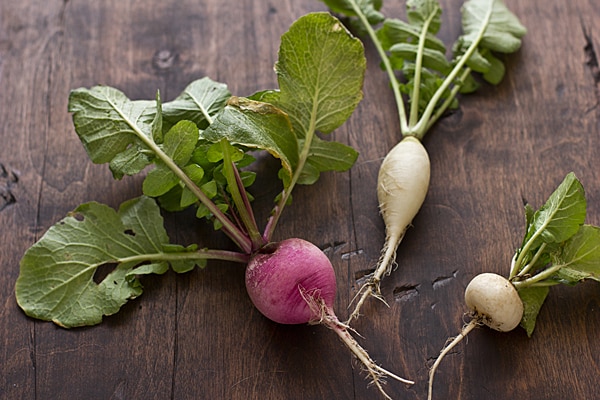
Many roots in the same plant family share a radish's round shape and smooth skin. If it looked like a radish but not quite, it may be one of these:
- Turnips. The closest look-alike: round, white and purple-topped, but larger than most radishes and milder once cooked. Baby Hakurei turnips look almost exactly like white radishes.
- White radishes. Icicle radishes are long and white, and white globe radishes look like small turnips. Both have a radish's peppery bite.
- Daikon and Korean radish. Radishes too, just much bigger.
- Kohlrabi. Round and green or purple, with stems sticking out of the sides.
- Rutabaga. Like a large, yellow-bottomed turnip.
- Beets. A red or golden root with a radish-like shape, but earthy and sweet, not peppery.
Need a radish substitute in a salad? Thinly sliced young turnips, jicama or kohlrabi give you the same crunch, and daikon brings a similar peppery kick.
Helpful Tools for Prepping Root Vegetables
Firm white roots can be tough to cut, and a few simple tools make prep much faster:
- Julienne peeler. Turns daikon, jicama, kohlrabi and white carrots into thin matchsticks for slaws, salads and spring rolls.
- Mandoline slicer. Makes paper-thin, even slices of turnip, lotus root or celeriac for salads, gratins and chips. Always use the hand guard.
- Microplane grater. The best way to grate fresh horseradish and finely grated daikon.
- Spiralizer. Turns daikon, kohlrabi and jicama into noodle-like spirals.
How to Store White Root Vegetables
Most firm white roots, including daikon, turnips, parsnips, rutabaga, celeriac, kohlrabi and white carrots, keep for one to three weeks in a bag in the refrigerator crisper drawer. Trim off any leafy greens first, since they draw moisture out of the root (turnip and radish greens are edible, so cook them separately). Once cut, wrap the pieces tightly and use them within a few days.
Jicama, taro, cassava, sweet potatoes and lotus root are the exceptions. Keep whole jicama, taro, cassava and sweet potatoes in a cool, dry, dark spot rather than the fridge, and use cassava within a few days, since it spoils quickly. Refrigerate lotus root and peeled or cut pieces of any of them, covered in water if they're prone to browning.
White Root Vegetable FAQ
What's the long white vegetable that looks like a carrot?
It's most likely a parsnip: cream colored, carrot-shaped, with wide shoulders and ringed skin. If it was perfectly smooth and shaped just like a carrot, it may be a white carrot. If it was much thicker and bright white, it's probably daikon.
What's the difference between daikon and parsnip?
Daikon is a radish: bright white, smooth, thick and fairly even in width, with a crisp, juicy, peppery bite that's great raw. A parsnip is a relative of the carrot: tan to cream, tapering, with sweet, nutty flesh that's best cooked.
Is it a turnip or a radish?
Size and flavor are the best clues. Radishes are usually smaller, with smooth, thin skin and a sharp, peppery bite. Turnips are larger, often purple on top, and milder and sweeter once cooked. Both are related, so they can often be swapped in recipes.
Which white root vegetables can you eat raw?
Daikon, jicama, kohlrabi, turnips, white carrots, celeriac and parsnips can all be eaten raw, usually grated or thinly sliced. Horseradish is used raw as a condiment. Taro and cassava must always be cooked, and lotus root and salsify are generally cooked too.
What white root vegetable looks like a potato?
Jicama is the most common one; it's round, tan-skinned and potato-like on the outside, but crisp and juicy inside. White sweet potatoes, taro and Jerusalem artichokes (knobby, ginger-shaped tubers) are also often mistaken for potatoes. See our Jerusalem Artichoke Salad for a way to use those.
Are white root vegetables healthy?
Yes. Even without the bright colors of carrots and beets, white roots are good sources of fiber, vitamin C and potassium, and they're low in fat. Daikon, kohlrabi, turnips and jicama are especially low in calories and high in vitamin C, while cassava, taro and sweet potatoes are more filling, starchy energy sources.
More Root Vegetable Recipes
Ready to cook with your white root vegetables? Here are a few favorites to start with:
Vegan Cassoulet (White Bean and Vegetable Stew)
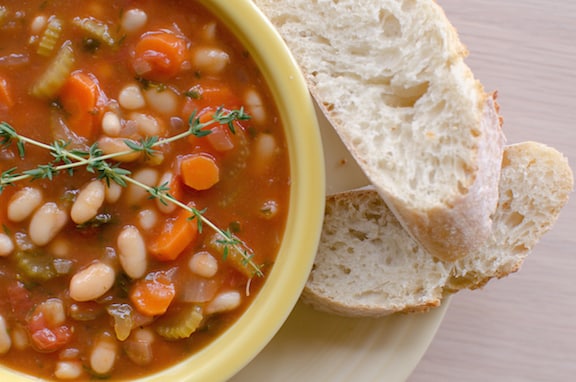
Cassoulet is a French comfort food - a rich, slow-cooked white bean stew originating from the south of France. I first came across cassoulet at the grocery store in St. Maarten (it was sitting among the canned beans), but it wasn't until I was actually in France that I came to appreciate the cultural significance of this dish. Each region has its own variation that reflects local specialties and in that tradition, I've created a vegan version. Serve with a crusty whole-grain bread. Recipe and photo from Happy Herbivore Abroad by Lindsay S. Nixon ©2012, Ben Bella Books. Reprinted by permission.
Warm Sushi Rice Bowls with Tofu Teriyaki
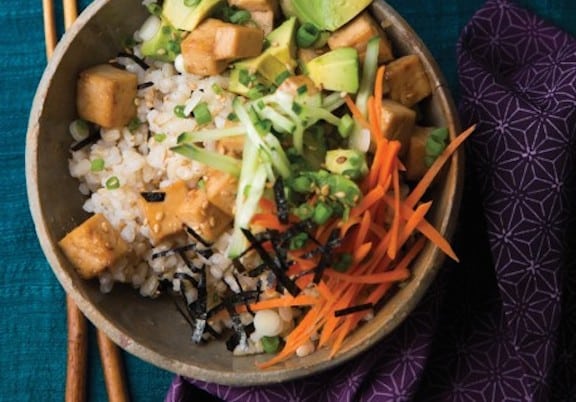
Crisp teriyaki-flavored tofu bites are perched atop nori-flecked sushi rice for an invigorating meal in a bowl. It's a lively combination of cooked and raw ingredients. Recipe originally published in January 2015 Vegetarian Times. Photo courtesy of Vegetarian Times. [Read more...]
Stir-Fried Bok Choy with Shiitake Mushrooms
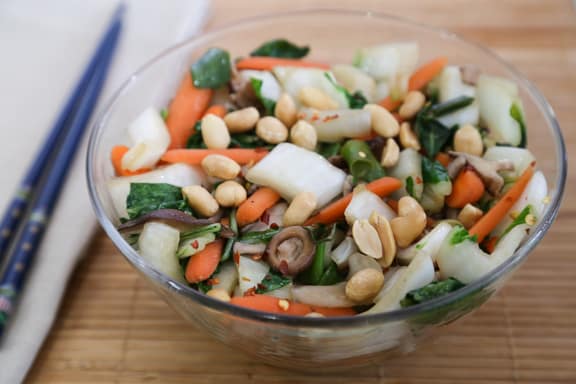
Here's a quick stir-fry using nutritious, crunchy bok choy. Shiitake mushrooms make a perfect partner for it. Serve this on its own or over rice; it's good hot or at room temperature. Use either large white bok choy or baby bok choy. Photos by Evan Atlas. [Read more...]
Ginger Tempeh Vegetable Stir Fry
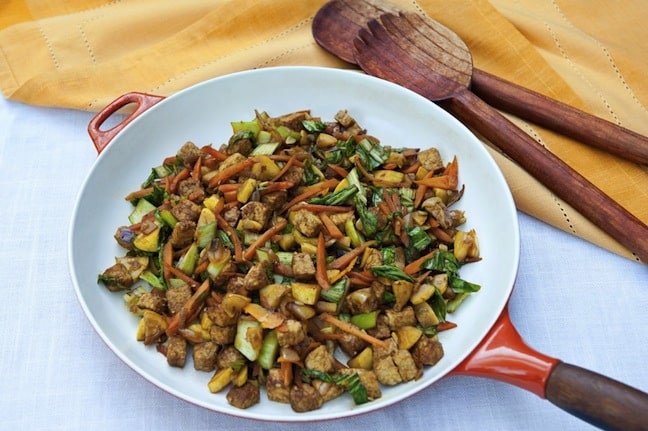
Frying tempeh in red palm oil gives it a rich flavor and meaty texture. You can use coconut oil or sesame oil and swap other seasonal vegetables for infinite tasty variations. In this recipe I used mirin, a sweet rice cooking wine, feel free to use another cooking wine or water. Serve this stir fry on top of rice and with a side of fresh pineapple for a fine meal. Copyright © 2013 Leslie Cerier. Photo by Tracey Eller.
[Read more...]
Chinese-Style Shredded Cold Vegetables and Tofu

A friend from Shanghai described this to me as a typical dish that comes as close the definition of salad in both the Eastern and Western interpretations of the word. Its name, literally translated, is the less-than-descriptive "cold mix." This veganized version features matchstick-cut vegetables and a chewy baked tofu. Serve with a simple noodle or rice dish for a delightful meal. [Read more...]
Wild Rice Salad with Corn and Black-Eyed Peas
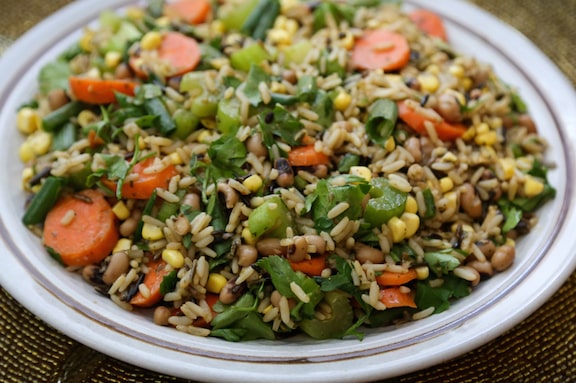
This hearty wild rice salad, embellished with corn, black-eyed peas, veggies, and herbs, is an invigorating melange of flavors, textures and colors. It's an attractive dish to serve at room temperature, any time of year, at buffets, potlucks, and holiday gatherings. Photos by Evan Atlas. [Read more...]
Coconut Cauliflower Curry with Mustard Greens and Spinach
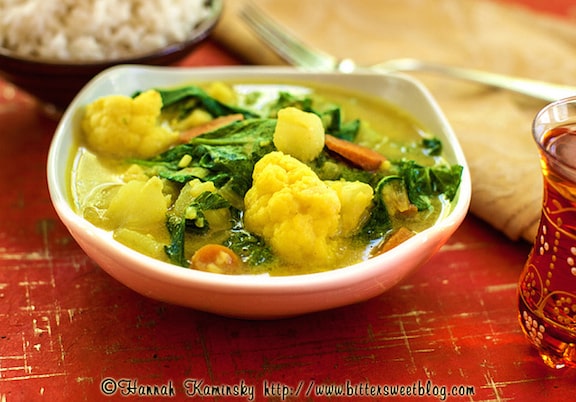
Pungent mustard greens are paired with mild spinach, and with the addition of mellow cauliflower, the result is a gorgeous and satisfying curried stew. Mustard greens, which are in fact a green often used in curries (as is spinach) most often come in really large bunches, so use as much as you'd like; the sharp flavor is well tamed by cooking. If you're not a fan of mustard greens, or just want to use a more familiar type of leafy green veggie, see the variations following the instructions. Recipe from Wild About Greens. Photo by Hannah Kaminsky, from her original review of this this book. [Read more...]
Chunky Sweet Potato Bisque

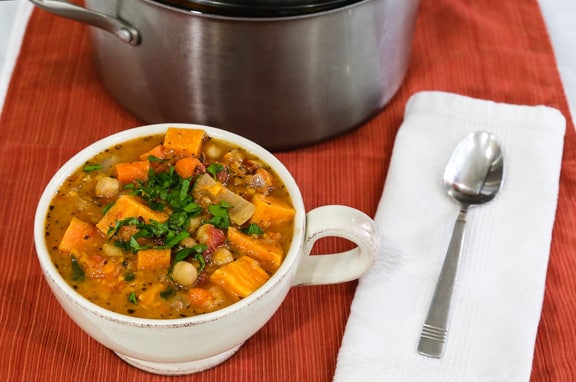
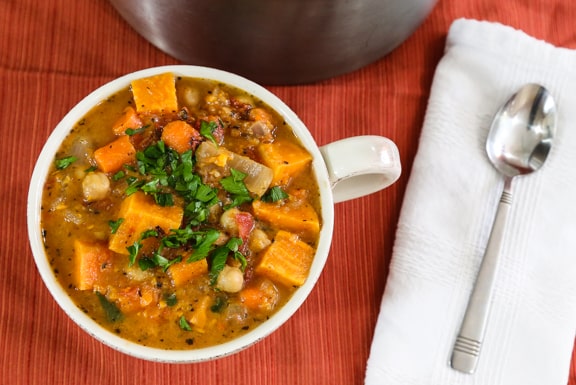
A satisfying soup that gets its golden-orange color from sweet potatoes and carrots, this chunky sweet potato bisque will warm you throughout the fall and winter. Half of it is blended until creamy and the rest stays in hearty chunks, so every spoonful has both velvety broth and tender vegetables.
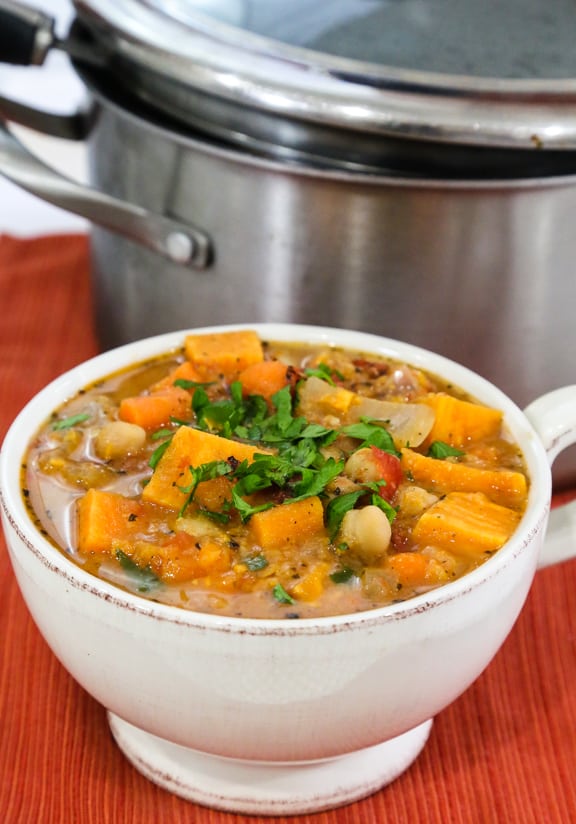
I'm completely in love with this chunky sweet potato soup! It's loaded with healthy flavor from hearty sweet potatoes, fresh veggies, and plenty of spice. Chickpeas or white beans add protein and make it filling enough for dinner, and a splash of nondairy milk gives it that classic bisque creaminess without any cream.
Served in a generous bowl, it can be a main dish, completed simply with salad and fresh bread. Served in smaller portions, it's a nice way to start a vegan Thanksgiving meal too.
Key Ingredients & Substitutions
- Sweet potatoes. The star of the pot. Orange-fleshed varieties such as Garnet or Jewel give the deepest color and natural sweetness. Cut them into roughly ¾-inch dice so the pieces hold their shape in the unblended half of the soup. Butternut squash works as a partial swap if you're short on sweet potatoes.
- Carrots. They reinforce the golden color and add an earthy sweetness. Parsnips are a nice alternative if you'd like a slightly spicier, more peppery note.
- Diced tomatoes. A can of tomatoes adds brightness and a little acidity to balance all that sweetness. Fire-roasted tomatoes are especially good here, since they bring a gentle smoky depth.
- Salt-free all-purpose seasoning. A blend like Mrs. Dash Original or Frontier All-Purpose Seasoning seasons the whole pot in one step and lets you control the salt yourself. No blend on hand? Use a mix of garlic powder, onion powder, and dried thyme.
- Ground cinnamon. Just a quarter teaspoon of ground cinnamon won't make the soup taste like dessert, but it rounds out the sweet potatoes beautifully. A pinch of nutmeg or allspice is a fine substitute.
- Chickpeas or white beans. Chickpeas keep their shape and add a pleasant bite, while cannellini or Great Northern beans blend into an especially silky base. Either way, drain and rinse them first.
- Nondairy milk. Unsweetened coconut milk beverage gives the richest, most bisque-like flavor, but any unsweetened plant milk works, such as unsweetened soy milk, oat, or almond. Avoid sweetened or vanilla versions, which will make the soup taste off.
Helpful Tips
Take your time with the onion. Sautéing the onion slowly over medium-low heat until it's golden builds a sweet, savory base for the whole soup. It takes 8 to 10 minutes, and it's worth every one of them.
Blend only half. The "chunky" in this bisque comes from leaving about half of the vegetables whole. An immersion blender makes this easy: just pulse it in a few spots right in the pot until the broth looks thick and creamy but you can still see plenty of whole pieces. If you use a food processor or blender, let the soup cool slightly first and don't fill the container more than halfway.
Adjust the thickness at the end. Add the nondairy milk gradually, starting with 1 cup. Stop when the soup is slightly thick and spoonable; you can always add more milk or a splash of water later, especially when reheating leftovers.
Mix up the veggies! Feel free to swap in your own veggies of choice depending on what is in season. Cauliflower would be a great addition, and a handful of baby spinach or chopped kale stirred in during the last few minutes adds color and extra nutrition.
Let it rest. Like most soups, this one tastes even better after it stands for an hour or two, as the spices mellow and the flavors meld. It's a great make-ahead dish for busy weeknights or holiday cooking.
Variations
- Add some spice. To up the heat factor, try adding a bit of chili powder or a sliced jalapeño to the mix.
- Smoky bisque. Stir in ½ teaspoon of smoked paprika along with the other seasonings, and use fire-roasted tomatoes.
- Curried version. Swap the all-purpose seasoning for 2 teaspoons of mild curry powder and a teaspoon of grated fresh ginger, and finish with coconut milk and cilantro.
- Extra greens. Add a few big handfuls of baby spinach or chopped kale during the final simmer.
- Lentil bisque. Replace the beans with 1 ½ cups of cooked brown or green lentils for a heartier, earthier soup.
Serving Ideas
For a cozy, complete meal, serve big bowls of this bisque with a warm wedge of easy vegan cornbread or a batch of fluffy vegan biscuits for dunking. If you're keeping things gluten-free, quinoa bread rolls are a great match.
A crisp green salad balances the soup's natural sweetness nicely. Toss mixed greens, sliced apple, and toasted pumpkin seeds with a simple 5-minute vinaigrette. For holiday meals, ladle smaller portions into mugs or cups and serve the soup as a first course before the main event.
Storing & Freezing
Let leftovers cool, then store them in an airtight container in the refrigerator for up to 4 to 5 days. The soup thickens as it sits, so when reheating on the stovetop over medium-low heat, stir in a splash of nondairy milk or water to bring it back to the consistency you like. Taste and adjust the salt and pepper before serving.
This bisque freezes well for up to 3 months. Portion it into freezer-safe containers, leaving about an inch of headspace for expansion. Thaw overnight in the refrigerator, or warm it gently from frozen in a covered pot, stirring often. The sweet potatoes may soften a little after freezing, and the soup can look slightly separated at first; a good stir as it heats brings it right back together.
More Cozy Vegan Soups
If you love this chunky sweet potato soup, be sure to check out my other soup and stew recipes, plus these delicious ideas:
- Sweet Potato Lentil Soup
- Black Bean Sweet Potato Chili
- 30-Minute Coconut Curry Pumpkin Soup
- Vegan Butternut Squash Soup
- Old Fashioned Vegan Stew
Recipe

Chunky Sweet Potato Bisque
A satisfying, chunky vegan soup that gets its golden-orange color from sweet potatoes and carrots, with chickpeas for protein and a creamy, half-blended base. Makes 6 to 9 servings, depending on bowl size.
Print
Pin
Save
Servings: servings
Ingredients
- 1 ½ tablespoons extra-virgin olive oil
- 1 large yellow or red onion chopped
- 2 large or 3 medium sweet potatoes peeled and cut into large dice, about ¾ inch
- 2 large or 3 to 4 medium carrots peeled and sliced
- about 4 cups water or enough to barely cover the vegetables
- 15- to 16- ounce can diced tomatoes try fire-roasted
- 2 bay leaves
- 2 teaspoons salt-free all-purpose seasoning such as Frontier or Mrs. Dash
- ¼ teaspoon ground cinnamon
- ½ teaspoon dried basil or oregano
- 15- to 16- ounce can chickpeas or large white beans cannellini or Great Northern, drained and rinsed
- 1 to 2 cups unsweetened nondairy milk very good with unsweetened coconut milk
- Salt and freshly ground pepper to taste
- Minced fresh parsley or cilantro for topping as desired
Instructions
- Heat the oil in a large soup pot over medium-low heat. Add the onion and sauté, stirring occasionally, until golden, 8 to 10 minutes.
- Add the sweet potatoes, carrots, and just enough water to barely cover the vegetables (about 4 cups).
- Bring to a slow boil over medium-high heat, then stir in the tomatoes, bay leaves, all-purpose seasoning, cinnamon, and basil or oregano. Reduce the heat, cover, and simmer gently until the sweet potatoes and carrots are tender, 20 to 25 minutes. Remove and discard the bay leaves.
- If using an immersion blender, add the beans to the pot and blend about half of the soup right in the pot, leaving plenty of chunks for texture.
- If using a food processor or blender, transfer about half of the solid ingredients to the container along with half of the beans and a little of the cooking liquid. Process until smooth, then return the purée to the soup pot and stir in the remaining beans.
- Stir in enough nondairy milk to give the soup a slightly thick consistency, starting with 1 cup. Season with salt and pepper, then simmer over very low heat for 10 minutes longer.
- Serve at once, or let stand off the heat for an hour or two before serving, then heat through as needed. Top individual servings with parsley or cilantro, if desired.
Notes
Storage: Refrigerate leftovers in an airtight container for up to 4 to 5 days, or freeze for up to 3 months. The soup thickens as it stands, so add a splash of nondairy milk or water when reheating.
Beans: Chickpeas keep their shape; cannellini or Great Northern beans blend into a silkier base. Either works.
Milk: Use an unsweetened, unflavored nondairy milk. Unsweetened coconut milk beverage is especially good here.
Nutrition (Estimate per Serving)
Calories: 197kcalCarbohydrates: 33gProtein: 6gFat: 6gSaturated Fat: 1gPolyunsaturated Fat: 1gMonounsaturated Fat: 3gSodium: 409mgPotassium: 604mgFiber: 8gSugar: 7gVitamin A: 14209IUVitamin C: 11mgCalcium: 160mgIron: 3mg
Vegan-ize any recipe!Grab our free vegan cheat sheet, packed with my favorite easy substitutions to make any recipe vegan.
Carrot, Apple, and Orange Juice
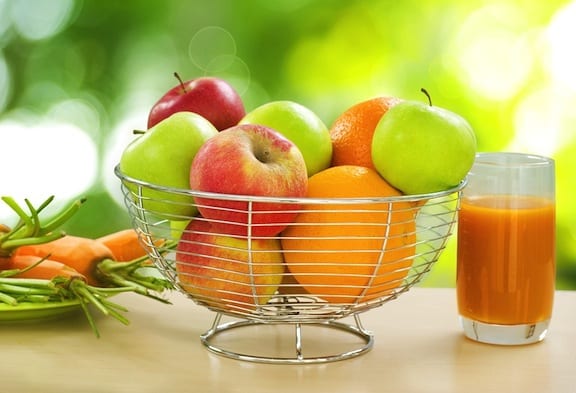
A classic combination, juicing fresh carrots, apples, and oranges will give you a great boost of energy and nutrition. [Read more...]
Japanese Soba Noodle Soup with Tofu and Greens
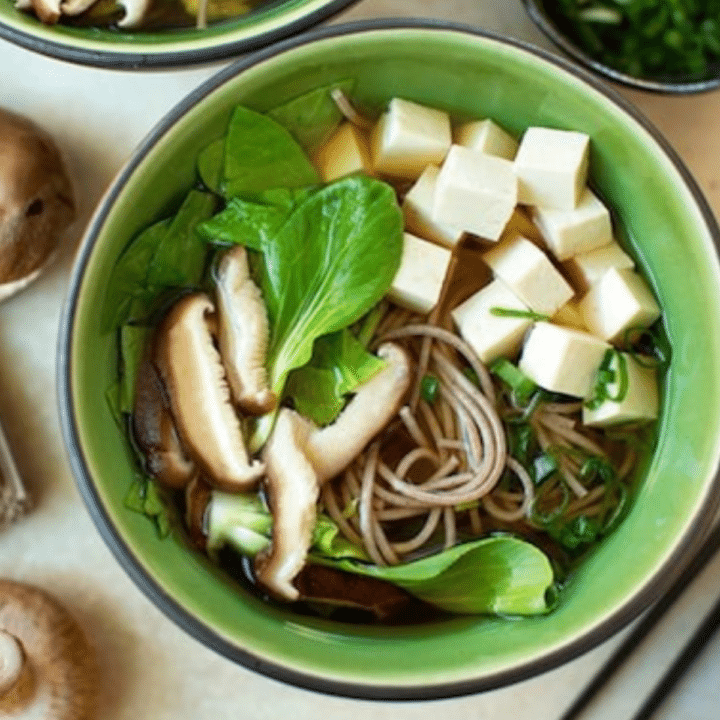
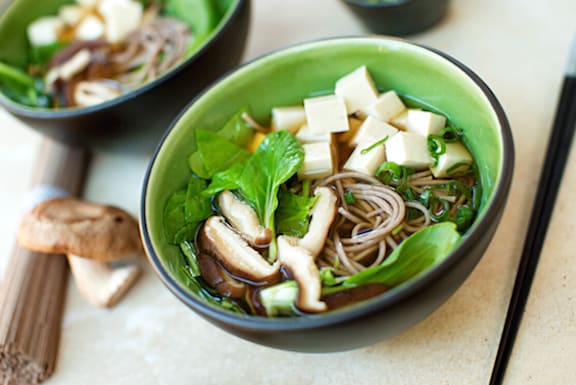
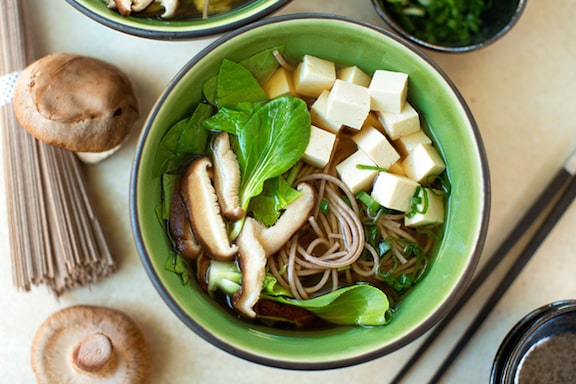
This Japanese soba noodle soup pairs nutty buckwheat noodles with silky tofu, meaty shiitake mushrooms, and tender greens in a light ginger-soy broth. It goes from counter to table in about 25 minutes, and it's the kind of soothing, clean-tasting bowl you'll want on repeat.
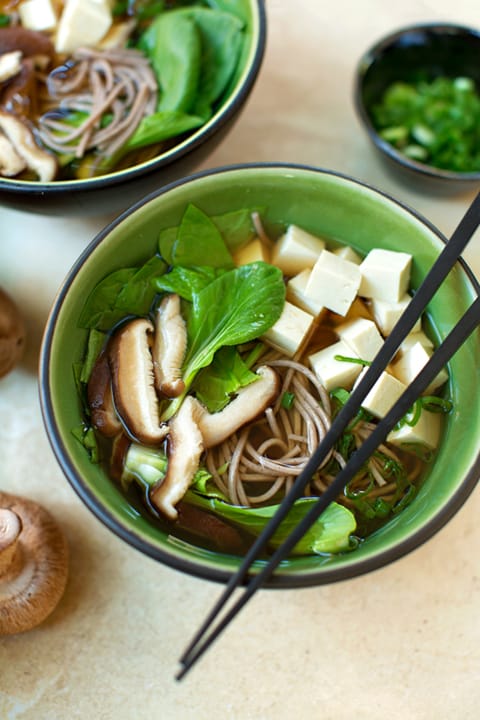
Photos by Hannah Kaminsky.
One thing to love about Asian-style soups is that they need very little advance planning. Unlike long-simmered soups that taste even better the next day, this one is at its best the moment it's done. That's especially true of noodle soups: left to sit overnight, the noodles drink up much of the broth, leaving you with more of a noodle dish than a soup. So make it, ladle it, and enjoy it right away. Serve it the traditional way, slurping the noodles from the broth with chopsticks, then using a soup spoon for whatever's left.
Key Ingredients & Substitutions
- Soba noodles. These thin Japanese noodles are made from buckwheat flour, which gives them an earthy, slightly nutty flavor. Many brands also contain wheat flour, so if you need the soup to be gluten-free, look for noodles labeled 100% buckwheat, such as Eden 100% Buckwheat Soba. Udon or thin rice noodles work in a pinch.
- Vegetable broth. A 32-ounce carton is all you need. Choose a low-sodium broth so you can control the saltiness with the soy sauce instead.
- Shiitake mushrooms. Fresh shiitake caps add savory depth to the broth. Remove the tough stems before slicing. Cremini mushrooms are a fine substitute, or use a handful of rehydrated dried shiitake and add a splash of their soaking liquid to the pot.
- Reduced-sodium soy sauce. This seasons the broth. For a gluten-free soup, swap in San-J gluten-free tamari.
- Rice vinegar, sugar, and fresh ginger. A little vinegar and sugar balance the salty soy sauce, and fresh ginger gives the broth its warmth. Use 2 teaspoons of ginger for a gentle bite or 3 if you like it zippy.
- Tofu. Soft tofu melts into the broth for a delicate texture, while firm tofu holds its cubes. Either works, so use what you like.
- Spinach and baby bok choy. Spinach wilts in minutes, and baby bok choy adds a pleasant crunch. Tatsoi or mizuna are lovely alternatives if you find them at a farmers' market.
Helpful Tips
Cook the noodles separately. Soba releases a lot of starch as it cooks. Boiling the noodles in their own pot keeps the broth clear rather than cloudy and gummy, and it lets you control exactly how soft they get.
Rinse the soba after draining. A quick rinse under cool water washes off the surface starch and stops the cooking, so the noodles don't clump together or go mushy by the time they hit the soup. Aim for al dente, since they'll soften a little more in the hot broth.
Keep the simmer gentle. Once the broth comes to a rapid simmer, turn it down and let it bubble quietly. A hard boil can break up the tofu, especially if you're using the soft kind.
Don't overcook the greens. Add the spinach and bok choy near the end and pull the pot off the heat as soon as they wilt. They should stay bright green, which looks better and tastes fresher.
Season at the end. After you add the extra water, taste the broth before serving. A splash more soy sauce or a pinch of sugar can bring it into balance, depending on how salty your broth is.
Variations
- Miso soba soup. Whisk 2 to 3 tablespoons of white miso with a ladle of hot broth, then stir it into the pot after you turn off the heat. For more miso-forward bowls, try this miso-butternut squash soup with soba or udon noodles.
- Spicy version. Add a pinch of red pepper flakes to the broth, or finish each bowl with a few drops of chili oil or a sprinkle of shichimi togarashi.
- Toasted sesame finish. Drizzle each bowl with a few drops of dark sesame oil and scatter toasted sesame seeds on top.
- Extra vegetables. Stir in snow peas, thinly sliced carrots, or bean sprouts along with the greens.
- Crispy tofu topping. Instead of simmering the tofu, pan-fry the cubes until golden and set them on top of each bowl just before serving.
Serving Ideas
With noodles, tofu, and plenty of greens, this soup is filling enough to be a light meal on its own. For a heartier dinner, pair it with a cold noodle salad like this cold soba and cucumber salad, or with some steamed edamame sprinkled with coarse salt.
Smaller portions also make a nice first course before a stir-fry or rice bowl. If you enjoy soba as much as we do, follow up another night with these simple sesame soba noodles.
Storing & Freezing
This soup is best eaten as soon as it's made. If you expect leftovers, store the noodles and broth separately. The broth with its vegetables and tofu keeps in an airtight container in the refrigerator for up to 3 days, and the cooked noodles for 1 to 2 days, tossed with a few drops of oil so they don't stick. Reheat the broth on the stovetop until steaming, then add the noodles just long enough to warm them through. If the noodles and broth were stored together, add a splash of water or broth when reheating to loosen things up.
We don't recommend freezing the finished soup. The soba turns soft and broken, and the tofu and greens get watery after thawing. You can freeze the broth base (broth, mushrooms, and seasonings) for up to 3 months, though. Thaw it overnight in the refrigerator, bring it to a simmer, and add fresh tofu, greens, and freshly cooked noodles.
More Asian-Style Noodle Soups
If you loved this recipe, here are a few more you might enjoy:
- Vegan Ramen Miso Soup
- Easy Tofu Ramen Soup
- 20-Minute Asian Vegetable Noodle Soup
- Rice Noodle Soup with Lettuce and Shiitake Mushrooms
Recipe
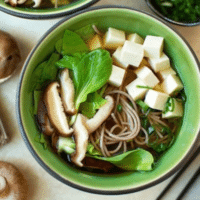
Japanese Soba Noodle Soup with Tofu and Greens
A light, soothing Japanese soba noodle soup with silky tofu, shiitake mushrooms, spinach, and baby bok choy in a gingery soy broth. Ready in about 25 minutes.
Print
Pin
Save
Servings: servings
Ingredients
- 8 ounces soba noodles use 100% buckwheat soba for gluten-free
- 4 cups low-sodium vegetable broth one 32-ounce carton
- 6 to 8 medium-sized shiitake mushroom caps stems removed, sliced
- 2 tablespoons reduced-sodium soy sauce or tamari for gluten-free
- 2 teaspoons rice vinegar
- 2 teaspoons natural granulated sugar
- 2 to 3 teaspoons minced fresh ginger to taste
- 3 scallions thinly sliced
- 8 ounces soft or firm tofu cut into ½-inch cubes
- 8 to 10 ounces fresh spinach well washed, stemmed, and chopped
- 1 cup chopped baby bok choy or tatsoi or mizuna, optional
- 2 cups water or as needed
- freshly ground pepper to taste
Instructions
- Bring a large saucepan of water to a boil. Break the soba noodles in half and cook according to package directions until al dente. Drain, then rinse briefly under cool water and set aside.
- Meanwhile, combine the vegetable broth, sliced shiitake mushrooms, soy sauce, rice vinegar, sugar, and ginger in a soup pot over medium-high heat. Bring to a rapid simmer, then lower the heat, cover, and simmer gently for 10 minutes.
- Stir in the scallions, tofu, spinach, and bok choy (if using). Cover and cook over medium-low heat until the spinach is wilted but still bright green, about 3 minutes.
- Stir in the cooked noodles and add the 2 cups of water, or enough to give the soup a dense but not overly crowded consistency. Season with pepper and a little more soy sauce if needed. Heat through for a minute or two and serve at once.
Notes
Gluten-free: use 100% buckwheat soba noodles and tamari in place of the soy sauce.
Leftovers: the noodles soak up the broth as the soup sits, so store noodles and broth separately if you expect leftovers. Refrigerate up to 3 days (noodles 1 to 2 days) and reheat gently on the stovetop.
Photos by Hannah Kaminsky.
Nutrition (Estimate per Serving)
Calories: 198kcalCarbohydrates: 36gProtein: 12gFat: 2gPolyunsaturated Fat: 1gMonounsaturated Fat: 1gSodium: 555mgPotassium: 387mgFiber: 3gSugar: 3gVitamin A: 5359IUVitamin C: 30mgCalcium: 150mgIron: 3mg
Vegan-ize any recipe!Grab our free vegan cheat sheet, packed with my favorite easy substitutions to make any recipe vegan.
Vegan Orange Tofu & Broccoli
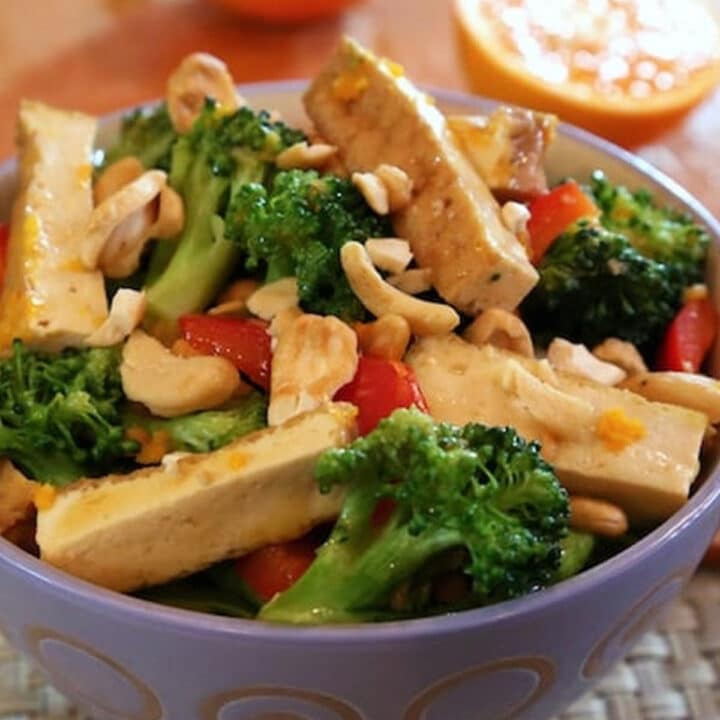
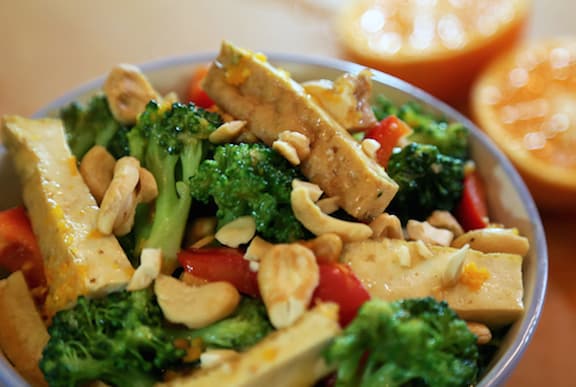
This vegan orange tofu and broccoli stir-fry gets its bright, tangy flavor from a quick sauce made with fresh orange juice, orange zest, and a splash of sesame oil and ginger. Baked tofu strips and tender-crisp broccoli soak up the glaze beautifully, while a scattering of toasted cashews adds a satisfying crunch to every bite.
What makes this dish such a good one to keep in your regular rotation is how quickly the sauce comes together with pantry staples - no jarred sauces needed here. Serve it over rice or alongside Vegetable Chow Mein for a fuller Asian-style spread, with a platter of raw vegetables on the side to round things out. The whole dish comes together in about 30 minutes, making it an easy weeknight option.
Photos by Evan Atlas.
Key Ingredients & Substitutions
- Fresh orange juice and zest - the backbone of the sauce. Fresh juice makes a real difference here, and the zest adds an extra boost of citrus flavor if you have an organic orange on hand.
- Arrowroot or cornstarch - this thickens the sauce so it clings to the tofu and vegetables instead of pooling in the pan.
- Baked tofu - already seasoned and firm, this holds its shape well when stir-fried into strips and needs no pressing.
- Broccoli and red bell pepper - cut into bite-sized pieces so they cook quickly and evenly together, adding color and crunch.
- Toasted cashews - scattered over the top just before serving, these add a rich, buttery crunch that pairs perfectly with the citrus sauce. Toasted peanuts or almonds work as substitutes.
Helpful Tips
- Whisk the arrowroot or cornstarch into the water fully before adding the remaining sauce ingredients, so it dissolves smoothly without any lumps.
- Cook the garlic over low heat just until golden - a minute or two is enough, since it can turn bitter if it browns too much.
- Cover the pan while the broccoli steams so it cooks through quickly and turns bright green rather than dull.
- Add the sauce only after the tofu and vegetables are already cooked through, then let it bubble briefly until thickened, since it can scorch if left too long.
Variations
Swap in snap peas, sliced carrots, or baby corn for some of the vegetables if you'd like more variety. For extra heat, add a pinch of red pepper flakes or a small splash of sriracha to the sauce. If you don't have fresh oranges on hand, a good-quality store-bought orange juice works fine, though the flavor will be a touch less vibrant.
Serving Ideas
Serve this over steamed rice or alongside Vegetable Chow Mein for a complete Asian-inspired meal. A platter of raw vegetables, like carrot and cucumber sticks, makes a nice fresh contrast on the side.
Storing & Freezing
Leftovers keep well in an airtight container in the refrigerator for up to 4 days; reheat gently on the stovetop or in the microwave. This dish freezes reasonably well for up to 2 months, though the broccoli and bell pepper will soften somewhat once thawed and reheated. For the best texture, add the cashews fresh after reheating rather than freezing them with the rest of the dish.
Recipe

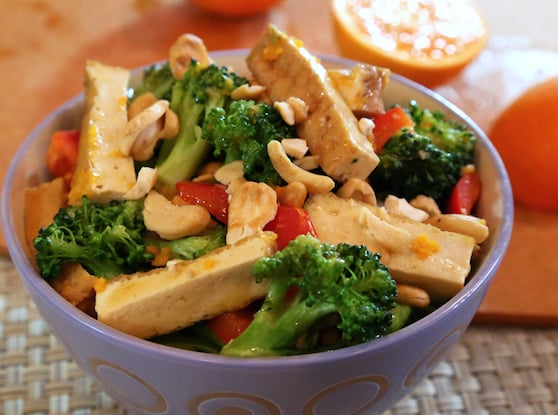
Vegan Orange Tofu & Broccoli
A vegan stir-fry of baked tofu and broccoli in a bright, tangy orange sauce with toasted cashews.
Print
Pin
Save
Servings:
Ingredients
For the sauce
- 2 tablespoons arrowroot or organic cornstarch
- 2 tablespoons reduced-sodium soy sauce or tamari
- ¾ cup orange juice preferably fresh
- 1 tablespoon orange zest optional, but highly recommended if using organic oranges
- 1 tablespoon rice vinegar or other mild white vinegar
- 2 teaspoons dark sesame oil
- 2 teaspoons grated fresh ginger or more, to taste
For the stir-fry
- 1 tablespoon safflower oil or other neutral vegetable oil
- 2 cloves garlic minced
- 2 large broccoli crowns cut into bite-sized pieces
- 1 medium red bell pepper cut into short, narrow strips
- 8 ounce package baked tofu cut into short, narrow strips
- Freshly ground pepper and extra soy sauce to taste, optional
- ¼ cup toasted cashew pieces or more as desired, optional
Instructions
- Combine the arrowroot or cornstarch with ¼ cup water in a small mixing bowl and stir to dissolve. Stir in the remaining sauce ingredients, then set aside until needed.
- Heat the oil in a stir-fry pan. Add the garlic and cook over low heat for 1 to 2 minutes, or until golden.
- Add the broccoli and ¼ cup water. Cover and cook over medium heat until the broccoli just turns bright green and tender-crisp, about 3 to 4 minutes.
- Stir in the bell pepper and tofu, turn the heat up to high, and stir-fry for 2 to 3 minutes.
- Pour in the sauce and cook just until it has thickened and everything is well heated through. Season with extra soy sauce (or pass around) to taste, and plenty of pepper.
- Scatter the cashews over the top and serve at once.
Vegan-ize any recipe!Grab our free vegan cheat sheet, packed with my favorite easy substitutions to make any recipe vegan.
Frequently Asked Questions
Can I use a different type of tofu?
Yes - extra-firm tofu, pressed well and cut into strips, works fine if you don't have baked tofu on hand. It will need a bit more oil and time in the skillet to develop a good golden color, since it doesn't come pre-seasoned the way baked tofu does.
Do I have to use fresh orange juice?
Fresh juice gives the best, brightest flavor, but a good-quality store-bought orange juice works in a pinch. If you have an organic orange on hand, it's worth zesting it for the sauce even if you use bottled juice, since the zest adds a real boost of citrus flavor.
Can I leave out the cashews?
Yes - the cashews are optional and mainly add crunch and richness. Toasted peanuts or almonds work as a substitute, or you can leave them out entirely for a nut-free version of the dish. A sprinkle of toasted sesame seeds is a nice nut-free alternative if you still want a bit of crunch on top.
More Vegan Tofu Recipes
Sharon’s Vegan Chickpea Salad
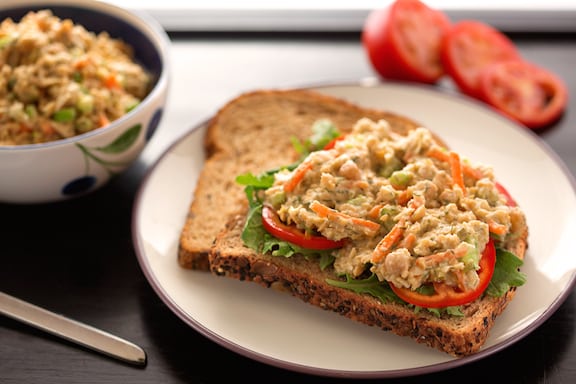
This chickpea salad recipe is super easy and completely delicious; it takes only about 15 minutes to make, and there are so many ways to serve it - as a sandwich, appetizer, or dolloped into a lettuce leaf.
The hint of sweet pickle relish really gives this preparation a great flavor! See suggestions following the recipe.
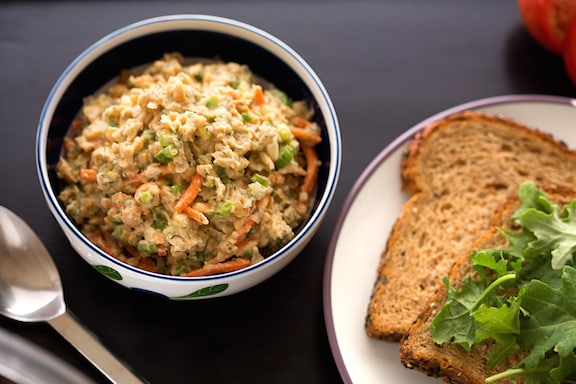
Recipe contributed by Sharon Nazarian, from Big City Vegan. Photos by Hannah Kaminsky.
Serving Ideas
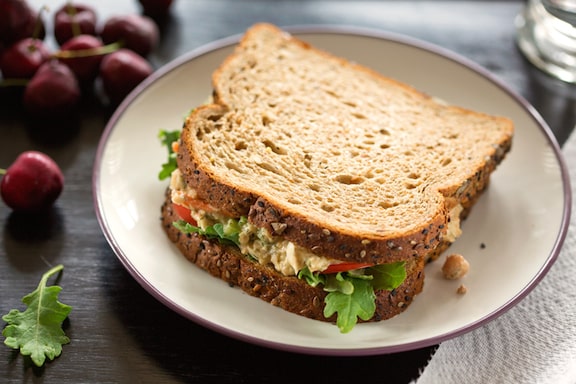
Serve as a sandwich with toasted bread. Try it on whole wheat bread with sliced tomatoes and a bed of greens, like baby spinach, baby kale, or romaine lettuce.
Or make romaine lettuce boats! Just scoop some chickpea salad onto a romaine lettuce leaf - so tasty and refreshing.
This is also delicious served on whole grain crackers or stoneground tortilla chips. This is a great way to serve it up as an appetizer.
Quick Tip! Depending on what brand of chickpeas you use, you may or may not need to add additional salt. Some canned beans have more salt than others. You can buy no-salt added chickpeas for complete control over your sodium intake. You could also soak and cook your beans instead of buying canned. This requires a little extra work but can be more economical.
Explore more of VegKitchen's Vegan sandwiches and wraps.
Recipe

Sharon's Chickpea Salad or Sandwich Spread
This chickpea salad recipe is super easy and completely delicious; it takes only about 15 minutes to make, and there are so many ways to serve it - as a sandwich, appetizer, or dolloped into a lettuce leaf.
Print
Pin
Save
Servings: to 4
Ingredients
- 15- oz can chickpeas garbanzo beans, drained and rinsed
- ½ cup carrots shredded (about 2 medium carrots)
- ½ cup celery finely chopped (1 large or 2 average-size stalks)
- 3 tablespoons lemon juice from about 1 lemon
- 2 tablespoons vegan mayonnaise or as desired
- 2 tablespoons chives or scallion finely chopped
- 1 tablespoon sweet pickle relish or more, to taste
- 1 tablespoon nutritional yeast optional but highly recommended
- 1 to 2 tablespoons minced fresh dill or 1 to 2 teaspoons dried to taste
- ¼ to ½ teaspoon sea salt or to taste, optional, see Note
Instructions
- Mash chickpeas in a bowl with a potato masher until there are no whole chickpeas left. A potato masher works best but if you don't have one, you can use a fork (or for the totally lazy, place the chickpeas in a food processor and pulse on and off until finely chopped).
- Combine the mashed chickpeas with the remaining ingredients and mix together. Serve as suggested below.
Nutrition (Estimate per Serving)
Calories: 216kcalCarbohydrates: 26gProtein: 9gFat: 9gSaturated Fat: 1gPolyunsaturated Fat: 1gMonounsaturated Fat: 1gSodium: 710mgPotassium: 390mgFiber: 8gSugar: 3gVitamin A: 3820IUVitamin C: 9mgCalcium: 67mgIron: 2mg
Vegan-ize any recipe!Grab our free vegan cheat sheet, packed with my favorite easy substitutions to make any recipe vegan.
Creamy Corn Chowder
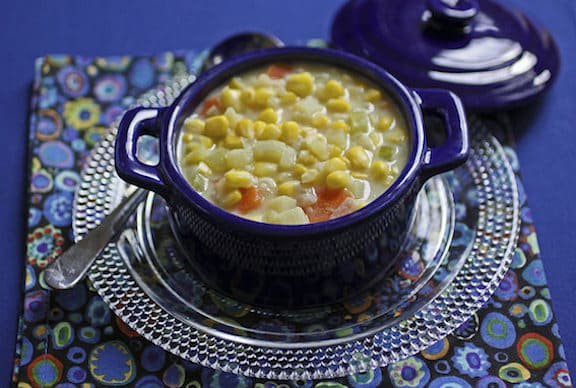
Pureed silken tofu is a superb base for creamy soups, such as this vegan creamy corn chowder. It provides substance without the need for thickening. The mild, familiar flavors will entice kids of all ages to enjoy a soothing bowl of soup. Photos by Lori Maffei. [Read more...]
Kale and Cabbage Slaw
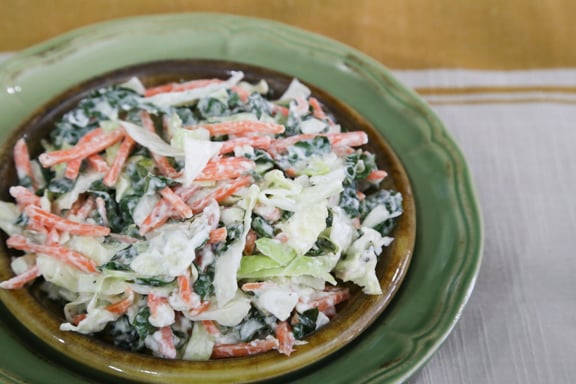
I find this simple raw kale and cabbage salad to be positively addictive, and my family seems to, as well! It goes with just about any kind of meal and is good year around. I prefer lacinato in this, but use what you've got! Photos by Evan Atlas. [Read more...]
8 Amazing Vegan Cheese Recipes
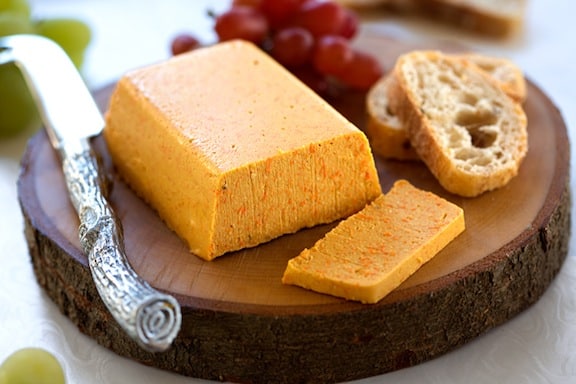
There’s no dairy in these vegan cheese recipes, but even your dairy-eating friends will be amazed by them! A good vegan cheese seems impossible, but certain ingredients lend a cheesy flavor. One of my favorites is nutritional yeast. It tastes good, and it’s good for you. Cashews, which are delicious just plain by the handful, create a magical texture that is reminiscent of goat cheese. Make sure to scroll to the end to see each one of these 8 vegan cheeses, all of which will knock your socks off!
Chinese-Style Vegetable Fried Rice

Chinese-style vegetable fried rice is an easy and tasty side dish to serve with Asian-style vegetable and tofu dishes. It's a great way to use up leftover brown rice, too. On the rare occasions when my family gets Chinese take-out, there's always a lot of leftover rice, and this is usually the way it gets repurposed!
Red Quinoa Pilaf with Porcini Mushrooms
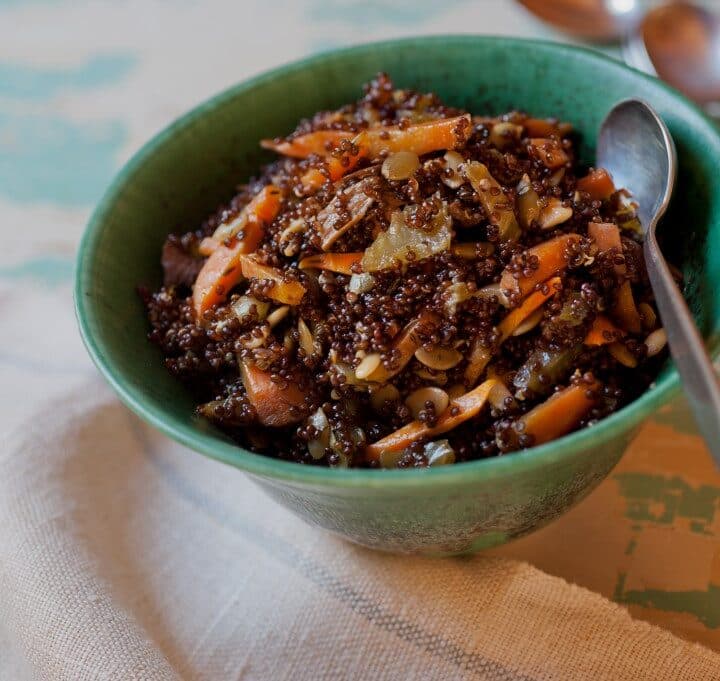
For this flavorful quinoa dish, you can choose from the red, tan or black varieties. I chose the red for a nice color contrast for all the earthy colors of the vegetables. The toasted pumpkin seeds also add a nice crunch, and extra protein to this delicious vegan main dish. Recipe contributed by Leslie Cerier. Photos by Tracey Eller.
[Read more...]
Hungarian-Style Noodles with Cabbage and Poppy Seeds
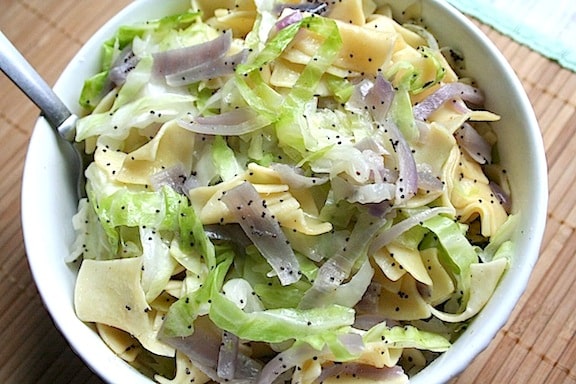
The preparation of hungarian-style noodles with cabbage and poppy seeds can be simplified by using pre-shredded coleslaw cabbage, but fresh green cabbage is best.
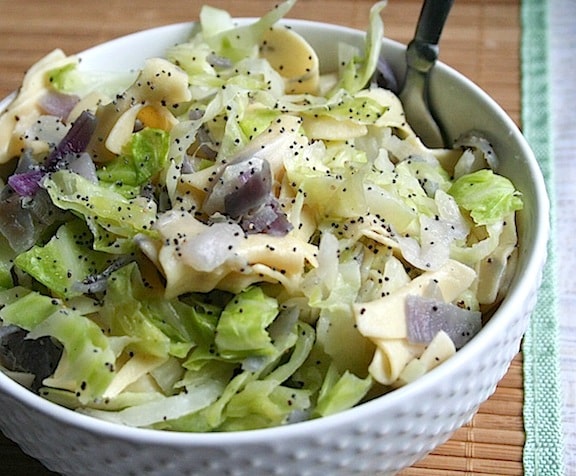
Photos by Rachael Braun.
The preparation of this tasty Slavic-inspired dish can be greatly simplified by using pre-shredded coleslaw cabbage.
But for flavor, I prefer a fresh green cabbage.
For a complete, easy meal, serve with a simple bean dish and a salad of mixed greens, tomatoes, peppers, and carrots.
For more healthy and light vegan meal ideas, check out these creative vegan salads and these lighter seasonal vegan pasta recipes.
Recipe
Hungarian-Style Noodles with Cabbage and Poppy Seeds
The preparation of this tasty Slavic-inspired dish can be greatly simplified by using pre-shredded coleslaw cabbage, but for flavor, I prefer a fresh green cabbage.
Print
Pin
Save
Servings:
Ingredients
- 2 tablespoons olive oil
- 1 large onion quartered and thinly sliced
- 1 small green or ½ medium savoy cabbage cut into long, thin shreds
- ¼ cup dry white wine
- 10 to 12 ounces flat egg-free noodles such as spelt ribbons or rombi
- 1 tablespoon vegan buttery spread such as Earth Balance
- 1 tablespoon poppy seeds more or less as desired
- Salt and lots of freshly ground pepper to taste
Instructions
- Heat the oil in an extra-wide skillet or stir-fry pan. Add the onion and sauté over medium heat until golden.
- Add the cabbage and wine, then cover and cook, stirring occasionally, until the cabbage is limp just beginning to brown lightly, about 10 to 12 minutes.
- Meanwhile, cook the noodles in plenty of rapidly simmering water until just tender. Drain and transfer to a large serving container, then stir in the Earth Balance.
- Add the cabbage mixture and poppy seeds to the noodles and toss gently but thoroughly. Season to taste with salt and lots of pepper, and serve at once.
Nutrition (Estimate per Serving)
Calories: 249kcalCarbohydrates: 38gProtein: 8gFat: 8gSaturated Fat: 1gPolyunsaturated Fat: 2gMonounsaturated Fat: 4gTrans Fat: 1gSodium: 312mgPotassium: 447mgFiber: 6gSugar: 4gVitamin A: 1589IUVitamin C: 48mgCalcium: 120mgIron: 2mg
Vegan-ize any recipe!Grab our free vegan cheat sheet, packed with my favorite easy substitutions to make any recipe vegan.
Russian Beet and Potato Salad

Here's a simple, classic potato salad made vivid with beets. If you have access to golden beets, by all means, use them. They're even sweeter than red beets, and keep their vivid color to themselves more than red beets do. Is this salad really Russian? I have no idea; it is really good, though, especially if you like beets! [Read more...]
Grated Beet and Carrot Salad

Beets and carrots are such companionable vegetables. They go together “grate” in this simple salad. Such flavorful veggies need only light embellishment — just a little added sweetness, plus the tartness of lemon, which brings out their flavors. And a small flourish of your favorite seeds is a nice finishing touch. [Read more...]
Lunch Box Pasta Salad
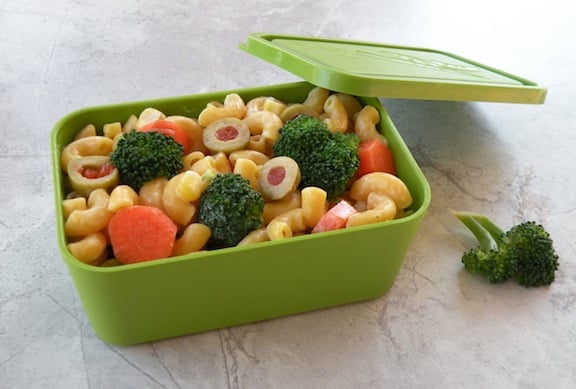
This simple pasta salad makes a nice change of pace from sandwich fare. Featuring kid-friendly veggies, you can dress it in a way you think would be most appealing. Vary the vegetables according to your child’s preference. You can make this for dinner, then use leftovers for the lunch box (moisten with additional dressing as needed), or just make it for lunch-packing from the get go, for which it yields a generous number of servings. If you're looking for more lunch ideas, you might enjoy our post, Healthy School Lunch Recipes and Tips. [Read more...]
Classic Carrot-Raisin Salad
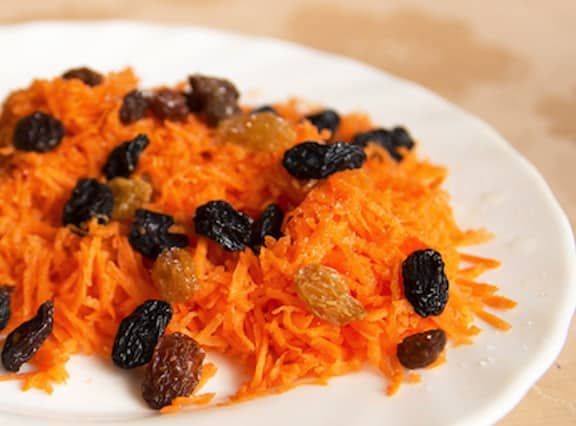
Here’s a simple salad that goes with just about anything. Carrot-raisin salad might just be the first that kids will enjoy! A food processor is a must for preparing this salad quickly; or you can start with pre-grated carrots that come packaged, but make sure they look nice and fresh. [Read more...]
6 Offbeat Veggies That are Worth a Try
In my experience, I've found that those who like vegetables are particularly fond of the tried-and-true varieties. Broccoli, carrots, peas, potatoes, sweet potatoes, and corn occupy the top rung. "Second string" vegetables include cauliflower, green beans, greens, squashes, and such. If those in your household are open to new vegetable adventures, here are a few veggies that you may not think of buying regularly, but which might add fun and variety to your everyday repertoire.
Brussels Sprouts
Okay, so Brussels sprouts aren't exactly "offbeat," but they may be one of the vegetables you hated as a child. I list them here, though, because I think they're underused and under appreciated. Cook them just until done, and these tiny cabbages are delightful. When eating overcooked Brussels sprouts, I can see where the prejudice may set in. Serve your perfectly cooked sprouts to your family with an air of excitement-it may be contagious!
- Maple-Sriacha Roasted Brussels Sprouts with Cranberry Wild Rice
- Wine-Glazed Brussels Sprouts
- Tempeh Stew with Brussels Sprouts, Sweet Potatoes, and Shiitakes
Edamame
Fresh green soybeans have become widely available in the West in the past few years. Resembling baby lima beans-but less mealy and more flavorful-edamame (eda-MA-may) are a popular appetizer in Japanese restaurants. In midsummer, I get fresh edamame from my local farm markets. Cook them in their shells for about 10 minutes, then pop them open and eat them at room temperature-much like green peas. Edamame are quite easy to find in frozen form in natural foods stores, either in or out of the shell.
- Asian-Flavored Edamame and Tofu Chopped Salad
- Quinoa with Edamame and Oranges
- Edamame Salad with Red Bell Pepper
Jerusalem Artichokes
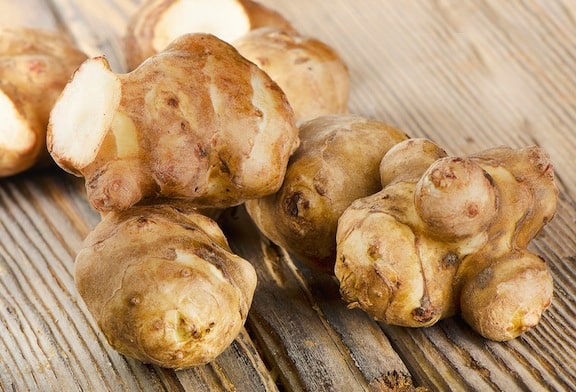
Also marketed as "sunchokes," these knobby roots have no connection with Jerusalem nor do they bear any resemblance to the more common, leafy artichokes. They are related in some way to the sunflower plant, however. These veggies have a texture that is a cross between a water chestnut and a white potato and a flavor that is pleasant but hard to describe. Jerusalem artichokes can be scrubbed, sliced, and eaten raw alone or in salads, or quickly sautéed in a little olive oil.
Jícama
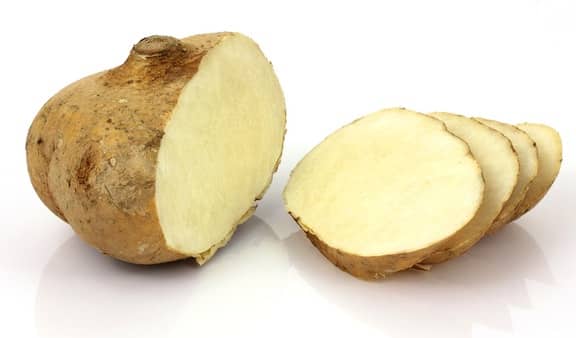
Another offbeat root, jicama (pronounced HICK-a-mah) is native to the American Southwest, and until the last decade or so was not easy to find outside that realm. Now you will find jicama in well-stocked supermarkets and produce stores from west to east. Sweet, crunchy, and a bit more watery than other roots, jicama is-like the Jerusalem artichokes-good sliced and eaten raw, used in salads, or sautéed.
Leeks
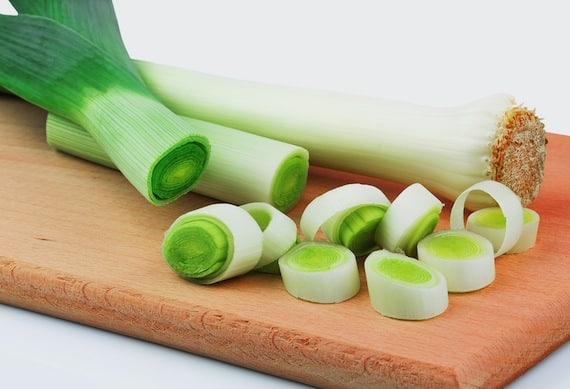
A member of the onion family, leeks resemble oversized scallions. Only the white and lightest green parts are edible. The dark green leaves may be washed well, chopped, and used to flavor homemade vegetable stock, or you can simply discard or compost them. Chop leeks and rinse very well before using. Sautéed leeks are wonderful in soups and paired with potatoes or cabbage. But you can always substitute them for ordinary onions.
- Simmered Tofu with Leeks and Tomatoes
- Sautéed Carrots and Leeks
- Mashed Sweet Potatoes with Leeks and Peas
Spaghetti Squash
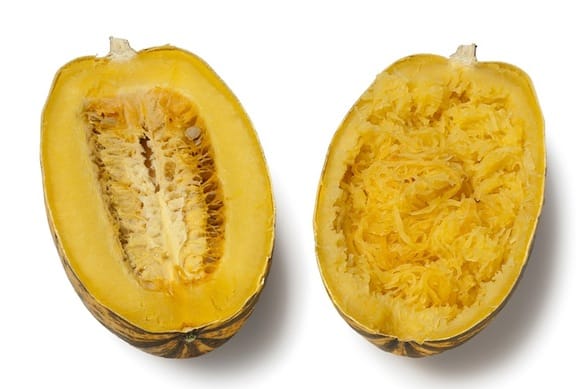
Winter squashes are not often great favorites of children (unless pureed into soups or otherwise disguised), but spaghetti squash may be the exception to this rule. Once baked, the flesh comes out in spaghetti-like strands, and children can get great enjoyment from "combing out" those strands with a fork (provided of course, that the squash is cool enough to handle). I like to serve spaghetti squash in its simplest form, sautéed in a little olive oil or Earth Balance, and seasoned with salt and pepper. Some people like to eat their spaghetti squash with marinara sauce as a low-carb substitute for pasta.
Smoky Vegan Cheddar Cheez

You can make this vegan cheese-y appetizer as a spread in no time, or let it set up into slices. I like it both ways and hope that you will, too. This is good with sliced fresh baguette, or serve it with whole-grain or gluten-free crackers or crispbreads. It’s also quite nice served with chunks of red bell pepper and peeled celery cut into short sections. Grapes served in small bunches on the side add a nice flavor balance. Recipe adapted from Vegan Holiday Kitchen by Nava Atlas. Photos by Hannah Kaminsky. [Read more...]
Vegan Tomato Lentil Soup
This vegan tomato lentil soup turns a handful of pantry staples into a warming, protein-packed meal. Lentils and pearl barley simmer together in a rich tomato broth loaded with vegetables, so every spoonful is filling enough to serve as a full dinner rather than a starter.
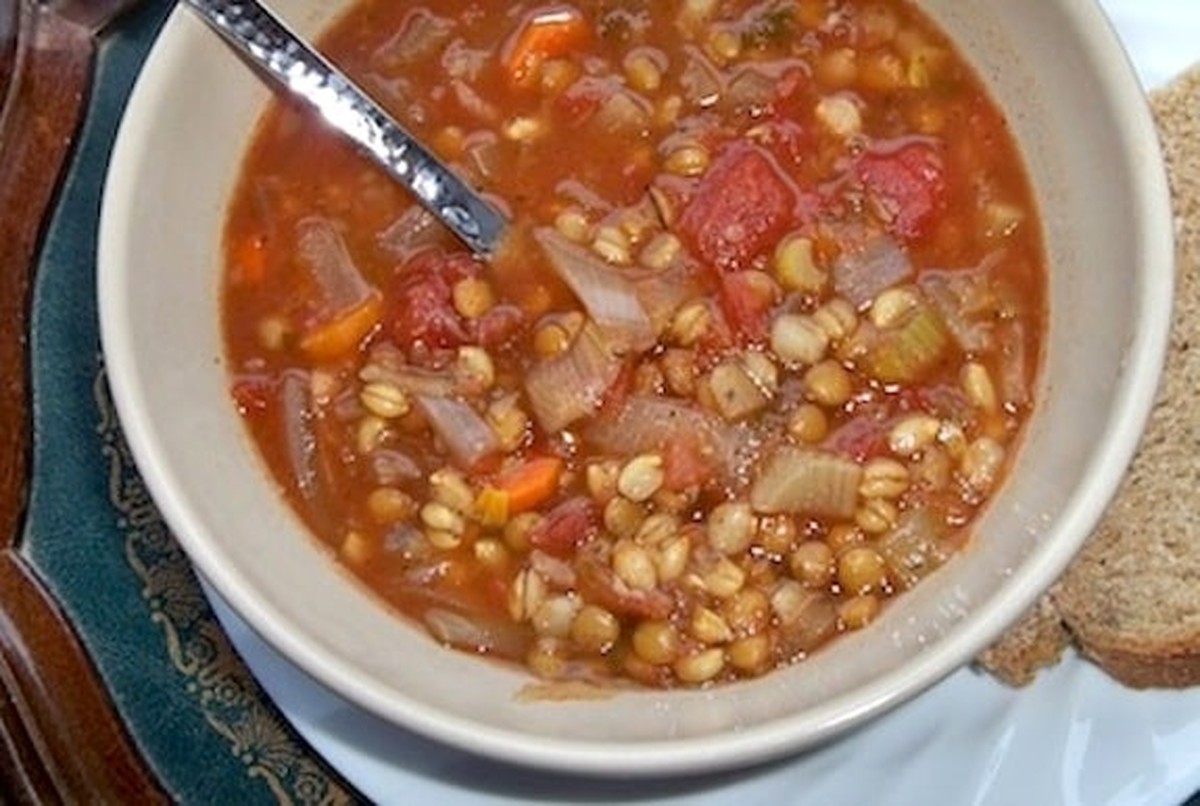
Photo by Laurie Fahrner, who writes the blog Mehitable Days.
Key Ingredients & Substitutions
- Green or brown lentils. These form the hearty base of the soup and cook right in the broth, with no pre-cooking needed. Either color works well; red or yellow lentils will break down faster and thicken the broth more, which is a nice variation if you prefer a creamier texture.
- Pearl barley. Chewy pearl barley adds body and a nutty flavor. If you don't have any on hand, swap in an equal amount of brown rice, or use quinoa for a version that cooks a little faster.
- Onion and garlic. The aromatic base for the broth — don't rush this step, since a good sauté here builds a lot of the soup's flavor.
- Celery and carrots. Classic soup vegetables that add sweetness and crunch. Parsnips or turnips make a good substitute if you want to switch things up.
- Shredded cabbage. Adds bulk and a little sweetness as it softens. Kale or Swiss chard, stirred in during the last few minutes of cooking, also works well.
- Salt-free diced tomatoes. Using a salt-free can lets you control the seasoning yourself. If you only have a regular salted can on hand, just cut back on the added salt at the end.
- Apple cider vinegar. A splash added near the end brightens the whole pot and balances the natural sweetness of the tomatoes and carrots.
- Salt-free seasoning blend and sweet paprika. These build warmth and depth without added sodium. Smoked paprika is a great substitute if you want a deeper, slightly smoky flavor instead.
Helpful Tips
Rinse your lentils and barley well. Both can carry a little dust or debris from packaging, so a quick rinse under cold water before they go into the pot keeps the finished soup tasting clean.
Let the soup rest before serving. Tomato-lentil soups like this one taste even better after sitting off the heat for 30 minutes to an hour — the flavors have time to meld and the barley keeps absorbing broth, so don't skip this step if you have the time.
Adjust the thickness as you go. Because lentils and barley keep absorbing liquid even after the soup is done cooking, it will thicken considerably as it sits or is reheated. Keep a kettle of hot water nearby so you can thin it back out to your preferred consistency.
Season at the end, not the beginning. Since this recipe leans on a salt-free tomato base and a salt-free seasoning blend, wait until the very end to add salt and pepper — that way you can taste the broth first and season it exactly to your liking.
Use a heavy-bottomed pot. Barley and lentils can stick and scorch on the bottom of a thin pot during the long simmer. A Dutch oven or other heavy soup pot distributes heat more evenly and needs less stirring.
Variations
- Smoky version. Swap the sweet paprika for smoked paprika, or stir in a small pinch of chipotle powder for a little heat.
- Extra greens. Add a few big handfuls of chopped kale or spinach during the last 5 minutes of cooking for extra color and nutrients.
- Creamier texture. Use red or yellow lentils instead of green or brown — they break down more as they cook, giving the broth a naturally thicker, creamier texture.
- Curried tomato lentil soup. Add 1 to 2 teaspoons of curry powder along with the paprika for a warmly spiced variation, closer in flavor to our Easy Vegan Dal Tadka.
- Slow cooker method. Sauté the onion and garlic on the stovetop first, then transfer everything to a slow cooker and cook on low for 7 to 8 hours, or on high for 3 to 4 hours.
- Grain-free version. Leave out the barley and add an extra ½ cup of lentils, or stir in cooked rice at the end if you'd rather skip the longer simmer barley needs.
Serving Ideas
This soup is filling enough to be the main event. Serve it in big bowls with warm crusty bread or cornbread for dipping, and a simple green salad on the side to round out the meal. A drizzle of good olive oil or a sprinkle of fresh herbs just before serving adds a nice finishing touch.
If you're building out a full soup-and-bread night, this pairs especially well with a slice of Easy Vegan Cornbread, or alongside a lighter dish like Vegan Split Pea Soup if you want to offer two soups at the table.
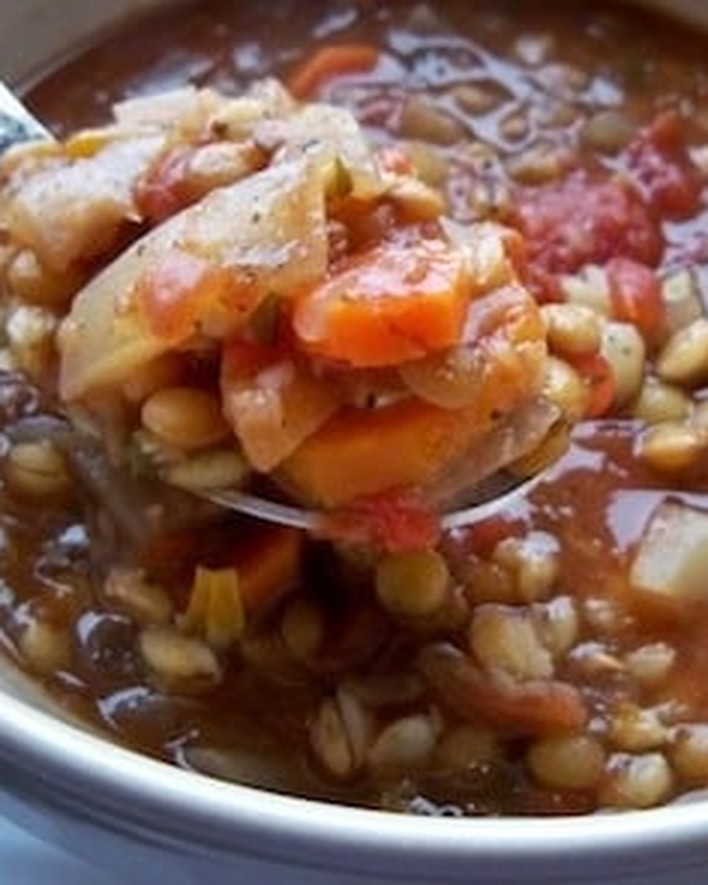
Storing & Freezing
Leftover soup keeps well in an airtight container in the refrigerator for up to 5 days. Since the barley and lentils continue to absorb liquid as it sits, expect the soup to thicken noticeably — just stir in a splash of water or vegetable broth when reheating to loosen it back up.
This soup freezes beautifully, making it a great candidate for a big batch. Cool it completely, then freeze in individual portions for up to 3 months. Thaw overnight in the refrigerator and reheat gently on the stovetop, adding extra water or broth as needed, since the texture will be thicker after freezing.
More Hearty Vegan Soups
If you loved this recipe, here are a few more cozy vegan soups you might enjoy:
- Sweet Potato Lentil Soup (Vegan & Vegetarian)
- Vegan Split Pea Soup
- Vegan Cream of Broccoli Soup
- Old-Fashioned Vegan Stew
Recipe

Vegan Tomato Lentil Soup
A hearty, protein-packed vegan soup that simmers lentils, pearl barley, and vegetables in a rich tomato broth — an inexpensive, freezer-friendly meal that's perfect with crusty bread.
Print
Pin
Save
Servings: servings
Ingredients
- 1 tablespoon olive oil (15 mL)
- 1 large onion chopped
- 2 cloves garlic to 3 cloves, minced
- 8 ounces green or brown lentils raw, rinsed (227g)
- ¾ cup pearl barley raw, rinsed; or substitute brown rice or quinoa (140g)
- 2 large celery stalks diced
- 2 medium carrots peeled and sliced
- 1 cup shredded white cabbage (90g)
- 28 ounces salt-free diced tomatoes undrained, 1 can (794g)
- ¼ cup dry red wine optional (60 mL)
- 1 tablespoon apple cider vinegar to taste, up to 2 tablespoons (15-30 mL)
- ¼ cup fresh parsley chopped (15g)
- 2 teaspoons salt-free seasoning blend such as Frontier or Mrs. Dash, or more to taste (10g)
- 2 teaspoons sweet paprika or use smoked paprika for a spicier flavor (5g)
- salt and freshly ground black pepper to taste
- fresh parsley and/or dill chopped, optional, for garnish
- 6 cups water (1.4 L)
Instructions
- Heat the olive oil in a large soup pot over medium heat. Add the chopped onion and cook, stirring occasionally, for about 5 minutes, until translucent. Add the garlic and continue cooking for 1 to 2 minutes, until both are golden and fragrant.
- Stir in the lentils, pearl barley, celery, carrots, cabbage, diced tomatoes (with their juices), red wine (if using), cider vinegar, parsley, salt-free seasoning blend, and paprika. Add the 6 cups of water and bring to a gentle boil over medium-high heat.
- Reduce the heat to low, cover, and simmer for 45 to 55 minutes, stirring occasionally, until the lentils, barley, and vegetables are tender. Add more water as needed if the soup becomes too thick.
- Season with salt and pepper to taste, and stir in extra fresh parsley or dill if desired. For the best flavor, let the soup stand off the heat for about an hour, then reheat gently before serving. The soup thickens as it stands, so add water and adjust the seasonings just before serving.
Nutrition (Estimate per Serving)
Calories: 245kcalCarbohydrates: 44gProtein: 12gFat: 4gSaturated Fat: 1gPolyunsaturated Fat: 1gMonounsaturated Fat: 1gSodium: 380mgPotassium: 620mgFiber: 14gSugar: 7gVitamin A: 2800IUVitamin C: 12mgCalcium: 60mgIron: 3mg
Vegan-ize any recipe!Grab our free vegan cheat sheet, packed with my favorite easy substitutions to make any recipe vegan.