
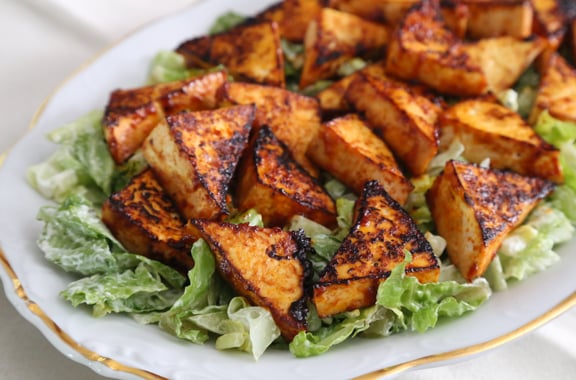
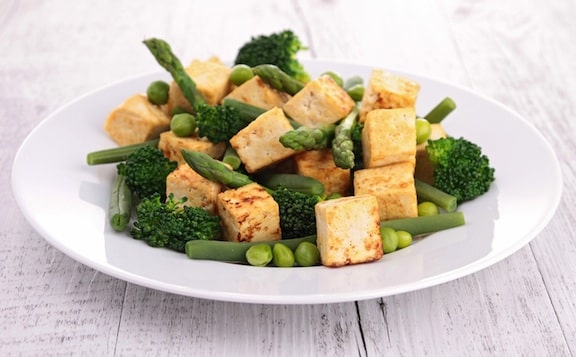
The contrast of warm, spicy triangles of pan-browned tofu with cool, crisp lettuce is quite enticing. Serve this easy tofu dish with a simply prepared brown rice, quinoa, or noodles, and a platter of raw veggies. Photos by Evan Atlas.
Search Results for: quinoa
Israeli Couscous Summer Pilaf
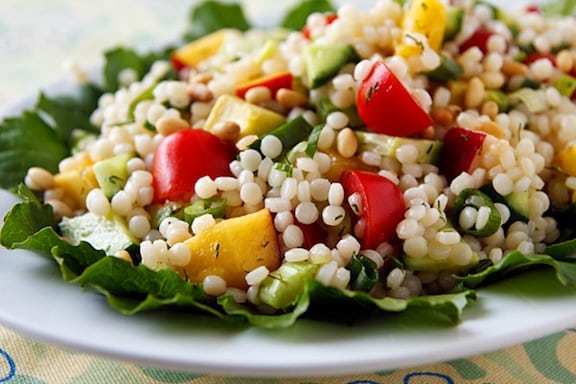
This delightful pilaf/salad combining Israeli couscous, tomatoes, avocado, and stone fruit is from Vegan Holiday Kitchen.* Israeli couscous is one fun little pasta. It's round and quick-cooking, and has a very pleasant mouth feel. Look for it in bulk in natural foods stores, or in the Middle Eastern section of the international aisle in well-stocked supermarkets. Photo by Susan Voisin, FatFree Vegan Kitchen. [Read more...]
Pear and Apple Crumble
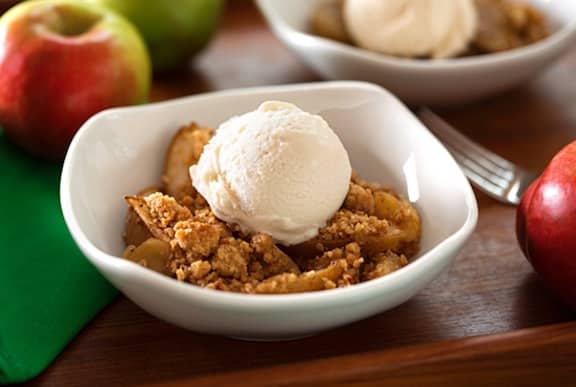
If you'd like an alternative to pumpkin pie for fall celebrations like Thanksgiving, or everyday meals, this pear and apple crumble is a welcome dessert. It's especially tasty served warm over vanilla nondairy ice cream. Photos by Hannah Kaminsky. [Read more...]
Classic Vegan Chili
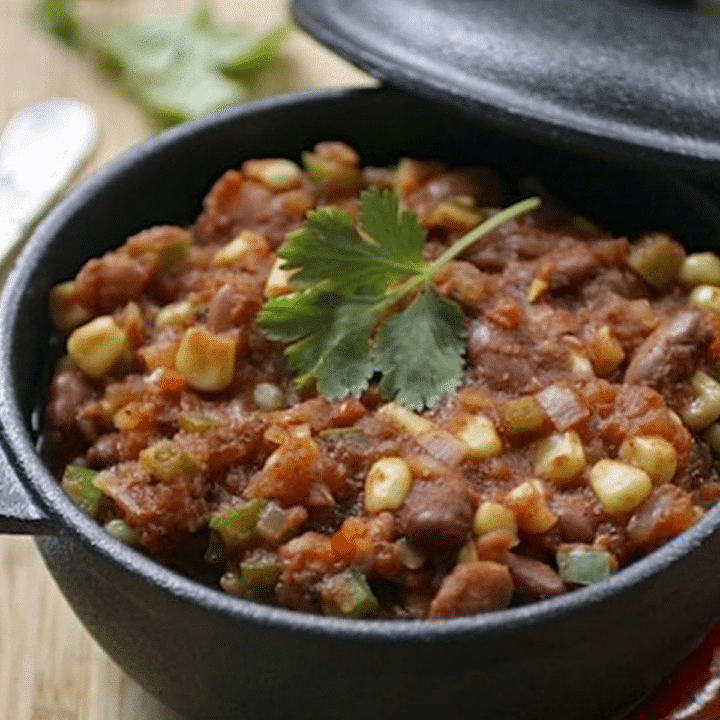
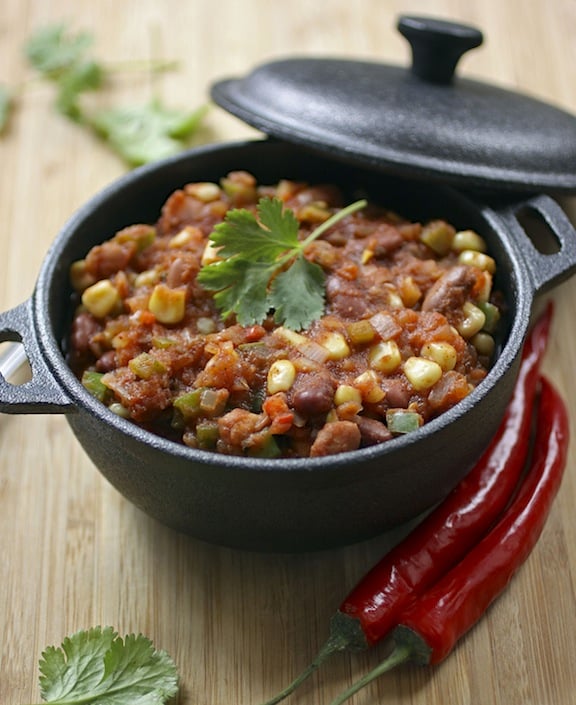
This classic vegan chili is everything you want in a bowl of comfort food: hearty beans, sweet corn, and a rich, spiced tomato base that simmers into something deeply satisfying. It comes together with pantry staples in under an hour, making it just as easy for a weeknight dinner as it is for a big pot to feed a crowd.
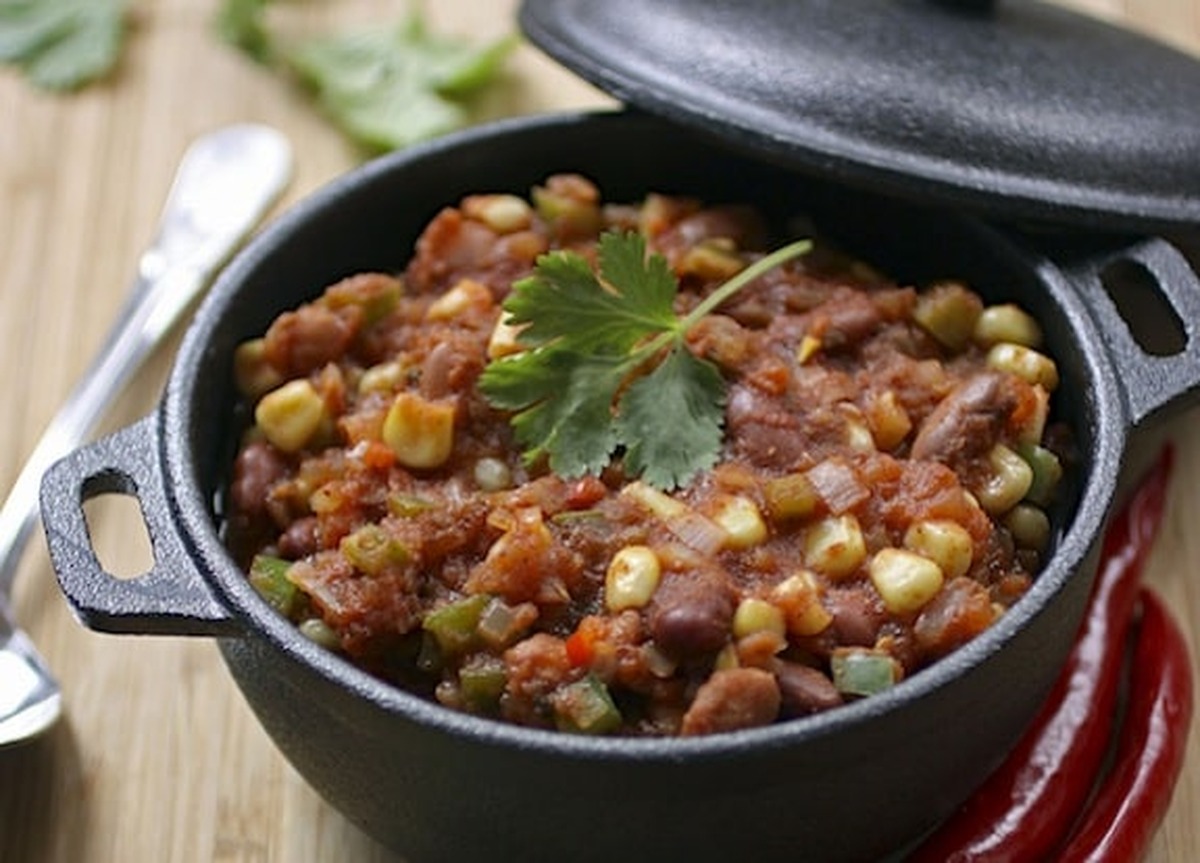
Photos by Lori Maffei.
Key Ingredients & Substitutions
- Olive oil. Just enough to soften the aromatics. Any neutral oil works fine if that's what you have on hand.
- Onions. The flavor backbone of the chili. White or yellow onions both work well here.
- Garlic. Adds depth and a little bite. Pre-minced garlic is a fine time-saver, though fresh is best.
- Green bell pepper. Adds sweetness and texture. A poblano or red bell pepper are both good swaps if you want a different flavor note.
- Pinto or pink beans. Creamy and hearty, and what gives this chili its classic texture. Kidney beans, black beans, or a mix of all three work just as well.
- Crushed tomatoes. Forms the base of the sauce. Diced tomatoes pulsed briefly in a blender make a good substitute if that's what's in your pantry.
- Corn kernels. Adds little pops of sweetness throughout. Frozen corn works year-round, or you can leave it out for a more traditional bean chili.
- Fresh hot chili peppers or canned green chiles. This is where you control the heat. Jalapeños, serranos, or a can of mild chopped green chiles all work depending on how spicy you like it.
- Dried oregano. A classic chili seasoning. Mexican oregano has a slightly citrusy edge if you can track it down.
- Chili powder. The main seasoning in the pot, so it's worth using a good-quality blend rather than one that's mostly filler.
- Ground cumin. Earthy and warm, and essential to that classic chili flavor. Freshly ground cumin has noticeably more punch than pre-ground if you have a spice grinder.
- Salt. Added at the end so you can season to taste once the chili has reduced and concentrated.
Helpful Tips
Don't rush the onions. Sautéing the onions and garlic until they're truly soft and starting to turn golden - not just translucent - builds a much deeper flavor base for the whole pot. Give it a full 6 to 8 minutes over medium heat rather than cutting it short.
Use a good chili powder. Chili powder blends vary a lot in quality and freshness. A stale or filler-heavy chili powder will leave the whole dish tasting flat, so it's worth reaching for a fresher, more flavorful brand if your usual one has been sitting in the cabinet for years.
Let it simmer low and slow. A full 30-minute simmer, covered, gives the beans and vegetables time to soften and the flavors time to meld. Resist the urge to crank the heat to speed things up - a gentle simmer keeps the tomatoes from scorching on the bottom of the pot.
Adjust the thickness as you go. This chili is meant to be thick, not soupy, but every batch of beans and tomatoes releases a different amount of liquid. If it looks too dense partway through cooking, stir in water a half cup at a time until it's exactly how you like it.
Give it a rest before serving. If you have the time, let the finished chili sit off the heat for an hour before reheating and serving. Like most stews, it actually tastes better once the flavors have had a chance to settle and deepen.
Variations
- Spicier chili. Add one or two extra seeded and minced jalapeños or other hot peppers, or stir in jarred sliced jalapeños to taste. Let it simmer for another 5 minutes after adding them so the heat has time to spread through the pot.
- Cheesy topped. Pass around a bowl of shredded vegan cheddar-style cheese for topping individual servings at the table.
- Textured chili. If you'd like a heartier, more textured bowl without a "meaty" quality, stir in about a cup of cooked quinoa, bulgur, or whole-grain couscous near the end of cooking.
- Smoky chili. Add a minced chipotle pepper in adobo sauce, or a teaspoon of smoked paprika, for a deeper, smokier flavor.
- Slow cooker chili. Sauté the onion and garlic on the stovetop first, then transfer everything to a slow cooker and cook on low for 6 to 7 hours, or on high for 3 to 4.
- Extra vegetables. Diced zucchini, carrots, or sweet potato all cook down nicely in this chili and stretch the pot even further.
Serving Ideas
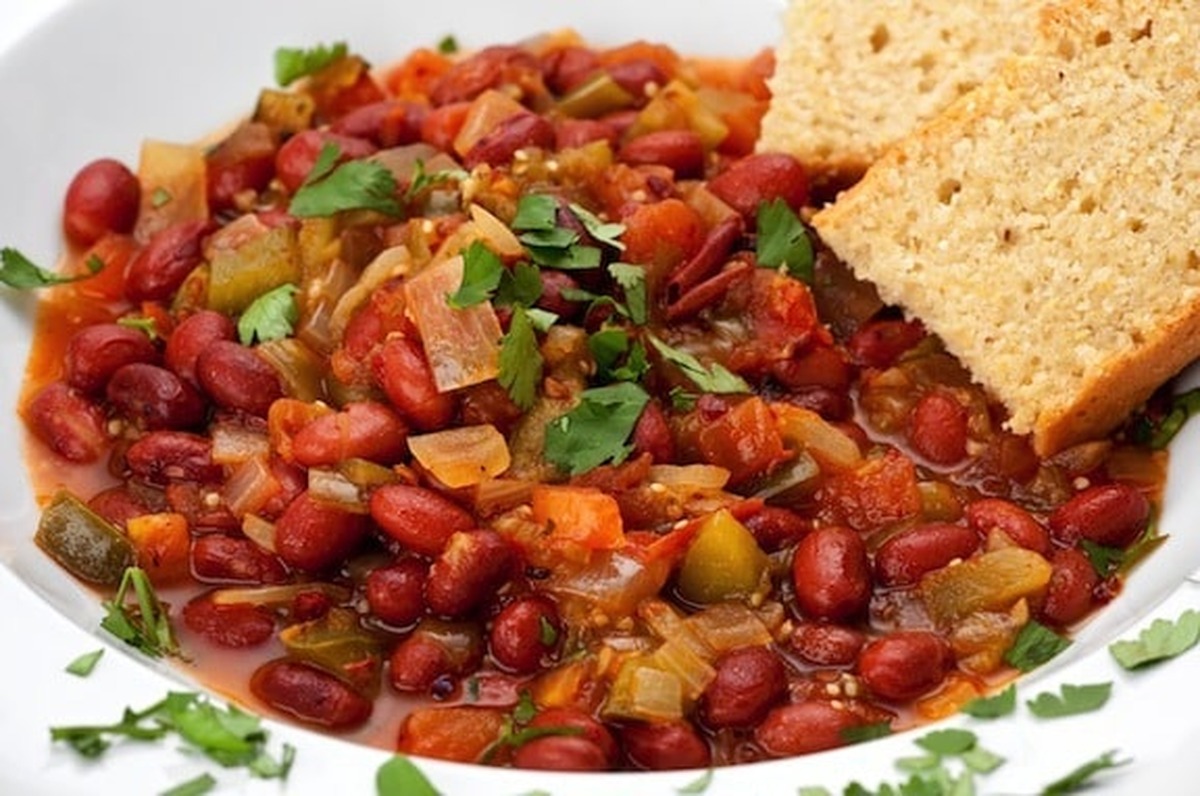
This chili is at its best served hot in bowls with a wedge of Green Chile Cornbread or a slice of Easy Vegan Cornbread alongside for scooping up the last bites. A basket of warm biscuits works just as well if cornbread isn't on hand.
For toppings, set out diced avocado, a dollop of vegan sour cream, chopped fresh cilantro, or a sprinkle of shredded vegan cheese so everyone can build their own bowl. Leftovers also make a great topping for a baked potato or a scoop of rice.
Storing & Freezing
Let the chili cool to room temperature, then store leftovers in an airtight container in the refrigerator for up to 5 days. The flavor actually improves after a day or two, making this one of those recipes that's even better as leftovers.
This chili freezes beautifully. Portion cooled chili into freezer-safe containers or bags and freeze for up to 3 months. Thaw overnight in the refrigerator, then reheat gently on the stovetop over low heat, adding a splash of water or vegetable broth if it's thickened up too much in the freezer.
More Vegan Soups, Stews, and Chilis
If you loved this recipe, here are a few more you might enjoy:
- Sweet Potato Black Bean Chili
- Smoky Lentil and Sweet Potato Chili
- VegKitchen's Vegan Chili Recipe Round-Up
Recipe
Classic Vegan Chili
This classic vegan chili is a hearty mix of beans, corn, and bell pepper simmered in a mildly spiced tomato base. It's easy enough for weeknight dinners and always a hit for casual company. Serves 6 to 8.
Print
Pin
Save
Servings: servings
Ingredients
- 1 tablespoon olive oil (15 mL)
- 2 medium onions finely chopped (about 320g)
- 2 cloves garlic minced (6g)
- 1 large green bell pepper finely chopped (150g)
- 4 cups cooked pinto or pink beans about 1 ⅔ cups dry, or two 15-ounce cans, drained and rinsed (680g)
- 28 ounce can crushed tomatoes (794g)
- 1 ½ cups corn kernels cooked fresh or thawed frozen (225g)
- 1-2 fresh hot chili peppers seeded and minced, or one 4-ounce can mild or hot chopped green chiles (113g)
- 1 teaspoon dried oregano (1g)
- 2-3 teaspoons chili powder good-quality, more or less to taste (5-7g)
- 1 teaspoon ground cumin (2g)
- salt to taste
Instructions
- Heat the olive oil in a large soup pot or Dutch oven over medium heat. Add the onions and garlic and sauté, stirring occasionally, for 6 to 8 minutes, until the onions are softened and starting to turn golden.
- Stir in the bell pepper, beans, crushed tomatoes, corn, chili peppers (or canned green chiles), oregano, chili powder, and cumin. Bring to a gentle simmer, then cover and cook over low heat for 30 minutes, stirring occasionally. If the chili looks too thick, stir in water a half cup at a time until it reaches a consistency you like — it should stay thick, not soupy.
- Season with salt to taste and adjust the other seasonings as needed. If you have time, let the chili stand off the heat for about an hour to let the flavors meld, then reheat gently over low heat before serving in bowls.
Nutrition (Estimate per Serving)
Calories: 230kcalCarbohydrates: 42gProtein: 11gFat: 3gSaturated Fat: 0.5gPolyunsaturated Fat: 0.5gMonounsaturated Fat: 1.5gSodium: 480mgPotassium: 700mgFiber: 12gSugar: 4gVitamin A: 10IUVitamin C: 35mgCalcium: 8mgIron: 15mg
Vegan-ize any recipe!Grab our free vegan cheat sheet, packed with my favorite easy substitutions to make any recipe vegan.
Kañiwa Confetti Salad
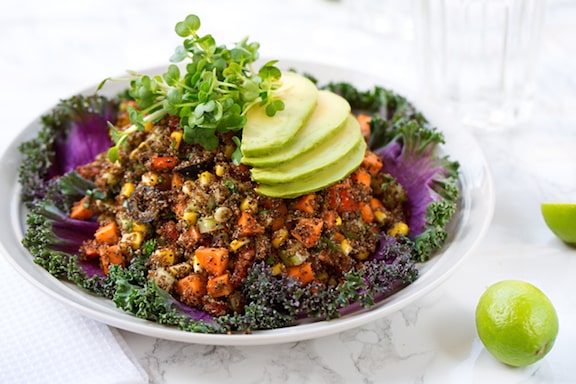
Kañiwa is, like quinoa (to which it is related), a super-nutritious ancient grain from South America. It's an excellent source of protein and amino acids, is exceptionally high in iron, and is gluten-free. Dark reddish-brown in color and about half the size of a tiny quinoa seed, kañiwa cooks up quickly to resemble a smaller version of red quinoa. [Read more...]
Taco Soup
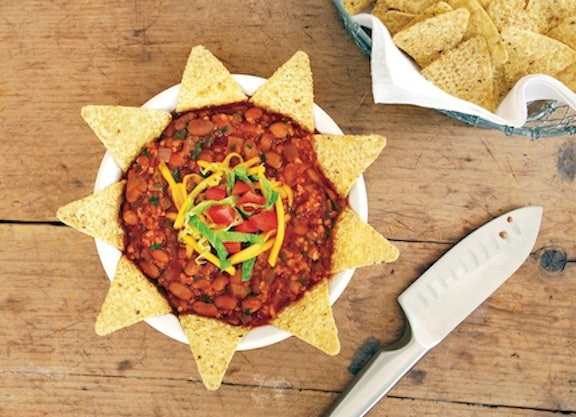
The presentation of this easy, offbeat soup, filled with spiced beans and grain (quinoa or bulgur) is like a taco turned inside out, is fun and dramatic. It's perfect for a chilly weeknight meal, served with a colorful salad and a green veggie. Adapted from Vegan Soups and Hearty Stews for All Seasons. Photo by Theresa Raffetto. [Read more...]
Kale, Yellow Squash, and Sweet Potato Stew
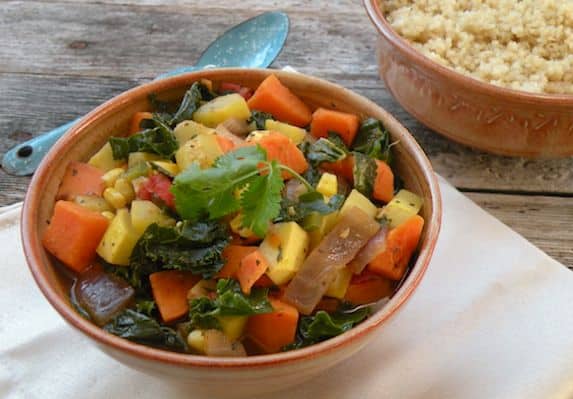
As everyone knows, greens are good for you, and with its high calcium content, kale is a standout. In this stew, the deep greens contrasted with the yellow of the squash and the orange of the sweet potato, makes this an attractive and nourishing dish for the autumn harvest. [Read more...]
Spinach, Leek, and Potato Matzo Gratin
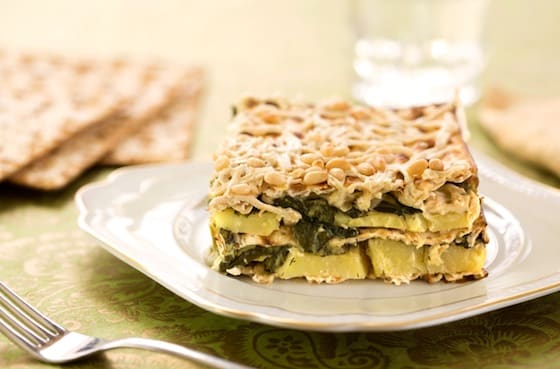
This dish closely resembles layered matzo casseroles, called minas, which are commonly served at Sephardic Seders. They consist of layered matzos, vegetables, and cheese. With optional Daiya cheese, or no cheese at all, it's a tradition well worth adopting (and adapting) for the vegan Passover Seder. Photos by Hannah Kaminsky. Adapted from Vegan Holiday Kitchen. [Read more...]
Moroccan-Style Vegetable Stew
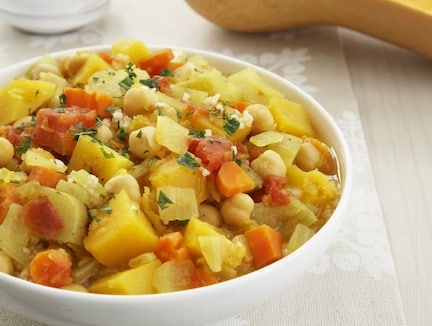
This delicious Moroccan-inspired stew looks as good as it tastes. It's a wonderful way to warm up cold season dinners, with sweet sugar pumpkin or butternut squash in an aromatic broth. This can also be a wonderful choice for fall Jewish holidays - Rosh Hashanah (Jewish New Year)and Sukkoth. Adapted from Vegan Soups and Hearty Stews for All Seasons by Nava Atlas. Photo by Theresa Raffetto.
Lentils with Spinach and Sun-Dried Tomatoes
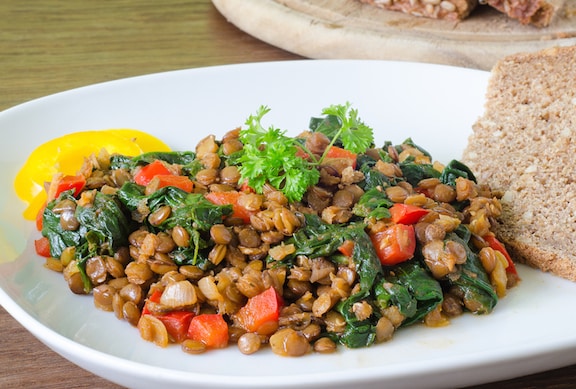
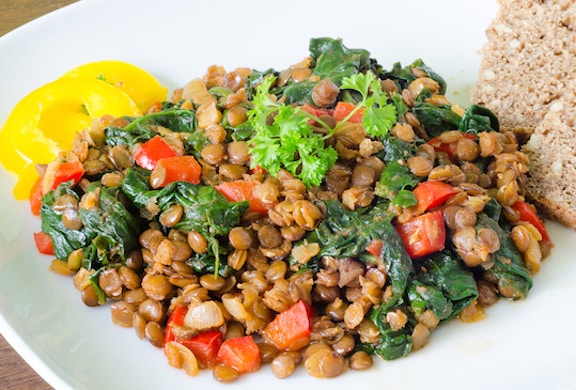
Since my family loves lentils, I keep a few cans of organic canned lentils on hand to use when we want a meal with this nourishing legume in a hurry. If you prefer to cook your own, the dish will also come together in a snap if you have them cooked ahead of time. To make this dish a little fancier, try using beluga lentils. There diminutive, gleaming black lentils contrast attractively with the greens and dried tomatoes. Green or brown lentils will taste just as good, though they’re not as pretty. This is great served with Cauliflower Rice Pilaf, Quinoa with Cauliflower, Cranberries, and Nuts, or another grain dish, plus a simple salad.
Serves: 4 to 6 as a side dish
- 1 tablespoon olive oil
- 1 medium onion, finely chopped
- 2 cloves garlic, minced
- ½ medium red bell pepper, finely diced
- 6 to 8 ounces baby spinach, rinsed
- Two 15-ounce cans lentils, drained and
rinsed (try using beluga lentils if available) - ¼ cup sliced sun-dried tomatoes (with a little of their oil, if using oil-packed_
- 2 tablespoon lemon juice, or to taste
- 1 teaspoon ground cumin
- ¼ cup minced fresh dill, cilantro, or parsley, or more to taste, optional
- Salt and freshly ground pepper to taste
Heat the oil in a large skillet. Add the onion and sauté over medium-low heat until translucent. Add the garlic and bell pepper, and continue to sauté until the onion is golden.
Add the spinach and cover the pat; Cook until just wilted, 1 to 2 minutes.
Add the remaining ingredients and stir until the spinach is evenly distributed with the lentils. Cook just until the mixture is well heated, then serve.
Variation: Replace all or part of the spinach with baby arugula.
- Here are more healthy whole grain recipes.
- Explore more way to enjoy spinach.
Curried Cashew Couscous
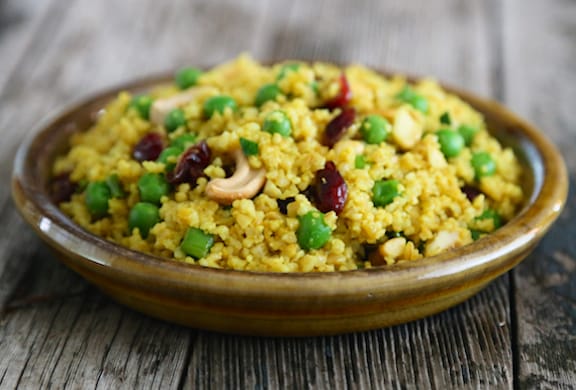
Here’s a delicious and colorful couscous dish, embellished with peas, cashews, dried fruits, and curry spices. It's ready in minutes, leaving you plenty of time to build a meal around it. This is very nice served with vegetable curries or simple bean dishes. Photos by Evan Atlas.
Jamaican-Inspired Jerk-Spiced Seitan
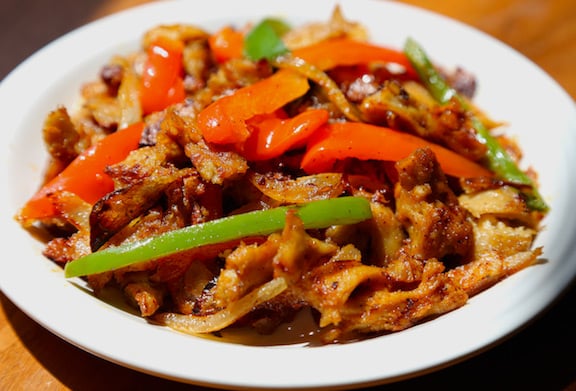
I had always wanted a luscious, reliable (and of course, easy) jerk seitan recipe, with lots of bell peppers and onions, but all the recipes I'd found rely on lengthy lists of spices, Scotch Bonnet peppers, and substantial time for marinating the seitan. After a couple of attempts to follow authentic-style recipes, with so-so results, I decided to throw authenticity to the wind, and take the easy route. This recipe may not be the genuine article, but its bold flavors never disappoint. Photos by Evan Atlas. [Read more...]
Seitan and Mushrooms in Paprika "Cream" Sauce
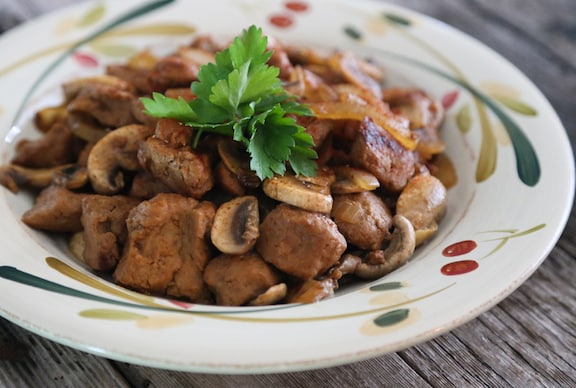
Who says it's not easy to be a vegan in Paris? I beg to differ. There are a number of fantastic vegetarian and vegan eateries all over the city of lights. Tender seitan, far better than any I've had in the U.S., is a common offering. This simple dish of seitan and mushrooms in a sweet paprika "cream" sauce is an amalgam of seitan dishes I enjoyed at Le Potager du Marais and Les Cinq Saveurs D'Ananda. Photos by Evan Atlas.
Paella Vegetariana (Veggie-Filled Vegan Paella)
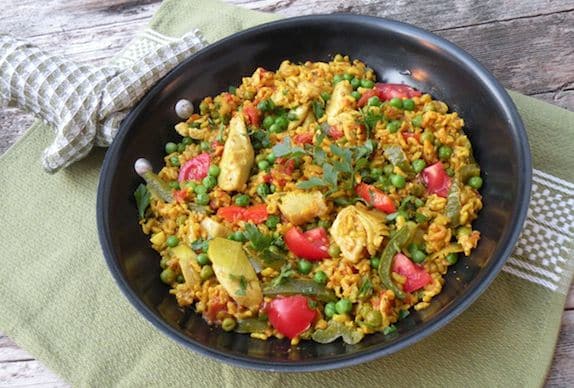
Paella is a traditional Spanish rice dish cooked in a skillet, colored bright yellow by saffron, and filled with seafood. This vegan rendition focuses on veggies instead. It's an easy dish to make, and the results are splendid. If saffron is hard to come by, this gives you the option of using turmeric instead. This goes well with a simple salad of mixed greens with orange sections, cucumber, and toasted almonds. In season, add a few slender asparagus stalks to the plate for a really gorgeous meal. For an even quicker version of veggie paella, see Quick Quinoa Paella. [Read more...]
Vegan Butternut Squash, Sweet Potato & Corn Chowder
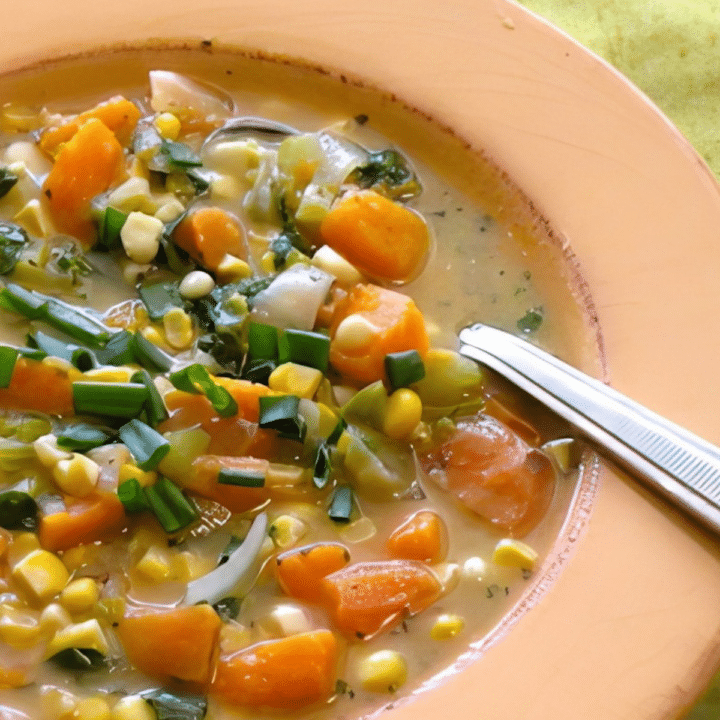
This vegan butternut squash chowder is a thick, chunky bowl of roasted squash, sweet potato, and sweet corn simmered with warm cumin and finished with a splash of rice milk. It's the kind of soup that makes the whole kitchen smell like fall, and it's hearty enough to serve as a light meal on its own.
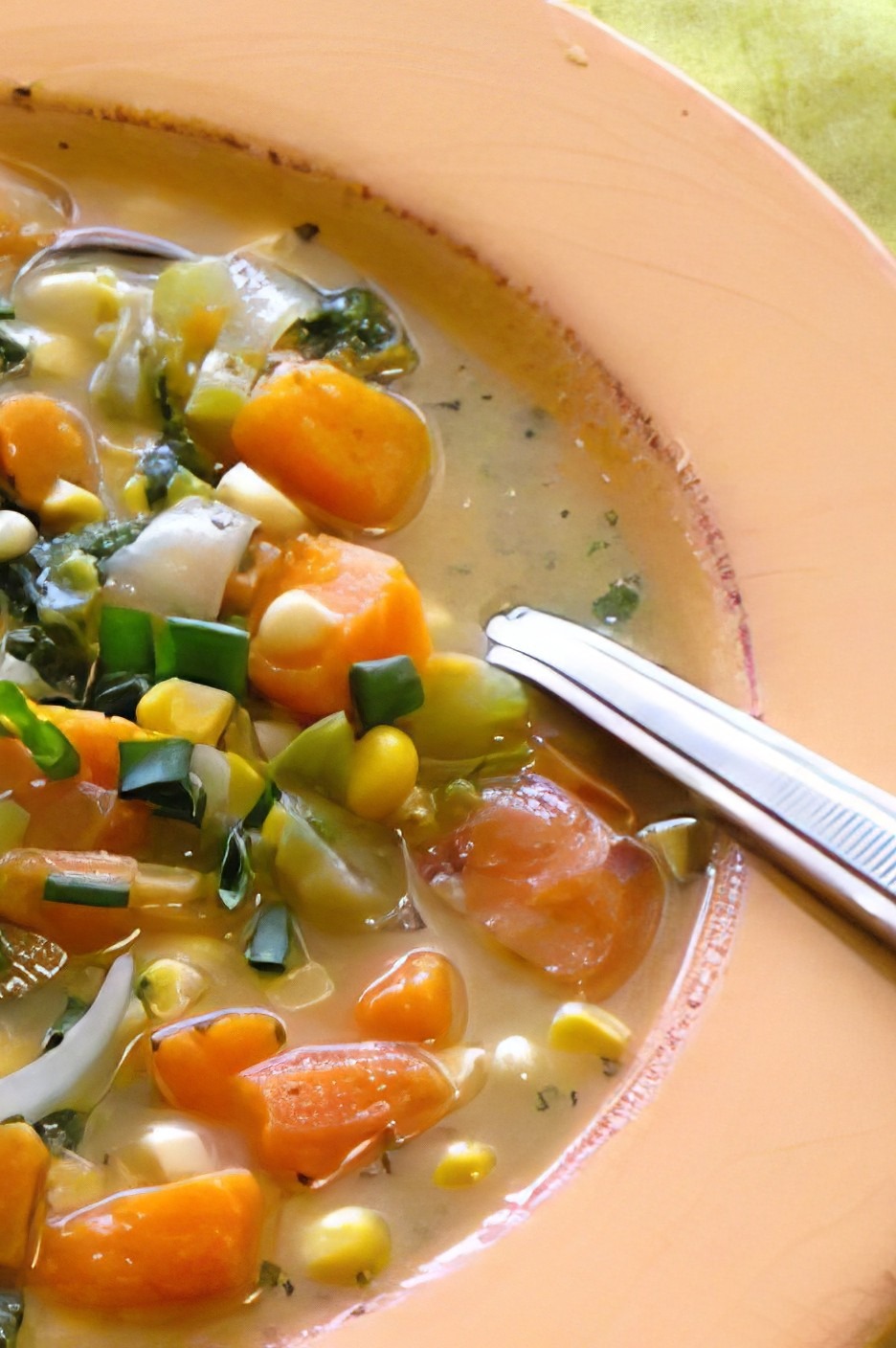
Key Ingredients & Substitutions
- Butternut squash. Roasting it whole in foil first makes peeling and dicing much easier. In a pinch, pre-cut fresh squash from the produce section works too, just skip the roasting step and simmer it a little longer in the broth.
- Sweet potato. Adds body and natural sweetness that balances the savory broth. A red-skinned or Yukon Gold potato can stand in if you're out of sweet potato, though the chowder will be a bit less sweet.
- Corn kernels. Fresh corn cut from the cob has the best flavor in late summer and early fall, but frozen corn kernels work great year-round and save you a step.
- Vegetable broth. Use a good low-sodium broth so you can control the seasoning yourself, or sub in 4 cups of water with 2 vegetable bouillon cubes.
- Cumin and salt-free seasoning blend. These two are what give the chowder its warm, savory depth without leaning on salt. A ground cumin and a salt-free seasoning blend like Mrs. Dash both work well.
- Rice milk. Adds a bit of creaminess without any dairy. Unsweetened soy or oat milk are easy substitutes if that's what you have on hand.
- Parsley and scallions. Stirred in and sprinkled on at the very end, they add a fresh, bright finish to an otherwise rich, earthy soup.
Helpful Tips
Roast the squash while you prep everything else. The whole squash needs about 40 minutes in the oven, which is plenty of time to chop the onion, celery, and sweet potato and get the broth simmering, so nothing about this recipe requires you to stand around waiting.
Thicken the base without any cream. Scooping out a couple of cups of the cooked vegetables, mashing them, and stirring them back in is the classic way to give this chowder body. If you'd rather skip a step, an immersion blender does the same job in seconds: just pulse it a few times right in the pot.
Don't skip the resting time if you can help it. Letting the chowder sit for even 20 to 30 minutes before serving gives the flavors time to meld. It's even better the next day, which makes it a great make-ahead option for a busy week or a holiday meal.
Add the rice milk at the end, off high heat. Stirring it in during the last few minutes of a gentle simmer keeps the chowder from separating or tasting overly starchy. A low simmer for a few minutes is all it needs to warm through.
Taste before you salt. Between the seasoning blend and the vegetable broth, this chowder already has a good amount of savory flavor. Add salt gradually at the end so you don't oversalt a dish that's meant to taste naturally sweet and earthy.
Variations
- Make it extra creamy. Puree the entire pot with an immersion blender instead of just a portion for a smooth, bisque-style soup. Our Creamy Corn Chowder uses this method if you want to see it in action with a different flavor combination.
- Add a smoky note. A teaspoon of smoked paprika or a pinch of chipotle powder stirred in with the cumin gives the chowder a smoky, campfire-like edge.
- Stir in some greens. A couple of handfuls of chopped kale or spinach added in the last five minutes of cooking sneaks in extra nutrition without changing the flavor much.
- Swap in miso for extra umami. A tablespoon of white miso whisked in at the end (the way we do it in our Miso-Butternut Squash Soup) adds a savory depth that pairs beautifully with the sweet potato and corn.
- Make it a chili-chowder hybrid. Stir in a drained can of black beans and a diced jalapeno for more heat and protein.
- Go grain-free or add grains. This chowder is naturally gluten-free as written; if you'd like more heft, a scoop of cooked wild rice or quinoa stirred in at the end works nicely.
Serving Ideas
A big bowl of this chowder is satisfying enough on its own, but it's even better with something to dip or scoop. Warm cornbread or a batch of our Vegan Biscuits are perfect for soaking up the last spoonfuls of broth.
This chowder also makes a wonderful addition to a holiday table. Serve smaller portions in mugs or small bowls as a starter alongside dishes like our Vegan Sweet Potato Casserole, or ladle out full bowls for a simpler, cozy weeknight dinner with a green salad on the side.
Storing & Freezing
Let the chowder cool to room temperature, then store it in an airtight container in the refrigerator for up to 4 days. The flavor actually improves after a day or two, so this is a great soup to make ahead.
This chowder freezes well, though the texture will be a little softer once thawed since the vegetables continue to break down. Freeze in an airtight, freezer-safe container for up to 3 months, then thaw overnight in the refrigerator and reheat gently on the stovetop, adding a splash of extra broth or rice milk if it's thickened up too much.
More Vegan Soups, Stews & Chilis
If you loved this recipe, here are a few more you might enjoy:
Recipe
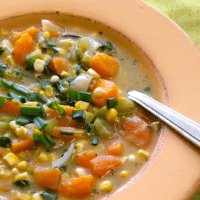
Vegan Butternut Squash, Sweet Potato & Corn Chowder
A cozy, chunky vegan butternut squash chowder loaded with sweet potato, corn, and warm cumin, finished with a splash of rice milk for a creamy, dairy-free bowl that's perfect for fall and holiday meals.
Print
Pin
Save
Servings: servings
Ingredients
- 1 medium butternut squash about 1 ½ pounds
- 2 tablespoons olive oil
- 1 large onion finely chopped
- 2 medium celery stalks finely diced
- 1 large sweet potato peeled and diced
- 4 cups vegetable broth or water with 2 vegetable bouillon cubes
- 2 bay leaves
- 2 teaspoons cumin
- 1 tablespoon salt-free seasoning blend such as Frontier or Mrs. Dash
- 2 ½ to 3 cups corn kernels fresh (from about 3 medium ears) or frozen, thawed
- 1 cup rice milk or as needed
- Salt and freshly ground pepper to taste
- ¼ cup minced fresh parsley or more, to taste
- 2 scallions thinly sliced, for garnish
Instructions
- Partially prebake the squash to make it easier to peel and cut. Wrap the whole squash in foil and bake at 375 degrees F for about 40 minutes, or until you can pierce the narrow end with a little resistance.
- Once the squash is cool enough to handle, cut it in half lengthwise and remove the seeds and fibers. Cut into ¾-inch slices, peel, then dice.
- Heat the olive oil in a large soup pot. Add the onion and celery and saute over medium heat until the onion turns golden, about 5 minutes.
- Add the sweet potato and vegetable broth. Bring to a slow boil, then stir in the bay leaves, cumin, and salt-free seasoning blend. Lower the heat and simmer, covered, for 10 minutes.
- Add the diced squash and corn. Continue to cook until all the vegetables are tender, about 15 minutes longer.
- With a slotted spoon, scoop out about 2 cups of the solid ingredients, mash well, and stir back into the soup - or simply insert an immersion blender and puree a small portion of the soup right in the pot to thicken the base.
- Stir in enough rice milk to give the chowder a slightly thick, creamy consistency. Season with salt and pepper, then simmer over low heat for 5 more minutes.
- If time allows, let the chowder stand for about an hour before serving, then reheat gently. This soup also keeps well and can be made a day ahead, since the flavor deepens overnight.
- Just before serving, stir in the parsley and garnish each bowl with sliced scallions.
Nutrition (Estimate per Serving)
Calories: 169kcalCarbohydrates: 23gProtein: 2gFat: 4gSaturated Fat: 1gPolyunsaturated Fat: 1gMonounsaturated Fat: 2gSodium: 398mgPotassium: 494mgFiber: 3gSugar: 5gVitamin A: 13996IUVitamin C: 22mgCalcium: 75mgIron: 2mg
Vegan-ize any recipe!Grab our free vegan cheat sheet, packed with my favorite easy substitutions to make any recipe vegan.
Bulgur Salad with Fruits and Nuts
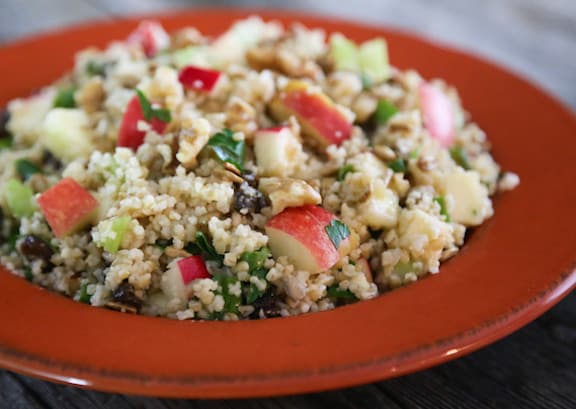
An invigorating melange of textures and flavors, this bulgur salad is also quite adaptable. Add various other fruits or veggies to it; substitute other dried or fresh fruits; or use another grain altogether, like couscous or quinoa. Photos by Evan Atlas. [Read more...]
Bok Choy, Tofu, and Baby Corn Soup
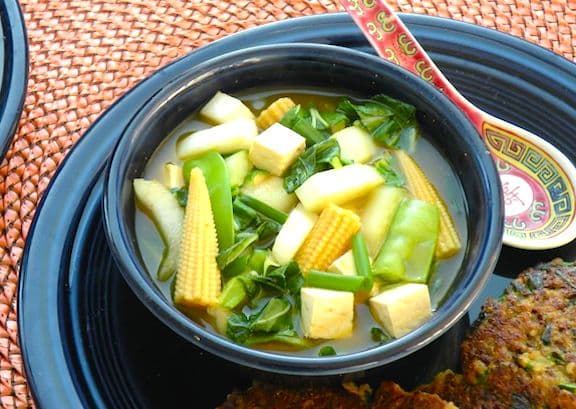
This quick Asian-style vegetable soup, combining crunchy bok choy with high-protein tofu, is perfect to team with a rice dish or a cold noodle dish like Orange Sesame Noodles. It's also delicious paired with Quinoa Scallion Fritters, as shown here. [Read more...]
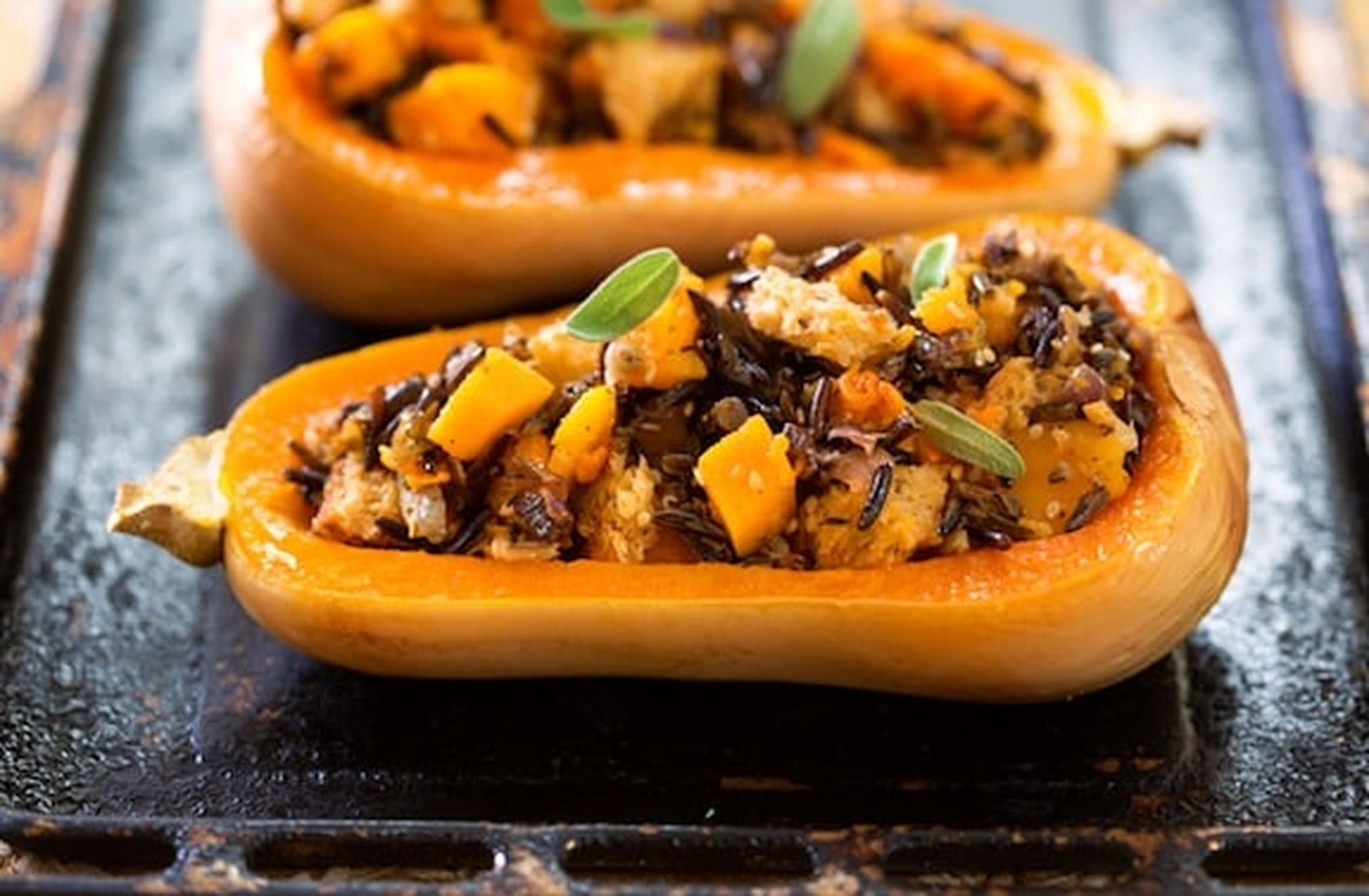
Vegan Butternut Squash with Wild Rice & Onion Stuffing

Even those of us who’ve given up the bird still want a showstopper for the table, and this vegan butternut squash stuffed with whole wheat bread, wild rice, and caramelized onions delivers exactly that. For more make-ahead holiday menu ideas, check out my Vegan Thanksgiving Cookbook and Vegan Christmas Cookbook. Photos by Hannah Kaminsky.

Key Ingredients & Substitutions
- Butternut squash. Look for squashes small enough to serve as individual portions (about 1 pound each) that can stand upright once halved. Delicata, acorn, or sweet dumpling squash all work as substitutes - just adjust the roasting time for size.
- Wild rice. Its chewy texture and nutty flavor hold up beautifully inside a roasted squash. A wild rice blend works too, or swap in cooked brown rice or quinoa if that's what you have on hand.
- Whole wheat bread. Torn into pieces, it soaks up the broth and stuffing flavors just like a classic bread stuffing. Use a certified gluten-free bread to make the whole dish gluten-free.
- Red onion and garlic. Sautéed until golden, they build the savory base of the stuffing. Any onion you have on hand will work in a pinch.
- Sesame seeds and fresh herbs. Sage and a pinch of dried thyme give the stuffing its cozy, Thanksgiving flavor, while sesame seeds add a subtle crunch and nutty depth.
- Orange juice and vegetable broth. A splash of fresh orange juice brightens the stuffing, while vegetable broth keeps everything moist. Use all broth if you'd rather skip the citrus.
Helpful Tips
Bake the squash ahead of time. The initial roasting step - wrapping the squash in foil and baking until just tender - can be done up to a day in advance. Let it cool, scoop out the pulp, and store the shells and filling separately in the fridge until you're ready to stuff and finish baking.
Don't skip resting the rice. Wild rice can take 40 minutes or more to fully absorb its cooking liquid. Let it sit, covered, for a few minutes once the water is absorbed so the grains finish plumping up.
Taste the stuffing before you stuff. Since the bread, wild rice, and vegetables are all already cooked, taste the stuffing mixture before filling the squash and adjust the salt, pepper, or thyme to your liking.
Watch the squash size. Smaller squashes cook faster and are easier to serve as individual portions. If yours are on the larger side, add a few extra minutes to the initial roasting time and check for doneness by piercing the narrow neck with a knife.
Reheat gently. Since the squash and stuffing are both already cooked by the time you get to the final bake, that step is really just about heating everything through. A covered dish in a moderate oven keeps the filling moist instead of drying it out.
Variations
- Swap the squash. Hubbard, delicata, sweet dumpling, and golden nugget squash are all great stuffable alternatives to butternut.
- Add dried fruit. A handful of dried cranberries or chopped dried apricots stirred into the stuffing adds a touch of sweetness that pairs perfectly with the wild rice.
- Go nutty. Toasted pecans or walnuts add crunch and richness - stir them in along with the sesame seeds.
- Make it a pilaf instead. Skip the squash shells altogether and serve the wild rice stuffing on its own as a side dish, similar to this Cranberry-Pear Wild Rice Stuffing.
- Change the grain. Quinoa or brown rice can stand in for the wild rice if that's what's in your pantry, with great results.
- Spice it up. A pinch of smoked paprika or a dash of cayenne in the stuffing adds warmth without overpowering the other flavors.
Serving Ideas
This stuffed squash is hearty enough to serve as the main event at a vegan Thanksgiving or holiday dinner - set it in the center of the table alongside the rest of your vegetarian and vegan Thanksgiving spread. A scoop of Vegan Sweet Potato Casserole or a simple green salad rounds out the meal nicely.
For a smaller gathering, it also works beautifully as a plated first course or a satisfying vegan main dish any night of the week - just pair it with a simple soup or salad to round out the plate.
Storing & Freezing
Leftover stuffed squash keeps well in the refrigerator for up to 4 days. Store it in an airtight container, or cover the baking dish tightly with foil.
To freeze, let the stuffed squash cool completely, then wrap each half tightly in foil and freeze for up to 2 months. Thaw overnight in the refrigerator before reheating, covered, in a 350 degree F oven until warmed through.
More Vegan Thanksgiving Recipes
If you loved this recipe, here are a few more you might enjoy:
- Rice and Pecan-Stuffed Squash
- Cranberry-Pear Wild Rice Stuffing
- Maple-Glazed Butternut Squash
- 6 Vegan Stuffings for Thanksgiving & Beyond
Recipe

Vegan Butternut Squash with Wild Rice & Onion Stuffing
Roasted butternut squash halves stuffed with whole wheat bread, wild rice, and caramelized onions — a hearty, vegan centerpiece for Thanksgiving or any holiday table.
Print
Pin
Save
Servings: servings
Ingredients
- 4 medium-small butternut squashes about 1 pound each
- ¾ cup raw wild rice rinsed
- 1 ½ tablespoons olive oil
- 1 large red onion
- 2 to 3 cloves garlic minced
- 2 ½ cups whole wheat bread torn, firmly packed; use gluten-free bread if you'd like
- 1 tablespoon sesame seeds
- A few sliced fresh sage leaves or leave whole if small, optional
- ½ teaspoon dried thyme
- 1 tablespoon mixed season blend salt-free, such as Frontier or Mrs. Dash, or to taste
- ½ cup vegetable broth
- Juice of 1 small orange about ¼ cup; or omit and just use more vegetable broth
- Salt and freshly ground pepper to taste
Instructions
- Preheat the oven to 375 degrees F.
- Wrap the whole squashes in foil and place on a rack in the center of the oven. Bake for 40 to 45 minutes, or until you can pierce through the narrow neck with a knife and feel a little resistance. You can do this step ahead of time. Let the squashes cool somewhat, then cut in half lengthwise and scoop out the seeds and surrounding fibers.
- Meanwhile, bring 2 cups of water to a boil in a saucepan. Stir in the wild rice, reduce to a simmer, then cover and cook until the water is absorbed, about 40 minutes. Remove from the heat and let sit, covered, for a few minutes to finish steaming.
- Heat the oil in a skillet over medium heat. Add the onion and garlic and sauté until golden, about 5 to 7 minutes.
- In a mixing bowl, combine the cooked wild rice with the sautéed onion and garlic, then stir in the whole wheat bread, sesame seeds, sage, thyme, seasoning blend, vegetable broth, orange juice, and salt and pepper. Taste and adjust the seasoning as needed.
- Scoop out the squash pulp, leaving firm shells about ½ inch thick. Chop or dice the pulp and stir it into the wild rice mixture. Stuff the squash shells with the mixture, place in foil-lined baking dishes, and cover.
- Before serving, place the stuffed squashes, still covered, in a preheated 350 degree F oven.
- Bake for 15 to 20 minutes, or just until heated through, then serve.
Nutrition (Estimate per Serving)
Calories: 230kcalCarbohydrates: 40gProtein: 6gFat: 8gSaturated Fat: 1gPolyunsaturated Fat: 2gMonounsaturated Fat: 4gSodium: 320mgPotassium: 750mgFiber: 6gSugar: 8gVitamin A: 39894IUVitamin C: 80mgCalcium: 213mgIron: 3mg
Vegan-ize any recipe!Grab our free vegan cheat sheet, packed with my favorite easy substitutions to make any recipe vegan.
Salsa Grain-and-Bean Pilaf
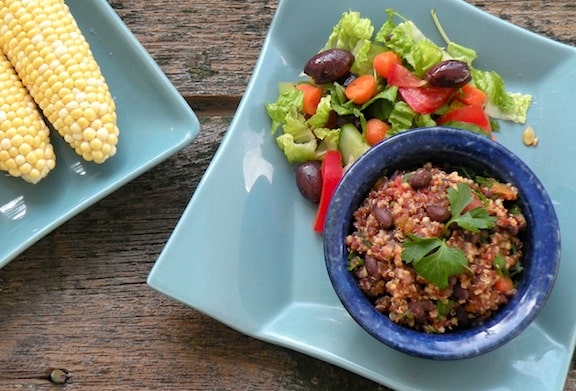
If you want to dress up a simple grain-and-bean pilaf in an instant, a good-quality, prepared tomato salsa is the answer. This is truly an emergency dinner, but a hearty and healthy one, at that! Vary the type of grain and/or bean you use each time you make this, and serve it with a simple salad or coleslaw and a steamed vegetable like broccoli, or fresh corn on the cob. Adapted from The Vegetarian 5-Ingredient Gourmet. [Read more...]
Great Gluten-Free Vegan Eats by Allyson Kramer

Allyson Kramer, who runs the popular Manifest Vegan blog (if you are interested in gluten-free, vegan, or both together, this is the place for you!) has released her first book, the bountiful, colorful Great Gluten-Free Vegan Eats.* Going vegan is a trend that has exploded over the last few years, and gluten-free diets have also gained traction in a big way. [Read more...]
Super-Easy Tofu Fajitas
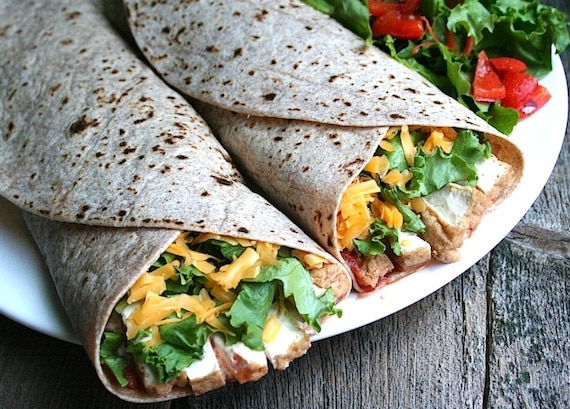
In this super-easy, nearly-instant fajita recipe, chewy baked tofu is a perfect filling. This is great for adults but it is also fun for kids if you let them assemble their own. It's one of those meals, in fact, in which everything goes on the table and everyone makes it to their own liking. Serve with cooked quinoa and/or baked sweet potatoes. Photos by Rachael Braun. [Read more...]
Vegan Cinco de Mayo Recipes
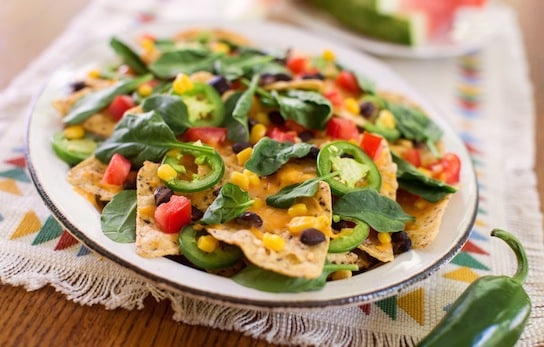
Cinco de Mayo has become a day to celebrate Mexican heritage and pride (contrary to popular belief, it isn’t Mexico’s independence day) —and a delicious way to celebrate is with easy vegan south-of-border and Southwestern-style dishes. VegKitchen has plenty of festive appetizers and main dishes to choose from! Shown above, Fully Loaded Vegan Nachos. [Read more...]
Couscous Stuffed Eggplant
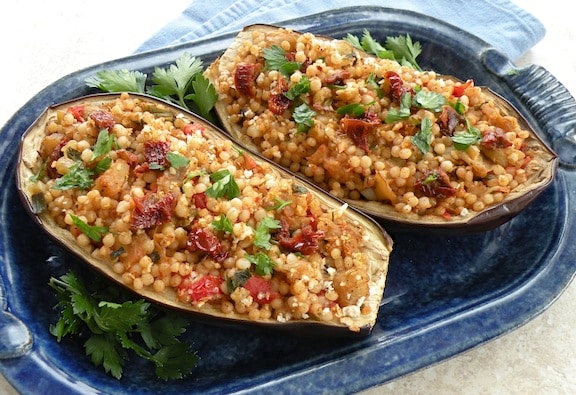
For this delightful couscous stuffed eggplant, you can use regular couscous, or try it with Israeli couscous, as shown in the photo. Regular couscous has more of the look and feel of a grain; Israeli couscous more like a tiny pasta. If you're looking for a gluten-free variation, you can substitute quinoa, which is also excellent in this preparation. [Read more...]
Sautéed Broccoli or Broccoli Rabe, Baby Carrots, and Yellow Squash
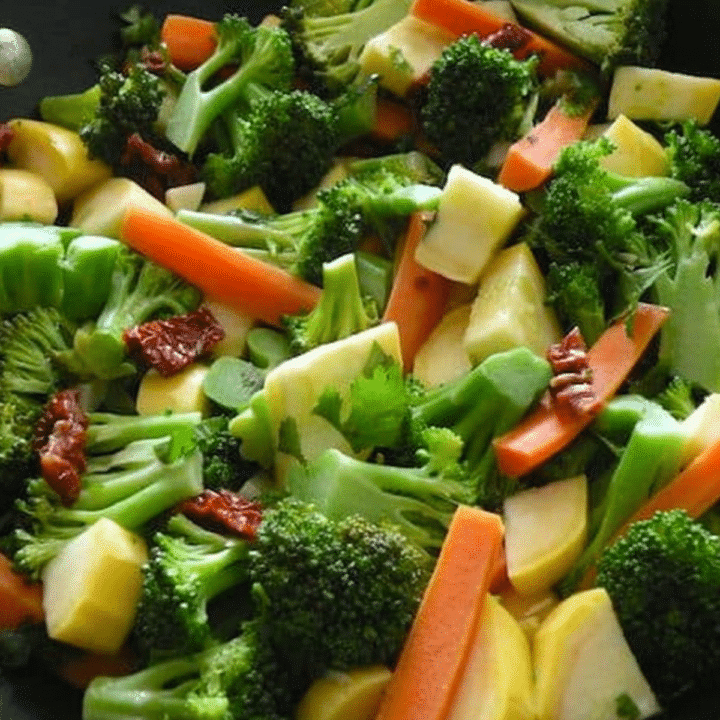
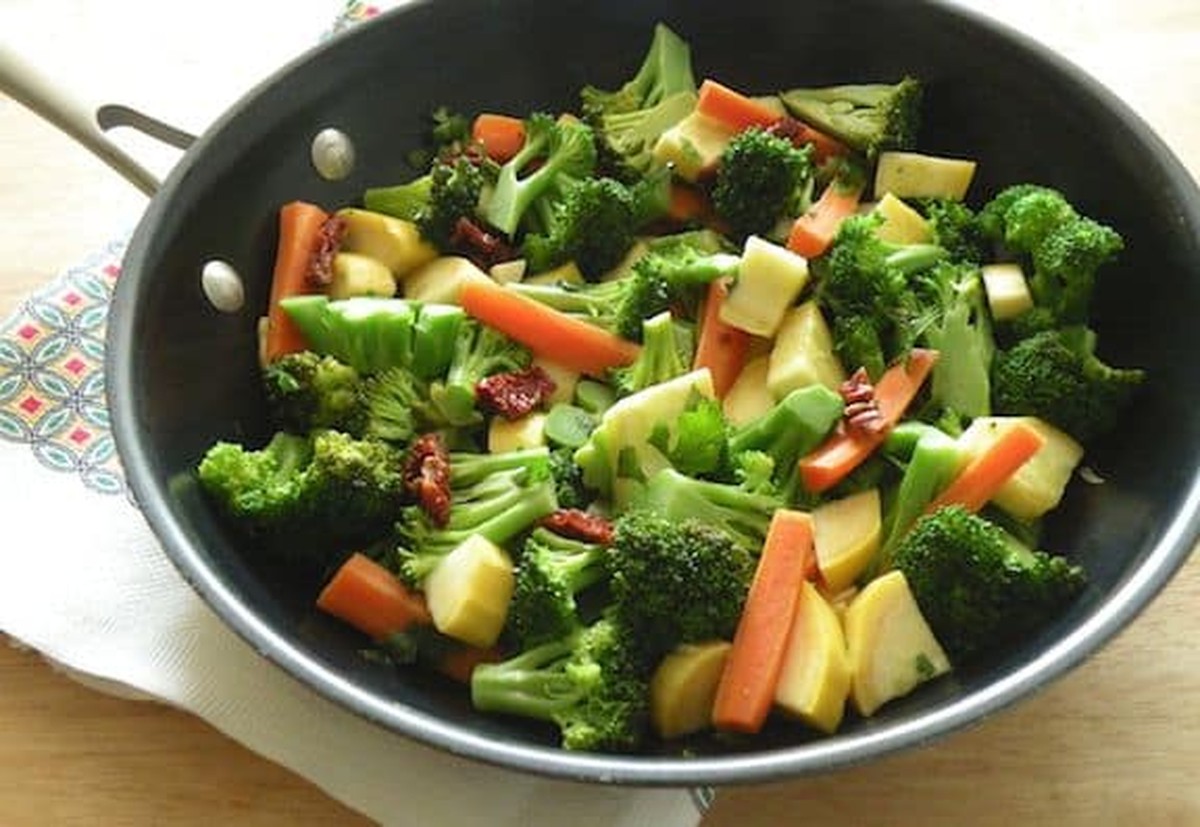
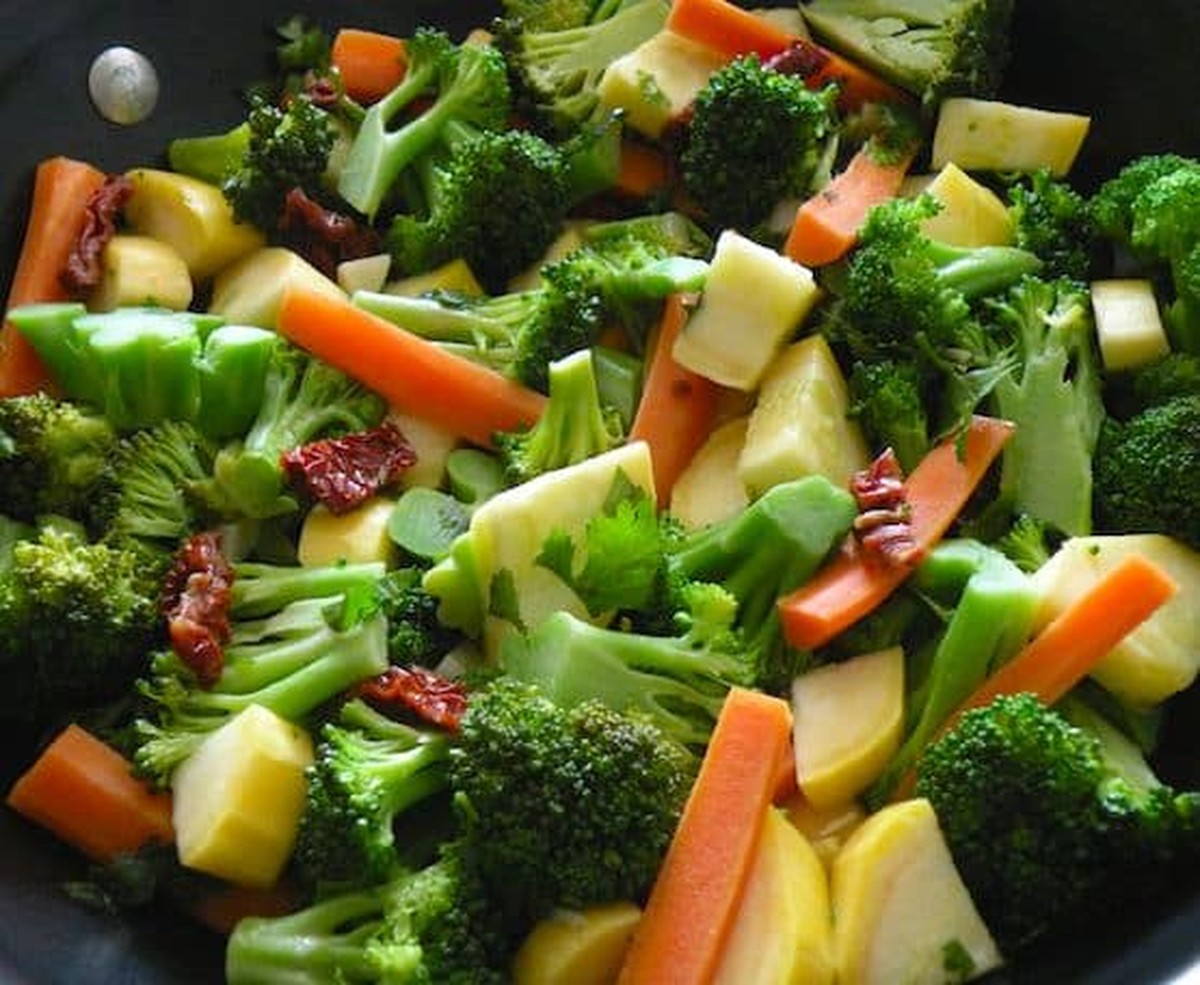
This colorful sauté brings together broccoli (or peppery broccoli rabe, if you'd rather), baby carrots, and yellow summer squash in one skillet, brightened with garlic, sun-dried tomatoes, and a handful of fresh herbs. It comes together in under 30 minutes and pairs with almost anything on your dinner table, from a bowl of pasta to a scoop of rice pilaf.
Key Ingredients & Substitutions
- Broccoli or broccoli rabe. Regular broccoli crowns give you a mellow, familiar flavor, while broccoli rabe (also called rapini) brings a pleasantly bitter, mustardy edge. Either works here - just cut broccoli into bite-sized florets, or chop broccoli rabe into similar-sized pieces so everything cooks evenly.
- Baby carrots. Baby carrots quartered lengthwise cook quickly and add natural sweetness and color. Regular carrots, peeled and sliced on the diagonal, work just as well if that's what you have on hand.
- Yellow summer squash. Look for squash that's firm with smooth, glossy skin. Zucchini is an easy one-for-one swap if yellow squash isn't available.
- Garlic. Fresh cloves, minced, build the aromatic base. Don't let it brown too far past golden or it turns bitter.
- Sun-dried tomatoes or sliced black olives. Either adds a concentrated, salty-savory punch that balances the sweetness of the carrots and squash. Oil-packed sun-dried tomatoes are easiest to work with - just pat off the excess oil before slicing.
- Fresh parsley or cilantro. Stirred in at the end, either herb adds brightness. Use whichever you prefer, or a mix of both.
- Extra-virgin olive oil. Just a tablespoon is enough to sauté the aromatics and start the vegetables cooking.
Helpful Tips
Cut everything roughly the same size. Broccoli florets, carrot sticks, and squash pieces that are all similar in size cook at the same rate, so you don't end up with mushy squash sitting next to still-crunchy broccoli. Aim for bite-sized pieces across the board.
Use a wide, heavy skillet. A wide nonstick skillet gives the vegetables enough surface area to cook in a single layer instead of steaming in a crowded pile, which is what keeps this dish tasting like a sauté instead of a boil.
Don't skip the splash of water. Adding a little water and covering the pan briefly steams the broccoli and carrots just enough to take the raw edge off before the lid comes off and everything finishes sautéing. Watch the clock here - a minute or two too long and the broccoli loses its bright green color.
Add the squash last. Yellow squash cooks much faster than broccoli or carrots and turns watery and soft if it's in the pan too long. Adding it partway through, once the sturdier vegetables have had a head start, keeps it tender-crisp instead of mushy.
Season at the very end. Salt draws moisture out of vegetables, so holding off until the pan comes off the heat helps everything stay crisp-tender rather than watery.
Variations
- Add protein. Toss in cubed baked tofu or a can of drained, rinsed chickpeas along with the squash to turn this side into more of a main dish.
- Make it spicy. A pinch of red pepper flakes added with the garlic gives the whole dish a gentle heat.
- Swap the aromatics. A tablespoon of grated fresh ginger alongside the garlic gives the sauté a different, brighter direction.
- Add a nutty crunch. Toasted slivered almonds or pine nuts scattered on top just before serving add texture and richness.
- Brighten it with citrus. A squeeze of lemon juice over the finished dish wakes up all the other flavors, especially if you've used broccoli rabe.
- Make it cheesy. A sprinkle of vegan parmesan just before serving adds a savory, salty finish.
Serving Ideas
This sauté is easygoing enough to serve alongside just about any main dish. Spoon it over a bowl of wild rice pilaf for a simple, satisfying dinner, or toss it right into pasta the way we do in penne and broccoli with tomatoes, walnuts, and raisins for a heartier meal.
It's also a great partner for roasted or mashed potatoes, a veggie burger, or a simple grain bowl with quinoa or farro. Leftovers make a fast lunch on their own, or stirred into a wrap with hummus.
Storing & Freezing
Leftovers keep well in an airtight container in the refrigerator for up to 4 days. Reheat gently in a skillet over medium heat, or in the microwave, just until warmed through - the vegetables can turn soft if they're overheated.
This dish isn't a great candidate for the freezer. Broccoli, carrots, and squash all hold a lot of water, and freezing and thawing breaks down their texture, leaving the sauté noticeably mushy once reheated. It's best enjoyed fresh or refrigerated for the week ahead.
More Vegan Side Dishes
If you loved this recipe, here are a few more vegetable-forward dishes worth trying:
- Sesame-Ginger Tofu and Broccoli Stir-Fry
- Vegan Cheddar and Broccoli Rice Casserole
- Sesame Kale and Broccoli Sauté
- Yellow Squash Soup
Recipe
Sautéed Broccoli or Broccoli Rabe, Baby Carrots, and Yellow Squash
A quick, colorful skillet sauté of broccoli (or peppery broccoli rabe), baby carrots, and yellow summer squash, brightened with garlic and sun-dried tomatoes.
Print
Pin
Save
Servings: servings
Ingredients
- 1 tablespoon extra-virgin olive oil
- 2 to 3 cloves garlic, minced
- 1 large or 2 medium broccoli crowns, cut into bite-sized florets or 1 good-sized bunch broccoli rabe, chopped into bite-sized pieces
- 1 cup baby carrots, quartered lengthwise or peeled and sliced regular carrots
- 1 medium yellow summer squash, sliced into half-moons
- ¼ cup thinly sliced sun-dried tomatoes or sliced black olives
- ¼ cup minced fresh parsley or cilantro
- Salt and freshly ground black pepper to taste
Instructions
- Heat the olive oil in a wide skillet over medium heat. Add the garlic and sauté for 1 to 2 minutes, until fragrant and just turning golden.
- Add the broccoli (or broccoli rabe), carrots, and ¼ cup water. Cover and cook over medium-high heat for 3 to 4 minutes, until the broccoli turns bright green, lifting the lid to stir occasionally.
- Uncover and add the squash. Continue sautéing over medium heat, stirring frequently, for 4 to 5 minutes, until all the vegetables are tender-crisp.
- Remove the pan from the heat and stir in the parsley or cilantro and the sun-dried tomatoes or olives. Season with salt and pepper, and serve warm.
Nutrition (Estimate per Serving)
Calories: 55kcalCarbohydrates: 7gProtein: 2gFat: 3gMonounsaturated Fat: 2gSodium: 40mgPotassium: 220mgFiber: 2gVitamin C: 15mgCalcium: 30mg
Vegan-ize any recipe!Grab our free vegan cheat sheet, packed with my favorite easy substitutions to make any recipe vegan.
Creating a Plant-Based Pantry
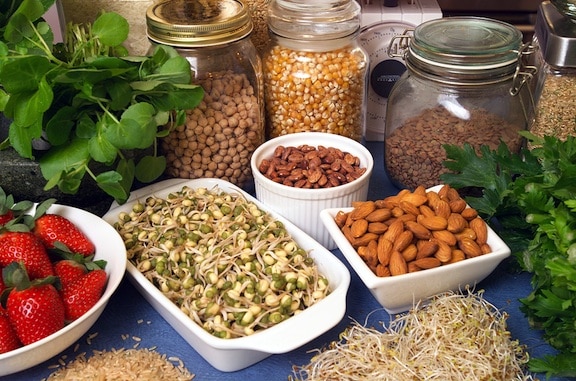
So many people have asked me how to set up a plant-based (vegan) pantry that I decided this subject merits a permanent place on VegKitchen. Whether you are a newcomer to a vegan/vegetarian diet, or someone who wants to have a greater variety of healthy ingredients at hand, this list can serve as your handy guideline. [Read more...]
Roasted Eggplant Curry
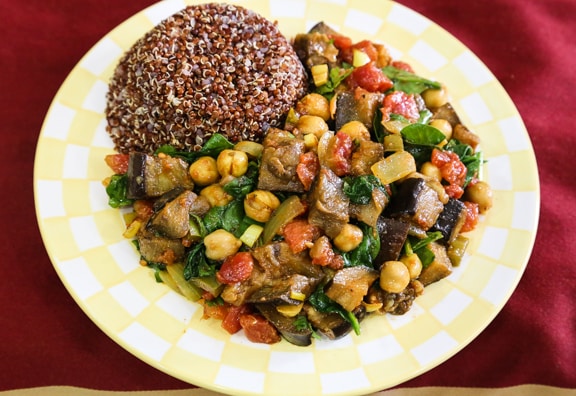
This is a simplified variation of an eggplant dish appears that frequently on Indian restaurant menus as Baingan Bharata. Once the eggplant has been roasted and is cool enough to handle, this dish comes together quickly and easily. Adding some chickpeas makes it a main dish. This is a good make-ahead dish. Make up to the point before adding the greens and cilantro. Let cool and keep covered or refrigerate until needed, then add the greens and cilantro and heat through. Photos by Evan Atlas.
Lemony Couscous with Broccoli
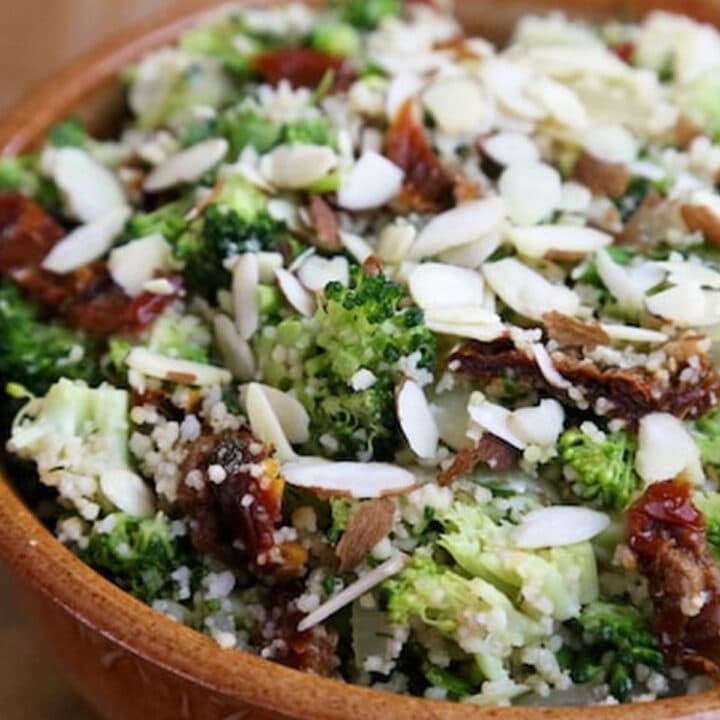
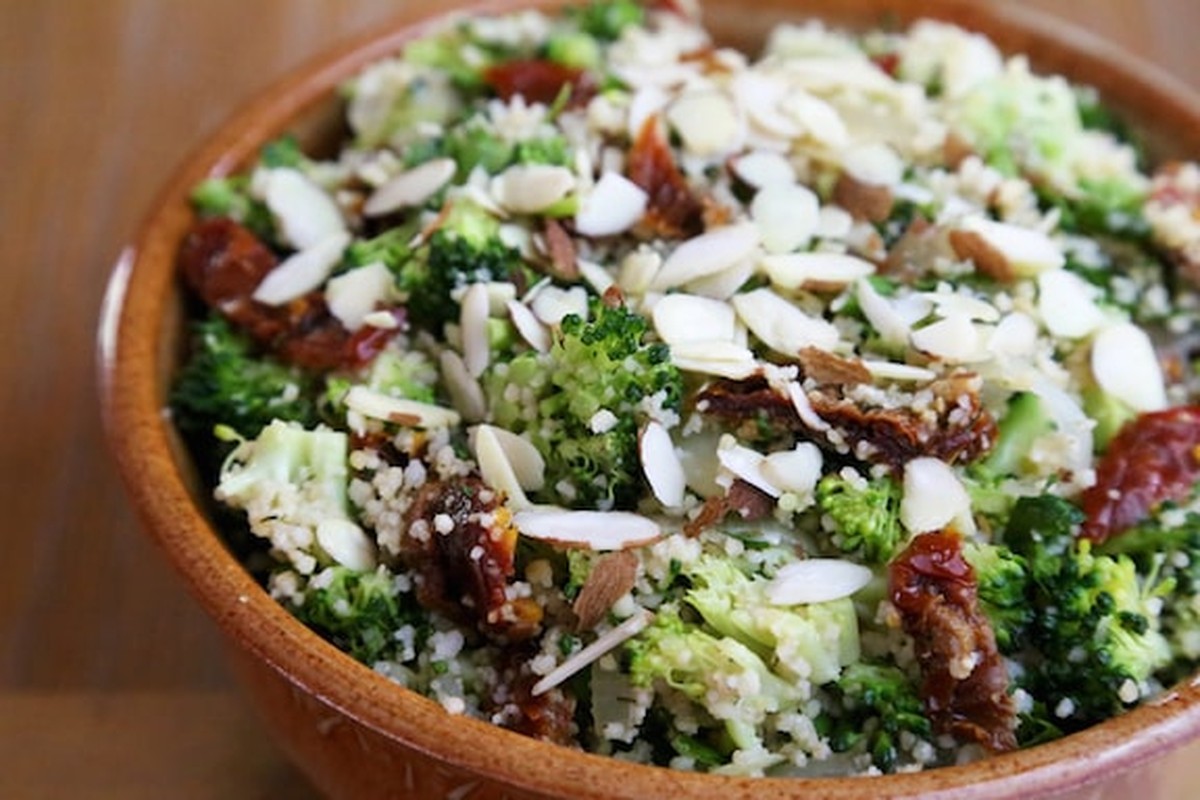
This simple combination of couscous and broccoli, bright with lemony flavor, might be too light to serve as a meal's centerpiece on its own, but it's perfect for pairing with a dish of equal heft, like a bean or legume dish, or a main-dish salad. Leftovers are also great served cold in a wrap with shredded lettuce and sliced tomatoes.
What makes this dish so easy to love is how quickly it comes together - the couscous needs only a quick soak in boiling water, and the broccoli steams right in the same skillet as the onion. A generous squeeze of lemon juice and a handful of fresh herbs turn a simple grain side into something bright and genuinely flavorful.
It's also a wonderfully flexible side dish to keep in your regular rotation. Because it tastes just as good warm, at room temperature, or straight from the fridge, it fits easily into meal prep, potlucks, or a quick weeknight dinner alongside whatever protein-rich dish you're already making.
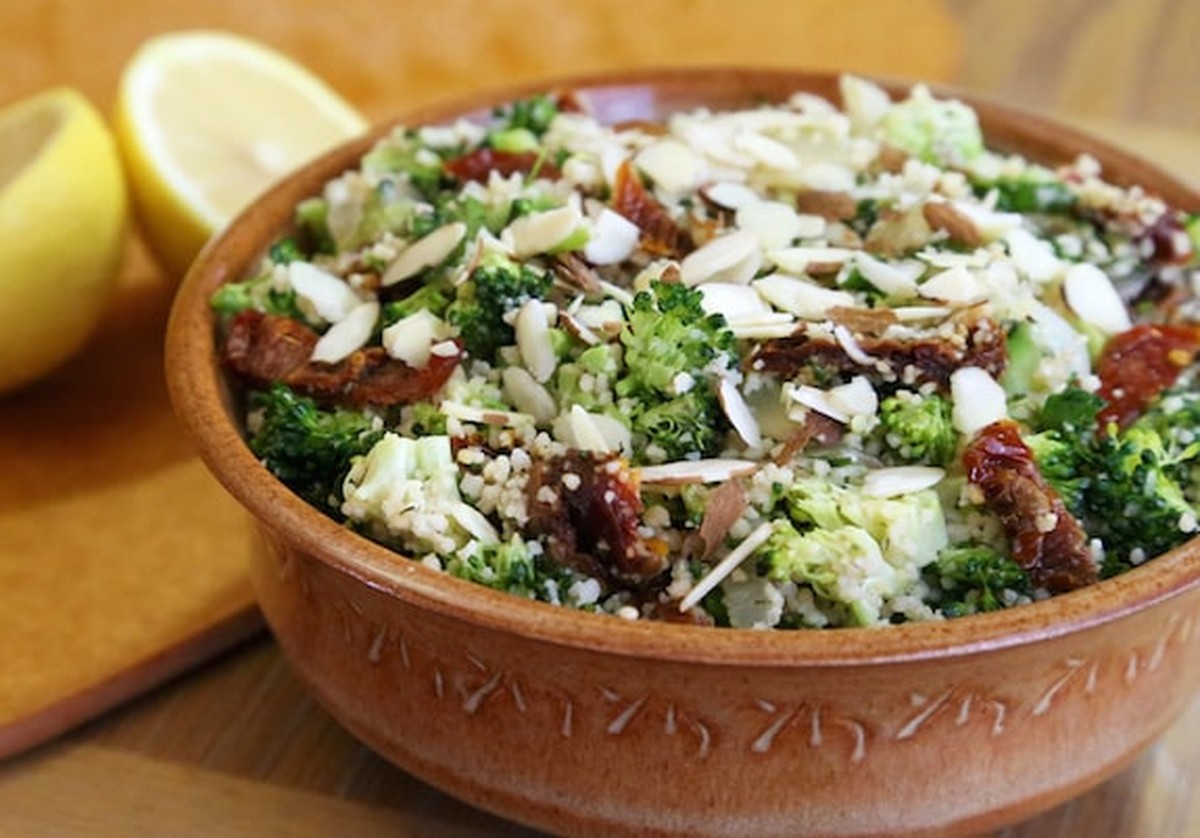
Photos by Evan Atlas.
Key Ingredients & Substitutions
- Whole grain couscous - this adds fiber and a slightly nuttier flavor than regular couscous, though either works well here.
- Broccoli - finely chopped florets cook quickly and mix evenly through the couscous. A little of the stem is fine too.
- Fresh lemon juice and zest - the zest is optional but adds a real boost of citrus flavor, so it's worth including if you have a lemon on hand.
- Sun-dried tomatoes or black olives - either adds a concentrated, savory-sweet or briny note that balances the bright lemon flavor. Use whichever you have on hand or prefer.
- Fresh parsley and dill - these herbs are what give the dish its fresh, herby character. Dried dill works in a pinch if fresh isn't available.
Helpful Tips
- Let the couscous stand fully covered for the full 10 minutes so it absorbs all the water and fluffs up properly with a fork.
- Add just enough water to the skillet to keep the bottom moist while the broccoli steams - too much and it will simmer rather than steam, turning the broccoli dull and soft.
- Zest the lemon before juicing it; it's much easier to zest a whole lemon than one that's already been cut and squeezed.
- This dish is just as good warm, at room temperature, or cold, so don't worry about the timing - it holds up well made ahead of time.
Variations
Swap in quinoa for the couscous if you'd like a gluten-free version, or add a handful of chickpeas for extra protein and heartiness. A crumble of vegan feta over the top adds a nice tangy finish if you want to dress it up a little. For more crunch, sprinkle on some toasted slivered almonds or pine nuts just before serving.
Serving Ideas
Pair this couscous with a hearty bean or lentil dish, or a main-dish salad, to round out the meal. It also makes a great packed lunch on its own, or rolled into a wrap with shredded lettuce and sliced tomatoes for an easy way to use up leftovers.
Storing & Freezing
Leftovers keep well in an airtight container in the refrigerator for up to 4 days. This dish isn't a great candidate for freezing, since the couscous and broccoli both change texture considerably once thawed, but it's quick enough to make fresh whenever you need it.
Recipe
Lemony Couscous with Broccoli
A simple, bright couscous and broccoli side dish flavored with lemon, fresh herbs, and sun-dried tomatoes or olives.
Print
Pin
Save
Servings:
Ingredients
- ¾ cup couscous preferably whole grain
- 2 tablespoons extra-virgin olive oil
- 1 medium red or yellow onion quartered and thinly sliced
- 3 cups broccoli florets finely chopped
- ¼ to ½ cup fresh parsley minced
- 2 tablespoons fresh dill minced, or 1 teaspoon dried
- juice of 1 lemon plus its zest, optional but highly recommended
- ⅓ cup sliced sun-dried tomatoes or chopped pitted cured black olives oil-cured or not, as preferred
- salt and freshly ground pepper to taste
Instructions
- Combine the couscous with 1 ½ cups boiling water in a heatproof container. Cover and let stand for 10 minutes, then fluff with a fork.
- Meanwhile, heat half of the oil in a large skillet. Add the onion and sauté over medium heat until golden.
- Add the broccoli and just enough water to keep the bottom of the skillet moist, then cover and allow to steam until the broccoli is bright green and tender-crisp, about 4 minutes.
- Add the cooked couscous to the skillet along with the herbs, lemon juice (and optional zest), and dried tomatoes or olives. Stir together well, and cook for 2 or 3 minutes longer.
- Season with salt and pepper and serve hot, warm, or at room temperature.
Nutrition (Estimate per Serving)
Calories: 170kcalCarbohydrates: 24gProtein: 5gFat: 7gSodium: 50mgFiber: 3g
Vegan-ize any recipe!Grab our free vegan cheat sheet, packed with my favorite easy substitutions to make any recipe vegan.
Frequently Asked Questions
Can I make this ahead of time?
Yes - this dish holds up especially well made a day ahead, since it's just as good served cold or at room temperature. Store it covered in the refrigerator and give it a quick taste for seasoning before serving.
Can I use regular couscous instead of whole grain?
Yes - regular couscous works just as well and cooks the same way. Whole grain couscous simply adds a bit more fiber and a slightly nuttier flavor, so use whichever you prefer or have on hand.
What can I use instead of sun-dried tomatoes?
Chopped pitted black olives make a great substitute and bring a similar briny, savory note. You could also leave them out entirely and add a few extra fresh cherry tomatoes, halved, for a lighter, fresher take on the dish.
More Whole Grain Recipes
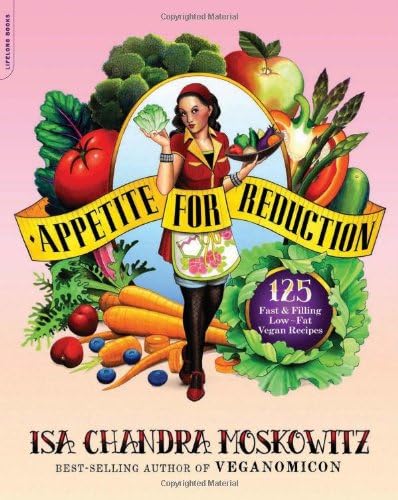
Appetite for Reduction by Isa Chandra Moskowitz
I adore the cover artwork, don't you? It's so beautiful, I'm inspired to write another book just so I can ask Lisa Diercks to design the cover. Did I mention that Isa wrote this book just for me? Well, not really. It only feels like she wrote it for me. Actually, she wrote it for her own personal reasons. But let's be honest: Who among us hasn't eaten more than our fair share of vegan cupcakes and cookies? (Thanks in no small part to Isa.)
Vegan Dinner Recipes
To help you answer the question “what’s for dinner?” here’s a selection of easy vegan main dish recipes you’ll find here on VegKitchen. Great vegan dinners, many of which are quick and easy—can be on the table in 30 minutes or so.
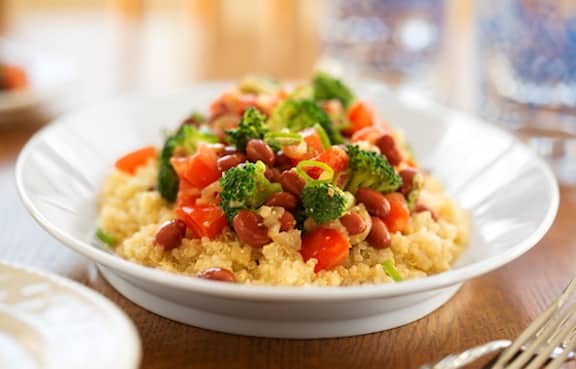
Though this isn't an exhaustive listing of all the possible dinner fare here on VegKitchen (after all, you can serve brunch dishes for dinner, or combine soups and sandwiches or salads—make sure to explore other recipes and categories on the Recipes Galore page), you’ll find plenty to choose from in this at-a-glance listing. Pictured at top, Miso Ginger Red Beans with Quinoa and Broccoli.
To help you answer the question “what’s for dinner?” here’s a selection of easy vegan dinner recipes (suitable for vegetarian diets as well, of course!) you’ll find here on VegKitchen. If you're more of a book person, please also explore some of Nava's cookbooks for fast dinner recipes, including Vegan Express, Vegetarian 5-Ingredient Gourmet and Vegetarian Family Cookbook.
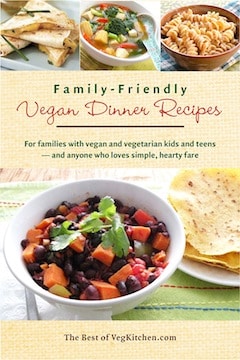
If you're part of a plant-strong family, you might enjoy one of the titles in VegKitchen’s pdf e-book series. This compact, affordable 48-page pdf e-book collects VegKitchen’s most popular family-friendly recipes. No more poring through recipes on the web (or even just this site, of which there are hundreds! For more information, go to Family-Friendly Vegan Dinner Recipes: For families with vegan and vegetarian kids and teens — and anyone who loves simple, hearty fare.
Vegan Dinner Recipes
Asian Noodle Dishes
- Vegetable Lo Mein
- Hoisin-Glazed Bok Choy with Tofu and Soba Noodles
- Pineapple Coconut Noodles
- Easy Vegan Pad Thai
- Pad Thai with Spicy Peanut Sauce
- Orange Sesame Noodles
- Asian Noodle Platter with Crisp Veggies and Peanut Sauce
- Fresh Chinese Noodles with Mixed Mushrooms and Spinach
- Pan-Fried Sesame Noodles and Broccoli
- Noodles with Peanut Sauce, Broiled Kale, and Butternut Squash
- Japanese Noodles with Tempeh and Vegetables
- Soba Noodles with Tofu, Tomatoes, and Basil
- Vegetable Chow Mein
- Szechuan-Style Eggplant with Noodles
- Asian Noodles with Napa Cabbage, Mushrooms, and Tofu
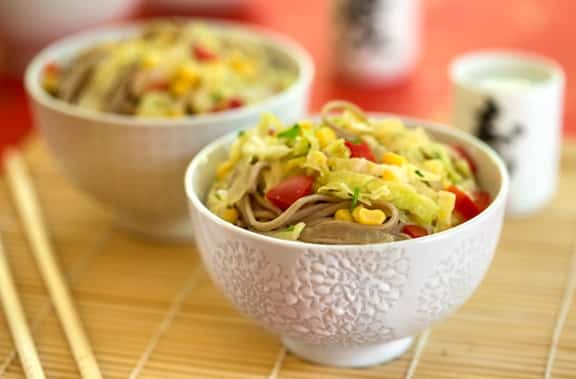
- Asian Noodles with Spicy Stir-Fried Corn and Cabbage
Burritos, Enchiladas, and Other Tortilla Dishes
- Basic Bean Burritos
- Mashed Potato Burritos
- Big Quesadillas with Black Beans, Broccoli, and Portabellas
- Cauliflower Power Tacos
- Quinoa Tacos
- Super Easy Tortilla Casserole
- Black Bean Tostadas
- Quesadillas with Sweet Potatoes, Zucchini, and Corn
- Big Quesadillas with Refried Beans, Spinach, and Avocado
- Avocado Quesadillas
- Yellow Rice and Black Bean Burritos
- Pinto Bean and Corn Soft Tacos
- Bountiful Vegetable Burritos

Casseroles and Other Comfort Foods
- Vegan Macaroni and Cheese
- Hearty Vegetable Pot Pie
- Quinoa, Broccoli, and Vegan Cheese Casserole
- Baked Risotto
- Classic Veggie Shepherd's Pie
- Butternut Squash and Mixed Mushroom Lasagna
- Sweet and White Potato Casserole with Apples
- Mozzarella Mashed Potato Pie
- Mom's "Tuna"-Noodle Casserole
- Black Bean and Zucchini Tortilla Casserole
Quinoa, Broccoli, and Vegan Cheese Casserole; photo by Rachael Braun
Main Dishes Featuring Grains and/or Beans
- Savory Stuffed Winter Squash
- Jamaican-Style Spicy Beans
- Quinoa with Cauliflower, Cranberries, and Nuts
- Valencian-Style Rice and Red Beans
- Tropical Quinoa and Black Beans
- Quinoa and Mushroom Stuffed Peppers
- Pink Bean, Quinoa, and Spinach Soup
- Miso-Ginger Red Beans with Quinoa and Broccoli
- Pinto Bean and Quinoa Sloppy Joes
- Quinoa with Edamame and Oranges
- Black Bean Hemp Protein Patties
- Polenta with Black Beans and Spinach
- Hummus and Quinoa Wraps
- Skillet Black Beans with Potatoes and Tortillas
- Thai Chickpea Almond Curry
- Quinoa Paella
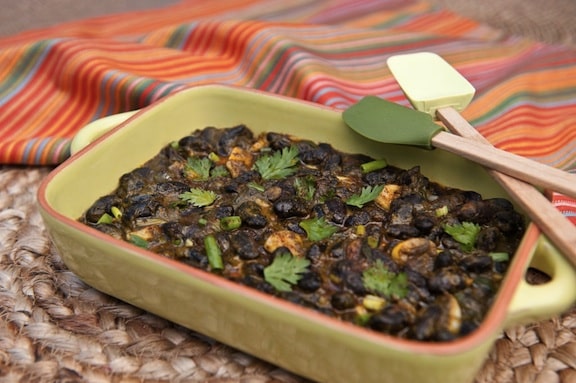
Pasta Entrées
- Pasta Puttanesca (Pasta with Olive Sauce)
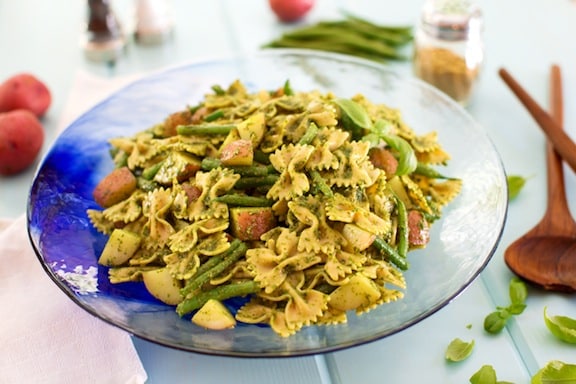
- Pasta with Pesto, Potatoes, and Green Beans
- Vegan Spinach-Mushroom Lasagna
- Pasta, Beans, and Greens with Creamy Cashew Sauce
- Pasta Arabiatta
- Pasta Curry with Cauliflower and Chickpeas
- Penne with Chard and Beans
- Pasta with Roasted Vegetables and Olives
- Mixed Vegetable Lasagna
- Cincinnati "Chili Mac"
- Tortellini or Ravioli in Sweet Potato Sauce
- Pasta, Greens, and Beans in Creamy Cashew Sauce
Pizzas
- Verdant Veggie Pesto Pizza
- Roasted Veggie Pizza
- Garlicky Fresh Tomato and Basil Pizza
- Pizza with Onions, Peppers, and Artichokes
- Mixed Olives and Spinach Pizza
- White Pizza with Asparagus and Spinach
- Artichoke, Green Pea, and Vegan Cheddar Pizza
- Two-Onion Pizza
- White Pizza with Sweet Potato and Carmelized Onions
- Mexican Pizza
- Fresh Tomato, Eggplant, and Olive Pizza

Seitan Recipes
- Dilip's Lime Jerk Seitan with Kale
- Seitan and Polenta Skillet with Fresh Greens
- "Buddhist's Delight" (Seitan and Vegetable Stew)
- Cornmeal-Crusted Seitan
- Seitan and Mushrooms in Paprika Cream
- Tofu and Seitan Sauté with Easy Gravy
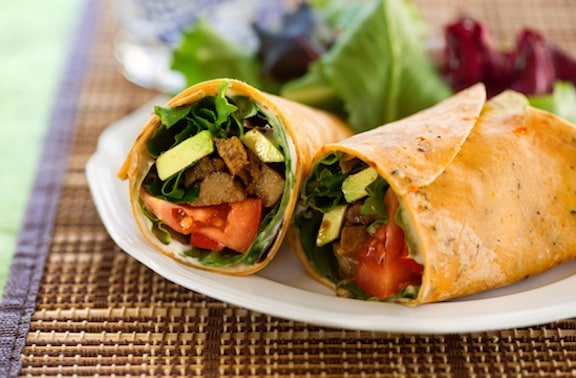
- BBQ-Flavored Seitan and Avocado Wraps
- Seitan "Peppersteak" with Bean Thread Noodles
- Seitan Chow Fun
- Seitan Gyros
- Sweet-and-Sour Seitan and Vegetables
- Seitan, Mushroom and Onion Stir-Fry
- Seitan Peppersteak
- Seitan "Meat and Potatoes" Stew
- Seitan and Broccoli Stir-Fry
Stews & Chilis
- Classic Vegetarian Chili
- Moroccan-Style Vegetable Stew
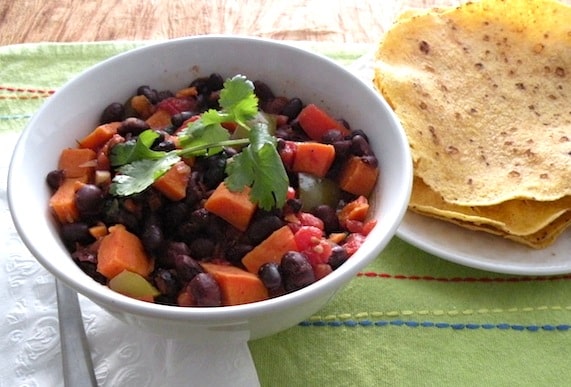
- Quick Black Bean and Sweet Potato Chili
- Curried Sweet Potatoes with Chard and Chickpeas
- Italian Vegetable Ragout with Chard
- Brazilian-Inspired Black Bean Stew
- Golden Hominy Chili
- Curried Mixed Vegetable Stew
- South American Harvest Stew
Tofu, Tempeh, and Vegan Sausage Main Dishes
- Spinach, Broccoli, and Tomato Scrambled Tofu
- Stir-Fried Tofu with Spring Greens
- Classic Tofu Quiche
- Citrus Roasted Tofu
- Tempeh Tamale Pie
- Kung Pao Broccoli and Tofu
- Thai Coconut Tempeh with Pineapple Salsa
- Barbecued-Flavored Roasted Tempeh and Vegetables
- BBQ-Flavored White Beans with Sausage and Spinach
- Easy Curried Sweet Potato and Tofu Stew
- Broccoli Frittata
- Tempeh, Kale, and Sweet Potato Skillet
- Tangy Tempeh with Portabella Mushrooms
- Gently Curried Tofu Burgers
- Potatoes and Collard Greens with Vegan Sausage
- Tofu Rancheros
- Tofu with Balsamic-Roasted Italian Vegetables
- Mediterranean Tofu
- Sautéed Tofu with Green Veggies
Vegan Spring Greens Salad with Endives and Oranges
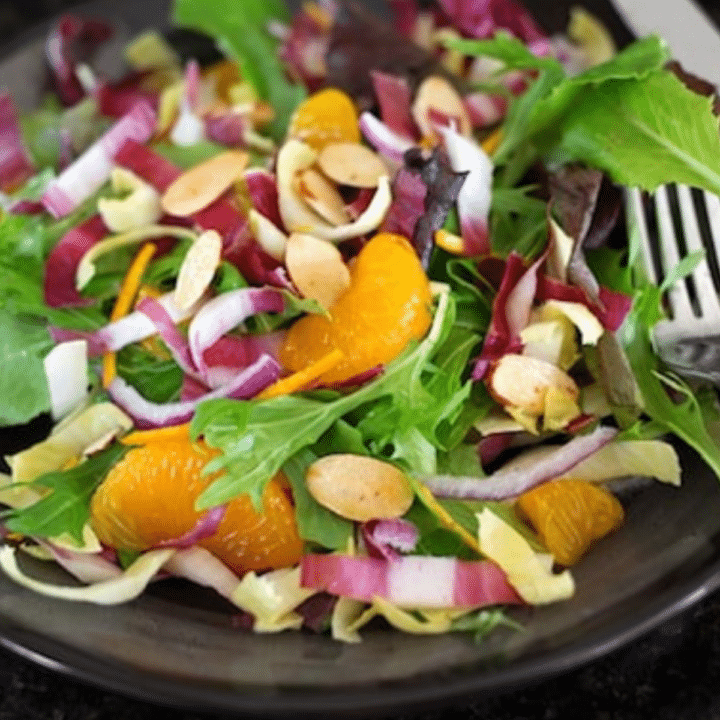
Here's a lovely and refreshing salad with tender greens, Belgian endives, and tiny oranges. A hint of citrus and toasted almonds add to the fresh flavor, making this a nice change of pace from an everyday tossed salad without much extra effort — the kind of salad that looks like it took real work but comes together in about 15 minutes.
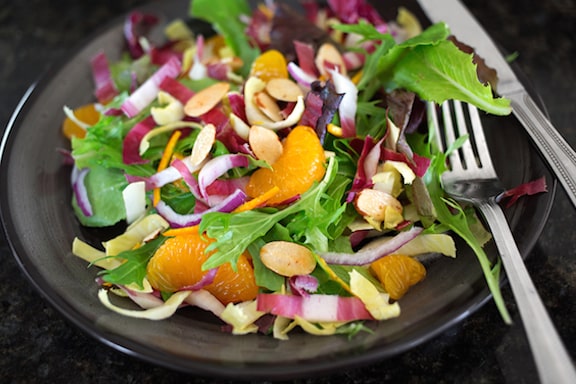
Photos by Hannah Kaminsky.
Key Ingredients & Substitutions
- Mixed greens. Use a mild lettuce such as Boston or butter mixed with any combination of sorrel, arugula, dandelion greens, watercress, and a small amount of tender Asian greens such as mizuna — or simply use a good store-bought mixed baby greens blend.
- Belgian endives. Add a pleasant, slightly bitter crunch that balances the sweet oranges — look for firm, tightly closed heads with pale, almost white leaves for the mildest flavor.
- Seedless oranges. Bring bright citrus sweetness — small varieties like clementines or mandarins work especially well since they section easily.
- Toasted almonds. Add crunch and nutty flavor — toast them first for the best taste, since raw almonds taste flat by comparison.
- Orange zest. A small addition that heightens the citrus flavor throughout the whole salad, not just where the orange segments happen to land.
Variations
- Swap the nuts. Toasted pecans or walnuts work well in place of almonds, or use toasted pepitas for a nut-free option.
- Add cheese. A sprinkle of vegan feta or goat-style cheese adds richness and a nice salty contrast to the sweet oranges.
- Skip the endive. If you can't find it, thinly sliced radicchio makes a good substitute with a similar pleasant bitterness.
- Make it a main. Add some cooked quinoa or chickpeas to turn this side salad into a light lunch.
- Add pomegranate seeds. Their jewel-toned pop adds color and a tart burst that plays well with the sweet orange.
Tips for the Best Spring Greens Salad
- Don't skip the orange zest. It's optional but highly recommended — it heightens the citrus flavor throughout the salad in a way the segments alone can't.
- Toast the almonds. A few minutes in a dry skillet, stirring often, brings out their flavor and adds a warm aroma to the finished salad.
- Slice the endive thinly. This keeps its texture pleasant rather than tough or overly bitter in any one bite.
- Section the oranges over the bowl. This catches any juice that escapes and lets it become part of the dressing instead of going to waste.
- Toss just before serving. This keeps the greens crisp and fresh rather than wilting under the dressing.
Make Ahead & Storage
The greens and endive can be washed and stored in the fridge a day ahead, and the almonds can be toasted in advance and kept in a sealed container at room temperature. Hold off on sectioning the oranges and tossing everything together until just before serving, since the citrus juice will wilt the greens if it sits too long.
How to Serve
Serve at once as a bright, refreshing salad alongside any spring meal, or as a starter course before a heartier main dish.
Recipe
Vegan Spring Greens Salad with Endives and Oranges
A lovely and refreshing salad with tender greens, Belgian endives, and tiny oranges, brightened with a hint of citrus and toasted almonds.
Print
Pin
Save
Servings:
Ingredients
- 6 cups washed and torn mixed greens see note
- 2 Belgian endives thinly sliced
- ¼ cup thinly sliced red onion
- 2 to 3 small seedless oranges peeled and sectioned
- ¼ cup toasted sliced or slivered almonds
- 1 tablespoon extra-virgin olive oil or fragrant nut oil
- 2 tablespoons white balsamic or white wine vinegar
- 2 tablespoons orange juice
- zest of ½ orange optional, but highly recommended
Instructions
- Combine all of the ingredients in a salad bowl and toss together. Serve at once.
Notes
Use a mild lettuce such as Boston or butter mixed with any combination of sorrel, arugula, dandelion greens, watercress, and tender Asian greens such as mizuna in small quantities. Or, just keep it simple and use mixed baby greens.
Vegan-ize any recipe!Grab our free vegan cheat sheet, packed with my favorite easy substitutions to make any recipe vegan.
Here are more recipes for colorful green salads and leafy spring greens.
Vegan Olive & Rice Salad
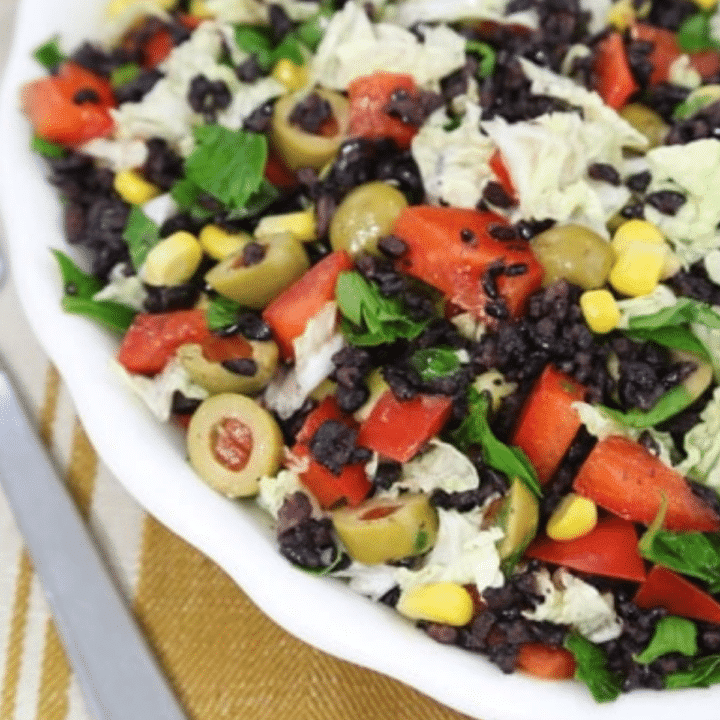
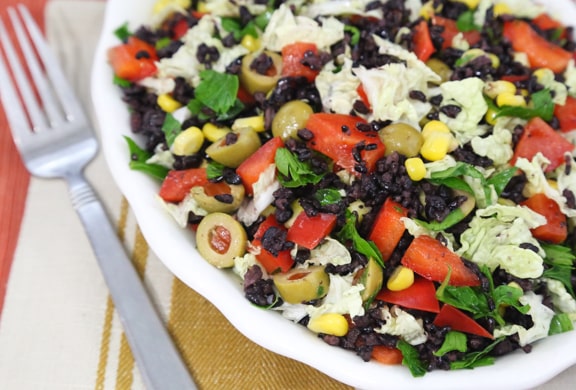
When the season for cold meals arrives, this easy rice salad studded with olives, corn, and bell pepper is most welcome. Try using black rice (sometimes marketed as forbidden rice, so named because it was once reserved for Chinese emperors) for added eye appeal - it turns an everyday side into something that looks like it took real effort, and it holds its texture beautifully once dressed. Photos by Evan Atlas.
Key Ingredients & Substitutions
- Brown rice. Black rice (also sold as forbidden rice) makes a striking substitute and adds extra visual appeal.
- Black and green olives. Using both adds nice color contrast and a range of briny flavor.
- Fresh lemon juice. Adds brightness that balances the richness of the olives — use fresh, not bottled, for the best flavor.
- White cabbage. Adds crunch. Shred it finely so it blends well with the rice.
- Bell pepper and corn. Add sweetness and color - use whatever bell pepper color you like, and fresh or thawed frozen corn both work.
Variations
- Add protein. Chickpeas or cubed baked tofu turn this into a heartier main-dish salad.
- Add cheese. Crumbled vegan feta adds a nice tang.
- Swap the grain. Quinoa or farro both work well in place of brown rice.
- Make it spicier. A pinch of red pepper flakes or a diced jalapeño adds heat.
- Add fresh herbs. Chopped parsley or dill adds a fresh, bright note to the finished salad.
- Add avocado. Diced avocado stirred in right before serving adds creaminess that plays well against the briny olives.
Tips for the Best Olive & Rice Salad
- Let the rice cool completely. Warm rice will wilt the fresh vegetables and make the salad soggy.
- Try black rice for a dramatic look. It holds its shape well and makes a beautiful contrast against the other ingredients.
- Taste before serving. Adjust the lemon juice, salt, and pepper right before you serve, since flavors mellow as the salad sits.
- Make it ahead. This salad keeps well in the fridge and actually improves after a few hours as the flavors meld.
- Rinse canned olives if very salty. A quick rinse mellows overly briny olives without losing their flavor entirely.
Make Ahead & Storage
This salad keeps well in a sealed container in the refrigerator for up to 4 days, making it an excellent make-ahead option for a picnic, potluck, or a week of easy lunches.
How to Serve
Serve at room temperature, paired with chickpeas or black beans and tomatoes drizzled with olive oil and balsamic vinegar, plus a side of steamed broccoli or green beans for a complete meal. It also makes an easy addition to a summer buffet or potluck spread, since it doesn't need reheating and actually tastes better once it has had a little time to sit. It holds up well enough to pack for lunch the next day without turning soggy, making it a handy make-ahead option for the workweek.
Recipe
Olive Rice Salad
When the season for cold meals arrives, this easy rice salad is most welcome. Try using black rice (sometimes marketed as forbidden rice) for added eye appeal.
Print
Pin
Save
Servings: to 6
Ingredients
- ¾ cup raw medium-grain brown rice see variations below recipe box
- 1 cup cooked corn kernels
- ⅓ cup chopped black olives
- ⅓ cup chopped green olives
- 1 medium red bell pepper finely diced
- 1 ½ cups finely shredded white cabbage
- ½ cup chopped fresh parsley
- 2 scallions minced
- 1 to 2 tablespoons extra-virgin olive oil
- Juice of ½ lemon or more to taste
- Salt and freshly ground pepper to taste
Instructions
- Combine the rice with 2 cups of water in a small saucepan and bring to a slow boil. Lower the heat, cover, and cook until the water is absorbed, about 30 minutes.
- Fluff the rice with a fork then let it cool completely.
- Combine the rice with the remaining ingredients in a mixing bowl and toss together thoroughly. Serve at room temperature.
Nutrition (Estimate per Serving)
Calories: 245kcalCarbohydrates: 40gProtein: 5gFat: 9gSaturated Fat: 1gPolyunsaturated Fat: 1gMonounsaturated Fat: 6gSodium: 439mgPotassium: 327mgFiber: 4gSugar: 4gVitamin A: 1756IUVitamin C: 59mgCalcium: 52mgIron: 2mg
Vegan-ize any recipe!Grab our free vegan cheat sheet, packed with my favorite easy substitutions to make any recipe vegan.
Vegan Matzo Brei
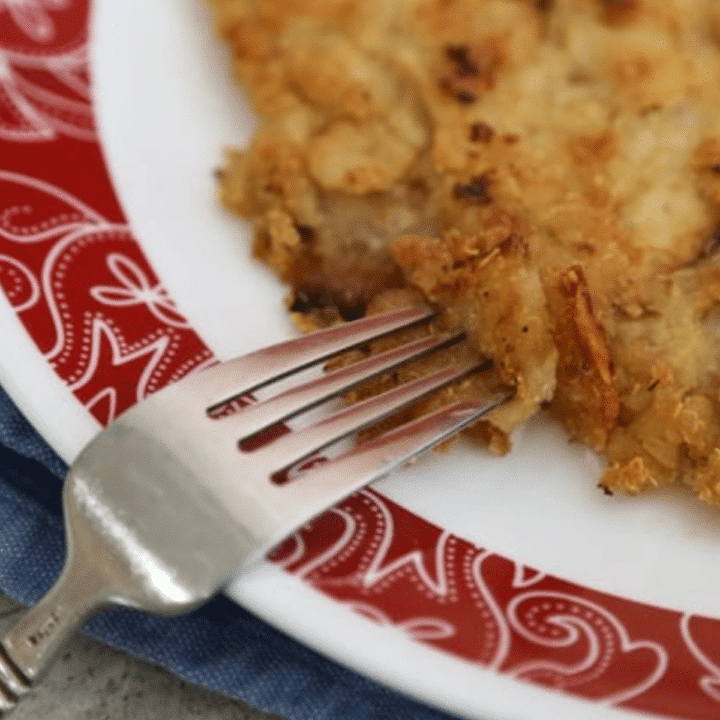
Matzo brei — a kind of flat omelet made from crushed matzo — is a beloved Passover-week breakfast. Quinoa flakes stand in for the traditional egg, acting as the "glue" that holds it together while adding a surprising amount of flavor to this comforting classic. It comes together in one skillet, one serving at a time, in well under 15 minutes.
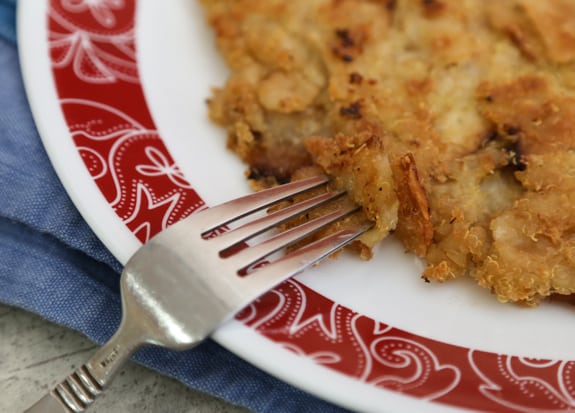
Photos by Evan Atlas.
Key Ingredients & Substitutions
- Matzo. The star of the dish — crumble it into small, irregular pieces so it soaks up the water evenly and gives the finished dish its characteristic texture.
- Quinoa flakes. These give the matzo brei its structure in place of egg. Look for them near the hot cereals or in the gluten-free aisle — they're worth seeking out for this recipe specifically, since few other pantry staples do the same binding job.
- Vegan buttery spread. Use a Kosher for Passover margarine if you're keeping strictly kosher for the holiday.
- Maple syrup. Optional, but a classic sweet topping if you like your matzo brei on the sweeter side.
- Salt. Essential even in the sweet version — it balances the maple syrup and keeps the dish from tasting flat.
Variations
- Make it savory. Skip the maple syrup and top with extra salt, or a spoonful of applesauce on the side.
- Add cinnamon. A pinch stirred into the matzo mixture adds warmth, especially if serving it sweet.
- Double the batch. This recipe is easiest to make one serving at a time in a small skillet — simply repeat for more servings rather than trying to cook a large batch in one pan.
- Add fried onions. A classic savory variation — sauté some onion in the skillet before adding the matzo mixture.
Tips for the Best Vegan Matzo Brei
- Get the skillet very hot first. This is what gives the matzo brei its crisp, golden crust rather than a soft, steamed texture.
- Let the matzo mixture stand. A few minutes of soaking is what lets the quinoa flakes do their binding work — don't rush straight into the pan.
- Flip confidently. Use a plate the same size as your skillet, and flip in one quick, decisive motion rather than hesitating halfway through.
- Serve immediately. Matzo brei is best hot and crisp, right out of the pan — it loses its crunch quickly as it cools.
- Don't over-soak the matzo. A few minutes is plenty; too long and it turns mushy instead of holding some texture.
Make Ahead & Storage
Matzo brei is really at its best made fresh and eaten immediately, since it loses its crisp texture as it sits. If you do have leftovers, reheat in a hot dry skillet rather than the microwave to bring back some crispness.
How to Serve
Serve hot with maple syrup for a sweet breakfast, or simply sprinkle with extra salt for a savory take.
Recipe
Vegan Matzo Brei
As in our recipe for Vegan Matzo Balls, quinoa flakes provide the Passover-appropriate “glue” that holds the matzo brei together. They also add a surprising amount of flavor to this bland yet comforting classic.
Print
Pin
Save
Servings:
Ingredients
- 1 ½ matzos crumbled
- ¼ cup quinoa flakes
- 1 tablespoon vegan buttery spread like Earth Balance, or use a Kosher for Passover margarine if you adhere strictly
- Pinch of salt plus more for serving, to taste
- Maple syrup optional
Instructions
- Start heating a 7- or 8-inch nonstick skillet before starting, as it’s best for it to be very hot when the pouring in the matzo brei batter.
- Combine the crumbled matzos and quinoa flakes in a heatproof bowl. Pour 1 cup boiling water over them and stir together. Let stand for 2 to 3 minutes as the skillet heats up.
- Melt the buttery spread or margarine in the skillet. Once it’s sizzling, pour in the matzo mixture and pat in evenly. Cover and cook over medium-high until the bottom is golden brown and crisp.
- Slide the matzo brei out onto a plate about the same size as the skillet. Holding the bottom of the plate with one hand, invert the skillet over the plate with the other and then flip right side up quickly. Cook the other side of the matzo brei until golden brown.
- Slide onto a a serving plate. Serve with the optional maple syrup, or sprinkle additional salt over the top.
Nutrition (Estimate per Serving)
Calories: 346kcalCarbohydrates: 52gProtein: 7gFat: 11gSaturated Fat: 2gPolyunsaturated Fat: 3gMonounsaturated Fat: 4gTrans Fat: 1gSodium: 92mgPotassium: 51mgFiber: 3gSugar: 2gVitamin A: 535IUCalcium: 5mgIron: 2mg
Vegan-ize any recipe!Grab our free vegan cheat sheet, packed with my favorite easy substitutions to make any recipe vegan.
Vegan Matzo Balls (with a Gluten-Free Variation)
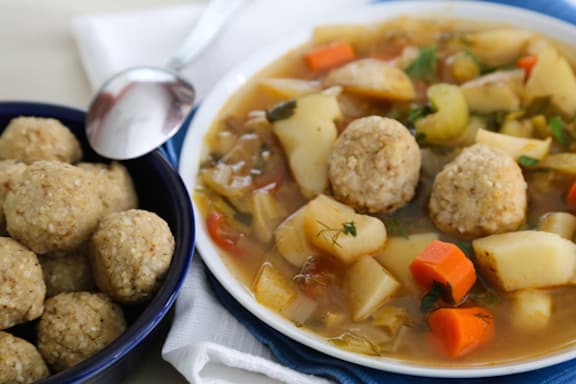
These vegan matzo balls aren't like the Jewish grandmothers' classic recipe for the big, fluffy variety, but they're delicious, easy to make, and soy-free. Many vegan matzo ball recipes on the web use tofu as a binder, which, for many Jews, is not an allowable Passover food; these use quinoa flakes instead. They're baked at a low temperature rather than boiled — without egg as a binder, vegan matzo balls of any kind are more likely than not to fall apart in simmering water.
Passover Carrot-Apple Pudding
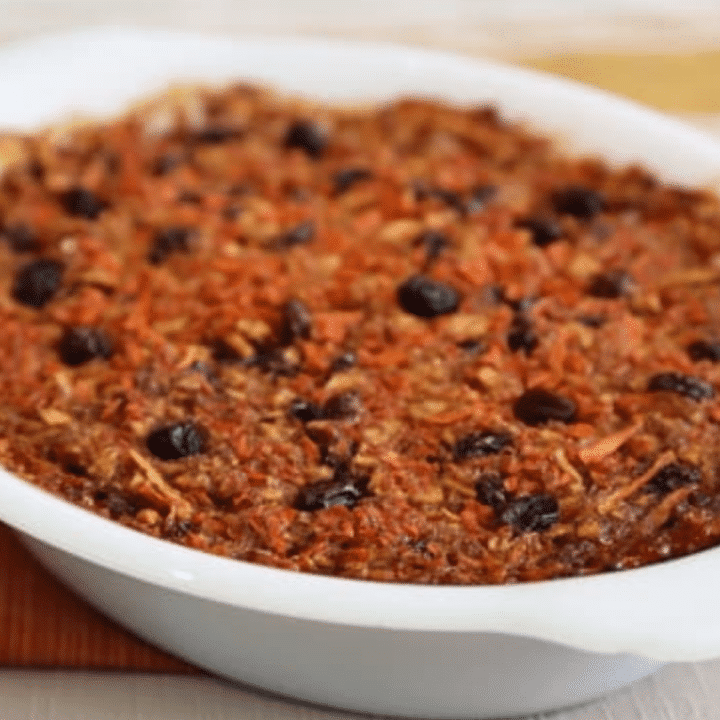
This sweet side dish of spiced carrots and apples brightens the Passover dinner plate. Baked until crusty on top and tender within, it's also yummy enough to be an everyday dessert with a dollop of coconut yogurt, and it holds together well enough to slice into neat squares.
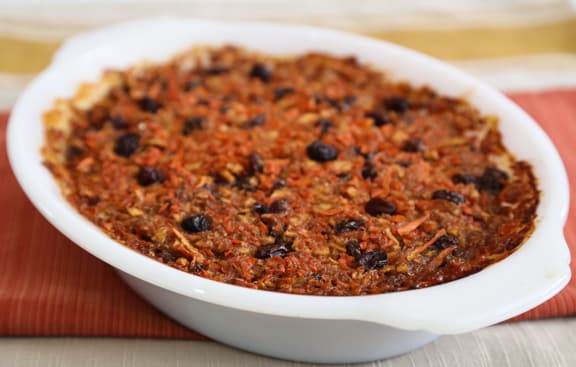
Key Ingredients & Substitutions
- Quinoa flakes. These act as the Passover-friendly binder, similar to how oats work in a crumble. Look for them near the hot cereals or in the gluten-free aisle.
- Carrots and apples. Grate them by hand or with a food processor's grating disc to save time — a coarser grate gives more texture, while a fine grate makes for a smoother pudding.
- Sweet Passover wine. Adds warmth and depth. Pomegranate juice or another no-sugar-added dark red juice works well as a substitute.
- Warm spices. Cinnamon, ginger, and allspice or nutmeg give this pudding its cozy, holiday flavor — don't be shy with them, since the carrots and apples can otherwise taste one-note.
- Raisins. Add pockets of concentrated sweetness throughout — golden raisins work just as well as dark ones.
Variations
- Add nuts. A handful of chopped walnuts or pecans adds crunch, especially nice scattered over the top before baking.
- Swap the dried fruit. Chopped dates or dried apricots work well in place of raisins.
- Make it a dessert. Serve warm with a dollop of coconut yogurt or a drizzle of maple syrup.
- Add citrus zest. A little orange or lemon zest brightens the flavor and cuts through the sweetness.
- Add a touch more spice. A pinch of ground cloves alongside the other warm spices deepens the holiday flavor further.
Tips for the Best Carrot-Apple Pudding
- Grate the carrots and apples finely. This helps the pudding hold together and bake evenly, rather than leaving large chunks that bake unevenly.
- Let the quinoa flakes soak fully. Giving them time in the boiling water softens them so they blend seamlessly into the batter instead of staying gritty.
- Cover for the first half of baking. This keeps the top from browning too quickly before the inside is set.
- Let it cool before slicing. This helps the pudding hold its shape for clean slices instead of falling apart.
- Grease the baking dish well. This pudding can stick as it bakes, so a generous coating of oil or margarine makes cleanup and serving much easier.
Make Ahead & Storage
This pudding keeps well in the refrigerator for up to 4 days, tightly covered, and can be served cold, at room temperature, or gently reheated. It's a good make-ahead dish for a Seder, since it actually slices more cleanly once fully chilled.
How to Serve
Slice and serve warm or at room temperature as a sweet side dish for a Passover Seder, or enjoy leftovers as a simple dessert with a dollop of coconut yogurt.
Recipe
Passover Carrot-Apple Pudding
This sweet side dish of spiced carrots and apples brightens the Passover dinner plate. Baked until crusty, it's also yummy enough to be an everyday dessert with a dollop of coconut yogurt.
Print
Pin
Save
Servings: to 8
Ingredients
- ⅓ cup quinoa flakes
- 5 large carrots grated
- 2 medium apples peeled, cored, and grated
- ⅓ cup raisins
- 2 tablespoons safflower or other neutral vegetable oil
- ¼ cup sweet Passover wine or substitute pomegranate juice, or similar no-sugar dark red juice
- ¼ cup natural granulated sugar
- 1 teaspoon cinnamon
- ½ teaspoon ground ginger
- ¼ teaspoon ground allspice or nutmeg
Instructions
- Preheat the oven to 350º F.
- Combine the quinoa flakes with ⅔ cup boiling water in a heatproof bowl. Let stand while the other ingredients are being prepared.
- Combine all the ingredients in a mixing bowl. Pour in the quinoa flakes and mix well.
- Pour into an oiled 9- by 5- by 3-inch loaf pan. Cover and bake for 40 minutes. Uncover and bake another 30 to 40 minutes, or until the top is nicely browned and crusty.
- Let cool. Slice and serve warm or at room temperature.
Nutrition (Estimate per Serving)
Calories: 181kcalCarbohydrates: 32gProtein: 2gFat: 5gSaturated Fat: 1gPolyunsaturated Fat: 1gMonounsaturated Fat: 4gTrans Fat: 1gSodium: 39mgPotassium: 309mgFiber: 4gSugar: 17gVitamin A: 8526IUVitamin C: 6mgCalcium: 28mgIron: 1mg
Vegan-ize any recipe!Grab our free vegan cheat sheet, packed with my favorite easy substitutions to make any recipe vegan.
Vegan Passover Seder Recipes
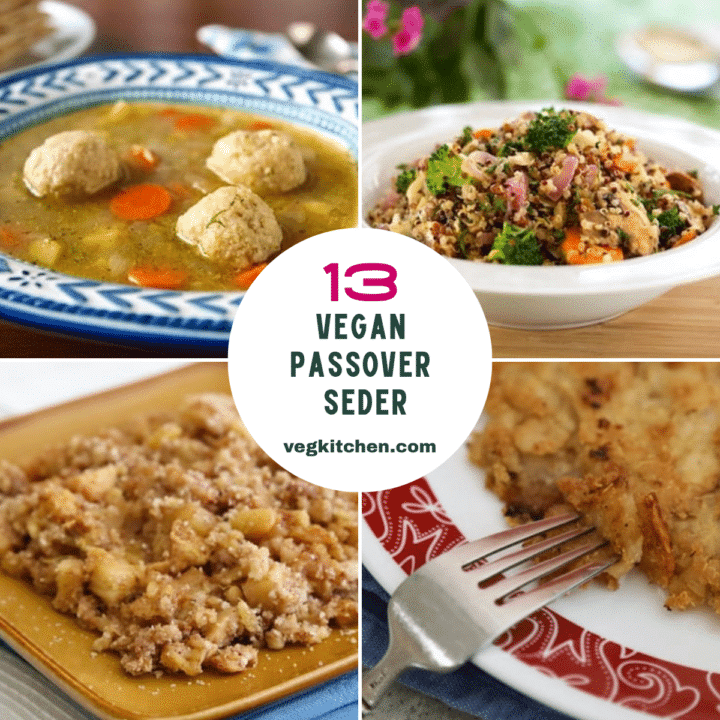
These vegan Passover Seder recipes and menus (great for vegetarians too) focus on the fresh produce of early spring — very fitting, as the holiday has connotations of renewal and rebirth. Though there's flexibility in what may be served for the meal itself, there are also many restrictions. Ashkenazic Jews avoid, aside from bread-related products, many other grains and legumes. Sephardic Jews avoid leavened wheat products, but can use rice and other grains, as well as legumes.
The biggest challenge for vegans is how to create eggless versions of egg-y classics like matzo balls — no worries, the recipes below include vegan matzo balls (with a gluten-free variation) that are awesome. Both traditions have lately embraced the use of quinoa during Passover week, and since Passover once had a strong seasonal festival aspect, spring's bountiful produce is most welcome.
Vegan Passover Seder Recipes
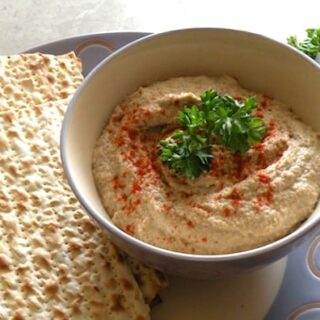
A rich, savory mock chopped liver made from mushrooms, cashews, and onions — a classic Seder appetizer with no eggs required.
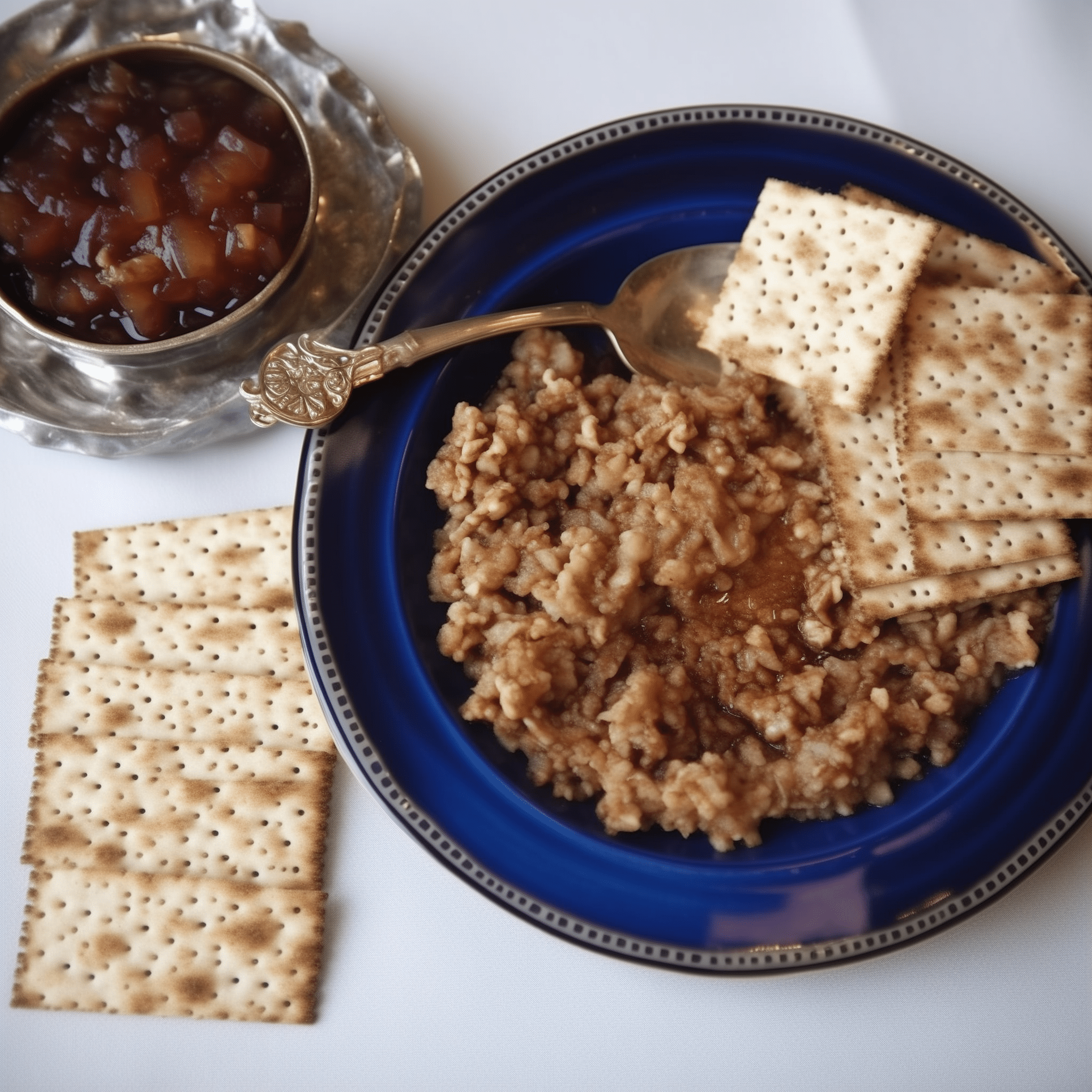
The traditional Ashkenazic haroset, a sweet mixture of apples, nuts, and wine that symbolizes the mortar used by enslaved Jews in Egypt.
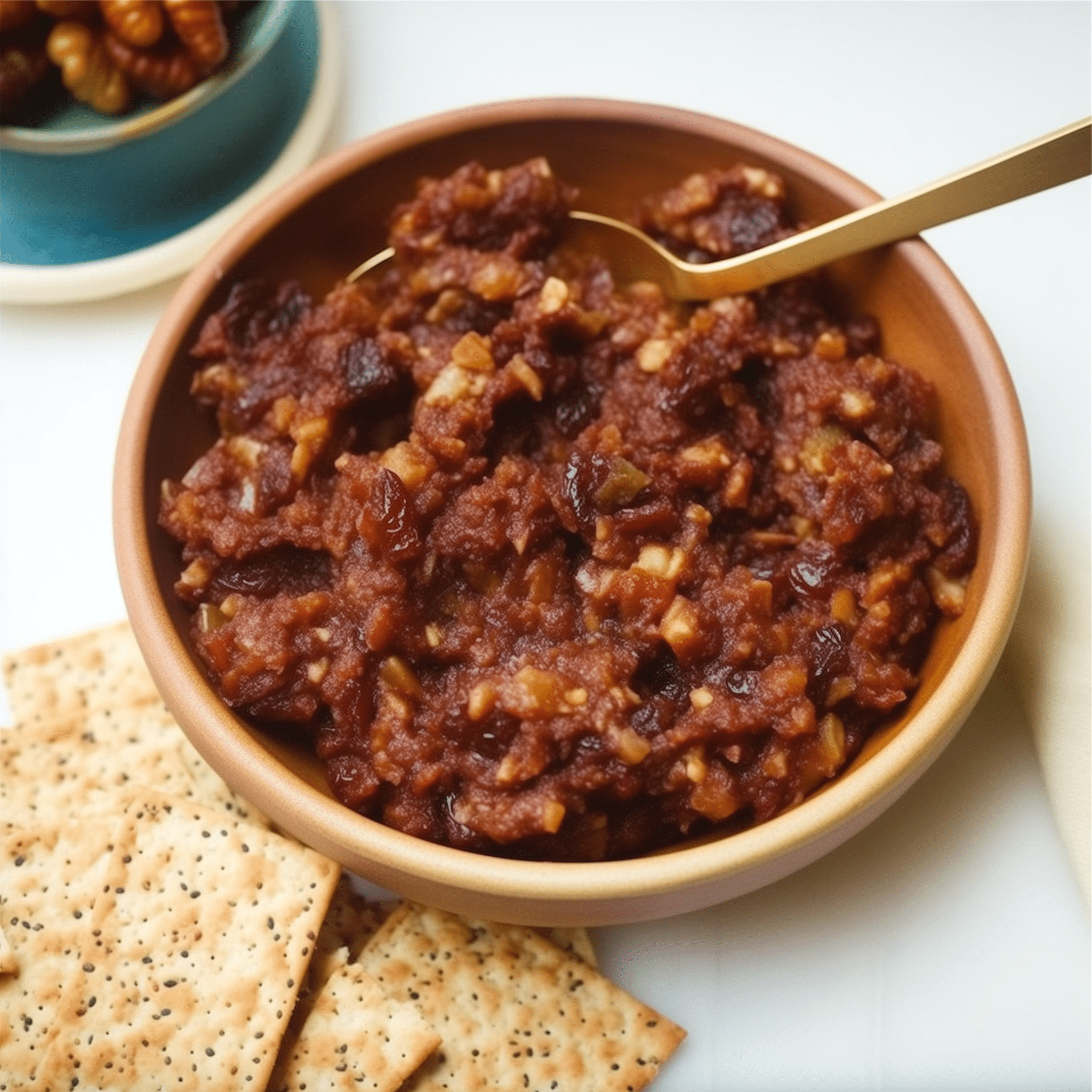
A Sephardic take on haroset, made with dates and dried fruits for a deeply sweet, brick-colored spread.

A comforting spring vegetable soup with fluffy, eggless matzo balls — the vegan answer to a Seder classic.

A Sephardic-style vegan matzo ball soup with warm, fragrant spices.
Layers of spinach, leek, and potato baked with matzo for a comforting Passover gratin.
A Sephardic-style matzo mina layered with eggplant, a hearty Passover main.
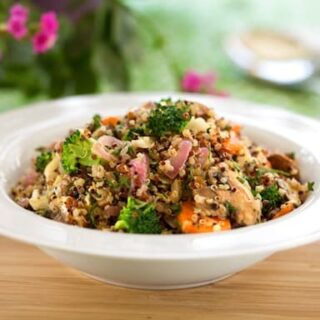
A light, fluffy quinoa pilaf that's Passover-friendly and full of spring flavor.
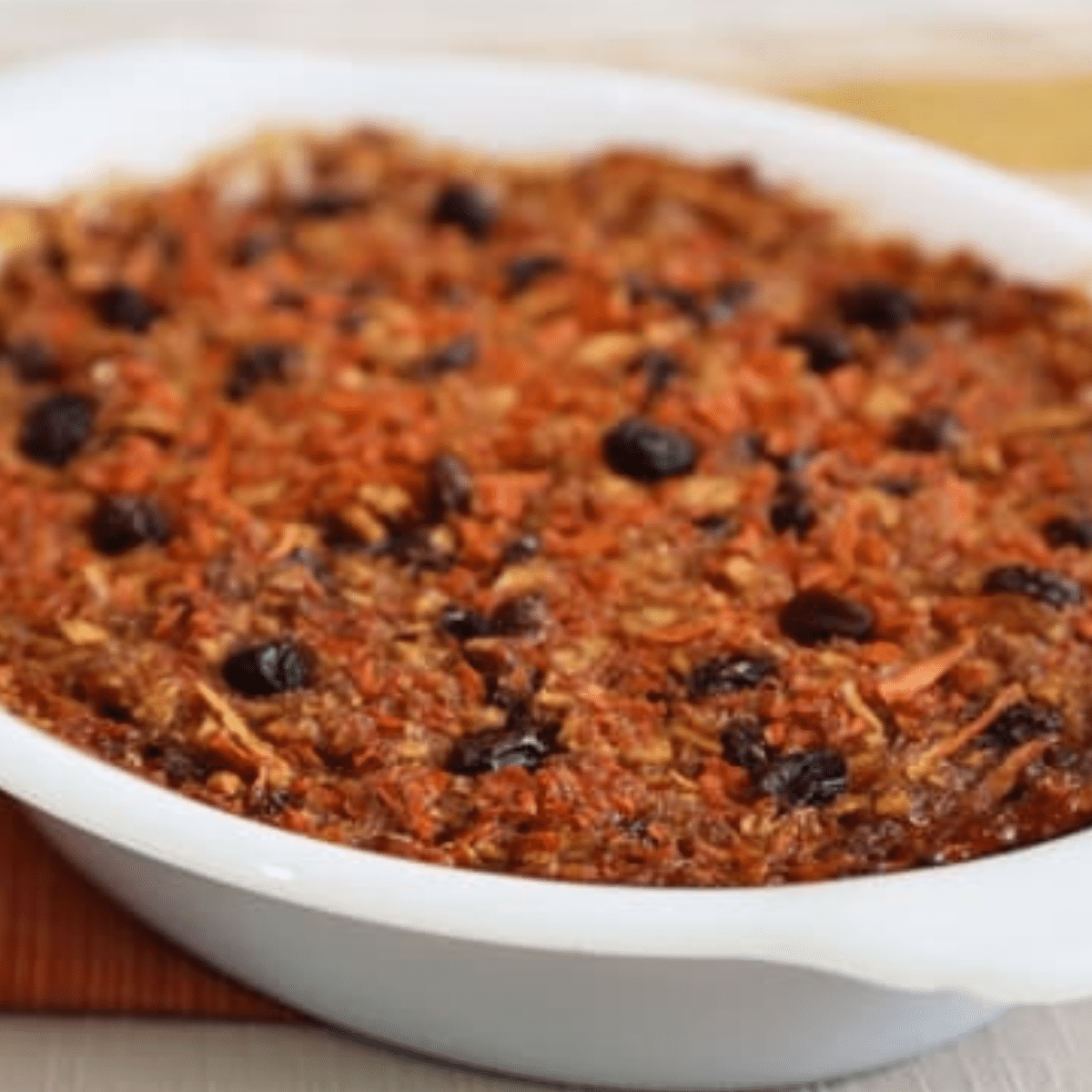
A naturally sweet carrot and apple pudding, a Passover-friendly side or dessert.
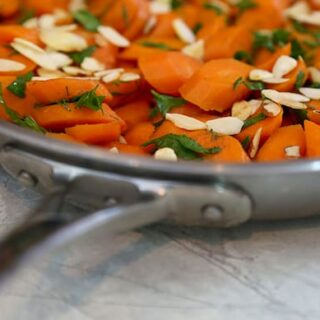
Simple sautéed carrots with toasted almonds, a quick and colorful Seder side.
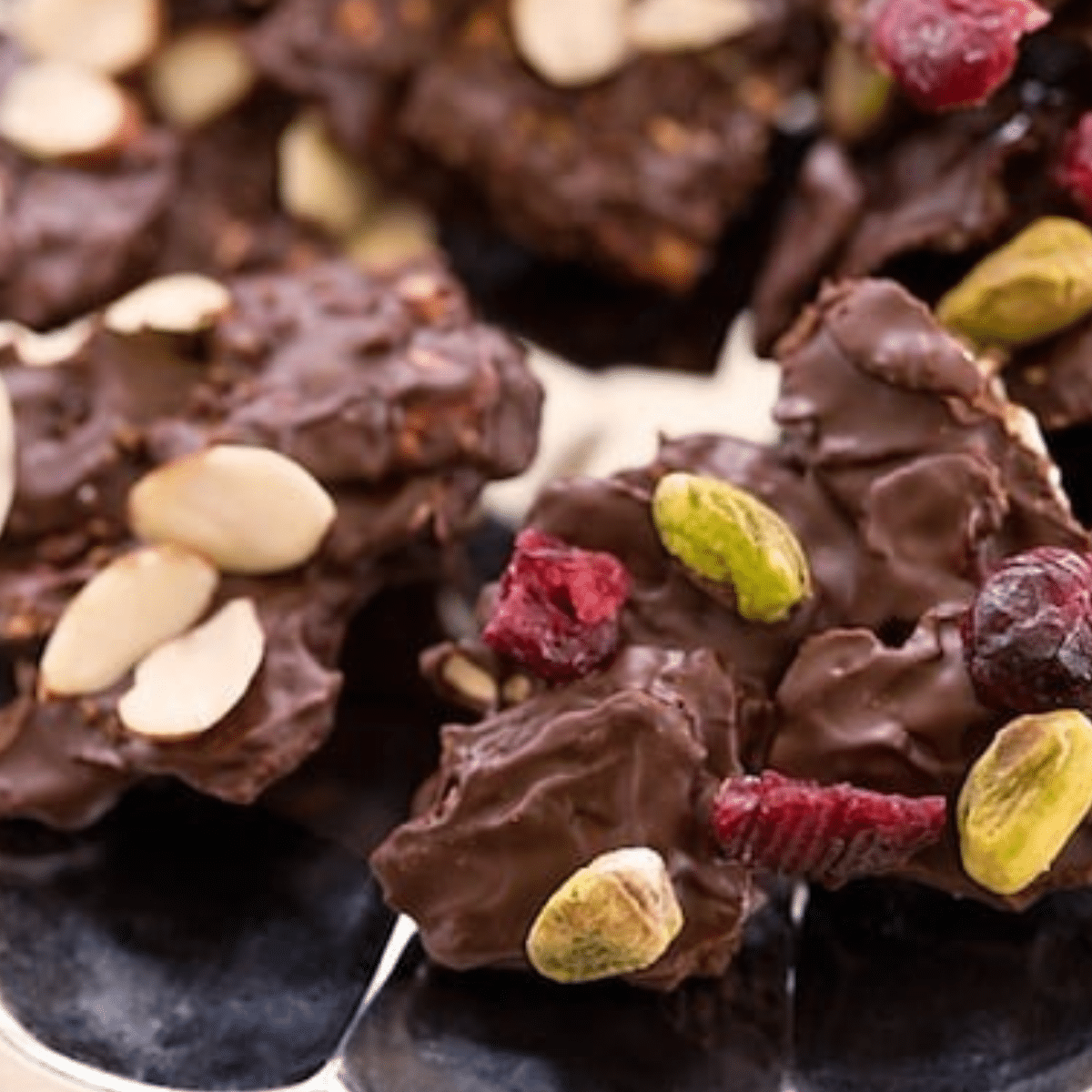
A rich, crunchy chocolate matzo brittle studded with toasted nuts and dried fruit — a great way to use leftover matzo.
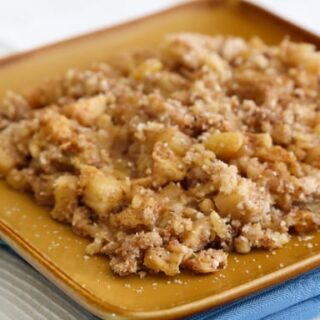
A juicy pineapple crumble made Passover-friendly, with a crisp, nutty topping.
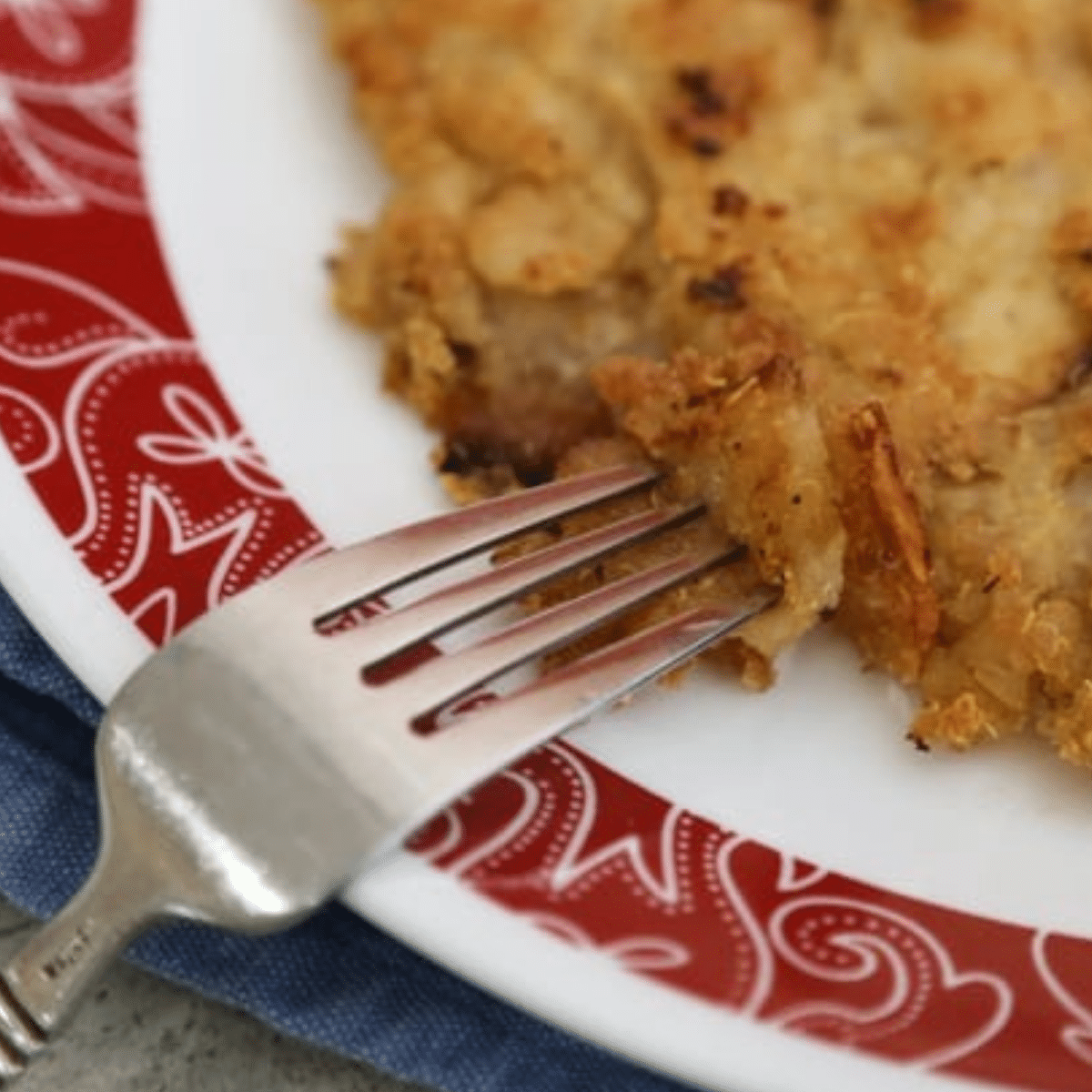
The classic Passover breakfast of fried matzo and vegan egg, made dairy- and egg-free.
Rounding out the menu: Serve plenty of matzo throughout the meal. Though this is an abundant menu, you may also wish to add a seasonal green salad and a simply prepared green vegetable such as asparagus or broccoli.
The Seder Plate, Vegan Version
During the course of the Seder and the meal that follows the reading of the Haggadah, a plate of matzos is served, as is plenty of Passover wine. Central to the table is the Seder plate, a round dish with designated spots for placement of the symbolic foods to be sampled during the reading of the Haggadah. The foods are not eaten from this plate, but everyone gets a sampling of the foods to be tasted from separate platters.
Karpas: A mild green vegetable or herb, such as celery or parsley. This symbolizes the new growth of spring. A small leaf of romaine lettuce or other mild green might be used. It's sometimes dipped into salt water or vinegar as a reminder of the tears shed by enslaved Jews.
Maror: A bitter herb, usually horseradish for Ashkenazic Jews or a bitter green such as escarole or endive for Sephardic Jews. This represents the bitterness of slavery suffered by the Jews in Egypt.
Haroset: This mixture of nuts, wine, and apples, as Ashkenazic Jews make it, or nuts, wine, and dried fruits, as Sephardic Jews make it, has a brick-like color to symbolize the bricks used by the Jewish slaves to build Pharaoh's cities.
Hazeret: Another bitter herb or green, such as watercress or chicory. Some believe that two bitter herbs should be tasted, though this component of the Seder plate is optional. Two components of the Seder plate that vegans obviously skip or replace: zoreah, the shank bone, and beytzah, a hard-boiled egg. To fill all the spots in the vegan Passover plate, the former is sometimes replaced with a roasted beet, and the latter, a boiled potato (more for its shape than any symbolic similarity).
Here are more tips for keeping the Holidays and Special Occasions healthy! For lots more features on healthy lifestyle, please explore VegKitchen's Healthy Vegan Kitchen page.
Pink Beans with Spring Greens
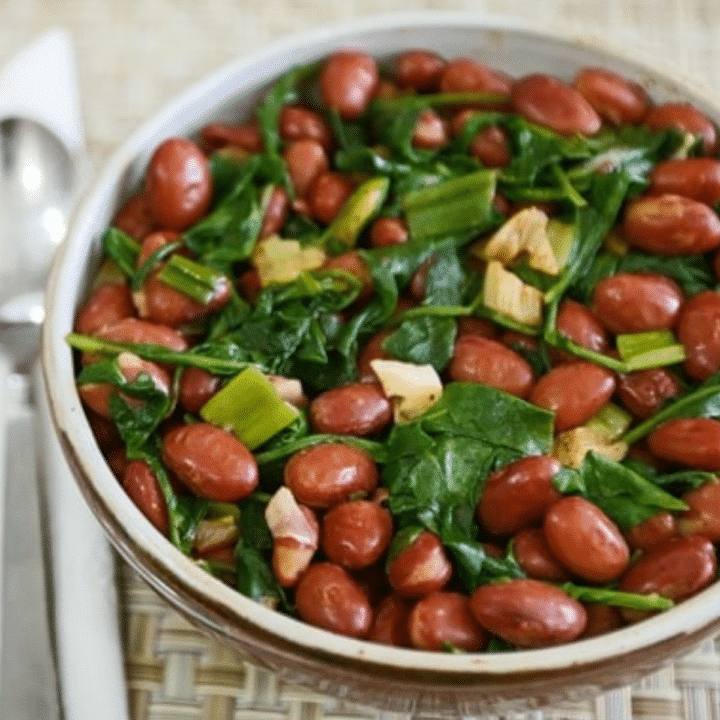
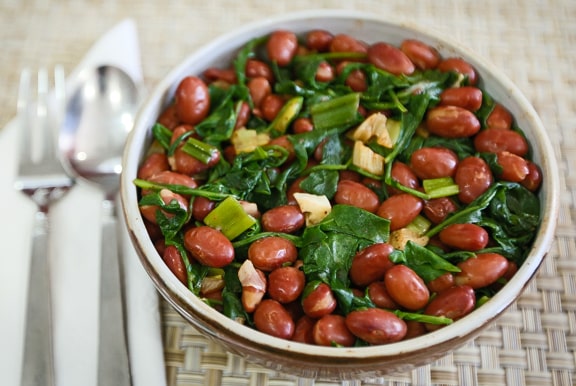
Leafy spring greens like spinach, arugula, or watercress pair beautifully with pink beans in this simple, garlicky skillet dish. It comes together entirely on the stovetop in about 30 minutes, making it an easy weeknight dinner that still feels like it took real effort.
Key Ingredients & Substitutions
- Pink beans. Canned or home-cooked both work well. Pinto beans make a fine substitute if pink beans aren't available, since the two are closely related and similar in texture.
- Spring greens. Baby spinach, arugula, watercress, and tatsoi all work, alone or combined — use whatever looks best at the market, or a mix of two for more complexity.
- Garlic. This dish leans garlicky on purpose — don't be shy with it, since the beans and greens are otherwise fairly mild.
- Chili powder. Adds warmth without heat. A good-quality blend makes a real difference here, since cheaper blends can taste dusty rather than warm.
- Olive oil. Used generously, it carries the garlic flavor through the dish and helps wilt the greens without them tasting steamed.
Variations
- Add protein. A handful of cubed tofu or tempeh turns this into a heartier main dish.
- Make it spicier. A pinch of red pepper flakes or a diced fresh chile adds heat.
- Swap the beans. Pinto, black, or cannellini beans all work in place of pink beans.
- Add citrus. A squeeze of lime brightens the finished dish.
- Make it a bowl. Serve over rice or quinoa for a more substantial meal.
- Add tomatoes. A handful of halved cherry tomatoes stirred in near the end adds juiciness and color.
Tips for the Best Pink Beans with Spring Greens
- Don't rush the garlic. Cooking it low and slow until just golden brings out its sweetness without bitterness.
- Add greens in batches. They cook down a lot, so adding them a bit at a time makes them easier to fit in the pan.
- Rinse canned beans well. This removes excess sodium and helps the sauce stay clean, not starchy.
- Season at the end. Taste and adjust salt and pepper only after everything is combined, since the beans and their liquid both carry some salt already.
- Use a wide skillet. This gives the greens room to wilt down without steaming into a soggy pile in the center of the pan.
Make Ahead & Storage
This dish keeps well in the refrigerator for up to 3 days, though the greens will soften further as they sit. Reheat gently on the stovetop with a splash of water or olive oil to loosen things back up.
How to Serve
Serve warm on its own, over rice, or alongside warm crusty bread. It's a satisfying weeknight dinner that comes together in about 30 minutes, and leftovers reheat well enough to make a quick lunch the next day.
Recipe
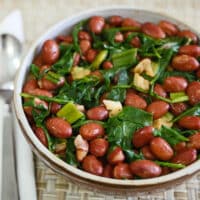
Pink Beans with Spring Greens
Leafy spring greens like spinach, arugula, or watercress pair beautifully with pink beans in this simple, garlicky skillet dish.
Print
Pin
Save
Servings: to 6
Ingredients
- 1 ½ tablespoons extra-virgin olive oil
- 3 to 4 cloves garlic minced
- 3 scallions sliced, or a good-sized bunch garlic chives, minced
- 3 to 3 ½ cups cooked pink beans or two 15- to 16-ounce cans, drained and rinsed
- 1 teaspoon good-quality chili powder
- 6 to 8 ounces small-leaf spring greens baby spinach, baby arugula, watercress, tatsoi, or any combination, rinsed well
- salt and freshly ground pepper to taste
Instructions
- Heat the oil in a large skillet over low heat. Add the garlic and saute until it just begins to turn golden, then add the scallions and saute until they soften slightly.
- Stir in the beans and chili powder and cook over medium heat until heated through.
- Add the greens to the skillet in 2 to 3 batches, covering and cooking down until wilted before adding the next batch, until all the greens fit in the pan.
- Season to taste with salt and pepper and serve at once.
Nutrition (Estimate per Serving)
Calories: 186kcalCarbohydrates: 26gProtein: 9gFat: 6gSaturated Fat: 1gPolyunsaturated Fat: 1gMonounsaturated Fat: 4gSodium: 418mgPotassium: 519mgFiber: 9gSugar: 3gVitamin A: 721IUVitamin C: 14mgCalcium: 63mgIron: 2mg
Vegan-ize any recipe!Grab our free vegan cheat sheet, packed with my favorite easy substitutions to make any recipe vegan.
Hearty Recipes for Hungry Teens (Vegan and Vegetarian)
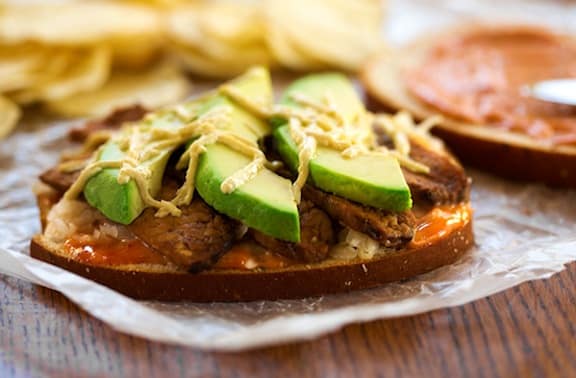
If you’re feeding teenagers, especially the male variety, you know that they go through mountains of food, and your grocery bill mounts alarmingly. Here are a handful of hearty, filling dishes that won’t break the bank. Now I'm not saying that young women won't like these hearty dishes, but in my experience, at least, they don't eat in nearly the quantity of their male counterparts. [Read more...]
Vegan Southwestern Rice and Beans
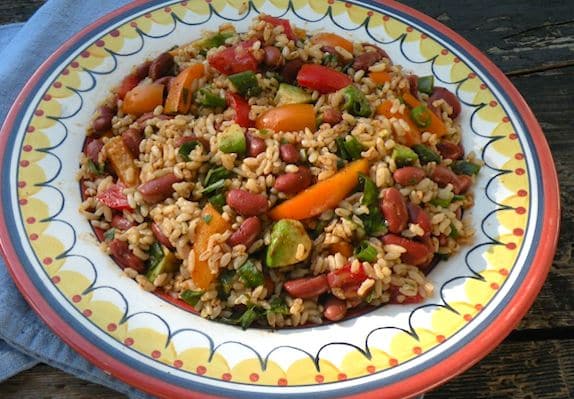
This no-cook main-dish salad turns leftover brown rice into something special with beans, avocado, lime, and warm southwestern spices. It's the kind of recipe that makes leftover grains feel like they were planned all along, and it comes together in the time it takes to chop a few vegetables — no stove required, which makes it a lifesaver on a hot day.
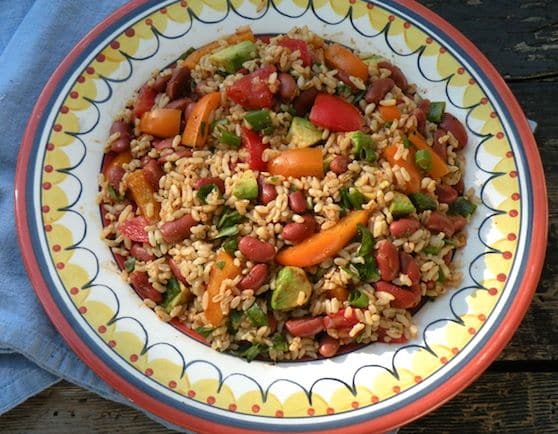
Key Ingredients & Substitutions
- Cold cooked brown rice. This is the perfect use for leftovers — cold, day-old rice holds its texture better than freshly cooked. Quinoa or farro work well too, and both bring their own pleasant chew.
- Beans. Pinto, black, red, or kidney beans all work equally well — use whichever you have on hand, or a mix of two kinds for variety.
- Avocado. Adds creaminess; dice it just before serving so it doesn't brown and turn the salad an unappetizing color.
- Fresh chili pepper. Jalapeño brings real heat, poblano is milder — or skip it and add a pinch of cayenne instead for background warmth without the fresh pepper flavor.
- Lime juice. Fresh-squeezed makes a real difference here — it's the main brightness in the dressing, since there's no cooking to develop flavor otherwise.
- Cumin and chili powder. The backbone of the southwestern flavor profile — toast them briefly in a dry pan first if you want an even deeper flavor.
Variations
- Add corn. A cup of fresh or thawed frozen corn kernels adds sweetness and crunch.
- Make it a wrap filling. Spoon into a tortilla with extra greens for a quick lunch wrap.
- Add a creamy dressing. A drizzle of vegan chipotle crema or cashew crema takes this over the top.
- Swap the grain. Quinoa, farro, or even cauliflower rice all work in place of brown rice.
- Add crunch. Crushed tortilla chips or pepitas sprinkled on top add texture right before serving.
- Make it a bowl meal. Serve over a bed of greens with extra salsa for a fuller Southwestern grain bowl.
Tips for the Best Southwestern Rice and Beans
- Use cold, leftover rice. Freshly cooked warm rice turns mushy when tossed with the dressing, and won't hold its shape nearly as well.
- Dice the avocado last. Add and toss it in right before serving to keep it from browning or getting mushy.
- Taste and adjust the lime. Limes vary a lot in juiciness and tartness — taste as you go rather than following the measurement blindly.
- Let it rest a few minutes. A short rest after tossing lets the flavors meld before serving.
- Rinse canned beans well. This removes excess sodium and the canning liquid that can make the salad watery.
Make Ahead & Storage
This salad keeps for about 2 days in the refrigerator, though it's best without the avocado added until closer to serving time, since it browns quickly once cut. If prepping ahead, store the avocado separately and fold it in just before eating, and give everything a good toss since the dressing settles.
How to Serve
This salad is a meal on its own, but it's even better paired with vegan quesadillas or nachos and a simple green vegetable. It also makes a great potluck dish since it holds up well at room temperature.
Recipe
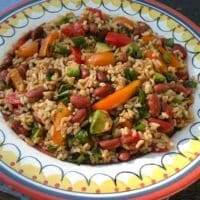
Vegan Southwestern Rice and Beans
A quick, no-cook main-dish salad that turns leftover brown rice into something special with beans, avocado, lime, and southwestern spices.
Print
Pin
Save
Servings:
Ingredients
- 2 to 2 ½ cups cold cooked brown rice
- 1 medium red or orange bell pepper cut into narrow 1 to 1 ½-inch strips
- 1 medium firm ripe avocado diced
- 15 to 16-ounce can pinto, black, red, or kidney beans drained and rinsed
- ½ cup fresh cilantro chopped, more or less to taste
- 2 scallions thinly sliced
- 1 fresh chili pepper jalapeno for heat, or poblano for mild, minced
- 1 teaspoon chili powder good-quality
- 1 teaspoon ground cumin
- 2 to 4 tablespoons fresh lime juice to taste (about ½ to 1 lime)
- 1 to 2 tablespoons extra-virgin olive oil as desired
- salt and freshly ground pepper to taste
Instructions
- Combine the rice, bell pepper, avocado, beans, cilantro, scallions, and chili pepper in a serving bowl.
- Sprinkle in the chili powder and cumin, then add the lime juice and olive oil.
- Toss until thoroughly mixed, then season with salt and pepper to taste.
- Let stand for a few minutes so the flavors can mingle, then serve.
Notes
This is a great way to use up leftover brown rice. Pair with vegan quesadillas or nachos and a green vegetable for a complete meal.
Vegan-ize any recipe!Grab our free vegan cheat sheet, packed with my favorite easy substitutions to make any recipe vegan.