
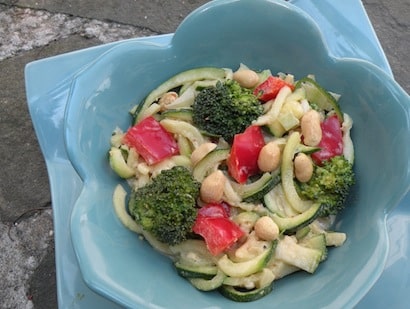
When the heat gets this intense, I try to make meals that don't require much if any heat (even if the A/C is on!). I've really enjoyed my spiral slicer, which makes instant "noodles" from raw zucchini. Now, don't get me wrong-I have no problem with pasta, but in the summer heat, zucchini noodles just feel lighter. And they're ready pretty much instantly, with a few cranks of the lever, and no heat needed. If you don't have a spiral slicer, you can use your favorite noodles-rice noodles, bean-thread noodles, soba, or linguini-this works with all of them. And this recipe adds a nice twist with some tasty peanut sauce. [Read more...]
Search Results for: broccoli
Vegan Sweet Potato Gnocchi (gluten free!)
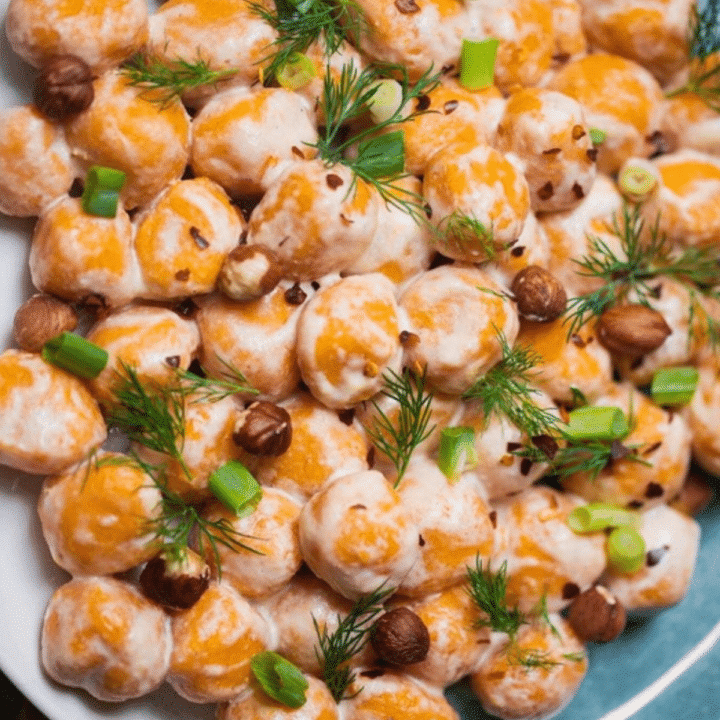
These vegan sweet potato gnocchi are soft, pillowy little dumplings made from roasted sweet potato and a trio of gluten-free flours, with no eggs, no dairy and no wheat. They're naturally sweet, a little chewy, and just right for tossing with whatever sauce you love on a cozy night in.

Squash and sweet potato pasta dishes are having a real moment, and homemade gnocchi is one of the most satisfying ways to join in. The dough comes together from just five pantry ingredients plus water, the shaping is simple (we roll ours into little balls), and a big batch freezes beautifully for quick dinners later. If you've only ever bought gnocchi in a vacuum pack, this is the version that will change your mind.
Key Ingredients & Substitutions
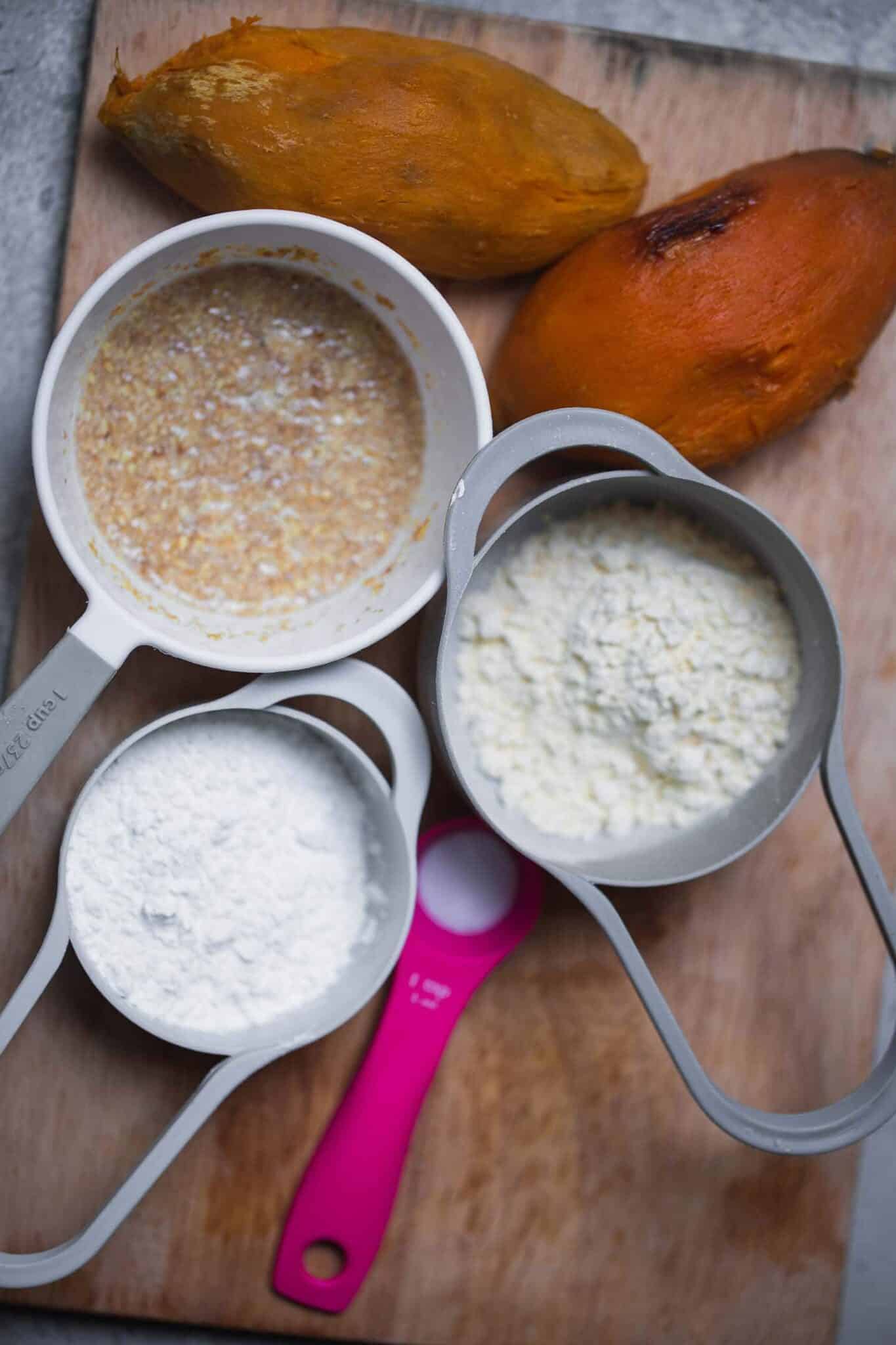
- Sweet potato. Roasting (rather than boiling) the sweet potatoes keeps them dry and concentrates their flavor, which means you need less flour and end up with lighter gnocchi. Orange-fleshed varieties give the prettiest color. Canned sweet potato puree is too wet for this recipe, so stick with fresh.
- Ground flaxseed. Mixed with water, ground flaxseed makes a flax egg that binds the dough in place of a real egg. Ground chia seeds work the same way if that's what you have.
- Rice flour. White rice flour is the main structure of the dough and keeps the recipe gluten-free. Use finely milled white rice flour rather than brown, which can make the gnocchi gritty.
- Tapioca flour. A little tapioca flour (also sold as tapioca starch) gives the gnocchi their signature chew and helps them hold together in the water. Arrowroot or potato starch are the best swaps.
- Chickpea flour. Chickpea flour adds a bit of protein and a savory note that balances the sweet potato. It's also the flour you'll adjust at the end, adding a spoonful at a time until the dough is soft but not sticky.
- Sea salt. Sweet potato needs a good pinch of salt to taste its best. Salt the cooking water too.
- A note on gluten. Every flour here is naturally gluten-free, but if you're cooking for someone with celiac disease, buy flours labeled certified gluten-free, since some are processed alongside wheat.
How to Make Sweet Potato Gnocchi
1. Bake the sweet potatoes
Prick the sweet potatoes a few times with a fork and bake them at 400°F (200°C) for 45 to 50 minutes, until they're completely soft and starting to caramelize at the edges. Let them cool until you can handle them comfortably, then peel off the skins.
2. Make the flax egg and mash
While the potatoes cool, stir the ground flaxseed with the water and let it sit for about 10 minutes to thicken. Mash the sweet potato until completely smooth using a masher or, even better, a potato ricer, which gives you the fluffiest, lump-free base.
3. Mix the dough
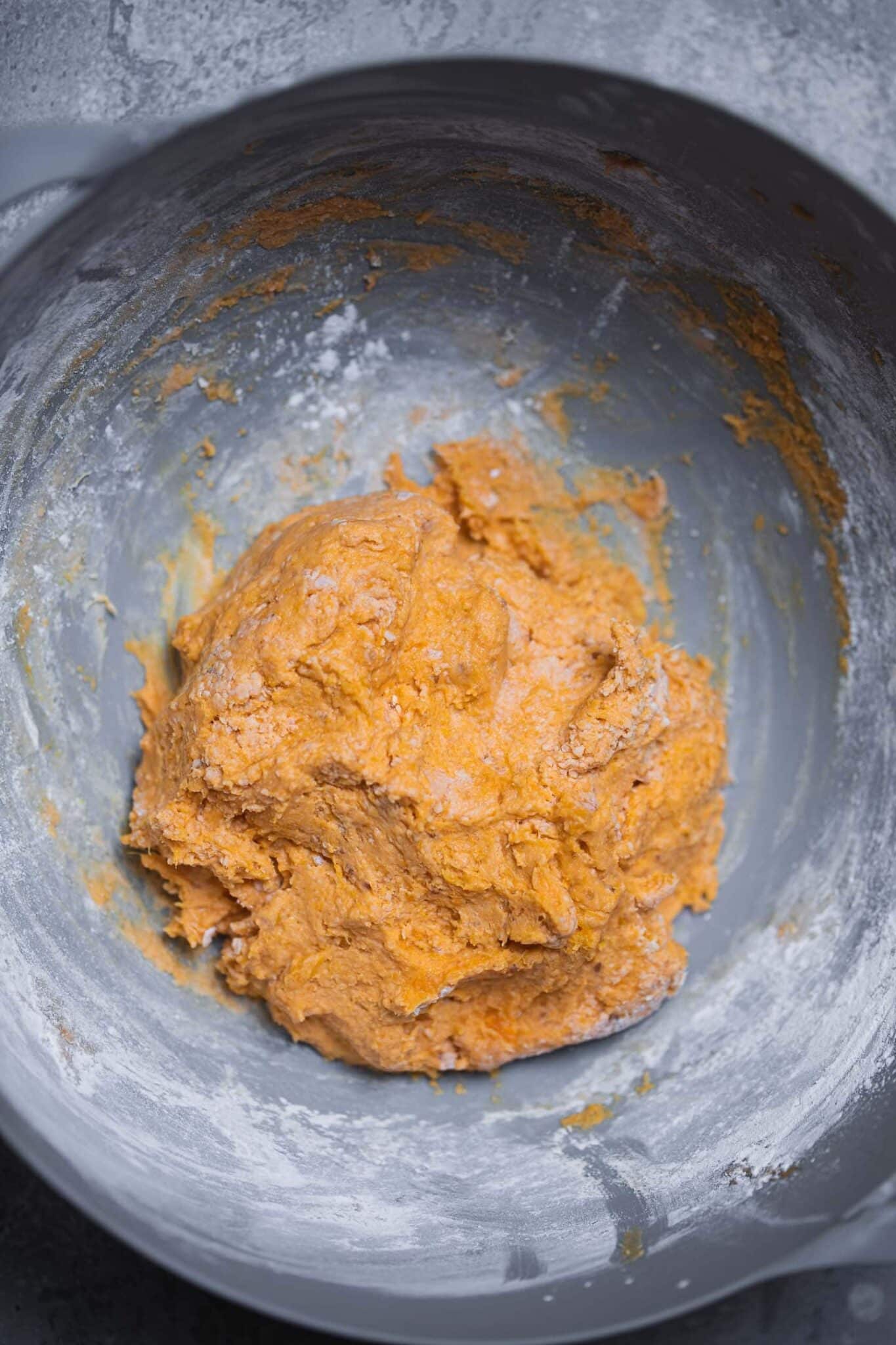
Add the sea salt and flax egg to the mashed sweet potato and stir well. Mix in the rice flour and tapioca flour, then add the chickpea flour and knead gently just until a soft dough forms. You may need a little more chickpea flour than the recipe lists, depending on how moist your potatoes are, but add it a spoonful at a time. Too much flour makes dense, dry gnocchi.

4. Shape the gnocchi
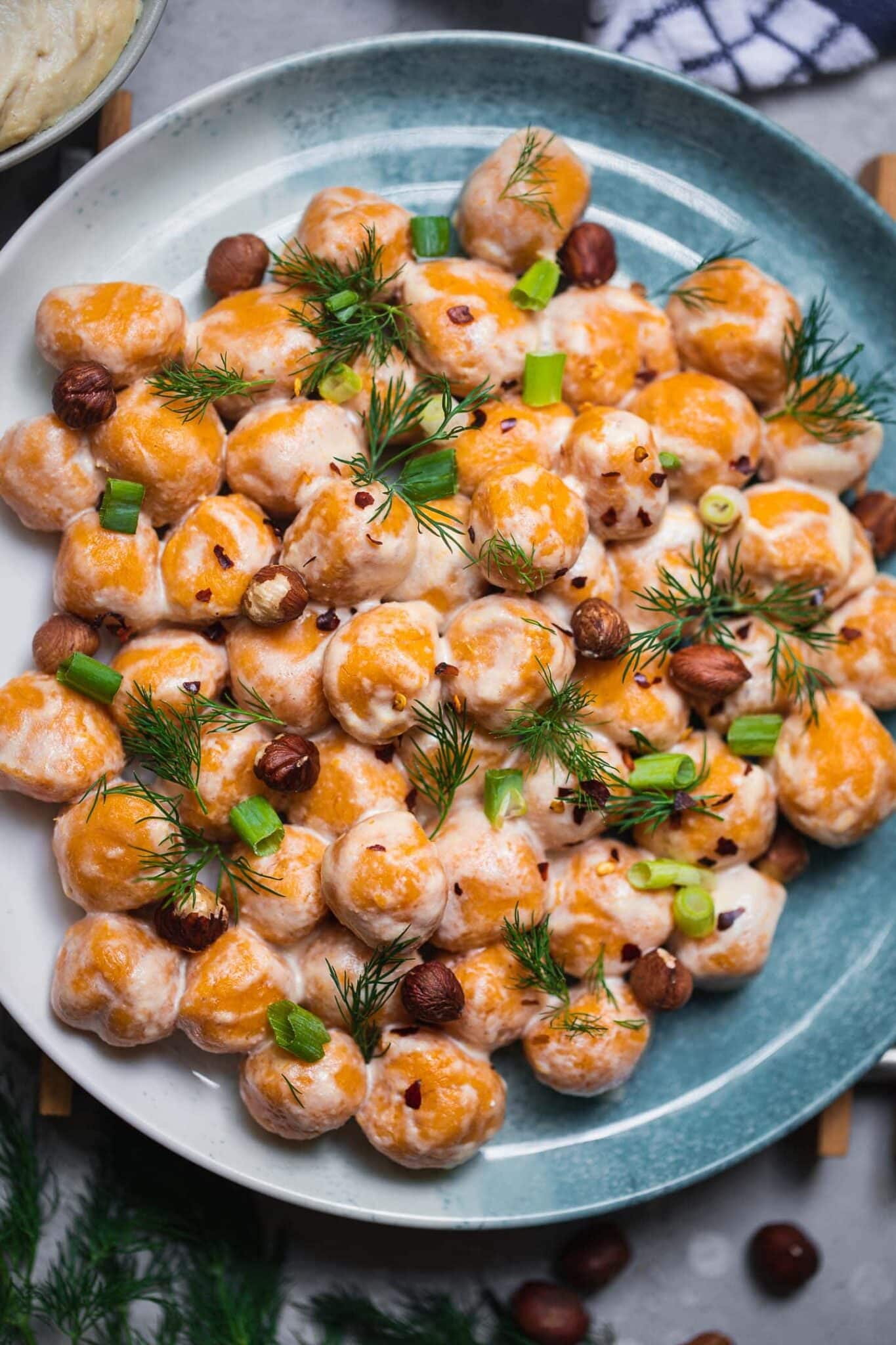
Turn the dough out onto a surface well dusted with rice flour and cut it into quarters. Roll each quarter into a long rope about ¾ inch thick, then cut it into 1-inch pieces. Roll each piece into a little ball, as we did here, or press it gently with a fork for the classic ridged shape.


5. Cook the gnocchi
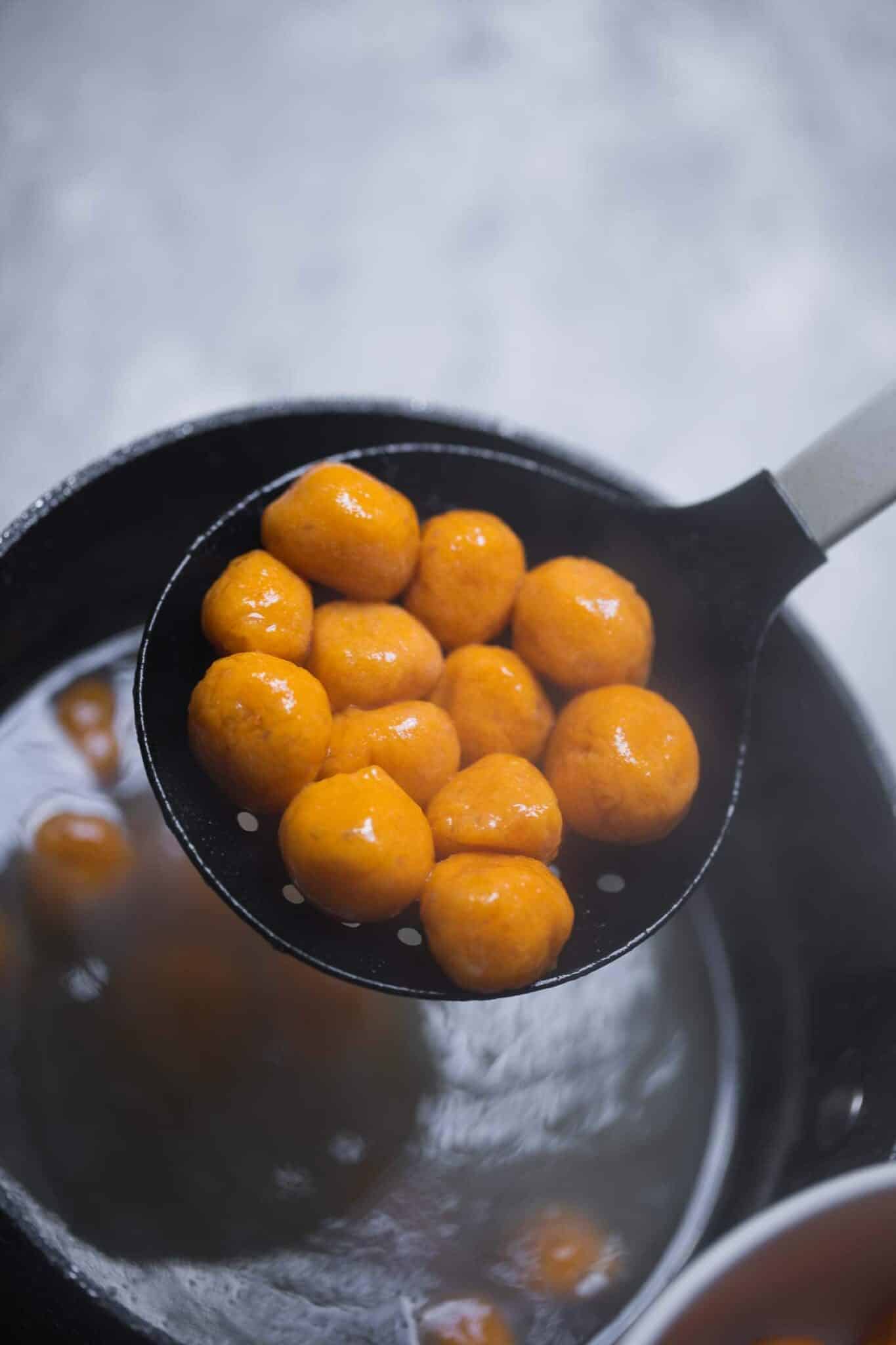
Bring a large pot of salted water to a gentle boil. Add the gnocchi in batches so they aren't crowded and cook for 3 to 5 minutes, until they float to the surface. Lift them out with a slotted spoon and set them aside while you cook the rest.
Helpful Tips
Roast, don't boil. Boiled sweet potatoes soak up water, and wet potatoes need extra flour to form a dough. Roasting drives off moisture, so the gnocchi stay light and tender.
Mash while warm, mix while cool. Warm sweet potato mashes more smoothly, but let it cool to room temperature before adding the flax egg and flours so the dough doesn't turn gummy.
Go easy on the flour. The dough should feel soft and slightly tacky, like play dough, not stiff. Test one gnocchi in the simmering water before shaping the whole batch. If it falls apart, knead in another tablespoon of chickpea flour.
Keep the water gentle. A hard rolling boil can knock soft gluten-free gnocchi apart. Keep it at a lively simmer and stir once, carefully, so nothing sticks to the bottom.
Crisp them up. For golden edges, pan-fry the boiled gnocchi in a little olive oil or vegan butter for 3 to 4 minutes after draining. It's the easiest way to add texture.
Variations
- Butternut squash gnocchi. Swap the sweet potato for the same weight of roasted, well-drained butternut or kabocha squash. You may need a bit more chickpea flour.
- Herbed gnocchi. Knead 1 to 2 tablespoons of finely chopped fresh sage, thyme or rosemary into the dough.
- Warmly spiced. Add a pinch of nutmeg, smoked paprika or cinnamon to play up the sweet potato.
- Cheesy gnocchi. Mix 2 tablespoons of nutritional yeast into the dry flours for a savory, parmesan-like flavor.
- Classic potato-style. Replace half the sweet potato with a baked russet potato for a milder, more traditional gnocchi.
Serving Ideas
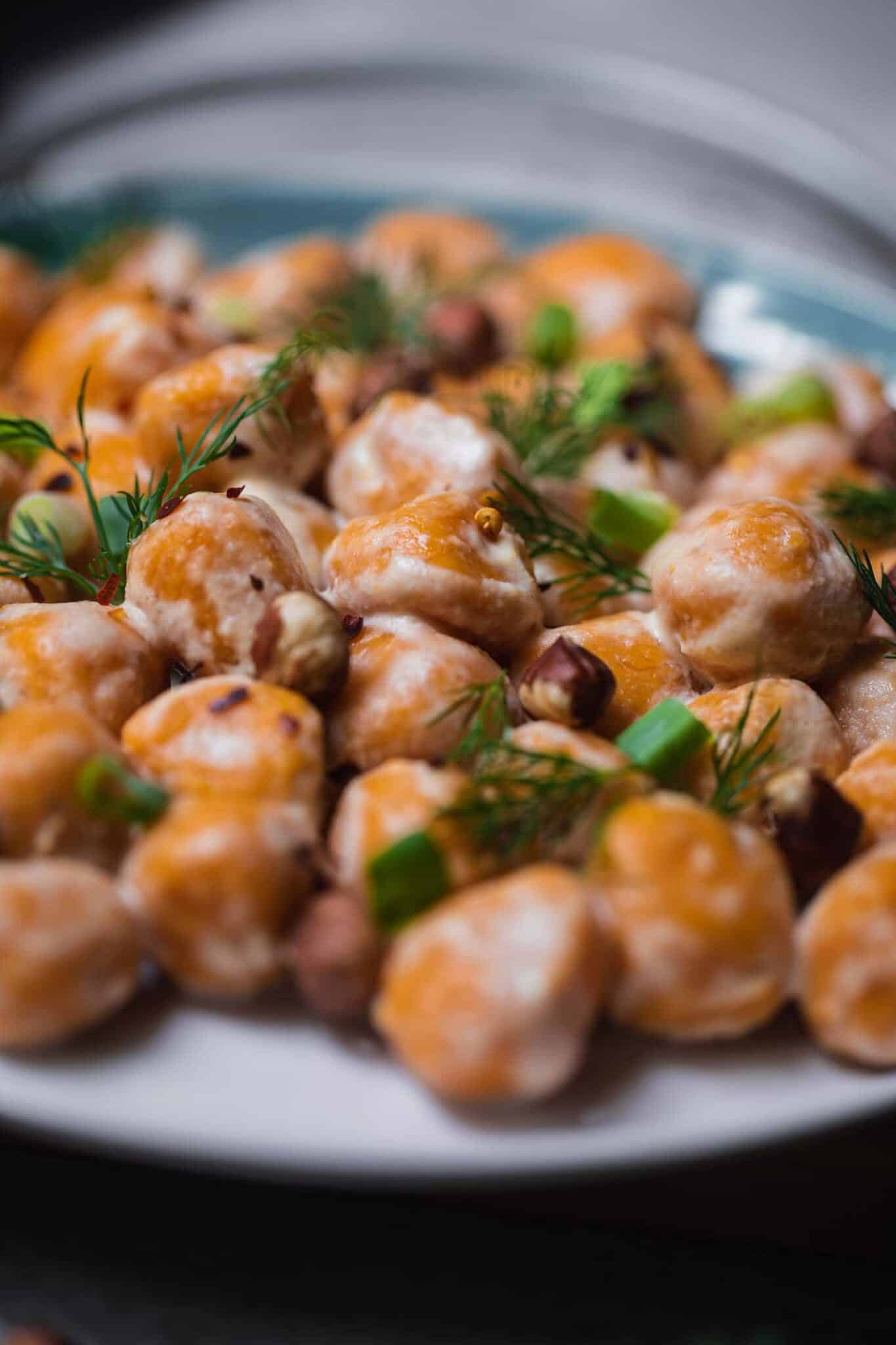
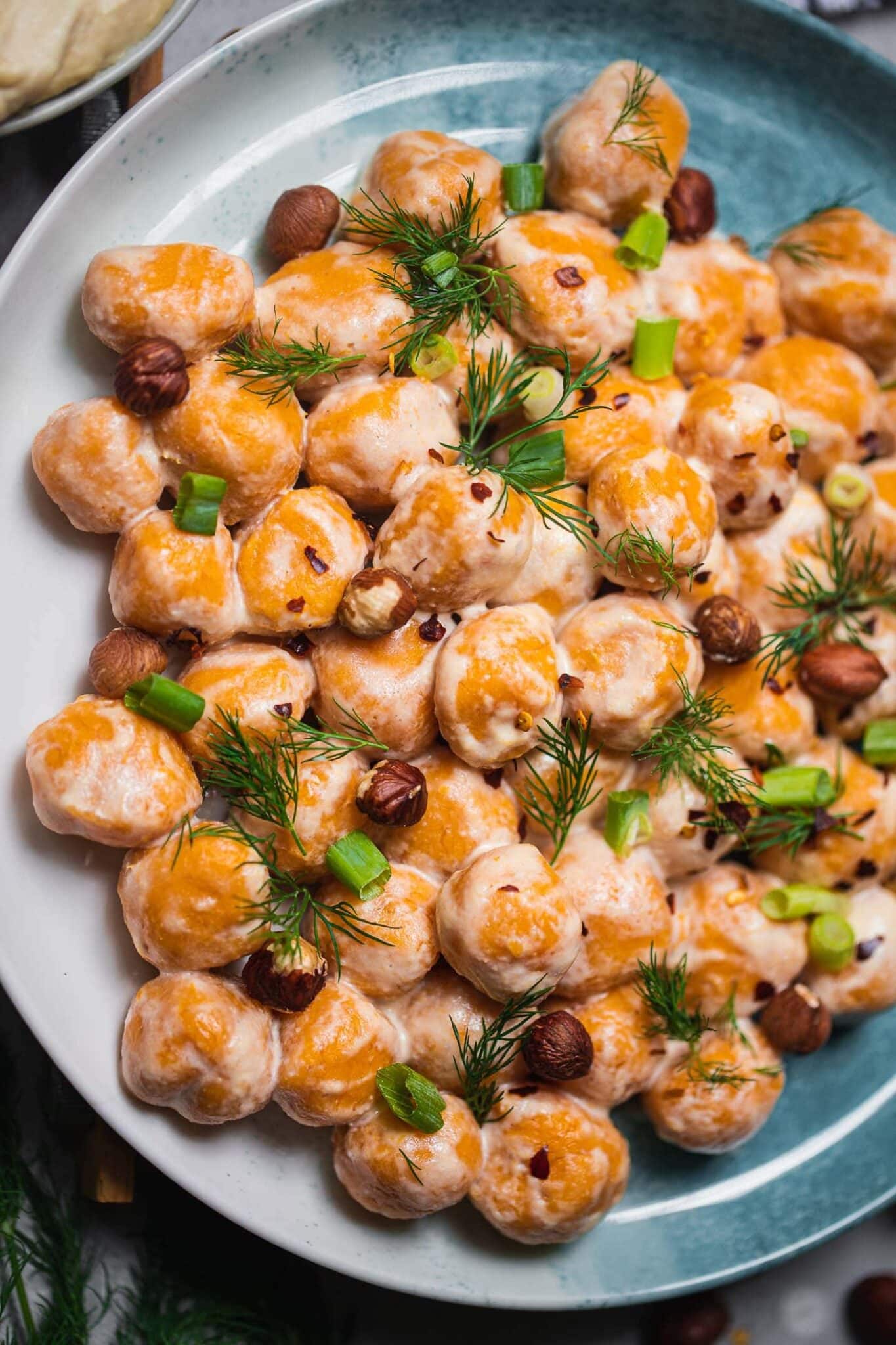
Sweet potato gnocchi are wonderful kept simple: toss them in melted vegan butter with fresh sage and a pinch of salt, or crisp them in a skillet and finish with a squeeze of lemon. Here we served them with vegan sour cream, then topped them with fresh dill, sliced green onion, toasted hazelnuts and a few chili flakes for crunch and heat.
For a heartier dinner, spoon them into a bowl of vegan bolognese sauce, toss them with basil pesto (the one from our vegan pesto pasta is perfect), or coat them in a creamy vegan alfredo sauce. A green salad or some roasted broccoli on the side rounds out the meal.
Looking for more ways to use the season's favorite root vegetable? Browse our collection of vegan sweet potato recipes, or our round-up of vegan gluten-free recipes if you're cooking for a gluten-free table.
Storing & Freezing
Store cooked gnocchi in an airtight container in the refrigerator for up to 3 days. Toss them with a little oil first so they don't stick together. Reheat them in a skillet with a splash of oil or vegan butter, which also crisps them nicely, or warm them through in your sauce. Uncooked, shaped gnocchi are best frozen rather than refrigerated, since the dough softens as it sits.
Gnocchi freeze exceptionally well, which makes this a great batch-cooking recipe. Arrange the uncooked, shaped gnocchi on a floured baking sheet so they aren't touching and freeze for 2 to 3 hours, until firm. Transfer them to a freezer bag or container and freeze for up to 3 months. Cook them straight from frozen in gently boiling salted water, adding a minute or two to the cooking time. There's no need to thaw first.
More Vegan Gnocchi & Pasta Recipes
If you loved this recipe, here are a few more you might enjoy:
- Gnocchi with Vegan Sausage and Gravy
- Quick Gnocchi with Beans and Greens
- Vegan Pumpkin Mac and Cheese
- Roasted Butternut Squash and Pasta Casserole
Recipe

Vegan Sweet Potato Gnocchi (gluten free!)
Soft, pillowy vegan sweet potato gnocchi made with roasted sweet potato and gluten-free rice, tapioca and chickpea flours. Egg-free, dairy-free and freezer-friendly, they're perfect with your favorite sauce.
Print
Pin
Save
Servings: servings
Equipment
- Conventional oven
- Mixing bowl
- Potato masher
- Saucepan
Ingredients
- 15 oz sweet potato about 2 medium
- 1 teaspoon sea salt
- 1 tablespoon ground flaxseed
- 3 tablespoon water for the flax egg
- ¾ cup rice flour + 2 tbsp, plus more for dusting
- ¼ cup tapioca flour
- ¼ cup chickpea flour plus more as needed
Instructions
- Preheat the oven to 400°F (200°C). Prick the sweet potatoes a few times with a fork, place them on a lined baking sheet and bake for 45 to 50 minutes, until completely soft and caramelized at the edges.
- While the potatoes cool, stir the ground flaxseed and water together in a small bowl and let it sit for about 10 minutes to thicken. Once the potatoes are cool enough to handle, peel off the skins and mash the flesh in a mixing bowl with a potato ricer or masher until completely smooth. Let it cool to room temperature.
- Add the sea salt and flax egg to the mashed sweet potato and stir well. Mix in the rice flour and tapioca flour until combined.
- Add the chickpea flour and knead gently just until a soft dough forms. If the dough is very sticky, add more chickpea flour a tablespoon at a time, but don't overdo it or the gnocchi will be dry and dense.
- Turn the dough out onto a surface well dusted with rice flour and cut it into quarters. Roll each quarter into a rope about ¾ inch thick and cut it into 1-inch pieces. Roll each piece into a ball, or press gently with a fork for ridges.
- Bring a large saucepan of salted water to a gentle boil. Add the gnocchi in batches so the pot isn't crowded and cook for 3 to 5 minutes, until they float to the surface. Remove with a slotted spoon and repeat with the remaining gnocchi. Serve with your favorite sauce.
Video
Notes
Flour amounts: Sweet potatoes vary in moisture, so add the chickpea flour gradually. The dough should be soft and slightly tacky, not stiff. Test-cook one gnocchi before shaping the whole batch; if it falls apart, knead in another tablespoon of chickpea flour.
Gluten-free: All the flours are naturally gluten-free. For celiac-safe gnocchi, choose flours labeled certified gluten-free.
To freeze: Freeze the uncooked, shaped gnocchi on a floured tray until firm, then transfer to a freezer bag for up to 3 months. Cook from frozen, adding 1 to 2 minutes.
Nutrition (Estimate per Serving)
Calories: 269kcalCarbohydrates: 57gProtein: 6gFat: 2gSaturated Fat: 1gSodium: 645mgPotassium: 465mgFiber: 5gSugar: 5gVitamin A: 15082IUVitamin C: 3mgCalcium: 45mgIron: 1mg
Vegan-ize any recipe!Grab our free vegan cheat sheet, packed with my favorite easy substitutions to make any recipe vegan.
Vegan Thai Pineapple Stir-Fried Rice
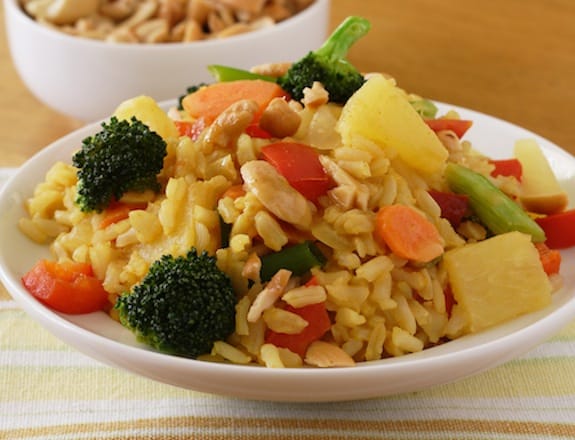
Colorful and luscious, this Thai restaurant classic can be made easily at home, using brown rice, pineapple, and veggies like broccoli, bell peppers, and carrots. When fresh pineapple is in season and reasonably priced, try this stir-fried rice recipe with the fresh fruit! Adapted from Vegan Express. Photo by Susan Voisin. [Read more...]
Pasta with Greens, Chickpeas, and Olives
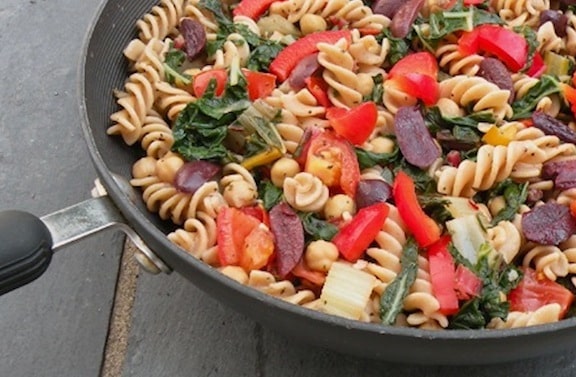
This quick and nourishing pasta recipe combines greens with chickpeas and olives for a tasty, healthy dish. Specifically, this recipe calls for chard, kale, or spinach, but you can use a combination or even substitute broccoli rabe or mustard greens. My personal favorite in this dish is chard, as it's so good in the Italian-style trio of pasta with greens and legumes. Just add a colorful salad and you've got a meal. Recipe from Wild About Greens* by Nava Atlas.
Super-Easy Vegan Tortilla Casserole
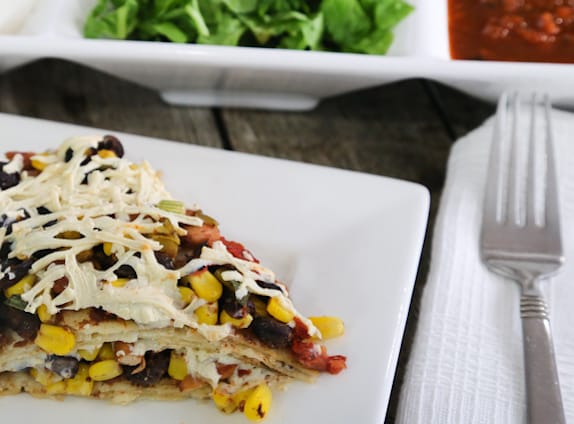
This Super-Easy Vegan Tortilla Casserole is my favorite in-a-hurry casserole filled with southwestern flavors. The recipe involves throwing together a lot of convenient ingredients like canned beans and tomatoes, and frozen corn, but it's unbelievably good when you need an emergency dinner. While it's in the oven, steam a big batch of broccoli or prepared stir-fried collard greens, and make a salad or a raw veggie platter. Adapted from Vegan Express. Photos by Evan Atlas. [Read more...]
Black Bean Salad with Tomatoes, Olives, and Croutons
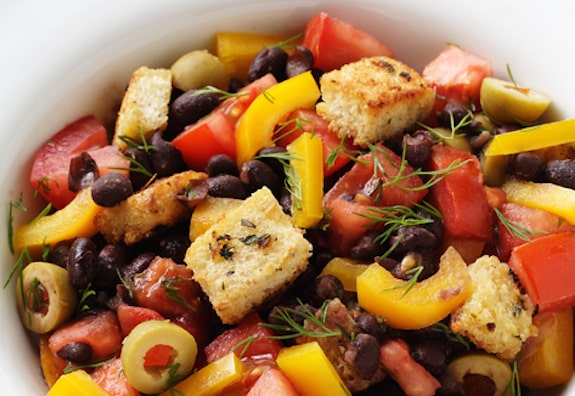
This easy and appetizing black bean and tomato salad adds color and crunch to the plate. Use gluten-free croutons if need be, or replace with sautéed cubes of prepared polenta. Serve this delicious recipe with grain dishes and pastas, or simple quesadillas or soft tacos. Add some sautéed greens or steamed broccoli and you've got a great weekday meal! Adapted from Vegan Express. Photo by Susan Voisin, FatFree Vegan Kitchen. [Read more...]
Vegan Pizzadillas (Pizza + Quesadilla)

This recipe for Vegan Pizzadillas, a fast and fun dinner idea, is a mash-up of pizza and quesadillas. Basically, you're filling soft taco-size tortillas with the kinds of ingredients you'd use for making pizza-marinara sauce, vegan cheese, and lots of veggies. And you can just wing it as far as measurements, too.
About the Recipe
For a one-person meal, cut the recipe in half. All you need to complete this meal is a substantial salad with some cooked quinoa, beans or chickpeas, and/or sunflower seeds for a protein boost. This serves 2 hungry people or 4 moderately (1 or 2 pizzadillas per serving). Photos by Hannah Kaminsky.
Ginger Grilled Tofu

This Ginger Grilled Tofu recipe goes well with many vegetables-steamed, braised, or wok stir-fried: broccoli, carrots, green beans, peppers, and green onions, depending on the season. Serve this dish with white rice or soba noodles to stay in an Asian theme.


Recipe

Ginger Grilled Tofu
This Ginger Grilled Tofu recipe goes well with many vegetables—steamed, braised, or wok stir-fried: broccoli, carrots, green beans, peppers, and green onions, depending on the season.
Print
Pin
Save
Servings:
Ingredients
- 1 block firm tofu chopped into small cubes
- 3 tablespoon soy sauce
- 1 tablespoon rice vinegar
- 1 ½ tablespoon avocado oil
- ½ tablespoon grilled sesame oil
- 4 teaspoon fresh ginger grated
Instructions
- Cut the tofu into cubes. Arrange the cubes in a single layer in a baking dish.
- In a bowl, combine soy sauce, rice vinegar, and oils. Grate the ginger and add it to the mixture. Mix well and pour over the tofu. Marinate 20 min.
- Preheat oven 400°F.
- Cook the tofu with the marinade in the center of the oven for 15 min.
- Serve with fried rice, if desired.
Nutrition (Estimate per Serving)
Calories: 155kcalCarbohydrates: 3gProtein: 10gFat: 11gSaturated Fat: 1gPolyunsaturated Fat: 4gMonounsaturated Fat: 6gSodium: 758mgPotassium: 37mgFiber: 1gSugar: 1gVitamin C: 1mgCalcium: 127mgIron: 2mg
Vegan-ize any recipe!Grab our free vegan cheat sheet, packed with my favorite easy substitutions to make any recipe vegan.
Nearly-Instant Thai Coconut Corn Soup
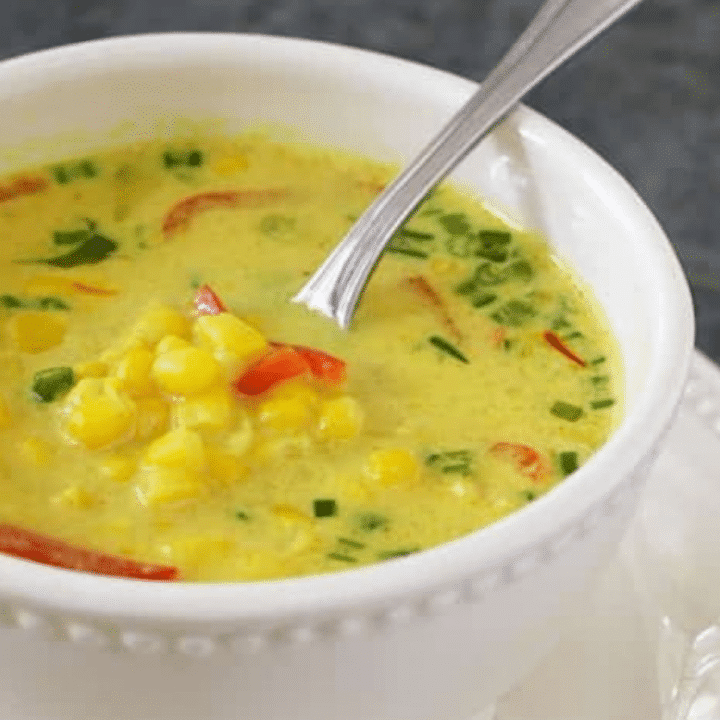
This Nearly-Instant Thai Coconut Corn Soup is creamy, golden, and gently spiced, with sweet corn, strips of red bell pepper, and scallions simmered in coconut milk and curry powder. It's ready in about 20 minutes, and it's just as good chilled on a hot day as it is steaming on a rainy one.

Photo by Susan Voisin, FatFree Vegan Kitchen.
Because it leans on frozen corn and canned coconut milk, this is a soup you can pull together from the pantry and freezer on a busy weeknight. There's no blending and no long simmer: soften the aromatics, pour in the liquids, and give it five minutes on the stove. A squirt of Sriracha and a handful of fresh cilantro at the end give it just enough heat and brightness to taste like far more effort than it is.
Key Ingredients & Substitutions
- Coconut milk. Two cans of light coconut milk make a silky broth that's rich without being heavy. Full-fat coconut milk gives you a more indulgent soup; if you use it, consider replacing one can with about 1 ¾ cups of vegetable broth so it doesn't turn too rich.
- Rice milk. Plain unsweetened rice milk thins the coconut milk to a spoonable consistency and keeps the flavor neutral. Any unsweetened nondairy milk works in its place (soy, oat, or almond), but skip vanilla or sweetened versions. Low-sodium vegetable broth is another option if you'd like a lighter, more savory soup.
- Frozen corn. Frozen kernels are picked and frozen at peak sweetness, which is what makes this soup good year-round. There's no need to thaw them first; they go straight into the pot. In late summer, fresh corn is even better (see Variations).
- Curry powder. A good curry powder gives the soup its golden color and warm, rounded spice. Blends vary a lot in heat and intensity, so start with 2 teaspoons and add more at the end if you like. For a more distinctly Thai flavor, use 1 to 2 tablespoons of Thai red or yellow curry paste instead; check the label, since some brands contain shrimp paste or fish sauce.
- Red bell pepper. It adds color, sweetness, and a little texture against the soft corn. An orange or yellow pepper works just as well. For more heat, sauté a minced jalapeño or Thai chile along with the garlic.
- Scallions and cilantro. The white parts of the scallions are sautéed with the garlic to build a mellow base, while the greens go in later so they stay fresh and bright. If you're not a cilantro fan, use Thai basil or simply more scallion greens.
- Sriracha. A few squirts of Sriracha add garlicky heat. Dried hot red pepper flakes or any hot sauce you like can stand in.
Helpful Tips
Prep everything before you turn on the heat. This soup moves fast, so have the garlic minced, the pepper cut, and the scallions sliced before you start. Keep the white and green parts of the scallions in separate piles, since they go into the pot at different times.
Keep the simmer gentle. Bring the soup up to a rapid simmer to heat the frozen corn quickly, then turn the heat down right away. Coconut milk that boils hard for a long time can separate and look curdled. It still tastes fine, but a gentle simmer keeps the broth smooth and glossy.
Season at the end, a little at a time. Canned coconut milk and nondairy milks vary in salt, and curry powders vary in heat, so wait until the soup is hot to season it. Add salt, pepper, and Sriracha in small amounts, tasting as you go.
Finish with lime. A squeeze of fresh lime juice just before serving brightens the coconut milk and makes all the flavors pop. Serve lime wedges at the table so everyone can add as much as they like.
Mash some of the corn for extra body. If you'd like a thicker, chowder-like texture, press a potato masher into the pot a few times once the corn is tender, or blend about a cup of the soup and stir it back in. The starch from the crushed kernels thickens the broth without any flour or cornstarch.
Variations
- Fresh corn. When you're in less of a hurry, use the kernels from 4 to 5 medium ears of lightly cooked fresh corn. Stand each cooled ear on its end and strip the kernels off with a sharp knife.
- With tofu. Stir in cubes of extra-firm or baked tofu along with the corn to turn the soup into a more filling main dish.
- Curry paste. Swap the curry powder for 1 to 2 tablespoons of vegan Thai red or yellow curry paste, stirring it into the sautéed aromatics for a minute before adding the liquids.
- Ginger and lemongrass. Sauté a tablespoon of grated fresh ginger with the garlic, and simmer a bruised stalk of lemongrass in the soup. Remove the lemongrass before serving.
- Extra greens. Add a couple of handfuls of baby spinach or thinly sliced bok choy in the last minute of cooking, just until wilted.
- Sweet potato and corn. Add a small diced sweet potato with the liquids and simmer about 10 minutes longer, until tender, for a heartier soup.
Serving Ideas
On its own, this soup makes a light lunch or a first course. For a fuller Thai-inspired meal, pair it with Tofu Spring Rolls, a plate of Vegan Pad Thai, or Vegan Thai Tofu & Broccoli over rice. A scoop of jasmine rice right in the bowl also makes it more substantial.
Corn and cornbread are a natural pair, so a square of Easy Vegan Cornbread on the side is never a bad idea. And on a hot day, serve it chilled in small cups or bowls as a starter; if you enjoy cold soups, Cold Tomato-Mango Coconut Soup is another refreshing one to try.
Storing & Freezing
Let leftovers cool, then refrigerate them in an airtight container for up to 4 days. The soup thickens as it sits, and the coconut fat may firm up on top; just stir it back in as you reheat gently on the stovetop, adding a splash of nondairy milk or broth if it's too thick. If you plan to serve it cold, it's ready to ladle straight from the fridge after a good stir and a taste for seasoning.
The soup can be frozen for up to 2 months, though the texture changes slightly: the coconut milk may look a little grainy after thawing, and the bell pepper softens. Thaw it overnight in the refrigerator, then reheat over medium-low heat, whisking well to bring the broth back together. For the freshest flavor, stir in new cilantro and scallion greens after reheating rather than before freezing.
More Vegan Soup Recipes
If you loved this recipe, here are a few more you might enjoy:
- 30-Minute Coconut Curry Pumpkin Soup
- Creamy Corn Chowder
- Vegan Butternut Squash, Sweet Potato & Corn Chowder
- Creative Vegan Corn Recipes
Recipe

Nearly-Instant Thai Coconut Corn Soup
A creamy, golden Thai-style soup of sweet corn, red bell pepper, and scallions simmered in coconut milk with curry powder. It's ready in about 20 minutes and is just as good served chilled on a hot day.
Print
Pin
Save
Servings: servings
Ingredients
- 1 tablespoon neutral vegetable oil or coconut oil
- 3-4 cloves garlic minced
- 4-5 scallions thinly sliced, white and green parts kept separate
- 1 medium red bell pepper cut into short, narrow strips
- 2 15-ounce cans light coconut milk
- 1 ½ cups Unsweetened rice milk or other nondairy milk
- 16 oz frozen corn kernels about 3 cups; no need to thaw
- 2 teaspoon good-quality curry powder or more to taste
- Sriracha or dried hot red pepper flakes, to taste
- salt and freshly ground pepper to taste
- ¼-1/2 cup fresh cilantro chopped, to taste
- 1 lime cut into wedges, for serving (optional)
Instructions
- Heat the oil in a medium soup pot over medium-low heat. Add the garlic, the white parts of the scallions, and the bell pepper. Sauté, stirring often, until the pepper has softened and the garlic is fragrant and just turning golden, 2 to 3 minutes.
- Stir in the coconut milk, rice milk, frozen corn, curry powder, and most of the scallion greens (save a few for garnish).
- Raise the heat to medium-high and bring the soup to a rapid simmer. Lower the heat, cover, and simmer gently for 5 minutes, until the corn is heated through and the pepper is tender.
- Season to taste with Sriracha (or red pepper flakes), salt, and pepper. Stir in the cilantro and remove from the heat.
- Ladle into bowls and top with the reserved scallion greens. Serve hot with lime wedges for squeezing over, or let cool and chill for at least 2 hours to serve cold.
Notes
Fresh corn: When you're in less of a hurry, use the kernels from 4 to 5 medium ears of lightly cooked fresh corn in place of the frozen corn.
Serving it cold: Chill the soup for at least 2 hours. Taste it again before serving, since cold dulls both salt and spice.
Storage: Refrigerate in an airtight container for up to 4 days. The soup can be frozen for up to 2 months; the coconut milk may look a little grainy after thawing, so whisk it well as it reheats.
Nutrition (Estimate per Serving)
Calories: 231kcalCarbohydrates: 24gProtein: 3gFat: 13gSaturated Fat: 10gPolyunsaturated Fat: 2gMonounsaturated Fat: 1gSodium: 299mgPotassium: 183mgFiber: 2gSugar: 7gVitamin A: 786IUVitamin C: 29mgCalcium: 22mgIron: 1mg
Vegan-ize any recipe!Grab our free vegan cheat sheet, packed with my favorite easy substitutions to make any recipe vegan.
Pasta Curry with Cauliflower and Chickpeas

Pasta and veggie combos are always welcome, no matter what time of year. Though not a traditional combination, I long ago discovered that pasta marries well with curry. With the addition of cauliflower and chickpeas, this recipe makes a tasty Italian-Indian fusion dish that's ready in 30 minutes or so. Use a whole-grain or even a gluten-free pasta. This tastes just as good at room temperature as it does warm (or even hot!). Serve with fresh corn during the summer; or any green vegetable for cooler weather meals. Add a big salad and you're all set. Photos by Evan Atlas. [Read more...]
Protein-Packed Plant-Based Lentil Stew

Did you know that a plate of lentils contains the same protein as a portion of meat? You can help our society consume less meat by eating lentils; they're perfect for a healthy, balanced diet! Incorporate lentils into your diet with this cheap, easy stew recipe.

Recipe

Protein-Packed Plant-Based Lentil Stew
Incorporate lentils into your diet with this cheap, easy lentil stew recipe.
Print
Pin
Save
Servings:
Ingredients
- 1 cup brown lentils washed and dried
- 4 cups vegetable broth
- 1 medium onion chopped
- 2 garlic cloves chopped
- 2 celery branches diced
- 4 medium carrots cut into sections
- 1 cup broccoli florets
- 2 to mato boxes with their juice
- 1 teaspoon dried rosemary
- pepper to taste
Instructions
- Combine all ingredients in a large pot.
- Bring to a boil over moderate heat.
- Cover, reduce heat, and simmer for 30 minutes, allowing the lentils to cook to perfection.
- Serve with brown rice.
Nutrition (Estimate per Serving)
Calories: 116kcalCarbohydrates: 21gProtein: 7gFat: 1gSaturated Fat: 1gPolyunsaturated Fat: 1gMonounsaturated Fat: 1gCholesterol: 1mgSodium: 506mgPotassium: 412mgFiber: 9gSugar: 4gVitamin A: 5474IUVitamin C: 15mgCalcium: 38mgIron: 2mg
Vegan-ize any recipe!Grab our free vegan cheat sheet, packed with my favorite easy substitutions to make any recipe vegan.
Healthy Pasta with Vegan Alfredo Sauce

If you've been looking for a healthier alfredo pasta sauce recipe (that's also vegan!), here it is. This one, which you can make with either silken tofu or cannellini beans, is mild and creamy, but harbors a fraction of the fat and calories of the traditional cream-based sauce. While the pasta is tasty in an of itself, what totally makes it for me are the veggie toppings, which can be varied each time. This is delicious with a briny salad like Chickpea and Carrot Salad with Parsley and Olives and some tomato wedges. Photos by Hannah Kaminsky. [Read more...]
Golden Roasted Cauliflower with Red Onion
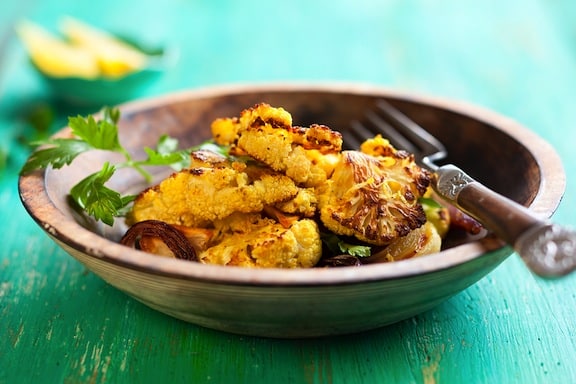
Curry and lemon add an offbeat flavor and vivid color to this roasted cauliflower recipe. Red onion and garlic add depth of flavor. Use on its own as a tasty side dish, or toss with pasta or grains. [Read more...]
Vegan "Vegetable" Noodle Soup

This hearty Vegan "Vegetable" Noodle Soup recipe can help you use up your leftover vegetables and noodles-and it's just as tasty as its classic meat cousin.
I love soups because they are quick to prepare, they use a lot of leftovers (which reduces waste!), and they can be made in advance.
This hearty soup has all the qualities that I look for in a meal: tasty, comforting, nutritious, and especially quick to prepare. It's perfect for cooler days!

Recipe

Vegan "Vegetable" Noodle Soup
This hearty Vegan "Vegetable" Noodle Soup recipe can help you use up your leftover vegetables and noodles—and it's just as tasty as its classic meat cousin.
Print
Pin
Save
Servings:
Ingredients
- 1 tablespoon olive oil
- 1 onion chopped
- 1 carrot chopped into thin half moons
- 2 celery branch finely chopped
- ½ cup broccoli florets
- ½ cup cauliflower florets
- 1 zucchini chopped in half-moons
- 5 cups vegetable broth
- 1 teaspoon salt
- 1 bay leaf
- 1 can diced tomatoes
- 1 cup fettuccini uncooked
Instructions
- In a medium saucepan, add olive oil and cook onion, celery, and carrots for 5 minutes.
- Add vegetable broth, diced tomatoes, broccoli, cauliflower, bay leaf, and salt. Bring to a boil.
- Add the fettuccini. Reduce heat to medium and simmer 8 to 10 minutes, or until noodles are tender.
- Remove from heat. Remove the bay leaf and add the zucchini. Serve.
Nutrition (Estimate per Serving)
Calories: 326kcalCarbohydrates: 58gProtein: 11gFat: 7gSaturated Fat: 1gPolyunsaturated Fat: 1gMonounsaturated Fat: 3gTrans Fat: 1gCholesterol: 50mgSodium: 1955mgPotassium: 680mgFiber: 5gSugar: 10gVitamin A: 3591IUVitamin C: 38mgCalcium: 88mgIron: 3mg
Vegan-ize any recipe!Grab our free vegan cheat sheet, packed with my favorite easy substitutions to make any recipe vegan.
6 Basic Guidelines for the Nutritarian Diet
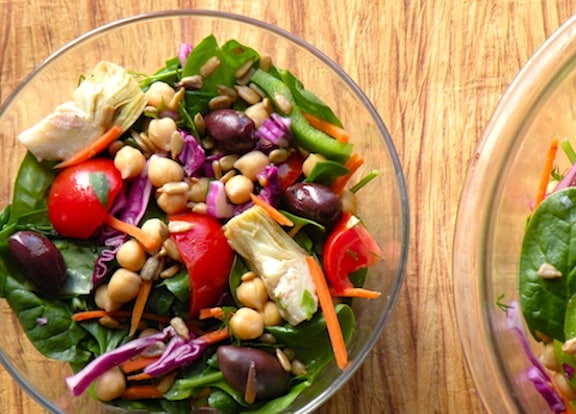
Here are 6 basic guidelines for following a nutritarian diet plan, excerpted from The End of Dieting: How to Live for Life* by Joel Fuhrman, MD. © 2014 HarperOne, reprinted by permission.
Everybody can do this, and here's how. But remember: These are just general guidelines; you don't have to follow them precisely. For example, you can go above or below the general serving recommendations depending on your height and degree of physical activity or exercise. A world-class athlete may need triple the calories of a sedentary office worker.
This article was written by Dr. Joel Fuhrman. You can learn more about him at Dr. Fuhrman
6 Basic Guidelines for the Nutritarian Diet
To call yourself a nutritarian, follow these six basic guidelines:
1. Eat a large salad every day as your main dish.

This salad should include lettuce, tomatoes, shredded onion, and at least one shredded raw cruciferous vegetable, such as chopped kale, red cabbage, nappa cabbage, arugula, watercress, or baby bok choy.
Use a variety of greens, including romaine, mixed greens, mesclun mix, arugula, baby spinach, Boston lettuce, and watercress.
For added veggies, choose from red and green bell peppers, cucumbers, carrots, bean sprouts, shredded red or green cabbage, chopped white and red onions, lightly sautéed mushrooms, lightly steamed and sliced zucchini, raw and lightly steamed beets and carrots, snow peas, broccoli, cauliflower, and radishes. I often add some frozen peas and beans to my salads too.
Add a healthy dressing (one that is nut and seed based). I usually make a huge salad, share it with family members, and have enough left over for later in the day or the next day. Remember, for superior health, the green salad is the main dish, not the side dish.
For inspiration, browse my vegan salad recipes!
2. Eat at least a half cup, but preferably closer to 1 cup, of beans a day.

This means eating a bean burger, a bean loaf, or a veggie-bean soup or putting beans on your salad or in a stew or chili in the evening.
In our household, we almost always make a giant pot of veggie bean soup once a week. After eating the soup that day, I portion it into eight containers and refrigerate or freeze it so I can take it to work with me or use it when I need it.
Quick tip: Use some of the soup you made as a unique salad dressing base by adding some flavored vinegar and nuts. Blend in a high-powered blender until smooth.
3. Eat one large (double-size) serving of lightly steamed green vegetables a day.
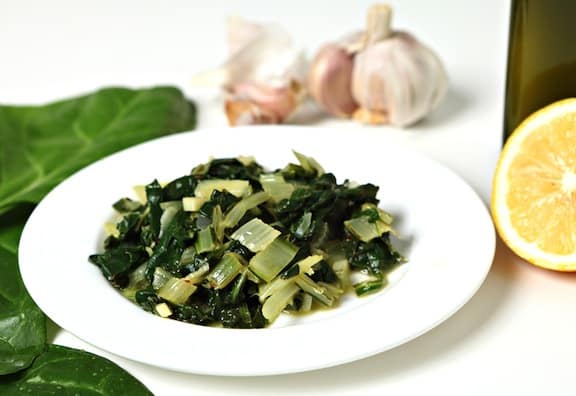
This means a bowl of asparagus, chopped kale with a delicious mushroom/onion sauce, green beans, steamed zucchini, bok choy, artichokes, cabbage, or collard greens.
Don't overcook greens; thirteen minutes of steaming is plenty. The longer you cook them, the more micronutrients you burn off, which wastes the effects of phytochemicals.
Green vegetables need to be fully chewed (to the consistency of nearly liquid in your mouth) for you to fully benefit from their anticancer phytonutrients.
4. Eat at least 1 ounce of nuts and seeds per day if you're female and at least 1.5 ounces of nuts and seeds per day if you're male.
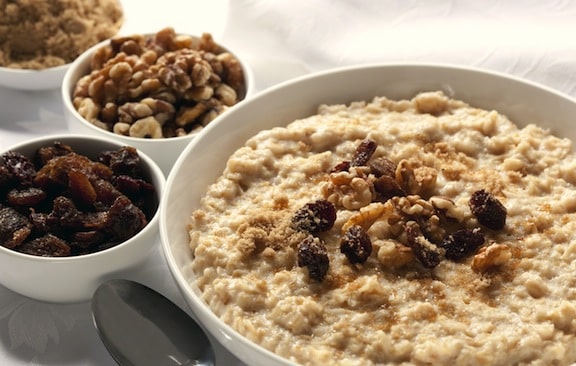
Remember, don't use nuts and seeds as snacks. They are the healthiest way to take in fat with meals and demonstrate a powerful effect on extending the human lifespan. The fat from nuts and seeds, when eaten with vegetables, increases the phytochemical absorption from those veggies.
That's why I typically recommend that nuts and seeds be part of your salad dressing, too. Also, at least half of this intake should be from walnuts, hemp seeds, chia seeds, flaxseeds, and sesame seeds because they have unique protective properties, such as lignans and omega-3 fatty acids.
Eating 3 to 4 ounces of nuts and seeds a day isn't too much if you're active and slim. There's no problem with eating even more than 4 ounces of nuts and seeds per day if you're an avid exerciser or athlete who needs the calories.
I have worked with professional football players and Olympic skiers who follow this diet style; obviously, they need lots more seeds and nuts, and other food too.
Eat nuts and seeds raw, or just lightly toasted, because the roasting process alters their beneficial fats. Commercially packaged nuts and seeds are also frequently cooked in oil and are heavily salted.
If you want to add some flavor, lightly toast seeds and nuts in a toaster oven on one low toasting cycle. This doesn't deplete their beneficial properties.
Don't toast to the point of dark browning, however, as this can cause carcinogenic compounds called acrylamides to be formed. You can also bake them in a 250°F oven for about fifteen minutes, or until very lightly browned.
5. Eat mushrooms and onions every day.

Both mushrooms and onions have powerful anticancer benefits. Mushrooms are better eaten cooked because some mushrooms contain a mild carcinogen called agaritine. It is gassed off during cooking.
Only the Agaricus genus of mushrooms-which includes the common white, brown, button, cremini, and portobello mushrooms-contains agaritine. Shiitake, chanterelle, enoki, morel, oyster, and straw mushrooms belong to different genera that don't contain agaritine. But they should also be cooked to reduce the risk of any potential contamination with microbes.
It's still not entirely clear whether agaritine is a health risk, but play it safe and cook most of your mushrooms with your other vegetables, or water-sauté them in a wok or other pan. Keep a container of cooked mushrooms in your fridge to add to salads and vegetable dishes regularly.
6. Eat three fresh fruits a day.

Fresh fruits aren't just nutritious and delicious, they also protect against disease. The phytochemicals in fruits have anticancer effects, and berries have even been shown to protect the brain from dementia in later life. Try to eat one serving of berries or pomegranate a day as part of your total fruit intake.
When eaten with a meal, vegetables dilute and slow your body's absorption of glucose and fructose, so it's best to eat fruit as part of your vegetable-based meal, either mixed in with your salad or as a dessert.
If you're physically active, you can certainly eat more than three fruits a day, but it's still best to avoid fruit juice and too much dried fruit, such as dates, raisins, figs, and prunes, because they are calorically dense and could elevate your blood sugar if you eat them in large amounts.
When making a recipe or dessert that contains dried fruit for flavor and sweetness, limit the amount to 2 tablespoons per serving. That means one Medjool date or two Deglet Noor dates per dessert serving; otherwise, you could be consuming too much simple sugar.
That's it. Six simple guidelines to follow.
That's not so difficult to do, is it? Can you imagine what would happen if everyone in the United States followed these guidelines?
- We would stop the healthcare crisis in its tracks and save billions of dollars on medical expenses.
- We would save millions of lives from premature death.
- We would reduce rates of heart disease, stroke, dementia, and cancer by more than 80 percent.
- We would have less crime, and a more successful, intelligent, and productive workforce.
- We would have many fewer people in nursing homes, fewer stroke victims, and fewer elderly people suffering from dementia and unable to enjoy life.
Nutritarian Daily Checklist
Make copies of this chart and check off each point each day.
- Eat a large salad as the main dish for at least one meal.
- Eat at least a half cup, but preferably closer to 1 cup, of beans.
- Eat one large (double-size) serving of steamed green vegetables.
- Eat at least 1 ounce of nuts and seeds if you're female and at least 1.5 ounces of nuts and seeds if you're male. Half of them should be walnuts, hemp seeds, chia seeds, flaxseeds, or sesame seeds.
- Eat some cooked mushrooms and raw and cooked onions.
- Eat at least three fresh fruits.
More
For more tips on plant-based nutrition, make sure to browse VegKitchen's Healthy Vegan Kitchen resources.
Green Noodles

This easy pasta dish with a very green sauce (made of pureed green peas and broccoli) is great for kids who don't mind a bit of green on their plate. Simple and tasty, you don't have to be a kid to enjoy it! Photos by Lori Maffei. [Read more...]
Healthy Vegan School Lunch Ideas
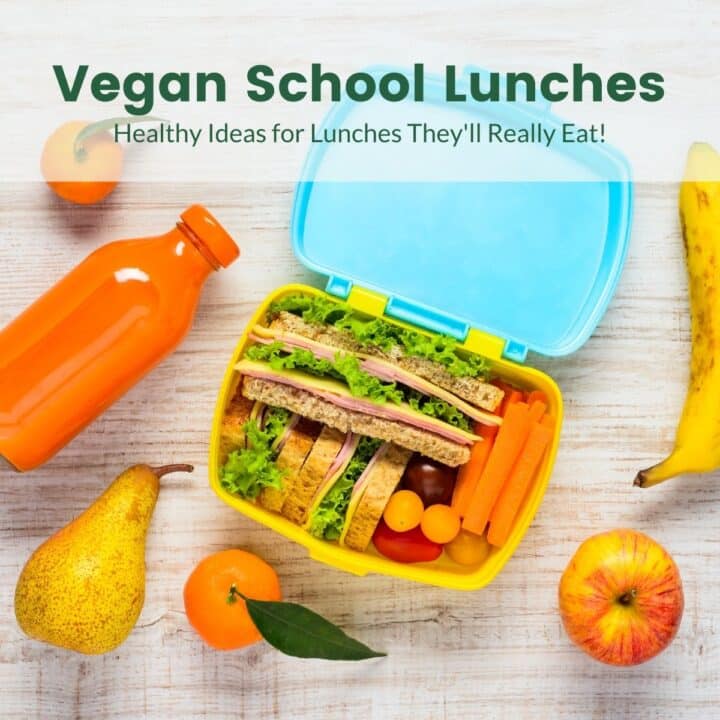
Summer always seems to disappear quickly, and back-to-school days find parents scrambling to get the kids ready. One thing you can check off your to-do list is finding healthy school lunch recipes.

If your child is vegan or vegetarian, that adds to the challenge. Don't despair! With our handy list of recipes and ideas, creating easy, tasty school lunches will be a breeze.
And, if you like the idea of having all of our best school lunch ideas, tips, and tricks in one neat package, you may want to check out our Healthy Plant Based School Lunches E-Book.
Here are some of the tips that will keep you sane from the first day of school to the last:
1. Keep your lunch-making supplies together.
Keeping everything you need for prepping lunches in one place makes for a much more efficient morning "rush hour." In one cabinet, you can store the lunch boxes, sandwich bags, thermoses, plastic spoons and forks, toothpicks, and small plastic storage containers. I also keep packaged snacks with these supplies for easy access.
2. Stock up on cold packs.
Make sure you have plenty of freezer packs available at the start of the school year. Somehow these things never make it back into my freezer in the evening, so having spares is essential. I like these slim ones that are easy to stack together in the freezer.
3. Vary the types of bread used for sandwiches.
Bagels, rolls, pita pockets, English muffins, raisin bread, and even fresh flour tortillas or "wraps" can add interest to standard sandwich fare. Check out our sandwich and wrap recipes for ideas.

4. Consider a thermos.
Dishes that taste just as good warm or at room temperature are more successful than those that need to stay hot (but usually don't).
If your child's school has a microwave available, your thermos offerings can include macaroni and cheese, soups, and leftover casseroles.

5. Make fruit appealing.
Fruit packed into lunch boxes can come home uneaten unless you try some simple tricks. Small chunks of fruit, such as strawberries, grapes, melon, tiny seedless orange sections, and such, served on a skewer (long cocktail toothpicks are perfect), are always eaten.
Similarly, apple slices are more likely to be eaten if you supply a tiny container of peanut butter to dip them into.

6. Raw vegetables are better with dip.
When sending carrots (or baby carrots), celery, bell peppers, etc. - cut them into strips and add a tiny container of your child's favorite dressing or dip.
Natural store-bought or homemade hummus is a great choice, as is vegan ranch dressing. Add wedges of pita bread for dipping, too.

7. Cereal is an unexpected treat at lunch.
Pack some nutritious cereal in a lidded bowl-shaped container, and your child can add his or her favorite nondairy milk to it (vanilla almond milk is particularly good with cereal) when it's time to eat.
Teamed with a banana, this makes a filling meal. And it's always fun to eat breakfast at "weird" times.

8. Make wholesome homemade muffins.
Muffins are always a crowd pleaser, and it's super easy to make tasty ones that are actually healthy too.
Check out these Chocolate Chip Banana Muffins or these Magic Vegan Muffins for starters.
Pack a wedge of vegan cheese or a container of coconut yogurt, plus fresh fruit to go along with them.

9. Salads in pita bread or in wraps appeal to kids with more adventurous palates.
Augment simple salads of lettuce, tomato, peppers, and cucumbers with chickpeas, chunks of baked tofu, chickpeas or other beans, and grated nondairy cheese.
Keep pita sandwiches fresh by wrapping them first in foil, then placing them in sandwich bags.

10. Expand on PB & J.
Try cashew, almond, or sunflower butters, and no-sugar added fruit spreads or apple butter for a change of pace.

11. Pack a veggie burger.
Veggie burgers make a surprisingly good packed lunch. Serve it on a whole grain roll or English muffin, with your child's favorite condiments for a fun surprise.

12. Faux meats can expand lunch box variety.
Vegan deli slices might especially appeal to teens. "Chicken" or "turkey"-style slices on soft whole grain bread appeal to tastes of any age.
Veggie Deli Heroes with Herb Mayonnaise are a great choice that will appeal to older kids and teens.

13. Vegan "Tuna"or "egg" salads.
These are delicious stuffed into pitas or in sandwiches. Check out these recipes for "Tofuna" Salad Sandwich Spread; Tofu Eggless "Egg" Salad; and Sharon's Chickpea Salad or Sandwich Spread) to get you started.
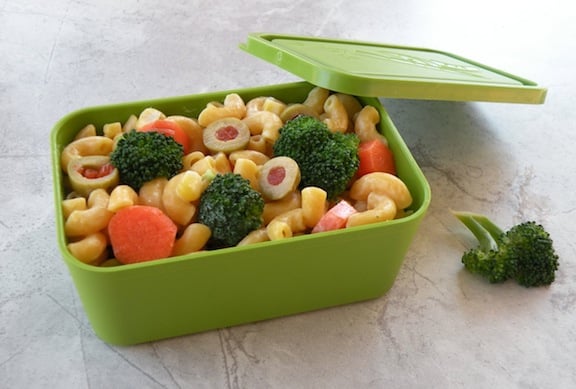
13. Pasta salad is an appealing lunch option.
Use small shapes such as elbows, wagon wheels, shells, or tiny tubes, which pack well into containers.
Add your child's favorite veggies-steamed broccoli, peas, corn and carrots, plus olives and their favorite dressing can add up to nice lunch box fare.
Check out all my favorite pasta salad recipes here.

14. Wholesome homemade cookies.
Cookies make a perfect after-school snack when served with almond milk. And the next day, you can pack the extras in their lunch box. Check out these vegan cookie recipes to get baking!
SCHOOL SNACKS
Snacks packed for school, whether for snack time or as an extra treat for the lunch box, should be simple and neat.
Explore natural foods stores for packaged snack ideas. Their cookies, cereals, fruit bars, and such, are often naturally sweetened and low in fat.
Similarly, natural chips, rice puffs or crisps, and other crunchy snacks have less salt and fat than their supermarket counterparts.
Prices can sometimes (but not always) be a little higher, but you're getting more value for your money.
Here are some suggestions for school snacks:
- Natural fruit leathers (or make your own fruit leather!)
- Low-fat fruit and cereal bars
- Granola bars
- Good-quality, non-frosted toaster tarts
- Dried fruit, such as apple rings or apricots
- Trail mix (dried fruits with nuts and seeds)
- Rice cakes or mini-rice cakes
- Individual containers applesauce or fruit cup
- Naturally sweetened cereal
- Graham crackers
- Sesame breadsticks
- Fruit-sweetened cookies
- Bagel crisps
- Baby bananas
- Small seedless oranges
More Resources
For more tips on feeding vegan and vegetarian kids, check out these resources:
Vegan Dinner Ideas: Mid-September

Fall is trying to sneak its way into the air; is your palate is ready? At the first hint of autumn I’m ready to turn on the oven to bake sweet and savory fare, and make soups. Potatoes, Corn, and Green Chile Soup is a perfect transitional soup, making use of fresh corn and tomatoes while at the same time serving as warming and comforting fare. Make a big pot of it and enjoy it for a couple of nights’ worth of dinners with a salad or salad-y wraps. [Read more...]
5 Best Vegetables for Acid Reflux and Heartburn — and a Smoothie
It is a well-known fact that diet plays a decisive role in the annoying symptom known as heartburn or acid reflux - often as a trigger, or root cause.
Changing your diet can help resolve heartburn symptoms for the long run. Some foods have substantial alkaline effects that help alleviate acid reflux quickly and effectively.
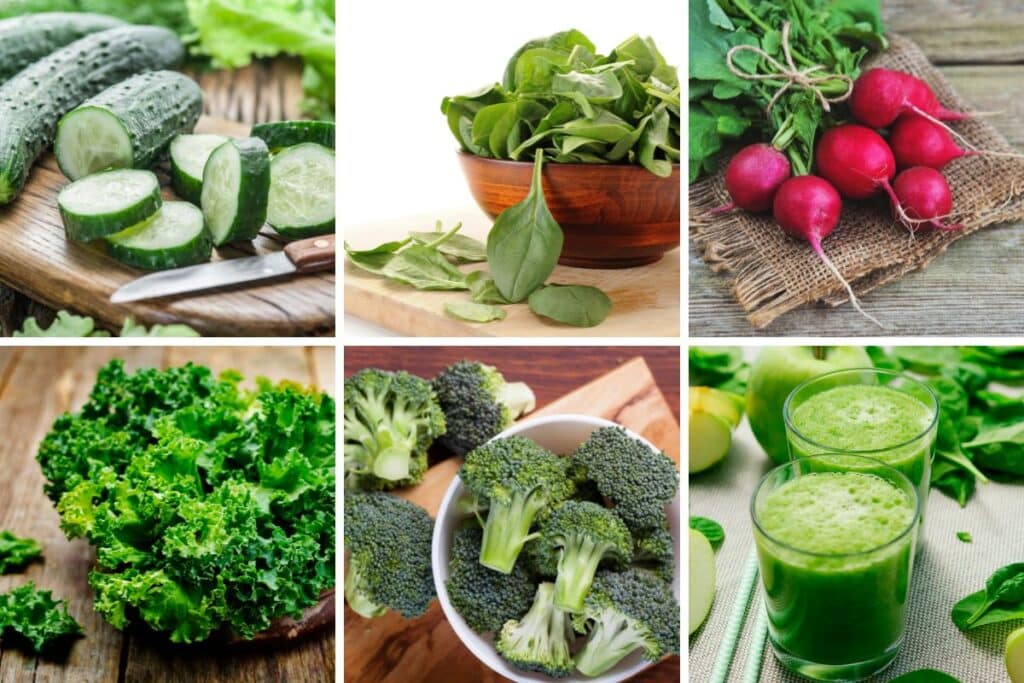
Here, we'll discuss the 5 best vegetables for acid reflux and heartburn - remedies you'll find in any produce section or farm market.
Studies are now showing us that certain unexpected vegetables are in fact great home remedies for acid reflux symptoms. The same studies are also showing that other groceries have so far been overrated as heartburn remedies.
At the end of the article we'll show you an easy and tasty anti-heartburn smoothie recipe, which combines the power of all these natural ingredients.
Home Remedies or drugs?
There are many potential causes for heartburn, and you should always talk to your doctor about the possible root cause. But what can be done if you have acute heartburn right now?
One option is medication, like antacids or PPIs. I assume, as you found your way to this site, that this isn't your goal. And that is very good! Many of the available drugs will indeed help against heartburn, but will often cause more severe or risky side effects.
And here I want to emphasize the "home" in remedy. Ideally you want an effective remedy that you already have at home for other reasons (like food for example).
The goal of this article is to present you with 5 vegetables, which almost everyone already has at home and which are excellent remedies for heartburn, as recent studies show. They act as natural antacids to neutralize stomach acid.
Vegetables for neutralizing stomach acid
Out of pure interest, I always keep one eye on the study situation around acid reflux and heartburn. Because of that I have recently encountered two very interesting, fairly recent studies of that topic.
Both studies research how effectively certain foodstuffs can be used as antacids (for neutralizing stomach acid).
These foods support restoring the natural gastrointestinal balance and the function of this tract. They help buffer the acid reflux, support the digestion process, reduce the burning sensation and soothe the inflamed stomach lining.
The study investigates the antacid effect of several foodstuffs and compares their effects to water and to the active controls: sodium bicarbonate and a marketed antacid (ENO). The foods used during this study were broccoli, cucumber, kale, radish, lemon juice, cold milk and curd.
While lemon juice unsurprisingly fails to deliver antacid effects, all the other foods - broccoli, cucumber, kale, radish, and spinach - proved to be strong antacids.
However, I would like to expressly point out the risks of milk and curd as home remedies for heartburn.
Although these have a positive effect on many people in the short term, as the studies have shown, they are unsuitable for safely fighting heartburn. Cow's milk is both difficult to digest and relatively greasy, and therefore remains in the stomach for a long time, thus stimulating gastric acid production. Hence, I would not recommend the milk products (milk or curd), nor lemon juice at all.
Both studies conclude that the tested foods have significant antacid effects, and can therefore be recommended as anti-heartburn additives for your own diet. All 5 vegetables are highly alkaline, but also extremely healthy in many other regards.
The 5 winners and the benefits for your health
Here is an overview of the 5 tested vegetables and a summary of their benefits to your health.
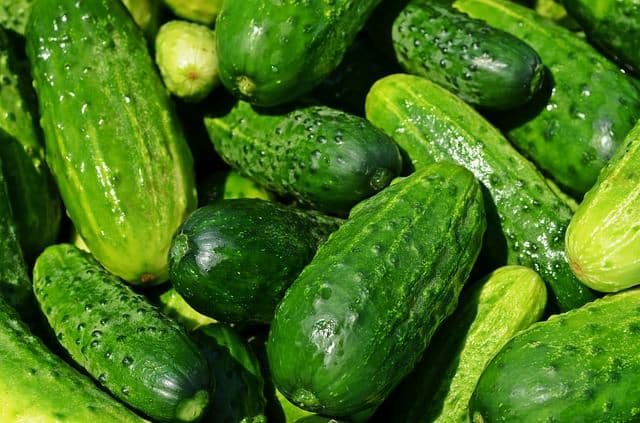
Cucumber
The cucumber includes so-called proteases (enzymes with a protein cleaving function). Thus, cucumber helps to more easily digest protein rich nutrients. The enzymes also clean the intestine by killing bacteria.
Additionally, there are antioxidant substances in a cucumber, which reduce for example the risk of heart diseases.
The cucumber is also one of the most calorie-free foods: one hundred grams contain only about 12 calories. This is mainly due to the high water content (about 95%). So a cucumber can also be a pretty good thirst quencher.
Furthermore, it contains not only water, but also many vitamins such as B (stress control), C (antioxidant - good for the heart), E and minerals like iron, calcium, phosphorus, zinc, magnesium, potassium (sustain healthy blood pressure).
Please note that most of the vitamins actually are in the cucumber peel. So it's best to buy untreated cucumbers or to wash them very well, and eat the skin. And if you use the cucumber as a smoothie or shake ingredient, it is best to blend it with its skin still on.
With regard to heartburn, cucumbers are an alkaline food and thus neutralize acid in the body by increasing the pH value.
Who knew cucumbers were so healthy?! They're also tasty - try them in this hummus and cucumber wrap or this watermelon cucumber cooler.
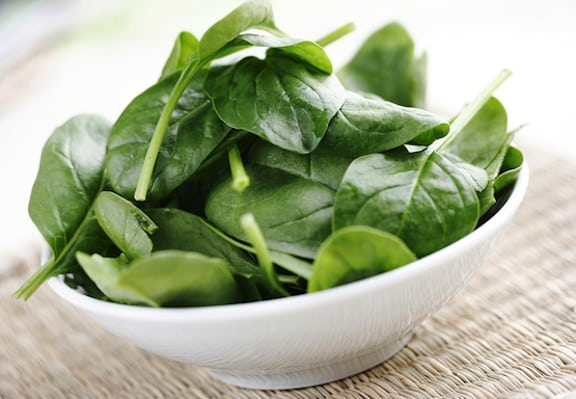
Spinach
Spinach helps against heartburn, as we have shown in the studies above. But this is only one of many benefits of this amazing vegetable.
The alkaline characteristics of the spinach are crucial with regard to heartburn and make it an excellent antacid. But this characteristic is just one of many health benefits.
In short, according to a study by the University of Manchester, spinach is extremely healthy and first and foremost protects the eyes in two ways:
- By a very high percentage of beta carotene, spinach protects against night blindness.
- Through the contained lutein, spinach also protects against AMD, an age-related eye disease.
With one serving of spinach, you cover your daily requirement of beta carotene, vitamin K, fiber and manganese, as well as about half of the magnesium requirement.
Spinach also contains various antioxidants. These have been proven to possess anticancer properties (skin cancer, stomach cancer, breast cancer and prostate cancer).
Furthermore, the magnesium contained in the spinach helps the cardiovascular system by regulating the blood pressure. Even one portion raw spinach salad is sufficient to lower high blood pressure within a few hours.
And if you're looking for some new ways to eat all that spinach - check out this vegan spinach artichoke dip or this Mediterranean Spinach.

Kale
Kale is also a vegetable with highly alkaline properties and therefore suitable as a natural remedy for heartburn.
But just like the other vegetables listed here, this is just the tip of the iceberg. Kale is generally extremely healthy. It contains lots of vitamin K and C, iron, calcium and many antioxidants.
Due to the high quality of the contained protein, it is often recommended as a healthy alternative to animal proteins. As studies prove, kale is a true superfood and possesses various healing effects.
I love kale - this massaged kale salad and this white bean and kale skillet are two of my favorite ways to enjoy it.
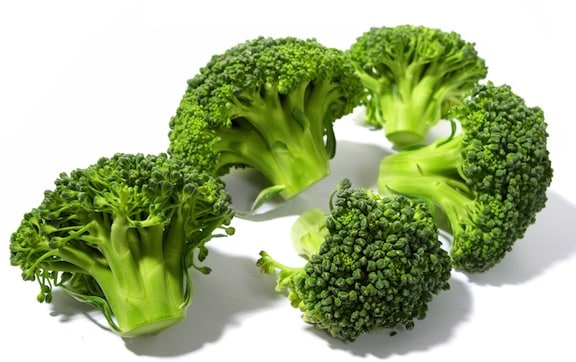
Broccoli
Broccoli is highly alkaline as well and therefore a strong antacid - an excellent food for heartburn. But this is just its side job, so to speak.
Broccoli is also extremely healthy and is one of the great vegetables that have been shown to have a preventive and combative effect on a wide variety of cancers (Study 1 - Ohio State University, Study 2 - University Hospital of Heidelberg/Germany).
However, this topic is beyond the scope of this article. If you are interested in all the details of the anti-carcinogenic properties of the broccoli, I can recommend this summary page from Greenmedinfo to launch for your further reading.
But apart from this sensational property, broccoli can do so much else for your health:
- It strengthens the immune system by possessing a high proportion of beta-carotene, zinc and selenium.
- Broccoli supports the fight against diabetes. The low sugar and high fiber content can be used to minimize insulin requirements.
- The risk of heart disease and stroke is minimized due to lutein, B6 and folate.
- Broccoli contains a lot of vitamin K and the calcium content is even higher than many dairy products. This helps build and maintain a healthy bone structure.
- The amount of potassium, calcium and magnesium supports the regulation of blood pressure.
- It's even known to be a cold remedy, thanks to the vitamin C, antioxidants and inflammation inhibitors.
For tasty broccoli ideas, check out these peanut noodles with broccoli slaw or this Thai Red Curry.
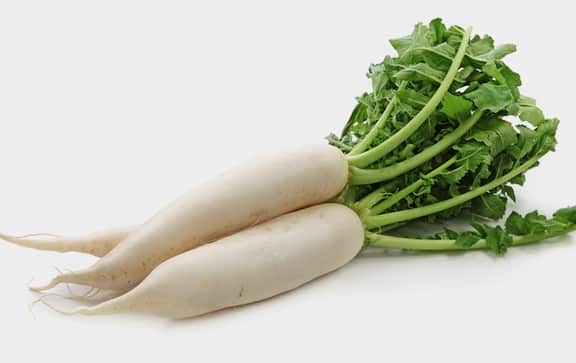
Radish
Radish is a great remedy for heartburn, as already noted above, and it's also very healthy for other reasons. Not everyone likes this root vegetable because of its spiciness.
This characteristic flavor stems from the radish containing a high amount of mustard oils, which are an additional help against your heartburn.
Varieties of radish include horseradish, daikon, red radishes, and many others. Mustard oils soothe the stomach and also lower the production of stomach acid.
Furthermore, the mustard oils have a healing effect on bile and the liver.
Other benefits of radishes are a low calorie and fat content, as well as being rich in vitamin C. Approximately half the daily requirement is covered by just 200 g of radish.
Need a radish recipe? This green pea and radish salad is a winner.
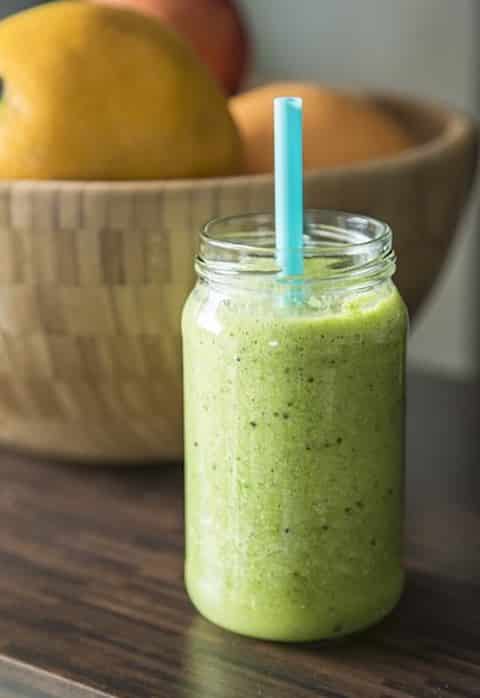
Anti-Heartburn Smoothie
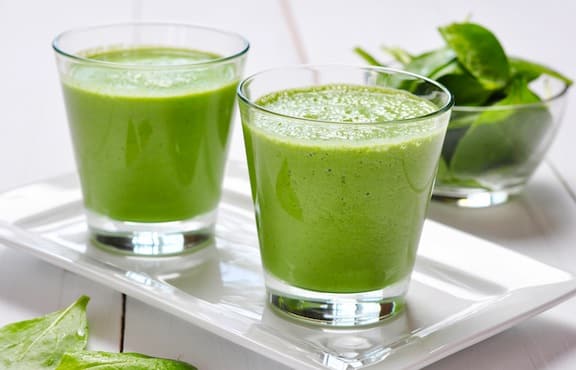
How about a wonderful, extra-healthy anti-heartburn smoothie made from all of the above ingredients? For me this has worked wonderfully against heartburn, whenever I've had some in the past weeks. And it tastes a lot better than you'd think!:
Makes: 1 green smoothie
- A handful of raw spinach (regular or baby spinach
- 3 to 4 broccoli florets (uncooked),
- 1 leaf of kale - fresh and without stems (because of the tough fibers it's best to chop it a little, unless you have a very powerful blender).
- ½ cucumber
- 3- or 4-inch piece horseradish or a handful of regular radishes, chopped (depending on your taste and spiciness of the radish, you can vary the quantity).
- Water as needed
- ½ peeled orange to sweeten, optional
Combine everything in a blender. Blend until completely smooth, and enjoy!
Say good bye to your heartburn and enjoy the many other benefits of the vegetables in this green smoothie.
Let us know what you think, and the results if you use the recommendations here to combat acid reflux. What will you try? Broccoli, cucumber, spinach, radish, kale or maybe our smoothie with all the ingredients?
Learn more about vegan nutrition and healthy eating here.
Mashed Potato Volcanoes with Hot Lava

When my kids were young, they never wanted mashed potatoes until we read The Trouble With Grownups, a Berenstain Bears book. In one scene, the cubs are bored with the same old dinner. Mama and Papa scold the cubs for building volcanoes with their mashed potatoes. Immediately charmed, my kids wanted mashed potatoes so they could rebel against the grumpy fictional bear parents. We even concocted a "hot lava" sauce for the mashed potato volcanoes.
I see nothing wrong with making food more amusing, especially if doing so inspires kids to eat it. Mashed potato volcanoes with hot lava became a fixture on their repertoire, and it accomplished the feat of getting mine to eat two - or three -vegetables in one dish. [Read more...]
3 Child-Friendly Noodle Dishes

When my kids were really young, my idea of meal planning during those truly frantic days was to rush into the kitchen at six o-clock, thinking: "Quick! Cook the noodles!" Child-friendly pasta dishes are a great choice when you want dinner in a hurry and need to please adults and children.
Most varieties cook quickly enough to accommodate ravenous hunger, yet allow enough cooking time to prepare a simple sauce and a salad. It's hard not to love pasta, and wonder of wonders, even kids will eat it — even if you have to leave the sauce you like off their portion and just add a little vegan buttery spread. [Read more...]
Hearty Vegetable Pot Pie

Everyone loves the nostalgic classic, vegetable pot pie. Many VegKitchen readers have let us know that this mild dish of hearty veggies enclosed in pie crust is on their regular cool-weather meal rotation; it's also a crowd-pleasing vegan option for a Thanksgiving or Christmas menu.
Using prepared whole-grain pie crusts makes pot pies a snap to prepare. We like to take them out of the tins they come in, and place them in a similar-sized pie pan. Adapted from The Vegetarian Family Cookbook by Nava Atlas. This recipe makes two pies, for at least 12 servings. For a smaller crowd, to make one pie, halve the recipe. Photos by Hannah Kaminsky
34 Best Plant-Based High-Fiber Foods
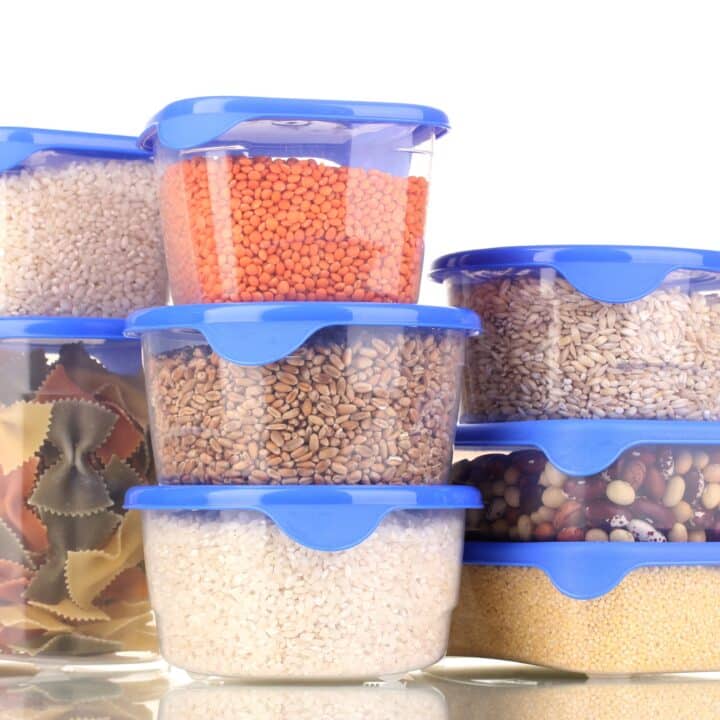
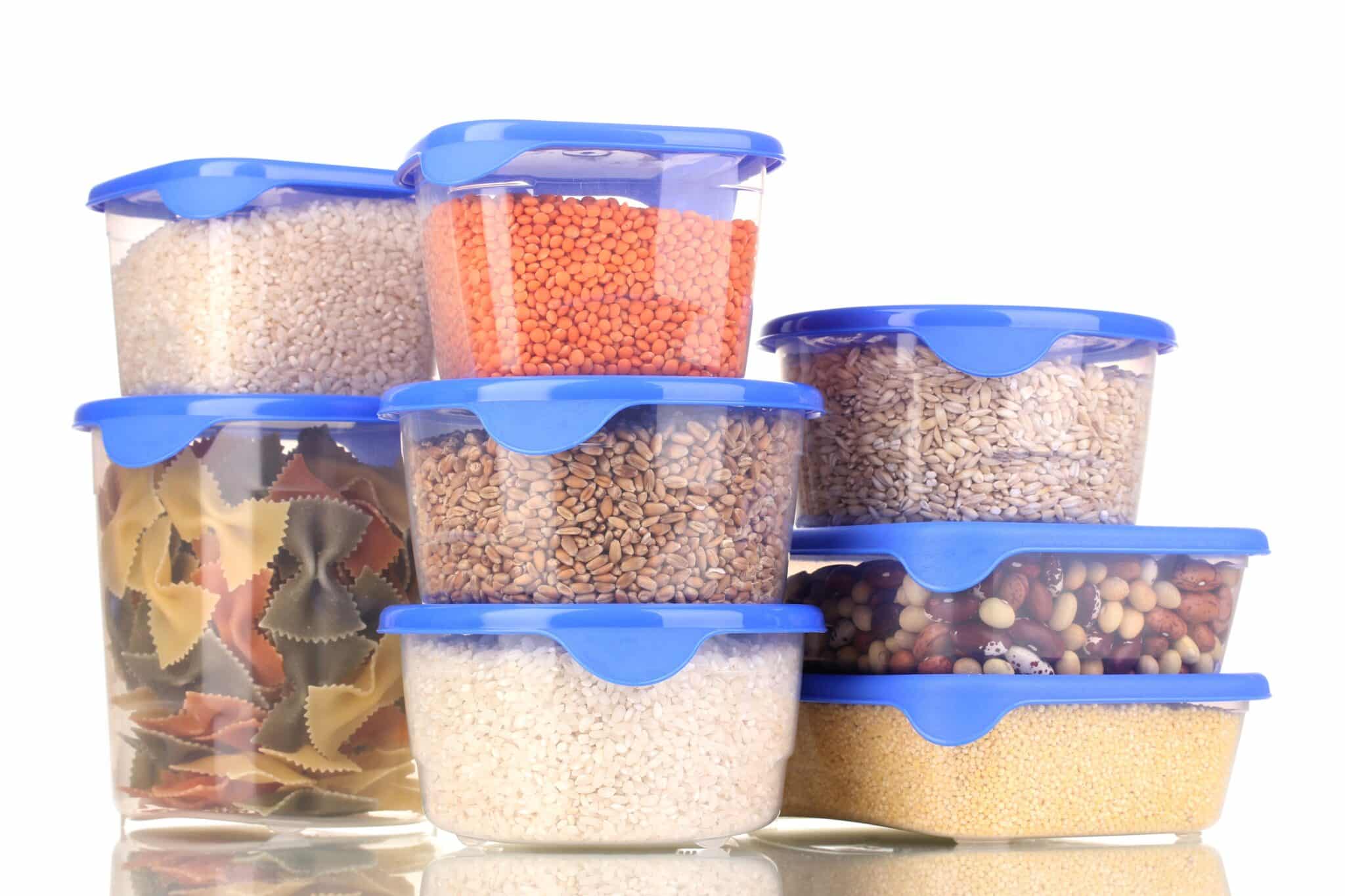
Many people eating a typical Western diet, heavy on refined starches and animal protein, don't get anywhere near enough fiber. The good news: plant foods are where fiber lives, and a vegan diet built on vegetables, beans, whole grains, fruit, nuts, and seeds makes it easy to hit your daily target. Here are 34 of the best high-fiber foods, grouped by type, with roughly how much fiber each serving delivers and a simple way to eat more of it.
Why Fiber Matters
Dietary fiber is the part of plant foods your body can't fully digest, and that's exactly what makes it useful. It comes in two main forms. Soluble fiber dissolves in water and forms a gel that slows digestion; beans, peas, oats, and apples are rich in it. Insoluble fiber (the "roughage" that doesn't dissolve) adds bulk and helps food move through the digestive system; you'll find it in whole grains, nuts, seeds, and the skins of fruits and vegetables. Most whole plant foods contain some of both.
Digestion. Insoluble fiber keeps things regular and helps prevent constipation, while fermentable fibers feed the beneficial bacteria in your gut.
Feeling full. High-fiber foods take longer to chew and digest, so they help you feel full sooner and stay satisfied longer. That's one reason a fiber-rich diet can make it easier to manage your weight without feeling deprived.
Heart health. Soluble fiber helps lower LDL ("bad") cholesterol, and diets rich in fiber are linked with a lower risk of heart disease, type 2 diabetes, and some cancers. Because it slows the absorption of sugar, fiber also helps keep blood sugar steadier after meals.
How much do you need? The general guideline is about 14 grams of fiber for every 1,000 calories you eat, which works out to roughly 25 to 35 grams a day for most adults. It's best to increase your intake gradually so your body can adjust, and as you eat more fiber, be sure to drink plenty of water.
A note on the numbers: the fiber figures below are approximate, per-serving values based on USDA nutrient data. Actual amounts vary with variety, ripeness, and how the food is prepared, so treat them as a helpful guide rather than exact counts.
High-Fiber Foods at a Glance
| Food group | Top picks | Approximate fiber per serving |
|---|---|---|
| Vegetables | Artichokes, green peas, collard greens, winter squash | 6 to 10 g per cup or medium artichoke |
| Legumes | Navy beans, split peas, lentils, pinto and black beans | 11 to 19 g per cooked cup |
| Whole grains | Bulgur, whole-wheat pasta, barley, quinoa | 5 to 8 g per cooked cup |
| Fruit | Raspberries, blackberries, dried figs, pears | 5 to 8 g per cup or medium fruit |
| Nuts and seeds | Chia seeds, flaxseeds, almonds, pistachios | 3 to 10 g per ounce or 2 tablespoons |
High-Fiber Vegetables
Vegetables are the easiest place to start. Leave the skins on where you can, and remember that cooking doesn't destroy fiber; a cup of cooked greens actually packs in more than a cup of raw because they shrink down.
1. Artichokes
Fiber: about 7 to 10 grams per medium artichoke, cooked. Easy way to eat it: Steam a whole artichoke and dip the leaves in a lemony vinaigrette, or toss jarred or frozen artichoke hearts into grain dishes like this Artichoke Farro.
2. Green peas
Fiber: about 9 grams per cup, cooked. Easy way to eat it: Keep a bag in the freezer and stir a handful into soups, pasta, and rice. Italian-Style Rice and Peas (Risi e Bisi) is a cozy way to eat a full cup.
3. Collard greens
Fiber: about 7.5 grams per cup, cooked. Easy way to eat it: Slice them thin and sauté with plenty of garlic, as in these Simple Sautéed Garlicky Greens.
4. Acorn and butternut squash
Fiber: about 6 to 9 grams per cup, baked. Easy way to eat it: Halve and roast, then fill the cavities with a hearty stuffing, like this Rice and Pecan-Stuffed Squash.
5. Parsnips
Fiber: about 5.5 grams per cup, cooked. Easy way to eat it: Roast them alongside carrots and potatoes, or simmer them into a creamy Vegan Parsnip Chowder.
6. Broccoli
Fiber: about 5 grams per cup, cooked. Easy way to eat it: Eat the stems too (they're just as fiber-rich as the florets). This Vegan Broccoli Quinoa Casserole pairs it with another high-fiber favorite.
7. Carrots
Fiber: about 4.5 grams per cup, cooked. Easy way to eat it: Snack on them raw with hummus, or roast them until caramelized, as in these Sweet Cinnamon-Roasted Baby Carrots.
8. Brussels sprouts
Fiber: about 4 grams per cup, cooked. Easy way to eat it: Halve and roast or pan-sear them until the edges crisp. Wine-Glazed Brussels Sprouts make an easy holiday-worthy side.
9. Sweet corn
Fiber: about 4 grams per cup, cooked. Easy way to eat it: Add kernels to salads, salsas, and chili, or make a bowl of Creamy Corn Chowder.
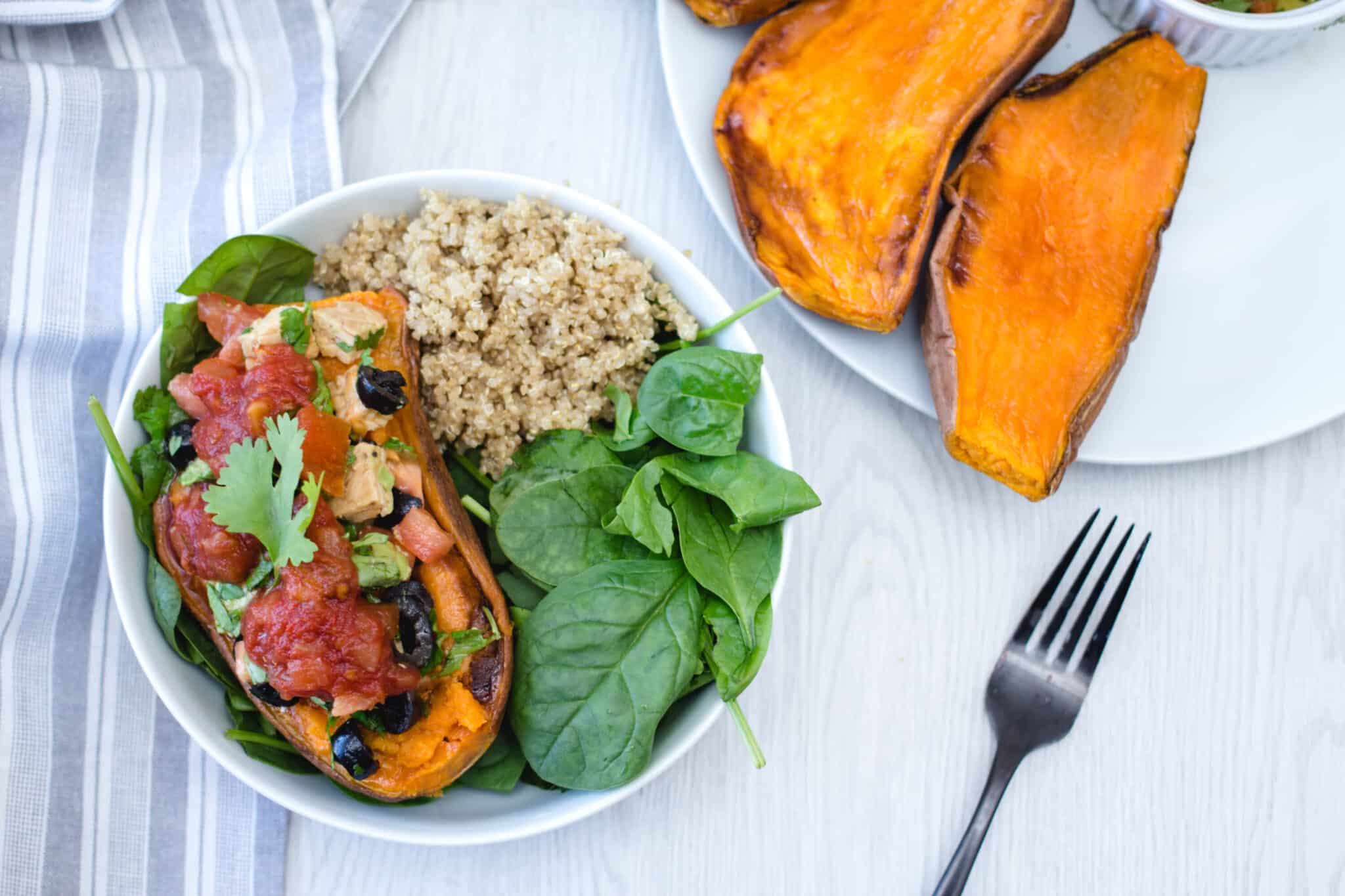
10. Sweet potatoes
Fiber: about 4 grams per medium potato, baked with the skin. Easy way to eat it: Bake them whole, skin and all, and load them up with beans, as in this Vegan Mexican Stuffed Sweet Potato.
High-Fiber Legumes
Beans, lentils, and peas are the undisputed fiber champions, with more per serving than any other food group, plus plenty of plant protein. Canned beans count just as much as home-cooked; just rinse them to cut the sodium.
11. Navy beans
Fiber: about 19 grams per cup, cooked. Easy way to eat it: Simmer them into a hearty soup, like this White Bean Soup with Corn and Red Peppers.
12. Split peas
Fiber: about 16 grams per cup, cooked. Easy way to eat it: They cook down without soaking into the ultimate thick, comforting Vegan Split Pea Soup.
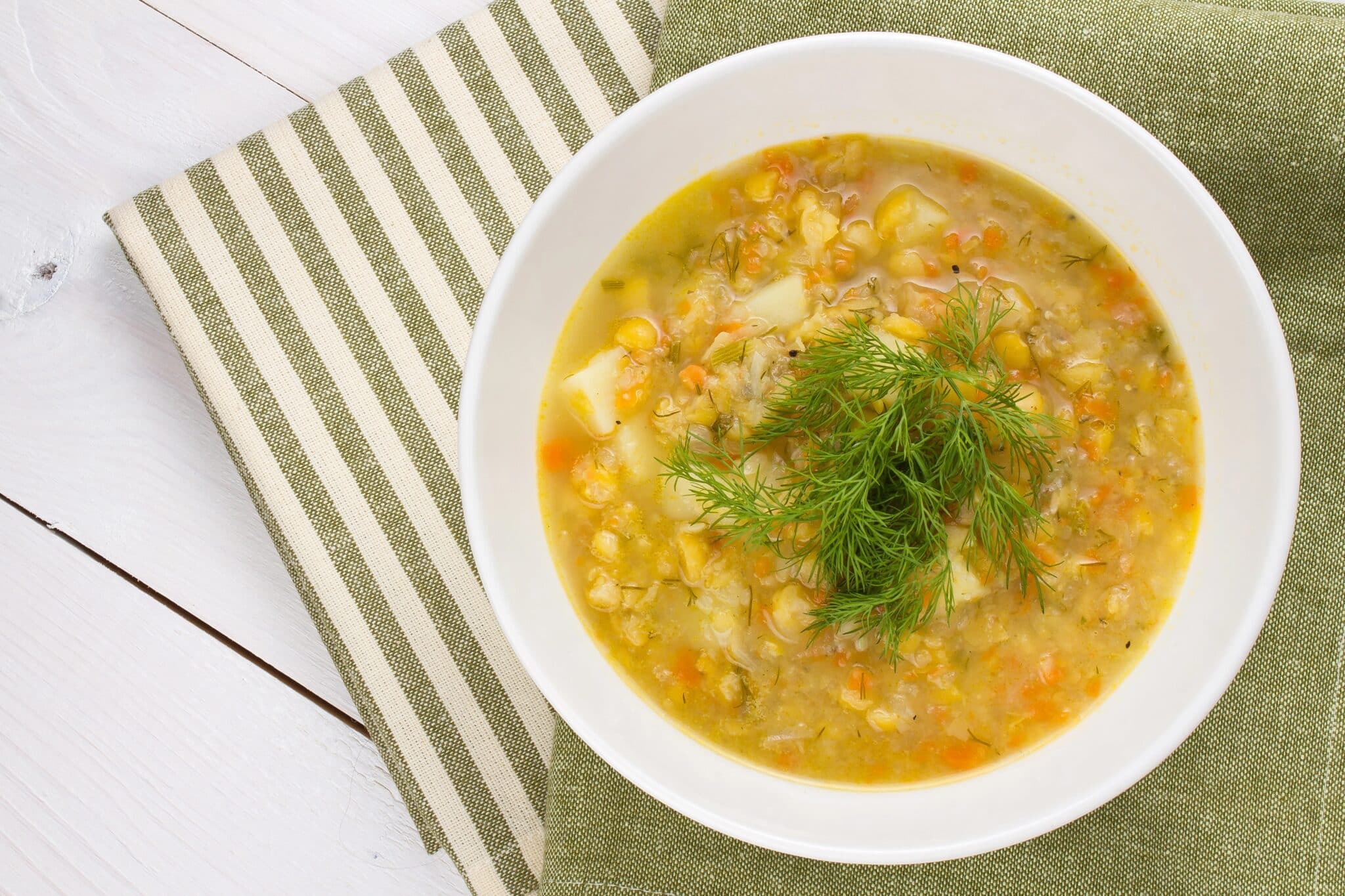
13. Lentils
Fiber: about 15.5 grams per cup, cooked. Easy way to eat it: Red lentils melt into soups and dals in about 20 minutes; try this Red Lentil Dal. Brown lentils hold their shape for salads, and a bag of Palouse Brand brown lentils keeps in the pantry for months.
14. Pinto beans
Fiber: about 15 grams per cup, cooked. Easy way to eat it: Stir them into tacos and burritos, or pair them with greens in this simple Chard with Pinto Beans.
15. Black beans
Fiber: about 15 grams per cup, cooked. Easy way to eat it: Purée them into a quick soup, like this 20-Minute Salsa Black Bean Soup, or mash them into burgers.
16. Lima beans
Fiber: about 13 grams per cup, cooked. Easy way to eat it: Give them a Southern-style simmer, as in these Vegan Southern Lima Beans.
17. Chickpeas
Fiber: about 12.5 grams per cup, cooked. Easy way to eat it: Roast them for a crunchy snack or blend them into Classic Hummus for dipping raw vegetables (a fiber double win).
18. Kidney beans
Fiber: about 11 grams per cup, cooked. Easy way to eat it: They're a natural in chili; try this Classic Vegan Chili and make a double batch for the freezer.
High-Fiber Whole Grains
Swapping refined grains for whole ones is one of the simplest fiber upgrades you can make, because the fiber-rich bran is left intact.
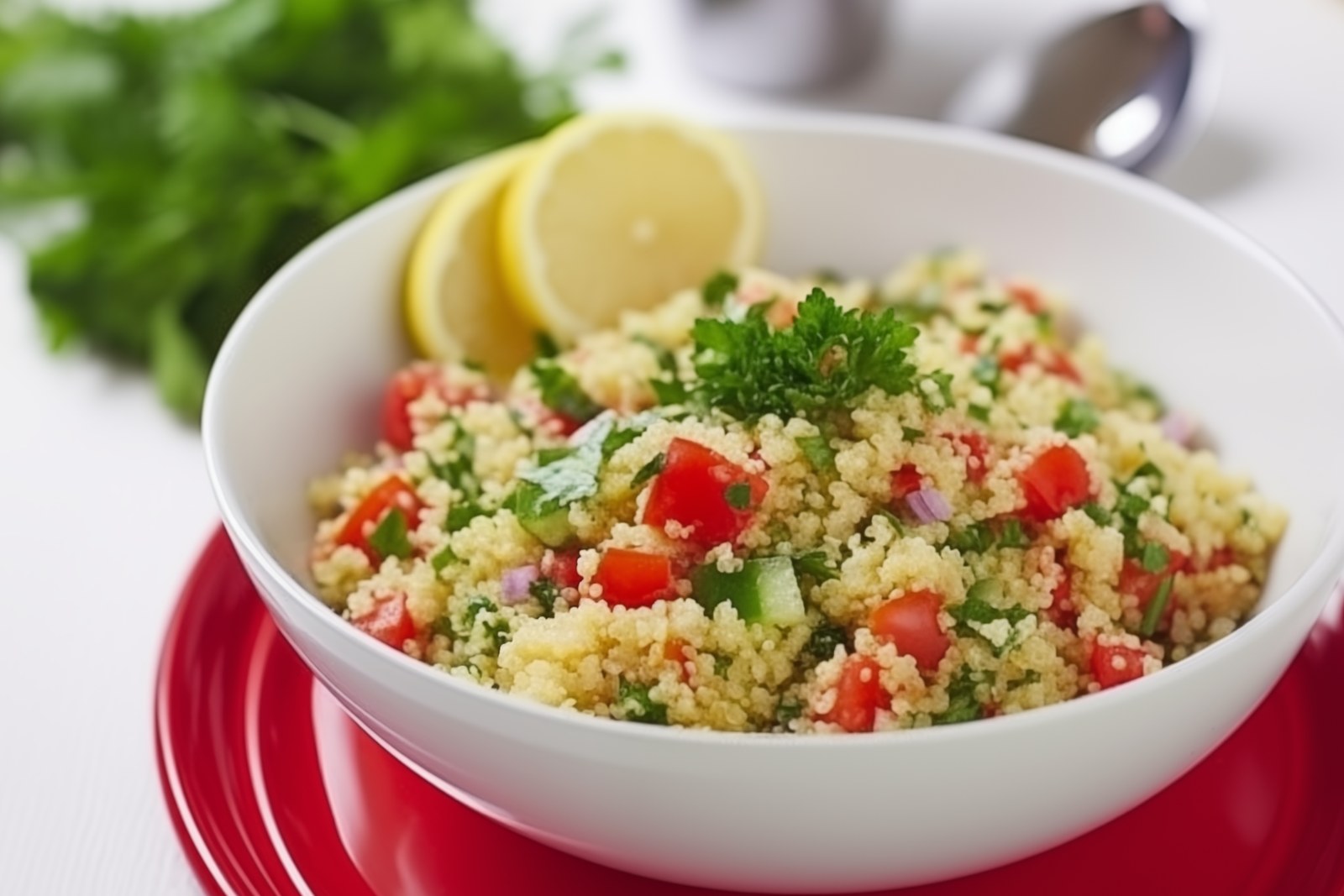
19. Bulgur
Fiber: about 8 grams per cup, cooked. Easy way to eat it: It only needs soaking or a short simmer, which makes it perfect for Tabbouleh Salad.
20. Whole-wheat pasta
Fiber: about 6 grams per cup, cooked. Easy way to eat it: Swap it in for white pasta in any recipe; it's especially good with a hearty sauce like this Pasta with Hearty Lentil and Spinach Sauce.
21. Barley
Fiber: about 6 grams per cup, cooked (pearled). Easy way to eat it: Barley adds a chewy bite and body to soups; try this Classic Mushroom-Barley Soup.
22. Quinoa
Fiber: about 5 grams per cup, cooked. Easy way to eat it: Use it as a base for grain bowls or a quick side, like this Simple Kale and Quinoa Pilaf.
23. Oats
Fiber: about 4 grams per cup of cooked oatmeal. Easy way to eat it: Start the day with a bowl of Apple Pie Oatmeal, topped with fruit and a spoonful of seeds for even more fiber.
24. Popcorn
Fiber: about 3.5 grams per 3 cups, air-popped. Easy way to eat it: Yes, popcorn is a whole grain! Skip the butter and season it with herbs, as in this Stovetop Herb Popcorn.
High-Fiber Fruits
Whole fruit beats juice every time when it comes to fiber. Berries lead the pack, and eating the skin on apples and pears roughly doubles what you get.
25. Raspberries
Fiber: about 8 grams per cup. Easy way to eat it: Add them to breakfast, as in these Raspberry Chia Breakfast Jars; frozen berries work just as well.
26. Blackberries
Fiber: about 7.5 grams per cup. Easy way to eat it: Eat them by the handful, blend them into smoothies, or bake them into these Vegan Blackberry Cookies.
27. Avocado
Fiber: about 5 grams per half avocado. Easy way to eat it: Mash it onto whole-grain toast or fill the halves with a zesty salad, as in these Stuffed Avocados with Corn and Olives.
28. Pears
Fiber: about 5.5 grams per medium pear, with the skin. Easy way to eat it: Slice them into salads, like these Mixed Greens with Pears, Cranberries, and Pecans.
29. Dried figs
Fiber: about 7 grams per ½ cup. Easy way to eat it: Chop them into oatmeal or snack mixes, or press them into these Unbaked Fig Bars.
30. Apples
Fiber: about 4.5 grams per medium apple, with the skin. Easy way to eat it: Pair slices with nut butter for a snack, or add them to a crunchy salad like this Kale, Romaine, and Apple Salad with Sesame-Avocado Dressing.
High-Fiber Nuts and Seeds
A small handful goes a long way. Nuts and seeds add fiber along with healthy fats, so they're an easy way to boost the staying power of breakfasts, salads, and snacks.
31. Chia seeds
Fiber: about 10 grams per ounce (roughly 2½ tablespoons). Easy way to eat it: Stir them into plant milk and let them thicken overnight into Raspberry Chia Pudding.
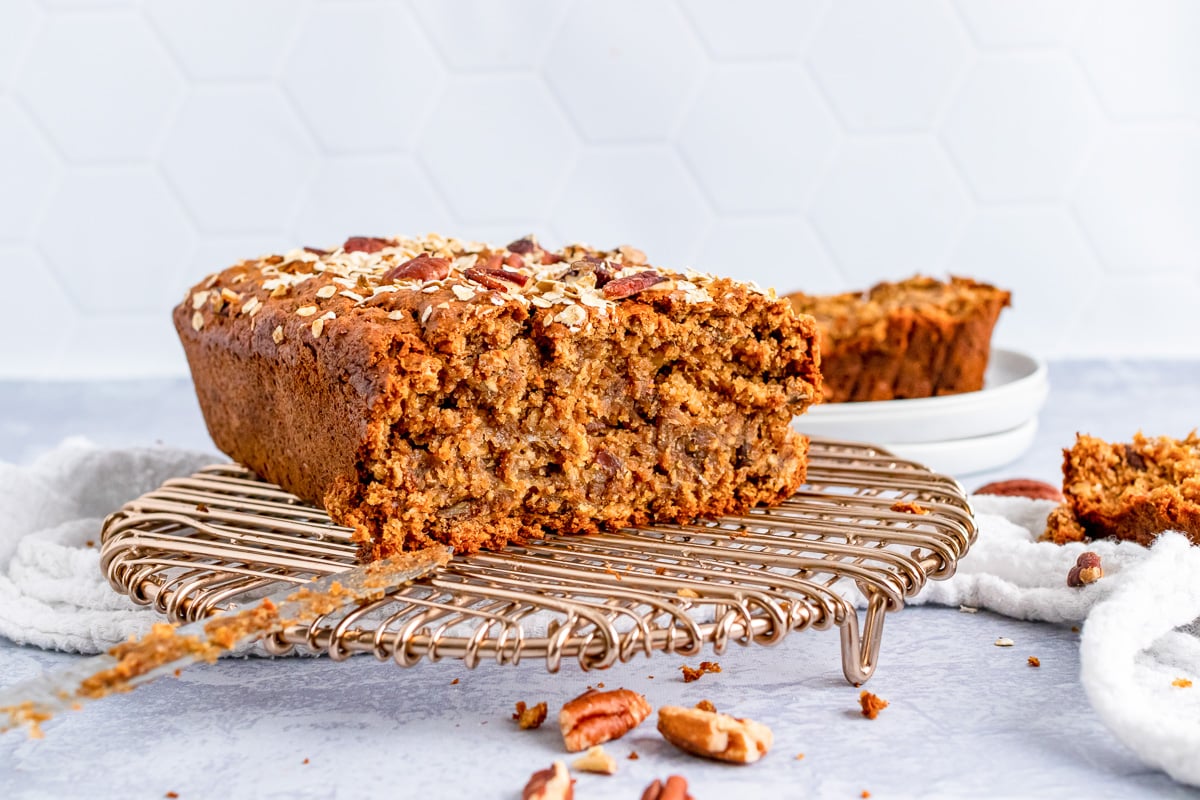
32. Flaxseeds
Fiber: about 4 grams per 2 tablespoons, ground. Easy way to eat it: Buy them ground (or grind them yourself) so your body can use the nutrients; a bag of Anthony's organic flaxseed meal is handy for sprinkling on oatmeal. Ground flax also works as an egg replacer in baking, as in this Oat Flour Banana Bread.
33. Almonds
Fiber: about 3.5 grams per ounce (about 23 almonds). Easy way to eat it: Keep a jar on hand for snacking, or blend them with dates into these Date and Almond Energy Bites.
34. Pistachios
Fiber: about 3 grams per ounce (about 49 pistachios). Easy way to eat it: Sprinkle them over grain salads, or blend them into this bright Green Pea, Parsley, and Pistachio Dip.
Easy Ways to Eat More Fiber
Build meals around beans. Just one cup of cooked beans or lentils covers about half of a day's fiber. Add them to soups, salads, pasta sauces, and tacos a few times a week.
Make half your plate vegetables. Leave peels on potatoes, carrots, and apples when you can, and add an extra vegetable to dishes you already make.
Choose whole grains by default. Swap white rice, white bread, and regular pasta for brown rice, whole-grain bread, bulgur, barley, and whole-wheat pasta.
Upgrade your snacks and breakfasts. Berries, a pear, a handful of nuts, or a spoonful of chia or ground flax in your oatmeal adds several grams without any extra effort.
Frequently Asked Questions
Which vegetables have the most fiber?
Artichokes top the list at about 7 to 10 grams per medium artichoke, followed by green peas (about 9 grams per cooked cup), collard greens (about 7.5 grams), and acorn and butternut squash (about 6 to 9 grams). Parsnips, broccoli, carrots, Brussels sprouts, sweet corn, and sweet potatoes with the skin all provide about 4 to 5.5 grams per serving. If you count legumes as vegetables, beans, lentils, and split peas beat them all, at 11 to 19 grams per cooked cup.
How much fiber do I need each day?
Most adults need roughly 25 to 35 grams a day, or about 14 grams for every 1,000 calories. A day that includes a cup of beans, a couple of servings of vegetables, a whole-grain breakfast, and a piece of fruit will get you there easily.
Can you eat too much fiber?
If you add a lot of fiber all at once, you may notice gas, bloating, or cramping. Increase it gradually over a few weeks and drink plenty of water, and your digestive system will adjust.
More Vegan Resources
If you found this info helpful, be sure to check out these other helpful vegan eating resources:
Mom’s Tofu-Noodle Skillet

This tofu noodle skillet is a vegan version of the vintage tuna-noodle casserole that evokes 1950s TV moms in shirtwaist dresses, wearing pearls. Firm and chewy baked tofu stands in for the tuna. The first few time I made this, I baked it, which tends to dry it out quite a bit.
When I made it again, I realized that there's really no reason to bake it, as all the ingredients are cooked and ready, needing just a spin in the skillet to pull eveything together. However, if you'd like to make this more casserole-like, simply transfer to a small casserole dish and serve from there. Or, you can make it ahead of time, and then reheat briefly in the oven in a casserole dish. Serve this mild dish with plenty of green veggies — broccoli, broccoli rabe, greens, or green beans. [Read more...]
Delicious and Easy Salad Bar at Home
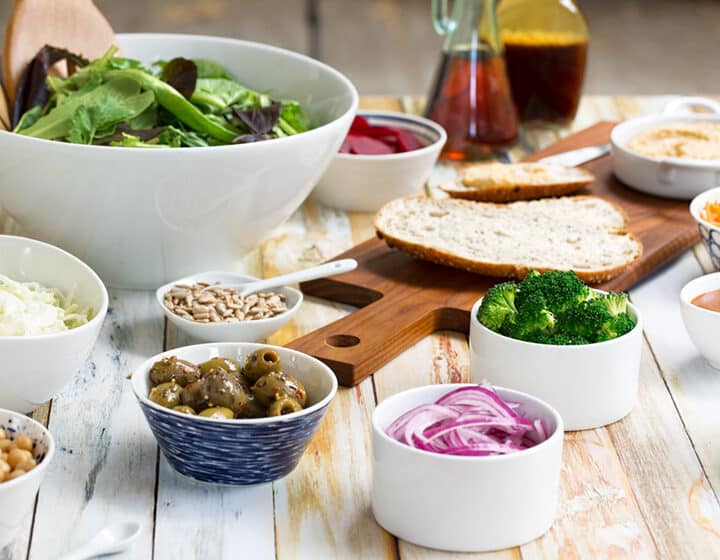
Salad bars are often an appealing option for healthy food fans at restaurants, so why not serve one in your own kitchen? Here's how to put together a delicious and easy salad bar at home. It's a fantastic way to put together a last-minute company meal or for building a dinner around fresh raw veggies when you're too rushed or tired to do a lot of cutting.
For a larger meal, consider a soup (or chili) and salad dinner. Classic Veggie Chili is a crowd-pleasing choice for cooler months; a cold soup like Gazpacho for summer (and if you want to take the hack a bit further, try our Brilliant 4-Ingredient Gazpacho).
BBQ-Flavored Tofu and Chickpea Bowl

One of the annoying things we've noticed about bowl recipes in cookbooks and around the web is how complicated they've become. Something that started out as a super-simple way to enjoy variety in a meal has gone kind of crazy - sometimes 3 to 4 sauces have to be made with a plethora of spices, along with a myriad of ingredients that have to be prepped just so.
It's almost a minimalist bowl recipe these days that has "only" 15 ingredients, and we counted up a bunch that have in the neighbor hood of 30 ingredients! And the concept behind this is supposed to be simple, one-bowl meals? We don't think so. And we're here to prove that it doesn't have to be that way. [Read more...]
Vegan Mac and Cheese

This easy vegan mac and cheese is rich and comforting. Using pureed silken tofu as a base makes it super creamy. Boost the nutrition of this comfort food meal by serving with plenty of fresh veggies — this goes well with simply prepared broccoli or kale — and a colorful salad or platter of fresh cut vegetables with dip. For an even healthier sauce, try our Almost-Raw Cheez Sauce, based on baby carrots, raw cashews, nutritional yeast, and other nutrient-dense ingredient [Read more...]
Creative Ways to Use Veggie Burgers (Besides on a Bun!)

A box of frozen veggie burgers is one of the most useful things you can keep in your freezer. Crumble them, slice them, or roll them into balls, and you have a head start on dinner that's hearty, budget-friendly, and ready in minutes. Here are our favorite ways to use veggie burgers besides on a bun, from meatballs and nachos to sloppy joes and cheesesteaks.

Why Veggie Burgers Make a Great Meal Starter
Many veggie burgers are made from grains, beans, and vegetables, which gives you a satisfying, "meaty" texture without relying on the soy protein isolates found in a lot of ready-made meat substitutes. They're already seasoned and already cooked through, so a little browning is all it takes to turn them into the base of a meal. If you're not sure which brand to buy, this list of the best vegan store-bought veggie burgers is a good place to start.
One important note: not every veggie burger is vegan. Some contain egg or dairy, so read the label before you buy.
Quick Guide to the Ideas
| Idea | How to Prep the Burgers | Ready In |
|---|---|---|
| Meatballs and meatball subs | Cut into quarters and roll into balls | About 15 minutes |
| Tacos, burritos, and nachos | Crumble and season | About 10 minutes |
| Philly-style cheesesteaks | Slice into thin strips | About 15 minutes |
| Sloppy joes, pasta sauce, and chili | Crumble and simmer in sauce | 15 to 20 minutes |
| Casseroles and stuffed peppers | Crumble and mix into the filling | 30 to 40 minutes |
| Pizza, breakfast scrambles, and salads | Crumble, slice, or cube | 10 to 15 minutes |
Vegan Meatballs
This is the one that started it all for us. Thaw a four-pack of your favorite veggie burgers, cut each patty into four equal pieces, and roll the pieces into balls with damp hands. Brown them in a lightly oiled skillet, or bake them, and you have 16 meatballs in about 15 minutes. Our Laughably Easy Vegan Meatballs walk you through every step, and they cost far less than buying vegan meatballs ready-made.

Toss them with spaghetti and marinara, or serve them as a protein-rich side with warm marinara or an easy vegan gravy for dipping.
Meatball Subs
For something familiar, hearty, and comforting at the end of a long day, tuck those meatballs into a hero roll with marinara and a sprinkle of vegan mozzarella. Our Vegan Italian Meatball Sub Dinner is on the table in about 20 minutes and pairs the subs with quick steamed asparagus and a broccoli slaw.

Tacos, Burritos, and Quesadillas
Crumbling veggie burgers into taco filling is about as easy as it gets. Thaw a few patties, crumble them into a skillet with a spoonful of olive oil, and stir in taco seasoning (or a little chili powder, cumin, and garlic powder) and a splash of water. Cook for five to eight minutes, until the edges are browned, and you have a taco filling so tasty you may find yourself sneaking bites straight from the pan.

Spoon the filling into taco shells, roll it into burritos, or fold it into a tortilla with vegan cheese for quick quesadillas. Making your own wraps? Try our Homemade Vegan Tortillas. And if you'd like a from-scratch taco filling on another night, our Vegan Walnut Taco Meat is a great option.
"Beefy" Nachos
Nachos make a fantastic party snack, appetizer, or emergency dinner, and crumbled veggie burgers make them convincingly "beefy" with almost no effort. They might even win over a skeptical friend or two. Spread tortilla chips on a rimmed baking sheet, scatter on the seasoned crumbles, top with vegan cheddar shreds, and bake at 375°F for five to eight minutes, until the cheese melts. Finish with diced tomatoes, corn, avocado, and salsa.

Want more topping ideas? Our Fully Loaded Vegan Nachos are a great template, and our nut-free Vegan Cheese Sauce is wonderful drizzled over the top.
Philly-Style Cheesesteak Sandwiches
Veggie burgers are just the thing for a vegan Philly cheesesteak: meaty but not too meat-imitation-y, and hearty without being gluten-heavy like seitan. Slice the patties into thin strips (they slice most cleanly when still a little frozen) and sauté them in a hot skillet with sliced onions and green bell pepper for about 10 minutes, until browned and tender. Pile the mixture into toasted hoagie rolls, top with vegan provolone or mozzarella shreds, and slip the sandwiches under the broiler for a minute to melt the cheese.

Sloppy Joes
Veggie burgers and a jar of salsa give you plenty of flavor for very little effort. Crumble four patties into a saucepan, stir in a 16-ounce jar of your favorite salsa, and simmer for 10 to 15 minutes, adding a splash of water if it gets too thick. Spoon it over toasted whole-grain buns or English muffins, and serve with fresh corn on the cob or baked sweet potatoes for an emergency meal that tastes like anything but. If you'd rather cook from scratch, try our Vegan Sloppy Joes with Pinto Beans and Quinoa.

Pasta Sauce
Turn a jar of marinara into a hearty, bolognese-style sauce by crumbling two or three veggie burgers into it and simmering for 10 minutes. It's a five-minute shortcut to a rich, chunky sauce for spaghetti, penne, or baked ziti. When you have more time, our Vegan Bolognese Sauce is a wonderful from-scratch version.
Chili
Stir two or three crumbled veggie burgers into a pot of chili during the last 10 minutes of simmering. They soak up the spices and add extra body, which is a nice trick when you want a chili that eats like a full meal. Try this with our Vegetarian Chili with Corn and Soy Beans, and serve it with a pan of Easy Vegan Cornbread.
Casseroles and Stuffed Peppers
Crumbled veggie burgers make a great layer in a casserole. Stir them into the beans and tomatoes of our Super-Easy Vegan Tortilla Casserole for an even heartier dinner. For stuffed peppers, mix crumbled patties with cooked rice, tomato sauce, and a pinch of Italian seasoning, spoon the filling into halved bell peppers, cover, and bake at 375°F for about 35 minutes.
Pizza Topping
Crumbled veggie burger works like vegan sausage on pizza. Scatter the crumbles over the sauce before you add the cheese, and the edges crisp up as the pizza bakes. Start with our Basic Vegan Pizza Dough, or browse our Best Vegan Pizzas for more topping ideas.
Breakfast Scrambles and Burritos
Brown a crumbled patty with diced onion and bell pepper, then stir it into a tofu scramble for a savory, sausage-style breakfast. Roll the mixture up in a warm tortilla and you have a make-ahead breakfast burrito. Our Scrambled Tofu Burritos are the perfect base for this, and the crumbles fit right in.
Salads, Bowls, and Wraps
Heat a patty until crisp on both sides, then slice it into strips or cube it and toss it over a big green salad or a grain bowl for an instant protein boost. The cubes make surprisingly good "croutons," too. Drizzle everything with our creamy Vegan Green Goddess Dressing or Vegan Ranch Dressing, or tuck the slices into a wrap with hummus, greens, and tomato, much like our Hummus and Quinoa Wrap.
Helpful Tips
Match the burger to the job. Sturdy bean-and-grain patties hold their shape best, so they're ideal for meatballs and sliced cheesesteak strips. Softer, vegetable-heavy patties crumble easily and melt into sauces, chili, and casseroles.
Thaw before crumbling. Thawed patties crumble and roll far more easily than frozen ones. Thaw them overnight in the refrigerator, or microwave them for 30 to 45 seconds. For slicing, a patty that's still slightly frozen gives the cleanest strips.
Brown them well. The best texture comes from letting the crumbles sit in a hot, lightly oiled skillet for a minute or two before stirring, so the edges get crisp and browned instead of steaming into mush.
Taste before you salt. Veggie burgers are already seasoned, and some brands are quite salty. Add spices, salsa, or sauce first, then adjust the salt at the end.
Add a little moisture. Crumbled patties can dry out, so a splash of water, broth, or sauce keeps fillings juicy. And always check the label if you need a vegan or gluten-free product, since ingredients vary widely from brand to brand.
Storing & Freezing
Cooked veggie burger crumbles, meatballs, and sliced strips keep well in an airtight container in the refrigerator for up to four days, so it's easy to cook a big batch and use it in a couple of different meals. Once a package of patties has been thawed, cook them within a couple of days.
Cooked crumbles and meatballs freeze beautifully for up to three months. Spread them on a baking sheet to freeze, then transfer to a freezer bag so they don't clump. Reheat from frozen in a skillet over medium heat with a splash of water or sauce, or warm them in the microwave.
More Veggie Burger Recipes
If you'd rather make your own patties from scratch, here are a few of our favorites:
- Bun-Believable: My Favorite Vegan Burger Recipes
- Vegan Chipotle Black Bean Burgers
- Vegan Chickpea Patties
- Vegan Quinoa and Wild Rice Burgers
- Vegan Beet Burgers
Photo credits: Evan Atlas (meatballs, meatball subs, taco filling, and nachos); Hannah Kaminsky (Philly cheesesteak and sloppy joes).
Peanut Satay Zucchini Noodle Bowl
These zucchini noodles are packed with flavor from a flavorful peanut satay sauce and loaded with nutritious veggies and tofu. And the best part - it's ready in 15 minutes!

Who doesn't love zucchini noodles? They make a perfect base for ever-popular vegan bowls, too. We love them not because there's anything wrong with regular pasta noodles. But in the same way as cauliflower "rice" has gotten to be such a big thing, it's just another very cool way to eat more veggies.
But what if you don't have a machine - how do you make zucchini noodles without a spiralizer? You buy them already spiralized, that's how. And then this peanut satay noodle bowl will be ready in a flash.
I love zucchini noodles, and I even have a spiralizer. But I'm so lazy that I hardly ever use it. I mean, I have to climb onto a step stool, get it down from a cabinet, then after using it, almost the whole thing needs to be washed and takes up the entire dish drainer. Then, of course, I have to climb onto the step stool to put it back. No wonder it sits there mostly unused.

So, imagine my delight when I discovered spiralized zucchini (and a bunch of other spiralized veggies in my supermarket's produce section. Granted, buying these prepared veggie noodles is a bit more expensive than buying a couple of zucchini and spiralizing it yourself. But for me, it means saving two trips on the godforsaken step stool, and cleaning up afterwards!
Zucchini noodles are so tasty with peanut sauce. And you guessed it - we'll be using prepared peanut satay sauce, too. I figure the little extra I'm spending on the prepped zucchini noodles, I'm saving on getting all the ingredients needed to make satay sauce from scratch.
The nice things about one bowl meals is that you don't need to obsessively measure ingredients. You can also substitute other vegetables for the ones we use here. Just arrange them artfully (or sloppily, we won't tell) on the base on the zucchini noodles bathed in satay sauce, serve, and enjoy.

What you need
- 10 to 12 ounce package fresh zucchini noodles (or a combo of zucchini and yellow squash)
- 12 to 16-ounce bottle peanut satay sauce
- 1 bunch regular bok choy or 1 baby boy choy
- 5.5- to 8-ounce package baked tofu
- 1 bunch scallions
- Bag of grated carrots
- Roasted peanuts or cashews, small quantity (optional)
You may already have on hand
- Sriracha or other hot stuff
What to do
1 Remove the zucchini noodles from the packaging and combine in a mixing bowl with enough satay sauce to coat generously. Divide between two wide shallow bowls.
2 If you're using regular bok choy you'll only need a couple of stalks. Either way, rinse the bok choy or baby bok choy, pat dry, and slice thinly.
3 Cut about half of the tofu into dice. Slice one or two scallions thinly.
4 Arrange the bok choy, tofu, and grated carrots over the zucchini noodles. Sprinkle with chopped nuts, if using, and pass around hot sauce if you'd like.
Note: You'll have quite a bit of bok choy (if using a regular bunch), scallion, and carrot from this meal; plus a small amount of tofu and some satay sauce. Use them to make a tasty raw salad or a quick stir-fry. Add whatever you'd like to the mix - leafy greens and/or tomatoes to a salad; a grain to the stir-fry.

If you love this recipe, check out these other delicious creations:
- Zucchini Noodles with Vegan Bolognese
- Creamy Pesto Zucchini Noodles
- Sesame Zucchini Noodles
- Easy Zucchini Noodles with Peanut Sauce
Photos by Evan Atlas
Recipe

Peanut Satay Zucchini Noodles
These zucchini noodles are packed with flavor from a flavorful peanut satay sauce and loaded with nutritious veggies and tofu. And the best part - it's ready in 15 minutes!
Print
Pin
Save
Servings:
Ingredients
- 10 to 12 ounce package fresh zucchini noodles or a combo of zucchini and yellow squash
- 12 to 16- ounce bottle peanut satay sauce
- 1 bunch regular bok choy or 1 baby boy choy
- 5.5- to 8- ounce package baked tofu
- 1 bunch scallions
- Bag of grated carrots
- Roasted peanuts or cashews small quantity (optional)
- You may already have on hand
- Sriracha or other hot stuff
Instructions
- Remove the zucchini noodles from the packaging and combine in a mixing bowl with enough satay sauce to coat generously. Divide between two wide shallow bowls.
- If you're using regular bok choy you'll only need a couple of stalks. Either way, rinse the bok choy or baby bok choy, pat dry, and slice thinly.
- Cut about half of the tofu into dice. Slice one or two scallions thinly.
- Arrange the bok choy, tofu, and grated carrots over the zucchini noodles. Sprinkle with chopped nuts, if using, and pass around hot sauce if you'd like.
Notes
You'll have quite a bit of bok choy (if using a regular bunch), scallion, and carrot from this meal; plus a small amount of tofu and some satay sauce. Use them to make a tasty raw salad or a quick stir-fry. Add whatever you'd like to the mix - leafy greens and/or tomatoes to a salad; a grain to the stir-fry.
Nutrition (Estimate per Serving)
Calories: 594kcalCarbohydrates: 55gProtein: 25gFat: 29gSaturated Fat: 1gSodium: 2689mgPotassium: 1428mgFiber: 6gSugar: 39gVitamin A: 19049IUVitamin C: 214mgCalcium: 561mgIron: 5mg
Vegan-ize any recipe!Grab our free vegan cheat sheet, packed with my favorite easy substitutions to make any recipe vegan.
10 Easy Vegan Pizza Recipes
Pizza is such a fun and easy main dish to make at home, now that great crusts and sauces are available to get you started. Just add veggies and you have a family friendly vegan dinner!
Here are our favorite easy vegan pizza recipes from all around the web.
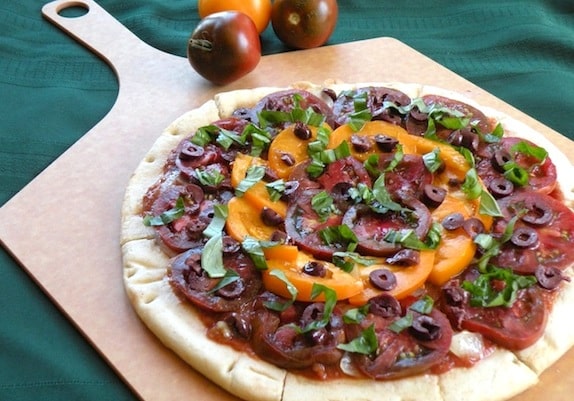
Garlicky Fresh Tomato and Basil Pizza is a fresh take on the classic fresh tomato and basil pizza known as Margherita. This variation is packed with extra flavor from garlic and black olives.

Broccoli, Mushroom, and Sun-Dried Tomato Pizza uses plenty of broccoli, making this easy pizza a nourishing meal. Serve a big salad with mixed greens and plenty of raw veggies, embellished with olives and chickpeas. Use as many of the shortcuts as you'd like, making this a super-quick preparation.

Layer on the Southwestern flavors in this playful Mexican Pizza. Serve with a colorful green salad and garlic-sautéed greens. This recipe doubles easily.

Verdant Veggie Pesto Pizza is piled generously with broccoli, bell pepper, and zucchini. And in place of the usual tomato sauce, this one features a delectable spinach-miso pesto as the base.

Arugula Salad Pizza is a fresh green salad and whole grain pizza all in one meal that you can whip up in 45 minutes. Now that's quick and delicious eating for even the busiest night of your week!

Mixed Olives and Spinach or Arugula Pizza is healthy and has great flavor. Do try finding the pepperjack or other spicy vegan cheese, which gives this a bit of a kick.

White Pizza with Sweet Potato, Onions, and Olives is a delectably different kind of pizza. Combined with most any kind of salad, this pizza makes a delicious cool-weather dinner.

Vegan Onion and Olive Pizza features mellow caramelized onions, with briny olives for a contrasting flavor.

Hearty Vegan Roasted Veggie Pizza is a good one for hearty appetites. Feeding a larger crowd? The recipe is easily doubled to make two pizzas.

White Pizza with Asparagus and Spinach is the perfect choice for a springtime meal, with favorite spring veggies on a creamy backdrop.
10 Great Quinoa Bowl Recipes

If you need an easy way to serve up a ton of protein and nutrients in one go, you’ll want to look into these vegan quinoa bowl recipes. These quinoa bowl recipes serve up fruit, veggies and tasty spices all heaped onto some delicious quinoa. Serve these up for an easy breakfast, lunch or dinner—seriously, you can have them any time of day! [Read more...]
15+ Creative Vegan Recipes Using Vegetable Broth That Aren't Soups
Vegetable broth is one of the hardest-working ingredients in a vegan kitchen, and it can do so much more than soup. It gives risotto its creamy, savory depth, turns a little flour and oil into a silky gravy, and makes pilafs, stuffings, and casseroles taste like they've been simmering all day.
So if you've got a carton in the pantry (or a jar of homemade in the fridge), here are 17 of our favorite cozy recipes with vegetable broth that aren't soups. You'll find pot pies, mushroom risotto, gnocchi in gravy, paella, holiday stuffings, hearty grain dishes, and more, plus a quick guide to making your own broth from kitchen scraps at the end.
From weeknight pastas to show-stopping holiday mains, these creative vegan recipes prove that a good broth is the secret to cozy, comforting food all year long.
17 Creative Vegan Recipes Using Vegetable Broth

All the comfort of a classic pot pie, baked casserole-style under a flaky homemade crust. Two and a half cups of vegetable broth turn into a thick, thyme-scented gravy that hugs the potatoes and mixed veggies.
Risotto is where good broth really shines, since the rice drinks it in one ladle at a time. Just a handful of ingredients (mushrooms, onion, garlic and plenty of stock) add up to a creamy, dairy-free bowl of comfort.
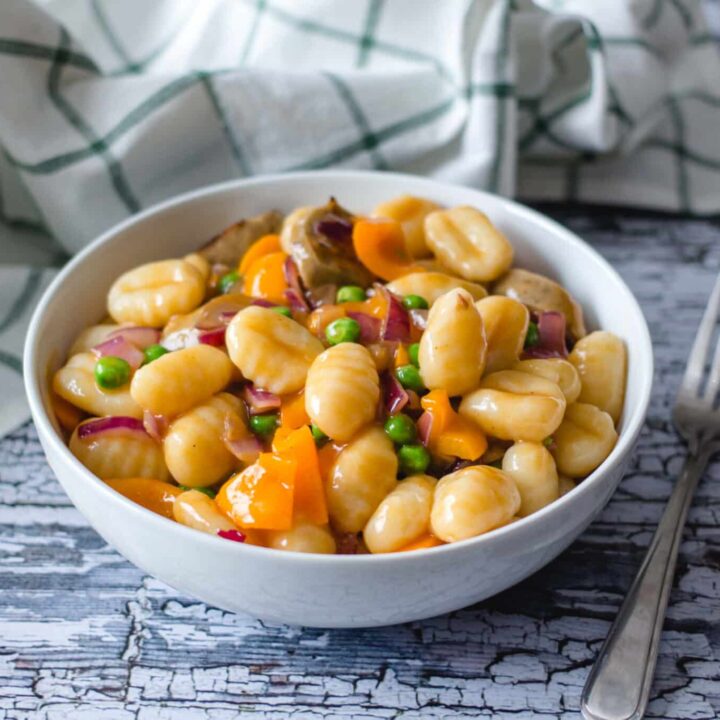
Pillowy potato gnocchi and savory vegan Italian sausage get smothered in a peppery brown gravy built on vegetable broth and soy sauce. It's stick-to-your-ribs comfort food in about 45 minutes.
Vegetable broth and coconut milk team up to make a silky, velvety sauce for earthy baby bella mushrooms, with a splash of white wine and fresh thyme. It's rich enough for company and quick enough for a weeknight.
Saffron and paprika tint the rice golden as it simmers in vegetable broth with peppers, artichokes and olives. Everything cooks in one pan, so cleanup is as easy as dinner.

Extra-luscious mashed Yukon Golds get a generous ladle of onion gravy made with vegetable stock, tamari, nutritional yeast, sage and thyme. It's a holiday-worthy side that's just as welcome on a Tuesday.
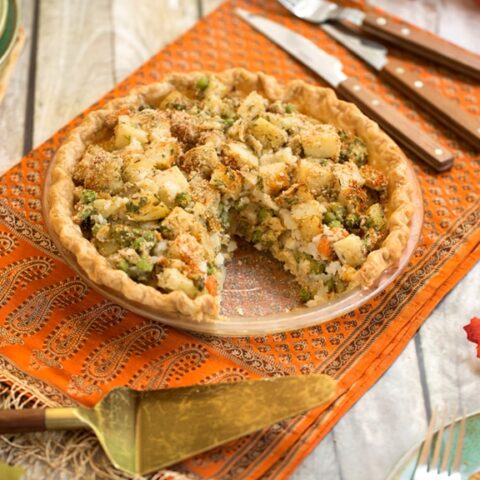
A nostalgic, double-crust pot pie packed with potatoes and your favorite diced vegetables in a savory stock-based filling. It's a crowd-pleasing vegan centerpiece for Thanksgiving, Christmas or any chilly night.

Roasted butternut squash halves are piled high with a stuffing of whole wheat bread, wild rice and caramelized onions, moistened with vegetable broth and a splash of orange juice. It makes a showstopping holiday main.

Crisp red apples, red onion, walnuts and fresh rosemary bring sweet and herbal notes to this whole grain bread stuffing. Low-sodium vegetable broth keeps it moist without any butter.

This simple gravy is mostly vegetable broth and mushrooms, thickened with arrowroot and seasoned with soy sauce and nutritional yeast. Spoon it over mashed potatoes, grains, tofu or veggie burgers in about 25 minutes.

Brown rice simmers in a full carton of vegetable broth, then gets tossed with eggplant, the "holy trinity" of onion, celery and green pepper, and smoky paprika. Pass the hot sauce!

Cooking quinoa in vegetable broth instead of water gives this cheesy broccoli casserole a savory backbone. Sun-dried tomatoes and a melty vegan cheddar topping make it a family-friendly one-dish meal.
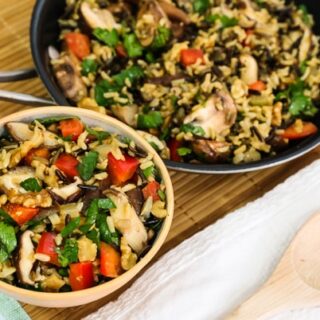
Wild rice and brown rice cook up in low-sodium vegetable broth, then meet sauteed cremini and shiitake mushrooms and crunchy walnuts. It's earthy and satisfying, and good warm or at room temperature.
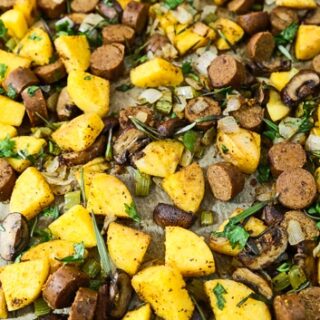
Cubes of prepared polenta stand in for bread in this change-of-pace stuffing with vegan sausage, mushrooms and fresh herbs. A splash of vegetable broth keeps it tender as it bakes.
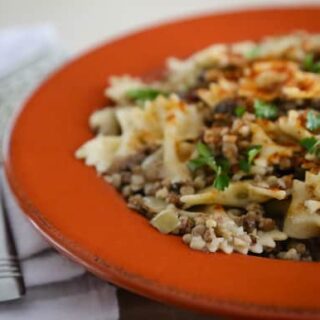
This classic Jewish comfort dish pairs toasty buckwheat groats with bow-tie pasta, browned onions and mushrooms. Cooking the kasha in vegetable broth gives it deep, savory flavor in just 30 minutes.
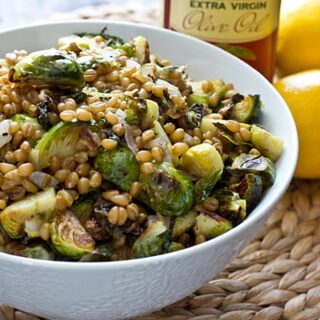
Chewy wheat berries simmer in three cups of vegetable broth, then get tossed with crispy roasted Brussels sprouts, shallots, walnuts and lots of lemon. It's a hearty whole grain dish that works as a main or a side.
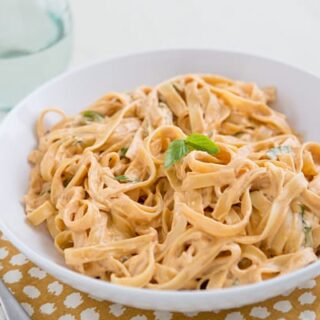
Soaked cashews blended with vegetable broth, sun-dried tomatoes, garlic and nutritional yeast make a creamy, dairy-free alfredo sauce. Toss it with whole-wheat fettuccine and fresh basil for a cozy pasta night.
How to Make Vegetable Broth from Kitchen Scraps
Homemade broth costs next to nothing and puts your vegetable trimmings to good use. Keep a zip-top bag or container in the freezer and add scraps as you cook: onion ends and skins, carrot peels, celery tops and leaves, mushroom stems, leek greens, herb stems, and garlic papers. Skip cabbage, broccoli, and Brussels sprouts, which can turn broth bitter, and beets, which will turn it pink.
- Load the pot. Once you have 2 to 3 cups of frozen scraps, add them to a large stock pot with a chopped onion, a couple of carrots and celery ribs, a few garlic cloves, 2 bay leaves, and a few sprigs of parsley and thyme.
- Simmer. Cover with about 8 cups of water, bring to a boil, then lower the heat and simmer, partially covered, for 45 minutes to 1 hour.
- Strain and store. Strain out the solids and season lightly with salt (or leave it unsalted so you can season each recipe as you go). Refrigerate for up to 5 days, or freeze in portions for up to 3 months. Ice cube trays are handy for small amounts.
For the full step-by-step recipe, see How to Make Vegetable Broth with Kitchen Scraps on our sister site, Oh My Veggies.
Short on time? A good store-bought broth works beautifully in every recipe above. We like Pacific Foods Organic Low Sodium Vegetable Broth, since low-sodium broth lets you control the salt. A jar of Better Than Bouillon Seasoned Vegetable Base is great to keep on hand too: stir about 1 teaspoon into each cup of hot water, and it takes up far less pantry space than cartons.
More Vegan Recipes You'll Love
If you love these creative vegetable broth recipes, be sure to check out these other cozy collections:
5 Simple Ways to Use Baked Tofu
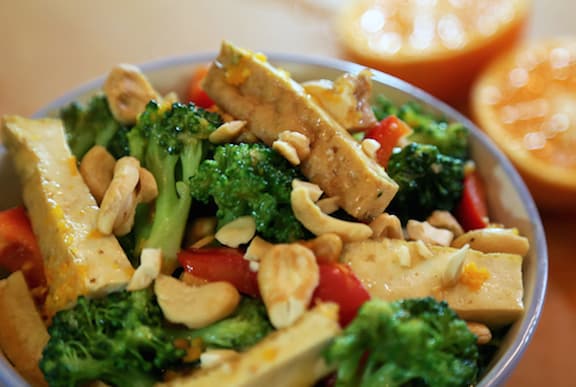
I’ve long considered marinated baked tofu a great product and have wondered why it has taken so long to make its way onto supermarket shelves. Finally, it's getting there! As always, it’s easy to find at any natural foods store, usually shelved alongside the tofu tub varieties.
If you're unfamiliar with marinated baked tofu, it’s a firmer, chewier, flavored variety. It comes in cellophane-wrapped packages (usually 8 ounces), and is ready to eat as is or to combine with other ingredients in hot or cold dishes. Here are 5 simple ways to use this fantastic product. [Read more...]
Vegan Italian Meatball Sub Dinner
If you're looking for something familiar, hearty, and comforting for the evening meal, our vegan Italian meatball sub dinner might be just the thing. It's made with our healthy (and sneaky) vegan meatball hack - a clever way to make these tasty bites almost instantly and without questionable processed soy.
Since the vegan meatball sub skews toward bread-y comfort food, let's make sure to add plenty of vegetables to the plate. Fresh asparagus and broccoli slaw add very little work to the mix and go so nicely with the sub. [Read more...]
8 Ways to Use Tube Polenta: Recipes and Ideas
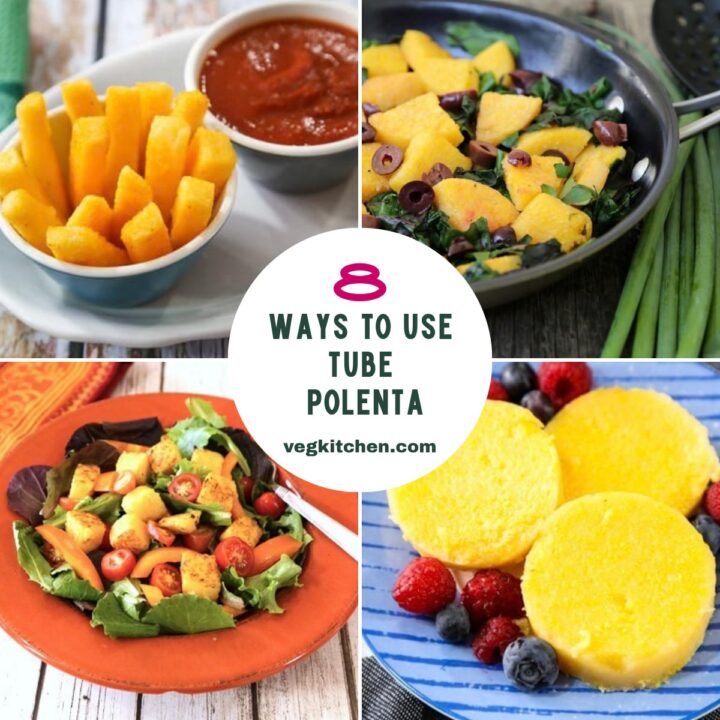
Tube polenta is a great natural product that lends a rustic charm to many types of dishes. Here are eight of our favorite ways to use it, from easy recipes to no-recipe-needed meal ideas, plus tips on buying it, cooking it, and storing what's left.

What Is Tube Polenta, and Where Do You Find It?
Are you looking for a great polenta recipe? The kind where that coarse cornmeal is cooked into a smooth porridge, then cooled and cut and baked and… If so, you've come to the wrong place. Here we're talking about polenta that comes in a tube: cornmeal that has already been cooked, seasoned lightly, and packed into a firm log. It's ready to slice straight out of the wrapper, and a few minutes in a hot pan or oven turns it golden and crisp outside and tender inside.

A number of brands make tube polenta. Look for it in the Italian foods or pasta aisle of well-stocked supermarkets, near the grains or gluten-free section of natural foods stores, and in Italian specialty markets. Most brands are shelf-stable, though a few are sold in the refrigerated case near the tofu. It comes plain ("traditional") or flavored with herbs, garlic, or sun-dried tomato. We particularly like San Gennaro Traditional Polenta, which you can also order online.
Polenta itself is gluten-free, but if you're very sensitive, check the package to make sure it wasn't made in a facility that also processes wheat. Nutrition-wise it isn't a powerhouse, but it isn't bad either: it's low in fat and calories and gives you a little protein and iron. Best of all, it's crazy easy to work with, and even on its own with little or no embellishment it can be surprisingly yummy.
The Best Pan for Crispy Tube Polenta
Most of the ideas below start the same way: slice the polenta about ½ inch thick (or cut it into wedges, sticks, or cubes) and brown it in a little oil over medium-high heat for 4 to 5 minutes per side, until golden. The pan makes a real difference, since polenta loves to stick. A heavy cast iron skillet gives you the crispiest crust once it's well preheated, while a good nonstick skillet lets you get away with less oil and makes flipping foolproof. Whichever you use, pat the slices dry first and don't move them until they release on their own.
1. Baked Polenta Fries

Cut the polenta into sticks, toss them gently with a little oil, and bake on a parchment-lined sheet at 425°F for 20 to 25 minutes, stirring every few minutes, until crisp outside. Using tube polenta for our Fuss-Free Baked Polenta Fries cuts 2 to 3 hours of prep and wait time down to 2 to 3 minutes. Serve them with ketchup or marinara for dipping.
2. Swiss Chard with Polenta

If you're trying to eat more greens, or get your family to, little wedges of tube polenta add immense charm to this simple Chard with Polenta Wedges. Brown the wedges first, set them aside, then sauté the chard with garlic and a handful of olives and fold the polenta back in just before serving. Kale or collards work well in place of the chard.
3. Sautéed Polenta and Green Veggies

Same idea, even simpler, and no recipe required: combine cubes or wedges of sautéed polenta with any steamed green vegetable, such as Brussels sprouts (shown above), broccoli, green beans, or zucchini. A drizzle of olive oil and a pinch of salt and pepper is all it needs, and the polenta makes the veggies more substantial and more appealing to picky eaters.
4. Polenta Croutons

Use tube polenta as gluten-free croutons that make almost any salad tastier and more substantial. Cut it into bite-sized cubes, pan-fry them in a bit of oil for 8 to 10 minutes, turning every few minutes until golden on all sides, then season with salt, pepper, and a pinch of dried herbs. Add them to the salad right before serving so they stay crisp.
5. Sweet Polenta with Fruit

When my son was young, he loved plain tube polenta sliced, sautéed in a little vegan butter on both sides, then served with maple syrup and fresh fruit. Brown the rounds for about 4 minutes per side, then top with berries or sliced bananas and a drizzle of syrup. No recipe needed, and maximum breakfast or brunch enjoyment.
6. Seitan and Polenta Skillet
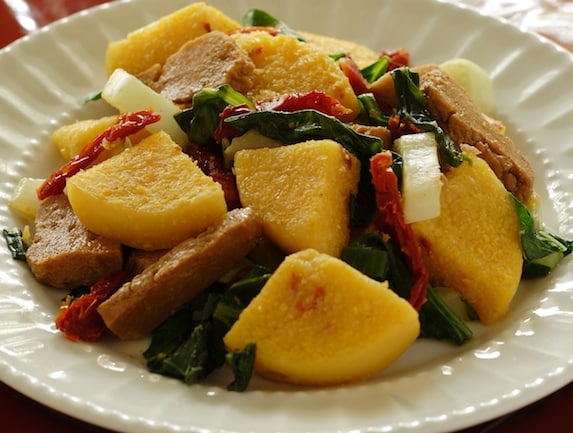
Tube polenta is a great way to bulk up easy vegan main dishes, and Seitan and Polenta Skillet with Fresh Greens is one of our all-time favorites. Brown diced polenta and strips of seitan in one skillet, then wilt in fresh greens (and sun-dried tomatoes, if you like) for a hearty, great-looking one-pan dinner. (Seitan is made from wheat, so swap in extra-firm tofu if you need this gluten-free.)
7. Beans and Polenta

Use golden, pan-crisped slices of polenta as a bed for bean dishes like this white bean and kale skillet or this veggie chili; their flavors are so compatible. For an instant meal, top the slices with heated canned chili such as Amy's Black Bean Chili, as shown in the photo, and serve over a handful of baby spinach.
8. Polenta and Mushroom Stuffing

This one is a little more involved, but it's a holiday recipe, and not at all difficult. In Polenta, Vegan Sausage, and Mushroom Stuffing, little wedges of polenta stand in for bread; they roast with sliced vegan sausage until crisp-edged, then get tossed with sautéed onion, celery, mushrooms, and herbs. It works spectacularly well, so try it for your next vegan holiday menu!
Storing Leftover Polenta
An unopened shelf-stable tube keeps in the pantry until the date on the package (refrigerated brands stay in the fridge). Once you've cut into it, wrap the cut end tightly in plastic wrap or slide the log into an airtight container and refrigerate it; use it within 4 to 5 days. Cooked slices, fries, and croutons keep in a covered container in the fridge for 3 to 4 days. Reheat them in a skillet or a 400°F oven rather than the microwave, which makes them soft and a bit rubbery.
You can freeze tube polenta, though the texture turns slightly softer and more crumbly after thawing. Slice it first, lay the slices on a parchment-lined tray until firm, then transfer them to a freezer bag and freeze for up to 2 months. Thaw overnight in the fridge and pat dry before using. Thawed polenta is best in recipes where it gets crisped or baked, like fries, croutons, or stuffing, rather than served in neat rounds.
More Polenta Recipes
I hope these ideas have given you a new reason to try this often overlooked ingredient. Here are more polenta recipes from VegKitchen to keep you cooking:
5 Great Ways to Use Hummus
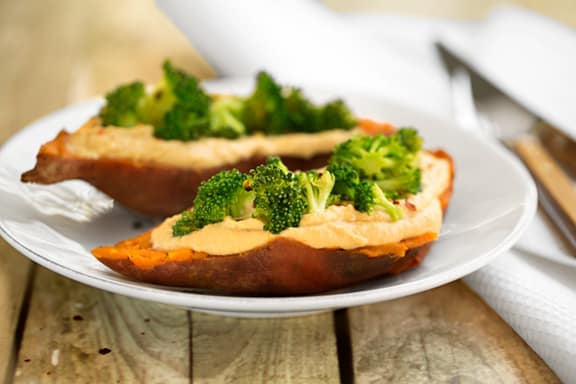
Not long ago, hummus became one of the fastest-growing snack foods in America. This Middle Eastern classic is made of healthful chickpeas and tahini, so it's a welcome alternative to the usual starchy and sugary junk foods people often gravitate to.

As a bonus, this Middle Eastern classic is already vegan! Here are 5 great ways to use hummus, aside from its most common use as a dip for fresh pita bread.
Of course, you can make your own hummus and experiment with your own creative combinations and flavorings. But here at VegKitchen, we're very lazy and fully endorse the use of store-bought hummus varieties. There are so many varieties and flavors of hummus that it often has its own bay in the supermarket produce section!
Use As A Spread For Wraps Or Sandwiches

This suggestion might, admittedly, be coming straight from Captain Obvious. But for anyone looking for a nice change of pace for wraps or sandwiches, you'll thank him for the reminder. Hummus keeps well on bread and wrappers, and doesn't get soggy when packed up for school or office lunch a few hours later. It also helps stick all the sandwich ingredients together!
Hummus goes well with leafy greens, avocado, bell pepper strips, shredded carrots, leftover cooked grains, and other legumes. Add variety to your combinations based on what's in your fridge!
If you want more specific recipe instructions, see Hummus and Veggie Lavash Wraps, Hummus, Avocado, and Baby Spinach Sandwich, Hummus Wraps with Grains and Greens, and Hummus, Cucumber, and Avocado Wrap. All of these recipes are so easy that you can just follow the photo rather than the recipe-no need to obsessively measure ingredients!
Use As A Topping For Potatoes

Tangy hummus is a great foil for the starchy flavors of potato or sweet potato. You can add other vegetables to the equation, too. Steamed broccoli tops the sweet potato variation above. Wilted spinach or other greens are also a great option.
Simply mix a few steamed vegetables in with the hummus before scooping over the potatoes. Then top with salsa or drizzle with sriracha, as shown in the photo at the top of this post. Served with a simple salad or slaw, these hummus slathered potatoes make for a great emergency dinner.

Use As Extra Protein For Vegan Bowls

Bowls are all the rage as a one-dish way to serve a well-rounded meal of complex carbs, protein, and veggies (cooked and/or raw). Bowls are meant to appeal to the eye as well as the palate. Simply arrange colorful veggies on a bed of cooked grain. The hummus doubles as your protein and your sauce!
Use As A Topping For Toast

Lately, avocado toast has become a big thing. This version's a bit in reverse: hummus toast topped off with thick slices of avocado. Their flavor and texture are so compatible, you could say that they're made for each other!
Use As An Appetizer Or Snack With Raw Veggies

This is another pretty obvious use of hummus, but how many times do you forget to prepare an appetizer when company's coming? If you keep prepared hummus in the fridge, you'll have an instant appetizer that everyone loves at the ready.
Spoon some hummus into a small bowl (pretend you made it; I won't tell), and surround the bowl with raw vegetables and whole-grain chips or crackers. If you're really pressed for time, you can get cut fresh vegetables at the supermarket, as well.
As another plus, hummus served as a dip works as a great incentive to get kids and picky eaters to eat their vegetables.
Want even more ideas? Check out four more ways to use hummus over at Oh My Veggies!
Polenta with a Variety of Toppings

Polenta is the Italian name for a basic cornmeal mush that can be served on its own or with a variety of toppings (see variations after recipe box). It's a comforting, naturally gluten-free grain dish that kids and picky eaters will love! When mine were growing up, they loved this with a side of steamed broccoli, and a platter of raw veggies with a dip. Thanks to Colavita for supplying the Instant Polenta used in this recipe, which not only cooks up super-fast, but is extra smooth. Photos by Evan Atlas. [Read more...]
Quick Kung Pao Tofu

Kung Pao Tofu is a tasty recipe whose many iterations often require lots of steps and ingredients and sometimes even two different sauces. This version streamlines the process so that it can be on the table in less than half an hour. Serve on its own or over hot cooked rice or noodles. Photos by Evan Atlas. [Read more...]
White Root Vegetables: A Guide to 14 Types (with Photos)
Spotted a pale, knobby or long white root at the market and can't put a name to it? You're in the right place. This guide covers 14 white root vegetables, from daikon and parsnips to jicama, taro and lotus root, with photos, the quickest ways to tell look-alikes apart, what each one tastes like, and the best ways to cook it.
Start with the comparison table if you just need a fast ID, then jump to the vegetable that matches what you saw. Near the end there are quick sections for the three things people search for most: long white root vegetables, big white root vegetables, and vegetables that look like radishes.
White Root Vegetables at a Glance
| Vegetable | What it looks like | Taste | How to cook it |
|---|---|---|---|
| Daikon | Long, smooth, white, carrot-shaped but much thicker; often green near the top | Crisp, juicy, mildly peppery raw; sweet and mellow cooked | Raw in salads, pickled, simmered in soups, stir-fried |
| Parsnip | Carrot-shaped, cream to tan, wide shoulders, ringed skin | Sweet, nutty, a little spicy | Roasted, in soups and stews, mashed |
| Turnip | Round, white with a purple top, 2 to 4 inches across | Peppery raw; mild and sweet cooked | Roasted, mashed, sautéed, pickled |
| Rutabaga | Larger than a turnip, purple top, yellowish bottom, often waxed | Sweet, buttery, earthy | Mashed, roasted, in stews |
| Celeriac (celery root) | Round, gnarly, beige-brown, hairy rootlets at the base | Celery and parsley with a nutty edge | Soups, mash, roasted, grated raw |
| Jicama | Round, flat-topped, thin tan-brown skin | Crisp, juicy, lightly sweet, like apple meets water chestnut | Raw sticks, slaws, salads, quick stir-fries |
| Kohlrabi | Pale green or purple bulb with stems sticking out | Like a sweet broccoli stem | Raw slaw, roasted, sautéed, soups |
| White sweet potato | Sweet potato shape, tan or purple-red skin, white flesh | Mildly sweet, chestnut-like, fluffy | Baked, roasted, mashed, fries |
| Taro | Round to barrel-shaped, shaggy brown skin with rings | Nutty, starchy, creamy when cooked | Always cooked: boiled, braised, fried, in curries |
| Cassava (yuca) | Long club shape, thick bark-like brown skin, often waxed | Mild, starchy, slightly sweet | Always cooked: boiled, fried, mashed |
| Horseradish | Long, thick, rough and gnarled, tan-brown | Fiercely hot and pungent when grated | Grated raw into sauces and condiments |
| Salsify | Long, thin, stick-like; tan and hairy or black | Delicate, nutty, like artichoke hearts | Sautéed, braised, in soups and gratins |
| Lotus root | Linked tan sections like sausages; lacy holes inside | Crisp, mild, lightly sweet | Stir-fried, braised, in soups, as chips |
| White carrot | Exactly like a carrot, but ivory white | Mild, sweet, less carrot-y | Raw, roasted, glazed, in soups |
The 14 White Root Vegetables, One by One
1. Daikon
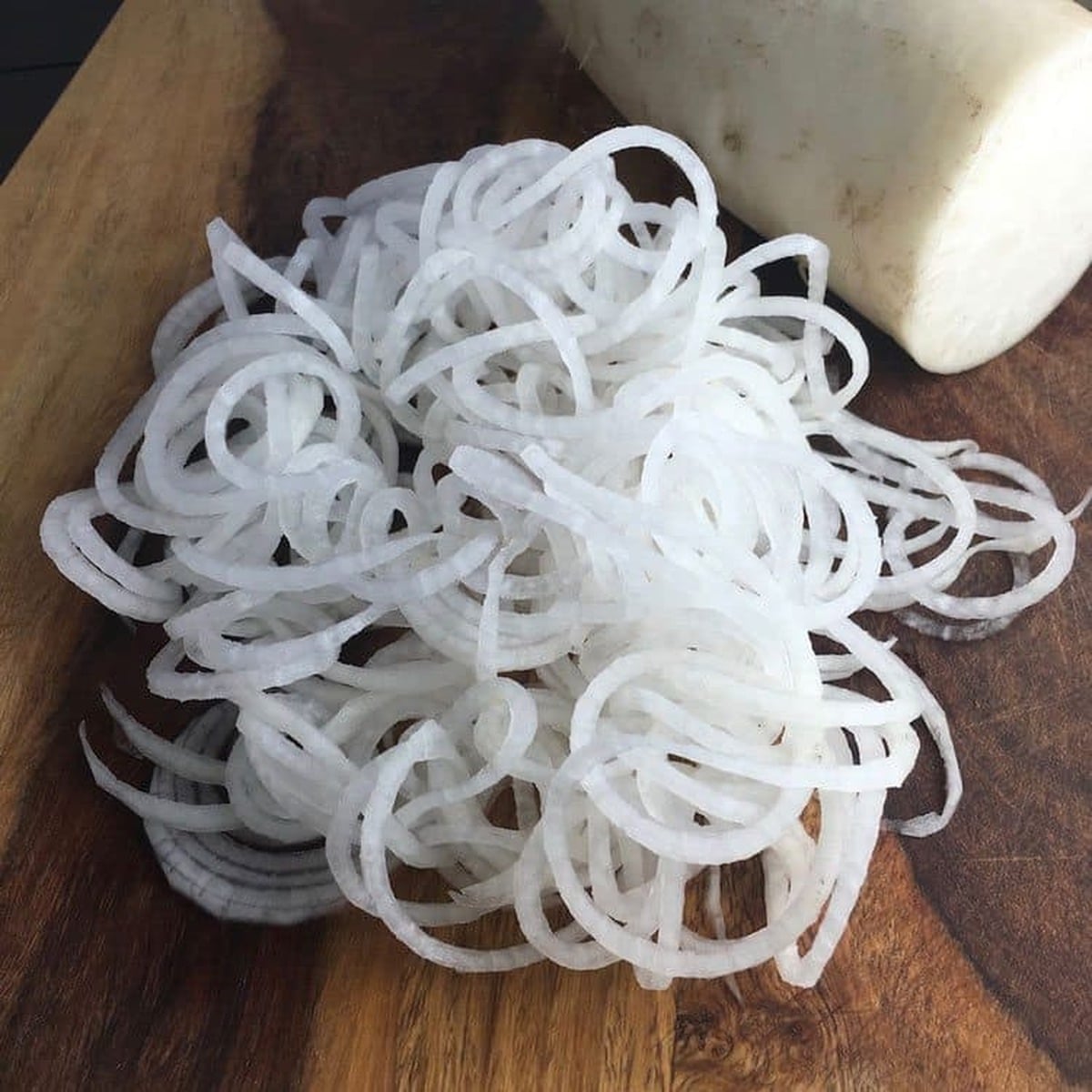
How to spot it: Daikon is the vegetable most people mean when they search for a "long white root vegetable." It's smooth, bright white and cylindrical, usually 8 to 20 inches long and 2 to 4 inches thick, and often pale green near the top where it pushed out of the soil. Korean radish (mu) is the same family but shorter and stouter, with more green on the shoulders. Its name means "big root" in Japanese, and it's sold in Chinese markets as white radish or lo bok.
How to tell it from look-alikes: A parsnip is cream to tan, tapers to a point and has a wide, flat crown with ringed skin; daikon is whiter, thicker and nearly the same width from top to bottom. Horseradish is also long, but its skin is rough, brown and gnarled.
Taste: Raw daikon is crisp, juicy and mildly peppery, gentler than a red radish. Cooked, it turns tender, sweet and mellow and soaks up whatever broth it's simmered in.
How to cook it: Grate or julienne it raw into salads and noodle bowls, like these Cold Japanese Noodles with Daikon and Carrots or Veggie Sushi Rice Bowls or even this Daikon Noodle Soup. Or cut it into half-moons and simmer it in a brothy soup such as Miso Soup with Winter Vegetables. It also makes excellent quick pickles!
2. Parsnip
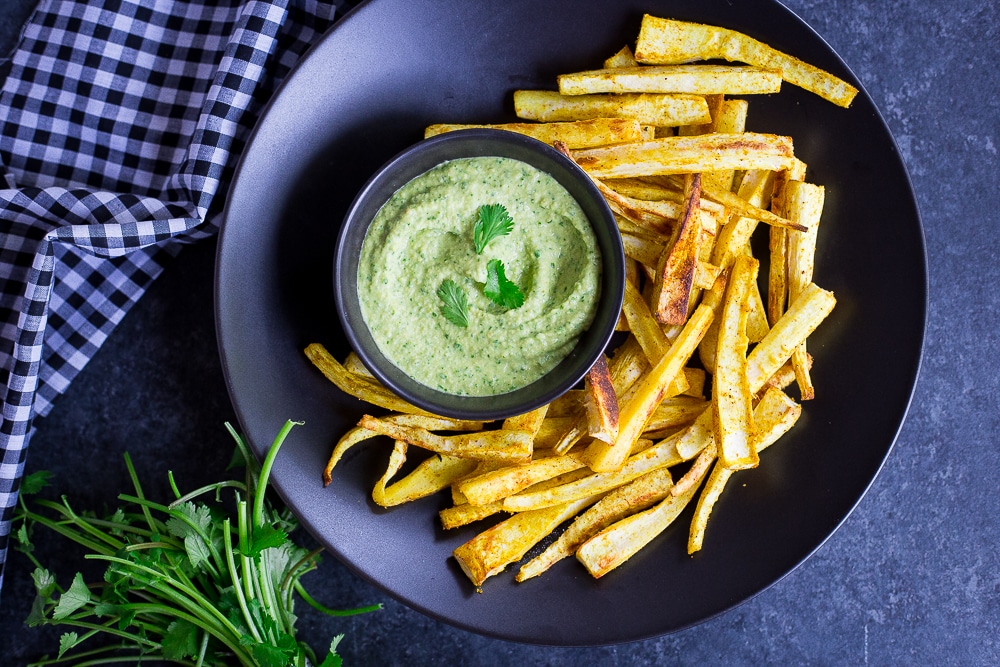
How to spot it: Parsnips look like cream-colored carrots with broad shoulders. The top is wide and slightly sunken where the leaves were trimmed, the skin has faint rings, and the root tapers to a thin tail. Most are 6 to 10 inches long.
How to tell it from look-alikes: White carrots are smoother and slimmer at the top, without a parsnip's wide, dished crown. Parsley root is similar but smaller and usually sold with its leaves attached. Snap a small piece of parsnip and you'll notice a sweet, almost spicy aroma that carrots don't have.
Taste: Sweet, nutty and earthy, with a hint of spice. Parsnips get even sweeter after a frost, and large ones can have a woody core that's best cut out.
How to cook it: Roasting is the classic: toss chunks with olive oil and roast until the edges caramelize, as in Garlicky Roasted Root Vegetables. Parsnips also give soups a gentle sweetness. Try this cozy Vegan Parsnip Chowder or Creole Creamy Carrot Soup.

3. Turnip
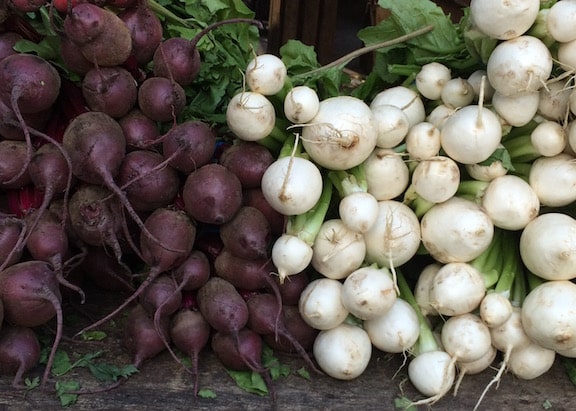
How to spot it: Turnips are round or slightly flattened globes, usually 2 to 4 inches across, white on the bottom with a purple or pinkish blush on top where the sun reached them. Baby Japanese turnips (Hakurei or Tokyo turnips) are smaller, all white and often sold in bunches with their greens.
How to tell it from look-alikes: A rutabaga is bigger, yellowish below the purple and usually waxed. A white radish is smaller and smoother, with a sharper bite. Kohlrabi looks similar from a distance, but its bulb sprouts stems from its sides, not just the top.
Taste: Raw turnips are crisp and a little peppery, somewhere between a radish and a cabbage. Cooking makes them mild and sweet. Small, young turnips are the most tender and least bitter.
How to cook it: Roast or mash them alongside potatoes, sauté them in a quick side like Sautéed Turnips and Peppers, or simmer them in a North African stew such as Vegetables Tajine. Thin raw slices of baby turnips are lovely in salads.
4. Rutabaga
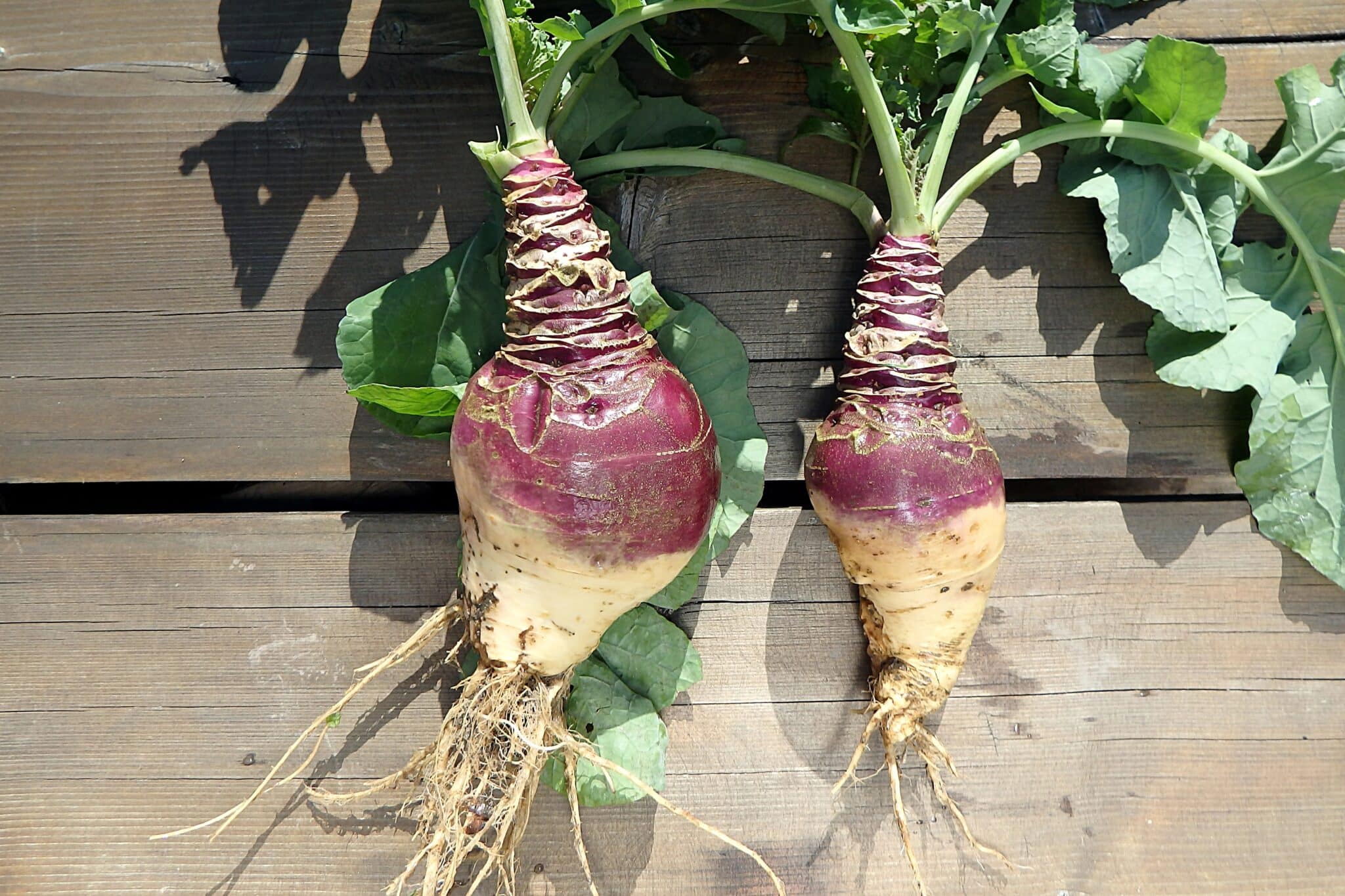
How to spot it: Rutabagas (called swedes in the UK) are a cross between a turnip and a cabbage. They're larger than turnips, often the size of a softball or bigger, with a purple top, a creamy yellow bottom and a thick neck with ridged leaf scars. Supermarket rutabagas are usually coated in wax to keep them fresh.
How to tell it from look-alikes: Cut it open: turnip flesh is white, while rutabaga flesh is pale yellow to golden. Rutabagas are also denser and heavier for their size.
Taste: Sweeter and more buttery than turnips, with a gentle earthy, cabbage-like note.
How to cook it: Peel away the wax and skin with a sharp knife, then mash it with potatoes, roast it in cubes, or add it to hearty stews like Winter One-Pot Lentils and Rice. Our roasted vegetables guide has timing tips for rutabaga and other roots.
5. Celeriac (Celery Root)
How to spot it: Celeriac is the knobbly, rough-skinned, beige-brown ball that looks a bit alarming the first time you see it. It's roughly 3 to 5 inches across, with a tangle of hairy rootlets at the bottom and sometimes celery-like stalks on top. Inside, the flesh is creamy white.
How to tell it from look-alikes: Its gnarly, tangled base is unlike anything else here. Taro is also brown and rough, but it has neat rings and shaggy fibers instead of a mass of rootlets.
Taste: Like celery and parsley combined, with a nutty, slightly sweet finish. It's milder once cooked.
How to cook it: Cut off the skin with a knife (a peeler won't get through the crevices). Grate it raw for a crunchy slaw with a mustardy vegan mayo, simmer it into silky soups, mash it with potatoes, or roast it in wedges. Drop cut pieces into lemony water so they don't brown.
6. Jicama
How to spot it: Jicama (HEE-kah-mah) is round with a flattened top and bottom, a bit like a big turnip, with thin, matte, tan-brown skin. They range from the size of a fist to several pounds. The flesh is bright white, crisp and very juicy.
How to tell it from look-alikes: It can be mistaken for a turnip or a potato, but jicama's skin is papery and dull brown all over, with no purple, and it feels heavy and hard. Cut it, and the watery crunch is unmistakable.
Taste: Mildly sweet and nutty, like a cross between an apple, a pear and a water chestnut.
How to cook it: Jicama is usually eaten raw. Peel it well (the skin isn't edible), then cut it into sticks with lime and chili, or shred it into a Vegan Jicama Coleslaw. It's also great in Jicama Salad with Oranges and Watercress and stays crunchy in quick stir-fries. For more ideas, see 10 Easy Jícama Recipes You'll Love.
7. Kohlrabi

How to spot it: Kohlrabi is technically a swollen stem, not a root. It grows just above the ground, so it looks like a pale green (or purple) ball with long leaf stems sprouting from its sides and top, a bit like a small alien spaceship. Inside, it's crisp and white.
How to tell it from look-alikes: Those stems coming out of the sides are the giveaway; turnips and radishes only have leaves on top. Once the stems are trimmed, look for the little scars they leave around the bulb.
Taste: Mild, sweet and juicy, like a broccoli stem or the heart of a cabbage, with a slight peppery note.
How to cook it: Peel off the fibrous outer layer, then cut it into sticks for dipping, shred it into slaw, or cut it into matchsticks for salads. It also roasts beautifully and can be sautéed or added to soups in place of potatoes.
8. White Sweet Potato
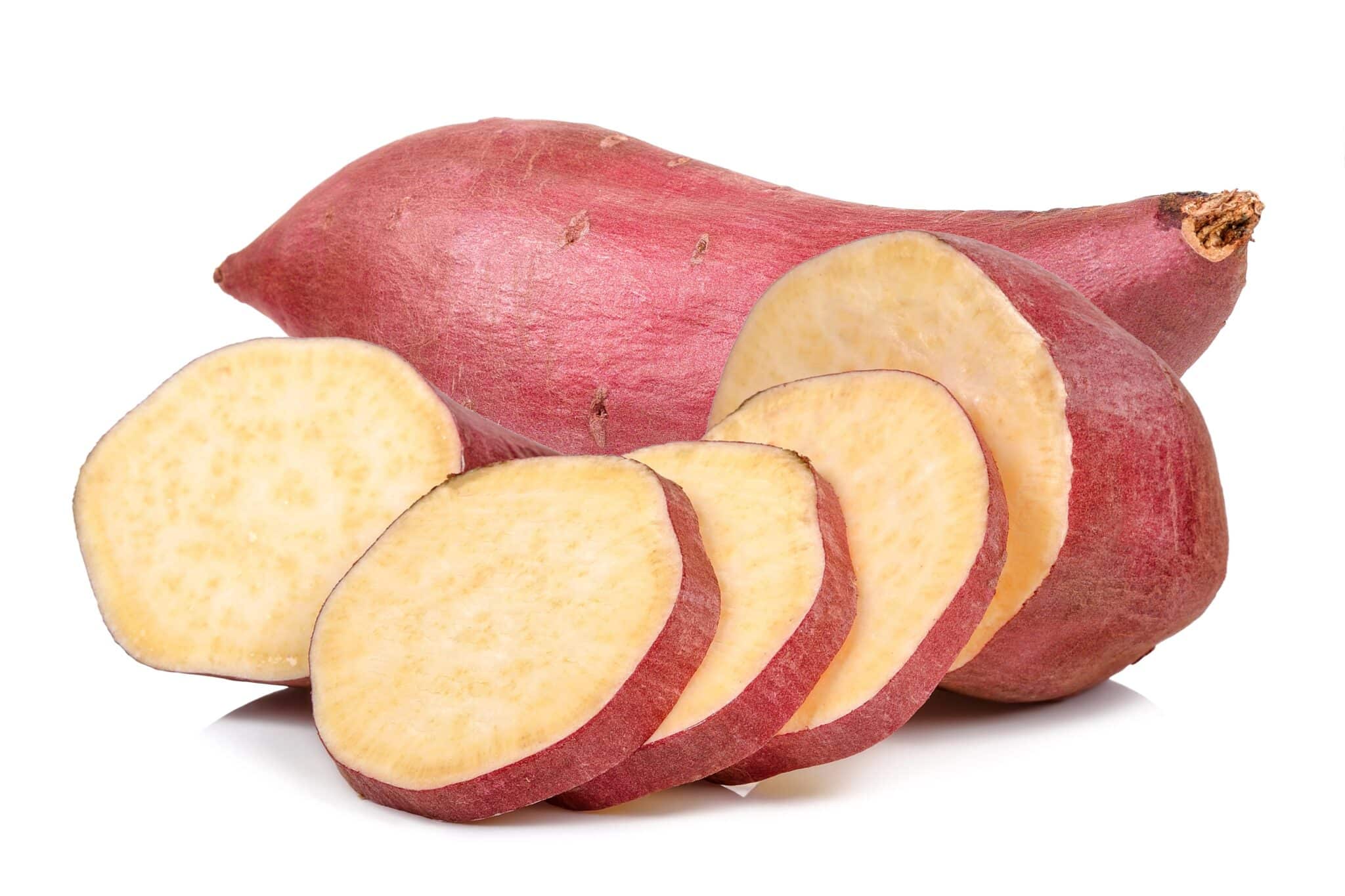
How to spot it: White sweet potatoes have the familiar tapered sweet-potato shape but pale flesh. Some, like Hannah and O'Henry, have tan or cream skin; Japanese sweet potatoes (satsuma-imo) have purple-red skin and creamy white flesh. The Caribbean boniato has pinkish, patchy skin and white flesh.
How to tell it from look-alikes: Regular potatoes are rounder and have "eyes" rather than tapered ends. True yams have rough, bark-like skin and are rarely sold in ordinary supermarkets. Cut a white sweet potato and the flesh turns faintly yellow once cooked.
Taste: Less sugary than orange sweet potatoes, with a drier, fluffier texture. Japanese sweet potatoes are especially sweet and chestnut-like.
How to cook it: Use them in any sweet potato recipe: bake them whole, roast wedges as in Simple Garlic-Roasted Sweet Potatoes, or swap them into a holiday Sweet Potato Tzimmes. Browse more ideas in our vegan sweet potato recipes.
9. Taro
How to spot it: Taro is a brown, hairy, bark-like root with concentric rings around it. Small ones (eddoes) are about the size of an egg; larger ones (dasheen) can be the size of a small coconut. Cut it open and the flesh is white or cream, often speckled with purple-gray flecks.
How to tell it from look-alikes: Its rings and shaggy fibers set it apart from celeriac and jicama. Cassava is much longer and has smoother, bark-like skin with no rings.
Taste: Nutty, starchy and slightly sweet, like a potato crossed with a chestnut, with a creamy, sometimes slightly sticky texture when cooked.
How to cook it: Never eat taro raw; it contains compounds that irritate the mouth and throat until they're cooked. Wear gloves when peeling, then boil, steam or braise it, add it to coconut curries and stews, or slice and bake it into chips.
10. Cassava (Yuca)
How to spot it: Cassava, also called yuca or manioc, is a long, club-shaped root, usually 8 to 16 inches long and 2 to 3 inches thick, with thick, dark brown, bark-like skin. It's usually sold coated in wax. The flesh is bright white with a fibrous string running down the center. (Yuca isn't the same as yucca, the spiky ornamental plant.)
How to tell it from look-alikes: It's thicker and woodier-looking than a parsnip or daikon, and its skin looks like tree bark. Snap off the end, and you'll see very white, dense flesh.
Taste: Mild, starchy and slightly sweet, denser and more satisfying than potato.
How to cook it: Cassava must always be peeled and cooked, since raw cassava contains natural compounds that cooking removes. Peel it with a knife, cut out the woody center, then boil until tender and toss with garlic, lime and olive oil, or boil and then fry it into crispy yuca fries. Cassava is also the source of tapioca and cassava flour.
11. Horseradish
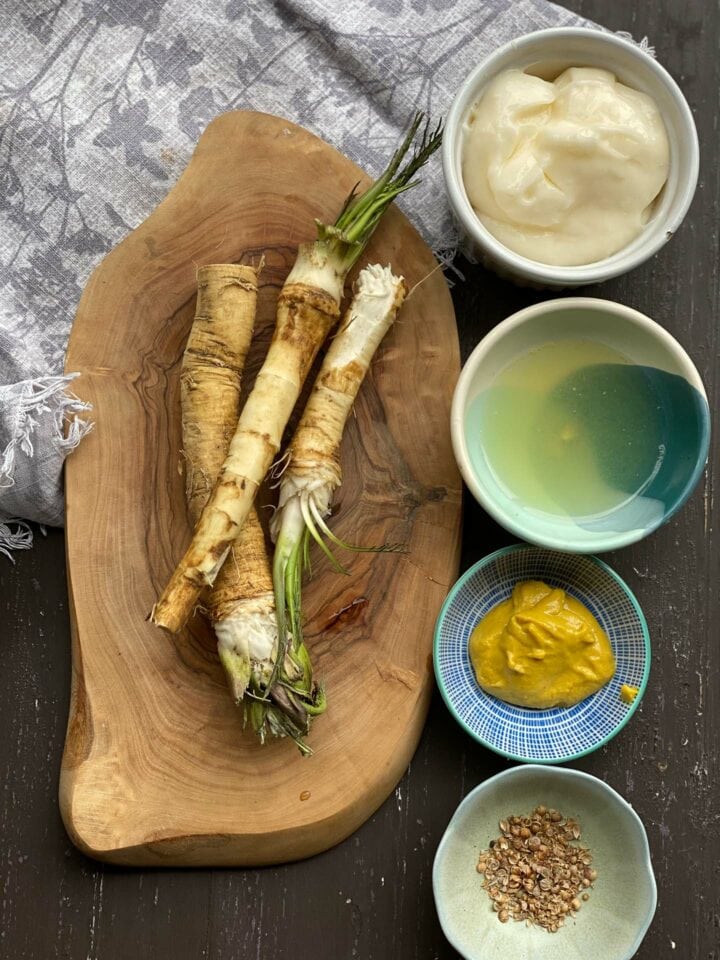
How to spot it: Fresh horseradish is a long, thick, gnarly root, usually 8 to 12 inches long, with rough tan-brown skin and a knobby top. Inside, it's white and hard.
How to tell it from look-alikes: It's the same general shape as a parsnip or daikon, but the skin is rougher and darker. The surest test: grate a little. Horseradish releases an eye-watering, sinus-clearing aroma within seconds.
Taste: Intensely hot and pungent when freshly grated, with a clean bite similar to wasabi. The heat fades quickly after grating unless you add vinegar.
How to cook it: Horseradish is almost always used raw as a condiment- and you can make your own homemade vegan horseradish sauce! Peel a small section and grate it on a fine rasp such as a Microplane grater, then stir in vinegar and a pinch of salt. Use it in dips, dressings and sauces, like the Horseradish-Dill Mayonnaise for tempeh fries, or on the Seder plate (see our vegan Passover Seder recipes).
12. Salsify
How to spot it: Salsify is a long, thin taproot about the size of a skinny carrot. White salsify has tan, slightly hairy skin; black salsify (scorzonera) has dark brown-black skin. Both have white flesh and a milky sap when cut.
How to tell it from look-alikes: It's much thinner and more stick-like than a parsnip or daikon, and the sticky white sap is a telltale sign.
Taste: Delicate, nutty and a little like artichoke hearts. It's nicknamed the "oyster plant" because some people taste a faint oyster-like note.
How to cook it: Scrub it, peel it and drop the pieces straight into lemony water, as it browns fast. Simmer until tender and then sauté in olive oil with garlic and herbs, braise it, or add it to soups and gratins.
13. Lotus Root
How to spot it: Lotus root is the underwater stem of the lotus plant. It grows in linked sections that look like fat, tan sausages, each 4 to 8 inches long. Slice it crosswise and you'll see its famous lacy pattern of holes.
How to tell it from look-alikes: Nothing else on this list has those holes. Whole, the linked, smooth, light brown segments are a giveaway.
Taste: Crisp, mild and lightly sweet, with a starchy crunch that holds up even after cooking.
How to cook it: Peel it, slice it thin and soak the slices in water with a splash of vinegar to keep them white. Stir-fry it with garlic and chili, braise it in soy and sugar, add it to soups, or fry thin slices into chips. It's generally cooked rather than eaten raw. You can check out some more creative lotus root ideas here.
14. White Carrots
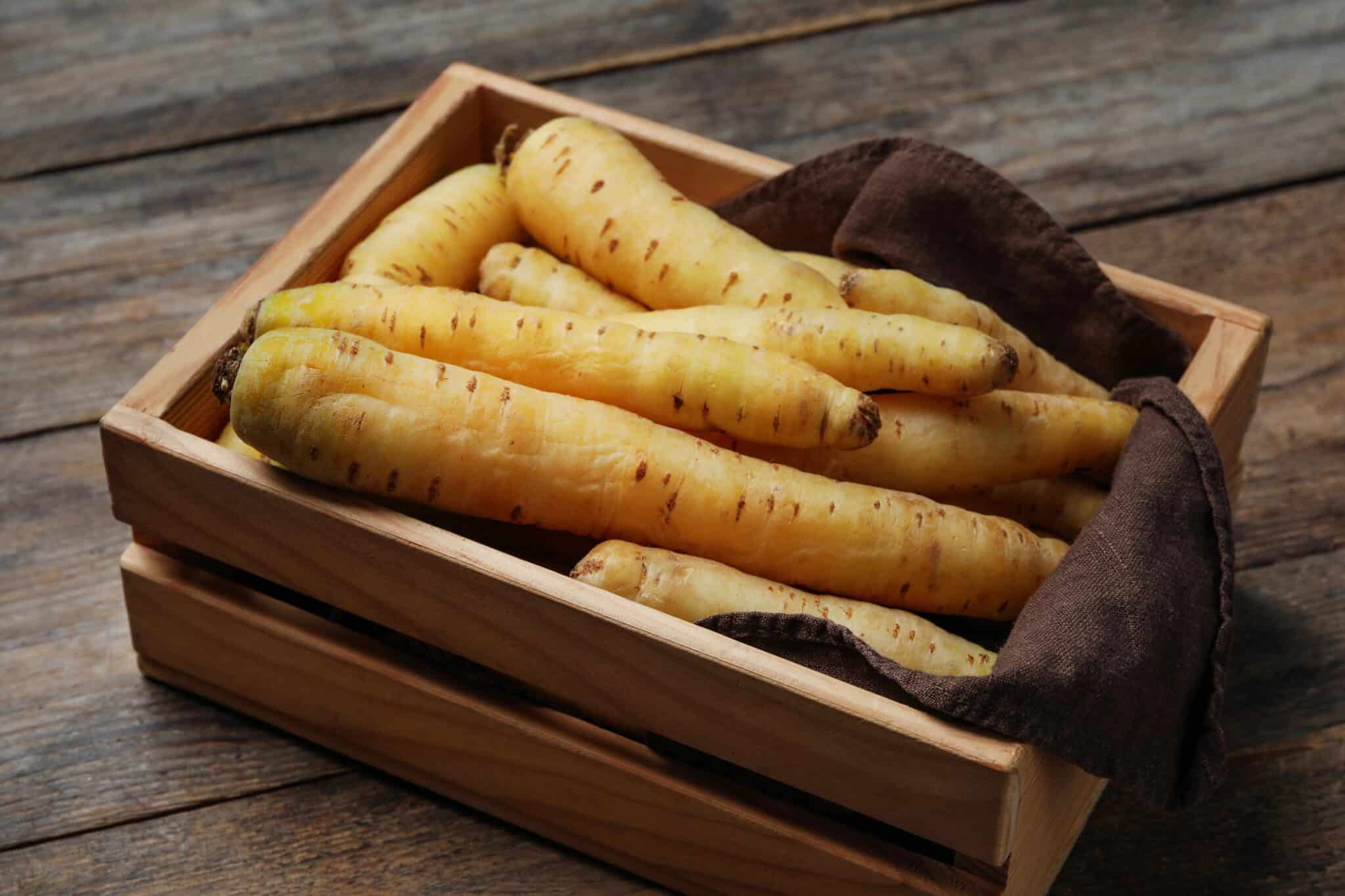
How to spot it: White carrots look exactly like orange carrots, just ivory or cream colored. Varieties such as White Satin and Lunar White are showing up at farmers' markets and in rainbow carrot bunches.
How to tell it from look-alikes: This is the one most often confused with parsnips. White carrots are smoother, slimmer at the top, without a parsnip's wide sunken crown, and they smell like carrots rather than the spicier parsnip scent. They're also crisp and snappy raw, while parsnips are firmer and more fibrous.
Taste: Mild and sweet, less earthy and "carroty" than orange carrots.
How to cook it: Use them anywhere you'd use regular carrots: raw in salads and slaws, roasted, glazed or simmered in soups. Mixed with orange and purple carrots, they make a gorgeous tray of roasted vegetables. I especially love these Vegan Honey Glazed Carrots.
Long White Root Vegetables
If the vegetable you saw was long and white, it's most likely one of these:
- Daikon. The most common answer. Smooth, bright white, thick and even from end to end, often with a green top.
- Parsnip. Cream to tan, with wide shoulders tapering to a point and ringed skin.
- White carrot. Carrot-shaped and smooth, but ivory instead of orange.
- Horseradish. Long, thick and rough, with gnarled tan-brown skin.
- Cassava (yuca). Long and club-shaped with bark-like brown skin; white only on the inside.
- Salsify. Long, very thin and stick-like, with tan or black skin.
- Burdock root (gobo). Not in our main list, but worth knowing: a very long, skinny, brown-skinned root with white flesh, popular in Japanese cooking.
Big White Root Vegetables
Some white roots get surprisingly large. If yours was big and heavy, consider these:
- Daikon. Regular daikon can reach 2 feet long and several pounds, and the round Sakurajima variety grows to the size of a basketball.
- Jicama. Large ones can weigh 4 or 5 pounds, round with flat tops and tan skin.
- Rutabaga. Often the size of a softball or bigger, purple on top and yellowish below.
- Celeriac. A big, gnarly, beige-brown ball with a hairy base.
- Taro. Large dasheen taro can be as big as a coconut, with ringed, shaggy skin.
- Kohlrabi. Most are tennis-ball sized, but giant varieties can grow as big as a cantaloupe.
By the way, if you've heard of a "big white vegetable" in Chinese cooking, that's the literal name of napa cabbage (da bai cai), not a root at all. Daikon is known as white radish (bai luo bo).
Vegetables That Look Like Radishes
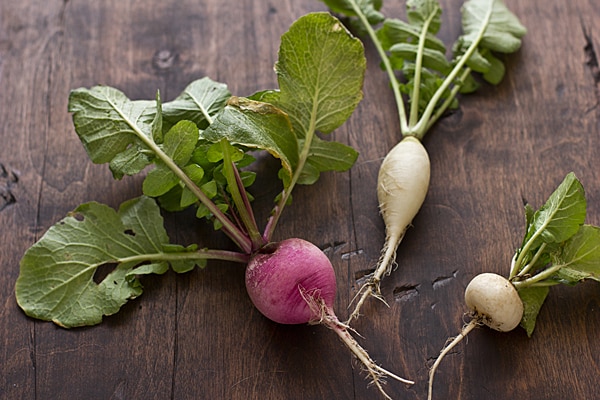
Many roots in the same plant family share a radish's round shape and smooth skin. If it looked like a radish but not quite, it may be one of these:
- Turnips. The closest look-alike: round, white and purple-topped, but larger than most radishes and milder once cooked. Baby Hakurei turnips look almost exactly like white radishes.
- White radishes. Icicle radishes are long and white, and white globe radishes look like small turnips. Both have a radish's peppery bite.
- Daikon and Korean radish. Radishes too, just much bigger.
- Kohlrabi. Round and green or purple, with stems sticking out of the sides.
- Rutabaga. Like a large, yellow-bottomed turnip.
- Beets. A red or golden root with a radish-like shape, but earthy and sweet, not peppery.
Need a radish substitute in a salad? Thinly sliced young turnips, jicama or kohlrabi give you the same crunch, and daikon brings a similar peppery kick.
Helpful Tools for Prepping Root Vegetables
Firm white roots can be tough to cut, and a few simple tools make prep much faster:
- Julienne peeler. Turns daikon, jicama, kohlrabi and white carrots into thin matchsticks for slaws, salads and spring rolls.
- Mandoline slicer. Makes paper-thin, even slices of turnip, lotus root or celeriac for salads, gratins and chips. Always use the hand guard.
- Microplane grater. The best way to grate fresh horseradish and finely grated daikon.
- Spiralizer. Turns daikon, kohlrabi and jicama into noodle-like spirals.
How to Store White Root Vegetables
Most firm white roots, including daikon, turnips, parsnips, rutabaga, celeriac, kohlrabi and white carrots, keep for one to three weeks in a bag in the refrigerator crisper drawer. Trim off any leafy greens first, since they draw moisture out of the root (turnip and radish greens are edible, so cook them separately). Once cut, wrap the pieces tightly and use them within a few days.
Jicama, taro, cassava, sweet potatoes and lotus root are the exceptions. Keep whole jicama, taro, cassava and sweet potatoes in a cool, dry, dark spot rather than the fridge, and use cassava within a few days, since it spoils quickly. Refrigerate lotus root and peeled or cut pieces of any of them, covered in water if they're prone to browning.
White Root Vegetable FAQ
What's the long white vegetable that looks like a carrot?
It's most likely a parsnip: cream colored, carrot-shaped, with wide shoulders and ringed skin. If it was perfectly smooth and shaped just like a carrot, it may be a white carrot. If it was much thicker and bright white, it's probably daikon.
What's the difference between daikon and parsnip?
Daikon is a radish: bright white, smooth, thick and fairly even in width, with a crisp, juicy, peppery bite that's great raw. A parsnip is a relative of the carrot: tan to cream, tapering, with sweet, nutty flesh that's best cooked.
Is it a turnip or a radish?
Size and flavor are the best clues. Radishes are usually smaller, with smooth, thin skin and a sharp, peppery bite. Turnips are larger, often purple on top, and milder and sweeter once cooked. Both are related, so they can often be swapped in recipes.
Which white root vegetables can you eat raw?
Daikon, jicama, kohlrabi, turnips, white carrots, celeriac and parsnips can all be eaten raw, usually grated or thinly sliced. Horseradish is used raw as a condiment. Taro and cassava must always be cooked, and lotus root and salsify are generally cooked too.
What white root vegetable looks like a potato?
Jicama is the most common one; it's round, tan-skinned and potato-like on the outside, but crisp and juicy inside. White sweet potatoes, taro and Jerusalem artichokes (knobby, ginger-shaped tubers) are also often mistaken for potatoes. See our Jerusalem Artichoke Salad for a way to use those.
Are white root vegetables healthy?
Yes. Even without the bright colors of carrots and beets, white roots are good sources of fiber, vitamin C and potassium, and they're low in fat. Daikon, kohlrabi, turnips and jicama are especially low in calories and high in vitamin C, while cassava, taro and sweet potatoes are more filling, starchy energy sources.
More Root Vegetable Recipes
Ready to cook with your white root vegetables? Here are a few favorites to start with:
Vegan Mushroom-Seitan Stroganoff

Here's a hearty pasta dish featuring a healthier, nondairy version of cream-filled Alfredo sauce. This dish also has some serious plant-based "beefiness" courtesy of seitan. Serve with plenty of green vegetables (like broccoli, greens, or green beans) and a simple salad for an any-night-of-the-week meal, or even as a company dish. Recipe adapted from Plant Power: Transform Your Kitchen, Plate, and Life with More Than 150 Fresh and Flavorful Vegan Recipes by Nava Atlas (©2014, published by HarperOne, reprinted by permission). Photos by Hannah Kaminsky.
BBQ-Flavored Chickpea Pitas
Cool romaine lettuce and barbecue-flavored chickpeas (or explore the other plant protein variations following the recipe) combine to create a great flavor and texture combination in this hearty pita sandwich. This pairs well with many simple companions - potatoes or sweet potatoes, fresh corn, a simple quinoa salad, or a light soup. This recipe makes enough to generously fill 4 good-sized pita halves. Adapted from Plant Power: Transform Your Kitchen, Plate, and Life with More Than 150 Fresh and Flavorful Vegan Recipes by Nava Atlas. ©2014, published by HarperOne, reprinted by permission. Photos by Hannah Kaminsky.
Macaroni Salad with Vegetable Confetti
This mild and creamy vegan macaroni salad is reminiscent of the kind sold at deli counters, but with more going for it - namely, lots of veggies. Kid- and picky eater-friendly, it's a nice change-of-pace from sandwiches to pack for school or office portable lunches. For this recipe, we used Tolerant gluten-free organic green lentil pasta, just one of several such high-protein, legume-based pastas. Adapted from The Vegetarian Family Cookbook. Photos by Evan Atlas. [Read more...]